

10 Best Sales Performance Management Software In 2026

10 Best Sales Performance Management Software Shortlist


With so many different sales performance management software available, figuring out which is right for you is tough. You know you want to align your sales strategies with business objectives and drive better sales results but need to figure out which tool is best. I've got you! In this post I'll help make your choice easy, sharing my personal experiences using dozens of different sales performance management tools with various teams and projects, with my picks of the best sales performance management software.
Why Trust Our Software Reviews
We’ve been testing and reviewing RevOps software since 2022. As RevOps leaders ourselves, we know how critical and difficult it is to make the right decision when selecting software.
We invest in deep research to help our audience make better software purchasing decisions. We’ve tested more than 2,000 tools for different RevOps use cases and written over 1,000 comprehensive software reviews. Learn how we stay transparent & our software review methodology.
| Tool | Best For | Trial Info | Price | ||
|---|---|---|---|---|---|
| 1 | Best for complex sales compensation processes | Free demo available | Pricing upon request | Website | |
| 2 | Best for end-to-end SPM | Free demo available | Pricing upon request | Website | |
| 3 | Best for automated sales tracking | 30-day free trial + free demo available | From $29/user/month (billed annually) | Website | |
| 4 | Best for customizable sales tracking | Free trial available | From $12/user/month (billed annually) | Website | |
| 5 | Best for AI-adaptive compensation modeling | Free demo available | Pricing upon request | Website | |
| 6 | Best for real-time sales coaching | Not available | Pricing upon request | Website | |
| 7 | Best for relationship-based sales at companies that use Salesforce | Free 30-day trial available | From $24/user/month (billed annually) | Website | |
| 8 | Best for gamified sales motivation | Free demo available | Custom pricing upon request | Website | |
| 9 | Best for integrated sales enablement, onboarding, and training | Free demo available | Pricing upon request | Website | |
| 10 | Best for augmenting human intelligence with AI guidance and a focus on Salesforce | Free trial available | Pricing upon request | Website |
Best Sales Performance Management Software Reviews
Here’s a brief description of each sales performance management software that showcases each vendor’s best use case, their noteworthy features, and some pros and cons. I’ve also included screenshots to give you a snapshot of their user interface too.

Qobra
Best for complex sales compensation processes
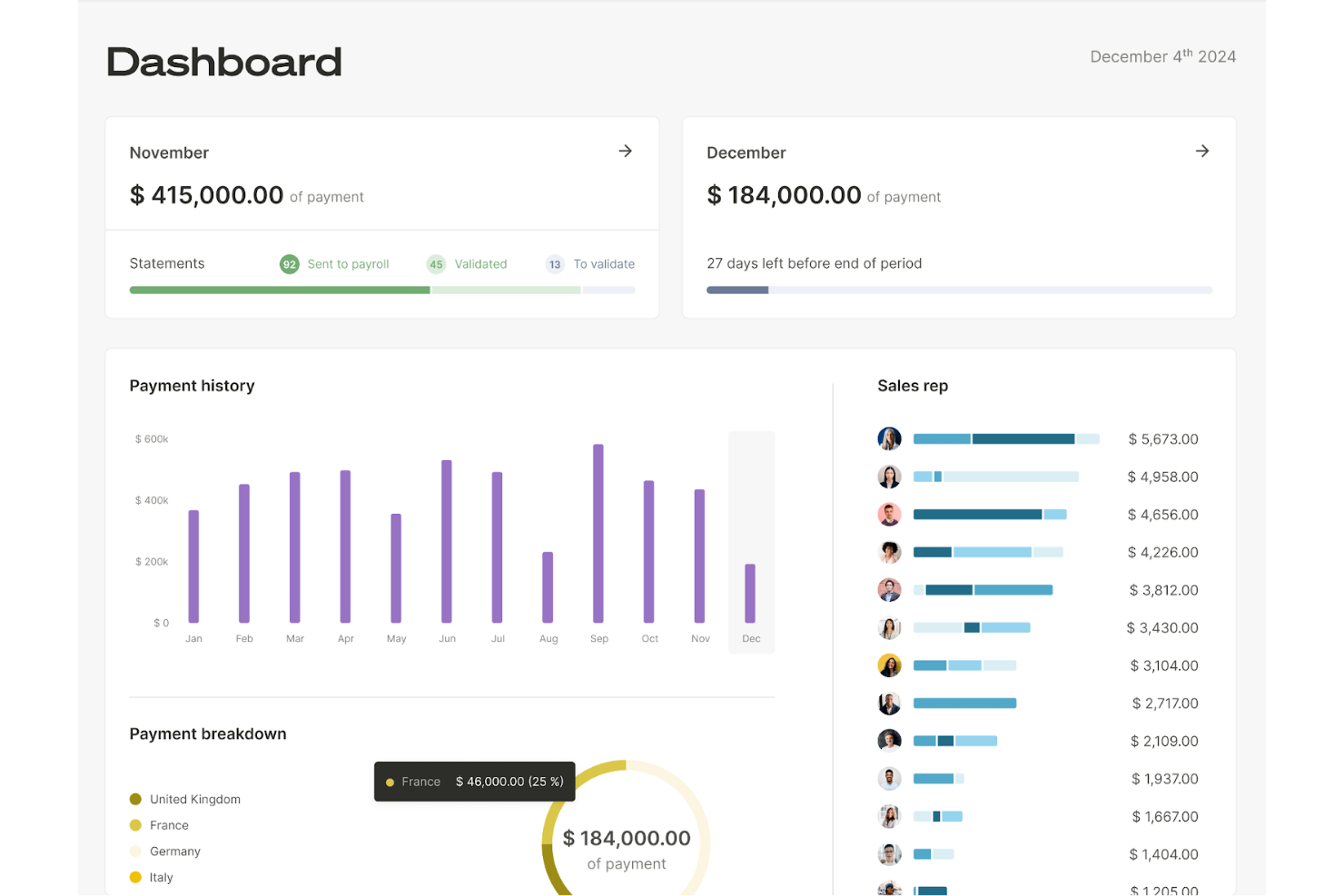
Qobra offers an appealing solution for sales operations and finance teams seeking a streamlined approach to managing sales compensation. This platform automates commission calculations and provides real-time visibility, helping to reduce manual errors and foster transparency within your team. Qobra makes compensation easier to manage, helping sales teams stay motivated and focused.
Why I Picked Qobra
I chose Qobra for its ability to simplify complex sales compensation processes into automated, transparent workflows. The platform's real-time commission updates ensure your team always has access to the latest earnings data, reducing the risk of discrepancies. The focus on enhancing trust and motivation aligns well with the needs of sales operations and finance teams.
Qobra Key Features
In addition to its automation capabilities, Qobra offers:
- Secure Payroll Integration: Computes commissions and sends them to your payroll tool for processing.
- Engagement Tools: These tools help keep your sales team motivated by providing clear visibility into performance metrics.
- Easy Design of Compensation Structures: You can customize compensation plans to fit your unique business needs without extensive coding knowledge.
- Insightful Analytics: The platform provides detailed analytics to help you evaluate and optimize your sales compensation strategies.
- QobrAI Agents: Use The Architect, The Analyst, and The Sales Coach to instantly build plans, detect calculation anomalies, and push proactive insights to your sales team.
Qobra Integrations
Integrations include Salesforce, HubSpot, Pipedrive, Microsoft Dynamics, Oracle, Slack, Google Workspace, QuickBooks, Xero, and FreshBooks.
Pros and Cons
Pros:
- Automates commission calculations, reducing manual errors
- Offers instant access to performance metrics
- Simplifies sales incentive programs, enhancing team motivation
Cons:
- Data synchronization may lag, affecting real-time updates
- Potential delays in commission payout processing

Xactly
Best for end-to-end SPM
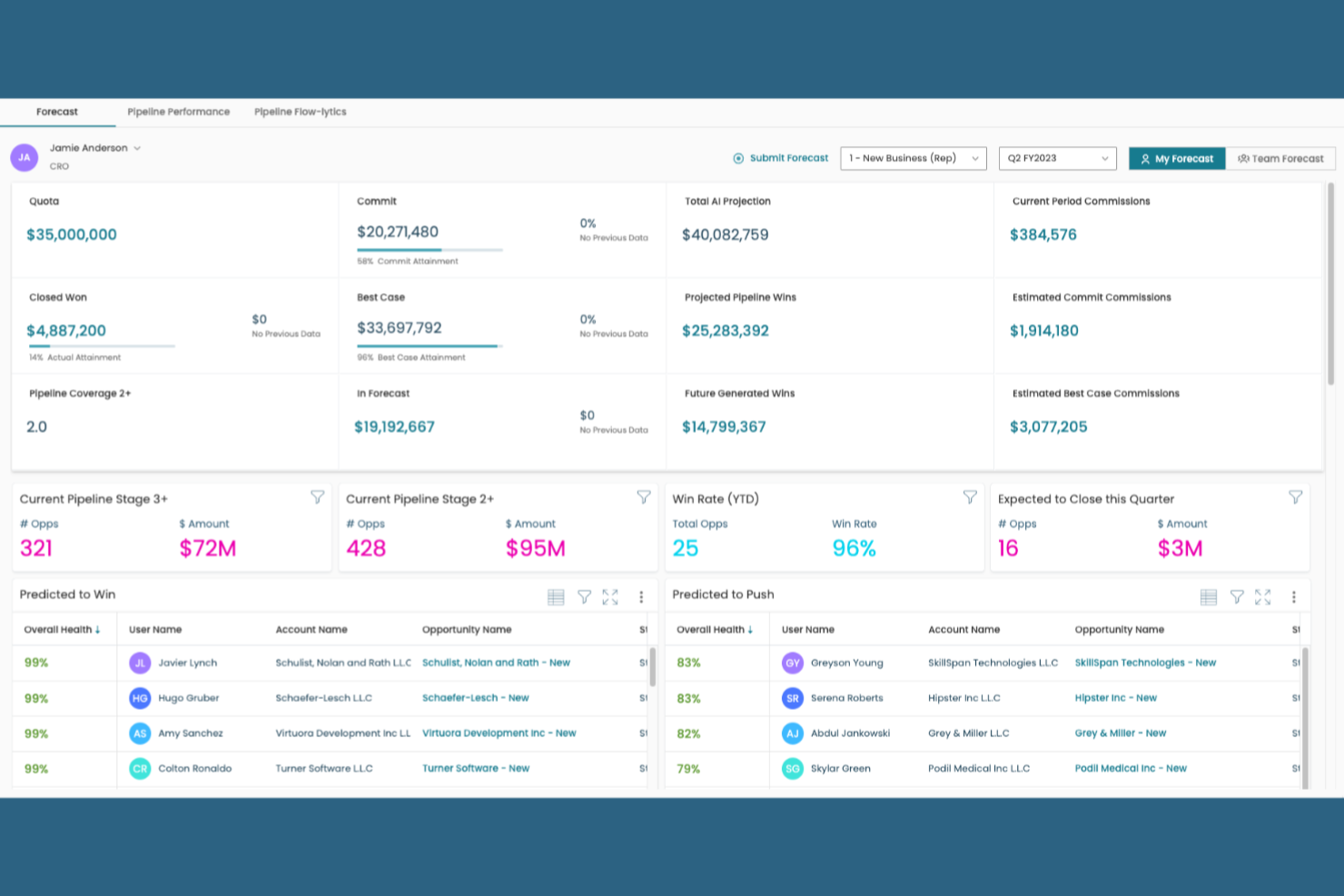
Xactly offers an Intelligent Revenue Platform designed to solve the three core challenges of the CRO: predictability, alignment, and performance. It is the single source of truth for sales performance management (SPM), uniting compensation, forecasting, territory, and quota planning. By moving beyond simple commission calculation, Xactly provides leaders with real-time insights and AI-driven recommendations to strategically align every sales action with corporate revenue objectives and drive consistent growth.
Why I Picked Xactly
I picked Xactly because it offers a comprehensive approach to SPM. The platform's real strength lies in its end-to-end GTM alignment capability. It ensures that incentive programs are not just accurate but actively motivate the right selling behaviors. The integration of AI-driven forecasting and quota management provides the objective data necessary to reduce risk, eliminate unattainable quotas, and build rep trust, directly driving sales effectiveness across the entire organization.
Xactly Key Features
In addition to automated compensation management, Xactly offers:
- Quota & Territory Optimization: Automated assignments and AI-driven modeling to design fair, balanced territories and set optimal sales targets.
- Performance Analytics: Provides real-time insights and AI-driven recommendations to inform strategic coaching and allow for immediate, proactive adjustments.
- Data Integration: Creates a single source of truth by connecting CRM, ERP, and HR systems to eliminate data silos and ensure reliable, real-time metrics.
- Incentive Alignment: Seamlessly connects compensation plans to GTM strategy, ensuring incentives accelerate desired revenue performance.
Xactly Integrations
Integrations include Salesforce, Workday, Oracle, SAP, Microsoft Dynamics, NetSuite, Slack, Tableau, Zendesk, and HubSpot.
Pros and Cons
Pros:
- Reliable for handling complex, flexible plan configurations at enterprise scale
- Clear dashboards for real-time compensation visibility and performance tracking
- Reduces manual spreadsheet work across compensation and planning
Cons:
- Accuracy depends on clean CRM data
- Customization options can feel limited
New Product Updates from Xactly
Xactly and ServiceNow Connect CRM Workflows to Revenue Performance
Xactly has partnered with ServiceNow to connect Xactly’s Intelligent Revenue Platform with ServiceNow CRM, embedding revenue performance intelligence into CRM workflows and surfacing commission and quota impacts in CPQ and Sales CRM. For more information, visit Xactly's official site.
 .
.
Best for automated sales tracking

Salesflare is a smart CRM designed specifically for small and medium-sized B2B businesses. It focuses on automating manual tasks and providing valuable insights to drive your sales success.
One of Salesflare's standout features is its automated sales tracking and email integration, which are vital for managing your sales performance. The system automatically tracks your leads and reminds you to follow up, so you don't miss out on potential opportunities.
Additionally, with Salesflare's visual sales pipelines, you can easily manage your leads and visualize your sales process, allowing for better planning and execution. These tools are designed to help you make informed decisions that can lead to improved sales outcomes.
Salesflare Standout Features and Integrations
Features include automated email sequences, a lead finder to simplify the process of identifying quality leads, and relationship intelligence metrics to help you strengthen customer relationships and improve collaboration within your team.
Integrations include Google Workspace, Slack, Mailchimp, QuickBooks Online, Google Calendar, Google Sheets, Asana, Stripe, Intercom, Shopify, LinkedIn, and Office 365.
Pros and Cons
Pros:
- Ability to prioritize leads based on engagement and behavior
- Responsive and helpful customer support
- Automated data entry and email sequences
Cons:
- Potential challenges setting up automated workflows
- Limited collection of email templates
Best for customizable sales tracking

Monday.com CRM is a customizable sales tracking tool that offers flexibility and intuitive customization options, allowing users to tailor their CRM to fit their specific sales cycle without the need for development help. It centralizes client communication, automates repetitive tasks, and provides a comprehensive overview of each deal.
I chose Monday sales CRM due to its fully customizable nature and intuitive interface, which allows for a tailored fit to specific sales processes. What differentiates it is the platform's ability to centralize client communication and automate sales processes, which can save valuable time.
Monday sales CRM is best for customizable sales tracking because it empowers users to manage multiple pipelines, edit deal stages, and utilize customizable dashboards to gain insights into deals and team performance, all without requiring extensive technical knowledge.
Monday sales CRM Standout Features and Integrations
Features include lead and contact management, customizable pipelines, sales automation, performance tracking, integration with various tools, advanced reporting and analytics, email tracking and synchronization, task and project management, mobile app support, and customizable templates and forms.
Integrations include Slack, Google Drive, Gmail, Google Calendar, Jira, GitHub, Trello, Dropbox, Typeform and many more, accessible through a paid plan with Zapier.
Pros and Cons
Pros:
- Advanced reporting and analytics
- Robust integration capabilities
- High customizability & automation-friendly
Cons:
- Slight learning curve
- Limited native email marketing features
New Product Updates from monday CRM

monday CRM Adds Meta Conversions API Integration
monday CRM now lets you connect Meta Conversions API and sync lead status back to Meta, improving targeting and conversions via a new Meta integration automation recipe. For more information, visit monday CRM's official site.
 .
.
Visdum
Best for AI-adaptive compensation modeling
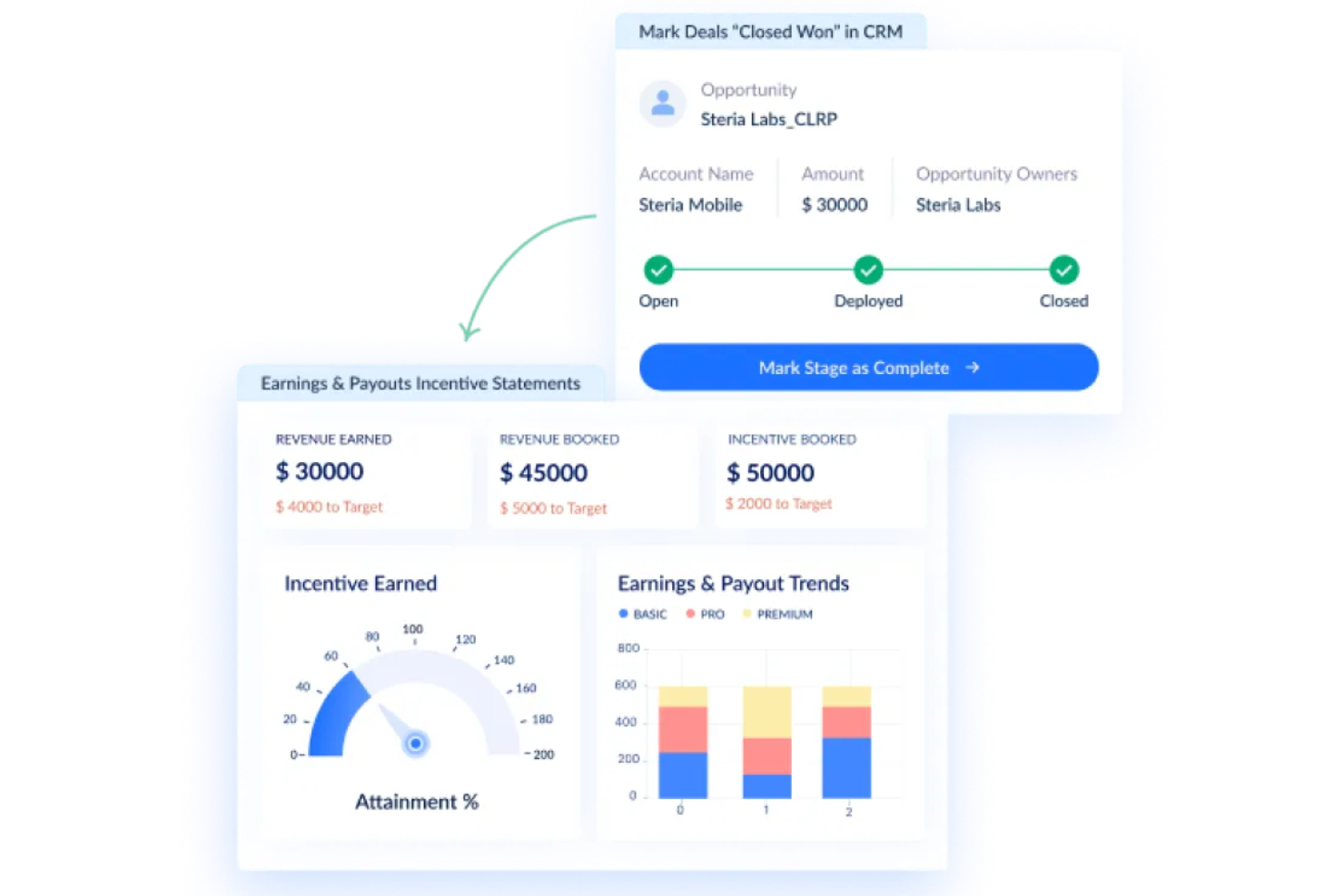
Visdum helps your sales, revenue operations and finance teams move away from complex spreadsheets and manual commission processes by offering a platform to define, calculate and communicate sales compensation plans at scale. It’s suited for mid-sized and growing SaaS organizations where you want clearer visibility into sales incentives, quicker plan modifications and greater alignment between opportunity data, payouts and actual performance.
Why I Picked Visdum
I picked Visdum for its ability to automate tailored sales compensation plans, which is crucial for sales performance management. With AI-driven modeling, you can customize compensation strategies that align with your business goals. The software's capability to provide real-time commission tracking is invaluable, as it allows your sales representatives to have a clear understanding of their earnings potential. This feature not only enhances transparency but also motivates your team to perform better.
Visdum Key Features
In addition to its robust compensation automation, Visdum offers several other features that enhance sales performance management.
- AI-Adaptive System: This feature simplifies reconciliation, payroll, and compliance reporting, ensuring audit-ready processes.
- Real-Time Data Synchronization: With over 100 integrations, Visdum ensures seamless data flow across platforms, eliminating manual data entry.
- Commission Splits & Overrides: Handle deal credits, overlays, and special payout splits with built-in logic.
- Compliance Support: Ensures that all compensation processes adhere to global security and privacy regulations, reducing compliance risks.
Visdum Integrations
Integrations include Salesforce, HubSpot, QuickBooks, Xero, NetSuite, Microsoft Dynamics, Zoho CRM, Freshworks, Pipedrive, and Slack.
Pros and Cons
Pros:
- Integrates directly with CRM/ERP systems so your sales and payout data stay synchronized.
- Offers real-time commission tracking to enhance transparency.
- Automates complex commission plans with ease, reducing manual work.
Cons:
- Some initial setup and implementation complexity when you have very custom or legacy commission rules.
- Mobile experience is noted as limited by some users, which may affect reps who prefer mobile access.

Best for real-time sales coaching

Attention is a sales intelligence tool that leverages artificial intelligence to enhance sales processes in real time. It automates administrative tasks, provides actionable insights from customer conversations, and offers real-time coaching to sales representatives.
One of the standout features is its real-time coaching and guidance system, which leverages advanced algorithms to analyze sales interactions and provide personalized suggestions and strategies. This feature is particularly beneficial as it helps sales representatives improve their performance on the spot, leading to more successful deal closures.
Additionally, Attention's integration with popular CRM systems like Salesforce and HubSpot ensures that all sales data is automatically populated and kept up-to-date, eliminating the need for manual data entry. This not only saves time but also allows sales teams to focus more on improving performance, building relationships, and closing deals.
Attention Standout Features and Integrations
Features include insights from customer conversations, sales training, KPI tracking, automated CRM updates, cross-call insights, deal analysis, sales messaging, and custom triggers to ensure the AI listens to what is most important to you.
Integrations include Zoom, Meets, Teams, Salesforce, HubSpot, Gmail, Outlook, Slack, and Zapier.
Pros and Cons
Pros:
- Real-time sales coaching on calls
- Personalized follow-up emails
- Actionable insights with AI
Cons:
- Some integrations may require extra assistance
- Reliance on AI may not suit all users
Groove
Best for relationship-based sales at companies that use Salesforce

As the only sales performance management market leader that is Salesforce-native, Groove provides support to your sales strategy by eliminating data latency and sync errors, providing customizable UI for a wide variety of workflows and use cases, and working with custom data models and subjects.
In addition to its integration with Salesforce, Groove also offers other unique tools to promote sales performance and productivity, like AI-informed coaching to improve team performance and build better customer relationships. With their Intelligence insights, managers can identify pain points and coaching opportunities with call transcription and review.
Groove is designed to support businesses of all sizes across a variety of industries, including business services, healthcare, biotech, higher education, and real estate.
Groove Standout Features and Integrations
Features include email platform integration tracking open rates and link activity, task management, email automation and tracking, CRM software integrations, content management, workflow management, and workflow performance optimization.
Integrations include GitHub, HubSpot, Mailchimp, Meta for Business, Shopify, Slack, Stripe, Trello, WordPress, Zapier, and Zoho CRM.
Pros and Cons
Pros:
- Custom prioritization for agents
- Great customer support
- Automation tools for outreach
Cons:
- Dependent on internet connectivity
- Limitations for tying campaigns in Salesforce

Best for gamified sales motivation

SalesScreen helps teams stay motivated by turning sales performance into an interactive, game-like experience. It uses psychology-based profiles and recognition systems to encourage reps in ways that resonate with their individual motivations. If you want to energize your sales floor and create friendly competition, SalesScreen provides the framework.
Why I Picked SalesScreen
I picked SalesScreen because it takes a personalized approach to sales motivation—something most platforms overlook. You can categorize reps by motivational profiles and tailor competitions or rewards that match their work style. Its gamification tools help managers reinforce positive behavior while keeping performance transparent. Coaching and recognition features round out the platform by offering structured ways to develop reps and highlight achievements. It’s a strong fit for organizations that value culture, engagement, and performance visibility.
SalesScreen Key Features
- Gamification tools: Leaderboards, competitions, dice roll, wheel of fortune, and more.
- Coaching tools: Scorecards, scheduled sessions, peer reviews, and weekly questions.
- Recognition tools: Public endorsements, visualized achievements, and badges.
- Motivational profiles: Tailored insights for encouraging different rep types.
- Team competitions: Encourage collaboration and performance across groups.
SalesScreen Integrations
Integrations include HubSpot, LeadDesk, Pipedrive, Podio, Salesforce Sales Cloud, Salesloft, SugarCRM, Zapier, Zendesk Suite, and Zoho CRM.
Pros and Cons
Pros:
- Customizable data visualization
- Versatile gamification to suit personalities
- Reinforces real-time sales metrics
Cons:
- No breakout team or location-specific feeds
- Single time-period goal setting

Best for integrated sales enablement, onboarding, and training

Mindtickle is a learning and sales management platform with a focus on enhancing key learning skills, growing careers, and coaching sales reps while monitoring their progress through content interactions and custom learning experiences.
One of the unique tools offered by Mindtickle is the Ideal Rep Profile, which allows users to build a profile of the perfect salesperson for their company based on common skills and competencies, product knowledge, competitive spirit, value articulation, and learning behaviors. You can use these metrics to track current rep success or help narrow the field when hiring new reps.
Mindtickle has many use cases, like sales onboarding, partner enablement, sales training, and manager-led coaching, that allow large enterprises to create cohesive training across the entire organization to ensure ideal sales behavior and rep performance.
Mindtickle Standout Features and Integrations
Features include sales enablement and training, sales coaching, sales content management, Readiness Index that tracks rep behaviors, Ideal Rep Profile, conversational intelligence, sales forecasting, digital sales room, dashboards, and analytics.
Integrations include Active Directory, BambooHR, Box, Google, IBM Cloud, Khan Academy, Seismic, Slideshare, Workday, and YouTube. Mindtickle promotes a hybrid approach with an in-house integration service, as well as an OEM-sourced iPaaS.
Pros and Cons
Pros:
- Easy to use
- Creative gamification features
- Flexibility to support almost any program
Cons:
- Limited call AI functionality
- Some features require heavy support and guidance

Revenue.io
Best for augmenting human intelligence with AI guidance and a focus on Salesforce

This cloud-based sales engagement platform focuses on helping Salesforce users through AI-driven intelligence that provides lead management, performance analysis, and lead prioritization with real-time recommendations.
The main reason this sales performance management solution caught my eye is the guided selling tools that help sales representatives minimize guesswork before, during, and after sales calls. Revenue.io not only provides a prioritized list of leads for sales people to contact, but it also helps you build sales playbooks and provides actionable insights in real-time.
Revenue.io can support organizations of all sizes with a number of use cases, functionalities, and industry-focused solutions. Some top use cases include pipeline generation, sales engagement, and quota attainment. They also cater to financial services, telecommunications, real estate, healthcare, technology, and medical device companies.
Revenue.io Standout Features and Integrations
Features include lead prioritization, conversation recording for analysis, activity and data capture, high-velocity dialing, real-time guidance, AI-powered insights, best practices library, and performance analytics.
Integrations include Gmail, Google Ads, Instagram, LinkedIn for Business, Meta for Business, Microsoft Outlook, Salesforce Sales Cloud, Twitter, and Zoom Meetings.
Pros and Cons
Pros:
- Personalized dashboards for agents
- Easy to learn and use
- All-in-one call center and SPM platform
Cons:
- No callback feature
- No app version
Other Sales Performance Management Software
Here are a few more worthwhile options that didn’t make the best sales performance management software list:
- Forecastio
For AI-powered sales planning and forecasting
- ElevateHQ
For a highly visual performance tracking dashboard
- Kixie Powercall
With multi-line power dialing
- Ambition
For building, scaling, and optimizing processes from the bottom up
- CaptivateIQ
For getting sales incentives right for sales reps and your bottom line
- Varicent
Performance platform for creating territory plans and identifying missed pipeline opportunities
- Scratchpad
For pre-call brief preparation
- SalesHood
For personalized sales training
- Weflow
For improving sales pipeline management through better Salesforce hygiene
- Spiff
For incentive and commission payout transparency
- Everstage
For no-code, automated custom commission processing
- Creatio CRM
For automated performance dashboards
- SPOTIO
For actionable field insights
- Spinify
Sales performance platform that prioritizes sales team engagement through gamification
- Mixmax
Sales platform for converting prospects through email communication for freelancers and small businesses
- SalesRabbit
Performance tool for door-to-door tracking and lead management for field sales


Related Reviews
If you still haven't found what you're looking for here, check out these tools closely related to sales performance management software that we've tested and evaluated.
- CRM Software
- Sales Software
- Lead Management Software
- Business Intelligence Software
- Contract Management Software
- Revenue Management System
How I Evaluate Sales Performance Management Software
I split every evaluation into baseline criteria—like commission automation and quota management—and differentiators that reveal whether a tool actually fits your revenue org's complexity.
Core Functionality (Table Stakes For This List)
When I'm selecting tools for my list, I rank each one on a scale from 0 (does not offer the functionality) to 5 (excels in this area) for each core functionality listed below. Then, I calculate the tool's total score into a percentage. Each tool needs to achieve a minimum total score of 75% to be considered for inclusion.
- Incentive Compensation Management: I evaluate how each platform handles complex comp plan logic—things like multi-tier accelerators, SPIFs, splits across reps, and clawbacks on churned deals.
- Quota & Territory Management: Each tool should let you assign, adjust, and rebalance quotas and territories at the rep, team, and segment level without rebuilding from scratch.
- Performance Analytics & Dashboards: I look for configurable, role-based dashboards where a VP sees team rollups while a rep sees personal attainment and earnings in real time.
- Sales Forecasting & Planning: Planning tools should tie pipeline data to capacity models so you can run scenarios like "what happens if we add five reps in Q3?"
- CRM & Data Integration: I check for native, bi-directional connectors with CRMs like Salesforce and HubSpot, plus ERP and HRIS systems for payroll handoff.
- Commission Statements & Disputes: Reps need transparent, self-service access to earnings breakdowns—and a built-in workflow for flagging and resolving payout questions.
Once I have a list of tools that meet this criteria, I consider what sets each platform apart.
Differentiating Factors (What Sets Vendors Apart)
Here's how I compare and contrast different vendors:
Standout Features
Plan simulation is a big one for me. Before rolling out a new comp plan mid-year, you want to model payout impact across your entire sales org without touching live data. AI-powered insights add another layer—flagging at-risk reps or surfacing anomalies in attainment trends before they become pipeline problems. I also look for built-in ASC 606 and audit-readiness tools, especially for finance teams that need version-controlled plan records and automated commission expense reporting at quarter close.
Beyond Features
Implementation timelines matter more than most buyers expect. A platform that takes six months to deploy means you're running a full comp cycle on spreadsheets in the meantime. I also evaluate pricing transparency—some vendors charge per payee while others bundle modules differently, and the total cost shifts fast once you add territory planning or forecasting. Scalability is the other factor I weigh closely, particularly whether a platform handles multi-entity, multi-currency structures as your sales org grows into new regions.
How To Choose Sales Performance Management Software
With so many different sales performance management software solutions available, it can be challenging to make decisions on what tool is going to be the best fit for your needs.
As you're shortlisting, trialing, and selecting sales performance management software, consider the following:
- What problem are you trying to solve - Start by identifying the sales performance management software feature gap you're trying to fill to clarify the features and functionality the tool needs to provide.
- Who will need to use it - To evaluate cost and requirements, consider who'll be using the software and how many licenses you'll need. You'll need to evaluate if it'll just be the revenue operation leaders or the whole organization that will require access. When that's clear, it's worth considering if you're prioritizing ease of use for all or speed for your sales performance management software power users.
- What other tools it needs to work with - Clarify what tools you're replacing, what tools are staying, and the tools you'll need to integrate with, such as accounting, CRM, or HR software. You'll need to decide if the tools will need to integrate together or if you can replace multiple tools with one consolidated sales performance management software.
- What outcomes are important - Consider the result that the software needs to deliver to be considered a success. Consider what capability you want to gain or what you want to improve, and how you will be measuring success. For example, an outcome could be the ability to get greater visibility into performance. You could compare sales performance management software features until you’re blue in the face but if you aren’t thinking about the outcomes you want to drive, you could be wasting a lot of valuable time.
- How it would work within your organization - Consider the software selection alongside your workflows and delivery methodology. Evaluate what's working well and the areas that are causing issues that need to be addressed. Remember every business is different — don’t assume that because a tool is popular that it'll work in your organization.
Trends In Sales Performance Management Software For 2026
Through a review of recent product updates, press releases, and release logs from leading SPM tools, several key trends emerge, showcasing the direction in which this technology is headed and the features that are becoming vital for businesses.
Key Trends in Sales Performance Management Software
Integration with Advanced Technologies:
- Enhanced AI and Machine Learning: SPM software is increasingly incorporating AI to provide predictive analytics, intelligent recommendations for sales strategies, and automated goal setting and tracking.
- IoT Integration: Some SPM tools are beginning to leverage IoT data, allowing sales teams to tap into real-time data from various sources to enhance decision-making and performance tracking.
Focus on Analytics and Data-Driven Decision Making:
- Advanced Analytics Features: There is a strong trend toward offering deeper analytical capabilities, enabling sales teams to gain more nuanced insights into performance metrics and trends.
- Customizable Reporting: Users demand highly customizable reporting tools that allow them to slice and dice data in various ways to uncover actionable insights and identify areas for improvement.
Most Rapidly Evolving Features
- Real-time Performance Tracking: The ability to monitor sales activities and performance in real time is becoming a standard feature, enabling immediate adjustments and strategic pivots.
- Collaborative Tools: Features that foster collaboration and communication among sales teams are being enhanced, reflecting the growing importance of teamwork in achieving sales objectives.
Most Important and In-Demand Features
- Goal Setting and Tracking: The core functionality of setting, monitoring, and adjusting sales goals remains a critical feature, integral to the strategic management of sales teams.
- Incentive Compensation Management: Efficient and accurate management of incentive compensation is highly demanded, as it directly influences sales motivation and performance.
Declining Features
- Manual Data Entry: The need for manual data input is diminishing as automation and data integration capabilities improve, reducing the administrative burden on sales teams.
- Standalone Tools: Solutions that operate in silos, without integration capabilities with CRM or other enterprise systems, are becoming less favored, as businesses seek more interconnected technology ecosystems.
These developments reflect the industry's response to the increasing complexity of sales operations and the need for more sophisticated, data-driven tools to manage and enhance sales performance effectively. For revenue operation leaders, staying abreast of these trends is crucial in selecting software that will support their teams' success and drive business growth.
What Is Sales Performance Management Software?
Sales performance management software is a tool used by organizations to track and optimize the efficiency and effectiveness of their sales teams. It integrates various functions like tracking sales goals, managing incentives, analyzing performance, and forecasting sales trends. This software streamlines the process of sales planning, execution, and evaluation on a single platform.
The benefits of sales performance management software include improved sales productivity and more data-driven decision-making. It helps in accurately forecasting sales, managing sales territories and quotas efficiently, and motivating sales teams through effective incentive management. For organizations focused specifically on compensation structures, specialized compensation software provides advanced incentive calculation capabilities. The software also aids in aligning sales strategies with business goals, ensuring that sales efforts contribute effectively to the overall success of the organization.
Features of Sales Performance Management Software
When selecting sales performance management software, keep an eye out for the following key features:
- Goal setting and tracking: Create, assign, and monitor individual or team sales targets directly within the platform. You can see everyone’s progress in real-time, making it easier to spot when someone is about to blow past their quota or needs a little extra support.
- Commission and incentive management: Automate commission calculations and payout processes to save time and ensure your team always knows how much they’re earning. No more spreadsheets or wondering where the numbers come from—everything is transparent and error-free.
- Performance analytics and dashboards: Access visual dashboards that break down sales activities, revenue, and trends. This lets you quickly identify top performers, spot bottlenecks, and make data-driven decisions to keep your sales engine running smoothly.
- Territory and quota management: Define sales territories and set quotas so you can balance workloads, avoid territory clashes, and make sure every lead gets the attention it deserves. This helps prevent turf wars and keeps things fair for everyone.
- Plan modeling and forecasting: Test out “what-if” scenarios with plan modeling tools. You can forecast the impact of different compensation schemes or market changes, helping you stay ahead of potential challenges before they even show up.
- Workflow automation: Streamline repetitive tasks like approval processes, reporting, or data entry. Automation cuts down on admin time—freeing up your team to sell more and deal with less paperwork.
- Integration capabilities: Connect with your CRM, HR, ERP, or payroll systems to keep data synced across your tech stack. This reduces manual entry and ensures everyone works from the same set of numbers, avoiding costly confusion.
Common Sales Performance Management Software AI Features
Beyond the standard sales performance management software features listed above, many of these solutions are incorporating AI with features like:
- Anomaly detection: AI quickly highlights odd changes or errors in sales or commission data (like a sudden big payout that doesn’t fit the trend). You can investigate issues faster—before they become problems.
- Predictive analytics: Use AI to dig through historical data and predict future sales performance or which deals are most likely to close. This helps you focus on opportunities with the highest payoff and plan resources accordingly.
- Automated quota recommendations: AI analyzes past trends and current pipeline data to suggest realistic, challenging quotas for each rep. This means you can set ambitious targets without guesswork or bias.
- Intelligent territory alignment: AI smartly proposes how to divide territories based on market data, rep strengths, and opportunity potential. This makes sure every rep has a fair shot and that no market gets overlooked.
- Real-time coaching insights: AI spots performance patterns and delivers tailored coaching tips right when reps need them—from nudging follow-ups to flagging training needs.
Benefits Of Sales Performance Management Software
By leveraging sales performance management software, businesses can gain valuable insights into their sales activities, streamline processes, and align sales efforts with broader company goals. Here are five primary benefits of SPM software that can significantly enhance the performance and outcomes for users and organizations:
- Enhanced Sales Strategy Alignment: Ensures that individual sales activities are in sync with organizational objectives. By clearly defining and tracking goals, SPM software helps align sales efforts with the business's strategic direction, fostering overall success.
- Improved Sales Productivity: Streamlines various sales processes and reduces administrative burdens. This efficiency boost enables sales teams to focus more on selling and less on time-consuming administrative tasks, directly enhancing productivity and outcomes.
- Data-Driven Decision Making: Offers comprehensive analytics and reporting tools. With access to real-time data and historical performance analytics, sales leaders can make informed decisions that drive revenue growth and operational efficiency.
- Increased Sales Team Motivation: Facilitates fair and transparent incentive compensation management. By clearly communicating how incentives are calculated and promptly rewarding achievements, SPM software helps motivate sales teams, driving performance and retention.
- Accurate Sales Forecasting: Utilizes historical data and predictive analytics to project future sales trends. Accurate forecasting helps organizations plan more effectively, allocate resources efficiently, and set realistic sales targets.
Costs & Pricing For Sales Performance Management Software
Sales performance management software comes with various pricing and plan options, each designed to cater to different business sizes, needs, and budgets. Understanding these options will help you make an informed decision that aligns with your organization's goals and financial constraints.
Plan Comparison Table For Sales Performance Management Software
| Plan Type | Average Price | Common Features Included |
|---|---|---|
| Basic | $10 - $50 per user/month | Goal setting and tracking, basic analytics, performance reporting |
| Professional | $50 - $200 per user/month | Advanced analytics, CRM integration, customizable dashboards, incentive management |
| Enterprise | $200 - $1000+ per user/month | AI-powered insights, advanced integrations, dedicated support, extensive customization |
| Free | $0 | Limited goal tracking, basic analytics, some performance reporting features |
When choosing a sales performance management software plan, consider the scale of your sales operations and the complexity of the features you need. It's crucial to select a plan that not only fits within your budget but also provides the functionalities necessary to achieve your sales and revenue objectives effectively.
Sales Performance Management Software Frequently Asked Questions
If you’re new to digital tools that manage sales performance, you may have a few questions that need answering. Check out the most frequently asked questions to get a better look at the big picture.
What are the types of sales performance management software?
Sales performance management (SPM) software varies in type to cater to the diverse needs and strategies of sales organizations. Understanding the different types of SPM software can help businesses choose the right tools to enhance their sales operations and achieve their performance goals. Here are the primary types of sales performance management software:
- Incentive Compensation Management (ICM) Software: Focuses on managing and automating the calculation of sales commissions and bonuses. It ensures that sales teams are compensated accurately and on time, according to their performance and achievement of sales targets.
- Sales Planning and Forecasting Software: Assists organizations in setting sales goals, planning territories, and forecasting future sales performance. This type of software enables sales leaders to allocate resources efficiently and set realistic, data-driven sales targets.
- Sales Coaching and Training Software: Provides tools and resources for sales managers to coach and develop their team members. It includes features like training modules, feedback mechanisms, and performance tracking to improve sales skills and knowledge.
- Sales Analytics and Reporting Software: Offers in-depth analysis and visualization of sales data, helping organizations track key performance indicators (KPIs), identify trends, and make informed decisions. This software type is crucial for understanding past performance and strategizing future sales efforts.
- Gamification Software: Incorporates game-like elements into the sales process to motivate and engage sales teams. It uses competition, rewards, and recognition to encourage sales performance and foster a collaborative and competitive sales culture.
- Territory and Quota Management Software: Helps sales organizations define, manage, and optimize sales territories and quotas. It ensures that sales efforts are aligned with market opportunities and that quotas are set fairly and strategically.
- Pipeline and Opportunity Management Software: Focuses on managing the sales pipeline and tracking sales opportunities from lead to close. It provides sales teams with the tools to prioritize opportunities, track progress, and close deals efficiently.
By identifying the specific needs and goals of their sales operations, businesses can select the type of sales performance management software that best aligns with their strategic objectives, ensuring an effective approach to enhancing sales performance and driving revenue growth.
Who uses sales performance management software?
Sales performance management software is used by a diverse range of professionals within an organization, each with their distinct roles and objectives. The software helps these users optimize sales processes, enhance performance, and achieve sales targets efficiently. Here are the key users of SPM software:
- Sales Executives: These top-level managers utilize SPM software to gain insights into overall sales performance, set strategic objectives, and make informed decisions to drive revenue growth. They rely on the software for high-level analytics, forecasting, and to ensure the sales strategy aligns with the company’s goals.
- Sales Managers: These users leverage SPM software to monitor and manage their team’s performance, set individual and team targets, and identify areas for improvement. Sales managers use the tool for coaching, giving feedback, and incentivizing their team members to enhance productivity and achieve quotas.
- Sales Operations Teams: These professionals use SPM software to streamline and optimize various sales processes, including territory and quota management, compensation planning, and performance analysis. They ensure the sales infrastructure operates efficiently and supports the sales team effectively.
- Sales Representatives: While not all SPM solutions are directly used by sales reps, those with features like gamification and performance tracking allow reps to monitor their own progress, understand their performance metrics, and stay motivated to reach their targets.
- HR and Compensation Specialists: In organizations where sales compensation is complex, HR and compensation specialists use SPM software to administer incentive programs, calculate commissions accurately, and ensure compliance with sales compensation policies.
- IT and System Administrators: These users ensure that the SPM software integrates seamlessly with other enterprise systems, maintains data integrity, and operates securely. They manage user access, troubleshoot issues, and customize the software to fit organizational needs.
- Finance Professionals: They utilize SPM software to forecast sales revenue, manage budgets, and align sales performance with financial objectives. Finance professionals need accurate and timely data to ensure the financial health of the sales organization.
By providing a suite of tools to manage, analyze, and improve sales performance, SPM software supports the diverse needs of these users, enabling them to contribute effectively to the organization’s sales success.
Why should I use sales performance management software?
Sales performance management software is a crucial tool for organizations looking to optimize their sales operations, enhance team performance, and ultimately increase revenue. Here are several compelling reasons why using SPM software can be highly beneficial:
- Streamlined Sales Processes: SPM software automates and streamlines various sales-related activities, from tracking sales goals and analyzing performance data to managing incentive compensation. This streamlining reduces manual workloads, minimizes errors, and allows your sales team to focus more on selling and less on administrative tasks.
- Enhanced Sales Performance: By providing clear visibility into individual and team performance metrics, SPM software enables managers to identify both high performers and those in need of additional support or training. This insight allows for targeted coaching and development initiatives, driving overall sales effectiveness.
- Informed Decision-Making: With robust analytics and reporting capabilities, SPM software delivers actionable insights that inform strategic decisions. Sales leaders can identify trends, forecast future performance, and make data-driven decisions to adjust sales strategies and meet business objectives.
- Increased Sales Motivation: Effective incentive management features ensure that sales representatives are fairly compensated based on their performance, fostering a motivated and engaged sales force. Additionally, gamification elements can introduce healthy competition and recognition, further boosting sales team morale.
- Accurate Sales Forecasting: SPM software enhances the accuracy of sales forecasts by utilizing historical data and predictive analytics. Accurate forecasting helps in better resource allocation, inventory management, and financial planning, ensuring that the business is well-prepared for future sales cycles.
- Improved Sales Alignment: By aligning sales activities with broader organizational goals, SPM software ensures that the sales team contributes effectively to the company’s strategic objectives. This alignment is critical for maintaining organizational focus and achieving long-term success.
- Scalability: As your business grows, SPM software can scale to accommodate increased data volumes, more complex compensation structures, and a larger sales force. This scalability ensures that your sales performance management processes remain efficient and effective, regardless of your organization’s size.
Adopting sales performance management software can significantly improve the efficiency and effectiveness of your sales operations, leading to better performance, higher revenue, and more strategic sales management.
How do sales performance management software adapt to different sales strategies?
Sales performance management software adapts to various sales strategies by allowing organizations to customize key performance indicators (KPIs), objectives, and evaluation metrics. This flexibility ensures that the software can align with specific sales processes, methodologies, and goals unique to each organization, facilitating effective performance tracking and management.
Can sales performance management software forecast individual rep performance?
Yes, sales performance management software can forecast individual rep performance using historical data, trend analysis, and predictive modeling. This feature enables managers to identify potential performance issues, set realistic targets, and provide timely support to improve sales outcomes.
Can sales performance management software assist in territory management?
Sales performance management software often includes territory management features that help allocate resources efficiently, define territories, and track performance by regions. This assists in optimizing sales coverage, balancing workloads, and aligning territories with market opportunities.
Additional Sales Management Software Reviews
Here are a few other tools that may pique your interest.
- Best Sales Software
- CPQ Software
- Quote Management Software
- Sales Automation Software
- 10 Best Sales Forecasting Software of 2023
- 10 Best Sales Podcasts All Sales Reps Need To Know
- 10 Best Sales Reporting Software In 2023
Conclusion
If you're in the process of researching sales performance management software, connect with a SoftwareSelect advisor for free recommendations.
You fill out a form and have a quick chat where they get into the specifics of your needs. Then you'll get a shortlist of software to review. They'll even support you through the entire buying process, including price negotiations.