

24 Best Sales Pipeline Management Software In 2026

10 Best Sales Pipeline Management Software Shortlist


With so many different sales pipeline management software available, figuring out which is right for you is tough. You know you want to oversee and optimize your sales process but need to figure out which tool is best. I've got you! In this post I'll help make your choice easy, sharing my personal experiences using dozens of different sales pipeline management tools with various teams and accounts, with my picks of the best sales pipeline management software.
Table of Contents
- Best Software Shortlist
- Why Trust Us
- Compare Specs
- Reviews
- Other Sales Pipeline Management Software
- Related Sales Pipeline Management Software Reviews
- Selection Criteria
- How To Choose
- Trends In Sales Pipeline Management Software
- What Is Sales Pipeline Management Software?
- Features
- Benefits
- Costs and Pricing
- FAQs
Why Trust Our Software Reviews
We’ve been testing and reviewing RevOps software since 2022. As RevOps leaders ourselves, we know how critical and difficult it is to make the right decision when selecting software.
We invest in deep research to help our audience make better software purchasing decisions. We’ve tested more than 2,000 tools for different RevOps use cases and written over 1,000 comprehensive software reviews. Learn how we stay transparent & our software review methodology.
| Tool | Best For | Trial Info | Price | ||
|---|---|---|---|---|---|
| 1 | Best for automated email sequences | 30-day free trial | From $29/user/month (billed annually) | Website | |
| 2 | Best for flexible, no-code customization | Free trial available | From $12/seat/month (billed annually) | Website | |
| 3 | Best web-based sales pipeline management software | 14-day free trial + free plan available | From $18/user/month (billed annually) | Website | |
| 4 | Best for AI-driven performance analytics | Not available | Pricing upon request | Website | |
| 5 | Best for managing team pipelines | Free plan available and 15-day free trial | From $7/user/month (billed annually) | Website | |
| 6 | Best for distribution focused CRM | Free 60-day trial available | Pricing upon request | Website | |
| 7 | Best CRM solution with sales tool add-on | 15-day free trial + free demo available | From $23/user/month (billed annually) | Website | |
| 8 | Best for building relationships with customers | Not available | Website | ||
| 9 | Best for visual sales pipeline management | Free demo + 14-day free trial available | From $14/user/month (billed annually) | Website | |
| 10 | Best for lead management and sale tracking | 14-day free trial + free demo available | From $15/month (billed annually) | Website |


-

Pipedrive CRM
Visit WebsiteThis is an aggregated rating for this tool including ratings from Crozdesk users and ratings from other sites.4.5 -
Creatio CRM
Visit WebsiteThis is an aggregated rating for this tool including ratings from Crozdesk users and ratings from other sites.4.7 -
monday CRM
Visit WebsiteThis is an aggregated rating for this tool including ratings from Crozdesk users and ratings from other sites.4.6


Best Sales Pipeline Management Software Reviews
In my overviews of each sales pipeline management software, you’ll see what the tool does best, what caught my eye about it, and what you can expect from the pricing model. I’ve also included a snapshot of each tool’s inner workings, as well as a few pros and cons that may sway your opinion about whether a specific platform is right for you.

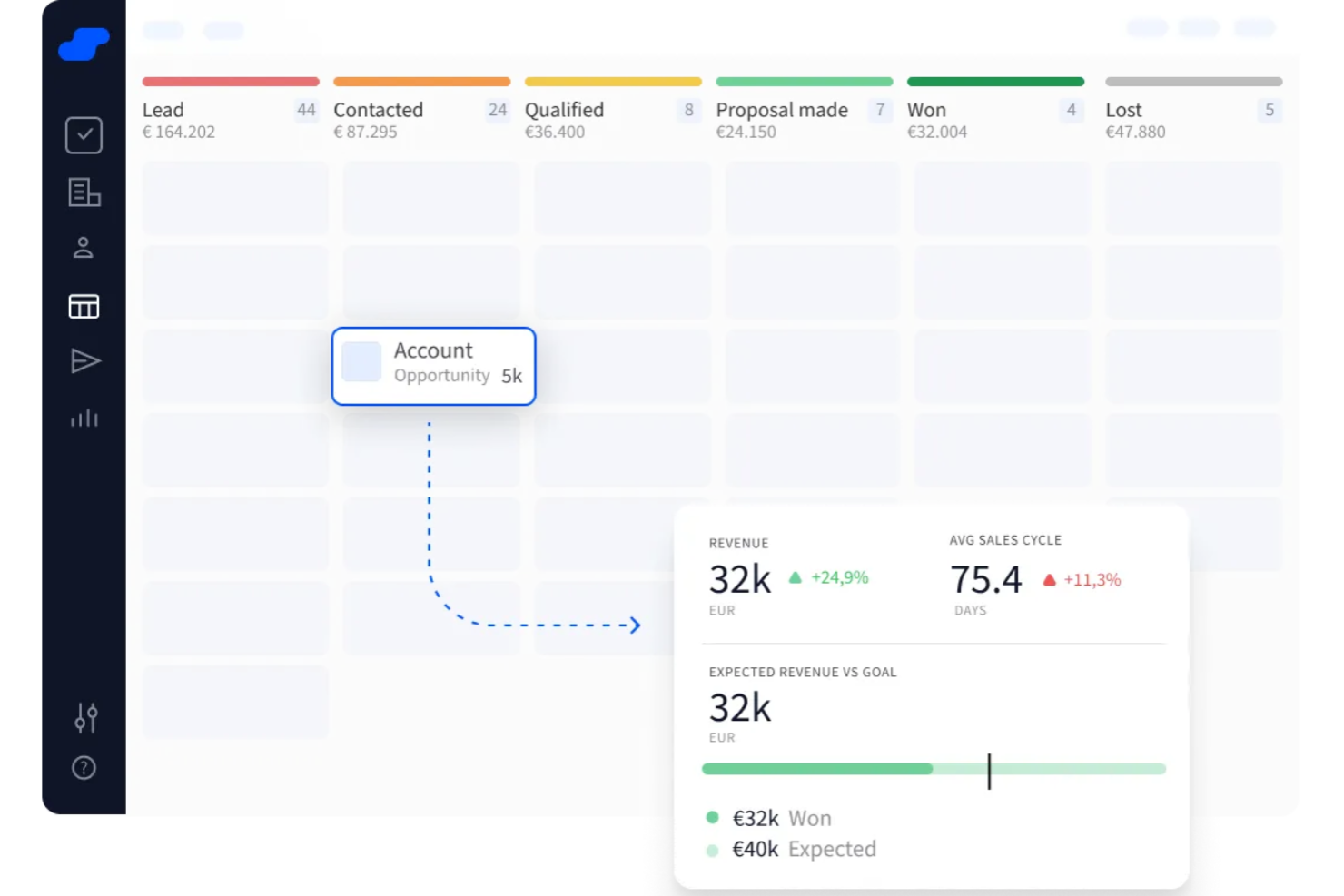
Salesflare is a B2B sales CRM for small and medium-sized businesses that combines visual pipeline management, automated data entry, email sequences, relationship intelligence, and lead generation tools in one platform.
Who Is Salesflare Best For?
Salesflare is a good fit for small and medium-sized B2B sales teams who want a CRM that minimizes manual data entry.
Why I Picked Salesflare
I've included Salesflare in my top picks because its email sequencing tools are built directly into the pipeline. I can set up multi-step automated email campaigns that trigger based on pipeline stage, so prospects get the right message without any manual scheduling. The built-in email and link tracking also shows me exactly who opened, clicked, or visited my site—giving me clear signals for when a deal needs attention.
Salesflare Key Features
- Drag-and-drop pipeline management: Move deals across fully customizable pipeline stages with a visual board interface.
- Automated data entry: Salesflare pulls contact and company data from emails, social profiles, and calendars automatically.
- Revenue reporting dashboard: Track pipeline value, win rates, and deal progress across your entire team in one view.
- Lead finder: Search for verified business email addresses directly within the platform to build prospect lists.
Pros and Cons
Pros:
- Contact timelines show full communication history
- Follow-up reminders reduce lead drop-off
- Automatically fills contact data from emails
Cons:
- Limited options for bulk editing records
- Lacks highly tailored workflows for complex teams

monday CRM is a visual sales pipeline management platform with deal tracking, lead management, email tools, AI-powered automations, and customizable dashboards built on the monday.com Work OS.
Who Is monday CRM Best For?
monday CRM is a strong fit for small to mid-sized sales teams that need a highly customizable pipeline without relying on developer support.
Why I Picked monday CRM
monday CRM earns its spot on my shortlist because the no-code pipeline builder lets me shape deal stages, fields, and views around how my team actually sells. I can spin up a new pipeline for a different product line in minutes, drag stages into place, and add custom fields without writing a single line of code. The no-code automation builder adds real depth—I set triggers like "when a deal moves to Proposal Sent, assign a follow-up task" without any technical help.
monday CRM Key Features
- AI email composition: Generate email drafts directly within deal records using monday CRM's built-in AI writing tool.
- Sales forecasting: Track close probabilities and compare forecast vs. actual revenue across your pipeline.
- Email sequences: Build and send automated multi-step email sequences to leads and contacts from within the CRM.
- Activity log: Record calls, meetings, and notes against deals and contacts to keep the full history in one place.
Pros and Cons
Pros:
- 24/7 customer support.
- Easy to develop and implement automations.
- Unlimited boards to organize clients, projects, and processes.
Cons:
- All plans have a three-user minimum.
- No customizable reports.
New Product Updates from monday CRM

monday CRM Introduces Activity Tracker Widget
monday CRM introduces an Activity Tracker widget for real-time visibility into activities. This update helps users monitor performance and prioritize work more effectively. For more information, visit monday CRM's official site.
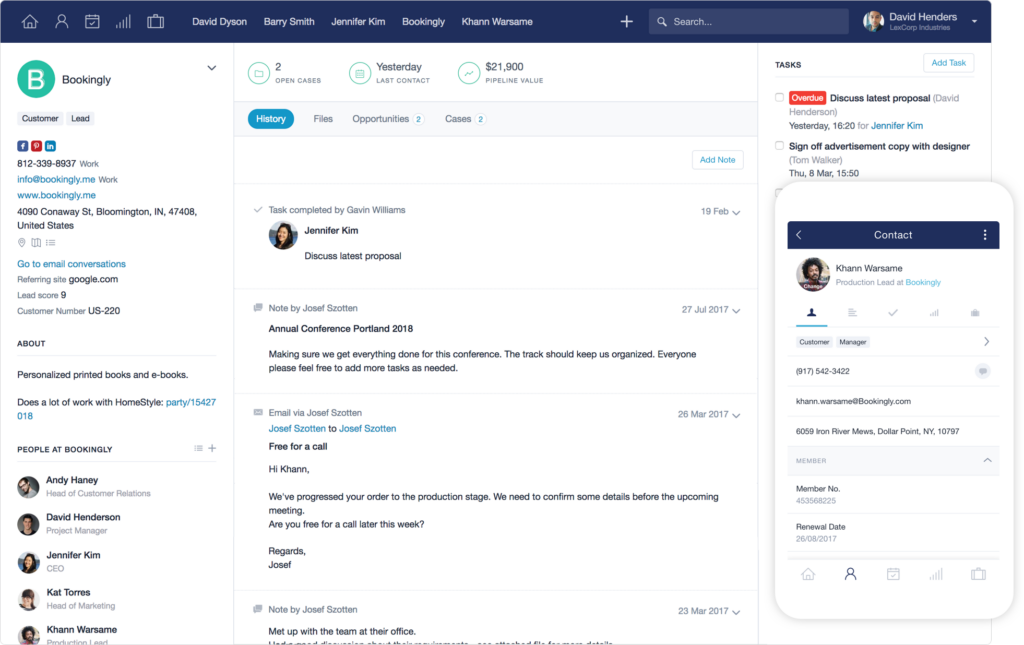
Capsule is a web-based CRM that lets you manage contacts, track deals across visual pipelines, log sales activity, and forecast revenue across multiple customizable pipeline stages.
Who Is Capsule Best For?
Capsule is a strong fit for small to mid-sized sales teams that need a straightforward, web-based CRM without the complexity of enterprise platforms.
Why I Picked Capsule
Capsule earns its spot as one of the best on my shortlist because it's purpose-built as a web-based CRM, meaning my team can access live pipeline data from any browser without installing anything. I particularly like the Kanban-style pipeline view, where I can drag and drop deals between stages and filter by milestone, tag, or status in seconds. The AI pipeline generator is also a nice touch—I've used it to build custom pipelines tailored to specific deal types without starting from scratch.
Capsule Key Features
- Sales forecasting dashboard: View projected revenue across your pipeline based on deal value, probability, and expected close date.
- Workflow automation: Build automated task sequences that trigger when a deal reaches a specific pipeline stage.
- Goals tracking: Set and monitor performance targets around opportunities, tasks, and activities at the team or individual level.
- Win/loss reporting: Access detailed reports on closed deals, including average time to won and pipeline conversion rates.
Pros and Cons
Pros:
- Fast and friendly customer support
- Intuitive navigation to find your way around
- User-friendly interface and dashboards
Cons:
- Limited marketing essentials and capabilities
- Can’t edit calendar tasks made in Capsule outside of it
New Product Updates from Capsule

Capsule Unveils AI Summaries and Email Assist
Capsule introduces two AI-powered features—AI Summaries and AI Email Assist—to help you get quick context on your records and draft emails faster. These tools streamline your workflow so you’re always prepared and can communicate with ease. For more information, visit Capsule’s official site.
 .
.
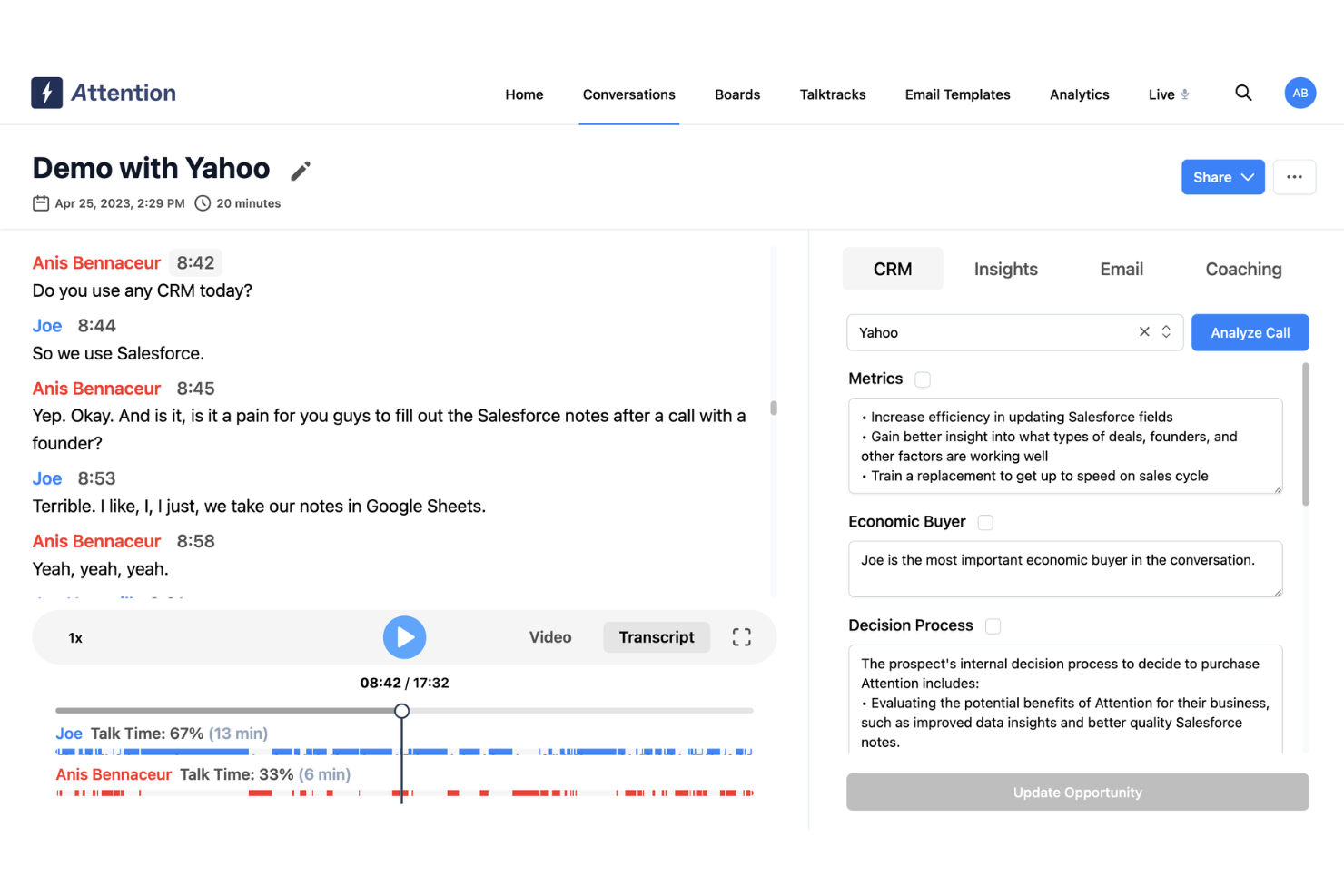
Attention is an AI-native conversation intelligence platform for sales teams that captures calls and meetings, auto-updates your CRM, and delivers deal-level forecasting, pipeline health monitoring, and rep performance analytics.
Who Is Attention Best For?
Attention is a strong fit for B2B sales teams and revenue operations leaders who need visibility into rep performance and deal health across a high-volume call environment.
Why I Picked Attention
Attention is one of my top picks because I love how it ties rep-level performance directly to pipeline outcomes. Most tools track activity in isolation, but Attention's AI coaching scorecards grade every call against frameworks like MEDDIC or BANT and feed that data into deal scores that update as conversations progress. I also like that its forecasting is built on actual call content — surfacing buying intent signals and urgency patterns across conversations — rather than relying on whatever a rep manually typed into your CRM.
Attention Key Features
- Automated CRM updates: Attention writes call notes and fills CRM fields automatically after each conversation, so your pipeline data stays current without manual entry.
- Pipeline Guard agent: A pre-built AI agent that continuously scans open deals to flag missing next steps, unresponsive prospects, and stalled opportunities.
- AI-generated follow-up emails: After each call, Attention drafts personalized follow-up emails based on the conversation, ready for rep review and send.
- Real-time battlecards: During live calls, Attention surfaces relevant talk tracks and competitive responses based on what's being discussed.
Pros and Cons
Pros:
- Actionable insights with AI
- Personalized follow-up emails
- Real-time sales coaching on calls
Cons:
- Lacks visual pipeline management features
- Reliance on AI may not suit all users

Bigin by Zoho CRM is a pipeline-centric CRM built for small businesses, with multi-team pipeline management, deal tracking across customizable stages, workflow automation, and built-in multichannel communication tools.
Who Is Bigin by Zoho CRM Best For?
Bigin is a good fit for small businesses and early-stage teams that need a lightweight CRM built around pipeline visibility rather than a full enterprise feature set.
Why I Picked Bigin by Zoho CRM
I picked Bigin as one of the best because its Team Pipelines feature genuinely sets it apart from other small-business CRMs. Most CRM pipelines are built for sales only, but Bigin lets you create distinct pipelines for marketing, onboarding, support, and customer success, all within one account. I also like that each team pipeline supports sub-pipelines—so your sales team can run separate inbound and outbound tracks simultaneously. Layer in pipeline-level permissions, and I can control exactly which team members see or edit records in each pipeline.
Bigin by Zoho CRM Key Features
- Connected pipelines: Link separate team pipelines together so a closed deal in sales automatically triggers the next stage in your onboarding pipeline.
- Stage transition rules: Set mandatory criteria a deal must meet before moving to the next pipeline stage, keeping your pipeline data accurate.
- Built-in telephony: Make, receive, and log calls directly inside Bigin without a third-party dialer, with automatic call activity attached to each deal record.
- Custom dashboards: Build pipeline dashboards using charts, target meters, and KPI tiles to track deal value, stage velocity, and conversion rates.
Pros and Cons
Pros:
- Simple to set up for immediate use
- Allows easy tracking of multiple pipelines
- Offers custom forms for data collection
Cons:
- Limited flexibility in custom report creation
- Lacks mapping features for routing contacts
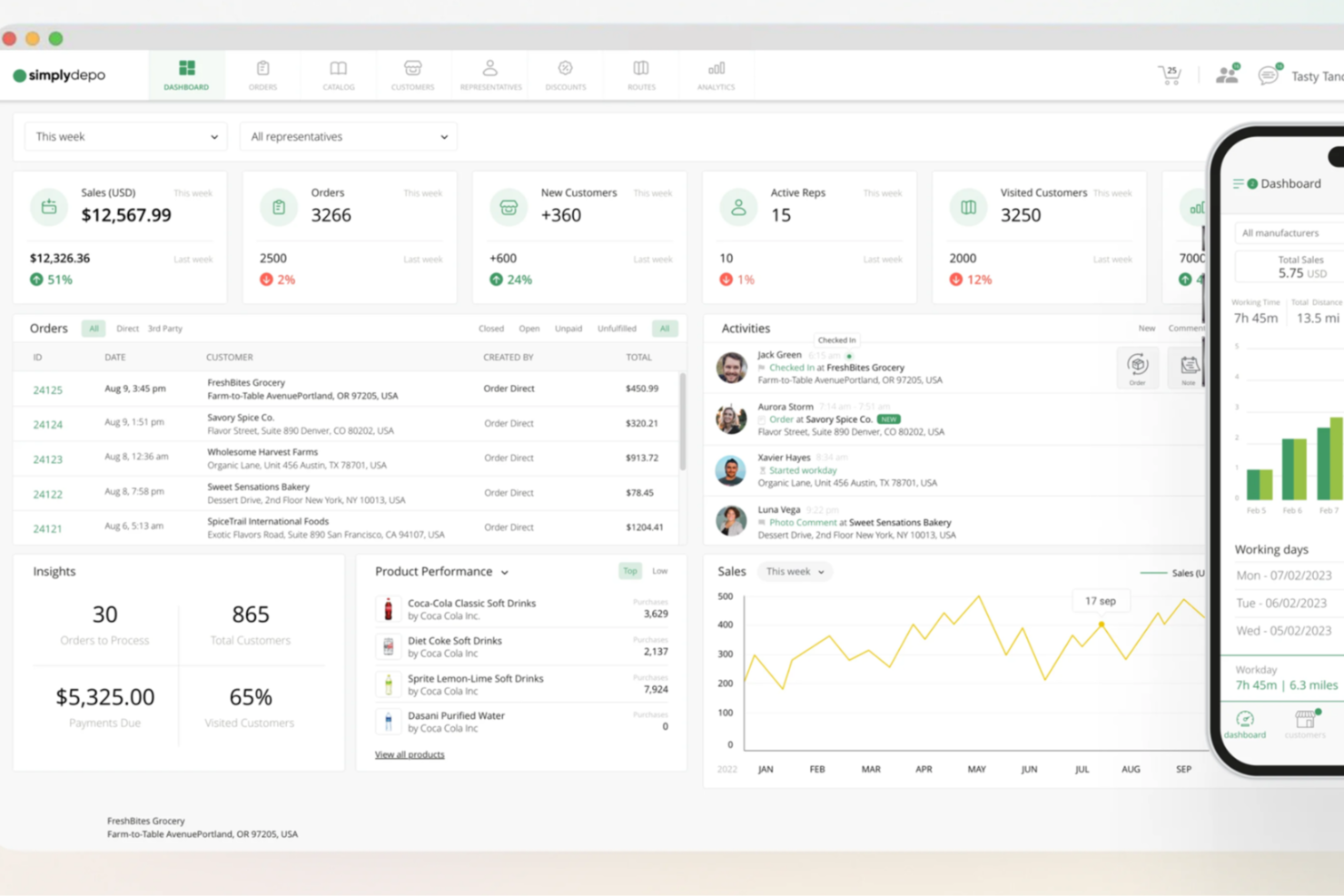
SimplyDepo is a field sales CRM built for CPG brands and distributors, combining account management, order capture, route planning, and in-store execution tracking in one mobile platform.
Who Is SimplyDepo Best For?
SimplyDepo is a strong fit for CPG brands, wholesale distributors, and field sales teams managing accounts across multiple locations or territories.
Why I Picked SimplyDepo
I picked SimplyDepo as one of the best because it's the only CRM on this list built specifically around how distribution and CPG field sales actually work. Instead of fitting distributors into a generic pipeline model, SimplyDepo structures accounts around locations, visit history, orders, and route coverage. I especially like the account CRM layer, which ties every customer record directly to execution data, so reps walk into each store with full context on what was ordered, visited, and actioned last time.
SimplyDepo Key Features
- B2B order portal: Lets customers place orders online while reps capture orders in the field, with product pricing and availability synced in real time.
- Tasks and forms: Build custom digital forms and assign store-specific tasks to reps, with photo proof and completion tracking replacing paper-based reporting.
- Route intelligence: Monitor route completion, identify missed visits, and measure rep performance across territories from a centralized dashboard.
- Inventory management: Track stock levels, sync warehouse data, and automate reorders to keep shelves stocked across all accounts.
Pros and Cons
Pros:
- Route planning and territory mapping
- Integrated CRM for account tracking
- Built-in B2B order management system
Cons:
- No transparent API documentation
- Limited advanced reporting customization

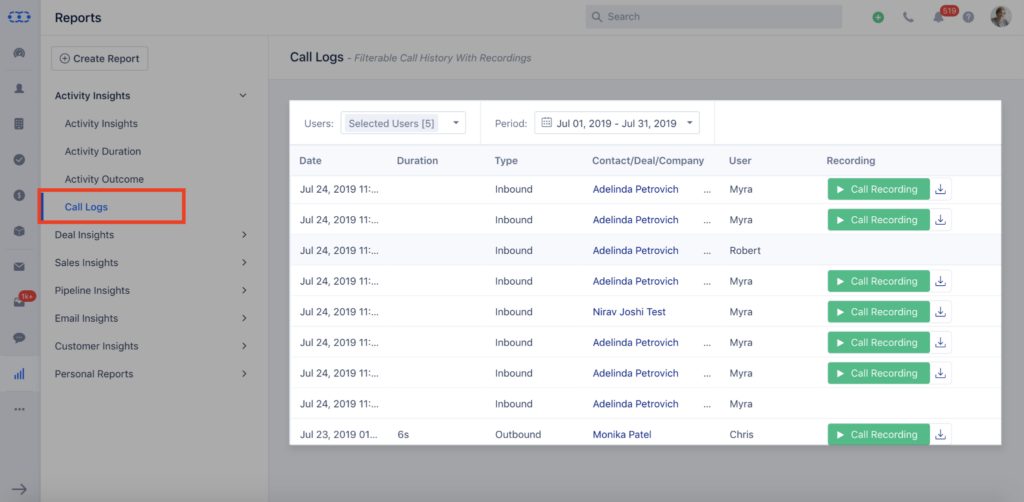
Salesmate is a CRM platform built around deal and pipeline management, with built-in tools for multi-pipeline tracking, contact management, sales automation, AI-assisted workflows, and multi-channel communication across sales, marketing, and customer support.
Who Is Salesmate Best For?
Salesmate is a good fit for small to mid-sized sales teams that need a single platform for managing pipelines, automating outreach, and handling customer communication.
Why I Picked Salesmate
I've included Salesmate in my top picks because it's one of the few CRM platforms that bundles a full sales toolset natively rather than patching it together through third-party add-ons. I especially like the Sandy AI co-pilot, which lets my team pull real-time prospect research directly inside a deal record. The built-in quote builder is another feature I find genuinely useful—it auto-fills customer and deal data to generate on-brand proposals without leaving the CRM.
Salesmate Key Features
- Multiple pipeline management: Create separate pipelines for different products, regions, or sales motions with customizable stages and deal card views.
- Sales sequences: Build multi-step outreach sequences that trigger emails, texts, and calls automatically based on deal activity or time delays.
- Power dialer: Run call lists from directly inside the CRM with auto-logging, call recording, and voicemail drop.
- Revenue forecasting: Track projected revenue by pipeline stage, rep, or date range using real-time deal data.
Pros and Cons
Pros:
- Very responsive customer support team
- Great price for the value
- Feature-rich CRM in a simple box
Cons:
- Limited scheduling to control incoming calls
- Cost of calls can be a bit high


Pipeliner (now branded as Coevera) is an AI-powered CRM built around visual pipeline management, with drag-and-drop deal tracking, customizable stages, account intelligence, no-code workflow automation, and the Voyager AI assistant for sales guidance.
Who Is Pipeliner Best For?
Pipeliner is a strong fit for B2B sales teams that manage complex, relationship-driven deals and need deep account visibility alongside pipeline tracking.
Why I Picked Pipeliner
I've included Pipeliner in my top picks because its account intelligence features go deeper than what most pipeline tools offer. The buying center visualization maps out the decision-making structure inside a target account—so you can see who holds real influence, not just who's listed as a contact. The 360-degree account view pulls activity history, communications, open deals, and AI-enriched insights into one screen, so my team doesn't have to search multiple records to see where a relationship stands before a call.
Pipeliner Key Features
- Multiple pipeline views: Switch between Kanban, list, bubble, chart, and map views to visualize your deals in whatever format suits your sales process.
- Opportunity Fitness scoring: Pipeliner scores each deal based on sales activity and engagement data, flagging at-risk opportunities before they go cold.
- Automatizer: A no-code workflow automation builder that triggers actions like task creation, field updates, and notifications based on pipeline stage changes.
- Sales forecasting: Build forecast reports by rep, team, or region using weighted pipeline data and adjustable close probability settings.
Pros and Cons
Pros:
- Offers more tools than HubSpot
- Backend maintenance is non-technical
- Engaging, user-friendly interface
Cons:
- Can be complicated to use third-party integration
- Offers fewer tools than Salesforce


Pipedrive is a sales CRM built around visual pipeline management, with drag-and-drop deal tracking, customizable pipeline stages, workflow automation, email sync, and reporting dashboards designed specifically for sales teams.
Who Is Pipedrive CRM Best For?
Pipedrive is a strong fit for small to mid-sized sales teams that want a dedicated CRM without the complexity of enterprise platforms like Salesforce.
Why I Picked Pipedrive CRM
Pipedrive earns its spot as one of the best on my shortlist because the visual pipeline is genuinely central to how the product works, not an afterthought. I love that you can drag deals between custom stages, and the color-coded activity indicators instantly show me which deals need attention. The pipeline view also surfaces win probability and expected close dates right on each deal card, so I can prioritize without digging into separate reports.
Pipedrive CRM Key Features
- Workflow automation: Automatically trigger follow-up emails, task creation, or stage moves based on deal activity and conditions you define.
- Email sync and tracking: Connect your inbox to Pipedrive and get open and click notifications directly on each deal's timeline.
- Customizable reporting dashboards: Build reports on deal velocity, conversion rates, and revenue forecasts using a drag-and-drop report builder.
- AI sales assistant: Get automatic deal recommendations, stalled deal alerts, and performance tips surfaced directly in your pipeline view.
Pros and Cons
Pros:
- Real-time reporting and analytics
- Many integrations available
- Customizable sales pipelines
Cons:
- Entry-level plans have a limited feature set
- Learning curve for beginners

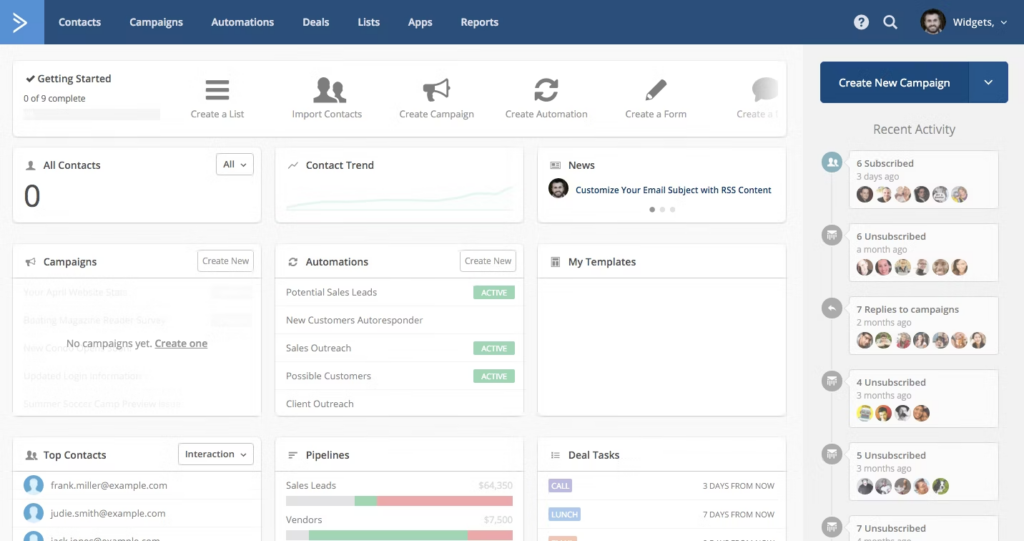
ActiveCampaign is a sales CRM and marketing automation platform that combines visual pipeline management, AI-powered lead scoring, deal tracking, and sales automation in a single system.
Who Is ActiveCampaign Best For?
ActiveCampaign is a strong fit for small to mid-sized businesses that need both marketing automation and sales pipeline management in one platform.
Why I Picked ActiveCampaign
I've included ActiveCampaign in my top picks because its lead scoring is genuinely one of the most connected I've used. You can set score thresholds that automatically create a deal in the CRM the moment a lead qualifies, so nothing gets missed between marketing and sales. Behavioral scoring rules also track email opens, clicks, and site visits in real time, keeping lead scores current as prospects move through the pipeline. I also like that you can build product-specific scoring models, which is especially useful if your team sells across multiple lines of business.
ActiveCampaign Key Features
- Visual pipeline builder: Manage deals across fully customizable stages using a drag-and-drop column view with unlimited pipelines.
- Sales automation: Automatically assign deals, trigger follow-up tasks, and move opportunities through stages based on rep activity or deal status.
- Win probability: Get AI-generated likelihood scores on open deals to help prioritize where your team focuses its time.
- Sales reporting: Build custom dashboards to track deal value, pipeline health, and rep performance over time.
Pros and Cons
Pros:
- Has a simple user interface
- Premium tools for an affordable price
- Delivers a highly customizable platform
Cons:
- Doesn’t provide comprehensive CRM services
- Limited standard reporting, requires customization
Other Sales Pipeline Management Software
There are so many sales pipeline management tools out there, I couldn’t resist adding a few more to the list. Here are the runners-up that could be an ideal choice for your organization.
- Streak
For managing all your stakeholders through Gmail
- Agile CRM
For comprehensive sales, marketing, and service tools
- Insightly
For fast-growing companies who need scalability
- Clari
For tracking the effects of your recent efforts
- People.ai
Enterprise-ready, data-driven solution with an AI copilot
- Dooly
For empowering your team with useful selling tools
- Creatio CRM
For no-code pipeline automation
- Copper
Sales CRM specifically built for Google users
- Salesforce CRM
Sales pipeline management tool with a small business focus
- Zendesk Sell
Platform for blending sales, service, and marketing processes
- Zoho CRM
For building and nurturing customer relationships in the long term
- Freshsales
For AI-driven lead generation and prioritization with Freddy AI
- Pipedrive
CRM to customize your sales pipeline for more visual data
- monday.com
All-in-one platform for design, marketing, sales, operations, and HR


Related Sales Pipeline Management Software Reviews
If you still haven't found what you're looking for here, check out these tools closely related to sales pipeline management software that we've tested and evaluated.
- CRM Software
- Sales Software
- Lead Management Software
- Business Intelligence Software
- Contract Management Software
- Revenue Management System
Selection Criteria For Sales Pipeline Management Software
Sales pipeline management software provides the structure and tools necessary to manage leads, track progress, and analyze sales data, ultimately enhancing your ability to close deals and grow revenue. Based on my extensive experience evaluating such tools, I prioritize solutions that offer comprehensive functionality aligned with key business needs and common use cases.
Core Sales Pipeline Management Software Functionality - 25% of total weighting score
To be considered for inclusion on my list of the best sales pipeline management software, the solution had to support the ability to fulfill common use cases:
- Streamlining lead capture and ensuring leads are promptly and effectively processed.
- Providing clear visibility into each stage of the sales pipeline.
- Facilitating accurate sales forecasting to inform strategic decisions.
- Enabling detailed performance analysis to identify areas for improvement.
- Integrating seamlessly with other key sales and marketing tools.
Additional Standout Features - 25% of total weighting score
- Advanced automation capabilities that reduce manual data entry and task management.
- AI-driven insights that offer predictive analytics and guidance on next best actions.
- Enhanced customization that allows businesses to tailor the software to their unique processes.
- Comprehensive mobile access, ensuring users can manage and monitor their pipeline from anywhere.
- Collaborative features that enhance team communication and coordination.
Usability - 10% of total weighting score
- Intuitive design that minimizes the need for extensive training and maximizes user adoption.
- Clean, clear user interfaces that facilitate quick access to key features and data.
- Personalization options that allow users to configure views and workflows to their preferences.
Onboarding - 10% of total weighting score
- Accessible training materials and resources that accelerate the learning curve.
- Interactive assistance, such as product tours or chatbots, that help new users navigate the software.
- Supportive onboarding processes that ensure businesses can quickly leverage the software's full potential.
Customer Support - 10% of total weighting score
- Responsive support teams that offer expert assistance when needed.
- Multiple support channels, providing convenient access to help.
- A commitment to customer success, evidenced by proactive support and resources.
Value For Money - 10% of total weighting score
- Transparent pricing that reflects the software's value and capabilities.
- Flexible pricing plans that cater to businesses of different sizes and needs.
- A clear return on investment, with benefits that justify the cost.
Customer Reviews - 10% of total weighting score
- Positive feedback from a broad user base, indicating satisfaction with the software.
- Testimonials that highlight specific benefits, such as ease of use or impactful features.
- Insight into how the software has helped businesses improve their sales operations.
When selecting sales pipeline management software, focus on finding a solution that not only addresses your current needs but also has the flexibility to grow with your business. The right software should enhance your sales team's efficiency, provide critical insights for decision-making, and contribute to a scalable, repeatable sales process.
How To Choose Sales Pipeline Management Software
With so many different sales pipeline management software solutions available, it can be challenging to make decisions on what tool is going to be the best fit for your needs.
As you're shortlisting, trialing, and selecting sales pipeline management software, consider the following:
- What problem are you trying to solve - Start by identifying the sales pipeline management software feature gap you're trying to fill to clarify the features and functionality the tool needs to provide.
- Who will need to use it - To evaluate cost and requirements, consider who'll be using the software and how many licenses you'll need. You'll need to evaluate if it'll just be the revenue operation leaders or the whole organization that will require access. When that's clear, it's worth considering if you're prioritizing ease of use for all or speed for your sales pipeline management software power users.
- What other tools it needs to work with - Clarify what tools you're replacing, what tools are staying, and the tools you'll need to integrate with, such as accounting, CRM, or HR software. You'll need to decide if the tools will need to integrate together or if you can replace multiple tools with one consolidated sales pipeline management software.
- What outcomes are important - Consider the result that the software needs to deliver to be considered a success. Consider what capability you want to gain or what you want to improve, and how you will be measuring success. For example, an outcome could be the ability to get greater visibility into performance. You could compare sales pipeline management software features until you’re blue in the face but if you aren’t thinking about the outcomes you want to drive, you could be wasting a lot of valuable time.
- How it would work within your organization - Consider the software selection alongside your workflows and delivery methodology. Evaluate what's working well and the areas that are causing issues that need to be addressed. Remember every business is different — don’t assume that because a tool is popular that it'll work in your organization.
Trends In Sales Pipeline Management Software For 2026
Sales pipeline management software is rapidly evolving, reflecting broader trends in digital transformation and data-driven decision-making. The developments in this field are not just about managing sales processes; they're about leveraging technology to gain competitive advantages, enhance strategic insights, and drive revenue growth more effectively. Here's an overview of the key trends shaping sales pipeline management software:
- Integration with Emerging Technologies:
- Enhanced AI capabilities for predictive analytics, offering foresight into sales trends and helping prioritize efforts based on data-driven insights.
- Integration with IoT devices and platforms, providing real-time data from a broader array of sources for more nuanced sales pipeline management.
- Novel and Unusual Functionality:
- The adoption of blockchain for secure and transparent data sharing within the sales pipeline, ensuring integrity and trust in shared information.
- Utilization of augmented reality (AR) for interactive presentations and product demonstrations directly within the sales pipeline interface.
- Most Important and In-Demand Features:
- Seamless CRM integration, ensuring that the sales pipeline management software works in tandem with CRM systems to provide a cohesive view of customer interactions.
- Advanced analytics and reporting features that deliver deeper insights into sales performance and opportunities for optimization.
- Declining Features:
- Basic task automation and notification features are becoming standard expectations, with less emphasis as standalone selling points.
- Traditional, non-integrated communication tools within the software are being overshadowed by more advanced, integrated collaboration features.
These trends highlight a shift towards more intelligent, integrated, and user-centric sales pipeline management solutions. For revenue operation leaders, staying on top of these trends is crucial to selecting software that not only addresses current needs but also positions the organization for future success. By choosing solutions that align with these evolving trends, businesses can enhance their strategic agility, operational efficiency, and competitive edge.
What Is Sales Pipeline Management Software?
Sales pipeline management software is a tool used by businesses to track and manage the progress of sales opportunities. It organizes leads and deals in various stages of the sales process, providing a clear view of the sales funnel. Features typically include lead tracking, pipeline visualization, activity tracking, sales forecasting, and performance analytics. This software centralizes all sales-related information, making it accessible for sales teams to manage their sales activities effectively.
The benefits of sales pipeline management software are numerous. It enhances visibility into the sales process, allowing sales teams to identify where prospects are in the sales cycle and prioritize their efforts accordingly. This leads to improved sales efficiency, as teams can focus on the most promising leads. The software provides valuable insights for data-driven decision-making, helping to forecast sales and plan strategies more accurately. Additionally, it streamlines the sales process by automating routine tasks, freeing sales representatives to concentrate on building relationships and closing deals, thereby increasing overall sales productivity.
Features Of Sales Pipeline Management Software
Sales pipeline management software offers critical insights and automation to help teams efficiently manage their sales pipelines from lead generation to deal closure. Here are the key features to look for in sales pipeline management software to enhance your revenue operations:
- Comprehensive Pipeline Visualization: Provides a clear overview of your sales pipeline, allowing for quick assessment and management of various sales stages. This visibility is crucial for understanding the flow of deals and identifying bottlenecks.
- Customizable Stages: Allows you to tailor the sales stages to fit your unique sales process. Customization ensures that the software aligns with your team's workflow, enhancing its relevance and effectiveness.
- Deal Tracking: Enables monitoring of individual deals, capturing essential details such as deal size, expected close date, and status. Effective deal tracking is vital for prioritizing efforts and forecasting revenue.
- Activity Tracking: Records interactions and activities related to each deal, providing a comprehensive history and context for sales decisions. This feature helps in maintaining consistency and continuity in customer engagement.
- Task Management: Facilitates the creation and assignment of tasks, ensuring timely follow-ups and actions. Efficient task management aids in keeping the sales process moving forward without delays.
- Sales Forecasting: Utilizes historical data and current pipeline information to predict future sales outcomes. Accurate forecasting is essential for strategic planning and resource allocation.
- Performance Analytics: Offers detailed insights into sales activities and outcomes, enabling teams to measure performance against goals. Analytics are key to identifying success factors and areas for improvement.
- CRM Integration: Seamlessly connects with customer relationship management systems for a unified approach to managing customer interactions. Integration ensures data consistency and provides a holistic view of customer engagements.
- Collaboration Tools: Supports team communication and collaboration within the context of the sales pipeline. These tools help in aligning efforts and sharing insights, fostering a collaborative sales culture.
- Mobile Accessibility: Ensures access to pipeline information and functionality on the go, enabling sales professionals to stay connected and responsive. Mobile access is crucial in today's fast-paced business environment.
Selecting sales pipeline management software with these features will equip your organization with the tools necessary to effectively manage and optimize your sales process, driving improved performance and revenue growth. By focusing on these essential functionalities, you can enhance visibility, control, and strategic decision-making within your revenue operations.
Benefits Of Sales Pipeline Management Software
By offering detailed insights and streamlined management capabilities, sales pipeline management software enhances both strategic decision-making and everyday sales activities. Here are five primary benefits that sales pipeline management software provides to users and organizations:
- Enhanced Visibility: Delivers a clear, comprehensive view of the entire sales pipeline. Enhanced visibility allows sales teams and managers to monitor progress, identify bottlenecks, and quickly address issues that could impede deal closures.
- Improved Productivity: Automates various sales processes, reducing manual work and enabling sales representatives to focus more on engaging with prospects and closing deals. Improved productivity directly translates to increased sales and revenue.
- Data-Driven Decision-Making: Provides robust analytics and reporting tools, offering deep insights into sales performance and trends. Data-driven decision-making supports more accurate forecasting, resource allocation, and strategy optimization.
- Increased Sales Velocity: Helps move deals through the pipeline more efficiently by identifying the most promising leads and focusing efforts where they are most likely to yield results. Increased sales velocity means faster conversions and a shorter sales cycle.
- Better Collaboration: Facilitates communication and collaboration within sales teams, ensuring that everyone is aligned and working toward common goals. Better collaboration enhances team performance and contributes to a more cohesive sales strategy.
Costs & Pricing For Sales Pipeline Management Software
Various sales pipeline management software packages are designed to cater to different business sizes, needs, and budget constraints, providing a range of functionalities to enhance your sales processes. Understanding the diverse plan options and their associated costs will help you make an informed decision that aligns with your company's objectives and resource availability. Here's an outline of typical plan options you might encounter:
Plan Comparison Table For Sales Pipeline Management Software
| Plan Type | Average Price | Common Features Included |
|---|---|---|
| Basic | $10 - $25 per user/month | Lead and deal tracking, basic reporting, email integration |
| Professional | $25 - $75 per user/month | Advanced analytics, CRM integration, custom pipelines |
| Enterprise | $75 - $150+ per user/month | Full feature access, premium support, advanced integrations |
| Free | $0 | Limited features, basic pipeline management, user caps |
When selecting a sales pipeline management software plan, consider not just the current size of your business but also your growth trajectory and how the software's features will scale with your needs. Ensuring that the plan you choose provides the functionalities essential for your sales team's success, balanced against the cost, will help maximize the return on your investment.
Sales Pipeline Management Software Frequently Asked Questions
Need more information before making your decision? Dive deeper into sales pipeline management software with answers to the most commonly asked questions.
What are the types of sales pipeline management software?
Sales pipeline management software varies significantly in complexity and functionality, catering to diverse business needs and sales processes. Here are the primary types of sales pipeline management software that organizations typically consider:
- CRM-Integrated Pipeline Management: This type of software is a feature within a broader customer relationship management (CRM) system. It allows businesses to manage their sales pipeline within the same platform they use for tracking customer interactions, managing contacts, and automating sales processes.
- Stand-Alone Pipeline Management: These tools focus specifically on managing the sales pipeline without the additional features of a full CRM system. They typically provide detailed visualizations of the sales stages, deal tracking, and performance analytics.
- All-in-One Sales Platforms: These comprehensive tools combine sales pipeline management with other sales-related functionalities, such as email marketing, lead generation, and sales forecasting, providing a holistic approach to sales management.
- Industry-Specific Pipeline Management: Some software is tailored to the unique requirements of specific industries, incorporating best practices and workflows that align with the particular sales processes of those sectors.
- AI-Enhanced Pipeline Management: Utilizing artificial intelligence, these systems offer predictive analytics, sales forecasting, and advanced data analysis to optimize the sales pipeline and improve decision-making.
- Mobile Pipeline Management: Designed for on-the-go access, these applications ensure sales professionals can manage their pipeline, update deals, and access critical information from anywhere, enhancing responsiveness and flexibility.
By understanding the different types of sales pipeline management software available, organizations can better assess which solution aligns with their sales processes, team structure, and overall business objectives, ensuring they choose a tool that best supports their revenue operations.
Who uses sales pipeline management software?
Any organization with a sales team can benefit from this type of software. Some platforms are targeted toward specific industries, including agencies, consultancies, real estate, technology, insurance, construction, and finance. You may also find software that focuses on helping a specific role or team.
How do you manage a sales pipeline?
There are several best practices for managing the sales pipeline, including:
- Collect and analyze the data you get from your sales pipeline for more insight
- Review future predictions based on metrics and analysis for better planning
- Evaluate your team and their strategies for peak effectiveness
- Use apps to increase your pipeline productivity and efficiency
- Streamline and optimize your pipeline based on data to ensure a higher conversion rate
A sales pipeline management tool can streamline the process into a few simple steps:
- Find sales prospects
- Qualify your leads
- Identify the decision-makers
- Make first contact
- Follow up on the pitch
- Measure and analyze results
- Update your pipeline
Can sales pipeline management software predict sales conversions?
Sales pipeline management software often includes predictive analytics features that analyze historical data and current pipeline trends to forecast sales conversions. These predictions help sales teams understand potential future outcomes and adjust their strategies accordingly.
How does sales pipeline management software integrate with email platforms?
Many sales pipeline management tools integrate with email platforms to enable seamless communication tracking, email automation, and direct email sending and receiving within the software. This integration helps maintain updated communication logs and enhances sales process efficiency.
How does sales pipeline management software support lead prioritization?
Sales pipeline management software supports lead prioritization by using scoring models and criteria such as engagement level, buying signals, and demographic information. This functionality allows sales teams to focus their efforts on the most promising leads.
Additional Revenue Operations Software
If you’re looking for other revops software to enhance your sales cycle, explore these CRM solutions, email marketing tools, and social media management platforms from The CRO Club.
- Business Intelligence Software For RevOps
- Sales Acceleration Software
- Free CRM Software
- Email Verification Software
- Marketing Automation Software
- LinkedIn Sales Automation Tools
What’s Next:
If you're in the process of researching sales pipeline management software, connect with a SoftwareSelect advisor for free recommendations.
You fill out a form and have a quick chat where they get into the specifics of your needs. Then you'll get a shortlist of software to review. They'll even support you through the entire buying process, including price negotiations.