
14 Best MAP Software Reviewed in 2026

Best MAP Software Shortlist
Here’s my shortlist of the best MAP software:


Navigating the complexities of pricing strategies can be a real headache for revenue operations teams. It's easy to feel overwhelmed when juggling price consistency, compliance, and market competitiveness. That's where MAP software steps in.
These tools are central in supporting your team's goals and maintaining pricing integrity and brand equity. They help you stay competitive and compliant with industry standards. In this article, I'll share my top MAP software picks.
I've tested and reviewed each one independently, focusing on features that address your specific challenges. Whether you're looking for increased accuracy or better compliance, you'll find a solution that fits your needs. Let's dive into the options that could transform your pricing strategy.
Why Trust Our Software Reviews
Best MAP Software Summary
This comparison chart summarizes pricing details for my top MAP monitoring software selections to help you find the best one for your budget and business needs.
| Tool | Best For | Trial Info | Price | ||
|---|---|---|---|---|---|
| 1 | Best for global market data | Free demo available | Pricing upon request | Website | |
| 2 | Best for multi-channel retailers | Free demo available | Pricing upon request | Website | |
| 3 | Best for custom analytics | Free trial available | Pricing upon request | Website | |
| 4 | Best for dynamic pricing | Free introductory call available | Pricing upon request | Website | |
| 5 | Best for real-time updates | Free demo available | Pricing upon request | Website | |
| 6 | Best for e-commerce platforms | Free demo available | Pricing upon request | Website | |
| 7 | Best for competitive analysis | Free demo available | Pricing upon request | Website | |
| 8 | Best for brand protection | Free demo available | Pricing upon request | Website | |
| 9 | Best for compliance support | Free market analysis + free demo available | Pricing upon request | Website | |
| 10 | Best for small retailers | Free 15-day trial + free demo available | From $199/month (billed annually) | Website |
-

Prisync
Visit WebsiteThis is an aggregated rating for this tool including ratings from Crozdesk users and ratings from other sites.4.7 -
Expedite Commerce
Visit Website -
QuickBooks Online
Visit WebsiteThis is an aggregated rating for this tool including ratings from Crozdesk users and ratings from other sites.4




Best MAP Software Reviews
Below are my detailed summaries of the best MAP software that made it onto my shortlist. My reviews offer a detailed look at the key features, pros and cons, integrations, and ideal use cases of each tool to help you find the best one for you.


Intelligence Node is an AI-driven analytics platform designed for enterprise retail. It focuses on competitive pricing monitoring and digital shelf insights. It serves large retailers and brands by optimizing their share of search, content, assortment, and price matching for smoother e-commerce performance.
Why I picked Intelligence Node: This tool provides global market data, offering features such as share-of-search analysis and competitor price monitoring. Its patented AI algorithm delivers 99% accuracy, making it reliable for large-scale operations. The configurable dashboards and easy API integration cater to your team's specific needs, and its focus on improving brand visibility and profitability sets it apart.
Standout features and integrations:
Features include digital shelf analytics, which help your team optimize product visibility and performance. Pricing and promotion optimization tools support margin growth by maintaining competitive product pricing. Assortment management helps with maintaining an efficient product mix to meet market demands.
Integrations include Shopify, Mirakl, WooCommerce, Walmart, Amazon, eBay, and more.
Pros and cons
Pros:
- Focus on brand visibility
- Configurable dashboards
- High accuracy with patented AI
Cons:
- Limited to enterprise solutions
- Advanced features can be complex to use

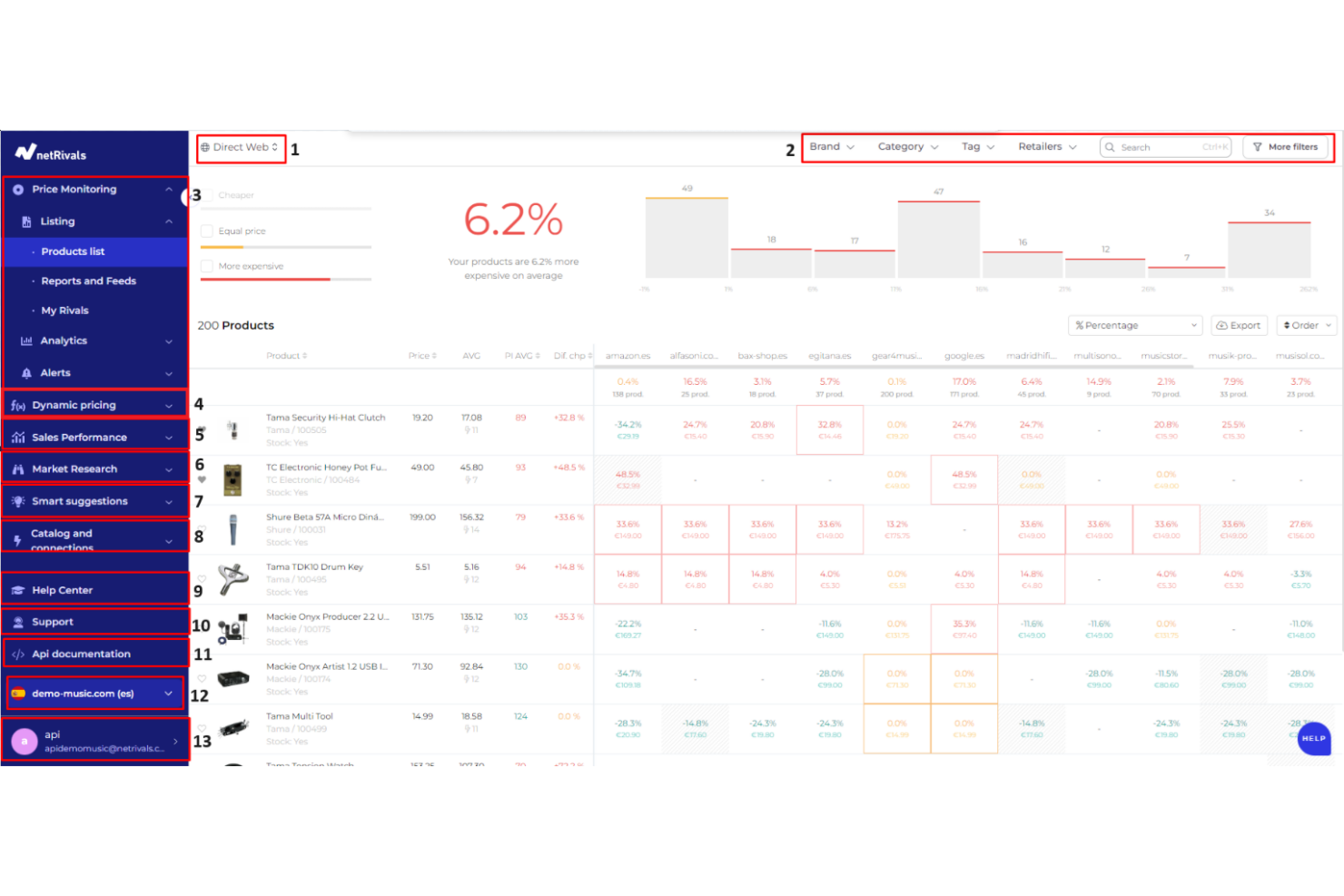
NetRivals is a pricing intelligence platform tailored for multi-channel retailers and brands aiming to optimize pricing strategies across various sales platforms. It supports businesses in tracking competitor prices, analyzing market trends, and maintaining competitive pricing.
Why I picked NetRivals: This tool excels in serving multi-channel retailers by offering features such as wide-ranging price monitoring and dynamic pricing capabilities. It helps your team manage pricing across different platforms with ease. The platform's ability to provide global market insights is important for businesses operating in multiple channels. It's a strong choice for retailers looking to harmonize their pricing strategies.
Standout features and integrations:
Features include dynamic pricing capabilities to allow your team to adjust prices in real time. The wide-ranging price monitoring tracks competitors across multiple channels, helping you stay competitive. Complete market insights provide a detailed view of pricing trends and consumer behavior.
Integrations include Shopify, WooCommerce, Shopware, PrestaShop, Amazon, eBay, Google Analytics, and more.
Pros and cons
Pros:
- Wide-ranging monitoring capabilities
- Real-time pricing adjustments
- Effective for multi-channel operations
Cons:
- Complexity of customization
- Lack of mobile app or dedicated mobile support

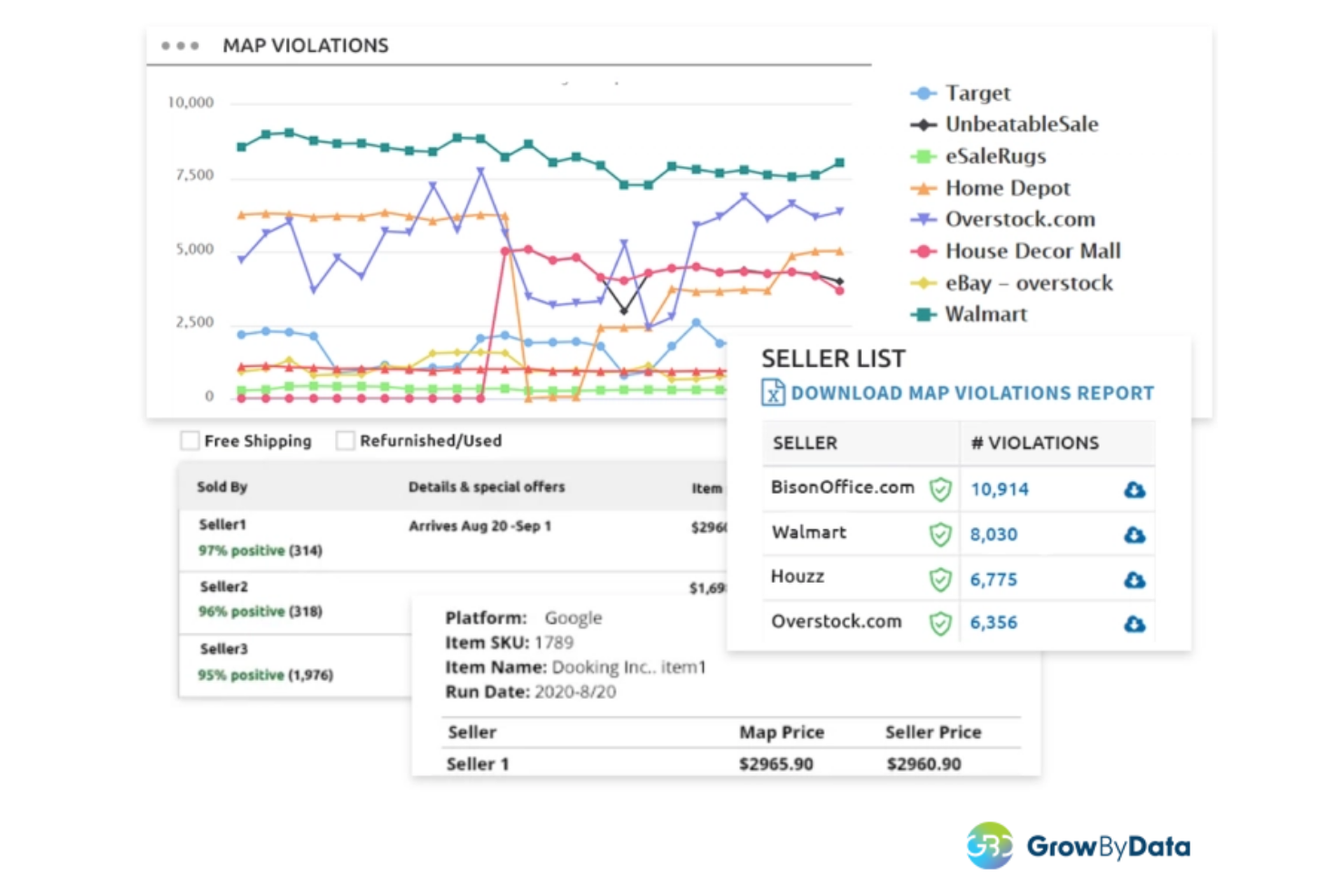
GrowByData is a data analytics platform tailored for e-commerce businesses looking to leverage custom analytics for pricing strategies. It serves retailers and brands aiming to optimize their pricing and marketing efforts through detailed data insights.
Why I picked GrowByData: This tool's custom analytics allow your team to tailor insights to your specific needs. It provides competitor price monitoring and market trend analysis to help you make informed pricing decisions. The platform's ability to offer bespoke analytical solutions is well-suited to businesses seeking personalized data insights. Its focus on customization makes it a valuable asset for data-driven decision-making.
Standout features and integrations:
Features include competitor price monitoring to help your team stay informed about market changes. The market trend analysis tools provide insights into consumer behavior and pricing strategies. Customizable dashboards allow you to tailor data presentation to meet your specific business needs.
Integrations include Amazon, Walmart, Google, Bing, Target, CVS, Walgreens, Reddit, and more.
Pros and cons
Pros:
- Tailors insights to business needs
- Supports data-driven decisions
- Customizable analytics options
Cons:
- Limited to data analytics
- Requires initial setup effort

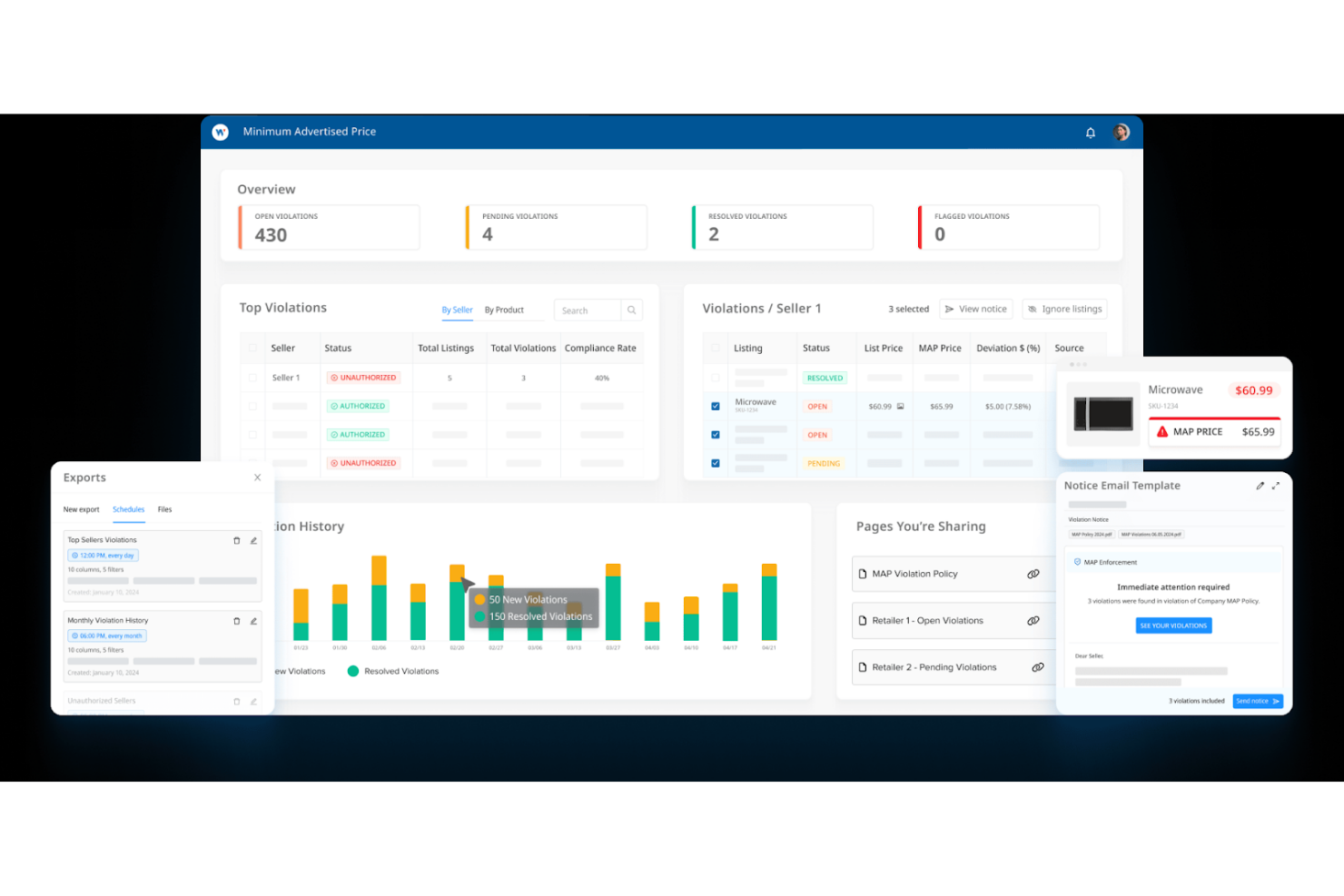
Wiser is a pricing intelligence platform designed for retailers and brands to optimize pricing strategies. It serves businesses looking to implement dynamic pricing to remain competitive and maximize profits.
Why I picked Wiser: This tool specializes in dynamic pricing, providing real-time price monitoring and automated price adjustments. It allows your team to react quickly to market changes with its competitive intelligence tools. The detailed analytics help you make informed pricing decisions. Wiser's dynamic pricing capability is valuable for businesses aiming to stay ahead in competitive markets.
Standout features and integrations:
Features include competitor monitoring to keep you informed about market trends. The price optimization tools support strategic pricing decisions by analyzing various market factors. Inventory management features ensure your stock levels are aligned with pricing strategies.
Integrations are not publicly listed.
Pros and cons
Pros:
- Effective for competitive markets
- Supports strategic pricing decisions
- Automated price adjustments
Cons:
- Adding new products for monitoring may take significant time
- Product matching may not always be accurate

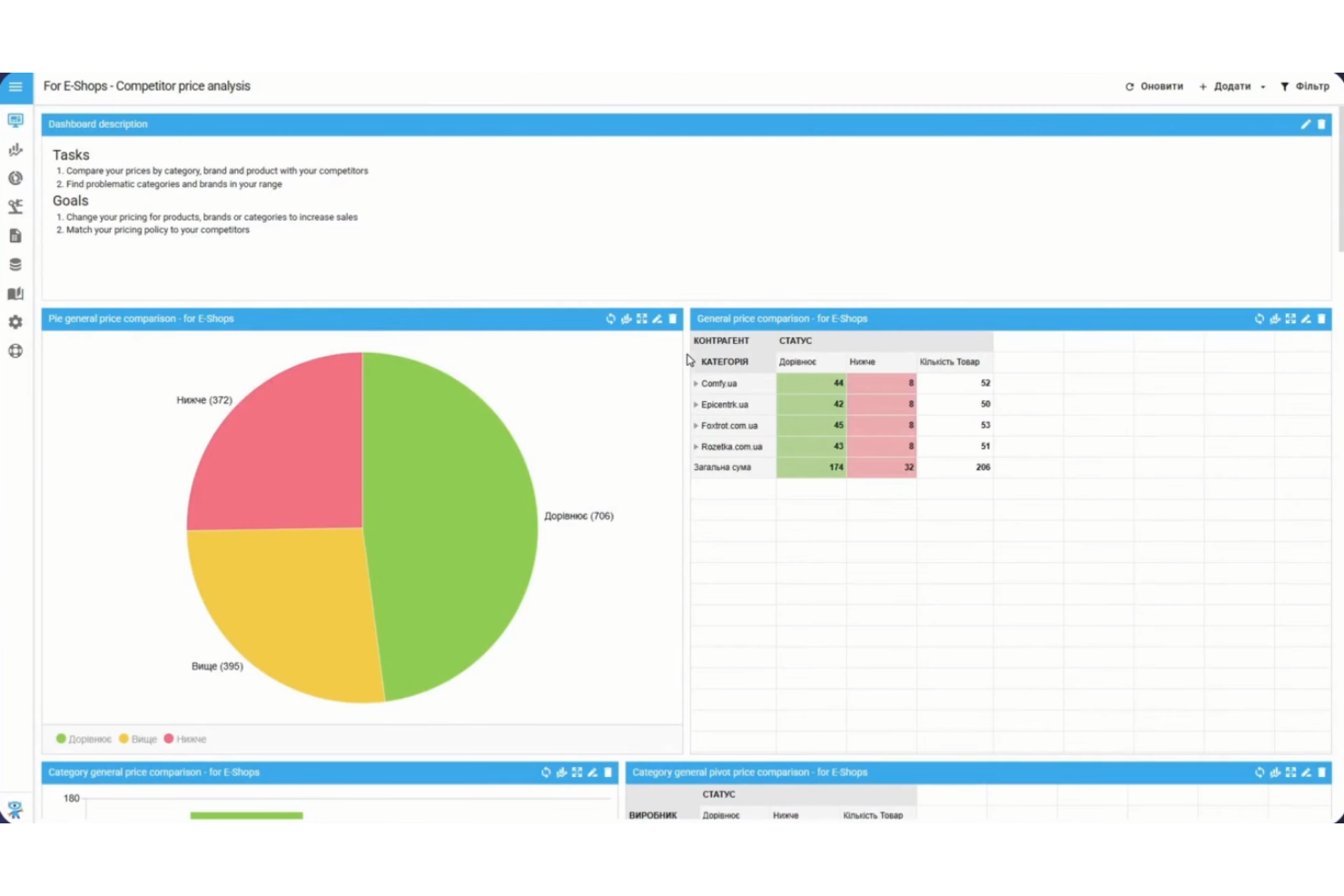
Pricer24 is a pricing intelligence and optimization tool designed for retailers and brands seeking real-time market data. It caters to businesses looking to adjust their pricing strategies swiftly based on current market conditions.
Why I picked Pricer24: This tool delivers real-time updates, with features such as instant price monitoring and alert systems. Its quick data processing capabilities help your team stay responsive to market changes. The platform's ability to provide up-to-the-minute pricing information is important for businesses in fast-paced markets. Its focus on real-time data makes it a standout choice for those needing timely insights.
Standout features and integrations:
Features include instant price monitoring and alert systems to notify you immediately of any significant pricing shifts. Customizable reports provide a detailed analysis of market trends and competitor pricing strategies.
Integrations include Amazon, Best Buy, Walmart, and more.
Pros and cons
Pros:
- Customizable reporting options
- Instant alert systems
- Real-time market data
Cons:
- Limited to pricing intelligence
- Data accuracy variances


Trade Vitality is a MAP monitoring software designed for brands and e-commerce platforms to enforce pricing compliance and protect profit margins. It serves businesses seeking automated monitoring solutions for managing MAP violations efficiently.
Why I picked Trade Vitality: This tool's automated violation detection and instant communication features are ideal for e-commerce platforms. Your team can address pricing issues swiftly with real-time alerts and detailed seller tracking. The software offers flexibility, functioning as either a DIY solution or a fully managed service. With a focus on e-commerce, Trade Vitality proves a reliable choice for maintaining pricing integrity.
Standout features and integrations:
Features include automatic violation detection that alerts your team to pricing issues immediately. The communication tools help you contact violators swiftly with pre-designed email templates. Seller tracking provides thorough insights into compliance trends across platforms.
Integrations include Amazon, Walmart, Google Shopping, and more.
Pros and cons
Pros:
- No contracts required
- Flexible service options
- Instant communication with violators
Cons:
- Limited industry scope
- Focused on e-commerce platforms


Minderest is a pricing intelligence platform aimed at retailers and manufacturers seeking to develop their competitive analysis. It tracks competitor prices, analyzes market trends, and optimizes pricing strategies.
Why I picked Minderest: This tool helps your team make informed pricing decisions with its detailed analytics. The real-time data updates help your strategies adapt to market changes promptly. Minderest's market trend analysis tools are ideal for businesses looking to refine their pricing tactics.
Standout features and integrations:
Features include detailed competitor price tracking, providing insights into market positioning. The market trend analysis tools help you understand consumer behavior and pricing dynamics. Customizable dashboards allow you to tailor data views to your specific needs.
Integrations include Shopify, Amazon, eBay, AliExpress, and more.
Pros and cons
Pros:
- Customizable data views
- Focus on market trends
- Detailed competitor tracking
Cons:
- Occasional data inaccuracies or delays
- Automatic product matching sometimes needs manual verification


Brand Alignment is a compliance and brand protection tool for manufacturers and retailers aiming to safeguard their brand integrity. It caters to businesses looking to enforce MAP policies and prevent unauthorized sellers from impacting their brand value.
Why I picked Brand Alignment: This tool focuses on brand protection by offering features such as unauthorized seller detection and MAP policy enforcement. It provides your team with real-time notifications to address violations quickly. The platform's varied reporting capabilities help you monitor compliance and maintain brand integrity. Its focus on protecting your brand makes it a strong choice for businesses concerned about brand value.
Standout features and integrations:
Features include unauthorized seller detection to help your team identify and address potential threats to brand integrity. The reporting tools offer detailed insights into compliance trends, aiding in effective policy enforcement. Real-time alerts enable swift action against violations.
Integrations include Amazon, eBay, Walmart, AliExpress, and more.
Pros and cons
Pros:
- Addresses unauthorized sellers
- Effective MAP policy enforcement
- Strong focus on brand protection
Cons:
- Limited customization options
- Requires initial setup time


MAP Services Corp is a compliance-focused platform and enforcement tool designed for manufacturers and retailers to support adherence to MAP policies. It primarily serves mid-to-large-sized companies aiming to protect their brand value and maintain fair market conditions.
Why I picked MAP Services Corp: This tool emphasizes compliance support, with features such as automated MAP monitoring and violation reporting. Real-time notifications help your team stay on top of pricing discrepancies. The reporting tools provide detailed insights into pricing trends and violations. MAP Services Corp's compliance-focused approach makes it useful for companies concerned about brand integrity.
Standout features and integrations:
Features include automated violation tracking to keep your team informed of any pricing discrepancies. The customizable reporting tools help you analyze pricing trends and enforce policies effectively. Real-time alerts enable immediate action when a violation occurs.
Integrations include Amazon, eBay, Walmart, and more.
Pros and cons
Pros:
- Automated monitoring process
- Real-time violation alerts
- Strong focus on compliance
Cons:
- Limited customization options
- Primarily focused on mid-to-large-sized companies


MapAuthority is designed to enforce MAP policies on Amazon, catering primarily to small retailers. It automates price monitoring and enforcement, preventing resellers and third-party sellers from listing products below the set MAP.
Why I picked MapAuthority: This tool is particularly useful for small retailers who need to maintain compliance but do not have the resources for extensive manual monitoring. It simplifies your team's workload by automatically denying price violations. Combining MAP monitoring and enforcement in a single package offers efficiency and cost-effectiveness. MapAuthority's ease of setup and automation make it ideal for small-scale operations.
Standout features and integrations:
Features include automated MAP enforcement, which prevents sellers and retail partners from listing products below the set price. MapAuthority also offers price monitoring to track and address violations efficiently. Its user-friendly interface allows small retailers to manage compliance with minimal effort.
Integrations include Amazon and more.
Pros and cons
Pros:
- Cost-effective for small operations
- Simplifies compliance for small retailers
- Automatic price enforcement
Cons:
- Limited customization options
- Currently only offers Amazon enforcement


MAP Software Selection Criteria
When selecting the best MAP software to include in this list, I considered common buyer needs and pain points, such as maintaining pricing compliance and monitoring competitor pricing. I also used the following framework to keep my evaluation structured and fair:
Core Functionality (25% of total score)
To be considered for inclusion in this list, each solution had to fulfill these common use cases:
- Monitor competitor pricing
- Track price changes over time
- Enforce MAP compliance
- Generate pricing reports
- Alert on pricing violations
Additional Standout Features (25% of total score)
To help further narrow down the list, I also looked for unique features, such as:
- Real-time data updates
- Customizable dashboards
- AI-driven insights
- Geographic pricing analysis
- Dynamic pricing capabilities
Usability (10% of total score)
To get a sense of the usability of each system, I considered the following:
- Intuitive user interface
- Easy navigation
- Minimal learning curve
- Customizable user settings
- Aesthetic design
Onboarding (10% of total score)
To evaluate the onboarding experience for each platform, I considered the following:
- Availability of training videos
- Interactive product tours
- Onboarding templates
- Live webinars
- Chatbot assistance
Customer Support (10% of total score)
To assess each software provider's customer support services, I considered the following:
- 24/7 support availability
- Response time
- Multi-channel support options
- Knowledge base access
- Personalized assistance
Value For Money (10% of total score)
To evaluate the value for money of each platform, I considered the following:
- Competitive pricing
- Feature set offered
- Scalability options
- Free trial availability
- Pricing transparency
Customer Reviews (10% of total score)
To get a sense of overall customer satisfaction, I considered the following when reading customer reviews:
- Ease-of-use feedback
- Feature satisfaction
- Support quality
- Return on investment
- Overall satisfaction ratings
How To Choose MAP Software
It's easy to get bogged down in long feature lists and complex pricing structures. To help you stay focused as you work through your unique software selection process, here's a checklist of factors to keep in mind:
| Factor | What To Consider |
|---|---|
| Scalability | Can the tool grow with your business? Check if it handles increased data volume and user numbers. Look for flexible pricing models that accommodate growth without a huge cost increase. |
| Integrations | Verify the software connects with your existing tech stack. Ask if it supports your e-commerce platforms and analytics tools. Lack of integration can disrupt workflows and data accuracy. |
| Customizability | Can you tailor the tool to fit your specific needs? Evaluate if it offers customizable reports and dashboards. Avoid rigid systems that force you into a one-size-fits-all approach. |
| Ease of use | Is the interface intuitive for your team? Test it with potential users to see if they can navigate it without extensive training. Complexity can lead to low adoption rates. |
| Implementation and onboarding | How quickly can you get up and running? Consider the availability of training resources and support during setup. Long onboarding can delay your ROI. |
| Cost | Analyze the total cost, including hidden fees. Compare with competitors to confirm you're getting value for your money. Beware of low upfront costs with high renewal rates. |
| Security safeguards | Does the tool protect your data? Verify compliance with industry standards and check for data encryption. Security breaches can lead to costly repercussions. |
| Support availability | What support options are available? Check for 24/7 availability and multiple contact channels. Lack of support can leave you stranded during critical moments. |
What Is MAP Software?
MAP software is a tool that helps businesses enforce MAP policies by monitoring and managing pricing across various platforms. Retailers, manufacturers, and brand managers typically use these tools to ensure pricing compliance and protect brand value. Real-time monitoring, automated alerts, and detailed reporting features help with tracking prices, detecting violations, and making informed pricing decisions. Overall, these tools help businesses maintain pricing integrity and competitiveness in the market.
Features of MAP Software
When selecting MAP software, keep an eye out for the following key features:
- Real-time monitoring: Tracks competitor prices continuously across multiple channels to ensure your pricing remains competitive and compliant.
- Automated alerts: Notify you instantly of any pricing violations or significant market changes to allow for quick adjustments.
- Detailed reporting: Provides thorough insights into pricing trends and competitor strategies, helping you make informed decisions.
- Customizable dashboards: Allow you to tailor how you display data to fit your specific business needs and preferences.
- Dynamic pricing capabilities: Allow you to adjust prices in real time based on market conditions and competitor actions.
- Competitor price tracking: Monitors competitor pricing across multiple channels to help you stay informed and competitive.
- Market trend analysis: Offers insights into consumer behavior and pricing dynamics to support strategic planning.
- Violation management: Helps manage and address pricing violations efficiently to maintain brand integrity.
- Integration support: Connects with your existing e-commerce and analytics platforms to confirm data accuracy and workflow efficiency.
Benefits of MAP Software
Implementing MAP software provides several benefits for your team and your business. Here are a few you can look forward to:
- Improved compliance: Maintain consistent enforcement of pricing policies by automatically monitoring and flagging violations.
- Increased competitiveness: Keep your pricing strategies agile and responsive to market changes through real-time monitoring and dynamic pricing capabilities.
- Time savings: Reduce manual effort in tracking and adjusting prices through automated alerts and reporting features.
- Informed decision-making: Provide detailed insights into market trends and competitor actions, helping you make strategic pricing decisions.
- Brand protection: Maintain your brand's integrity by effectively managing and addressing pricing violations across various platforms.
- Better data integration: Connect easily with existing tools to maintain accurate data flow and efficient workflows.
- Increased revenue potential: Optimize pricing strategies to maximize profitability by leveraging in-depth market analysis and dynamic pricing.
Costs and Pricing of MAP Software
Selecting MAP software requires an understanding of the various pricing models and plans available. Costs vary based on features, team size, add-ons, and more. The table below summarizes common plans, their average prices, and typical features included in MAP software solutions:
Plan Comparison Table for MAP Software
| Plan Type | Average Price | Common Features |
|---|---|---|
| Free Plan | $0 | Basic price monitoring, limited reporting, and single-user access. |
| Personal Plan | $20-$50/user/month | Advanced monitoring, customizable dashboards, and basic alerts. |
| Business Plan | $50-$150/user/month | Multi-channel tracking, detailed analytics, and automated alerts. |
| Enterprise Plan | $150-$300/user/month | Extensive integration support, dynamic pricing capabilities, and full customization. |
MAP Software FAQs
Here are some answers to common questions about MAP software:
How do I know if my business needs MAP software?
If your business struggles with maintaining consistent pricing across multiple platforms, MAP software can help. It automates price monitoring and alerts you to any violations, saving you time and effort. Businesses that rely on brand reputation and need to enforce pricing policies will find it particularly useful. Consider your current challenges with price tracking and compliance to determine if this software is right for you.
How does MAP software help enforce pricing policies across multiple channels?
MAP software automates monitoring by scanning online retailers, authorized sellers, and marketplaces to detect violations. It alerts your team when sellers advertise below your set minimum price, so you can quickly address issues and maintain pricing consistency.
Can MAP software integrate with my existing systems?
Yes, most MAP software can integrate with common e-commerce platforms and analytics tools. Before purchasing, check if the software supports your current systems, such as Shopify, Magento, or Google Analytics. Integration allows data flows smoothly between platforms, reducing manual work. Always consult the vendor’s integration list or speak to their support team for confirmation.
How secure is MAP software?
MAP software typically includes security measures such as data encryption and compliance with industry standards. Verify the vendor offers security features to protect your sensitive pricing data. Ask about their security protocols and any certifications they hold. It’s essential to choose a provider that prioritizes data protection to avoid potential breaches.
How do I know if MAP violations are actually hurting my revenue?
MAP software provides analytics that show violation frequency, sell-through rates, and trends. By tracking these metrics, you can correlate policy violations with margin erosion or distributor complaints to gauge revenue impact.
How often do updates occur in MAP software?
Update frequency varies by vendor, but many offer real-time or daily updates. Real-time updates are ideal for businesses needing immediate pricing changes, while daily updates might suffice for less time-sensitive operations. Evaluate how quickly you need to respond to market changes and choose software that meets those demands. Always verify update capabilities with the vendor.
What's Next:
If you're in the process of researching MAP software, connect with a SoftwareSelect advisor for free recommendations.
You fill out a form and have a quick chat where they get into the specifics of your needs. Then you'll get a shortlist of software to review. They'll even support you through the entire buying process, including price negotiations.