
28 Best AI Sales Tools in 2026

AI Sales Tools Shortlist
Here’s my shortlist of the best AI sales tools:


AI sales tools are software platforms that use artificial intelligence to automate, analyze, and optimize sales processes across your revenue teams. If you’re searching for the best AI sales tools, you’re likely aiming to improve pipeline visibility, reduce manual tasks, and help your team focus on high-value selling activities. Many tools include predictive lead scoring, AI copilots for SDRs, and features that help identify qualified leads—so your team can act faster and close more deals. With so many options available, it’s tough to know which tools actually deliver reliable data, actionable insights, and real workflow improvements. This guide will help you quickly compare top AI sales tools, understand their core features, and choose solutions that fit your sales operations and growth goals.
Why Trust Our Software Reviews
Best AI Sales Tools Summary
This comparison chart summarizes pricing details for my top AI sales tools selections to help you find the best one for your budget and business needs.
| Tool | Best For | Trial Info | Price | ||
|---|---|---|---|---|---|
| 1 | Best for AI sales prospecting and enrichment | Free demo available | Pricing upon request | Website | |
| 2 | Best for digital sales rooms and tracking | Free trial + free demo available | From $25/user/month | Website | |
| 3 | Best for sales intelligence and contact data | Free trial + free demo available | Pricing upon request | Website | |
| 4 | Best for AI meeting transcription | Free plan + free demo available | From $10/seat/month (billed annually) | Website | |
| 5 | Best for sales conversation insights | Free demo available | Pricing upon request | Website | |
| 6 | Best for sales enablement and content management | Free demo available | Pricing upon request | Website | |
| 7 | Best for multichannel sales outreach | 14-day free trial + free demo available | From $69/user/month | Website | |
| 8 | Best for automated lead qualification | Free plan + free demo available | From $29/month | Website | |
| 9 | Best for AI sales research and insights | 14-day free trial + free plan + free demo available | From $85/month (billed annually) | Website | |
| 10 | Best for AI-driven sales automation | 30-day free trial + free plan available | From $25/user/month | Website | |
| 11 | Best for LinkedIn outreach automation | 30-day free trial + free demo available | From $59/seat/month (billed annually) | Website | |
| 12 | Best for AI email outreach | Free plan + free demo available | From $29/month | Website |
-

Pipedrive CRM
Visit WebsiteThis is an aggregated rating for this tool including ratings from Crozdesk users and ratings from other sites.4.3 -
Creatio CRM
Visit WebsiteThis is an aggregated rating for this tool including ratings from Crozdesk users and ratings from other sites.4.7 -
monday CRM
Visit WebsiteThis is an aggregated rating for this tool including ratings from Crozdesk users and ratings from other sites.4.6



AI Sales Tools Reviews
Below are my detailed summaries of the best AI sales tools that made it onto my shortlist. My reviews offer a detailed look at the features, capabilities, and integrations of each platform to help you find the best one for you.

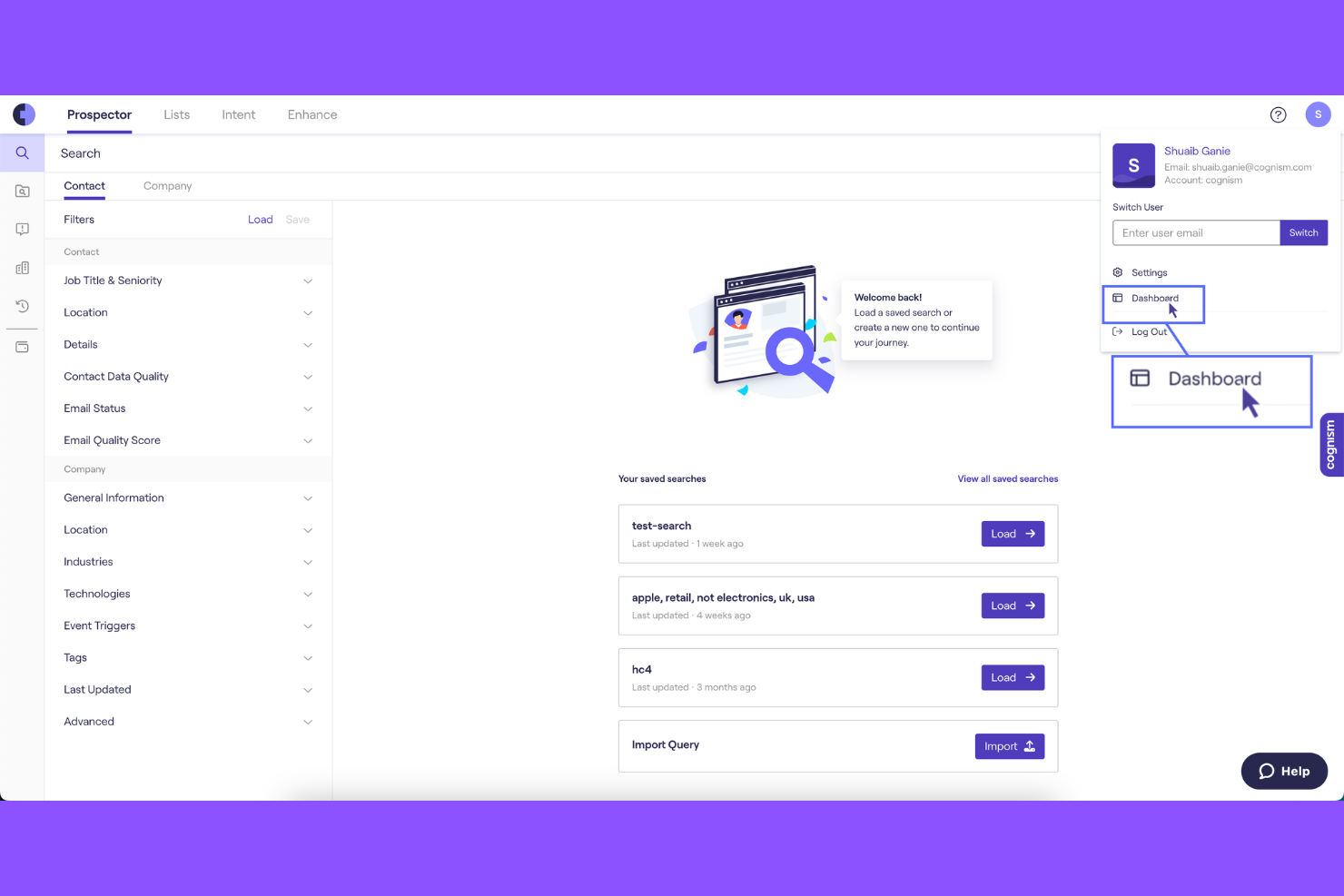
Cognism offers AI-driven prospecting for sales teams that need accurate, compliant contact data. It’s a strong fit for B2B organizations looking to automate lead generation and enrich their CRM with up-to-date information. If your team struggles with manual research or outdated lists, Cognism addresses these challenges with automated data sourcing, enrichment, and features like an AI assistant, buyer intent signals, and support for targeted outreach, such as cold email campaigns.
Who Is Cognism Best For?
Cognism is a good fit for B2B sales teams in regulated industries that require accurate, compliant contact data for outbound prospecting.
Why I Picked Cognism
I picked Cognism for this list because its AI-powered sales prospecting and lead enrichment capabilities address a core challenge for revenue teams: finding accurate, compliant contact data at scale. The platform uses AI to automatically source, verify, and enrich leads, reducing the time your team spends on manual research. I also appreciate that Cognism prioritizes data compliance, which is especially important for teams operating in regions with strict privacy regulations. Its enrichment features help keep your CRM data fresh, so your outreach efforts are always based on the most current information available.
Cognism Key Features
Some other features in Cognism that stand out for sales teams include:
- Chrome extension: Capture and enrich leads directly from LinkedIn and company websites without leaving your browser.
- Do-not-call and compliance screening: Automatically flags contacts against global do-not-call lists and compliance requirements.
- Intent data integration: Surfaces leads showing buying signals by integrating intent data into your prospecting workflow.
- Automated list building: Create targeted lead lists using advanced filters for industry, company size, location, and more.
Cognism Integrations
Integrations include Salesforce, HubSpot, Outreach, Salesloft, Microsoft Dynamics 365, Pipedrive, Bullhorn, Zapier, and more.
Pros and Cons
Pros:
- Intent data highlights prospects ready to buy
- Built-in compliance checks for GDPR and CCPA
- Accurate B2B contact data for global markets
Cons:
- No native email sequencing or outreach tools
- Occasional gaps in smaller market data coverage

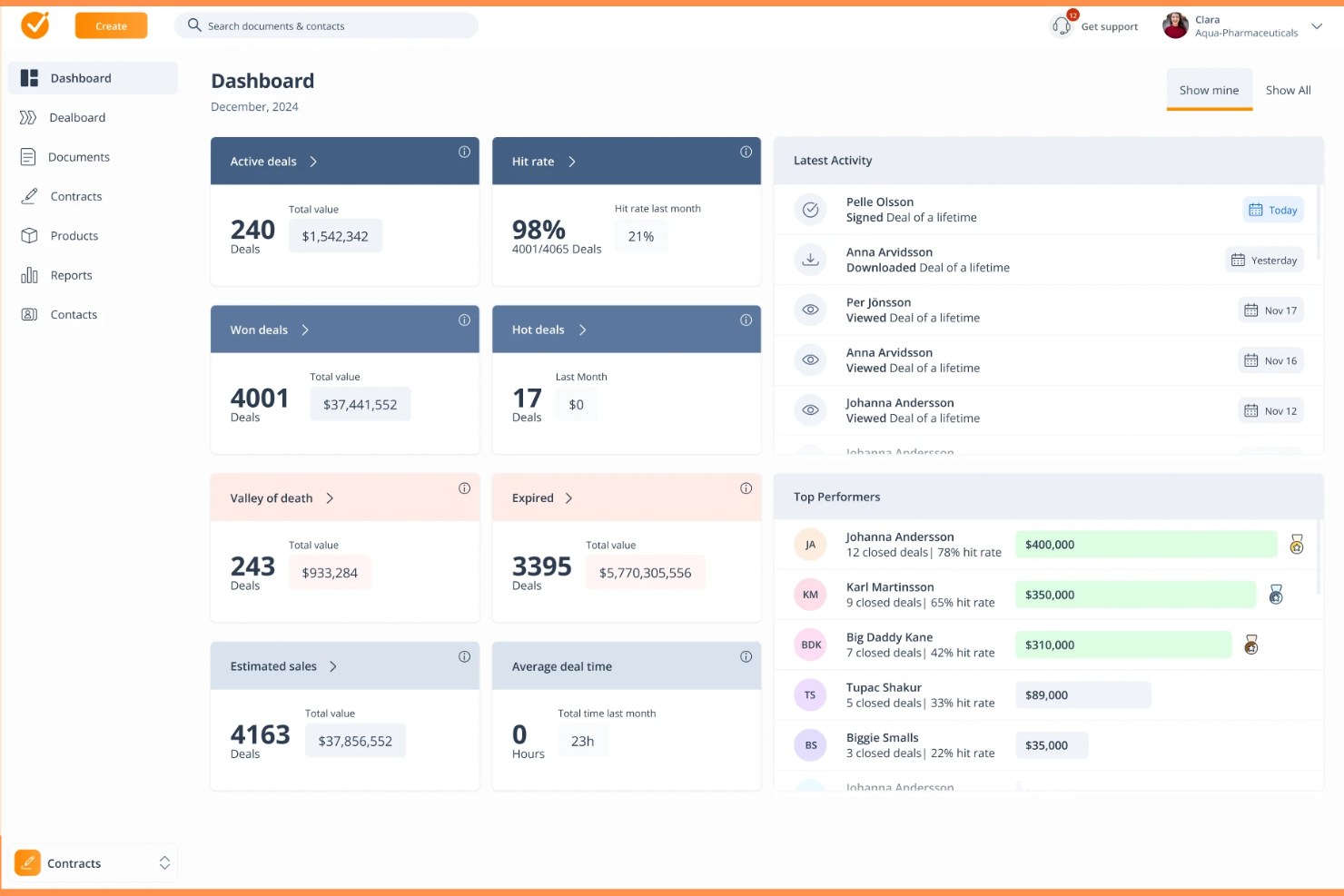
Sales teams looking to modernize their deal management often turn to GetAccept. The platform combines digital sales rooms, document tracking, and e-signature in one workspace, making it especially useful for B2B sales cycles with multiple stakeholders. It’s a strong choice for teams that want to personalize buyer experiences and keep deals moving with real-time engagement insights.
Who Is GetAccept Best For?
GetAccept is well-suited for B2B sales teams at mid-sized companies that manage complex deals involving multiple stakeholders and documents.
Why I Picked GetAccept
What drew me to GetAccept is its focus on creating a digital sales room that brings together document tracking and e-signature in one place. For teams managing complex B2B deals, I find the ability to track buyer engagement with sales documents in real time especially valuable. The platform’s integrated e-signature simplifies closing, while its digital workspace helps sales reps personalize the buying experience and keep all stakeholders aligned. These features make GetAccept a strong fit for anyone searching for an AI sales tool that supports high-touch, multi-step deal cycles.
GetAccept Key Features
Some other features that make GetAccept useful for sales teams include:
- Automated reminders: Send scheduled notifications to prospects and internal team members to keep deals moving forward.
- Video messaging: Lets sales reps record and embed personalized videos directly into sales documents for a more engaging buyer experience.
- Contract templates: Provides customizable templates for frequently used agreements, reducing manual document creation time.
- Deal analytics dashboard: Offers real-time insights into document views, time spent, and stakeholder engagement across all active deals.
GetAccept Integrations
Integrations include Salesforce, HubSpot, Microsoft Dynamics, Pipedrive, SuperOffice, Lime CRM, UpSales, Gong, Slack, and more.
Pros and Cons
Pros:
- Automated reminders to reduce deal delays
- Built-in video messaging for personalized outreach
- Real-time document tracking for sales engagement
Cons:
- Occasional delays in document delivery notifications
- Limited AI-driven forecasting features

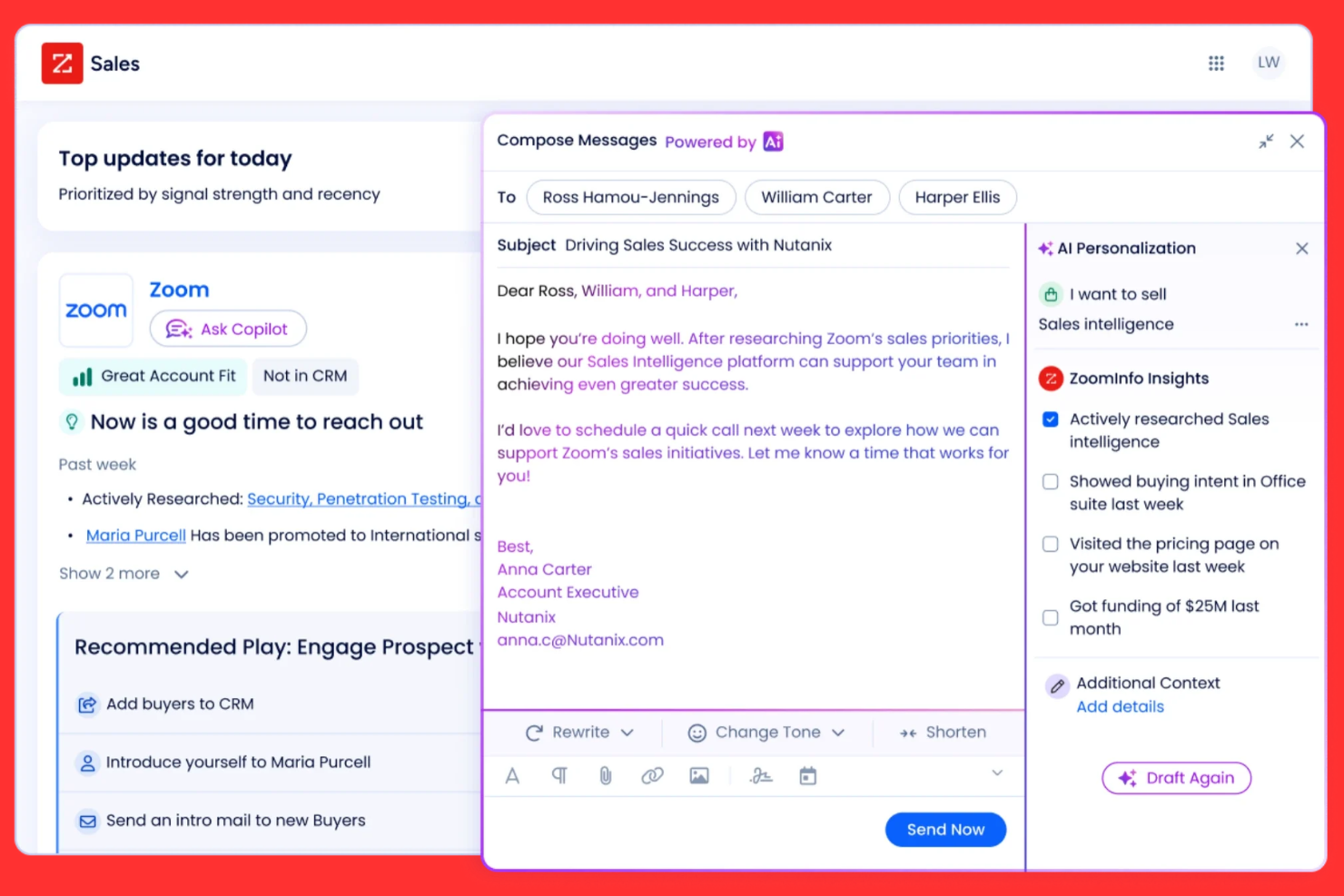
Sales teams looking for accurate B2B contact and company data often turn to ZoomInfo. The platform is designed for professionals who need to identify, research, and connect with decision-makers quickly. Its data-driven approach helps users build targeted prospect lists and improve outreach precision.
Who Is ZoomInfo Best For?
ZoomInfo is a strong fit for B2B sales and marketing teams at mid-sized to large enterprises that need accurate contact and company data for targeted outreach.
Why I Picked ZoomInfo
What sets ZoomInfo apart for me is its depth and accuracy of B2B contact and company data, which is essential for targeted sales outreach. The platform’s AI-driven search and filtering tools help users quickly identify the right decision-makers within specific industries or companies. I also value its real-time data enrichment, which keeps prospect information up to date and actionable for sales teams. For anyone searching for an AI sales tool that prioritizes data quality and precision targeting, ZoomInfo is a strong contender.
ZoomInfo Key Features
Some other features that make ZoomInfo valuable for sales teams include:
- Intent data tracking: Surfaces companies actively researching topics relevant to your solution so you can prioritize outreach.
- Automated workflows: Lets you trigger actions like list building, alerts, or CRM updates based on data changes or prospect activity.
- Engagement tracking: Monitors email opens, clicks, and responses to help you gauge prospect interest and refine messaging.
- Chrome extension: Allows users to access contact and company data directly from LinkedIn or company websites without leaving their browser.
ZoomInfo Integrations
Integrations include Salesforce, HubSpot, Microsoft Dynamics 365, Snowflake, Gmail, Zoom, Aircall, and more.
Pros and Cons
Pros:
- Real-time data enrichment for CRM records
- AI-powered intent data for prospecting
- Extensive B2B contact and company database
Cons:
- Limited support for international markets
- Occasional outdated or inaccurate contact data

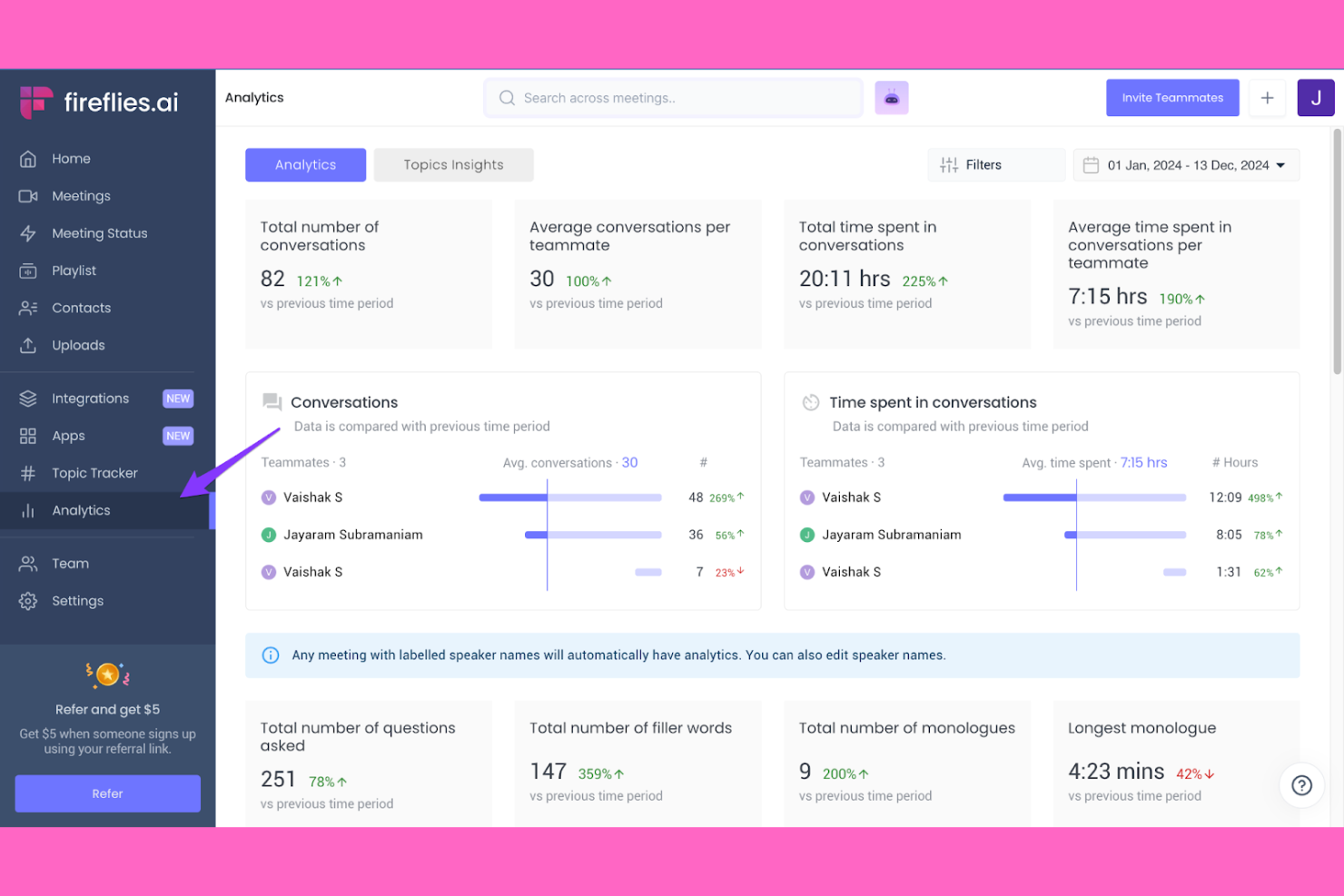
Sales teams looking to capture, transcribe, and analyze calls may find Fireflies.ai especially useful. The platform uses AI to automate meeting notes and surface key insights from sales conversations. It’s a strong fit for revenue operations professionals who want searchable records and actionable data from every customer interaction.
Who Is Fireflies.ai Best For?
Fireflies.ai is a strong choice for sales and revenue teams that need automated call transcription and searchable meeting records.
Why I Picked Fireflies.ai
I picked Fireflies.ai because its AI meeting assistant directly addresses the challenge of capturing and organizing sales call data. The tool automatically records, transcribes, and summarizes sales meetings, making it easy to revisit key moments and action items. I also appreciate how Fireflies.ai lets you search across transcripts and highlight important topics, which helps sales teams quickly surface insights from their conversations. For anyone looking to automate sales call documentation and analysis, Fireflies.ai’s focus on accurate, searchable transcription stands out.
Fireflies.ai Key Features
Some other features that make Fireflies.ai valuable for sales teams include:
- AI-powered topic detection: Automatically identifies and tags key topics discussed during sales calls for easier review.
- Collaboration tools: Lets team members add comments, reactions, and highlights directly within call transcripts.
- CRM auto-logging: Syncs call notes and summaries to connected CRM platforms without manual entry.
- Custom vocabulary: Allows users to add industry-specific terms to improve transcription accuracy.
Fireflies.ai Integrations
Integrations include Salesforce, HubSpot, Slack, Google Meet, Microsoft Teams, Zoom, Dropbox, and more.
Pros and Cons
Pros:
- Automatic CRM note syncing after calls
- Searchable meeting records for quick reference
- Accurate AI transcription for sales calls
Cons:
- Custom vocabulary setup can be time-consuming
- No real-time coaching during live calls

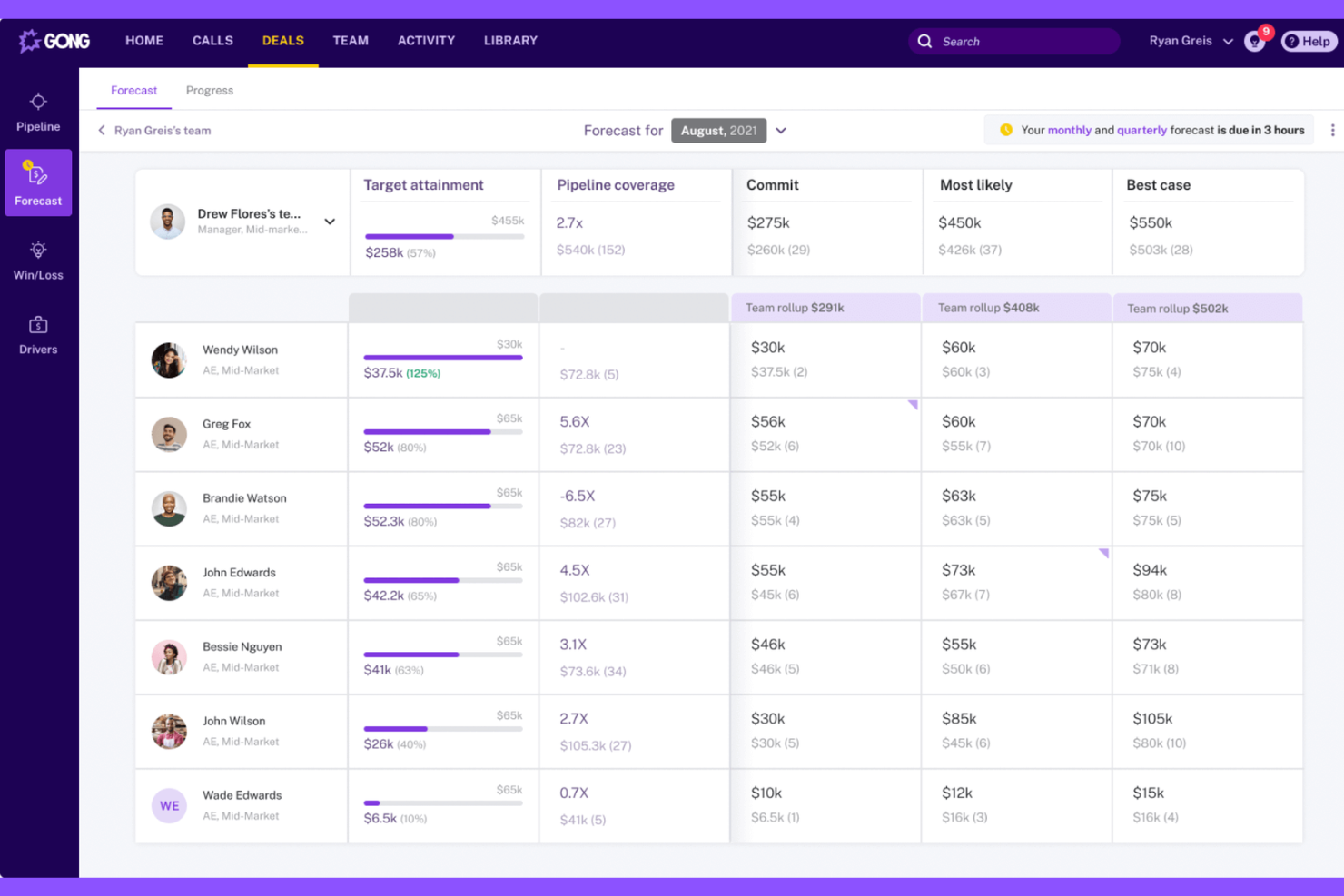
Gong uses AI to analyze sales conversations and deliver actionable insights for revenue teams. It’s designed for sales leaders and reps who want to understand deal risks, coach teams, and improve win rates using real customer interactions. If you need visibility into what’s actually happening in your pipeline, Gong helps you turn call data into strategic guidance.
Who Is Gong Best For?
Gong is a strong fit for mid-sized to enterprise sales teams that want AI-driven insights from customer conversations to improve coaching and deal execution.
Why I Picked Gong
I chose Gong for this list because its AI-driven revenue intelligence and conversation analytics set it apart from other sales tools. Gong automatically records and analyzes sales calls, emails, and meetings to surface deal risks and coaching opportunities that are easy to miss manually. I find its conversation analytics especially valuable for identifying patterns in winning deals and highlighting where reps may need support. For teams looking to use AI to turn real customer interactions into actionable insights, Gong delivers a focused and practical solution.
Gong Key Features
Some other features in Gong that are especially useful for sales teams include:
- Deal boards: Visualize and track the status of every deal in your pipeline with customizable boards.
- Smart trackers: Automatically monitor keywords, topics, and competitor mentions across all sales conversations.
- Call transcription: Generate searchable, AI-powered transcripts for every recorded call and meeting.
- Integration with CRM systems: Sync call data and insights directly with Salesforce, HubSpot, and other leading CRMs.
Gong Integrations
Integrations include Slack, HubSpot CRM, Chili Piper, Gainsight, G2, AWS, Snowflake, ZoomInfo, Zapier, Vidyard, Salesforce, Zoom, Rippling, and more.
Pros and Cons
Pros:
- Tracks competitor mentions in real time
- Conversation intelligence highlights coaching opportunities
- AI analyzes calls for deal risk signals
Cons:
- Can generate too many notifications for users
- Requires call recording consent for compliance

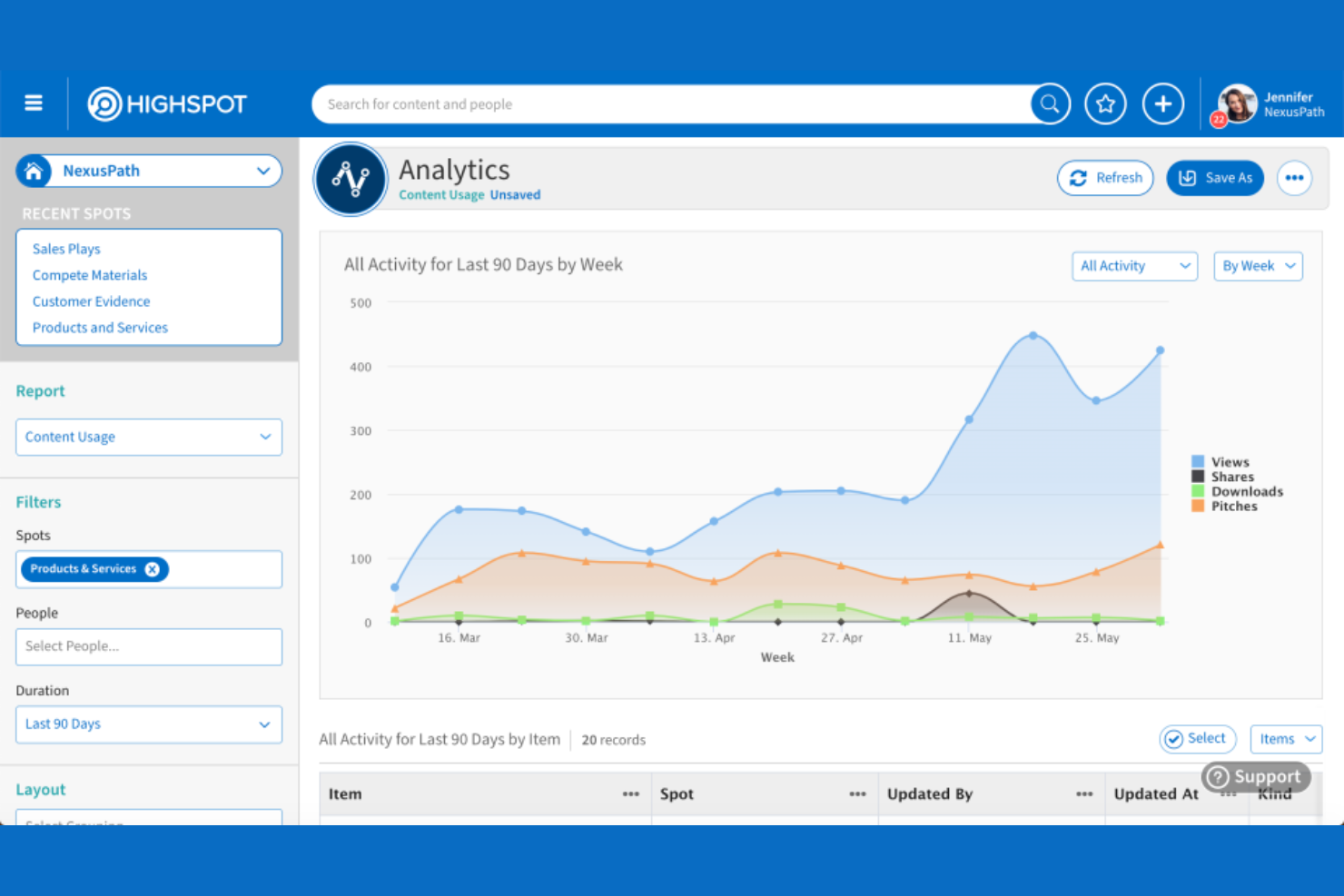
Sales enablement teams looking to unify content, training, and analytics often turn to Highspot. The platform is designed for organizations that want to equip their sales reps with the right materials and guidance at every stage of the buyer journey. Highspot stands out for its focus on surfacing relevant content and actionable insights directly within sellers’ workflows.
Who Is Highspot Best For?
Highspot is a strong fit for mid-sized to large sales and enablement teams in B2B industries that need centralized content management and guided selling.
Why I Picked Highspot
What stands out to me about Highspot is its focus on AI-powered sales enablement that brings content management and guided selling together. I picked Highspot because it uses AI to recommend the most relevant sales content and playbooks to reps based on deal stage and buyer engagement. The platform’s guided selling features help teams deliver consistent messaging and training, while analytics provide visibility into what content actually drives results. For anyone searching for an AI sales tool that connects enablement, content, and actionable insights, Highspot offers a unified approach.
Highspot Key Features
Some other features that make Highspot valuable for sales enablement teams include:
- Pitch tracking: Tracks when prospects open, view, and engage with shared sales content.
- Content governance: Lets admins control content access, versioning, and compliance across distributed teams.
- Training and onboarding modules: Provides built-in tools for delivering sales training, onboarding, and certification programs.
- CRM integration: Connects with platforms like Salesforce and Microsoft Dynamics to sync sales activities and content usage data.
Highspot Integrations
Integrations include Salesforce, Microsoft Dynamics 365, Microsoft Teams, Outlook, SharePoint, Slack, Google Workspace, Gmail, Salesloft, and more.
Pros and Cons
Pros:
- In-depth pitch engagement analytics available
- Guided selling playbooks for consistent messaging
- AI recommends content based on deal stage
Cons:
- Lacks native predictive forecasting features
- Limited workflow automation compared to peers

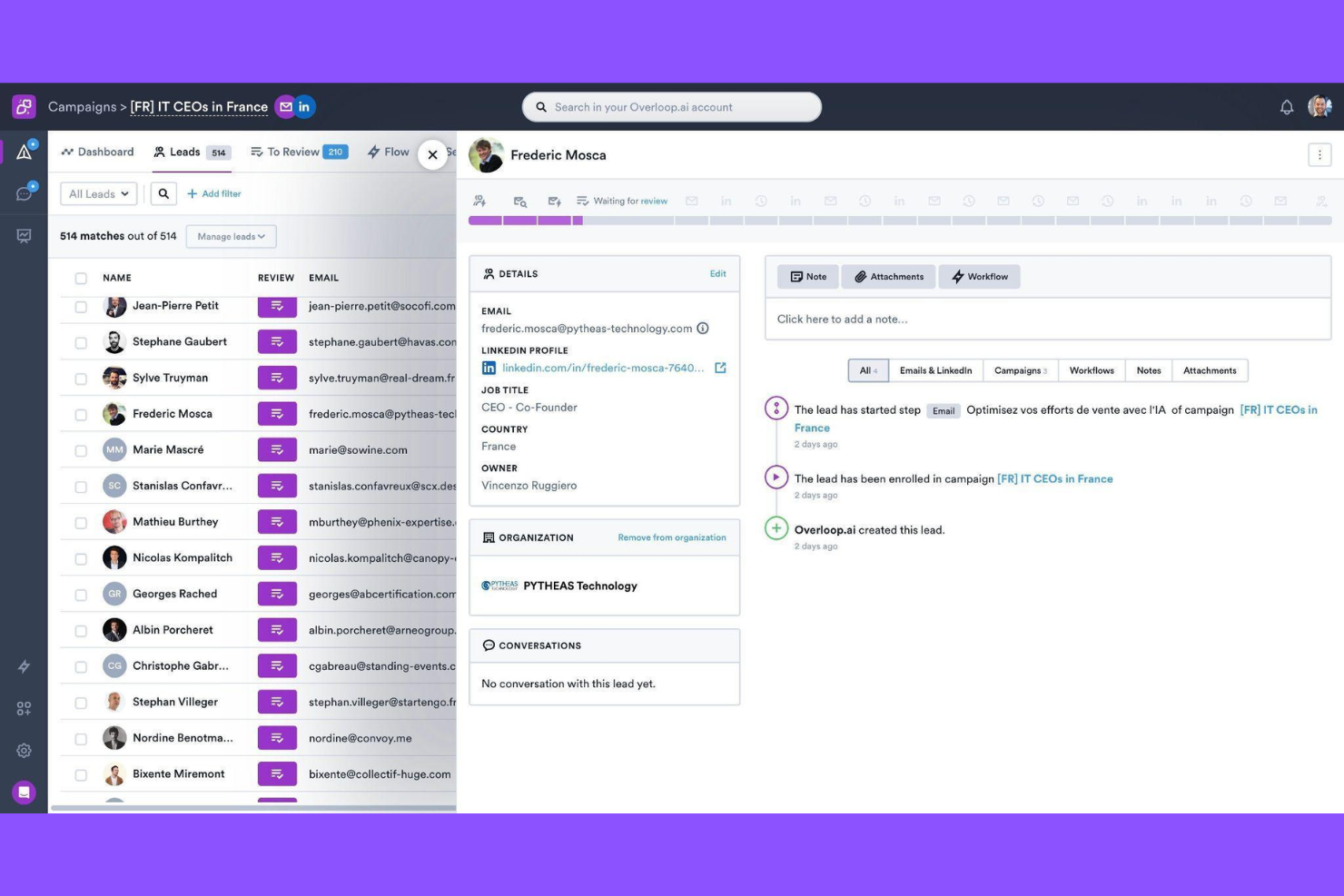
Overloop offers multichannel sales engagement with a focus on LinkedIn automation and outreach. It’s a good fit for sales teams and agencies looking to manage prospecting across email, LinkedIn, and calls from one platform. If you need to automate outreach and track engagement across multiple channels, Overloop brings these workflows together in a single tool.
Who Is Overloop Best For?
Overloop is well-suited for sales teams and agencies that prioritize multichannel outreach and LinkedIn automation in their prospecting workflows.
Why I Picked Overloop
I picked Overloop because its multichannel sales engagement and LinkedIn automation capabilities address a real gap for teams managing outreach across several platforms. Overloop lets you automate LinkedIn connection requests, messages, and profile visits alongside email and call sequences, all from one dashboard. I find its unified approach especially useful for sales teams that want to coordinate and track prospecting efforts without switching between tools. For anyone looking to scale personalized outreach and keep engagement organized, Overloop’s focus on LinkedIn automation stands out in the AI sales tools space.
Overloop Key Features
Some other features in Overloop that are especially relevant for AI-driven sales teams include:
- Visual workflow builder: Design and automate complex sales sequences using a drag-and-drop interface.
- Built-in email finder: Discover verified email addresses directly from LinkedIn profiles or company domains.
- Conversation tracking: Monitor and log all prospect interactions across channels for a complete engagement history.
- Team performance analytics: Access dashboards that break down campaign results and individual rep activity.
Overloop Integrations
Integrations include Slack, Chrome Extension, Zapier, Pipedrive, Salesforce, HubSpot, and more.
Pros and Cons
Pros:
- Built-in email finder for prospecting
- Visual workflow builder for multichannel campaigns
- Automates LinkedIn outreach and messaging
Cons:
- No built-in call recording or transcription
- No AI-powered lead scoring features

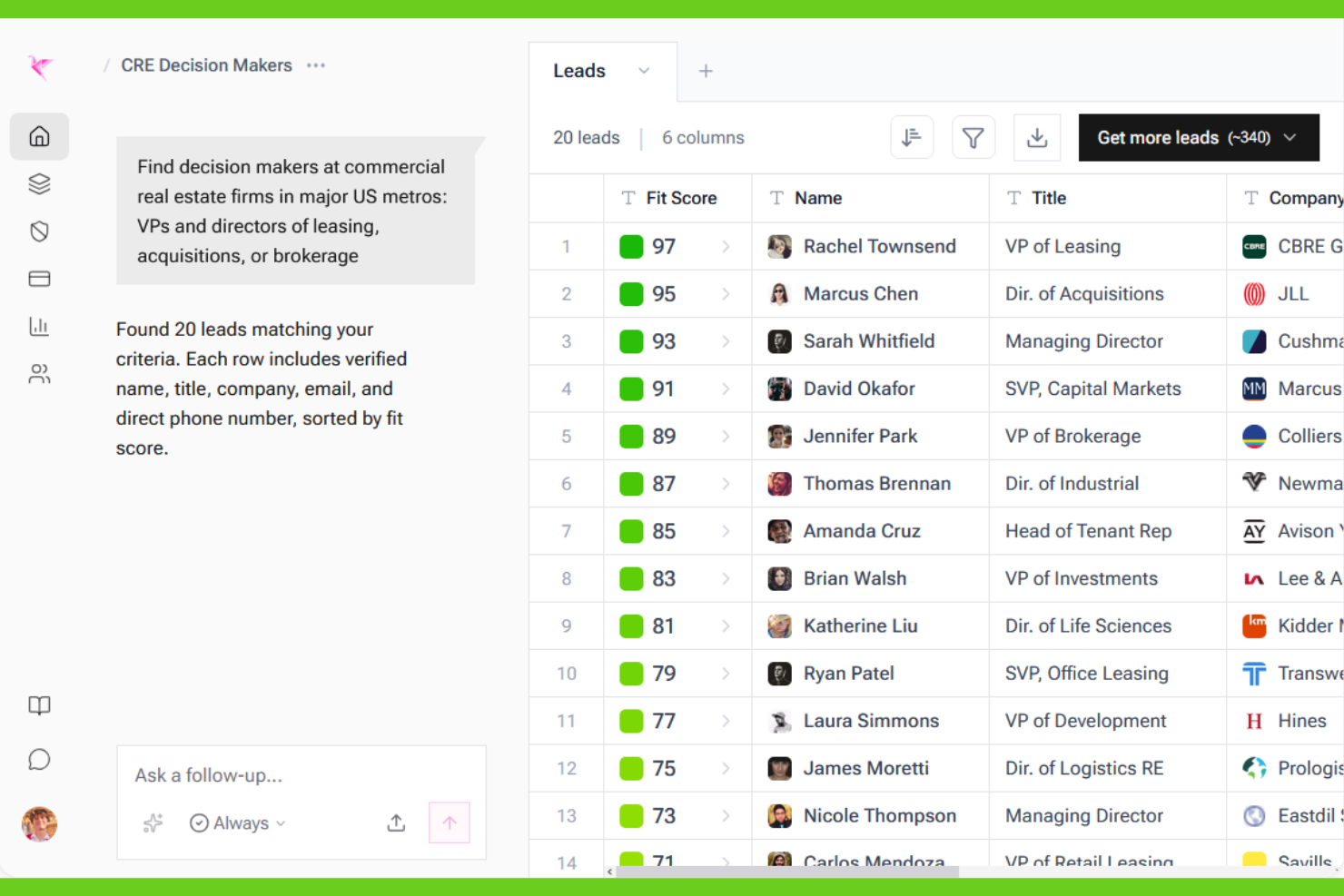
Origami offers an AI-powered sales agent designed to automate outbound prospecting for B2B teams. It’s a strong fit for sales professionals and revenue operations leaders who want to scale outreach without expanding headcount. By handling research, messaging, and follow-up, Origami helps teams focus on higher-value sales activities.
Who Is Origami Best For?
Origami is well-suited for B2B sales teams at growth-stage companies that want to automate and scale outbound prospecting.
Why I Picked Origami
What sets Origami apart for me is its focus on delivering an AI-powered sales agent that fully automates outbound prospecting. The platform handles everything from researching leads to crafting personalized outreach messages and following up, which is especially valuable for teams looking to scale without adding headcount. I like that Origami’s AI can adapt messaging based on prospect responses, making outreach feel more human and relevant. For anyone searching for an AI sales tool that goes beyond simple automation and actually manages the outbound process end-to-end, Origami is a strong contender.
Origami Key Features
Some other features that make Origami useful for sales teams include:
- Automated lead sourcing: The platform identifies and imports new leads based on your target criteria.
- Multi-channel outreach sequencing: Origami supports outreach across email, LinkedIn, and other channels in coordinated sequences.
- Conversation tracking dashboard: Users can monitor all ongoing prospect conversations and engagement in one place.
- Team collaboration tools: Multiple team members can share notes, assign leads, and coordinate outreach within the platform.
Origami Integrations
Native integrations are not currently listed.
Pros and Cons
Pros:
- AI-driven data collection and research
- Multi-channel outreach from one platform
- Fast lead list generation and enrichment
Cons:
- No built-in phone dialer functionality
- Some features are still maturing or in beta

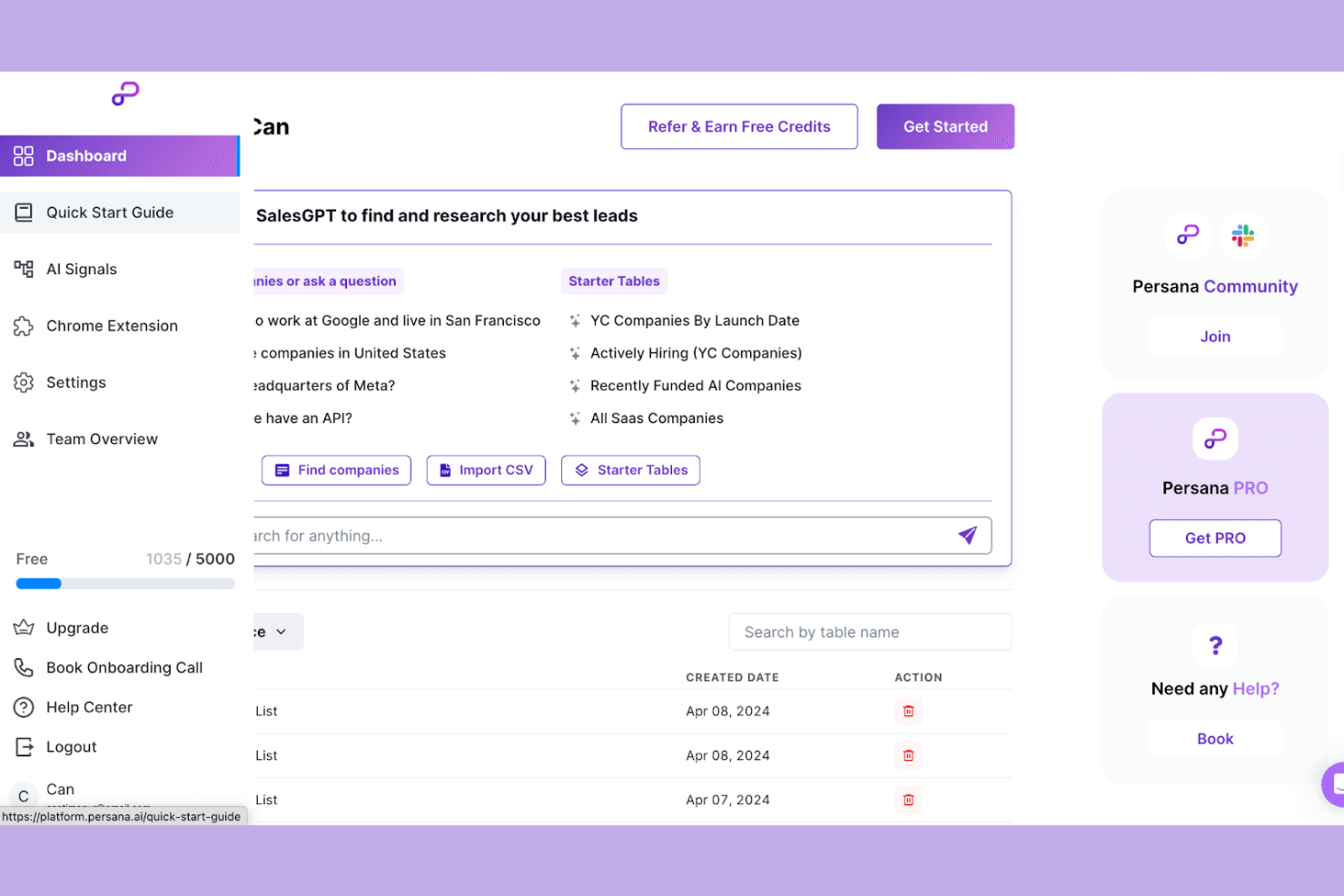
Sales teams looking to automate prospect research and outreach may find Persana AI especially relevant. The platform uses AI to gather, analyze, and enrich prospect data from multiple sources, helping users identify high-potential leads faster. It’s a strong fit for revenue operations professionals who want to simplify sales research and improve targeting accuracy.
Who Is Persana AI Best For?
Persana AI suits sales and revenue operations teams at B2B companies that prioritize data-driven prospecting and outreach.
Why I Picked Persana AI
What drew me to Persana AI is its focus on AI-powered prospecting and sales research, which is especially valuable for teams looking to automate and scale their outbound efforts. The platform uses AI to aggregate and enrich data from multiple sources, so you can quickly build detailed prospect profiles without manual research. I also appreciate how Persana AI surfaces actionable insights—like buying signals and intent data—directly within the workflow, helping sales teams prioritize outreach. For anyone searching for an AI sales tool that goes beyond basic automation and actually improves prospect intelligence, Persana AI stands out.
Persana AI Key Features
Some other features that make Persana AI useful for sales teams include:
- Automated contact enrichment: The platform automatically pulls in missing data points for leads and accounts from public and proprietary sources.
- Multi-channel outreach support: Users can launch outreach campaigns across email, LinkedIn, and other channels directly from the platform.
- Custom list building: You can filter and segment prospects using advanced criteria to create highly targeted lists.
- Collaboration tools: Teams can share prospect lists, notes, and research within the platform to coordinate outreach efforts.
Persana AI Integrations
Integrations include Salesforce, HubSpot, Instantly, Outreach, Salesloft, Slack, Google Sheets, Gmail, LinkedIn, and an API for custom integrations.
Pros and Cons
Pros:
- AI-driven data collection and research
- Multi-channel outreach from one platform
- Fast lead list generation and enrichment
Cons:
- No built-in phone dialer functionality
- Limited reporting and analytics depth
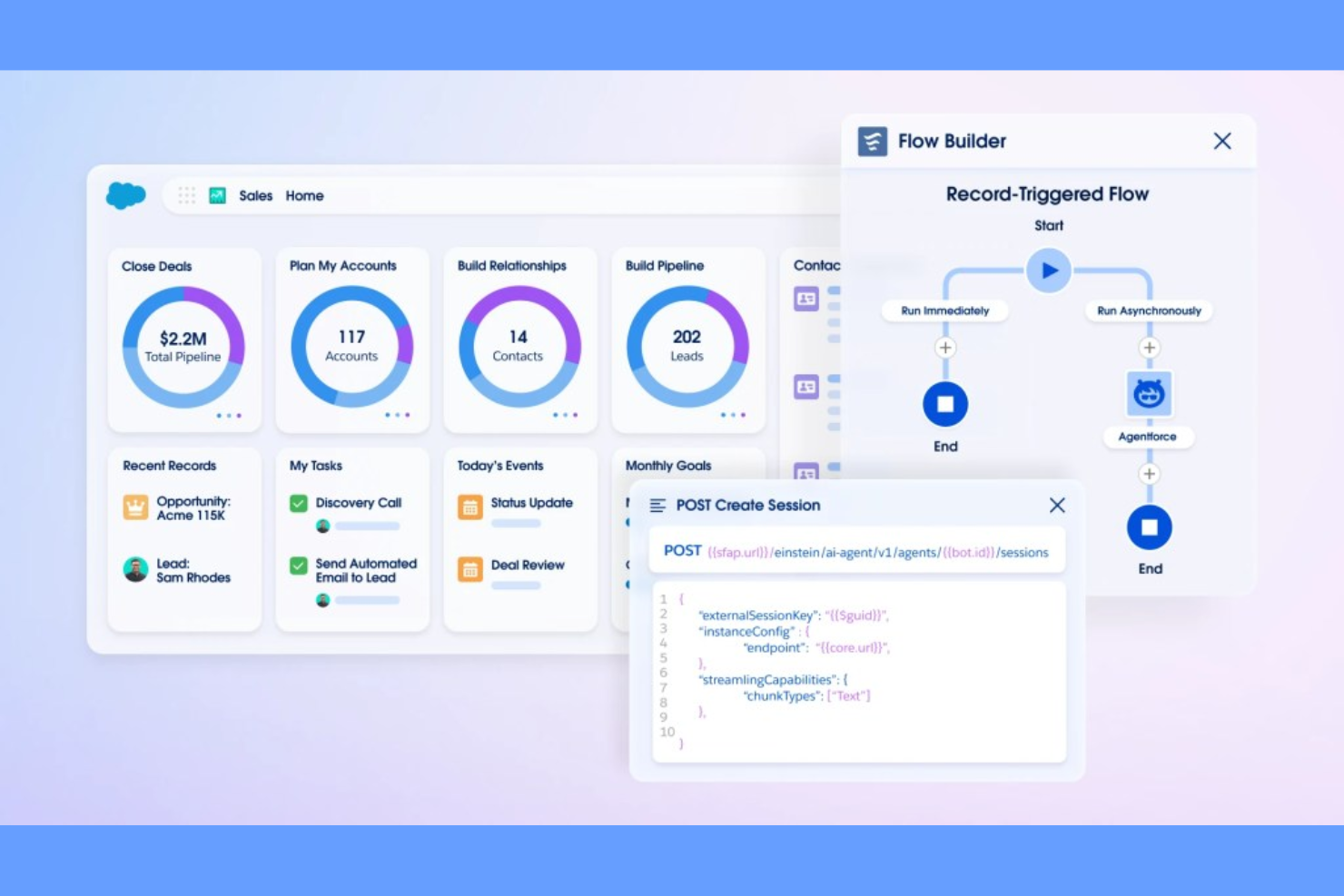
Agentforce Sales is Salesforce’s AI-powered sales platform designed for teams that need advanced automation and pipeline management. It’s a strong fit for organizations looking to unify sales processes, automate repetitive tasks, and gain predictive insights. Sales leaders and operations professionals can use it to improve forecasting and keep complex sales cycles on track.
Who Is Agentforce Sales Best For?
Agentforce Sales is a strong choice for mid-sized to enterprise sales teams that need AI-driven automation and pipeline management.
Why I Picked Agentforce Sales
I chose Agentforce Sales because its AI-driven sales automation and pipeline management capabilities directly address the needs of modern sales teams. The platform uses AI to score leads, recommend next steps, and automate follow-ups, which helps sales reps focus on high-value activities. I also appreciate how Agentforce Sales provides real-time pipeline visibility and forecasting tools, making it easier for managers to track progress and identify risks. For teams looking to bring more predictability and automation to their sales process, these features make Agentforce Sales a compelling option.
Agentforce Sales Key Features
Some other features that make Agentforce Sales valuable for sales teams include:
- Opportunity management dashboard: Track, update, and prioritize deals in a centralized workspace.
- Sales activity tracking: Log calls, emails, and meetings automatically for a complete activity history.
- Customizable sales workflows: Design and automate multi-step sales processes tailored to your team’s needs.
- Mobile sales app: Access sales data, update records, and manage tasks from any device.
Agentforce Sales Integrations
Native integrations are not currently listed.
Pros and Cons
Pros:
- Real-time sales insights for team collaboration
- Automated lead scoring prioritizes high-value prospects
- AI forecasts pipeline health and deal risk
Cons:
- High cost for advanced AI capabilities
- Occasional delays in CRM data syncing

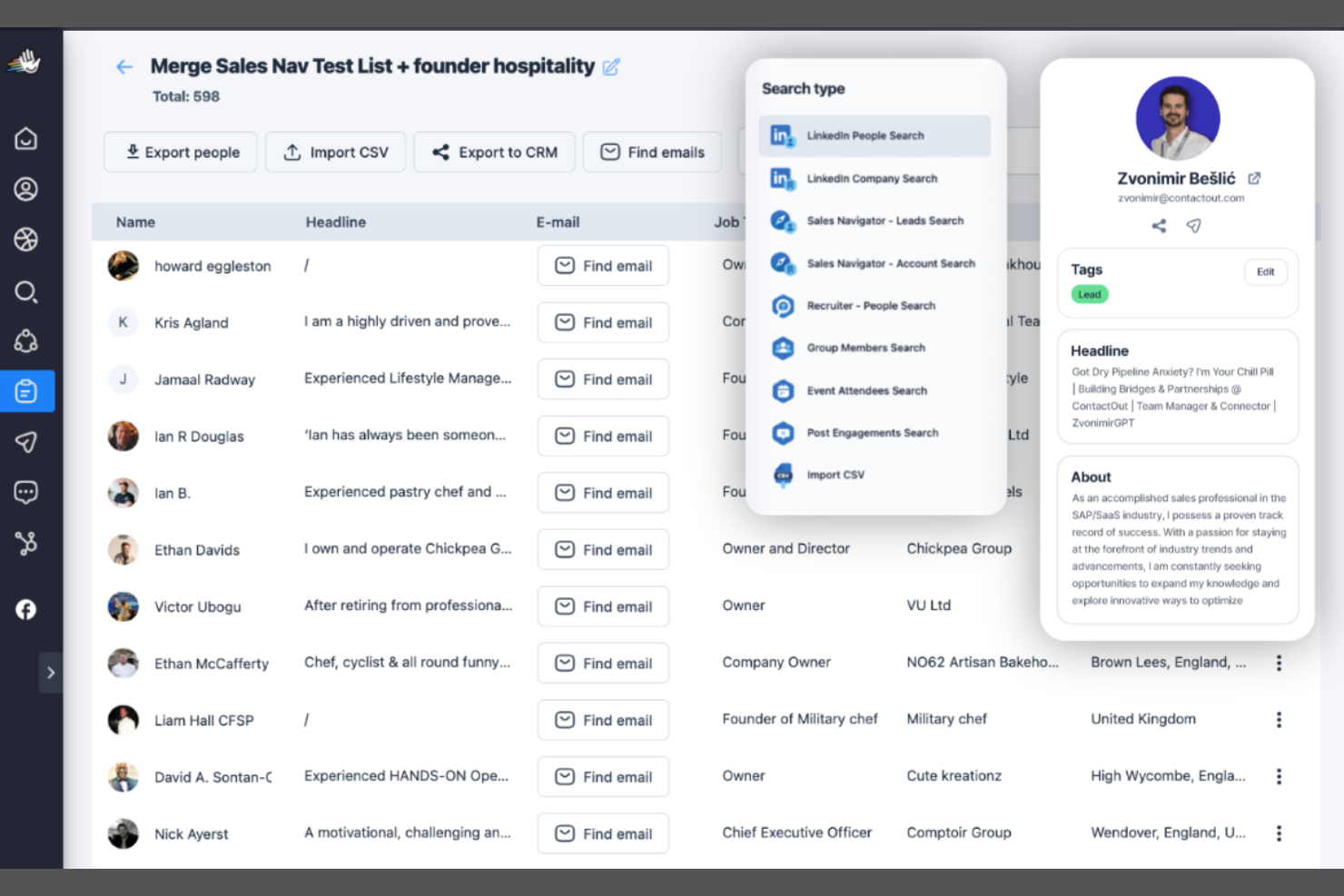
Sales teams looking to scale LinkedIn outreach across multiple accounts may find HeyReach especially useful. The platform is designed for agencies and businesses that need to manage high-volume, personalized LinkedIn campaigns without risking account restrictions. Its focus on multi-account management and automation helps teams boost prospecting efficiency while maintaining compliance with LinkedIn’s limits.
Who Is HeyReach Best For?
HeyReach suits agencies and sales teams that manage LinkedIn outreach at scale across multiple user accounts.
Why I Picked HeyReach
I picked HeyReach because its multi-account LinkedIn outreach automation stands out for teams running high-volume prospecting. The platform lets you manage dozens of LinkedIn accounts from a single dashboard, making it possible to distribute outreach safely and avoid triggering LinkedIn’s limits. I also like that HeyReach supports advanced campaign scheduling and rotation, so you can stagger messages and keep activity looking natural. For sales teams and agencies that need to scale LinkedIn outreach without risking account bans, these features make HeyReach a strong fit.
HeyReach Key Features
Some other features that make HeyReach valuable for sales teams include:
- Inbox management: Centralizes all LinkedIn conversations from multiple accounts in one unified inbox for easier tracking and response.
- Team collaboration tools: Lets multiple users coordinate, assign, and monitor outreach tasks within the platform.
- Personalized message sequences: Supports custom message templates and automated follow-ups tailored to each prospect.
- Analytics dashboard: Provides detailed metrics on campaign performance, response rates, and account activity.
HeyReach Integrations
Integrations include LinkedIn, Slack, Instantly, Smartlead, Clay, RB2B, Trigify, Persana, HubSpot, Make, and an API for custom integrations.
Pros and Cons
Pros:
- Centralized inbox for all LinkedIn conversations
- Automated message sequencing for outreach campaigns
- Manages multiple LinkedIn accounts simultaneously
Cons:
- Lacks native email outreach capabilities
- No built-in AI for message personalization

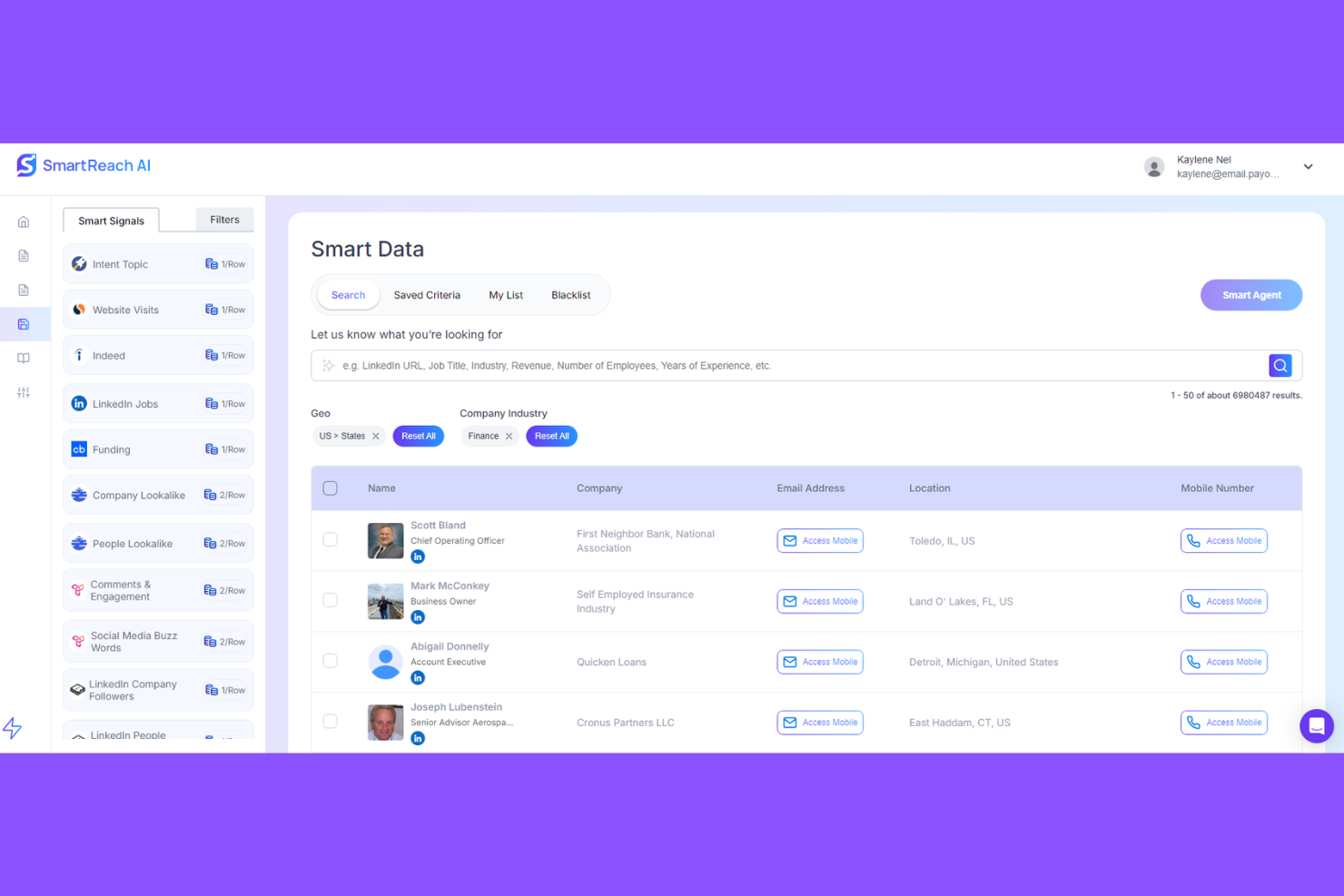
Sales teams looking to personalize and automate their outreach at scale may find SmartReach AI a strong fit. The platform combines AI-driven prospecting with multi-channel engagement tools designed for B2B sales. It’s especially useful for teams that want to improve response rates and manage complex outbound campaigns from a single workspace.
Who Is SmartReach AI Best For?
SmartReach AI is well-suited for B2B sales teams at SaaS companies and agencies that need to automate and personalize outbound email and multi-channel campaigns.
Why I Picked SmartReach AI
What drew me to SmartReach AI is its focus on AI-powered sales engagement that goes beyond simple automation. The platform uses AI to craft personalized outreach messages and optimize send times, which helps teams stand out in crowded inboxes. I also appreciate that SmartReach AI supports multi-channel sequences, allowing users to coordinate email, LinkedIn, and SMS outreach from one place. For anyone searching for an AI sales tool that prioritizes personalization and engagement quality, SmartReach AI offers a targeted solution.
SmartReach AI Key Features
Some other features that make SmartReach AI useful for sales teams include:
- Shared inbox management: Manage all team email conversations in one unified inbox for better collaboration and visibility.
- Automated follow-up scheduling: Set up rules for automatic follow-ups based on recipient behavior and engagement.
- Prospect list import and segmentation: Import leads from spreadsheets or CRM and segment them for targeted campaigns.
- Email deliverability monitoring: Track sender reputation and deliverability metrics to reduce the risk of emails landing in spam folders.
SmartReach AI Integrations
Integrations include HubSpot, SmartLead, Reply, Instantly, HeyReach, and more.
Pros and Cons
Pros:
- Automated follow-up and sequence scheduling
- Multi-channel outreach from one dashboard
- AI-driven lead research and enrichment
Cons:
- CRM syncing needs manual setup
- Requires external email sending tools
Other AI Sales Tools
Here are some additional AI sales tools options that didn’t make it onto my shortlist, but are still worth checking out:
- Outreach
For AI-driven sales engagement
- MindTickle
For sales coaching and enablement
- monday CRM
For customizable sales workflows
- Creatio
For low-code sales automation
- CloudApper
For customizable AI sales automation
- Freshsales
For AI-driven sales CRM
- Microsoft Dynamics 365 Sales
For enterprise sales automation
- Pipedrive
For visual sales pipeline insights
- Crystal
For personality-based sales insights
- HubSpot Sales Hub
For AI-powered sales productivity
- SPOTIO
For field sales and territory management
- Forecastio
For AI sales forecasting insights
- SalesCloser AI
For AI-powered sales calls
- Cirrus Insight
For email-integrated sales productivity
- Revenue Grid
For guided selling and revenue insights
- BenchmarkONE
For small business CRM and automation


AI Sales Tools Selection Criteria
When selecting the best AI sales tools to include in this list, I considered common buyer needs and pain points like surfacing relevant sales content automatically and improving sales pipeline visibility. I also used the following framework to keep my evaluation structured and fair:
Core Functionality (25% of total score)
To be considered for inclusion in this list, each solution had to fulfill these common use cases:
- Automate repetitive sales tasks
- Score and prioritize leads using AI
- Track and analyze sales activities
- Recommend next best actions for reps
- Integrate with CRM and communication tools
Additional Standout Features (25% of total score)
To help further narrow down the competition, I also looked for unique features, such as:
- AI-driven conversation intelligence
- Predictive sales forecasting
- Automated content personalization
- Real-time coaching and feedback
- Multichannel engagement tracking
Usability (10% of total score)
To get a sense of the usability of each system, I considered the following:
- Simple and intuitive user interface
- Customizable dashboards and workflows
- Minimal clicks to complete core tasks
- Responsive design for mobile and desktop
- Clear navigation and labeling
Onboarding (10% of total score)
To evaluate the onboarding experience for each platform, I considered the following:
- Availability of step-by-step product tours
- Access to training videos and documentation
- Pre-built templates for quick setup
- Interactive onboarding checklists
- Live chat or chatbot support during setup
Customer Support (10% of total score)
To assess each software provider’s customer support services, I considered the following:
- Multiple support channels like chat, email, and phone
- Fast response times to inquiries
- Access to a searchable knowledge base
- Availability of onboarding specialists
- Community forums or user groups
Value For Money (10% of total score)
To evaluate the value for money of each platform, I considered the following:
- Transparent and flexible pricing plans
- Features included at each pricing tier
- Free trial or demo availability
- No hidden fees or surprise charges
- Discounts for annual or volume commitments
Customer Reviews (10% of total score)
To get a sense of overall customer satisfaction, I considered the following when reading customer reviews:
- Positive feedback on AI capabilities
- Reports of measurable sales improvements
- Comments on ease of adoption
- Praise for customer support quality
- Critiques of any missing or weak features
How to Choose AI Sales Tools
It’s easy to get bogged down in long feature lists and complex pricing structures. To help you stay focused as you work through your unique software selection process, here’s a checklist of factors to keep in mind:
| Factor | What to Consider |
|---|---|
| Scalability | Will the tool support your team as you grow? Check user limits, data caps, and pricing jumps for larger teams or volumes. |
| Integrations | Does the tool connect natively with your CRM, email, and communication platforms? Confirm compatibility with your existing stack. |
| Customizability | Can you tailor workflows, scoring models, or dashboards to your sales process? Avoid rigid tools that force you to adapt your process. |
| Ease of use | How quickly can reps and managers learn the system? Look for clear navigation, minimal training requirements, and user feedback on adoption. |
| Implementation and onboarding | What resources are needed to get up and running? Assess migration support, training materials, and the typical time to value for similar teams. |
| Cost | Are all costs transparent, including add-ons and usage-based fees? Compare the total cost of ownership, not just sticker price. |
| Security safeguards | Does the tool meet your data security standards? Ask about encryption, access controls, and compliance with regulations like GDPR. |
| Support availability | What support channels are offered, and during what hours? Consider if you need 24/7 help or dedicated account management for your team. |
What Are AI Sales Tools?
AI sales tools are software platforms that use artificial intelligence to automate, optimize, and analyze sales processes. These tools help salespeople prioritize leads, recommend next steps, personalize outreach, and gain insights from data. With advanced AI features like AI agents and AI-generated recommendations or AI content, teams can improve customer engagement, increase conversion rates, and improve forecast accuracy. By leveraging automation, these tools help teams accomplish more in less time, making them especially valuable for startups and growing businesses building their tech stack. Many platforms offer all-in-one capabilities that support better decision-making with high-quality insights throughout the entire sales cycle.
Features of AI Sales Tools
When selecting AI sales tools, keep an eye out for the following key features:
- Lead scoring: Uses AI algorithms to evaluate and rank leads based on their likelihood to convert, helping sales teams focus on the most promising opportunities.
- Predictive forecasting: Analyzes historical sales data and current pipeline activity to project future sales outcomes and identify potential risks or gaps.
- Automated outreach: Sends personalized emails, messages, or follow-ups to prospects at optimal times, reducing manual effort and increasing engagement rates.
- Conversation intelligence: Records, transcribes, and analyzes sales calls or meetings to surface insights, highlight key topics, and suggest improvements for reps.
- Content recommendations: Suggests relevant sales collateral, case studies, or presentations based on deal stage, buyer persona, or previous interactions.
- Next-best action guidance: Provides real-time prompts or suggestions for reps on what steps to take next in the sales process, based on AI analysis of deal progress.
- Pipeline analytics: Offers dashboards and reports that visualize deal stages, win rates, and bottlenecks, enabling better pipeline management and forecasting.
- CRM integration: Connects directly with your existing CRM to sync data, track activities, and ensure a unified view of customer interactions.
- Sales activity tracking: Monitors emails, calls, meetings, and other touchpoints to give a complete picture of rep productivity and buyer engagement.
- Training and coaching modules: Delivers AI-driven training content, onboarding paths, and performance feedback to help reps improve skills and ramp up faster.
Benefits of AI Sales Tools
Implementing AI sales tools provides several benefits for your team and your business. Here are a few you can look forward to:
- Improved lead prioritization: AI-driven lead scoring helps your team focus on prospects most likely to convert, increasing win rates and sales efficiency.
- Faster sales cycles: Automated outreach and next-best action guidance reduce manual tasks and keep deals moving forward without unnecessary delays.
- More accurate forecasting: Predictive analytics and pipeline insights enable better revenue planning and help identify risks before they impact results.
- Personalized buyer engagement: Content recommendations and conversation intelligence allow reps to tailor their approach to each prospect, improving engagement and trust.
- Improved coaching and onboarding: AI-powered training modules and performance feedback accelerate ramp-up time for new reps and support ongoing skill development.
- Unified data and workflows: CRM integration and sales activity tracking ensure all sales data is centralized, making it easier to manage and analyze team performance.
- Greater visibility for leadership: Real-time dashboards and analytics provide leaders with actionable insights into pipeline health, rep productivity, and overall sales effectiveness.
Costs and Pricing of AI Sales Tools
Selecting AI sales tools requires an understanding of the various pricing models and plans available. Costs vary based on features, team size, add-ons, and more. The table below summarizes common plans, their average prices, and typical features included in AI sales tools solutions:
Plan Comparison Table for AI Sales Tools
| Plan Type | Average Price | Common Features |
|---|---|---|
| Free Plan | $0 | Basic lead tracking, limited AI recommendations, email integration, and simple reporting. |
| Personal Plan | $15-$40/user/month | Lead scoring, automated outreach, CRM integration, activity tracking, and basic analytics. |
| Business Plan | $40-$90/user/month | Predictive forecasting, advanced analytics, content recommendations, workflow automation, and team collaboration. |
| Enterprise Plan | $90-$150/user/month | Custom integrations, conversation intelligence, advanced security, dedicated support, and compliance features. |
AI Sales Tools FAQs
Here are some answers to common questions about AI sales tools:
How do AI sales tools improve sales team productivity?
AI sales tools automate repetitive tasks like lead scoring, follow-ups, and data entry. This frees up reps to focus on building relationships and closing deals, while also surfacing insights that help them prioritize their efforts more effectively.
Can AI sales tools integrate with my existing CRM?
Yes, most AI sales tools offer native integrations with popular CRMs. Before choosing a tool, confirm it supports your CRM and check if the integration syncs data in real time or requires manual updates.
What data security considerations should I keep in mind?
Look for tools that offer encryption, access controls, and compliance with standards like GDPR. Ask vendors about their data storage practices and how they handle sensitive customer information to ensure your data stays protected.
How long does it take to implement an AI sales tool?
Implementation time varies by tool and team size. Many platforms offer onboarding resources like product tours and templates, but complex setups or custom integrations may take several weeks. Plan for training and data migration as part of your rollout.
Are AI sales tools suitable for small businesses?
Yes, many AI sales tools offer plans and features designed for small teams. Look for solutions with flexible pricing, easy setup, and minimal IT requirements to ensure a good fit for your business size and resources.