

Highspot Review 2026: Pros, Cons, Features and Pricing
Highspot is a sales enablement platform that helps teams manage content, train reps, and engage buyers. Learn how it supports your sales process, improves productivity, and where it may fall short.

We review tools independently, and commissions help fund our testing. See our transparency policy, our methodology, or suggest a tool.
Highspot is a sales enablement software for go-to-market teams that need a single place to manage sales content, run onboarding and coaching programs, and track buyer engagement. I'd consider it over Seismic if your team wants tighter integration between content management and sales coaching without the administrative overhead Seismic typically requires to get both working well together.
Highspot Evaluation Summary
4.6/5
- Pricing upon request
- Free demo available
Why Trust Our Software Recommendations
6,700+
Reviews
20
Industry experts
16+
Evaluation factors
14
Years
Our reviews reflect our independent judgment—not a sales pitch. Learn how we stay transparent.
For this guide, we evaluated tools using hands-on testing and independent research, scoring tools using our selection criteria.
Our reviews reflect our human editorial judgment, not a sales pitch.
Highspot Overview
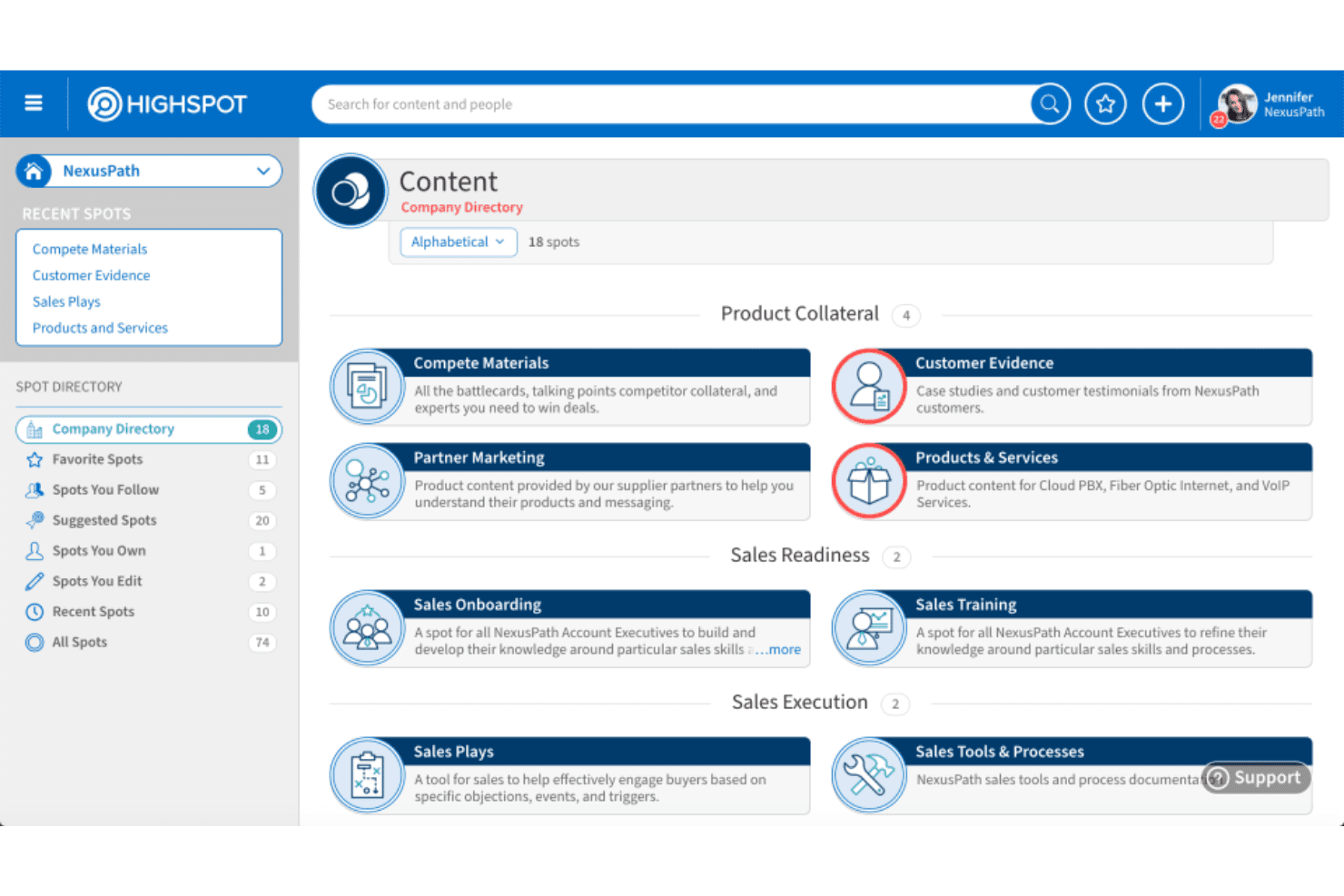
When I’m judging sales enablement tools, I see Highspot standing out for its polished interface, strong analytics, and top-notch onboarding resources. Its pricing isn’t the lowest, but you get advanced search, intuitive content management, and tight CRM integrations.
If you’re selecting for a large team with complex sales motions or global enablement needs, I think Highspot is a front-runner. Some competitors offer cheaper plans or broader native integrations, but Highspot’s training modules and support make adoption easier in my experience, especially if you’re determined to drive consistent seller performance at scale.
Pros
- Guided selling playbooks make onboarding and ramping faster.
- Deep analytics connect content usage to sales outcomes.
- In-app training modules help reinforce best practices.
Cons
- Search can return too many irrelevant results for users.
- Reporting customizations feel limited for advanced analytics needs.
- Bulk content uploads sometimes run into processing delays.
Is Highspot Right For Your Needs?
Who Would be a Good Fit for Highspot?
Highspot is especially well-suited for mid-to-large B2B companies, global organizations, or regulated industries needing a robust content and training hub. Revenue teams and enablement leaders will get the most value from Highspot’s powerful playbooks, content analytics, and enterprise-grade controls.
Teams rolling out new sales methodologies, hiring aggressively, or operating with large, distributed workforces are also likely to see fast results from Highspot’s focused onboarding and localization features.
- Large Sales TeamsHighspot’s scalable playbooks and content management keep big teams working from the same resources and best practices.
- Life Sciences IndustryStrict version control and content compliance help life sciences companies deliver only approved assets to reps.
- Global EnterprisesGlobal localization and region-specific content distribution make it easy to support sales in multiple languages.
- Technology CompaniesHighspot’s analytics and guided selling give tech sales leaders insight into content performance and rep activity at scale.
- High-Velocity OnboardingFast-moving organizations benefit from structured ramp-up paths and in-app training for new hires.
- Revenue OperationsRevOps teams appreciate detailed reporting, pipeline-linked engagement metrics, and seamless integration with CRM tools.
Who Would be a Bad Fit for Highspot?
If you’re running a small business, a simple sales process, or rarely update your content, Highspot’s advanced features will likely go underused and overpriced. Companies seeking deeply customized workflows, one-off marketing campaigns, or lightweight collaboration may find Highspot more complex and expensive than needed.
Teams with minimal regulatory risk or lacking a formal enablement function will not get full value from Highspot’s enterprise-grade capabilities.
- Small StartupsThe steep learning curve and advanced features are overkill for startups needing just basic content sharing.
- Solo ConsultantsIndividual sellers rarely need Highspot’s playbooks, coaching, or centralized analytics.
- Retail Sales TeamsFrontline retail staff tend to require hands-on, POS-focused enablement vs. formalized sales asset management.
- Creative AgenciesTeams needing a flexible, design-oriented platform may find Highspot’s sales workflows too rigid.
- Informal Sales ProcessesOrganizations without a defined sales process likely won’t benefit from Highspot’s structured playbooks or tracking.
- Minimal Compliance NeedsCompanies without content regulation or strict messaging guidelines will leave many Highspot features unused.
How We Test & Score Tools
We’ve spent years building, refining, and improving our software testing and scoring system. The rubric is designed to capture the nuances of software selection and what makes a tool effective, focusing on critical aspects of the decision-making process.
Below, you can see exactly how our testing and scoring works across seven criteria. It allows us to provide an unbiased evaluation of the software based on core functionality, standout features, ease of use, onboarding, customer support, integrations, customer reviews, and value for money.
Core Functionality (25% of final scoring)
The starting point of our evaluation is always the core functionality of the tool. Does it have the basic features and functions that a user would expect to see? Are any of those core features locked to higher-tiered pricing plans? At its core, we expect a tool to stand up against the baseline capabilities of its competitors.
Standout Features (25% of final scoring)
Next, we evaluate uncommon standout features that go above and beyond the core functionality typically found in tools of its kind. A high score reflects specialized or unique features that make the product faster, more efficient, or offer additional value to the user.
We also evaluate how easy it is to integrate with other tools typically found in the tech stack to expand the functionality and utility of the software. Tools offering plentiful native integrations, 3rd party connections, and API access to build custom integrations score best.
Ease of Use (10% of final scoring)
We consider how quick and easy it is to execute the tasks defined in the core functionality using the tool. High scoring software is well designed, intuitive to use, offers mobile apps, provides templates, and makes relatively complex tasks seem simple.
Onboarding (10% of final scoring)
We know how important rapid team adoption is for a new platform, so we evaluate how easy it is to learn and use a tool with minimal training. We evaluate how quickly a team member can get set up and start using the tool with no experience. High scoring solutions indicate little or no support is required.
Customer Support (10% of final scoring)
We review how quick and easy it is to get unstuck and find help by phone, live chat, or knowledge base. Tools and companies that provide real-time support score best, while chatbots score worst.
Customer Reviews (10% of final scoring)
Beyond our own testing and evaluation, we consider the net promoter score from current and past customers. We review their likelihood, given the option, to choose the tool again for the core functionality. A high scoring software reflects a high net promoter score from current or past customers.
Value for Money (10% of final scoring)
Lastly, in consideration of all the other criteria, we review the average price of entry level plans against the core features and consider the value of the other evaluation criteria. Software that delivers more, for less, will score higher.
Core Features
Content Management
Organize, tag, and share sales content from a single library. Teams always find up-to-date assets for every stage of the funnel.
AI-Powered Search
Smart search surfaces the most relevant resources quickly. Sellers waste less time hunting for the right piece of content.
Guided Selling
Interactive playbooks deliver context-specific content and messaging tips. New reps follow consistent steps to match top performers.
Training and Coaching
In-app training lets managers assign learning modules and track completion. Reinforce best practices with quizzes and feedback loops built right in.
Engagement Analytics
Track who views, shares, or interacts with every asset. Link content performance directly to deal activity and sales outcomes.
Pitch Tracking
Monitor how prospects engage with shared presentations and materials. Reps get real-time alerts when content is opened or forwarded.
Standout Features
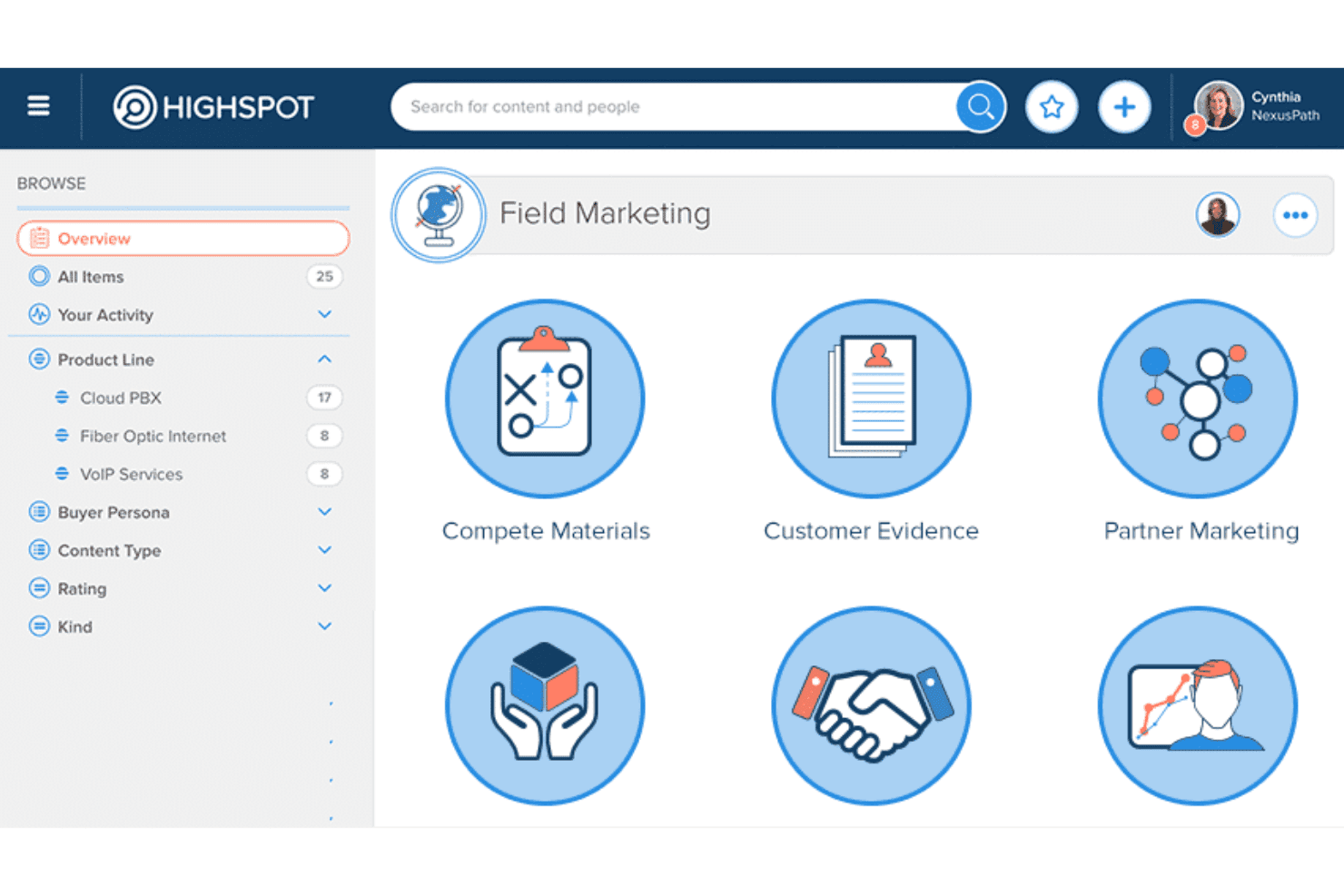
SmartPage Builder
Design dynamic, microsite-style pages to package content, training, and messaging together. Reps access always-current resources tailored to specific personas or plays.
Global Localization Tools
Easily manage and distribute content in multiple languages and regions. Teams in different countries get relevant, compliant sales materials without manual updates.
Ease of Use
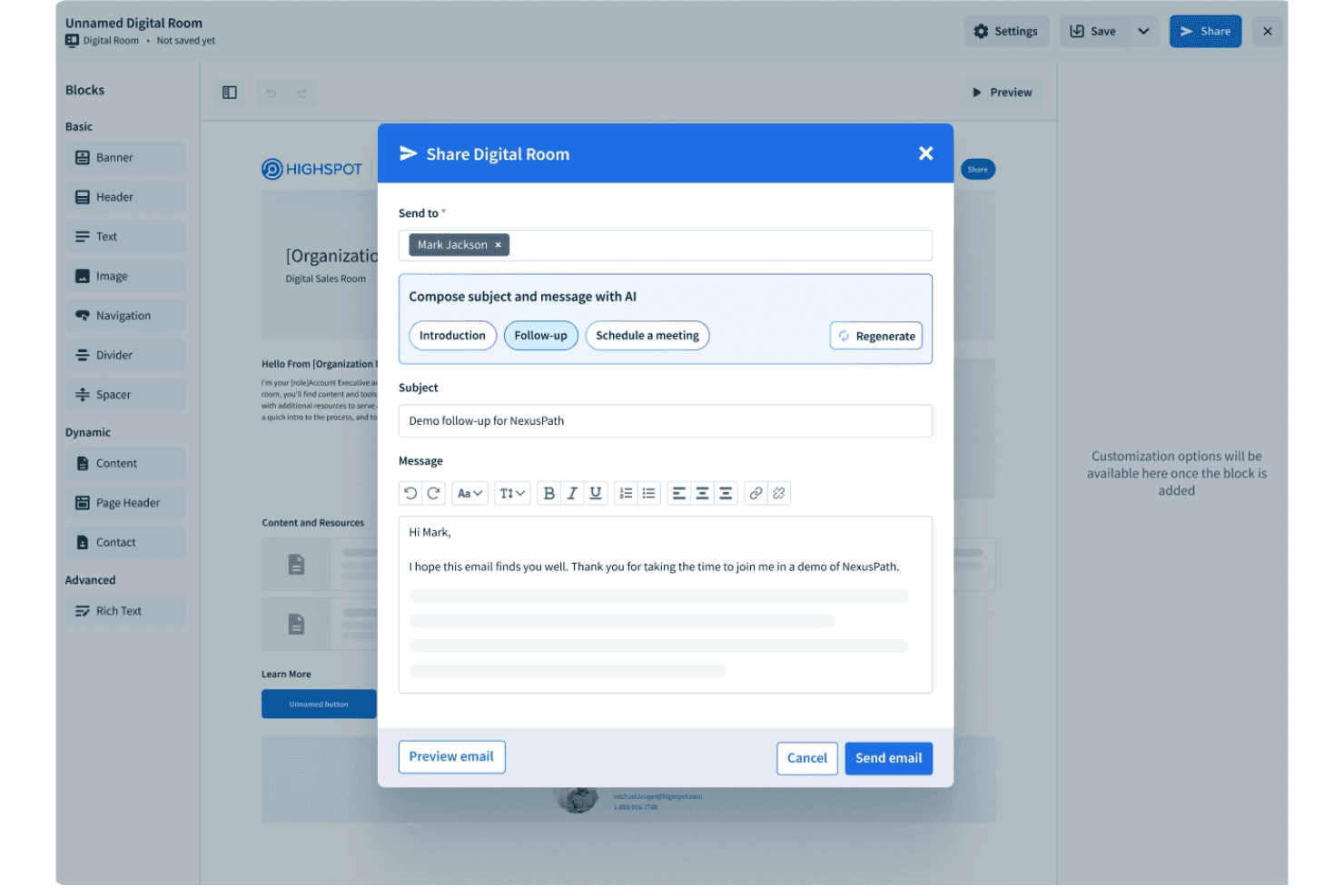
Highspot’s crisp interface and clear navigation make it easy for new users to get up and running fast. I think one of its big usability wins is intuitive content tagging and recommended resources—most reviewers agree reps quickly find what they need.
Guided playbooks and training modules are simple to assign or complete, keeping adoption high even for less tech-savvy teams.
Onboarding
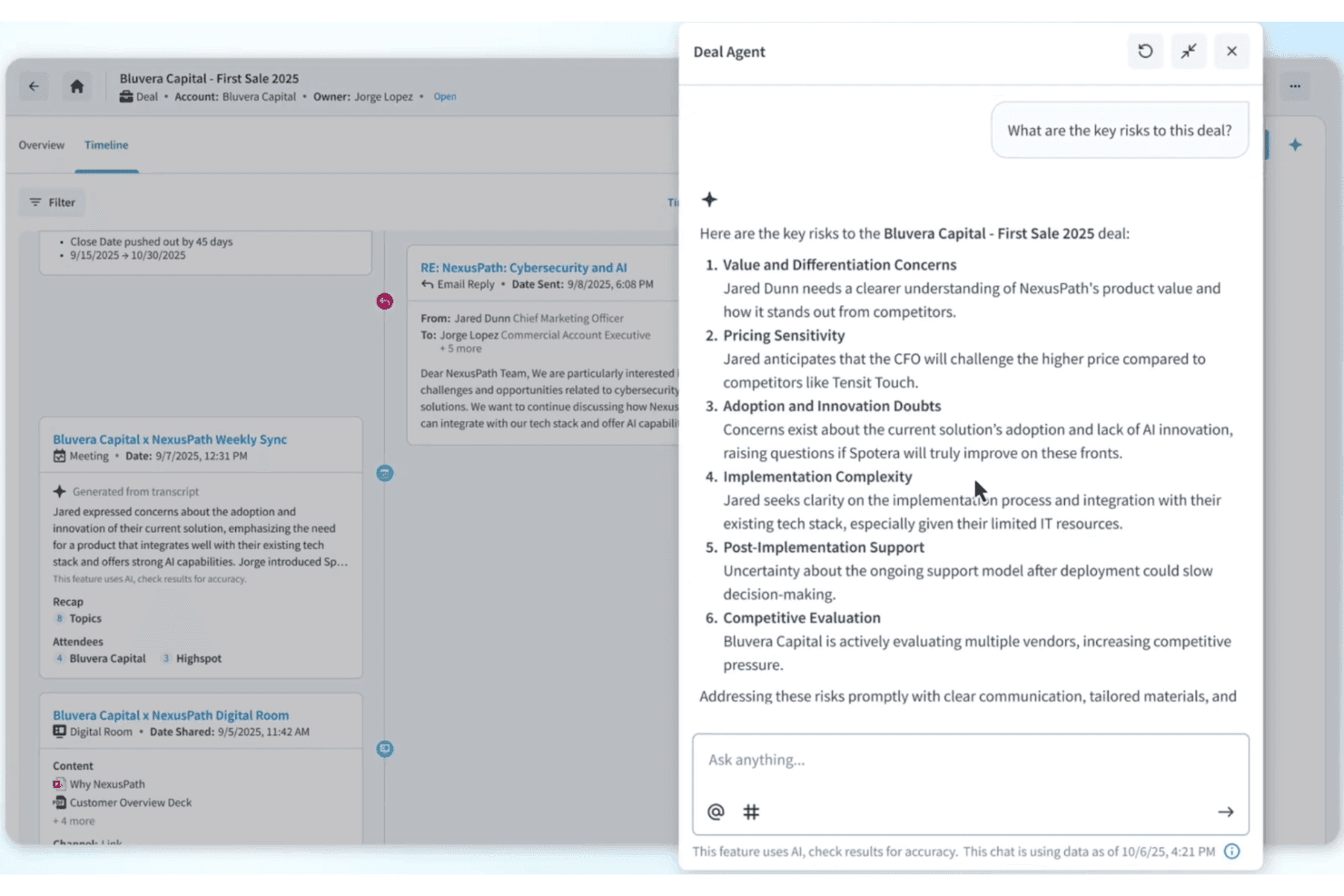
Highspot provides a guided implementation process with a dedicated team, including an Implementation Manager, Customer Success Manager, Support Team, and Account Manager. Each rollout includes scoping workshops, solution design, and change management support to help teams launch successfully.
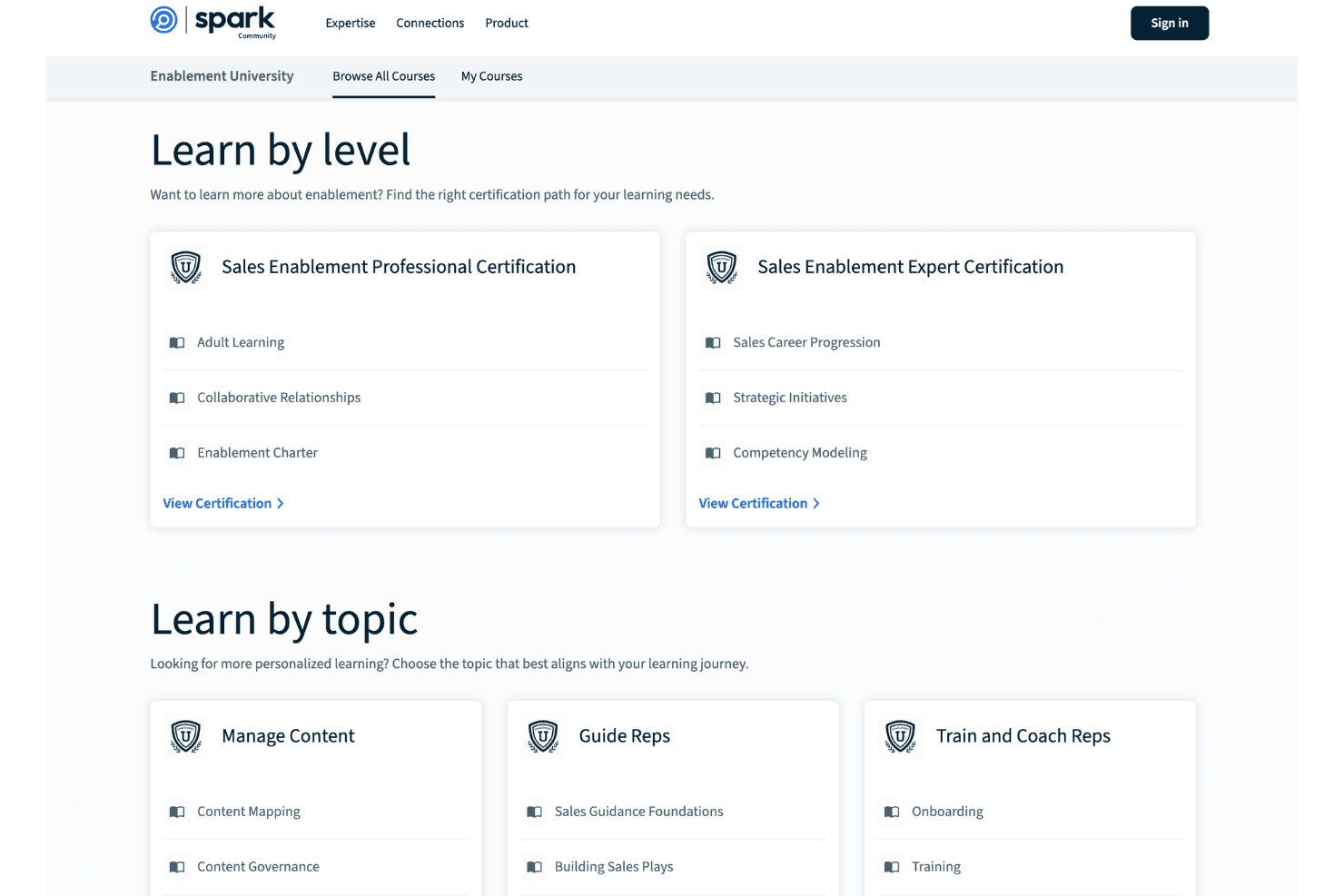
Beyond setup, users can access Enablement University for self-paced courses, certifications, and best-practice resources that strengthen sales enablement skills and help teams get more value from the platform.
Customer Support
Highspot’s customer support gets frequent praise for speedy responses and knowledgeable staff. I think teams benefit from dedicated account managers plus a robust online knowledge base for troubleshooting.
Users mention that support is easy to reach via chat or email, and resolutions often come within hours—not days.
Integrations
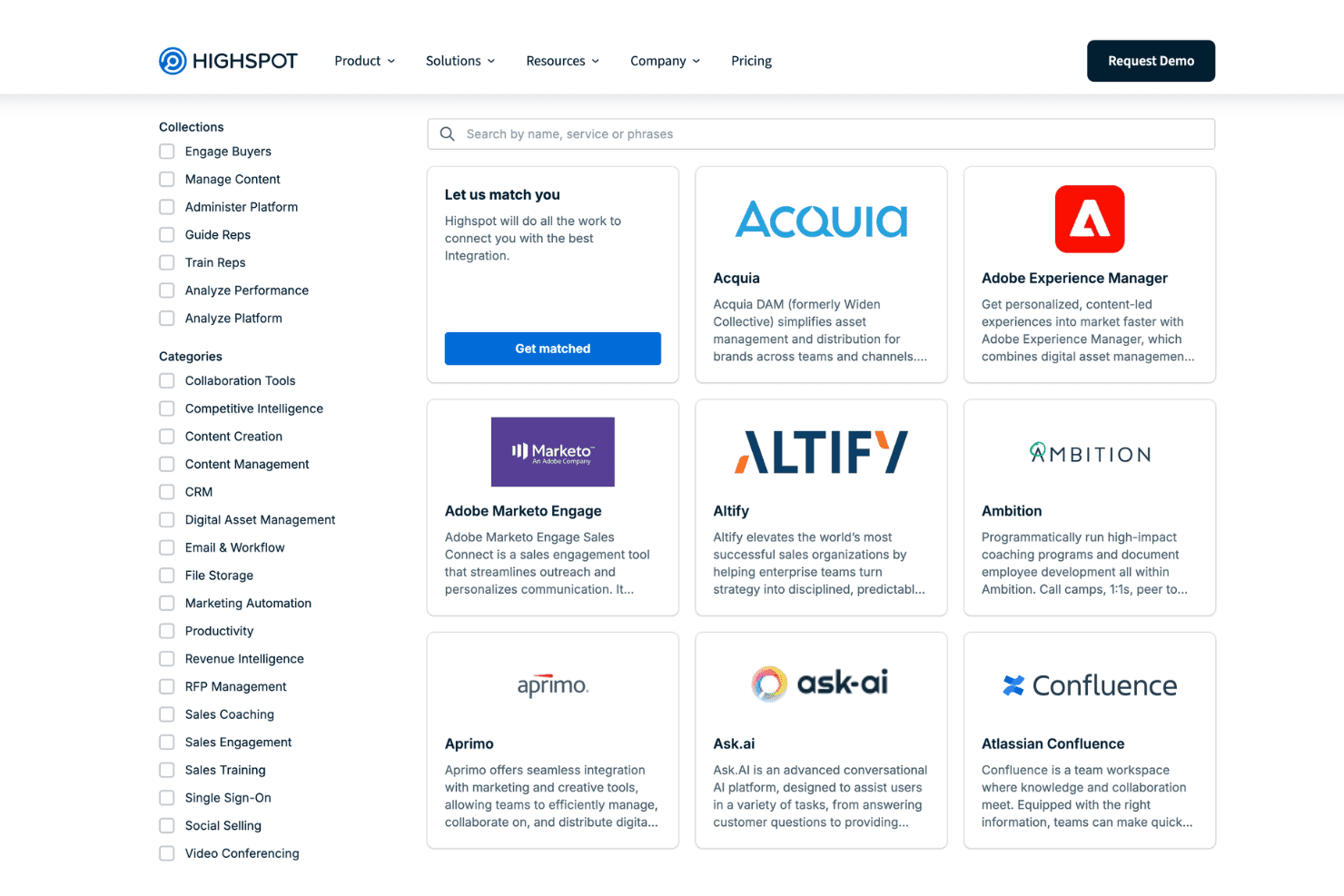
Highspot integrates with Salesforce, Microsoft Dynamics 365, Slack, Microsoft Teams, Outlook, Google Workspace, Zoom, DocuSign, Seismic, and Outreach, among others.
Highspot also offers a robust API for custom integrations and supports connections with third-party integration platforms.
Value for Money
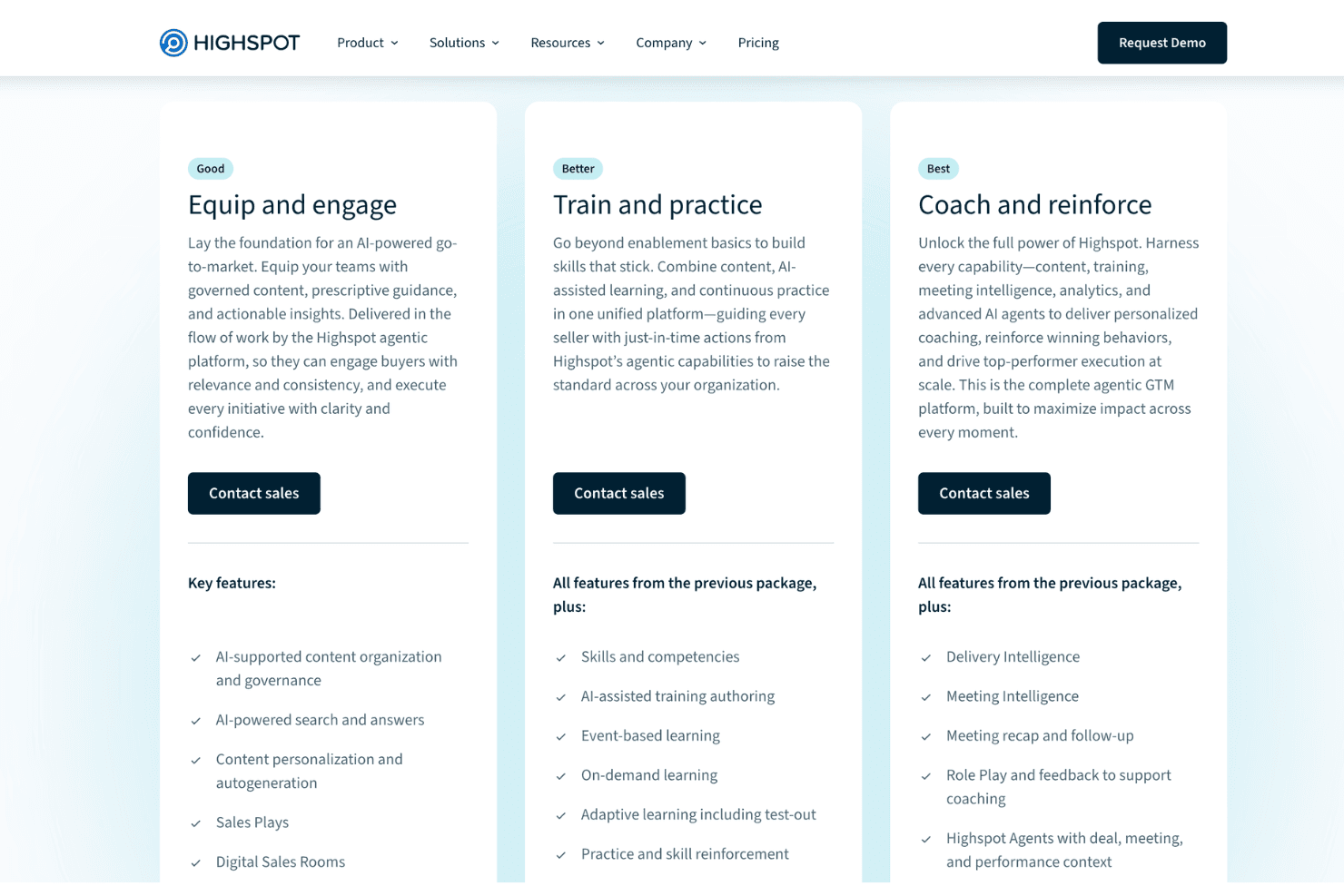
Highspot uses a custom pricing model based on team size, selected capabilities, and business needs. Pricing details are not publicly listed, so organizations need to contact Highspot for a tailored quote.
- Equip and Engage: Includes AI-powered content management, content governance, search, sales plays, digital sales rooms, CRM integrations, and sales analytics.
- Train and Practice: Adds AI-assisted training creation, learning paths, skills development, practice tools, role plays, and training analytics.
- Coach and Reinforce: Includes advanced coaching tools, meeting intelligence, AI feedback, performance insights, advanced integrations, and expanded AI-powered support.
Highspot Specs
- 2-Factor Authentication: Yes
- Accounts Payable: No
- Accounts Receivable: No
- API: Yes
- Approval Workflows: Yes
- Balance Sheet: No
- Billing/Invoicing: No
- Budgeting: No
- Calendar Management: No
- Comparative Reporting: Yes
- CRM Integration: Yes
- Custom Reports: Yes
- Customer Management: No
- Dashboard: Yes
- Data Export: Yes
- Data Import: Yes
- Data Visualization: Yes
- Expense Tracking: No
- External Integrations: Yes
- Forecasting: No
- General Account Ledger: No
- Historical Data Analysis: Yes
- Inventory Tracking: No
- Multi-Currency: No
- Multi-User: Yes
- Notifications: Yes
- P&L: No
- Payroll: No
- Scenario Planning: No
- Scheduling: No
- Supplier Management: No
- Tax Management: No
- Time Management: No
Highspot FAQs
Highspot Company Overview & History
Highspot is a sales enablement software company headquartered in Seattle, Washington. As of {{year}}, Highspot serves thousands of businesses worldwide, including enterprise teams across technology, financial services, manufacturing, and life sciences.
The platform helps companies improve sales productivity through content management, sales guidance, training, coaching, buyer engagement, and analytics. Highspot is recognized as one of the leading sales enablement platforms, with continued global growth and industry recognition.
Highspot Major Milestones
- 2012: Founded by Robert Wahbe, Oliver Sharp, and David Wortendyke in Seattle, Washington.
- 2014: Launched its sales enablement platform to help businesses organize content and improve sales execution.
- 2017: Raised $15 million in Series B funding to accelerate product development and company growth.
- 2019: Expanded globally and opened its London office to support customers across Europe.
- 2021: Raised $200 million in Series E funding, reaching a valuation of $2.3 billion.
- 2022: Raised $248 million in Series F funding, increasing its valuation to $3.5 billion.
- 2023: Continued global expansion and earned recognition from industry reports for sales enablement innovation.