
15 Best AI Pricing Software Reviewed in 2026

Best AI Pricing Software Shortlist
Here’s my shortlist of the best AI pricing software:


In the fast-paced world of revenue operations, pricing strategies can make or break your bottom line. You're likely grappling with fluctuating market demands and complex data analysis. That's where AI pricing software steps in, offering smart, data-driven solutions to your challenges.
AI tools can help you and your team make informed pricing decisions, optimize revenue, and stay ahead of competitors. In my experience, these tools provide valuable insights and automate tedious tasks, freeing up your time for strategic planning.
In this article, I'll share my top picks for AI pricing software, focusing on their unique capabilities and how they can benefit your business. Let's explore how these AI solutions can transform your pricing strategies.
Why Trust Our Software Reviews
Best AI Pricing Software Summary
This comparison chart summarizes pricing details for my top AI pricing software selections to help you find the best one for your budget and business needs.
| Tool | Best For | Trial Info | Price | ||
|---|---|---|---|---|---|
| 1 | Best for global price monitoring | Free demo available | Pricing upon request | Website | |
| 2 | Best for omnichannel retailers | Free demo available | From €399/month | Website | |
| 3 | Best for e-commerce businesses | 14-day free trial | From $99/month | Website | |
| 4 | Best for B2B dynamic pricing | Demo available upon request | Pricing upon request | Website | |
| 5 | Best for scenario testing and price simulation | Free demo available | Pricing upon request | Website | |
| 6 | Best for AI-driven pricing governance | Free demo available | Pricing upon request | Website | |
| 7 | Best for B2B enterprise pricing solutions | Free demo available | Pricing upon request | Website | |
| 8 | Best for real-time price optimization | Free demo available | Pricing upon request | Website | |
| 9 | Best for retail price management | Free trial available | Pricing upon request | Website | |
| 10 | Best for AI in retail strategy | Free demo available | Pricing upon request | Website |
-

Prisync
Visit WebsiteThis is an aggregated rating for this tool including ratings from Crozdesk users and ratings from other sites.4.7 -
Expedite Commerce
Visit Website -
QuickBooks Online
Visit WebsiteThis is an aggregated rating for this tool including ratings from Crozdesk users and ratings from other sites.4




Best AI Pricing Software Reviews
Below are my detailed summaries of the best AI pricing software that made it onto my shortlist. My reviews offer a detailed look at the key features, pros & cons, integrations, and ideal use cases of each tool to help you find the best one for you.

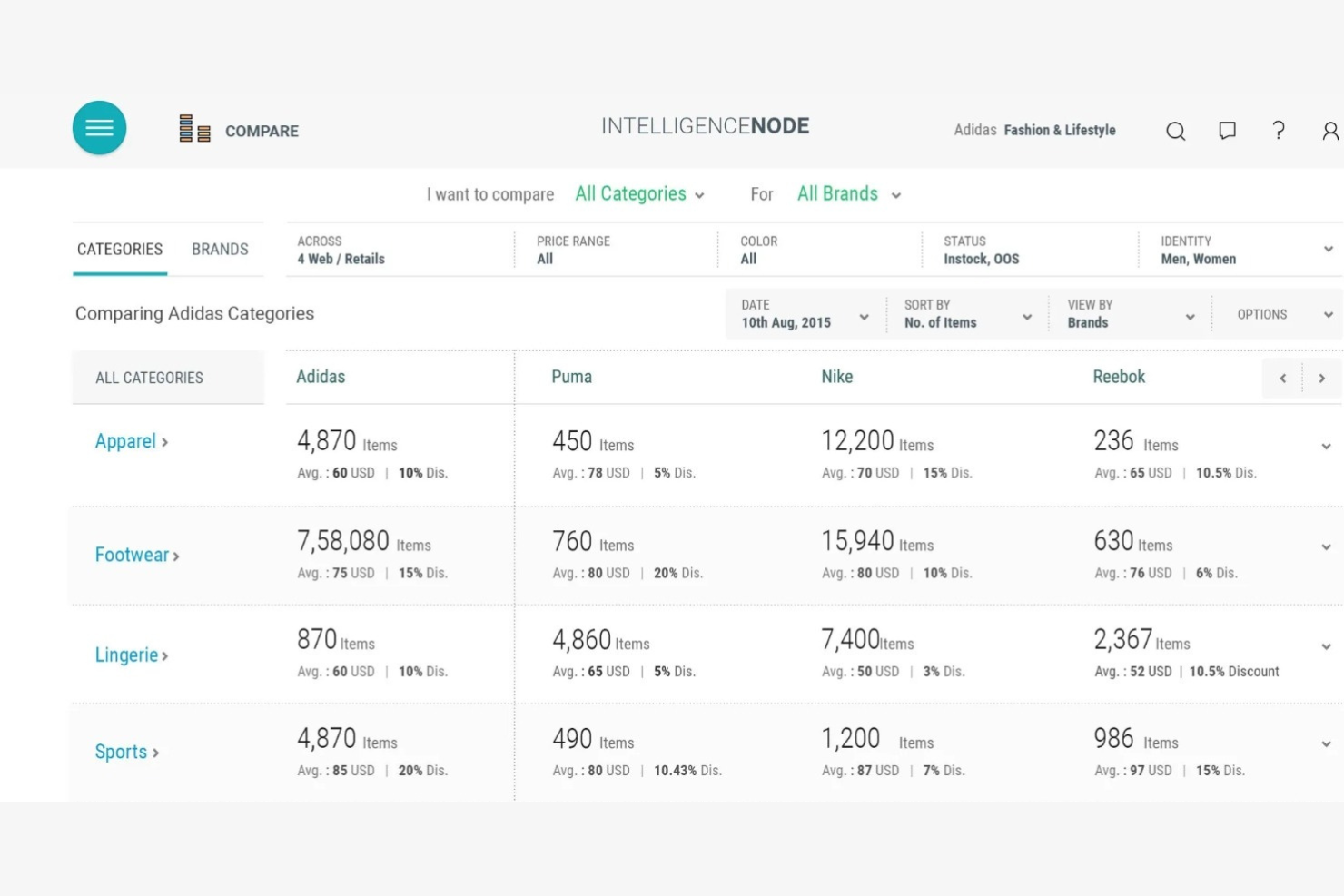
Intelligence Node is a pricing intelligence platform designed for businesses needing in-depth market analysis and price monitoring. Its AI capabilities allow users to track global pricing trends and make informed decisions.
Why I picked Intelligence Node: It excels in global price monitoring, ideal for businesses operating in multiple markets. The AI-powered analytics provide your team with real-time competitive pricing data. Its price tracking feature ensures you stay updated on global market shifts. The tool's ability to analyze vast data sets helps you optimize pricing strategies effectively.
Standout features & integrations:
Features include MAP compliance features, which automatically detect any Minimum Advertised Price (MAP) violations. The analytics dashboard provides demand forecasting insights into market trends, enabling better inventory management. Intelligence Node also offers competitor monitoring, so you can track competitor pricing in real-time.
Integrations include Shopify, Adobe Commerce, WooCommerce, BigCommerce, Salesforce, SAP, Oracle, Microsoft Dynamics, NetSuite, and HubSpot.
Pros and cons
Pros:
- Competitive pricing data
- Effective price optimization tools
- Strong global market analysis
Cons:
- Requires technical setup expertise
- Effective price optimization tools

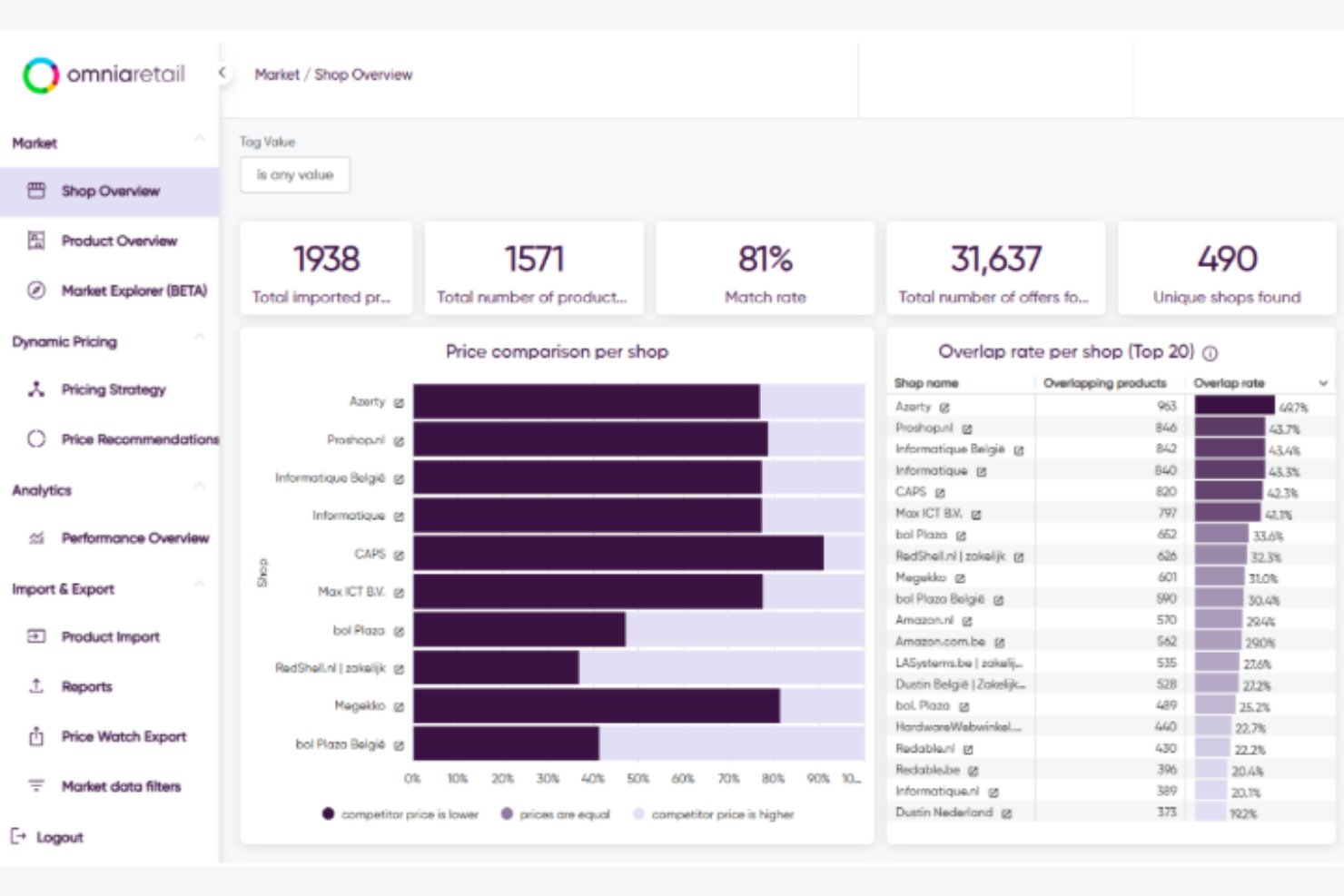
Omnia Retail is a pricing software solution aimed at retailers looking to manage pricing across multiple channels. Its AI tools help businesses adjust prices dynamically based on market conditions and customer behavior.
Why I picked Omnia Retail: It's well-suited for omnichannel pricing, allowing your team to maintain consistency across different sales platforms. The AI-driven pricing engine adjusts prices in real-time, ensuring competitiveness. You can leverage its pricing insights to make informed decisions tailored to each channel. The tool's ability to automate pricing tasks helps you save time and reduce manual errors.
Standout features & integrations:
Features include dynamic pricing, which ensures your prices remain competitive across channels. The pricing insights tool offers data-driven recommendations for effective pricing strategies. Automated pricing tasks help reduce manual errors and save your team time.
Integrations include Shopify, Adobe Commerce, WooCommerce, BigCommerce, Salesforce, SAP, Oracle, Microsoft Dynamics, NetSuite, and HubSpot.
Pros and cons
Pros:
- Automated pricing tasks
- Real-time price adjustments
- Effective omnichannel pricing management
Cons:
- May not integrate cleanly with existing tech stack
- Less plug-and-play features than some competitors

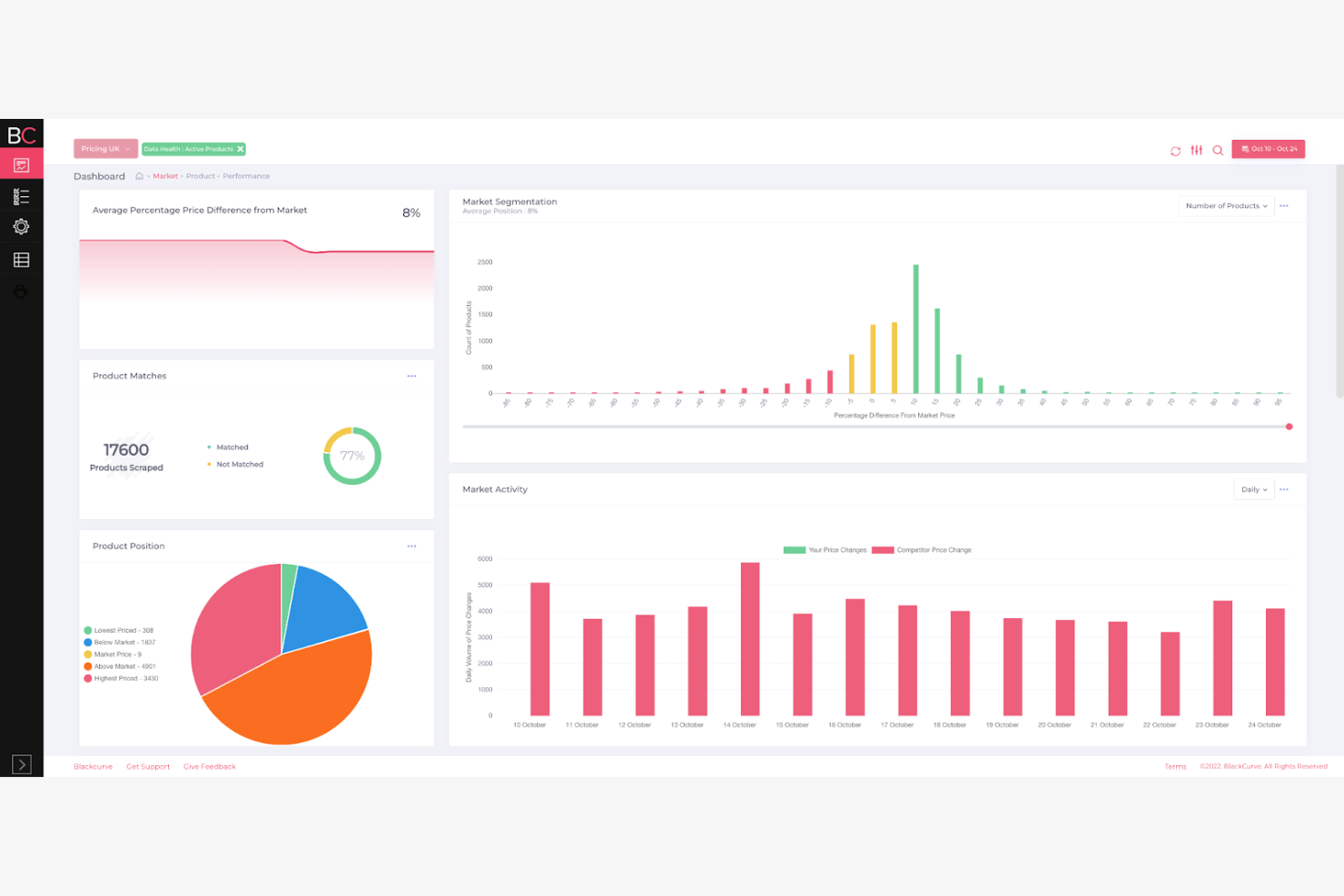
BlackCurve is a pricing optimization platform built for ecommerce companies that want sharper, faster, and more intelligent pricing decisions. It uses AI to analyze demand shifts, competitor changes, and customer behavior, then turns that data into precise price recommendations. The platform is designed to help businesses react quickly to market changes, protect margins, and outpace competitors with minimal manual effort.
Why I picked BlackCurve: BlackCurve is a strong choice for ecommerce users because it combines advanced pricing intelligence with practical automation. It evaluates competitor pricing, customer behavior, and market demand to help businesses find competitive price points while protecting margins. Its rule-based automation is especially helpful for companies with large catalogs, because prices can update automatically when chosen conditions are met. The platform also includes forecasting tools, profitability analysis, and scenario testing, which help teams understand the impact of pricing changes before rolling them out.
Standout features & integrations:
Features include competitor tracking, dynamic pricing, predictive modeling, and detailed analytics that show how pricing decisions affect revenue and margin performance. It offers price simulations, historical trend analysis, and customizable dashboards that allow teams to spot opportunities or risks quickly. The system supports price differentiation across products, locations, or customer groups and provides management tools for promotions, product data, and inventory-linked pricing.
Integrations include Shopify, WooCommerce, Adobe Commerce, BigCommerce, Salesforce, SAP, Oracle, Microsoft Dynamics, NetSuite, and HubSpot.
Pros and cons
Pros:
- Implementation is dynamic and tailored to specific business needs
- Effective price optimization tools
- Strong focus on pricing analytics
Cons:
- Initial setup can be complex due to customization
- Limited support or applicability for non-ecommerce businesses
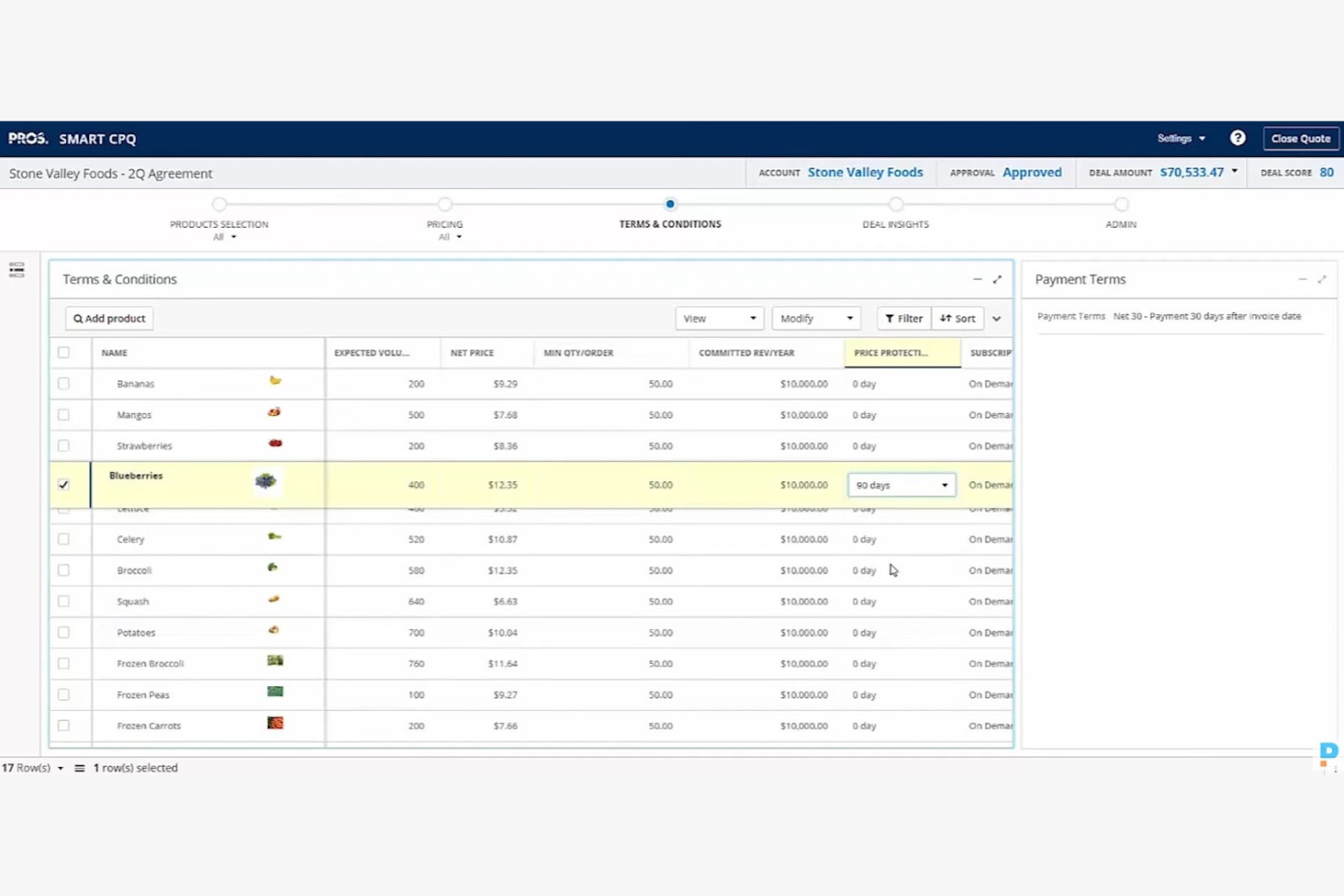
PROS is a pricing optimization software designed for B2B companies aiming to dial in their sales and pricing strategies. It leverages AI to provide pricing solutions, helping businesses adapt to market changes.
Why I picked PROS: It's tailored for B2B dynamic pricing, making it good for businesses that need to adjust prices in real-time. The AI functionality was built by experts with over 30 years of leadership in the revenue and pricing industry. Scientists created neural-like networks designed to solve complex pricing calculations.The AI-driven pricing engine analyzes market trends and customer data, delivering actionable insights. The tool's predictive analytics also forecast future price impacts, discerning market patterns and market gaps, automatically factoring multiple variables in real-time.
Standout features & integrations:
Features include real-time pricing optimization that adjusts prices based on current market conditions. The price guidance feature provides your team with actionable insights to set competitive prices. Smart quoting helps reduce the time spent on generating quotes, enhancing sales efficiency.
Integrations include Salesforce, SAP, Microsoft Dynamics, Oracle, NetSuite, HubSpot, SugarCRM, Marketo, Adobe, and Zendesk.
Pros and cons
Pros:
- Dynamic pricing insights
- Real-time data analysis
- Tailored for B2B environments
Cons:
- AI pricing rationale can feel “black-box” and unclear
- May require technical expertise
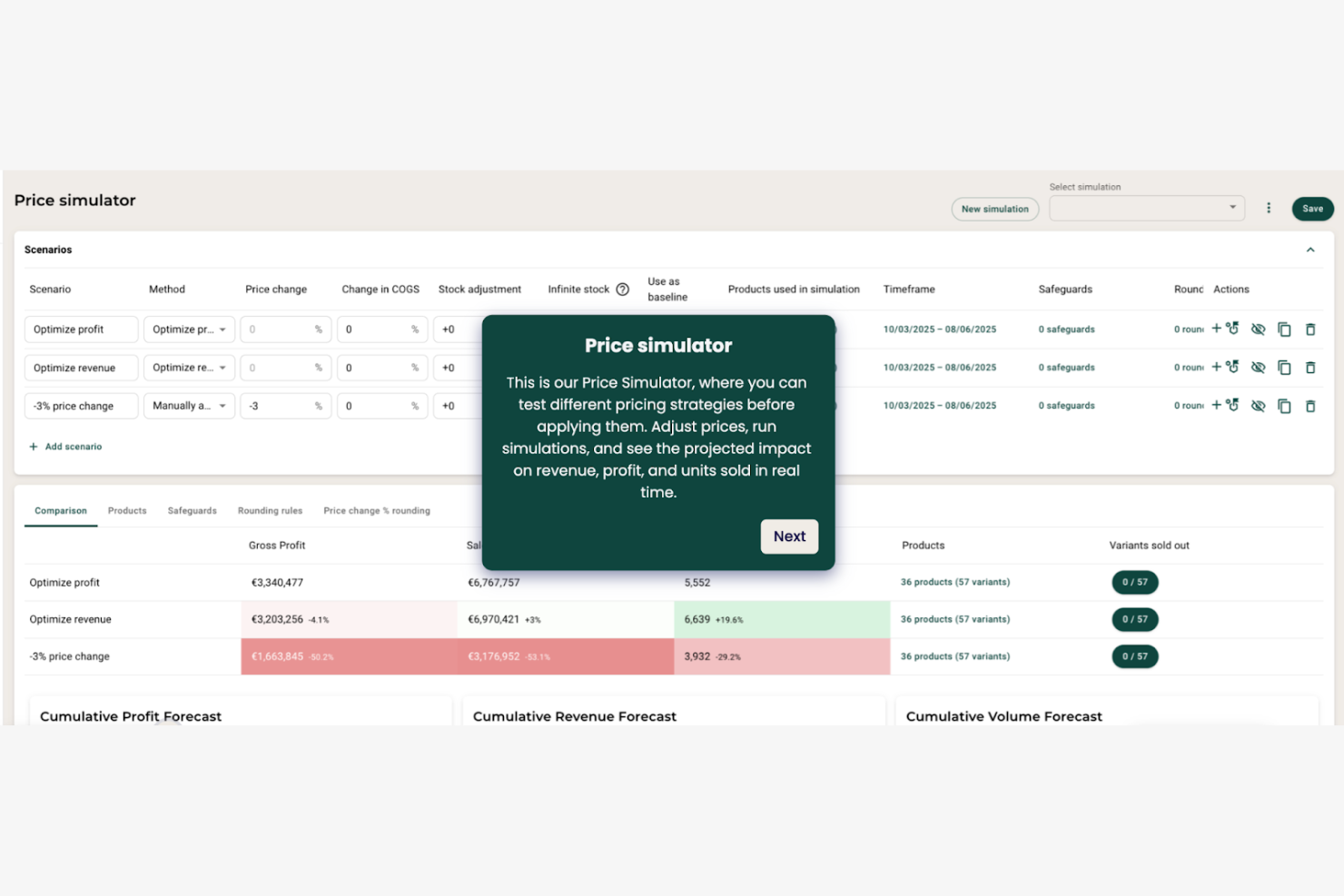
Pricen is a pricing automation platform built for retailers and ecommerce teams who want to combine AI-driven insights with hands-on oversight. Its predictive models analyze sales, competitor activity, and inventory data to generate pricing recommendations, while integrated scenario testing and price simulation let users safely explore potential changes before implementing them.
Why I picked Pricen:It specializes in AI-powered price simulation and scenario planning, making it ideal for teams who want to test pricing strategies before applying them. The platform uses predictive algorithms to analyze sales, competitor activity, and market trends, providing actionable insights while reducing the time spent on routine pricing tasks. Its combination of simulation, forecasting, and automated adjustments allows teams to explore potential outcomes, make informed decisions, and implement pricing changes with confidence.
Standout features & integrations:
Features include predictive analytics, which uses sales, competitor, and inventory data to generate realistic projections of different pricing strategies. Users can compare multiple scenarios, assess their potential effects on revenue and margins, and review insights through intuitive dashboards. The platform integrates with ecommerce and retail systems, making it easier to implement validated pricing strategies once they’ve been tested.
Integrations include Shopify, Adobe, WooCommerce, BigCommerce, Salesforce, SAP, Oracle, Microsoft Dynamics, NetSuite, and HubSpot.
Pros and cons
Pros:
- Streamlines routine pricing tasks
- Predictive analytics for market trends
- Effective pricing automation
Cons:
- Sometimes requires manual matching for products
- Not suited to small retailers or those with simple, low‑volume catalogs

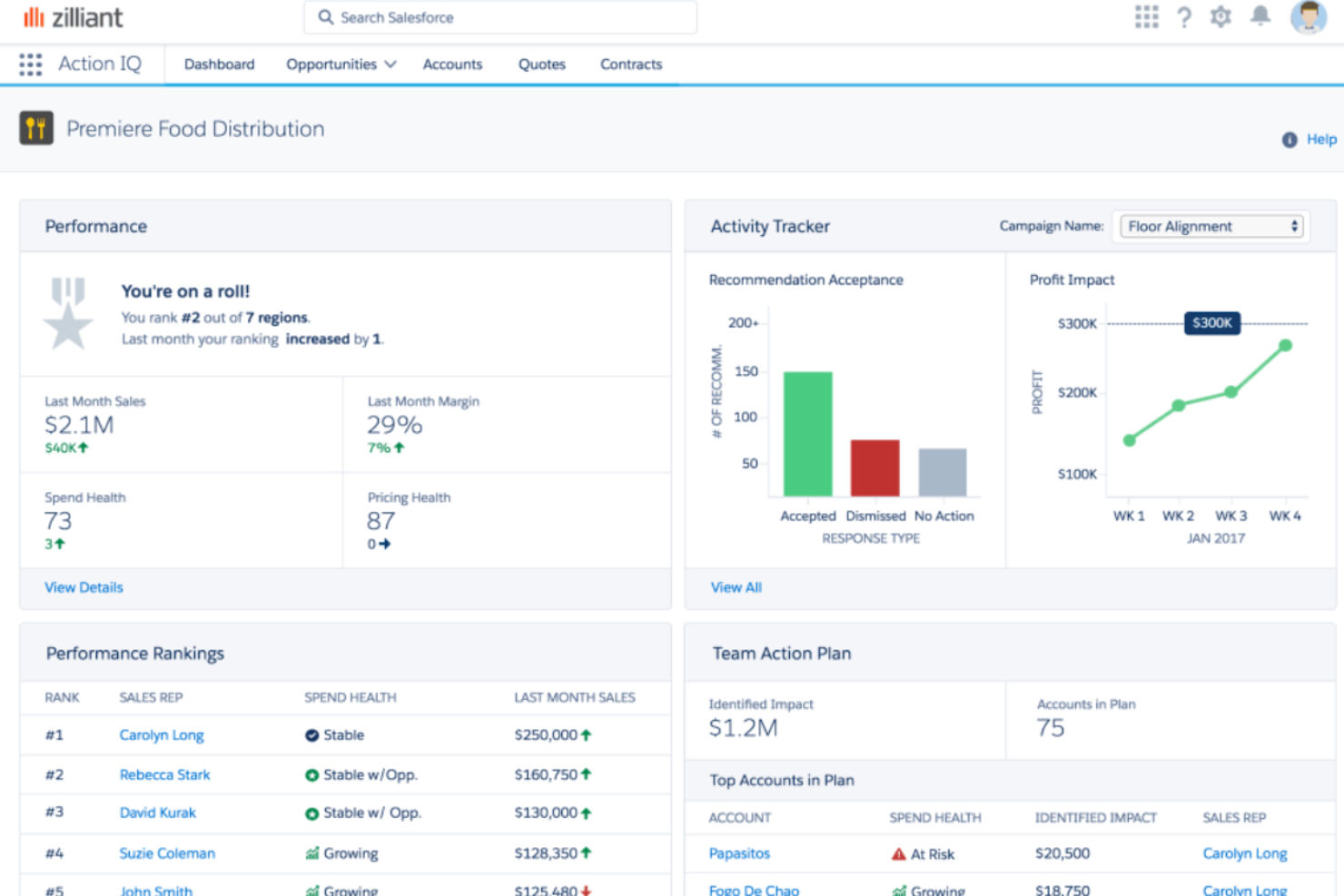
Zilliant is an AI-based pricing and sales optimization software designed for B2B companies. It helps businesses inform their pricing strategies by providing data-driven insights and recommendations.
Why I picked Zilliant: Its strength lies in delivering AI-driven pricing insights, allowing you to catch margin risks proactively and model pricing changes before launch, making it a valuable tool for teams seeking data-backed decisions. The predictive analytics feature helps your team anticipate market changes and adjust prices accordingly. Zilliant's price optimization solutions suggest optimal pricing to maximize revenue. Plus, your team can benefit from structured alignment across ERP, CRM, and eCommerce systems in real time, meaning everything is updated and consistent, improving governance and reducing silos and potential room for error.
Standout features & integrations:
Features include price optimization, which ensures your prices align with market conditions. The sales guidance tools help your sales team target the right opportunities. Detailed reporting provides insights into pricing performance and areas for improvement.
Integrations include Salesforce, SAP, Oracle, Microsoft Dynamics, NetSuite, SugarCRM, Marketo, HubSpot, Adobe, and Zendesk.
Pros and cons
Pros:
- Customizable reporting features
- AI-driven sales guidance
- Strong predictive analytics
Cons:
- Limited customization compared to some competitors
- User interface can feel complicated

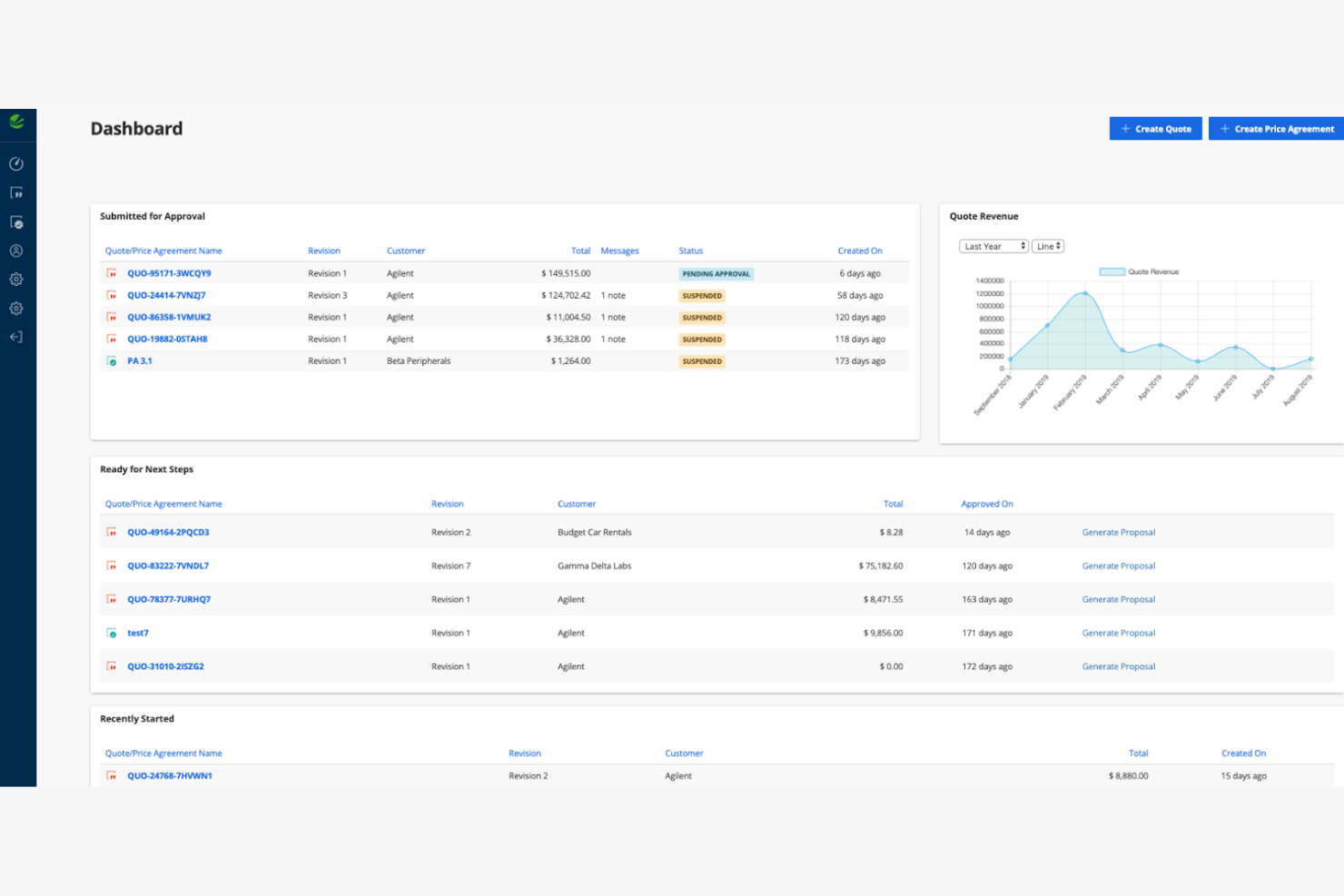
Vendavo is a pricing optimization platform tailored for large enterprises, especially within the manufacturing and distribution industries, seeking to improve profitability and pricing efficiency. Its AI-driven tools offer insights and strategies for effective price management and margin enhancement.
Why I picked Vendavo: It's designed for enterprise pricing solutions, making it suitable for large-scale operations. The AI capabilities include price setting and deal guidance, with an emphasis on AI transparency and human-AI collaboration. Vendavo’s recommendations are role-specific and informed by deep industry expertise. Vendavo's margin analytics help identify opportunities for profit improvement. Additionally, the solution's dynamic pricing feature adapts to market fluctuations, aligning with its USP.
Standout features & integrations:
Features include margin analytics, which provide insights into profit enhancement opportunities. The deal guidance tool supports your sales team in crafting competitive offers. The dynamic pricing feature adjusts prices based on real-time market data. Built for the manufacturing and distribution B2B industry, including global operations, Vendavo’s features are built to handle large product portfolios, complex pricing structures, multi-currency support, and long-term agreements.
Integrations include SAP, Salesforce CRM, Oracle, Microsoft Dynamics, NetSuite, Infor, Epicor, SugarCRM, Marketo, and HubSpot.
Pros and cons
Pros:
- Detailed margin analytics
- Integrates with enterprise systems
- Tailored for manufacturing and distribution enterprises
Cons:
- New users will require training on several platforms
- Complex implementation process

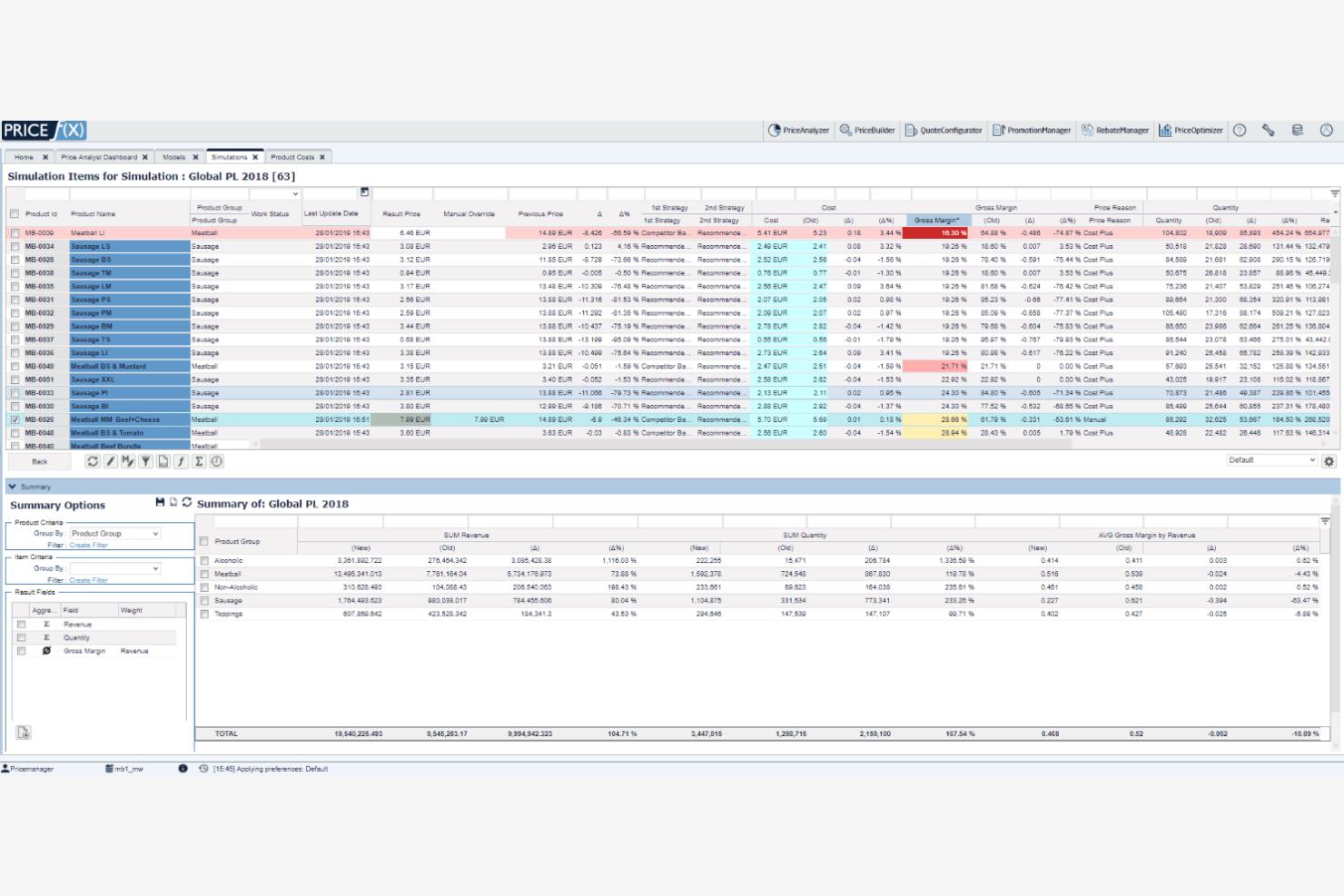
Pricefx is a cloud-based pricing management software designed for businesses looking to increase margins and profitability. Its AI-driven features provide personalized pricing insights and facilitate rapid optimization, catering to diverse industries seeking data-driven solutions.
Why I picked Pricefx: Its real-time price optimization capabilities make it stand out. PricingAI offers a user-friendly chat interface that leverages LLM Gen-AI for insights. You can expect full visibility into pricing optimizations, which helps your team make informed decisions. The composable optimization approach ensures that the tool evolves with your business needs.
Standout features & integrations:
Features include continuous data observation, which ensures you always have up-to-date insights. The price management tools help define strategies and manage rebates, and accurate quoting and sales commission management for your sales process.
Integrations include Salesforce, SAP, Oracle, Microsoft Dynamics, NetSuite, Shopify, Adobe Commerce, WooCommerce, QuickBooks, and HubSpot.
Pros and cons
Pros:
- Easy to use interface
- Rapid implementation
- Significant ROI potentia
Cons:
- Implementation may be time-consuming, especially for legacy systems
- Requires adaptation to new strategies

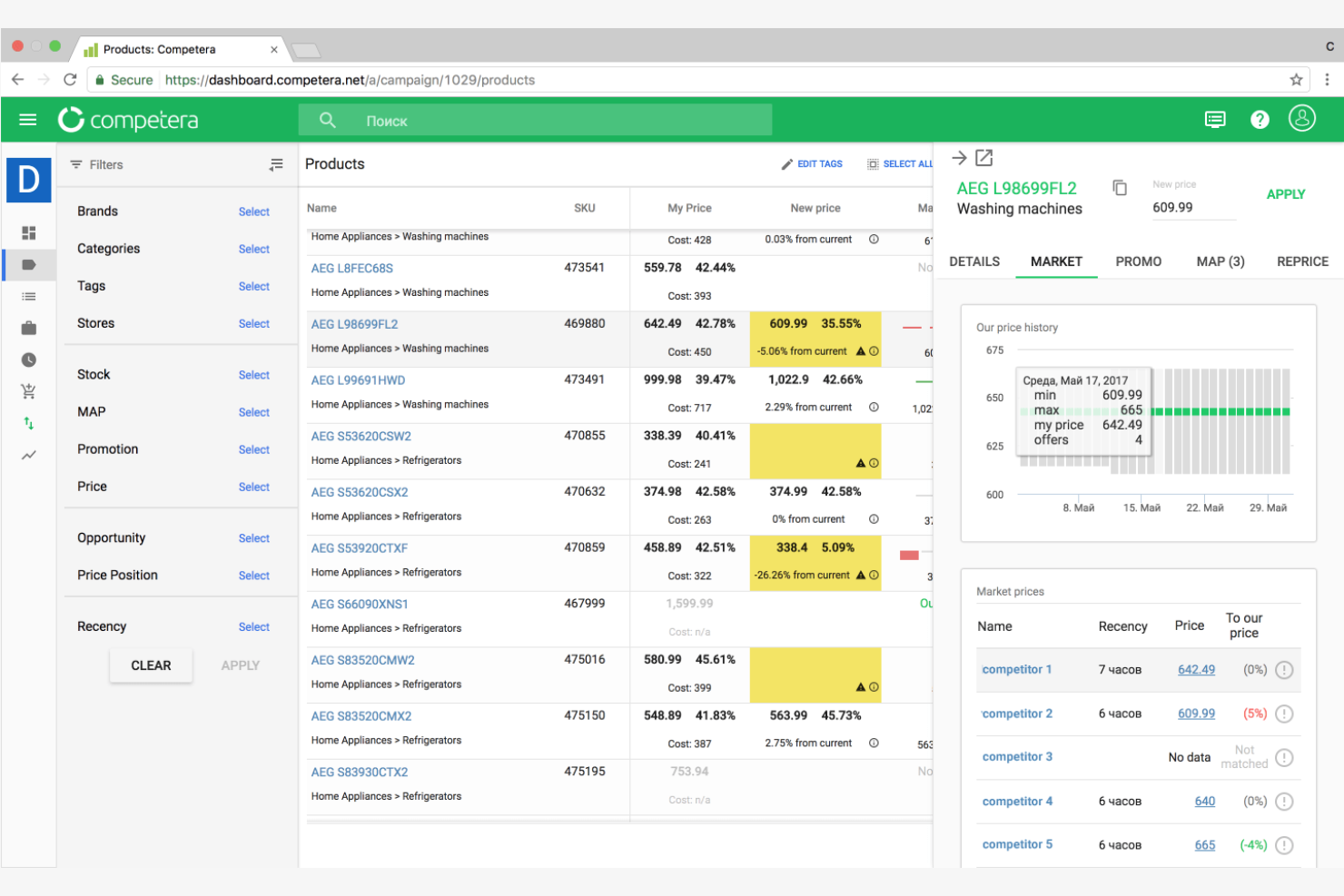
Competera is a pricing platform tailored for retailers aiming to optimize their pricing strategies and improve profitability. Its AI-driven tools analyze market trends and competitor pricing to offer data-backed pricing recommendations.
Why I picked Competera: It excels in retail price management, making it ideal for retailers who need precise pricing strategies. The AI capabilities include competitive data analysis, helping your team stay ahead of market trends. Competera's dynamic pricing feature adjusts prices in real-time to maximize revenue. The pricing insights provide actionable recommendations to enhance your pricing effectiveness.
Standout features & integrations:
Features include competitive data analysis, which keeps you informed of market trends. The dynamic pricing feature allows for real-time price adjustments. Pricing insights offer actionable recommendations, helping you enhance your pricing strategies.
Integrations include Shopify, Adobe Commerce, WooCommerce, BigCommerce, Salesforce, SAP, Oracle, Microsoft Dynamics, NetSuite, and Vend.
Pros and cons
Pros:
- Excellent for rule-based automation
- Can handle detailed logic such as demand, location, and historical data
- Tracks competitor prices in real-time
Cons:
- Initial setup complexity
- Focus is more rule-based than goal-driven optimization
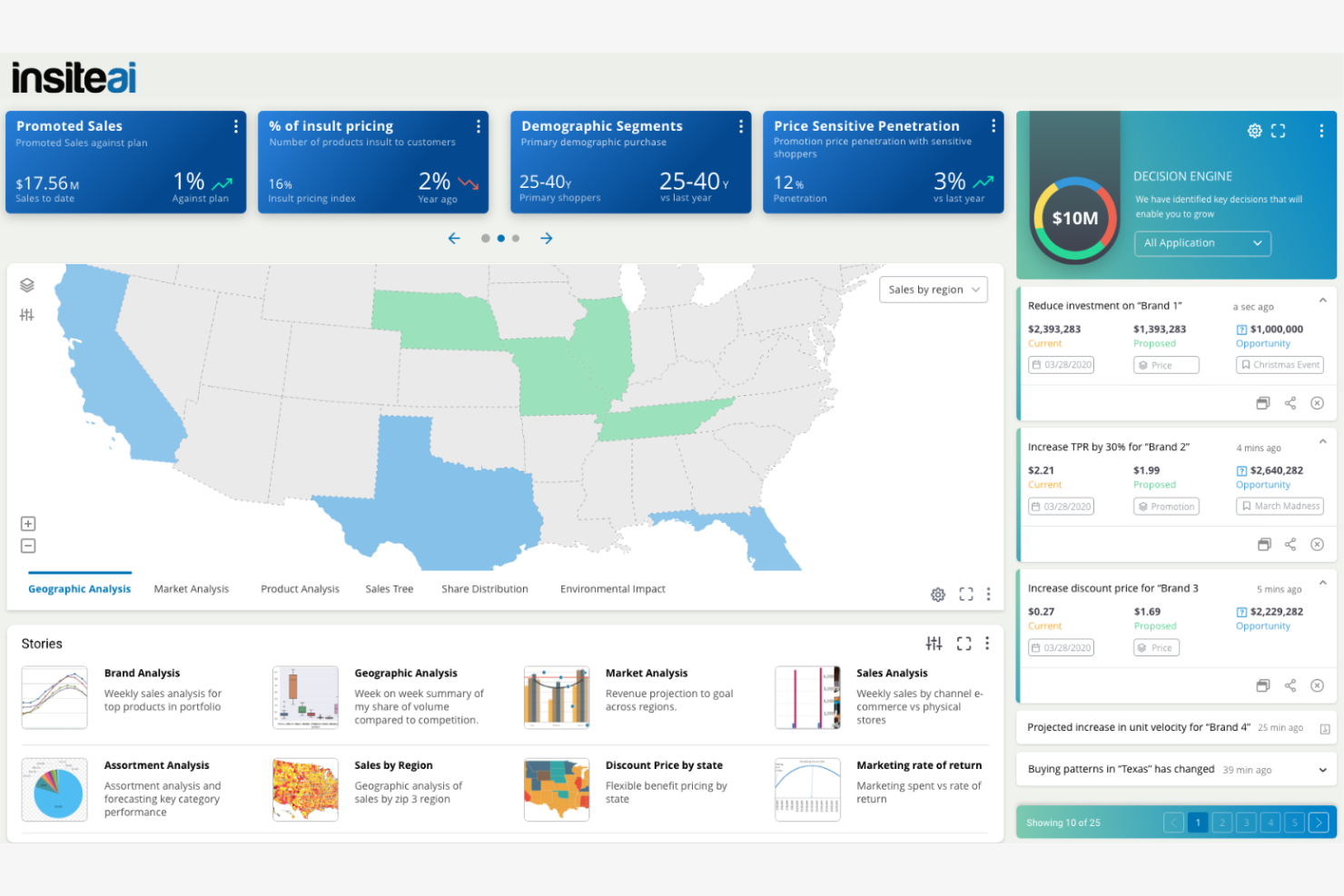
Insite AI is a strategic planning tool for retailers seeking to leverage AI for data-driven decision-making. It helps retailers optimize merchandising, pricing, and inventory management through advanced analytics.
Why I picked Insite AI: It focuses on AI in retail strategy, providing insights that help your team make informed decisions. The predictive analytics feature forecasts demand, optimizing your inventory levels. Its AI-driven recommendations guide merchandising and pricing strategies effectively. You can expect to enhance operational efficiency with its tailored solutions that adapt to your business needs.
Standout features & integrations:
Features include predictive analytics, which forecast demand to optimize inventory, dynamic price analysis based on real proposal data, and AI-driven recommendations, which help you refine merchandising strategies. Insite AI also consolidates data into one place, including CRM, ERP, and financial systems. Detailed reporting provides insights into pricing performance and market trends. Large product catalog management features and scalability enable Insite AI to grow with your business.
Integrations include Shopify, Adobe Commerce, WooCommerce, BigCommerce, Salesforce, SAP, Oracle, Microsoft Dynamics, NetSuite, and HubSpot.
Pros and cons
Pros:
- Tailored AI recommendations
- Predictive analytics for demand forecasting
- Strong focus on retail strategy
Cons:
- High initial implementation costs and ongoing expenses
- Analysis may not translate into clear, actionable steps
Other AI Pricing Software
Here are some additional AI pricing software options that didn’t make it onto my shortlist, but are still worth checking out:
- Revionics
For lifecycle price optimization
- 7Learnings
For automated goal-driven pricing
- DealHub
For CPQ integration
- Syncron Price
For global price management


AI Pricing Software Selection Criteria
When selecting the best AI pricing software to include in this list, I considered common buyer needs and pain points like optimizing pricing strategies and managing price fluctuations. I also used the following framework to keep my evaluation structured and fair:
Core Functionality (25% of total score)
To be considered for inclusion in this list, each solution had to fulfill these common use cases:
- Price optimization
- Competitor price tracking
- Dynamic pricing adjustments
- Revenue management
- Pricing analytics and reporting
Additional Standout Features (25% of total score)
To help further narrow down the competition, I also looked for unique features, such as:
- AI-driven demand forecasting
- Customizable pricing rules
- Real-time market analysis
- Multichannel pricing support
- Predictive sales analytics
Usability (10% of total score)
To get a sense of the usability of each system, I considered the following:
- Intuitive user interface
- Easy navigation
- Customizable dashboards
- Minimal learning curve
- Responsive design
Onboarding (10% of total score)
To evaluate the onboarding experience for each platform, I considered the following:
- Availability of training videos
- Interactive product tours
- Access to webinars
- Comprehensive documentation
- Onboarding support team
Customer Support (10% of total score)
To assess each software provider’s customer support services, I considered the following:
- 24/7 customer support availability
- Live chat support
- Email response time
- Access to a dedicated account manager
- Community forums
Value For Money (10% of total score)
To evaluate the value for money of each platform, I considered the following:
- Pricing transparency
- Competitive pricing
- Flexible subscription plans
- Features offered for the price
- Discounts for annual billing
Customer Reviews (10% of total score)
To get a sense of overall customer satisfaction, I considered the following when reading customer reviews:
- Overall satisfaction rating
- Frequency of positive feedback
- Commonly mentioned pain points
- Feedback on customer support
- User-reported ROI
How to Choose AI Pricing Software
It’s easy to get bogged down in long feature lists and complex pricing structures. To help you stay focused as you work through your unique software selection process, here’s a checklist of factors to keep in mind:
| Factor | What to Consider |
|---|---|
| Scalability | Will the software grow with your business? Check if it supports increasing data volume and user count without degradation in performance. |
| Integrations | Does it integrate with your existing systems, like CRM and ERP? Ensure compatibility to avoid data silos and unblock workflows. |
| Customizability | Can you tailor the software to your specific pricing strategies? Look for flexibility in setting rules and parameters. |
| Ease of use | Is the user interface intuitive for your team? A steep learning curve can delay adoption and reduce effectiveness. |
| Implementation and onboarding | How long does setup take, and what resources are needed? Consider the availability of training materials and support during the transition. |
| Cost | Does the pricing fit your budget? Evaluate the total cost of ownership, including any hidden fees or additional costs for extra features. |
| Security safeguards | How does the software protect your data? Ensure it complies with industry standards for data protection and offers features like encryption and access control. |
| Support availability | What support options are available? Ensure you have access to timely help through channels like live chat, email, or phone. |
What Is AI Pricing Software?
AI pricing software is a tool that uses artificial intelligence to optimize pricing strategies for businesses. Typically used by pricing analysts, revenue managers, and sales teams, it helps increase profitability and competitiveness. Predictive analytics, dynamic pricing, and competitor tracking features help with making informed pricing decisions and reacting to market changes. Overall, these tools enhance decision-making and efficiency in pricing management.
Features
When selecting AI pricing software, keep an eye out for the following key features:
- Predictive analytics: Uses historical data to forecast future pricing trends, helping you make proactive pricing decisions.
- Dynamic pricing: Adjusts prices in real-time based on market conditions to maximize revenue and competitiveness.
- Competitor tracking: Monitors competitors' pricing strategies to ensure your prices remain competitive in the market.
- Price optimization: Analyzes various pricing scenarios to recommend the best pricing strategies for profitability.
- AI-driven recommendations: Offers data-backed suggestions for pricing adjustments, improving decision-making efficiency.
- Reporting and analytics: Provides detailed insights into pricing performance and market trends, supporting strategic planning.
- Automated pricing tasks: Reduce manual workload by automating routine pricing processes, saving time and resources.
- Demand forecasting: Predicts future demand for products, enabling better inventory and pricing management.
- Multichannel pricing support: Ensures consistent pricing across various sales channels, enhancing customer experience.
- Customizable pricing rules: Allows you to tailor pricing strategies to fit your unique business needs and objectives.
Benefits
Implementing AI pricing software provides several benefits for your team and your business. Here are a few you can look forward to:
- Increased profitability: By analyzing market data, the software suggests optimal pricing strategies that boost your revenue.
- Time savings: Automated pricing tasks reduce manual efforts, allowing your team to focus on strategic activities.
- Enhanced competitiveness: Competitor tracking ensures your prices remain competitive, helping you capture market share.
- Improved decision-making: AI-driven recommendations provide data-backed insights, leading to more informed pricing decisions.
- Better demand forecasting: Predictive analytics help forecast demand, enabling efficient inventory management and pricing adjustments.
- Consistency across channels: Multichannel pricing support ensures uniform pricing, enhancing customer satisfaction.
- Adaptability to market changes: Dynamic pricing allows you to quickly adjust prices in response to market fluctuations, keeping your strategy agile.
Costs & Pricing
Selecting AI pricing software requires an understanding of the various pricing models and plans available. Costs vary based on features, team size, add-ons, and more. The table below summarizes common plans, their average prices, and typical features included in AI pricing software solutions:
Plan Comparison Table for AI Pricing Software
| Plan Type | Average Price | Common Features |
|---|---|---|
| Business Plan | $99-$1500/user/month | Full competitor tracking, predictive analytics, and multichannel support. |
| Enterprise Plan | $2000-$50,000+/user/month | Customizable features, comprehensive reporting, real-time data integration, and dedicated support. |
AI Pricing Software FAQs
Here are some answers to common questions about AI pricing software:
How does AI pricing software help improve revenue forecasting accuracy?
AI pricing software improves revenue forecasting by analyzing large sets of historical sales, market, and customer data to spot trends and predict outcomes. By identifying patterns that humans might miss, these tools can make more accurate predictions about how pricing changes will impact revenue, helping you build better forecasts and adjust your strategies quickly.
Can AI pricing software automate price optimization across multiple channels?
Yes, AI pricing software can automatically optimize prices across different channels such as e-commerce, direct sales, and distributors. It updates prices based on real-time data, demand fluctuations, competitor activity, and pre-set business rules, allowing your team to maintain consistent, competitive, and profitable pricing everywhere you sell.
What are the common challenges when adopting AI pricing tools in revenue operations?
Common challenges include managing data quality, integrating new tools with legacy systems, and getting buy-in from teams. There may also be a learning curve as staff adjust to AI-driven recommendations and trust the tool’s outputs. Addressing data governance and offering training can help smooth the transiti
How do I measure ROI from implementing AI-driven pricing solutions?
You measure ROI by comparing the increase in revenue, profit margins, and overall pricing efficiency before and after implementation. Track metrics like price realization, deal cycle time, win rates, and average deal size over time. Regularly review these KPIs to confirm the AI solution is driving measurable improvements and justifying its cost.
What’s Next:
If you're in the process of researching AI pricing software, connect with a SoftwareSelect advisor for free recommendations.
You fill out a form and have a quick chat where they get into the specifics of your needs. Then you'll get a shortlist of software to review. They'll even support you through the entire buying process, including price negotiations.