

10 beste KI-Vertriebsagenten im Jahr 2026

Beste Auswahl an KI-Vertriebsagenten


Ein KI-Vertriebsagent ist eine Software, die künstliche Intelligenz nutzt, um Vertriebsaufgaben zu automatisieren, Leads anzusprechen und Gespräche zu verwalten, sodass sich Ihr Team auf den Abschluss von Geschäften konzentrieren kann. Wenn Sie nach Möglichkeiten suchen, stundenlange Recherche nach potenziellen Kunden einzusparen, die Antwortraten zu steigern oder eine endlose Liste von Konten sinnvoll zu nutzen, kann ein KI-Vertriebsagent Ihrem Team dabei helfen, im gesamten Umsatzprozess intelligenter zu arbeiten.
In diesem Leitfaden stelle ich die besten Tools vor, erläutere, wodurch sich die einzelnen Lösungen unterscheiden, und zeige, worauf Sie achten sollten, um die richtige Plattform für Ihren Vertriebsprozess zu finden.
Warum Sie unseren Software-Empfehlungen vertrauen können
Unsere Bewertungen spiegeln unser unabhängiges Urteilsvermögen wider – keine Verkaufsstrategie. Erfahren Sie, wie wir transparent bleiben.
Für diesen Leitfaden haben wir Tools mithilfe von praktischen Tests und unabhängiger Recherche bewertet und dabei unsere Bewertungskriterien angewendet.
Unsere Bewertungen spiegeln unser menschliches redaktionelles Urteilsvermögen wider, keine Verkaufsstrategie.
Vergleichstabelle für KI-Vertriebsagenten
Diese Vergleichstabelle fasst die Preisinformationen für meine besten ausgewählten KI-Vertriebsagenten zusammen:
| Tool | Best For | Trial Info | Price | ||
|---|---|---|---|---|---|
| 1 | Am besten mit sofortiger weltweiter Bereitstellung von Telefonnummern | 14-tägige kostenlose Testversion + kostenlose Demo verfügbar | Ab $25/Nutzer/Monat (jährliche Abrechnung) | Website | |
| 2 | Am besten geeignet für zweisprachige, dialogbasierte Ansprache | Kostenlose Demo verfügbar | Preise auf Anfrage | Website | |
| 3 | Beste Lösung für KI-gestützte Antwortverarbeitung | Kostenlose Demo verfügbar | Ab $500/Monat (jährliche Abrechnung) | Website | |
| 4 | Am besten geeignet für KI-gestützte Erstellung von Verkaufsinhalten | Kostenlose Demo verfügbar | Ab $180/Nutzer/Monat (jährliche Abrechnung) | Website | |
| 5 | Am besten für CRM-native Vertriebsautomatisierung | Kostenloser Plan + kostenlose Demo verfügbar | Ab $500/100k Credits | Website | |
| 6 | Am besten für Multi-Channel-Outbound-Kampagnen | Kostenloser Plan + 30-tägige kostenlose Testphase + kostenlose Demo verfügbar | Ab $250/Monat (jährliche Abrechnung) | Website | |
| 7 | Am besten für autonome Lead-Qualifizierung | Kostenlose Demo verfügbar | Preis auf Anfrage | Website | |
| 8 | Am besten geeignet für Kampagnenanpassung und Schutzmechanismen | 7 Tage kostenlos testen + gratis Demo verfügbar | Ab $600/Monat (jährliche Abrechnung) | Website | |
| 9 | Am besten geeignet für Website-Besucher-Engagement | Kostenlose Demo verfügbar | Preise auf Anfrage | Website | |
| 10 | Am besten geeignet für die Terminvereinbarung mit eingehenden Leads | Kostenlose Demo verfügbar | Ab $250/Monat (vierteljährlich abgerechnet) | Website |
Die besten Bewertungen von KI-Vertriebsagenten
Im Folgenden finden Sie meine ausführlichen Zusammenfassungen der besten KI-Vertriebsagenten-Tools, die es in meine Auswahl geschafft haben. Meine Bewertungen bieten einen detaillierten Einblick in die Funktionen, die besten Anwendungsfälle und die Integrationen jedes Tools und helfen Ihnen dabei, die beste Lösung für Ihre Anforderungen zu finden.

Am besten mit sofortiger weltweiter Bereitstellung von Telefonnummern
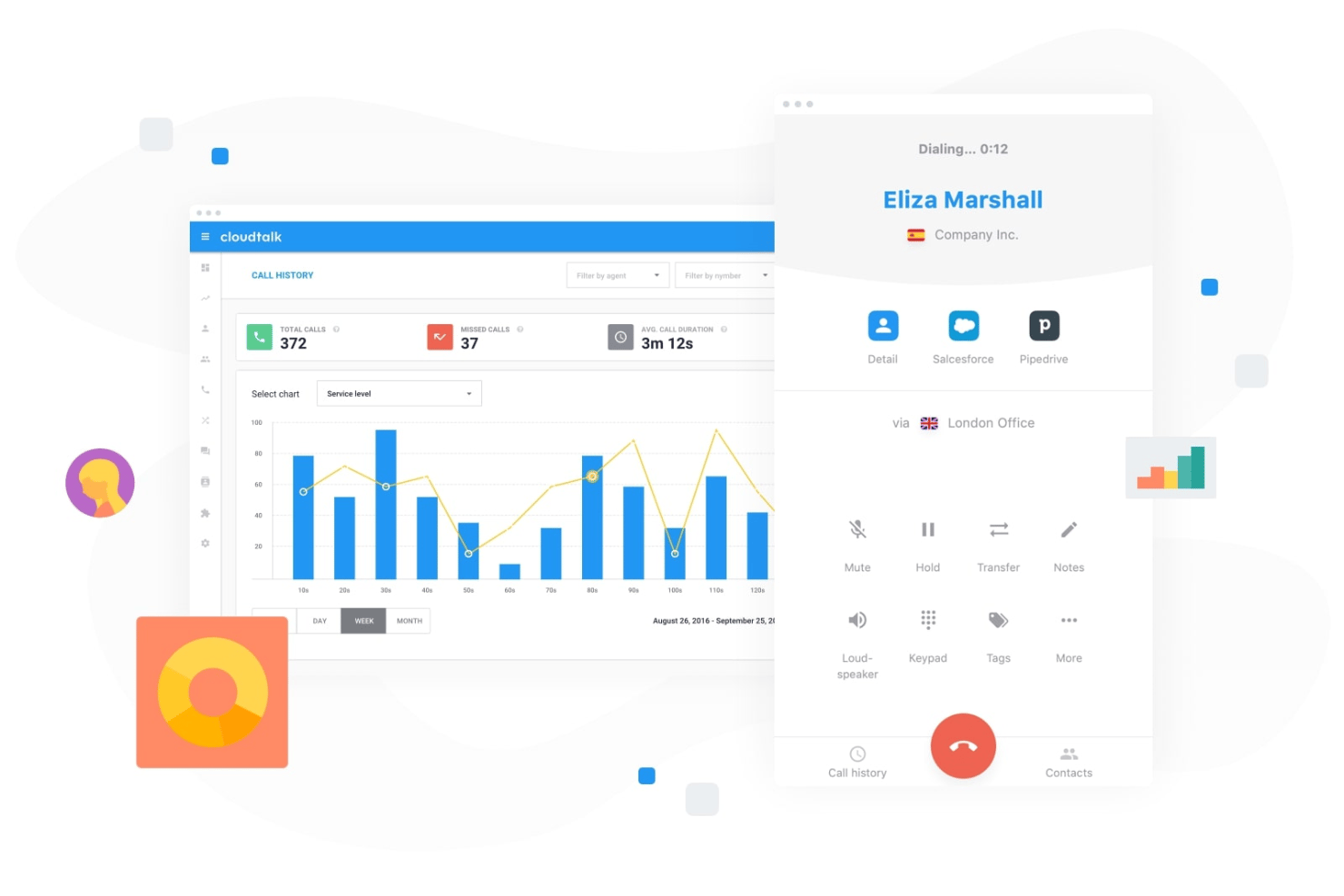
CloudTalk ist eine KI-gestützte Sprachplattform, die autonome KI-Sprachagenten, Vertriebswählgeräte und Gesprächsintelligenz für die aktive Kundenakquise und die Bearbeitung eingehender Leads kombiniert.
Für wen ist CloudTalk am besten geeignet?
CloudTalk eignet sich besonders für SDR- und BDR-Teams in wachsenden KMU, die in mehreren Ländern oder Regionen ausgehende Anrufe in großem Umfang tätigen.
Warum ich CloudTalk ausgewählt habe
Ich habe CloudTalk als eine der besten Lösungen ausgewählt, weil die sofortige Bereitstellung von Telefonnummern in mehr als 160 Ländern ein echtes Problem für KI-gestützte Vertriebsteams mit aktiver Kundenakquise löst. Wenn ich einen KI-Sprachagenten in einem neuen Markt einsetze, sind lokale Anrufer-IDs innerhalb weniger Minuten aktiv, was die Annahmequoten direkt verbessert. Der Parallelwähler von CloudTalk verarbeitet anschließend bis zu 10 parallele Leitungen, während die automatische Erkennung von Voicemails dafür sorgt, dass sich KI-unterstützte Vertriebsmitarbeiter ausschließlich auf Live-Gespräche konzentrieren.
Die wichtigsten Funktionen von CloudTalk
- KI-Sprachagenten: Integrierte Agenten automatisieren die Bearbeitung eingehender und ausgehender Anrufe, die Lead-Weiterleitung, die Qualifizierung und die Eskalation.
- KI-gestützte Gesprächsintelligenz: Automatische Anruftranskription, Stimmungsanalyse, Bewertung und Zusammenfassungen nach dem Gespräch für jede Interaktion.
- Intelligente Wählmodi: Wechseln Sie für ausgehende Anrufkampagnen mit hohem Volumen zwischen Vorschau-, leistungsstarken und Parallelwählern.
- Umfassende CRM-Integration: Aktivitäten, Notizen und KI-gestützte Zusammenfassungen werden automatisch direkt in Salesforce, HubSpot und andere CRMs protokolliert.
CloudTalk-Integrationen
CloudTalk bietet native Integrationen mit Salesforce, HubSpot, Pipedrive, Zendesk, Intercom, Freshdesk, Aircall, LiveAgent und Zoho CRM. Für individuelle Integrationen steht eine API zur Verfügung.
Pros and Cons
Pros:
- Sofortige Bereitstellung von Telefonnummern in mehr als 160 Ländern
- KI-Sprachagenten automatisieren die Bearbeitung ausgehender Anrufe
- Parallelwähler erhöht die Anzahl von Live-Gesprächen
Cons:
- KI-gestützte Kontaktaufnahme ist ausschließlich auf Sprachanrufe beschränkt
- Die neuen KI-Funktionen verfügen noch über keine nachgewiesene Erfolgsbilanz

Am besten geeignet für zweisprachige, dialogbasierte Ansprache
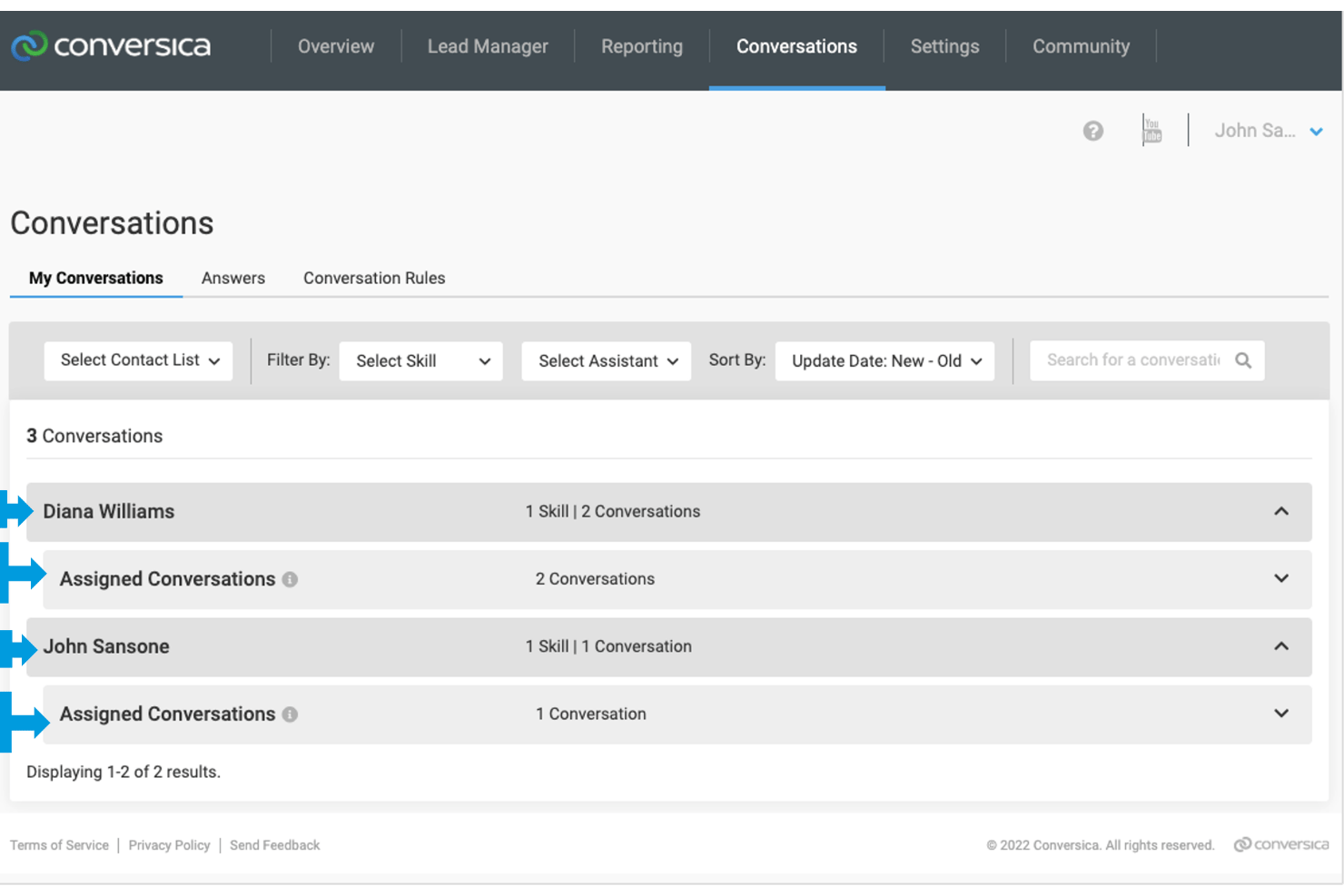
Conversica ist eine Plattform für KI-Vertriebsagenten, die selbstständig zweisprachige Gespräche mit Interessenten über E-Mail, SMS und Chat führt, potenzielle Kunden qualifiziert, Termine bucht und engagierte Kontakte an menschliche Vertriebsmitarbeiter weiterleitet.
Für wen ist Conversica am besten geeignet?
Conversica ist besonders geeignet für Revenue-Teams in Unternehmen, die große Mengen eingehender Leads, lange Bestands-Pipelines oder längere Pflegezyklen managen.
Warum ich Conversica ausgewählt habe
Conversica hat seinen Platz auf meiner Shortlist verdient, weil sich die Engine für zweisprachige Gespräche deutlich von sequenzbasierten KI-SDRs unterscheidet. Die Revenue Digital Assistants interpretieren Antworten von Interessenten in Echtzeit, gehen kontextbezogen auf Einwände ein und eskalieren nur, wenn ein Lead Kaufinteresse signalisiert. Ich setze das Tool zudem bei Bestands-Pipelines ein, denn durch das dialogorientierte Re-Engagement werden Deals aufgedeckt, die durch Standard-Drip-Sequenzen unentdeckt bleiben.
Hauptfunktionen von Conversica
- ABM-Programm-Ansprache: Zielkunden mit personalisierten, mehrstufigen Kampagnen ansprechen, gesteuert durch Kampagnenparameter.
- Inbound-Lead-Erfassung: Sofortiges Antworten auf Webformulare und eingehende Leads mit KI-gestützter Qualifizierung.
- Mehrsprachige Kommunikation: Interaktion mit Interessenten und Kunden in allen unterstützten Sprachen über E-Mail, SMS und Chat.
- Enterprise-CRM-Integrationen: Native Anbindung an Salesforce, HubSpot und Microsoft Dynamics für Echtzeit-Synchronisierung von Leads und Aktivitätenprotokollierung.
Conversica Integrationen
Conversica bietet native Integrationen mit Salesforce, HubSpot, Microsoft Dynamics 365, Marketo, Eloqua und Oracle Sales Cloud. Für individuelle Integrationen steht eine API zur Verfügung.
Pros and Cons
Pros:
- Geht kontextbezogen auf Einwände ein, ohne menschliches Eingreifen
- Reaktiviert veraltete Pipelines automatisch und skalierbar
- Unterstützt mehrsprachige Gespräche über verschiedene Kanäle
Cons:
- Umfangreiche Einarbeitung erforderlich, bevor der Agent produktionsreif ist
- Weniger stark bei Kaltakquise als bei Pflege eingehender Leads

Beste Lösung für KI-gestützte Antwortverarbeitung
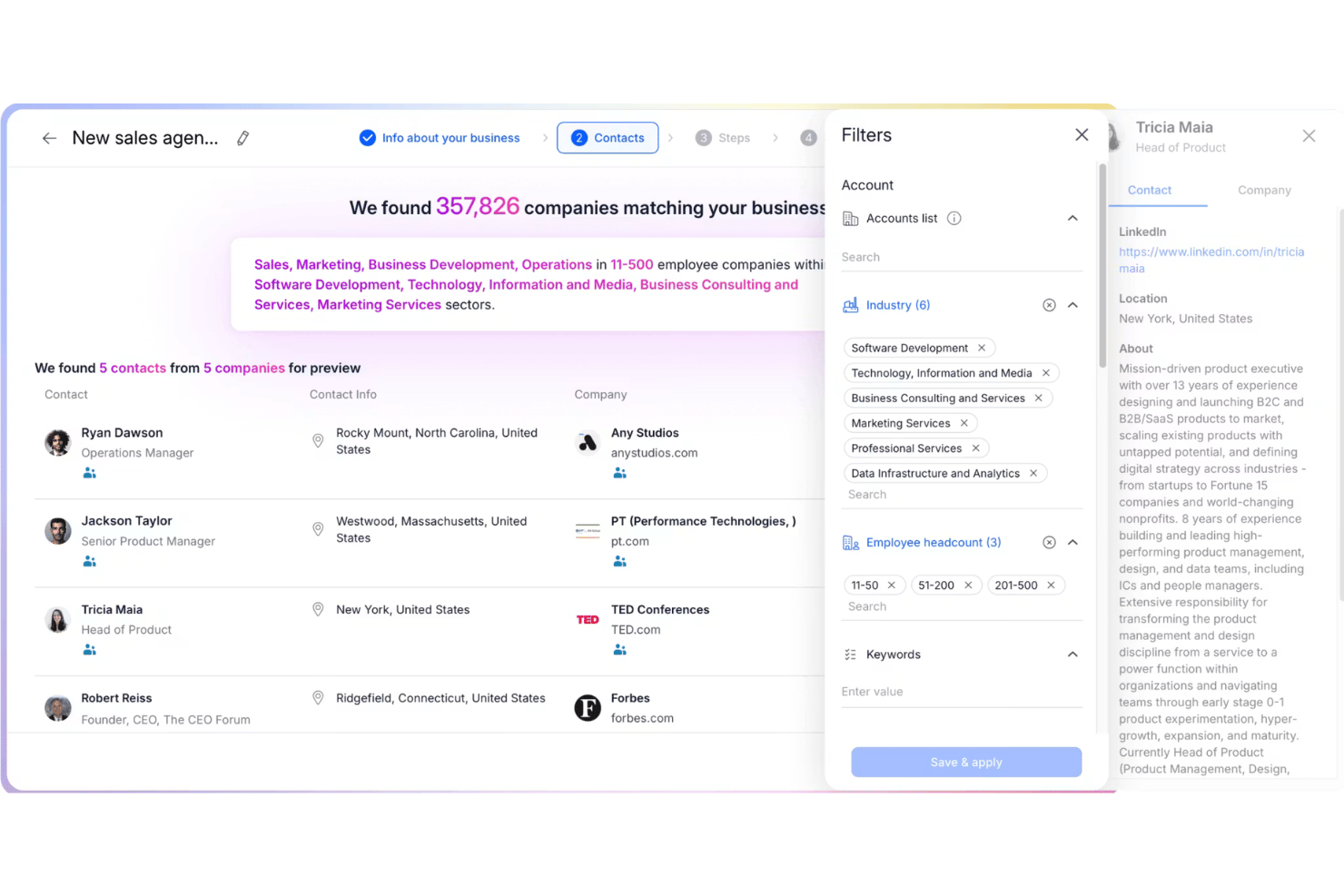
Jason AI SDR ist ein KI-Vertriebsagent von Reply.io, der eigenständig potenzielle Kunden findet, kanalübergreifende Ansprache über E-Mail, LinkedIn und SMS startet, auf Antworten reagiert und Termine direkt in den Kalendern Ihrer Vertriebsmitarbeiter bucht.
Für wen ist Jason AI SDR am besten geeignet?
Das Tool eignet sich besonders gut für schlanke Vertriebsteams, die ein hohes Volumen an Outbound-Aktivitäten ohne personellen Ausbau abwickeln müssen – insbesondere in wachstumsorientierten B2B-Unternehmen.
Warum habe ich Jason AI SDR ausgewählt?
Jason AI SDR erhält seinen Platz auf meiner Shortlist, weil seine Antwortverarbeitung weit über einfache automatische Klassifikation hinausgeht. Wenn ein Interessent zum Beispiel mit 'nicht der richtige Zeitpunkt' antwortet, erkennt Jason die Absicht, formuliert eine kontextbezogene Antwort und belebt den Gesprächsfaden ohne jeglichen Input meines Teams neu. Mir gefällt außerdem, dass ich mit Autopilot- und Freigabemodus selbst bestimmen kann, wie viel menschliche Kontrolle im Prozess verbleibt – so kann ich entweder komplett autonome Kampagnen fahren oder KI-Entwürfe vor dem Versand prüfen.
Jason AI SDR Hauptfunktionen
- Automatisierung kanalübergreifender Kampagnen: Startet und verwaltet Ansprache-Sequenzen über E-Mail, LinkedIn, SMS und WhatsApp innerhalb eines Workflows.
- B2B-Kontaktdatenbank: Bietet Zugang zu einer integrierten Datenbank mit über einer Milliarde verifizierten Kontakten und Unternehmen.
- Bidirektionale CRM-Synchronisation: Integriert sich nativ mit Salesforce, HubSpot und Pipedrive, um Kontaktinformationen und Aktivitätsprotokolle automatisch abzugleichen.
- Playbook-gesteuerter Workflow: Ermöglicht die Festlegung von ICP, Tonfall, Angeboten und Leitplanken, um die KI-gestützte Kampagnenausführung zu steuern.
Jason AI SDR Integrationen
Jason AI SDR bietet native Integrationen mit Salesforce, HubSpot, Pipedrive, Copper und Google Kalender und verbindet sich mit Zapier. Eine API steht für individuelle Integrationen zur Verfügung.
Pros and Cons
Pros:
- SMS-Erreichbarkeit ermöglicht Ansprache auf mobilen Geräten
- Autopilot- und Freigabemodus zur Kontrolle des Oversights
- Integrierte Kontaktdatenbank mit über 1 Mrd. verifizierten Leads
Cons:
- Eingeschränkte Berichterstattung zur ROI-Zuordnung auf Kampagnenebene
- Antwortqualität lässt bei komplexen technischen Themen nach
Regie.ai
Am besten geeignet für KI-gestützte Erstellung von Verkaufsinhalten
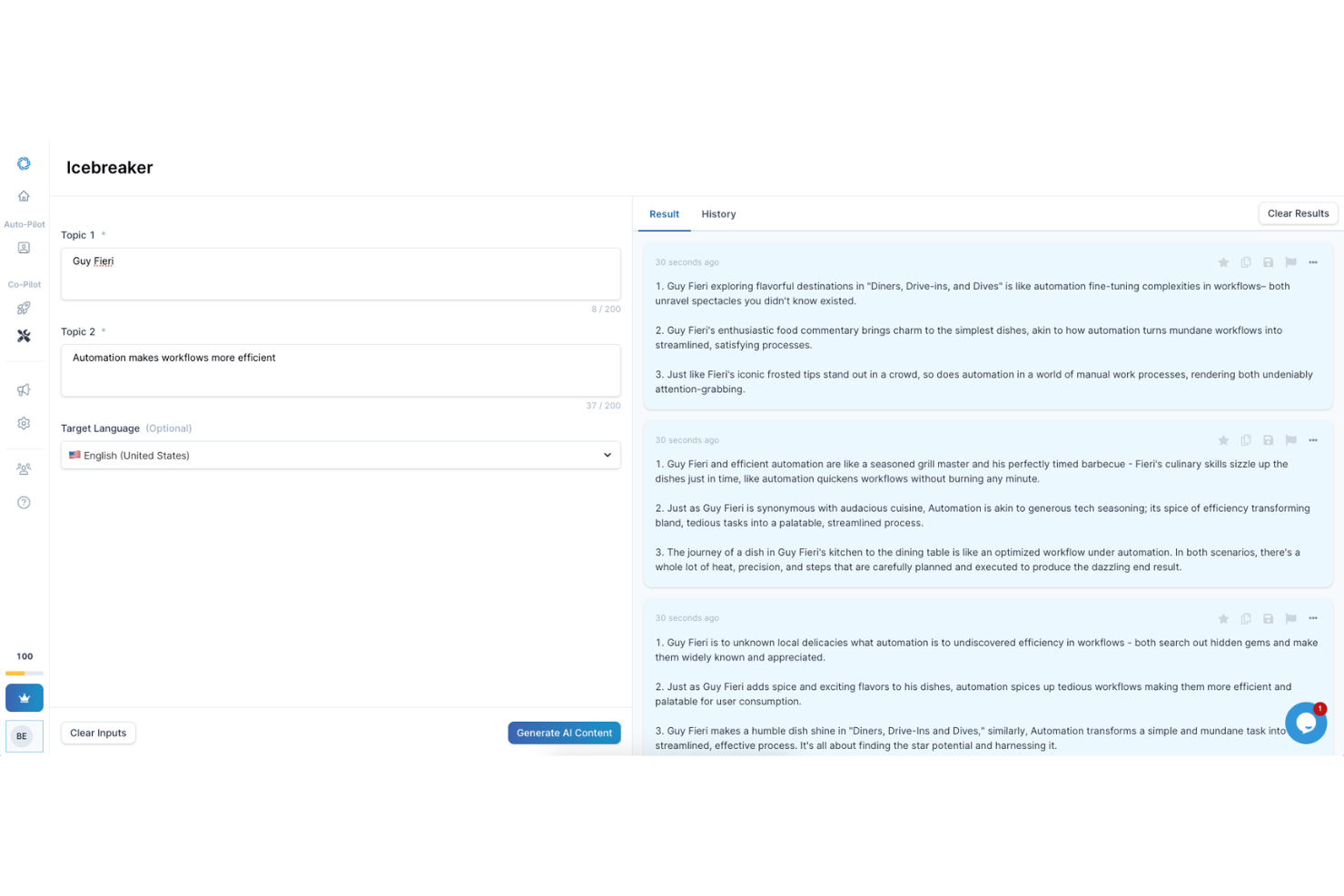
Regie.ai ist eine KI-basierte Sales Engagement Plattform, die autonome Prospecting-Agenten, Multi-Channel-Outreach per E-Mail, LinkedIn und Telefon, KI-generierte Verkaufsinhalte sowie einen integrierten Parallel-Dialer in einem einzigen Workflow vereint.
Für wen ist Regie.ai am besten geeignet?
Regie.ai eignet sich besonders für mittlere und große B2B-Vertriebsteams, die hochvolumige Outbound-Programme durchführen und möchten, dass KI-Agenten das Prospecting übernehmen, ohne zusätzliches SDR-Personal einzustellen.
Warum ich Regie.ai ausgewählt habe
Ich habe Regie.ai zu den Besten gezählt, weil die von der KI generierten Inhalte keine generischen Lückenfüller sind. Die Agenten schreiben E-Mails, LinkedIn-Nachrichten, Call-Skripte und Voicemails in der tatsächlichen Stimme jedes Vertriebsmitarbeiters, wobei ein geklonter Stimm-Modell für KI-generierte Voicemails verwendet wird. Was die Inhalte besonders wertvoll macht, ist die zugrunde liegende Signal-Ebene: Regie greift auf über 100 Quellen – darunter 10-K-Berichte, G2-Bewertungen und LinkedIn-Aktivitäten – zurück, sodass jede Nachricht spezifisch und aktuell an den jeweiligen Kontakt angepasst ist.
Wichtige Funktionen von Regie.ai
- Paralleler KI-Dialer: Bis zu neun Kontakte gleichzeitig anrufen, wobei die KI relevante Erkenntnisse für jeden Anruf bereitstellt.
- Geteilter Posteingang für Vertreter und KI-Agent: Menschliche und KI-basierte Vertriebsmitarbeiter arbeiten gemeinsam im gleichen Posteingang, um Follow-ups und Antworten zu verwalten.
- Mailbox-Rotation und -Warming: Bis zu zehn Postfächer mit automatischem Domain-Warming rotieren, um die Zustellbarkeit zu maximieren.
- Signal-Monitoring und individuelle Trigger: Mehr als 100 Kaufsignale aus Quellen wie LinkedIn, Crunchbase und Web-News tracken, um Outreach oder Aufgaben zu initiieren.
Regie.ai Integrationen
Regie.ai bietet native Integrationen mit Salesforce, Outreach, Salesloft und Gong. Eine API ist für eigene Integrationen verfügbar.
Pros and Cons
Pros:
- KI klont individuelle Stimmen der Vertriebsmitarbeiter für das Outreach
- Integrierter Dialer ruft mehrere Kontakte an
- Automatisch über 100 Echtzeit-Kaufsignale
Cons:
- Erste ICP-Konfiguration erfordert viel Zeit
- Keine umfangreichen Exportoptionen für Analysen
Am besten für CRM-native Vertriebsautomatisierung
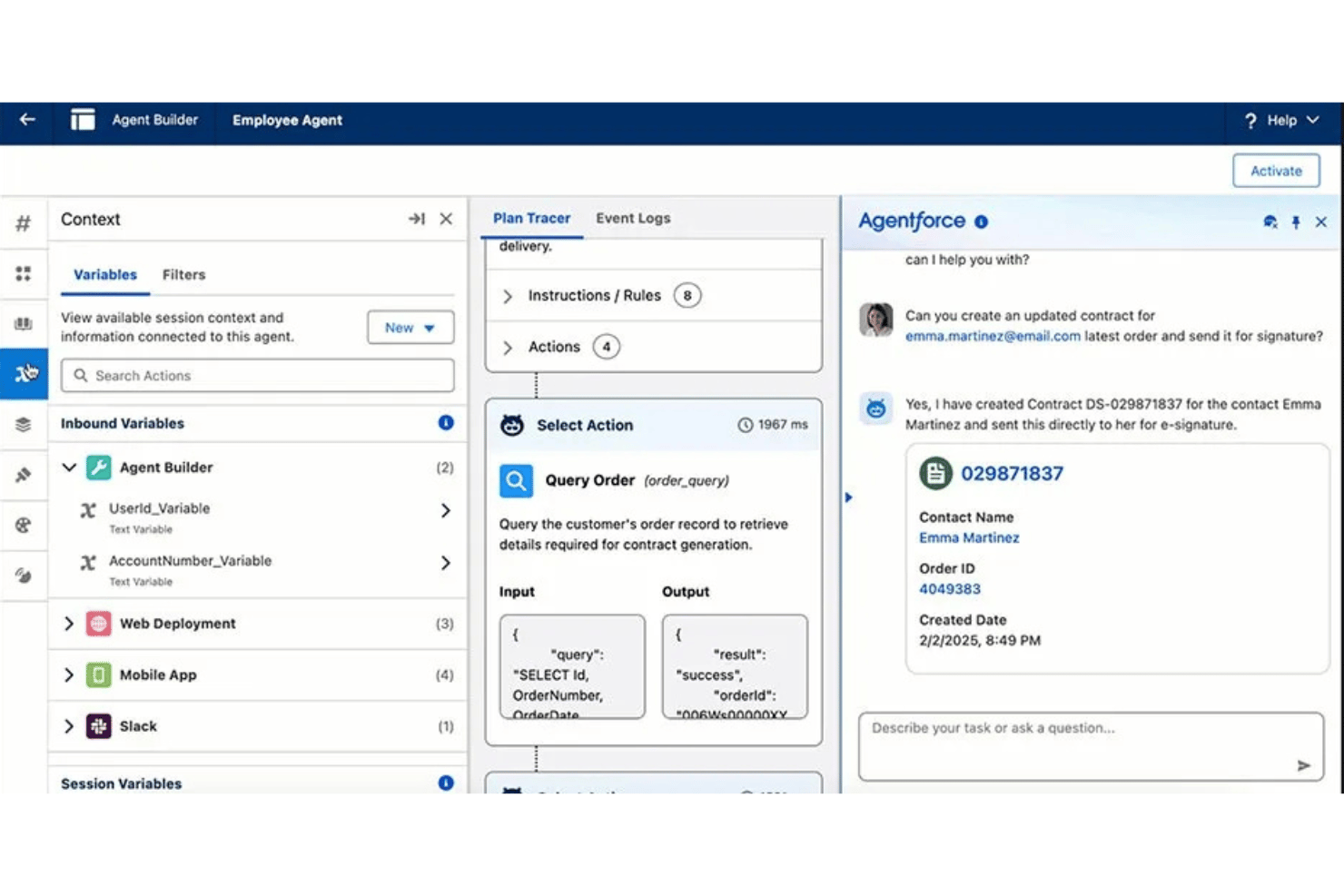
Salesforce Agentforce ist eine CRM-native KI-Agentenplattform, die autonome SDR-, Vertriebscoach- und Umsatzagenten direkt in Salesforce implementiert, um die Ansprache von Interessenten, das Einwandsmanagement und die Terminplanung zu übernehmen.
Für wen ist Salesforce Agentforce am besten geeignet?
Agentforce eignet sich besonders für mittelständische und große Vertriebsteams, die bereits mit Salesforce arbeiten und KI-Agenten direkt in ihre bestehenden CRM-Workflows integrieren möchten.
Warum ich Salesforce Agentforce gewählt habe
Agentforce verdient seinen Platz auf meiner Auswahlliste, weil der SDR-Agent vollständig innerhalb von Salesforce läuft, auf aktuelle CRM-Daten zugreift, um die Ansprache zu personalisieren und Einwände zu bearbeiten, ohne dass ein separates Tool benötigt wird. Besonders gefällt mir die Atlas Reasoning Engine, die jede Interaktion mit Interessenten in Einzelschritte unterteilt und das Vorgehen in Echtzeit neu bewertet. Der Sales Coach Agent ermöglicht es Vertriebsmitarbeitern außerdem, angebotsbezogene Verkaufsgespräche gegen KI-simulierte Einwände zu üben, die auf echten Pipeline-Daten basieren.
Wichtige Funktionen von Salesforce Agentforce
- Agent Builder: Ermöglicht die Konfiguration von Agenten, Subagenten, Aktionen und Anweisungen über eine Low-Code-Oberfläche.
- Agentforce Voice: Bringt KI-gestützte Sprachfunktionen in Web-, Telefon- und In-App-Kanäle für die Kundenansprache.
- Agentforce Grid: Überwacht, analysiert und optimiert die Agentenleistung nahezu in Echtzeit über ein einheitliches Dashboard.
- Agent Script: Ermöglicht detaillierte Skripterstellung, mit der das Verhalten und die Entscheidungswege der Agenten präzise gesteuert werden können.
Salesforce Agentforce Integrationen
Salesforce Agentforce bietet native Integrationen mit Salesforce-Produkten, darunter Sales Cloud und Revenue Cloud. Eine API ist für benutzerdefinierte Integrationen verfügbar.
Pros and Cons
Pros:
- Native CRM-Daten ermöglichen personalisierte Ansprache
- Echtzeit-Reasoning-Engine passt das Agentenverhalten an
- Sales Coach Agent führt angebotsbezogenes Pitch-Training durch
Cons:
- Erfordert eine bestehende Salesforce-Organisation
- Komplexe anfängliche Einrichtung und Admin-Konfiguration erforderlich
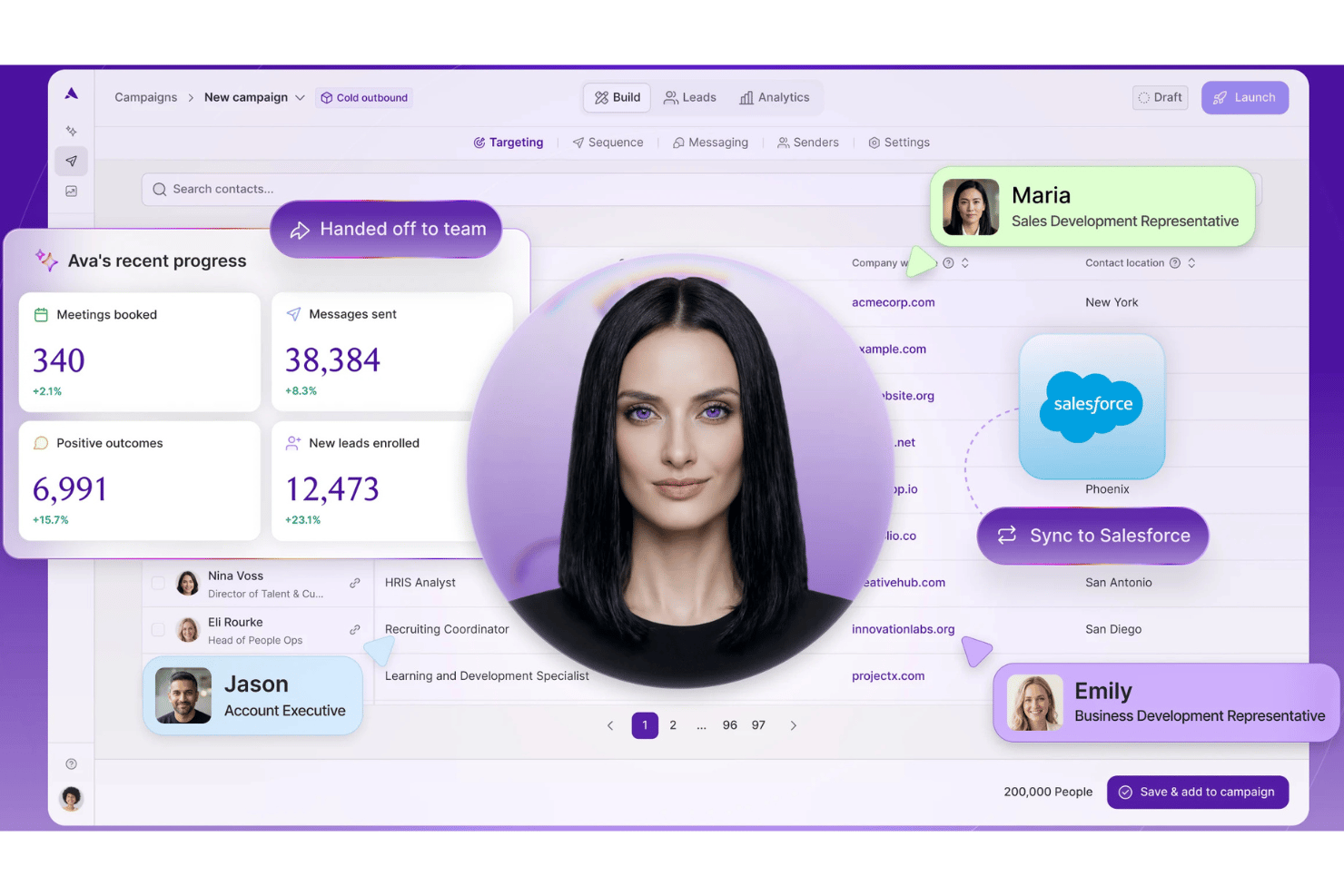
Artisan ist eine KI-Vertriebsagentenplattform, die rund um Ava aufgebaut ist, eine autonome KI-BDR, die Interessenten aus einer Datenbank mit über 250 Millionen Kontakten identifiziert, personalisierte Multi-Channel-Sequenzen erstellt, auf Antworten reagiert und Meetings bucht.
Für wen ist Artisan am besten geeignet?
Artisan eignet sich besonders für kleine Vertriebsteams und junge Unternehmen, die Outbound-Aktivitäten durchführen möchten, ohne ein eigenes SDR-Team aufbauen zu müssen.
Warum habe ich Artisan ausgewählt?
Artisan steht auf meiner Shortlist, weil Ava Multi-Channel-Outreach steuert, ohne dass ich einzelne Sendungen anfassen muss. Besonders gefällt mir das Auslösen durch Intent-Signale – Ava erkennt beispielsweise eine Finanzierungsrunde oder eine Neueinstellung und ordnet diesen Interessenten sofort der passenden Sequenz zu. Auch die Selbstoptimierung ist echt: Ava erhöht automatisch das Sendevolumen für Betreffzeilen und Varianten, die konvertieren, ohne dass ich Berichte ziehen und manuell anpassen muss.
Wichtige Funktionen von Artisan
- Bidirektionale CRM-Integration: Synchronisiert Aktivitäten und Daten sofort mit Salesforce und HubSpot.
- Intent-Signal-gesteuerte Kontaktaufnahme: Überwacht Signale wie Finanzierungen, Einstellungen und Website-Besuche, um Outreach zu priorisieren.
- Zustellbarkeitsmanagement-Tools: Enthält integriertes Domain-Warming, SPF/DKIM-Einrichtung und Optimierung der Versandlimits.
- Anpassbare Kampagnen-Schutzmaßnahmen: Ermöglicht für jede Kampagne die Festlegung von Freigaben, Tonfall, Antwortsensitivität und Kanalsteuerung.
Artisan-Integrationen
Artisan bietet native Integrationen mit Salesforce und HubSpot und stellt eine API für individuelle Integrationen bereit.
Pros and Cons
Pros:
- Ava führt Outbound-Kommunikation über drei Kanäle aus
- Große integrierte Datenbank mit über 250 Mio. Kontakten inklusive
- Optimiert Sequenzen eigenständig ohne manuelles A/B-Testing
Cons:
- Einrichtung und ICP-Kalibrierung erfordern Zeit
- Berichtsoptionen bieten zu wenig Detailtiefe für Pipeline-Zuordnung
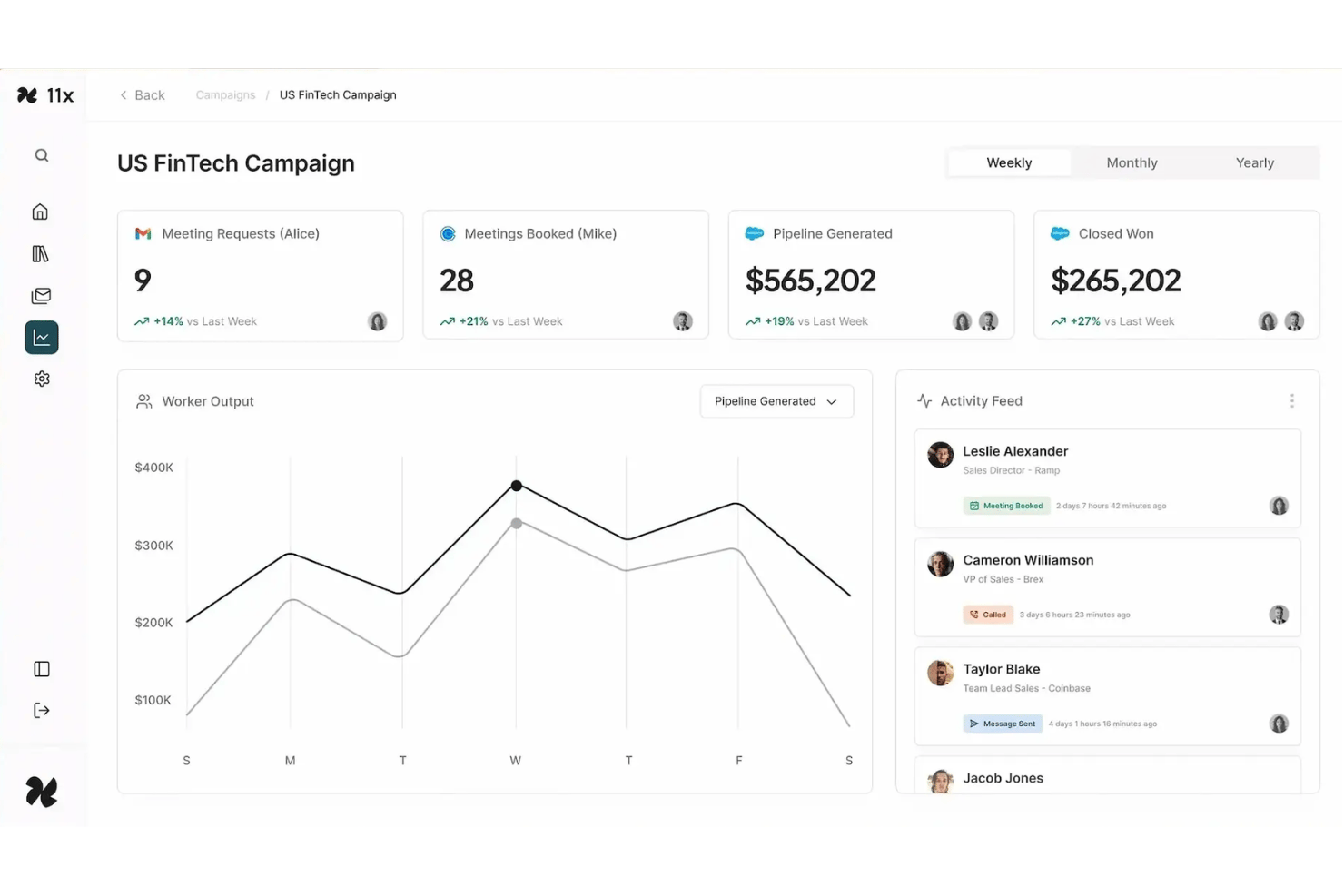
11x ist eine KI-Vertriebsplattform, die autonome digitale Mitarbeiter einsetzt – Alice für Outbound-Prospekting und Multi-Channel-Engagement sowie Julian für eingehende Sprachgespräche – und SDR-Workflows vollständig ohne menschliches Eingreifen durchführt.
Für wen ist 11x am besten geeignet?
11x wurde für Enterprise-Vertriebsteams entwickelt, die eine etablierte CRM-Infrastruktur nutzen und ihr Outbound-SDR-Volumen steigern möchten, ohne zusätzliche Mitarbeiter einzustellen.
Warum habe ich 11x ausgewählt?
Ich habe 11x zu den besten Lösungen gezählt, weil Alice die gesamte Qualifizierungsrunde ohne menschliches Zutun erledigt. Sie zieht Absichtssignale aus mehr als 50 Datenquellen, um Leads zu bewerten und zu priorisieren, und geht anschließend eigenständig über E-Mail, LinkedIn und SMS auf sie zu. Sobald ein Interessent antwortet, interpretiert Alice die Antwort, behandelt Einwände und bucht direkt einen Termin in den Kalender des zuständigen Vertriebsmitarbeiters – ohne dass dieser eingreifen muss, bis der Kontakt qualifiziert ist.
11x Hauptfunktionen
- Mehrsprachige Ansprache: Alice unterstützt Outreach in über 105 Sprachen und ermöglicht so globale Reichweite.
- Bidirektionale CRM-Integration: Synchronisiert Aktivitäten und Daten in Echtzeit mit Salesforce, HubSpot und Pipedrive.
- Individuelle Sequenz-Kontrollmechanismen: Nutzer können Kampagnenziele, ICP-Definitionen und Markenrichtlinien vorgeben, um den Agenteneinsatz zu steuern.
- Zustellbarkeits-Engine: Die integrierte Infrastruktur verwaltet die Absenderreputation, das Rotieren von Postfächern und sorgt für Compliance-Vorgaben.
11x Integrationen
11x bietet native Integrationen mit Salesforce, HubSpot und Pipedrive. Für eigene Anbindungen steht eine API zur Verfügung.
Pros and Cons
Pros:
- Bewältigt großes Outbound-Volumen problemlos
- Mehrsprachige Unterstützung ermöglicht globale Märkte
- Absichtssignale aus über 50 Quellen priorisieren Accounts automatisch
Cons:
- Schwächen bei kleinen oder hochspezifischen Zielgruppenlisten
- Jahresvertrag verpflichtet vor nachgewiesenem Erfolg

Am besten geeignet für Kampagnenanpassung und Schutzmechanismen
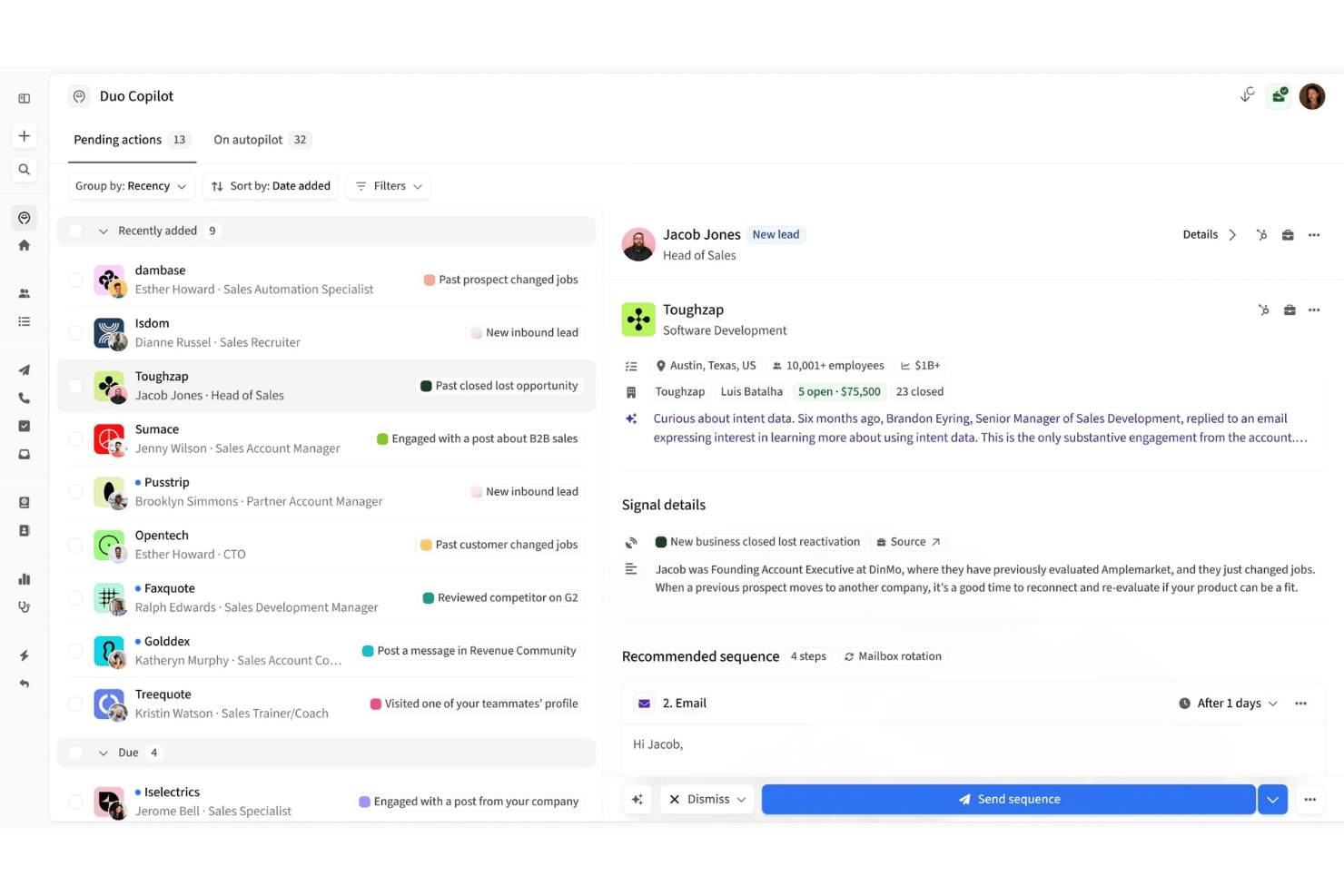
Amplemarket Duo Copilot ist ein KI-Vertriebsagent, der aus drei spezialisierten Subagenten besteht – Signal, Research und Sequence –, die den Kaufimpuls erkennen, eigenständig Interessenten recherchieren und die Ausführung von Multikanal-Kampagnen über E-Mail, LinkedIn, Telefon und mehr übernehmen.
Für wen ist Amplemarket Duo Copilot am besten geeignet?
Das Tool ist ideal für SDR- und BDR-Teams wachstumsorientierter B2B-Unternehmen, die große Outbound-Mengen bearbeiten und KI-gesteuerte Signalerkennung und Sequenzierung benötigen, ohne die Vertriebsmitarbeitenden vollständig aus dem Prozess zu nehmen.
Warum ich Amplemarket Duo Copilot ausgewählt habe
Amplemarket Duo Copilot gehört zu den besten, weil es Ihnen so viel Kontrolle darüber gibt, wie sich die KI tatsächlich verhält. Mir gefällt, dass Sie eigene Signale über Ihr CRM oder eine API einbinden, Leads per Gebietszuweisung an die richtigen Kollegen weitergeben und das Team vor dem Versand in die Freigabeschleife einbinden können. Wenn mein Team einen Duo-Vorschlag ablehnt, lernt der Agent aus dieser Ablehnung und meidet ähnliche Leads künftig.
Wichtige Funktionen von Amplemarket Duo Copilot
- Signalerkennung für 100+ Kaufintentionen: Überwacht in Echtzeit Kaufimpulse wie Jobwechsel, Finanzierungsrunden und Wettbewerberaktivitäten auf Kontaktebene.
- Sequenzierung von Multikanal-Outreach: Automatisiert personalisierte Vertriebsserien per E-Mail, LinkedIn, WhatsApp, iMessage, Telefon und KI-Sprachnachricht.
- Native Zweiwege-CRM-Synchronisierung: Synchronisiert Aktivitäten, Kontakte und Engagementdaten in Echtzeit mit Salesforce, HubSpot und Pipedrive.
- KI-generierte Recherche-Briefs: Verdichtet Informationen aus sozialen Profilen, Unternehmensmeldungen und beruflicher Historie zu einer detaillierten Interessentenübersicht.
Amplemarket Duo Copilot Integrationen
Amplemarket Duo Copilot bietet native Integrationen mit Salesforce, HubSpot und Pipedrive sowie eine API für individuelle Integrationen. Zusätzlich werden Integrationen über Zapier unterstützt.
Pros and Cons
Pros:
- Fein abgestimmte Schutzmechanismen verhindern unpassende Ansprache
- Erkennt Kaufimpulse aus über 100 verschiedenen Triggern
- Ablehnungen durch Mitarbeiter trainieren die KI fortlaufend
Cons:
- Herausfordernder Einstieg bei individuellen Signal-Workflows
- Nicht speziell für die Qualifizierung eingehender Leads entwickelt

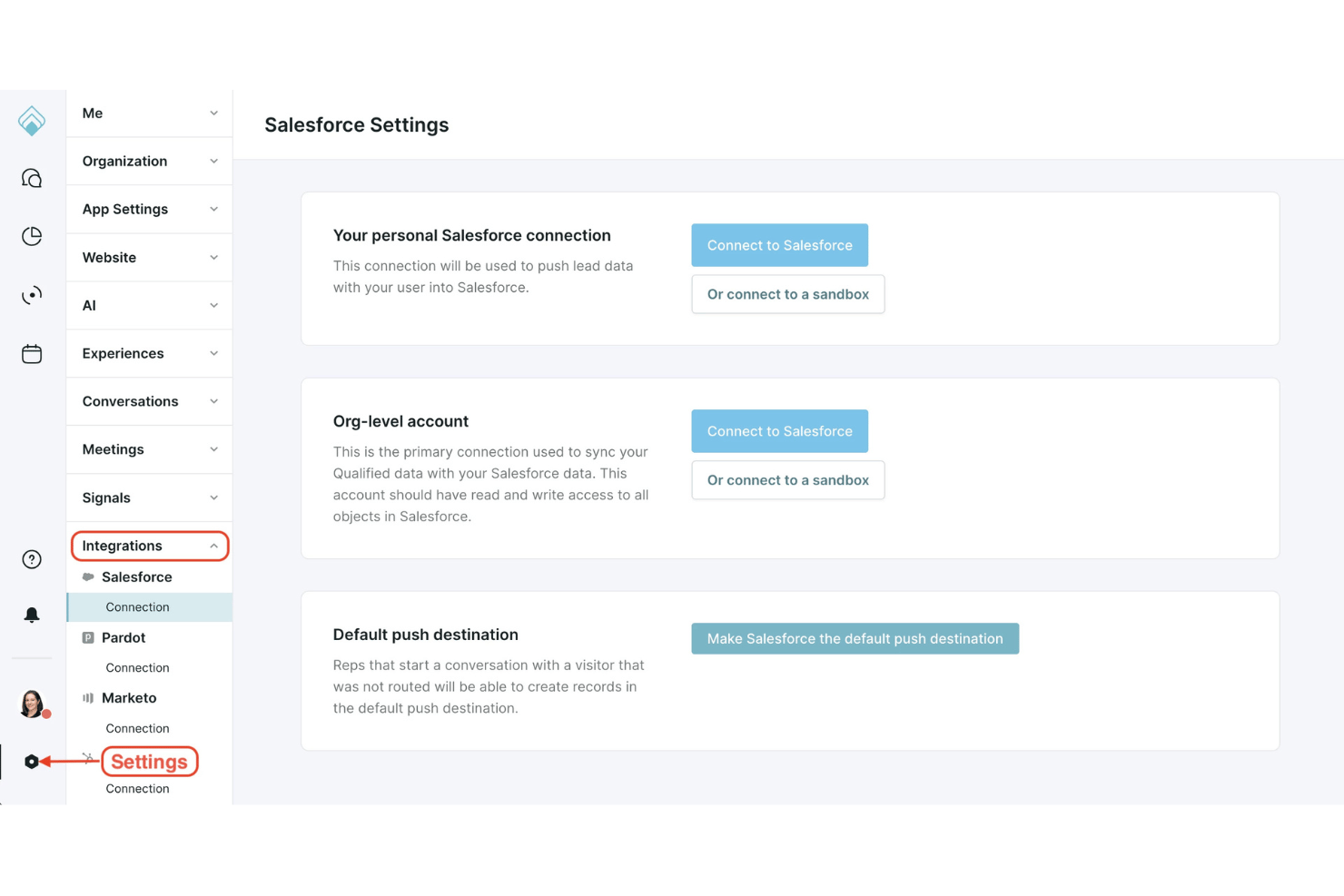
Qualified ist eine inbound-orientierte KI-SDR-Plattform, die um Piper, einen KI-Agenten, aufgebaut ist. Piper interagiert mit Website-Besuchern per Live-Chat, Sprache und Video, um Leads zu qualifizieren, Einwände zu behandeln und Meetings direkt im Kalender der Vertriebsmitarbeiter zu buchen.
Für wen ist Qualified am besten geeignet?
Qualified ist besonders geeignet für B2B-Teams im mittleren und Großunternehmensbereich, die Salesforce nutzen und über dedizierte RevOps-Ressourcen verfügen, um den Inbound-Pipeline-Prozess in großem Maßstab zu verwalten.
Warum ich Qualified ausgewählt habe
Qualified hat seinen Platz auf meiner Auswahlliste verdient, weil kein anderer KI-Sales-Agent ihm bei der Interaktion in Echtzeit mit Website-Besuchern das Wasser reichen kann. Piper kann einen potenziellen Käufer begrüßen, sobald dieser auf eine Seite gelangt, und ein echtes, wechselseitiges Gespräch über Text, Sprache oder Video führen – kein vordefinierter Entscheidungsbaum. Besonders gefällt mir die Funktion Agent Spotlight, die exakt zeigt, warum Piper während eines Gesprächs jede Entscheidung getroffen hat. So kann ich das Qualifikationsverhalten gezielt und ohne Rätselraten anpassen.
Wichtige Funktionen von Qualified
- Slack-Kollaborationsintegration: Direkte Interaktion mit Piper in Slack, um Benachrichtigungen zu überprüfen und Gespräche mit dem KI-Agenten zu führen.
- Multimodale Agentengespräche: Mit Website-Besuchern per Text-, Sprach- oder Videochat interagieren, für ein persönlicheres Erlebnis.
- Salesforce-native Weiterleitung: Tiefe Integration in Salesforce für individuelle Zuordnungslogiken, Synchronisationen und automatisierte Lead-Zuweisung.
- Agent Studio-Konfiguration: Zentrale Verwaltung von Agenten-Onboarding, Training, Zielen und Leitplanken über einen eigenen Konfigurationsbereich.
Qualified-Integrationen
Qualified bietet native Integrationen mit Salesforce, HubSpot, Marketo, Outreach, Salesloft, 6sense und Gong und kann mit Slack verbunden werden. Für individuelle Integrationen steht eine API zur Verfügung.
Pros and Cons
Pros:
- Echtzeit-Identifikation und -Engagement von Besuchern auf eingehenden Kanälen
- Salesforce-native Weiterleitung mit umfassender CRM-Datenunterstützung
- Persönliche Einführung mit dedizierten Success Architects
Cons:
- Fokus auf Website-Traffic
- Fehlen von Funktionen für kalte Outbound-Ansprache
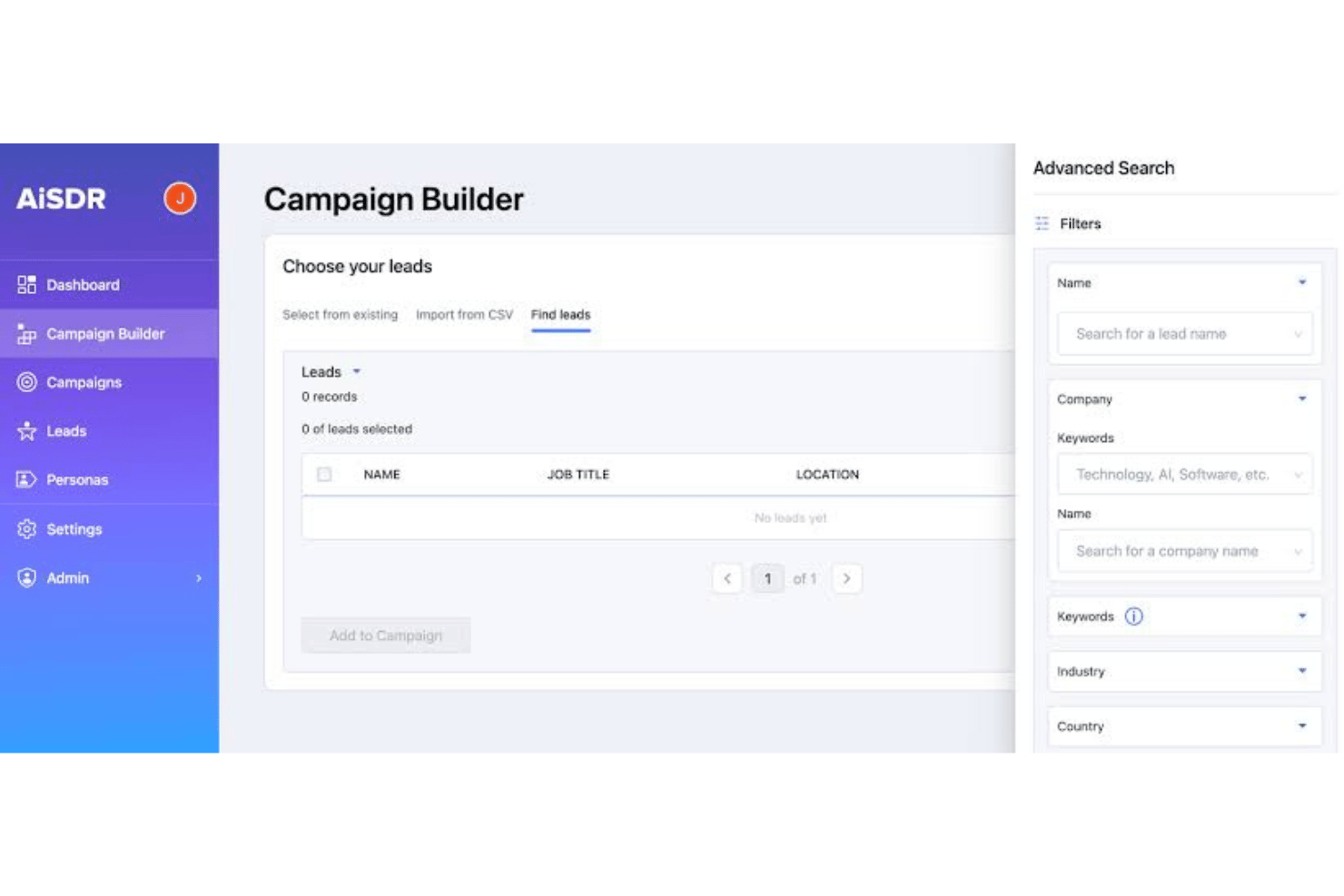
AiSDR ist eine KI-gesteuerte Plattform, die eigenständig das Outbound-Prospecting, die Nachverfolgung eingehender Leads, personalisierte E-Mails und LinkedIn-Outreach, die Bearbeitung von Antworten und die Terminbuchung mithilfe von signalbasiertem Targeting und tiefgehender Lead-Recherche übernimmt.
Für wen ist AiSDR am besten geeignet?
AiSDR eignet sich für Early-Stage- und Wachstumsunternehmen, die eine hohe SDR-Outreach-Menge wünschen, ohne eine entsprechende Anzahl an Mitarbeitenden einstellen zu müssen.
Warum habe ich AiSDR ausgewählt
Ich habe AiSDR als besonders empfehlenswert ausgewählt, weil das Tool eingehende Leads sofort nach deren Eintreffen bearbeitet. Der Agent antwortet innerhalb von 5-10 Minuten, qualifiziert den Interessenten, handelt Einwände und bucht eigenständig einen Termin über Calendly oder den HubSpot-Kalender – ganz ohne Zutun eines Vertriebsmitarbeiters. Besonders wertvoll finde ich den Co-Pilot-Modus, welcher es Mitarbeitenden ermöglicht, von der KI vorgeschlagene Antworten zu prüfen, bevor diese gesendet werden, wenn maximale Automatisierung nicht angebracht ist.
AiSDR-Hauptfunktionen
- KI-gestützte Lead-Recherche: Sammelt Daten aus mehr als 323 Quellen, um jede Kontaktaufnahme optimal zu unterstützen.
- Signalbasiertes Targeting: Überwacht Kaufsignale wie Jobwechsel, Finanzierungsrunden und LinkedIn-Aktivitäten, um die Kontaktaufnahme auszulösen.
- Automatisierte Multi-Channel-Sequenzen: Versendet personalisierte E-Mails und LinkedIn-Nachrichten in festgelegten Abläufen, ohne dass ein Vertriebsteam eingreifen muss.
- Native CRM-Synchronisierung: Zwei-Wege-Integration mit HubSpot und Salesforce für die Protokollierung von Aktivitäten und die Aktualisierung von Datensätzen.
AiSDR-Integrationen
AiSDR bietet native Integrationen mit HubSpot, Salesforce, Gmail, Outlook, LinkedIn, Calendly und Aircall. Eine API steht für individuelle Integrationen zur Verfügung.
Pros and Cons
Pros:
- Schneller Kampagnenstart ohne zusätzliche Tools
- Dedizierter GTM-Engineer in jedem Tarif enthalten
- Bearbeitung eingehender Antworten inklusive autonomer Terminvereinbarung
Cons:
- Kein A/B-Testing über Sequenzen oder Nachrichtenvarianten hinweg
- Signal-Logik ist vorgegeben und nicht individuell konfigurierbar
Weitere KI-Vertriebsagenten
Hier finden Sie einige weitere Optionen für KI-Vertriebsagenten, die es nicht in meine Auswahl geschafft haben, aber dennoch einen Blick wert sind:
- Apollo.io
Am besten geeignet für groß angelegte Zielkunden-Recherche
- Clay
Am besten geeignet für fortgeschrittene Datenanreicherungs-Workflows
- Unify
Am besten für CRM-Integration
- Outreach
Am besten geeignet für Analysen mehrstufiger Vertriebsinteraktionen
- Salesloft
Am besten geeignet für groß angelegte Workflow-Orchestrierung
- Breakout
Am besten für sprachbasierte Outbound-Anrufautomatisierung geeignet
- Nooks AI
Am besten für KI-gestütztes Power-Dialing in Echtzeit
- Salesforge Agent Frank
Am besten für automatisierte Posteingangsrotation
- Landbase
Am besten für umsetzbare, intentbasierte Konto-Zielgruppenansprache
- Alta
Am besten für einsatzbereite SDR-Konversationsflüsse geeignet


How I Evaluate AI Sales Agents
Every tool on this list needs to do more than slap an AI label on a sequencer—it should autonomously research, reach out, and handle replies without a rep babysitting each step. I split my evaluation into two layers: the core functionality a tool must have to qualify and the differentiating factors that separate one agent from another.
Core Functionality (Table Stakes for This List)
When I'm selecting tools for my list, I rank each one on a scale from 0 (does not offer the functionality) to 5 (excels in this area) for each core functionality listed below. Then, I calculate the tool's total score as a percentage. Each tool needs to achieve a minimum total score of 65% to be considered for inclusion.
- Autonomous Outreach Execution: I check whether the agent can send personalized emails, LinkedIn messages, or SMS on its own—not just draft copy that a rep still has to review and hit send on.
- AI Lead Research & Enrichment: The agent should pull firmographic, technographic, and intent data to build prospect profiles, similar to how Clay or Apollo.io layer multiple data sources automatically.
- Conversational Reply Handling: I evaluate how well the agent interprets and responds to prospect replies, including objection handling and knowing when to escalate a conversation to a human rep.
- Meeting Booking & Calendar Handoff: A strong agent negotiates times, books directly on a rep's calendar, and handles rescheduling—going well beyond just dropping a booking link into a message.
- CRM Sync & Activity Logging: I look for two-way sync with CRMs like Salesforce or HubSpot, including activity logging and record updates, so pipeline data stays accurate without manual entry.
- Goal-Based Campaign Configuration: Teams should be able to define an ICP, set guardrails, and let the agent plan and execute multi-step sequences rather than manually building each cadence from scratch.
Once I have a list of tools that meet the criteria, I consider what sets each platform apart.
Differentiating Factors (What Sets Vendors Apart)
Here's how I compare and contrast different vendors:
Standout Features
Self-learning optimization is a big differentiator. I look for agents that A/B test subject lines, send times, and cadences on their own, then apply winning variants without manual tweaking. Intent-based lead prioritization also matters—the strongest agents use real-time buying signals and behavioural data to surface accounts actively in-market, so reps focus on warm prospects instead of cold lists. When these two capabilities work together, outreach gets sharper over time with less human intervention.
Beyond Features
Core use case alignment matters a lot here. Some agents are purpose-built for high-volume cold outbound, while others focus on inbound qualification or re-engaging dormant leads—picking the wrong type wastes budget fast. Deliverability is another factor I evaluate closely, including inbox warm-up, domain rotation, and compliance safeguards that protect your sender reputation at scale. I also consider integration depth, especially whether the agent syncs bidirectionally with your CRM and data providers to prevent duplicate records and preserve attribution.
So wählen Sie einen KI-Vertriebsagenten aus
Bei langen Funktionslisten und komplexen Preisstrukturen verliert man leicht den Überblick. Damit Sie sich bei der Auswahl der für Sie passenden Software auf das Wesentliche konzentrieren können, finden Sie hier eine Checkliste mit Faktoren, die Sie berücksichtigen sollten:
| Faktor | Was zu beachten ist |
|---|---|
| Skalierbarkeit | Unterstützt die Plattform einen Anstieg bei Leads oder Vertriebsmitarbeitern, wenn Ihre Marktbearbeitung wächst? Achten Sie auf flexible Workflows, die sich an die zukünftige Größe Ihres Teams anpassen. |
| Integrationen | Verbindet sich das Tool nativ mit Ihrem CRM, Ihren Vertriebsengagement- und Datensystemen? Bevorzugen Sie Agenten, die manuelle Datenarbeit oder eine fragmentierte Pipeline-Verwaltung vermeiden. |
| Anpassbarkeit | Können Sie Kampagnen, den Umgang mit Einwänden und die Lead-Verteilung an Ihre Prozesse anpassen? Berücksichtigen Sie, wie stark Sie Abläufe, Nachrichten und die Kontoauswahl anpassen können. |
| Benutzerfreundlichkeit | Ist die Benutzeroberfläche sowohl für Administratoren als auch für Vertriebsmitarbeiter intuitiv? Achten Sie auf eine schnelle Einarbeitung und klare Bedienelemente—vermeiden Sie Tools, für deren Verwaltung häufige Unterstützung durch den Anbieter erforderlich ist. |
| Implementierung und Einarbeitung | Wie schnell können Sie mit Ihren wichtigsten Anwendungsfällen in Betrieb gehen? Klären Sie Zeitpläne, erforderliche Ressourcen und Anforderungen für die Einrichtung, Leitfäden oder die Datenbereinigung. |
| Kosten | Wie passen Preisstufen, Agentenlimits oder Nutzungsbegrenzungen zu Ihrem prognostizierten Volumen? Achten Sie auf versteckte Gebühren, etwa für die Anreicherung von Kontaktdaten oder zusätzliche Posteingänge. |
| Sicherheitsvorkehrungen | Unterstützt die Plattform SSO, Berechtigungskontrollen und Prüfpfade? Prüfen Sie, wie das Tool sensible Lead- und Pipeline-Daten innerhalb Ihres Technologie-Stacks schützt. |
| Verfügbarkeit des Supports | Wie schnell erhalten Sie Hilfe, wenn Probleme Ihre Kontaktaufnahme blockieren? Berücksichtigen Sie die Abdeckung verschiedener Zeitzonen, Eskalationswege und die Frage, ob Live-Chat oder eine Kontobetreuung angeboten wird. |
Was sind KI-Vertriebsagenten?
KI-Vertriebsagenten sind Softwareplattformen, die Aufgaben im Outbound- und Inbound-Vertrieb wie die Akquise, Lead-Recherche, personalisierte Nachrichten, die Bearbeitung von Antworten und die Terminbuchung autonom ausführen. Diese Tools nutzen künstliche Intelligenz, um Workflows für Kontaktaufnahme und Qualifizierung zu verwalten, damit sich Ihr Umsatzteam auf Verkaufsgespräche mit höherem Mehrwert statt auf repetitive SDR-Aufgaben konzentrieren kann.
Funktionen
Achten Sie bei der Auswahl eines KI-Vertriebsagenten auf die folgenden wichtigen Funktionen:
- Autonome Kontaktaufnahme: Der Agent versendet Nachrichten über mehrere Kanäle—E-Mail, LinkedIn, SMS—ohne dass für jeden einzelnen Kontaktpunkt manuelle Eingriffe erforderlich sind.
- KI-gestützte Lead-Anreicherung: Das System ruft Unternehmens-, Technologie- und Interessensdaten aus Datenbanken von Drittanbietern ab, um umfassende Interessentenprofile zu erstellen und die Zielgruppenansprache zu unterstützen.
- Konversationelle Antwortverarbeitung: Das System interpretiert Antworten von Interessenten und reagiert darauf, bearbeitet Einwände und leitet qualifizierte Leads bei Bedarf an menschliche Vertriebsmitarbeiter weiter.
- Automatisierte Terminbuchung: Der Agent schlägt Zeiten vor, stimmt Termine ab und trägt Besprechungen direkt in die Kalender der Vertriebsmitarbeiter ein, wodurch der manuelle Planungsaufwand sinkt.
- CRM-Integration und -Synchronisierung: Sämtliche Aktivitäten werden in Ihrem CRM protokolliert. Die bidirektionale Datensynchronisierung sowie die Erstellung von Leads oder Verkaufschancen in Echtzeit gewährleisten konsistente Datensätze.
- Automatisierung mehrstufiger Kampagnen: Sie können ideale Kundenprofile, Kampagnenziele und Leitplanken konfigurieren, sodass der Agent maßgeschneiderte Kontaktsequenzen planen und ausführen kann.
- Personalisierung im großen Maßstab: Nachrichten und Abläufe werden für jedes Interessentensegment oder jede einzelne Person angepasst. Dabei werden verfügbare Daten genutzt, um relevante Nachrichten ohne Kopieraufwand zu erstellen.
- Optimierung durch A/B-Tests: Betreffzeilen, Nachrichteninhalte und Versandzeitpunkte werden automatisch getestet, wobei wirksame Varianten auf zukünftige Kampagnen angewendet werden.
- Schutzmaßnahmen für die Zustellbarkeit: Die Plattform verwaltet die Aufwärmphase von Posteingängen, den Wechsel von Domains und die Einhaltung von Gesetzen wie der DSGVO oder CAN-SPAM, um den Ruf des Absenders zu schützen.
- Verwertbare Berichte: Übersichten zeigen wichtige Kennzahlen wie Antwortraten, gebuchte Termine und den Einfluss auf die Pipeline und bieten so einen klaren Einblick in die Leistung des Agenten.
Vorteile
Die Implementierung eines KI-Vertriebsagenten bietet Ihrem Team und Ihrem Unternehmen zahlreiche Vorteile. Auf Folgendes können Sie sich freuen:
- Skalierbare Akquise: KI-Agenten führen die Kontaktaufnahme über mehrere Kanäle und die Lead-Qualifizierung automatisch aus, sodass Ihr Team ein größeres Volumen bewältigen kann, ohne die Mitarbeiterzahl zu erhöhen.
- Höhere Pipeline-Qualität: Automatisierte Lead-Recherche und Interessensdaten helfen dabei, Interessenten mit höherer Konvertierungswahrscheinlichkeit zu priorisieren und bessere Verkaufschancen in Ihr CRM zu bringen.
- Schnellere Reaktionszeiten: Die Bearbeitung von Konversationsantworten und die sofortige Buchung von Meetings sorgen dafür, dass qualifizierte Leads in Echtzeit betreut werden und nicht verloren gehen.
- Konsistente Prozessausführung: Vordefinierte Kontaktfrequenzen, Leitplanken und Datensynchronisierungen stellen sicher, dass Ihre Ansprache jedes Mal der festgelegten Botschaft entspricht und Ihrem Vertriebsleitfaden folgt.
- Weniger manuelle Dateneingabe: CRM-Integrationen in Echtzeit protokollieren Aktivitäten, aktualisieren Datensätze und erstellen automatisch neue Verkaufschancen für Ihr Team.
- Kontinuierliche Kampagnenoptimierung: Integrierte A/B-Tests und selbstlernende Optimierungen verbessern Betreffzeilen, Nachrichten und den Versandzeitpunkt mit jeder neuen Kontaktsequenz.
- Mehr Fokus für Vertriebsmitarbeiter: Durch die Automatisierung wiederkehrender SDR-Aufgaben geben AI-Vertriebsagenten Ihren menschlichen Vertriebsmitarbeitern mehr Zeit für wertvolle Gespräche und den Abschluss von Geschäften.
Kosten und Preise
Für die Auswahl eines AI-Vertriebsagenten ist ein Verständnis der verschiedenen verfügbaren Preismodelle und Tarife erforderlich. Die Kosten variieren je nach Funktionen, Teamgröße, Zusatzoptionen und weiteren Faktoren. Die folgende Tabelle fasst gängige Tarife, ihre durchschnittlichen Preise und typische in Lösungen für AI-Vertriebsagenten enthaltene Funktionen zusammen:
Vergleichstabelle der Tarife für AI-Vertriebsagenten
| Tariftyp | Durchschnittlicher Preis | Übliche Funktionen |
|---|---|---|
| Kostenloser Tarif | $0 | Grundlegende Ansprache über einen einzelnen Kanal, begrenzte Anzahl an Kontakten, standardmäßige Bearbeitung von Antworten, grundlegende Berichte und minimaler CRM-Export. |
| Persönlicher Tarif | $25-$75/Nutzer/Monat | Nachrichten über mehrere Kanäle, teilweise Lead-Anreicherung, Meeting-Buchung, CRM-Synchronisierung, grundlegende A/B-Tests und Anpassung von Vorlagen. |
| Geschäftstarif | $75-$200/Nutzer/Monat | Erweiterte Anreicherung, mehrstufige Kampagnen, AI-gestützte Priorisierung, umfassende CRM-Integration, individuelle Leitplanken und Schutzmaßnahmen für die Zustellbarkeit. |
| Unternehmenstarif | $200+/Nutzer/Monat | Vollständig autonome Ansprache, bidirektionale CRM-Synchronisierung, proprietäre Datenintegrationen, erweiterte Compliance, Unterstützung bei der Einführung, dedizierter Support und individuelle Workflows. |
Häufig gestellte Fragen zu AI-Vertriebsagenten
Hier finden Sie Antworten auf häufige Fragen zu AI-Vertriebsagenten:
Wie schnell können Sie einen AI-Vertriebsagenten implementieren?
Die meisten Plattformen bieten eine geführte Einführung und können bei standardmäßigen automatisierten Workflows innerhalb weniger Tage betriebsbereit sein. Die Implementierung zur Verkürzung Ihres Vertriebszyklus kann einige Wochen dauern, wenn Sie individuelle generative AI-Konfigurationen, Modelle zur Verarbeitung natürlicher Sprache (NLP) für die Terminplanung oder eine umfassende CRM-Integration für komplexe Pipeline-Anforderungen benötigen.
Können AI-Vertriebsagenten menschliche SDRs vollständig ersetzen?
Nein. Zwar automatisieren autonome, von LLMs unterstützte Agenten wiederkehrende Aufgaben und sprechen Ihr ideales Kundenprofil an, doch ein Ansatz mit menschlicher Beteiligung bleibt unerlässlich. Menschliche Vertriebsmitarbeiter nutzen Konversationsintelligenz für komplexe Verhandlungen, die Qualifizierung von Leads und den Beziehungsaufbau – Aufgaben, die Software allein nicht bewältigen kann.
Wie verwalten AI-Vertriebsagenten Compliance und Datenschutz?
Über die üblichen Compliance-Anforderungen wie DSGVO und CCPA hinaus nutzen diese Systeme maschinelles Lernen und prädiktive Analysen zur sicheren Datenanreicherung und zur Überwachung von Kaufsignalen. Sie bieten Einwilligungsverwaltung und Prüfpfade. Sie sollten jedoch stets die spezifischen regionalen Datenschutzkontrollen jeder Plattform überprüfen.
Welche Arten von Unternehmen profitieren am meisten von AI-Vertriebsagenten?
Schnell wachsende Vertriebsteams, Unternehmen mit skalierbarer Outbound-Leadgenerierung oder Unternehmen, die große Lead-Listen verwalten, profitieren am meisten. Kleinere Teams können AI-Agenten einsetzen, um schlanke Teams zu unterstützen oder neue Outreach-Programme schneller umzusetzen.
Benötigen AI-Vertriebsagenten viele Anpassungen, um gut zu funktionieren?
Einige Agenten sind sofort einsatzbereit und funktionieren bei standardmäßigen Anwendungsfällen ohne weitere Anpassungen. Wenn Ihr Prozess einzigartig ist, sollten Sie nach Plattformen mit No-Code-Anpassungen oder Playbook-Buildern suchen, die sich an Ihre Workflows anpassen lassen.