
CRO Shares His Agentic Workflows And Tells Us Where AI Breaks Down In The Revenue Lifecycle
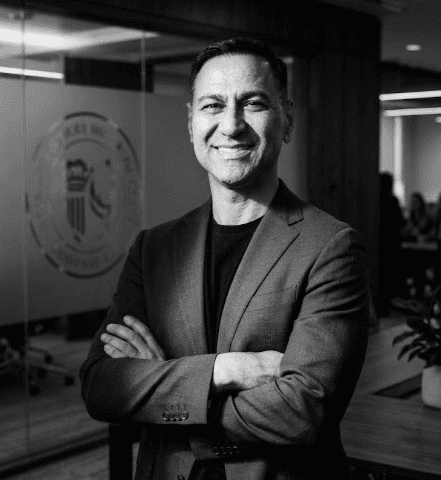
André Magrini
CRO at OGI

See how André Magrini uses AI agents to strengthen revenue decisions, qualify deals faster, and protect human judgment where enterprise sales matter most.
Key Takeaways
AI Systems: AI aids in refining high-stakes decision-making but cannot replace human judgment amid uncertainty.
Digital Transformation: OGI uses a proven land-and-expand method, emphasizing direct ROI to assist digital transformations.
Efficiency Gains: AI reduces account prep time significantly, increasing efficiency without expanding headcount.
AI Limitations: AI fails in generating authentic account outreach and predicting revenue better than experienced staff.
Human Element: AI should complement human decision-making, particularly in nuanced, high-stakes enterprise sales.
André Magrini is CRO at OGI. With 20 years of experience in revenue, he's currently going deep into agentic workflows that power high-stakes decisions.
We caught up with André to learn where he's applying his agents — and where AI is causing surprising issues. Here's what he told us.
AI systems for high-stakes decision-making
I'm André Magrini, Chief Revenue Officer at OGI, the international arm of the Objective Group. My world is revenue, but my obsession is how we decide revenue, the human judgment behind every qualified pipeline, every forecast call, every "is this deal real?" conversation.
My path here wasn’t a straight line. I’ve spent years building and running go-to-market motions that were deliberately network-led and disciplined rather than brute-force — small teams, high-trust relationships, rigorous qualification. That taught me something most AI conversations skip: the bottleneck in revenue isn't activity, it's decision quality under uncertainty. Reps and leaders are drowning in signals and still guessing.
That's what pulled me into AI. In parallel with my CRO role, I've gone deep into building AI systems for high-stakes decision-making — where the cost of a confident-but-wrong answer is real.
So the moment I'm in now is less "adopt AI tools" and more "redesign the revenue engine around better decisions." Not AI that writes more emails — AI that tells you which deals deserve your attention, where the forecast is fragile, and when the honest answer is "we don't know yet." That's the transformation I care about.
More Articles
Driving digital transformation

At OGI, we advise and execute for enterprises driving digital transformation — we don't just recommend strategy; we deliver outcomes. Our GTM uses a land-and-expand motion anchored in clear, direct ROI. We earn the first engagement by proving measurable value, then grow the account from there.
We are an international team with offices across North America, South America, and Europe. Our footprint lets us serve large multinational enterprises across a wide range of industries — from food and consumer goods to major government-owned banks — and adapt to very different buying cultures and decision cycles.
Our partner ecosystem is a big part of how we deliver. We work closely with platforms like Databricks, Snowflake, and Liferay, and with major cloud providers including Azure and AWS. This lets us meet enterprise clients on the technology stack they're already betting on.
How agents can support account prep
On a lean team, our scarcest resource isn’t headcount or pipeline; it’s the attention of people who can correctly read a deal. Every hour someone spent pulling company data was an hour not spent deciding what to do with it.
Our bottleneck was never lead volume; it was prep. Before a rep touched an account, a senior team member did the desk work of digging into the company, figuring out who owned the budget versus who just showed up to meetings, finding a credible reason to reach out, and running it through BANT to decide if it was worth our time.
With a small, senior team across three regions, that work fell to the same handful of people who should have been in front of customers. It was slow and inconsistent. Two of us researching the same type of account would return with different depths and conclusions.
I built what I call our "CRO Squad." I designed a set of AI agents to do that heavy lifting first. This includes deep account research, an org map of real stakeholders, signals and entry points worth acting on, and structured first-pass qualification. By the time a human picks up the account, a defensible go/no-go is already in front of them instead of a blank page.
As a result, prep that used to take 5 hours now takes 15 minutes. Because every account comes through the same process, what we say no to is as deliberate as what we chase.
On a lean team, our scarcest resource isn't headcount or pipeline; it's the attention of people who can correctly read a deal. Every hour someone spent pulling company data was an hour not spent deciding what to do with it.
A real-world account-prep workflow
Here's the workflow we use for net-new target accounts.
It starts with a trigger. Triggers include market signals, partner motions (e.g., Databricks or Snowflake flagging account activity), existing clients requesting expansion, or a name one of my team members suggests. Regardless of the source, the account enters the workflow, and the CRO Squad begins its work.
Agents build a dossier detailing the business's operations, its technology stack, recent signals (like leadership hires, transformation initiatives, funding, press), and an organizational map distinguishing decision-makers from meeting attendees. Every claim in the dossier includes its source. If an agent cannot provide a source, they cannot assert the claim.
Next, a structured, BANT-style first pass evaluates the account against our qualification criteria. Most importantly, the AI flags areas where it lacks confidence. If the budget signal is weak or the authority is a guess, it explicitly states this rather than presenting a weak inference as fact. I would rather see ten honest "low confidence" marks than one confident sentence I cannot trust.
Next is the human checkpoint, a step often overlooked. Before reviewing the AI output, the rep first writes their own assessment of the account. They document their intuition, perspective, and go/no-go instinct. Only then do they open and compare it with the dossier. Agreement means proceeding; divergence initiates a conversation, focusing directly on points the AI marked as uncertain. The go/no-go decision is entirely human.
Many accounts intentionally end here. We disqualify early to avoid wasting senior time on unrealistic opportunities.
For surviving accounts, the AI helps shape the approach: the value and ROI thesis for that specific account, the entry point, and which partner and solution fit best. However, the rep crafts the message and conversation, ensuring it's person-to-person, not mass-generated outreach.
From there, the process runs as a loop. As the deal progresses, agents continuously scan for signals — cooling risk, churn risk, or expansion triggers — and inform us if the forecast appears soft. The forecast call and the relationship stay human.
How AI shifts GTM metrics
André Shares
More coverage is not always better. When AI removed the research and qualification bottleneck, I expected the obvious payoff: It did the opposite.
More coverage is not always better. When AI removed the research and qualification bottleneck, I expected the obvious payoff: My team would cover far more accounts, and pipeline would balloon.
It did the opposite. While we could suddenly qualify a huge volume of accounts, most of what came back was qualified garbage. More coverage just produced more noise. Selection and depth of relationship were more important than scale.
So, I changed what I measure. I stopped tracking GTM health by volume and coverage; instead, I tracked it by quality of selection and where my senior people spent their hours. The real lever turned out to be subtraction, not addition. Saying no faster, concentrating the senior team on fewer accounts, and going deeper instead of wider.
That was hard to admit because it contradicts how I had run teams for twenty years.
What should remain human vs. what AI should handle
Once you stop thinking of AI as a productivity multiplier and start thinking of it as a way to protect a small team's attention, the split between AI and human is clear.
AI gathers and ranks — account research, the org map, and the BANT first pass. Additionally, it informs pipeline prioritization, performs deal scoring and triage so we're not all looking at the same forty opportunities with the same flat eyes, and scans for signals like an account ready to expand or an account quietly going cold. For forecasting, it pulls data together and, more useful to me, flags where the call is soft. It tells me which numbers it doesn't trust.
Humans make the decisions. I own the final forecast number. Humans handle pricing and commercial strategy. Humans manage the relationship and negotiation, full stop. We never trust a high-stakes client decision — where we commit to an ROI or where trust is on the line — to a model. The reason is not sentimental. Those decisions are made under real uncertainty, with context that lives in a room and in a history with the client, not in the data. That's exactly where a model is weakest and where being wrong is most expensive.
An example of why human judgment is necessary with new deals

Last year, we had a deal with a global manufacturer that the system favored. Every metric was green: dozens of emails a week, recurring calls, and six or seven active stakeholders in the thread. The CRO Squad scored it near the top of the pipeline and told me to lean in, forecast, and push for close. On paper, it was our healthiest deal.
My senior rep on the account felt the opposite, and she was right. All that activity was not momentum; it was friction. Seven people were in the room because not one of them could say yes. The meetings repeated because the deal circled back to the same unanswered question. Our most enthusiastic contact, who drove most of the email traffic, had no budget authority. The AI read volume as intent. Internal politics and a buying group too afraid to make a decision were the actual cause.
The machine could not see the silence of the one executive who mattered or the flat tone in the room every time price came up. Engagement metadata does not show that subtext. Our rep knew because she knew the people.
We trusted her, dropped the deal's grade, and stopped pouring senior hours into it. We were right, saving ourselves a quarter of wasted effort. This hardened a rule we still follow: AI brings the evidence; humans read between the lines.
How AI improves efficiency, discipline, and win rates
Overall, time savings are the obvious win with AI…Another quiet benefit is discipline.
Overall, time savings are the obvious win with AI. The account prep agents alone let us run the same process across roughly three times more accounts with existing headcount. We didn't add people; we gave our existing team their hours back, and those hours now go in front of clients instead of into spreadsheets.
Another quiet benefit is discipline. We disqualify earlier now. We say no to the wrong deals faster, which sounds negative but is one of the healthiest developments for our pipeline.
I won't provide a clean win rate percentage because I don't think the number would be honest yet. What I will say is we see a measurable lift in conversion on the deals we choose to pursue, and the forecast has fewer surprises. Part of that is chasing better deals. Part of it is the AI pointing out where the forecast is thin, and evidence doesn't truly support the call. A surprise you can see coming three weeks out isn't really a surprise. That, more than any single metric, is what changed how we run the quarter.
Why AI output should be treated as a draft
Early on, we trusted the output too much. The research looked clean, well-written, confident, and formatted like a good analyst's report. In a couple of cases, it was wrong in critical ways.
One account map identified the wrong decision-maker. Another relied on a signal months out of date. One almost made it into a real client conversation before a team member caught it. That scared us more than any missed number, because confident and wrong is the most expensive failure mode there is.
Internal friction also arose. My people are senior. The last thing a good seller wants is a machine handing them a score and implying it knows the account better than they do.
We stopped treating the AI output as truth and started treating it as a draft. The system now flags when it is unsure and hands the call back to a human instead of guessing. Once the team understood the AI was there to do grunt work and protect their judgment, not replace it, resistance dropped fast. They started trusting it because it earned that trust and admitted when it didn't know.
Three places where AI misses the mark in revenue workflows

The biggest miss with AI was probably outreach. We expected AI to build pipeline for us, delivering personalized messages at scale to hundreds of accounts in a way that felt one-to-one. It didn't work.
In complex enterprise deals with significant value, more messages do not generate more pipeline. The buyers I sell to recognize AI outreach instantly and delete it just as fast. So, we didn't increase response; we flattened it. AI excels at getting a human ready for a conversation but fails at replacing the conversation itself.
Forecasting was another miss, and that surprised me more. The pitch claimed AI would predict revenue better than a senior person analyzing the same deals. It didn't prove true. What truly moves enterprise numbers is information not found in the data. A sponsor leaves. A budget freezes two weeks before close. A quiet political shift inside the client suddenly leaves your champion with no air cover. The model can't see any of that. It genuinely flags fragility well, telling me which deals feel thin, but it cannot call the quarter. Senior judgment still wins there.
And the final miss was compressing the sales cycle. It barely affected it. An enterprise cycle runs on the client's clock, not ours: Procurement, legal, the committee, the budget calendar. We can make the seller's side faster by a wide margin — and we did — but we cannot accelerate the buyer's side, which governs the timeline.
Why revenue leaders must pay attention to the human side of AI adoption
André Shares
Imposed adoption is silent sabotage with better manners.
I got the human side badly wrong. I treated it like a tool rollout instead of a behavior change. I built something, handed it over finished, and expected adoption to follow.
I encountered resistance. People used it only because they were told to. Others quietly ignored it. Imposed adoption is silent sabotage with better manners.
If I could redo it, I would bring the team in to co-design from day one instead of presenting them with a finished answer.
That would have saved months of chasing the perfect tool while the real problem lay in unwritten criteria and a team that hadn't bought in. I would have started smaller, with one workflow and the team in the room, and I would have written the criteria first. That would have saved me an expensive false start and the trust I spent rebuilding afterward.
Four pieces of advice for revenue leaders
Here's my advice:
- Start with a question, not a tool. Ask yourself what the scarcest resource on your team is. For almost everyone running a complex sale, it's judgment and attention, not activity. Your best people have a finite number of hours where they're thinking clearly about a deal, and that's what you lack. So direct AI to protect that.
- Be honest with yourself about vanity metrics. More emails, more touches, more content, more activity in the system. In a complex sale that's mostly noise dressed up as progress. AI is very good at manufacturing activity that feels like work and produces nothing. If your only proof that AI is helping is that your team is busier, you've bought the wrong thing.
- Demand that your AI systems be able to say "I don't know" and escalate to a human. Treat every output as a draft to check, never as truth.
- Start small and measure AI honestly. Don't outsource your revenue discipline to a model and call it transformation. The advantage in this cycle won't go to whoever adopts the most AI. It'll go to whoever keeps human judgment focused on the right place and refuses to let the tool decide what only a person should.
Follow along
You can follow André Magrini's work on LinkedIn or check out his personal website.
More expert interviews to come on The CRO Club!