

10 Best Oracle NetSuite Alternatives for ERP in 2026

Best Oracle NetSuite Alternatives Shortlist


Oracle NetSuite is an advanced enterprise resource planning (ERP) system, offering powerful features and multiple customization options. However, some users may seek alternatives due to its high cost and complexity, which can be intimidating for newcomers and smaller businesses.
To help teams find their next Oracle NetSuite alternative, I used my experience in revenue operations and digital software to test and compare several of the top solutions. With my in-depth reviews, I’m assured that you’ll be able to find an Oracle NetSuite alternative that meets your company needs while also improving overall processes.
What is Oracle NetSuite?
Oracle NetSuite is a cloud-based enterprise resource planning (ERP) software suite designed to help businesses manage various aspects of their operations, including financials, inventory, CRM, and e-commerce. It offers a unified platform for businesses to streamline processes, gain real-time insights, and scale their operations efficiently.
Why Trust Our Software Recommendations
Our reviews reflect our independent judgment—not a sales pitch. Learn how we stay transparent.
For this guide, we evaluated tools using hands-on testing and independent research, scoring tools using our selection criteria.
Our reviews reflect our human editorial judgment, not a sales pitch.
Oracle NetSuite Alternatives Comparison Table
This comparison table summarizes pricing details for my top Oracle NetSuite alternative selections:
| Tool | Best For | Trial Info | Price | ||
|---|---|---|---|---|---|
| 1 | Best for fashion and apparel industry | Free demo available | Pricing upon request | Website | |
| 2 | Best for advanced financial automation | Free demo available | Pricing upon request | Website | |
| 3 | Best for production planning | 30-day free trial | From $49/user/month | Website | |
| 4 | Best for integrated CRM and ERP | 30-day free trial | From $65/user/month (billed annually) | Website | |
| 5 | Best for small business accounting automation | 30-day free trial available | From $2.50/month | Website | |
| 6 | Best for secure and customizable business reports | 7-day free trial | From $99/month | Website | |
| 7 | Best for open-source integration | Free plan available | From $8.95/user/month (billed annually) | Website | |
| 8 | Best for manufacturing and distribution ERP | Free demo available | Pricing upon request | Website | |
| 9 | Best for Salesforce-native ERP and PSA | Free demo available | Pricing upon request | Website | |
| 10 | Best for ecommerce-focused ERP | Free demo available | Pricing upon request | Website |
Best Oracle NetSuite Alternatives
In this analysis, I will walk you through the pros and cons of each Oracle NetSuite alternative. I’ll cover their features and best use cases to help you make an informed decision.

Best for fashion and apparel industry
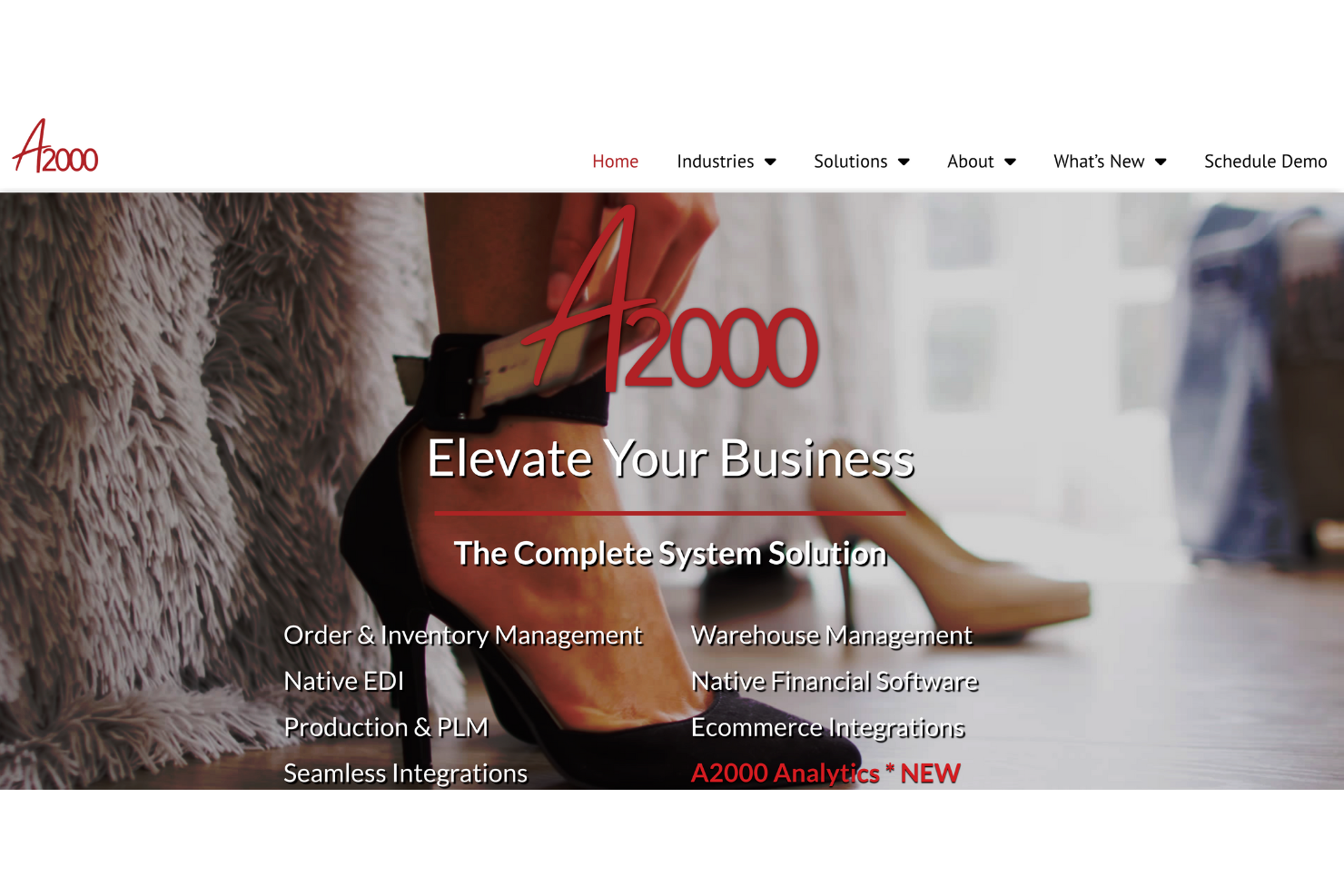
A2000 is designed for businesses in the fashion and apparel industry, offering unique solutions tailored to their needs. With its focus on enhancing operational efficiency and managing complex inventory and supply chain processes, A2000 provides an attractive alternative to Oracle NetSuite. This software addresses specific industry challenges, making it ideal for companies looking to improve their operations.
Why I Picked A2000 Software
I picked A2000 because of its specialized focus on the fashion and apparel industry, which sets it apart as a strong alternative to Oracle NetSuite. The software's Native Electronic Data Interchange (EDI) capabilities eliminate the need for third-party software, streamlining business processes and reducing the risk of errors. Additionally, its integrated Warehouse Management System enhances inventory control and logistics management, crucial for businesses handling large volumes of products. These features directly address the needs of companies looking for a tailored ERP solution that aligns with their industry-specific requirements.
A2000 Software Key Features
In addition to compatibility with the fashion and apparel industry, A2000 offers:
- Product Lifecycle Management: This feature allows your team to manage the entire lifecycle of a product from conception to delivery, ensuring quality and consistency.
- Fully Integrated Financial Software: A2000 provides comprehensive financial management tools that integrate seamlessly with your operations, enhancing financial oversight and decision-making.
- Logistics Integrations: With support for major carriers like UPS and FedEx, A2000 streamlines shipping and distribution, ensuring timely and efficient delivery of goods.
- Custom REST API: This capability allows your IT team to develop custom integrations, ensuring that A2000 can adapt to your unique business processes and requirements.
a2000 Software Integrations
Integrations include Shopify, QuickBooks, UPS, FedEx, and custom REST API capabilities.
Pros and Cons
Pros:
- Supports global currency and tax rules, aiding international business operations
- Provides real-time analytics for informed decision-making and strategic planning
- Flexible deployment options include both cloud and on-premises solutions
Cons:
- Interface design is considered outdated by some users, impacting user experience
- Smaller user community compared to larger ERP solutions like NetSuite

Best for advanced financial automation

DualEntry is an AI-native ERP platform designed to help finance teams automate complex accounting tasks and scale operations efficiently. It offers a wide range of features tailored to support businesses from mid-market stages through to IPO readiness.
Why it's a good Oracle NetSuite alternative: DualEntry stands out because of its advanced automation capabilities that reduce manual work. For instance, it automates journal entries with smart approval workflows that verify thresholds and limits, and it manages the reversal of accruals and short-term entries at the beginning of each accounting period without manual intervention. Additionally, DualEntry's AI handles bank matching, transaction creation, and categorization, simplifying the reconciliation process and reducing the risk of errors.
Standout features & integrations:
Features include a comprehensive general ledger capable of handling over 40 billion records. Additionally, DualEntry's fixed assets module supports various depreciation methods, including ACRS, straight-line, declining balance, and sum of years' digits, allowing for flexible asset management.
Integrations include BambooHR, Bill.com, Brex, Deel, Google SSO, Gusto, HubSpot, Ramp, Rippling, Salesforce, Stripe Billing, and Stripe Invoicing.
Pros and Cons
Pros:
- Advanced AI features help with complex accounting tasks
- Supports multi-entity and multi-currency operations
- Automated revenue recognition ensures compliance with standards
Cons:
- Initial data migration could be complex depending on existing systems
- No option to try the system before buying

MRPeasy
Best for production planning
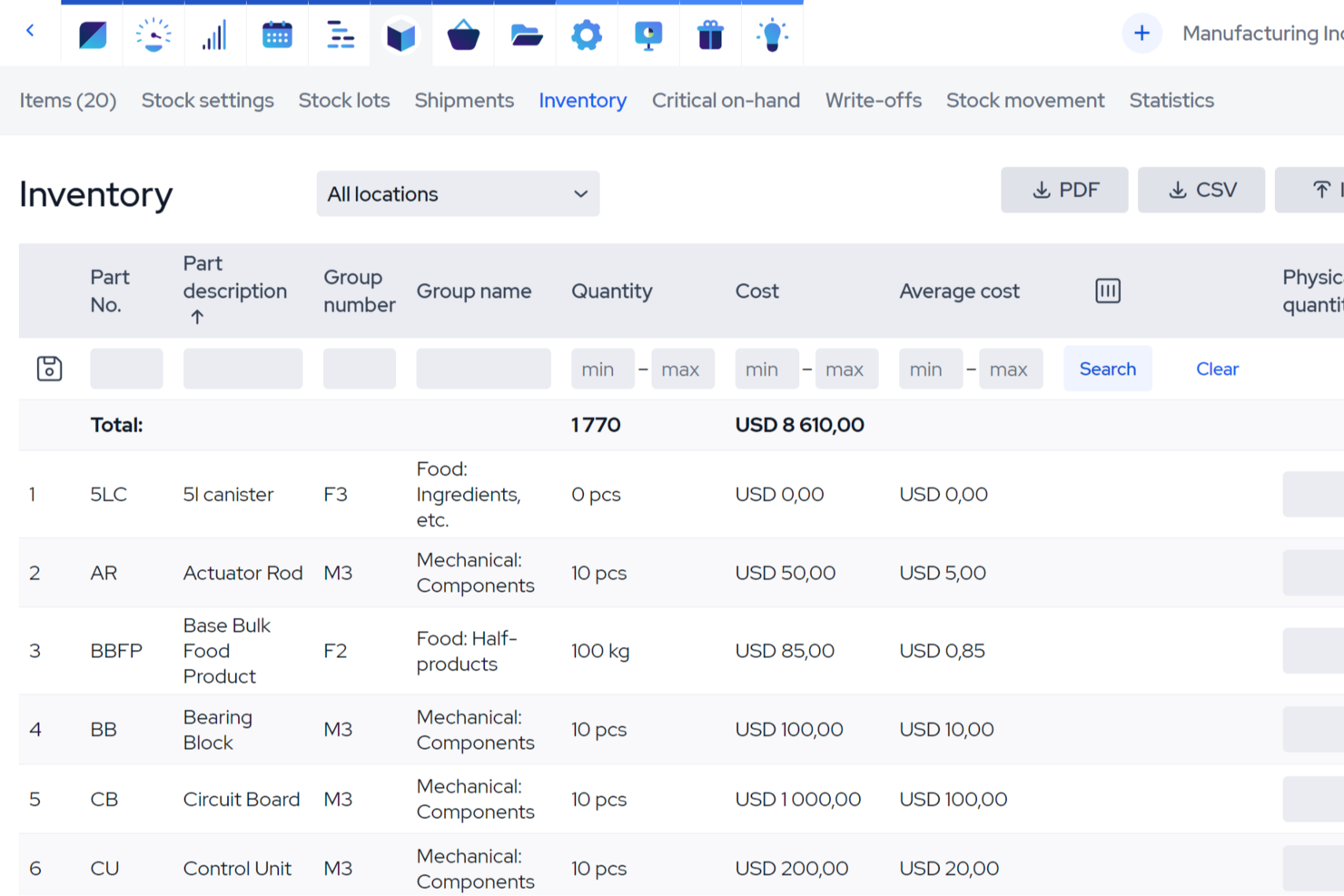
For small manufacturers looking to optimize operations without the complexity of larger systems, MRPeasy offers a tailored solution. Whether you're managing production schedules, tracking inventory, or handling sales, this AI-powered software is designed to meet the unique needs of businesses with 10 to 200 employees. If you're seeking a cost-effective and efficient alternative to Oracle NetSuite, MRPeasy could be the perfect fit for improving your manufacturing processes.
Why I Picked MRPeasy
I picked MRPeasy as a noteworthy alternative to Oracle NetSuite because it excels in providing specialized functionalities for small manufacturers. The software’s production planning feature stands out, allowing teams to coordinate tasks and resources with precision. Additionally, its real-time inventory management offers businesses the capability to keep track of stock levels instantaneously, reducing waste and ensuring timely order fulfillment. These features, tailored specifically for smaller manufacturing setups, make it a valuable tool for businesses looking to enhance operational efficiency without the overhead of more extensive systems.
MRPeasy Key Features
In addition to its standout production planning and inventory management capabilities, I also found several other features that enhance its value:
- Sales Management: This feature helps you simplify the sales process, from order entry to invoicing, ensuring that every transaction is smoothly handled.
- Workforce Tracking: With this, you can monitor employee productivity and manage task assignments, which is important for maintaining an efficient operation.
- Procurement: This function facilitates efficient procurement processes, ensuring that your materials are sourced and delivered on time.
- Financial Management: It provides tools for tracking costs and managing budgets, giving you critical insights into your financial operations.
MRPeasy Integrations
Integrations include Xero, Shopify, QuickBooks Online, WooCommerce, Amazon, Zapier, Dropbox, HubSpot, and more.
Pros and Cons
Pros:
- Simple BOM and inventory management workflows
- Built-in barcode and serial number tracking
- Visual production planning and scheduling tools
Cons:
- Not suitable for large or multi-entity enterprises
- Limited advanced financial management features
New Product Updates from MRPeasy
MRPeasy Expands REST API v2 With New Data Endpoints
MRPeasy expands REST API v2 with new endpoints for reports, dashboard data, production resources, stock, and settings. This gives users broader programmatic access to operational data. For more information, visit MRPeasy’s official site.
 .
.
Best for integrated CRM and ERP

Microsoft Dynamics 365 is a suite of intelligent business applications designed to connect data, processes, and teams across an organization. It combines customer relationship management and enterprise resource planning functionalities into a single platform.
Why it's a good Oracle NetSuite alternative: Microsoft Dynamics 365 has a modular architecture that allows businesses to choose specific applications that meet their needs, such as sales, customer service, finance, and operations. The embedded AI capabilities offer advanced analytics and insights for data-driven decision-making and task automation. On the other hand, its integrated CRM and ERP put all customer interactions, financial data, chain information, and operational metrics all in one place.
Standout features & integrations:
Features include AI-powered insights, seamless integration with Microsoft 365 and Teams, and low-code customization through Microsoft Power Platform.
Integrations include Microsoft 365, Microsoft Teams, LinkedIn, Power BI, Azure, Outlook, OneDrive, SharePoint, PowerApps, and Microsoft Power Automate.
Pros and Cons
Pros:
- AI and mixed reality integrations
- Single data model for CRM and ERP systems
- Modular flexibility to avoid cost of unused features
Cons:
- Integration challenges with non-Microsoft products
- Complex licensing structure
Xero
Best for small business accounting automation
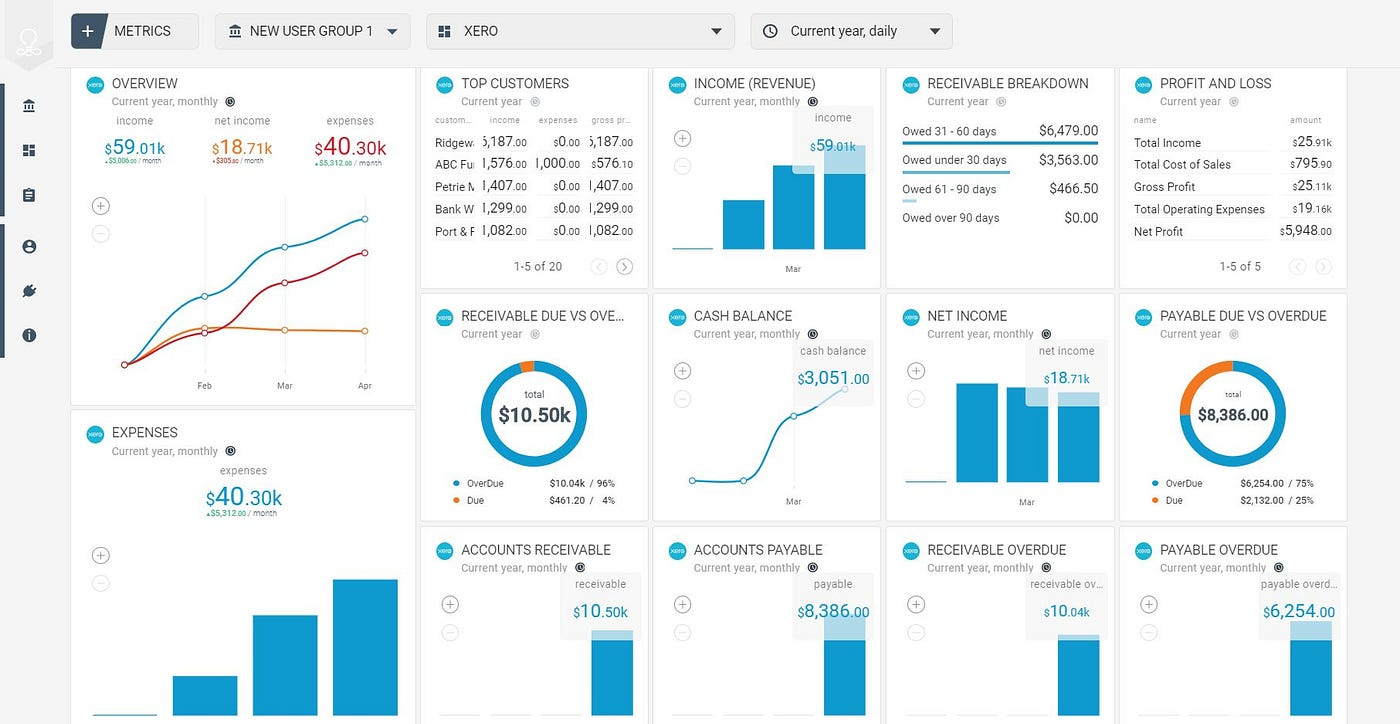
Xero is a cloud-based accounting software for small businesses that automates various accounting tasks, making it easier for small business owners to manage their finances efficiently.
Why it's a good Oracle NetSuite alternative: Xero offers a more accessible and intuitive interface that simplifies accounting tasks for small businesses. It comes with advanced automation capabilities that streamline routine accounting processes like bank reconciliations, invoicing, bill payments, and expense tracking. Xero also handles payroll, inventory management, and real-time financial reports, allowing small businesses to create a tailored ecosystem that supports their operational needs.
Standout features & integrations:
Features include automated bank transaction reconciliation, invoicing, and expense tracking. It also offers smart data insights and customizable reporting to help businesses make informed decisions.
Integrations include Hubdoc, Stripe, PayPal, Square, Gusto, Shopify, WooCommerce, Microsoft 365, Google Workspace, and Mailchimp.
Pros and Cons
Pros:
- Expense claims for mobile app
- Integrated payroll for multiple regions
- Automatic bank feeds for real-time transaction updates
Cons:
- Limited reporting customizations
- Limited inventory management

Best for secure and customizable business reports

TallyPrime is a business management software designed for small and medium-sized businesses that provides secure and customizable business reports and allows users to make informed decisions with actionable insights.
Why it's a good Oracle NetSuite alternative: TallyPrime stands out for its powerful reporting capabilities, allowing users to generate business reports like financial statements, inventory reports, and tax compliance documents. This is helpful for businesses that need to gain insights into their operations. Additionally, its modular design allows businesses to start with the basic functionalities they need and add more advanced features over time, such as payroll management, statutory compliance, and inventory management. This scalability makes it a valuable tool for businesses at various stages of growth and a reliable alternative for Oracle NetSuite.
Standout features & integrations:
Features include inventory management, accounting and financial management, GST compliance, multi-currency support, payroll management, banking transactions, data security and audit, invoicing and billing, job costing, budget and controls, multi-user capability, and remote access.
Integrations include Microsoft Excel, WhatsApp, Google Drive, Dropbox, OneDrive, Zoho CRM, Salesforce, QuickBooks, PayPal, and Stripe.
Pros and Cons
Pros:
- Voucher customization for specific transaction types
- Real-time data synchronization across locations
- Simplified GST compliance
Cons:
- Complex data migration from other accounting systems
- Less intuitive for non-accountants

Odoo
Best for open-source integration

Odoo is an open-source ERP and CRM platform that offers a wide range of business applications, including finance, sales, websites, supply chain, human resources, marketing, services, and productivity.
Why it's a good Oracle NetSuite alternative: Odoo is an open-source ERP and CRM solution that allows businesses to customize and adapt the software to their needs without being locked into proprietary systems. Its modular architecture offers apps that integrate smoothly with various business functions like sales, accounting, inventory, and human resources. It has an intuitive design that reduces users’ learning curve and offers cloud-based or on-premise deployment options, providing flexibility.
Standout features & integrations:
Features include inventory and warehouse management, CRM and sales management, human resources and payroll, e-commerce integration, manufacturing management, marketing automation, point of sale, multi-currency support, real-time reporting and analytics, customization and scalability, and cloud or on-premise deployment options.
Integrations include Google Drive, Slack, PayPal, Stripe, Amazon, eBay, QuickBooks, WooCommerce, Shopify, and Microsoft Office 365.
Pros and Cons
Pros:
- Country-specific modules and features
- Multi-website management
- Rapid prototyping and development
Cons:
- Limited out-of-the box features for niche industries
- Performance issues with large data sets

SYSPRO
Best for manufacturing and distribution ERP

SYSPRO is an ERP solution for the manufacturing and distribution sectors. It provides advanced tools for managing data and gaining insights into business operations, promoting efficiency and profitability.
Why it's a good Oracle NetSuite alternative: SYSPRO is an industry-specific ERP solution, focusing mainly on manufacturing and distribution functionalities. The software offers advanced inventory management, production, scheduling, and quality control, which are essential for maintaining efficiency. Additionally, it provides models for lot traceability, material requirement planning, shop floor control, and other tools for operations optimization.
Standout features & integrations:
Features include financial management, inventory control, and supply chain management. It also provides industry-specific solutions and strong analytics to help businesses make informed decisions.
Integrations include Microsoft Office, Salesforce, Shopify, Amazon, eBay, QuickBooks, Sage, PayPal, FedEx, and UPS.
Pros and Cons
Pros:
- Extensive multi-level bill of materials
- Graphical workflow automations
- Lot traceability and serial tracking
Cons:
- Dependent on reseller network with varying service quality
- Limited global capability

Certinia
Best for Salesforce-native ERP and PSA

Certinia is a cloud-based professional services automation and ERP software built on the Salesforce platform. It offers solutions to improve cash flow, keep projects profitable, and optimize employee utilization.
Why it's a good Oracle NetSuite alternative: Certinia natively integrates with Salesforce, offering a wide range of CRM and ERP functionalities. This connection allows businesses to streamline operations by managing customer interactions, financials, and project delivery in one ecosystem, reducing data silos and improving efficiency. Additionally, Certinia has powerful professional services automation capabilities for resource and project management, allowing service-oriented businesses to manage projects more effectively.
Standout features & integrations:
Features include services automation, resource management, and financial planning and analysis.
Integrations include Salesforce, Slack, Microsoft Teams, Google Workspace, Docusign, QuickBooks, Xero, HubSpot, Zendesk, and Jira.
Pros and Cons
Pros:
- Leverages Salesfoce Einstein AI
- Advanced PSA and ERP functionalities
- Real-time financial and customer data access
Cons:
- Complex data migration from legacy systems
- Dependence on Salesforce ecosystem

Fulfil
Best for ecommerce-focused ERP

Fulfil.io is an AI-native ERP platform built specifically for ecommerce and wholesale brands. It combines financial, inventory, and order management into a unified system that helps retailers manage complex omnichannel operations. With faster deployment and deep integrations, it offers a modern alternative to traditional ERP systems for growing online sellers.
Why it’s a good Oracle NetSuite alternative: Fulfil.io stands out as a cost-effective and faster-to-implement ERP solution for high-growth ecommerce businesses. Unlike NetSuite’s typical six-to-eighteen-month rollout, Fulfil.io can be deployed in roughly eight to twelve weeks, allowing teams to start realizing ROI sooner. Its real-time inventory tracking avoids the batch delays common in older systems, providing immediate visibility across warehouses and sales channels. Additionally, Fulfil.io’s direct integrations with Shopify and Amazon reduce the need for middleware, lowering implementation costs and complexity.
Standout features & integrations:
Features include real-time inventory visibility, advanced order processing across multiple channels, and warehouse management tools that optimize picking and packing operations. The platform also supports AI-powered analytics and automated workflows to simplify financial and operational reporting.
Integrations include Shopify, Amazon, UPS, FedEx, Canada Post, Ramp, Brex, PayPal, and Mercury.
Pros and Cons
Pros:
- Fast implementation compared to NetSuite
- Real-time inventory synchronization
- Strong native eCommerce integrations
Cons:
- Limited scalability for very large enterprises
- Pricing available upon request
Other Oracle NetSuite Alternatives
Below is a list of additional Oracle NetSuite alternatives that I shortlisted. While they didn’t make the top 10, they’re still valuable and worth further research.
- SAP S/4HANA Cloud
For AI-driven business insights
- Infor
For industry-specific solutions
- Kinetic
For manufacturing teams
- Focus
For customizable ERP for SMEs
- QT9 ERP
For managing life sciences
- Brightpearl
For retail and wholesale management
- Workday
For human capital management
- Salesforce Financial Services Cloud
For comprehensive CRM capabilities
- Cin7
For inventory management and omnichannel retail
- QuickBooks
For small business accounting needs
- Zendesk
For customer service and support solutions
- Quadient
For customer communication management
- monday.com
For project management and team collaboration
- Acumatica
For cloud ERP with flexible deployment
- Netstock
For inventory optimization and planning


Related CRM Reviews
If you still haven't found what you're looking for here, check out these tools closely related to all-in-one CRMs that we've tested and evaluated.
- CRM Software
- Sales Software
- Lead Management Software
- Business Intelligence Software
- Contract Management Software
- Revenue Management System
- CPQ Software
How I Evaluate Oracle NetSuite Alternatives
I look at every platform across two layers: the baseline—can it handle ASC 606, recurring billing, and order management?—and the differentiators that determine actual fit.
Core Functionality (Table Stakes For This List)
When I'm selecting tools for my list, I rank each one on a scale from 0 (does not offer the functionality) to 5 (excels in this area) for each core functionality listed below. Then, I calculate the tool's total score into a percentage. Each tool needs to achieve a minimum total score of 65% to be considered for inclusion.
- Financial Management & Accounting: I check for a full general ledger, AP/AR, and financial reporting—things like automated bank reconciliation or multi-period close workflows that mirror what teams rely on in NetSuite.
- Revenue Recognition Automation: Each tool gets evaluated on how well it handles ASC 606 and IFRS 15 compliance, especially across contracts with multiple performance obligations or variable consideration.
- Quote-to-Cash Workflow: I look at how the platform connects quoting, order management, invoicing, and cash application into a single flow rather than requiring manual handoffs between stages.
- Subscription & Billing Management: Recurring billing, usage-based pricing, and mid-cycle subscription changes all factor in—particularly for teams running hybrid monetization models.
- CRM & Sales Stack Integration: The depth of connectivity to platforms like Salesforce and HubSpot matters here, including bidirectional sync, custom field mapping, and real-time data flow.
- Multi-Entity & Consolidated Reporting: I evaluate whether a platform can handle intercompany eliminations, multi-currency consolidation, and real-time dashboards across entities without relying on spreadsheet workarounds.
Once I have a list of tools that meet this criteria, I consider what sets each platform apart.
Differentiating Factors (What Sets Vendors Apart)
Here's how I compare and contrast different vendors:
Standout Features
Revenue intelligence dashboards are a big differentiator—I look for platforms that surface MRR, NRR, and pipeline-to-close metrics without requiring a separate BI tool. Embedded CPQ is another area I evaluate closely, especially for teams that want reps quoting from the same system that handles billing and rev rec. Dunning and collections automation also matters; platforms that trigger retry logic and escalation sequences help reduce revenue leakage across subscription portfolios.
Beyond Features
Total cost of ownership is one of the first things I evaluate—NetSuite's module-based pricing often catches teams off guard, so I check whether alternatives are transparent about per-user fees, add-ons, and overage charges as you scale. Implementation timelines matter just as much; I look at whether a platform offers guided onboarding or requires a partner-led engagement that stretches across quarters. I also consider business model fit, since a platform built for SaaS subscription companies won't serve an ecommerce or services-heavy operation the same way.
Why Look for an Oracle NetSuite Alternative?
While Oracle NetSuite is one of the top CRM and ERP solutions available, there are several reasons why you may be looking for an alternative. These reasons might include:
- Cost: Oracle NetSuite can be expensive for smaller businesses. Its additional fees can add up quickly, making it difficult to justify especially compared to more affordable alternatives.
- Complexity: The system may be too overwhelming for those needing simpler features. Seeking alternatives with more straightforward features can enhance productivity and ease of use.
- Customization: Oracle NetSuite’s customization might not be as extensive as some businesses require. Look for alternatives that provide the flexibility your business operation needs.
- User Experience: Some users report Oracle NetSuite’s interface is less intuitive and harder to navigate. Considering alternatives with a more user-friendly interface could improve your overall experience.
- Support: Oracle NetSuite has reports about support not meeting user expectations. Seek an alternative with better support reviews for faster problem resolution.
Alternatives to Oracle NetSuite often provide more affordable pricing, simpler interfaces, and better customization options. These solutions can also offer superior customer support and a more user-friendly experience, addressing some of the common pain points associated with Oracle NetSuite.
Key Features of Oracle NetSuite Alternatives
Here are some key features of Oracle NetSuite ERP that your alternative software should be able to replicate or improve upon.
- Financial Management: This streamlines financial processes like accounts payables and receivables, and general ledger, expediting financial transactions and ensuring compliance.
- Customer Relationship Management (CRM): A CRM manages customer interactions and improves customer service, helping businesses manage current and potential customers, store data, and automate sales and marketing.
- Inventory Management: With inventory management processes, companies can track and optimize stock levels, ensuring the right amount of inventory is available. This helps to automate restocking processes and minimize overstock.
- Order Management: Order management helps to improve order accuracy and reduces processing times. It captures sales quotes and processing orders to manage shipments and invoicing.
- Supply Chain Management: Using supply chain management, companies can enhance the flow of goods across the supply chain, helping them to respond quickly to changes in demand and supply.
- Human Capital Management: Human capital management handles employee-related processes such as recruitment, onboarding, payroll, performance management, and benefits administration.
- Professional Services Automation: Professional services automation systems help service-based businesses manage client projects, allocate resources, track time and expenses, and generate invoices.
- Analytics and Reporting: Powerful analytics and reporting capabilities collect and analyze data from various business functions, providing real-time insights, trend identification, and KPIs monitoring.
- Global Business Management: Global business management facilitates operations across multiple countries and regions, supports multi-currency transactions, and complies with various accounting standards and tax regulations.
- Procurement: Procurement streamlines acquiring goods and services to save time and reduce costs. This automates purchase requisitions, approvals, supplier management, and purchase order processing.