

10 Best AI SDR Agents in 2026

Best AI SDR Agents Shortlist


An AI sales development representative (SDR) agent is an autonomous platform that handles key sales tasks from cold email outreach to qualifying leads and booking meetings. For RevOps leaders who are trying to drive growth without ballooning headcount or wrangling disconnected data, the right agent can change how you run top-of-funnel activities.
In this guide, I’ll help you identify tools that fit your workflow, integrate with your stack, and actually deliver on multi-channel engagement, so your team spends less time on manual work and more time moving deals forward.
Why Trust Our Software Recommendations
Our reviews reflect our independent judgment—not a sales pitch. Learn how we stay transparent.
For this guide, we evaluated tools using hands-on testing and independent research, scoring tools using our selection criteria.
Our reviews reflect our human editorial judgment, not a sales pitch.
Compare the Best AI SDR Agents
Compare pricing and specs, side by side, for the agent solutions that made it onto my shortlist.
| Tool | Best For | Trial Info | Price | ||
|---|---|---|---|---|---|
| 1 | Best for AI cold dialing and live rep coaching | Free demo available | Pricing upon request | Website | |
| 2 | Best for enterprise sales and pipeline management | Free demo available | Pricing upon request | Website | |
| 3 | Best for converting website traffic via AI chat | Free demo + 30-day free trial available | From $500/month | Website | |
| 4 | Best for multi-language cold email execution at scale | Free demo available | From $499/month (billed annually) | Website | |
| 5 | Best for deep multi-channel personalization | Free demo available | Pricing upon request | Website | |
| 6 | Best for automated multichannel outreach and bookings | Free demo available | From $500/month (billed annually) | Website | |
| 7 | Best for building custom, multi-agent sales workflows | Free demo available | Pricing upon request | Website | |
| 8 | Best for inbound lead qualification and routing | Free demo + 7-day free trial available | From $600/month (billed annually) | Website | |
| 9 | Best for autonomous reply handling and meeting booking | Free demo available | Pricing upon request | Website | |
| 10 | Best for outbound with managed deliverability | Free demo available | From $250/month | Website |
AI SDR Agents Reviews
Below are my detailed summaries of the best software that made it onto my shortlist. My reviews offer a detailed look at the features, best use cases, and integrations of each tool to help you find the best one for you.

Nooks AI
Best for AI cold dialing and live rep coaching
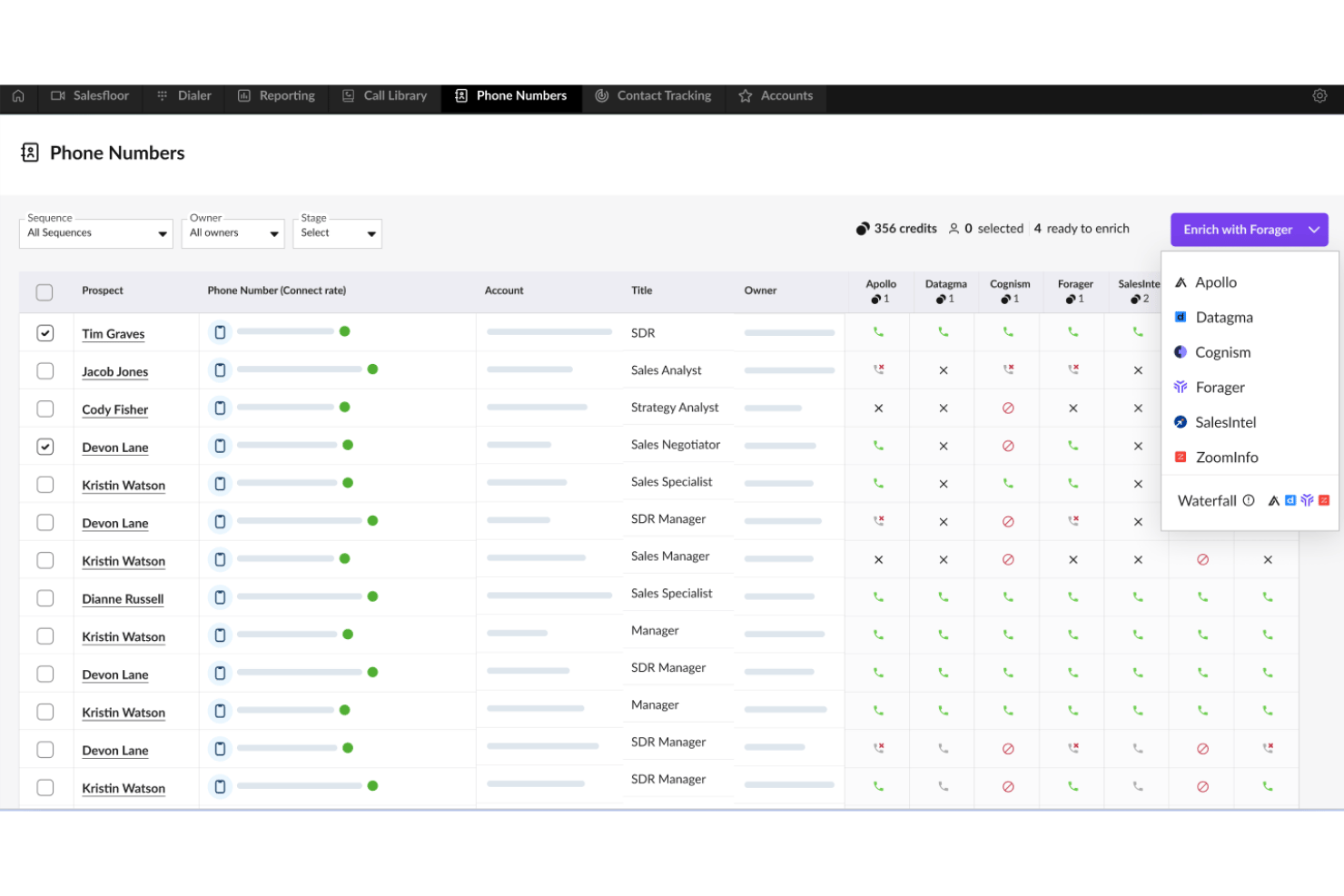
Nooks AI is an AI SDR platform built around a parallel dialer, virtual sales floor, and AI sequencing that spans email, phone, SMS, LinkedIn, and voicemail.
Who Is Nooks AI Best For?
Nooks AI is built for SDR and BDR teams at mid-market and enterprise companies that run high-volume phone outbound and need a platform to support live rep coaching alongside AI-assisted prospecting.
Why I Picked Nooks AI
Nooks AI earns its spot on my shortlist because no other platform pairs AI cold dialing at scale with live rep coaching the way it does. I love the Virtual Salesfloor, which lets managers listen in and whisper-coach reps mid-call during parallel dialing sessions where up to five lines run simultaneously. The AI Answer Detection skips voicemails instantly and connects reps only to live humans, so my team spends time on real conversations rather than waiting through rings.
Nooks AI Key Features
- Signal-based sequence triggers: Sequences auto-enroll prospects when specific buying signals fire, such as a job change, funding round, or competitor renewal.
- Waterfall contact enrichment: Nooks pulls contact data across nine-plus providers, including Apollo, ZoomInfo, and Cognism, to verify mobile numbers and emails in sequence.
- AI call scoring and peer benchmarking: Every call is automatically scored and compared against team benchmarks, giving managers objective data for rep development.
- Dynamic smart lists: Prospect lists refresh automatically, adding or removing contacts based on ICP rules and live signal changes.
Nooks AI Integrations
Nooks AI offers bidirectional sync with Salesforce and HubSpot, and integrates with Outreach, Salesloft, Common Room, Groove, Cognism, and LeadIQ. Its Chrome extension integrates LinkedIn prospecting directly with CRM and dialer workflows.
Pros and Cons
Pros:
- Signal-based sequences prioritize in-market prospects
- Parallel dialer increases live connect rates
- Virtual Salesfloor enables live call coaching
Cons:
- Separate enrichment subscriptions drive up cost
- Not fully autonomous for reply handling

Outreach
Best for enterprise sales and pipeline management
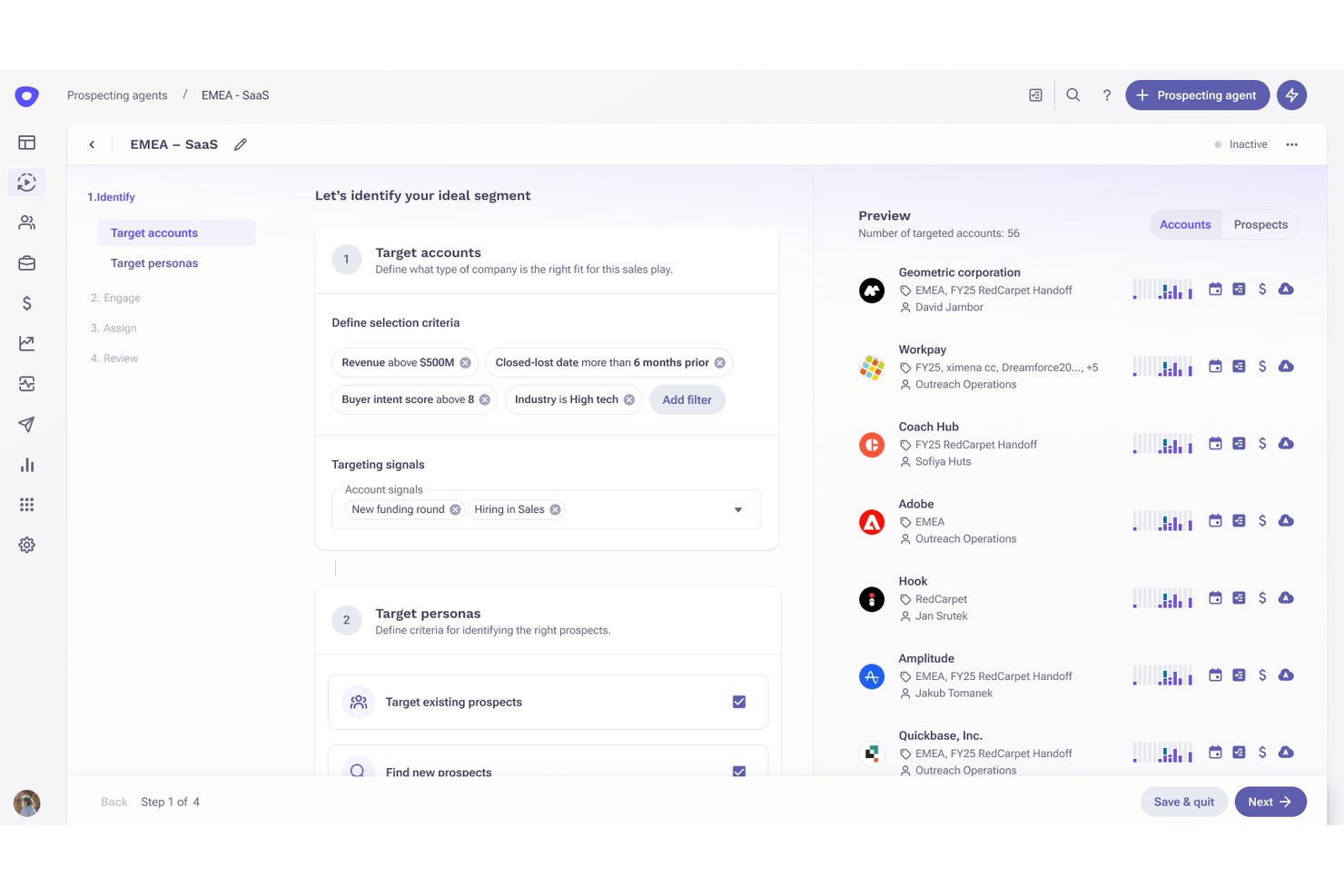
Outreach is a sales engagement platform with an agentic AI layer that spans autonomous prospecting, AI-personalized multi-channel outreach, conversation intelligence, and pipeline forecasting across the full revenue cycle.
Who Is Outreach Best For?
Outreach is a strong fit for enterprise sales teams with dedicated RevOps support who need a multi-agent AI layer built on top of a mature, full-cycle sales engagement platform.
Why I Picked Outreach
Outreach earns its spot on my shortlist because it's the only platform here that layers agentic AI across an already-mature, enterprise-grade sales engagement foundation. I picked it specifically for large sales orgs where RevOps needs full-cycle control: the Revenue Agent continuously sources and sequences ICP-matched prospects, while the Personalization Agent generates context-aware messaging across email, LinkedIn, and call talking points using live CRM data, intent signals, and uploaded Knowledge Base documents.
Outreach Key Features
- Kaia conversation intelligence: Real-time call transcription with keyword-triggered content cards, post-call AI summaries, and automated CRM field updates.
- Agent Studio: A visual canvas for building and orchestrating multi-agent workflows, connecting triggers, agents, and revenue cycle actions across the platform.
- AI Credits Metering Dashboard: Admin-facing dashboard that tracks real-time AI credit consumption by action type and user across all active agents.
- A/B testing at the sequence step level: ML-driven testing that identifies top-performing messaging variants and surfaces results for rep and sequence optimization.
Outreach Integrations
Outreach integrates with Salesforce, Microsoft Dynamics 365 Sales, HubSpot, ZoomInfo, and SalesIntel. It also offers 90+ marketplace integrations and full API access for custom connections.
Pros and Cons
Pros:
- Deep conversation intelligence with real-time call insights
- AI personalization across email, LinkedIn, and calls
- Best-in-class Salesforce sync and governance controls
Cons:
- No built-in B2B contact database
- Autonomous reply handling feature not yet released

Breakout
Best for converting website traffic via AI chat
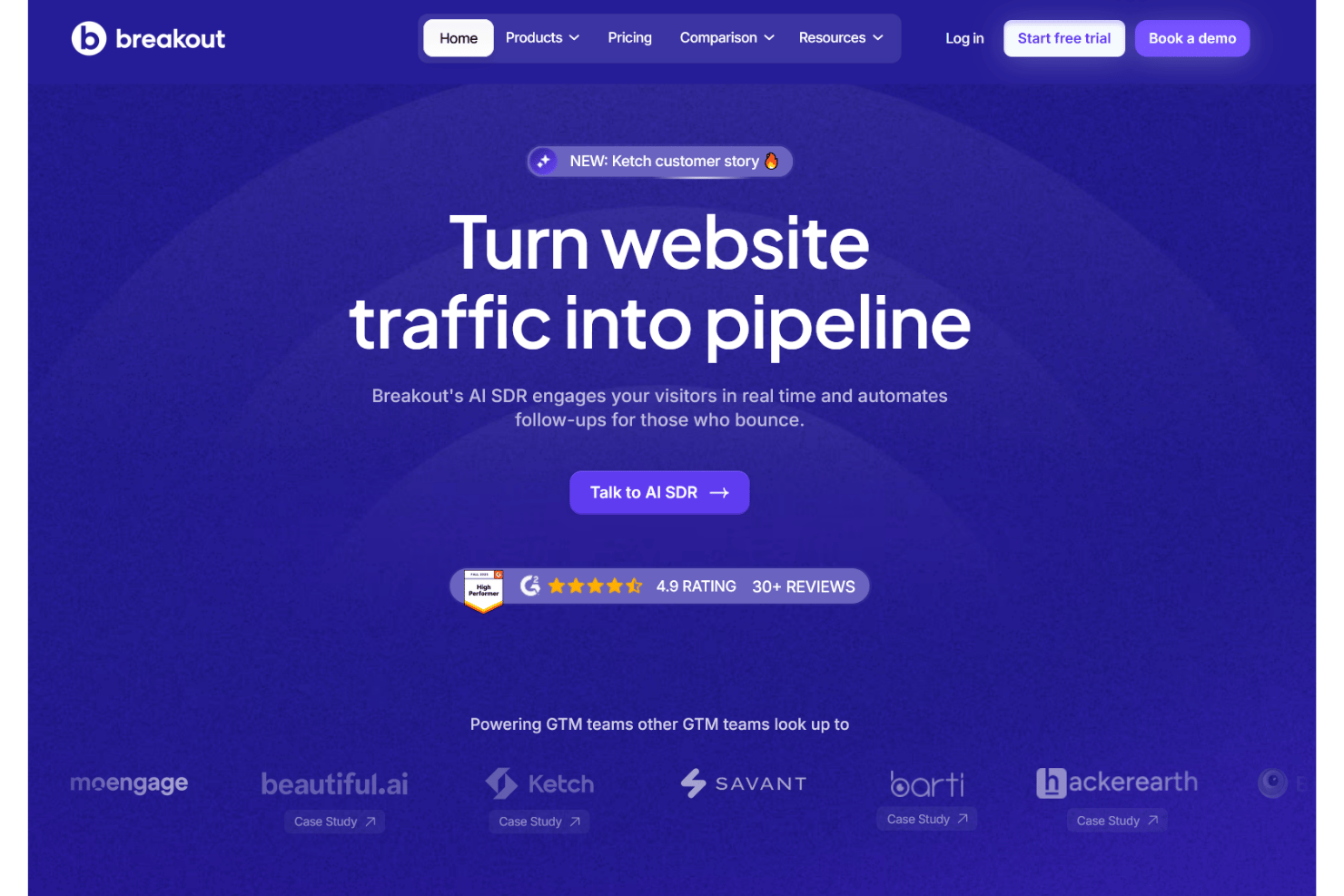
Breakout is an inbound AI SDR platform that identifies and deanonymizes website visitors, qualifies them via real-time AI chat, and automates personalized follow-up across email and LinkedIn.
Who Is Breakout Best For?
Breakout is a strong fit for B2B revenue teams with meaningful website traffic who want to qualify and convert inbound visitors without adding headcount.
Why I Picked Breakout
Breakout earns its spot on my shortlist because it's purpose-built for the inbound side of pipeline generation, specifically qualifying and converting website visitors before that intent window closes. I love how the Inbound AI SDR engages visitors in real two-way conversations, handles objections, surfaces relevant case studies or ROI calculators via Breakout Blocks, and books meetings directly in chat, all without a rep present. The 700+ intent signals (including Bombora, funding rounds, and hiring surges) mean the AI isn't just reacting to visits; it's triggering outreach at the moment of peak buying intent.
Breakout Key Features
- Spoc AI campaign builder: Generate and launch personalized email and LinkedIn sequences using plain-English inputs.
- MarkOps agent: Automates CRM updates, contact enrichment, and rep alerts across Salesforce, HubSpot, and Marketo without manual RevOps intervention.
- Human-in-the-loop approval gates: Queue outreach for rep review and approval before sending a message.
- Person-level visitor deanonymization: Identify individual website visitors using waterfall enrichment across multiple data providers to surface buying groups.
Breakout Integrations
- Breakout offers native integrations with Salesforce, HubSpot, Marketo, and Slack. It also connects with intent data sources and sales platforms like Bombora and Gong Engage to route and convert inbound traffic.
Pros and Cons
Pros:
- Human-in-the-loop approval before outreach
- Tracks 700+ buying intent signals
- Automates inbound visitor qualification and chat
Cons:
- Lacks native voice or phone outreach
- No autonomous cold prospect sourcing

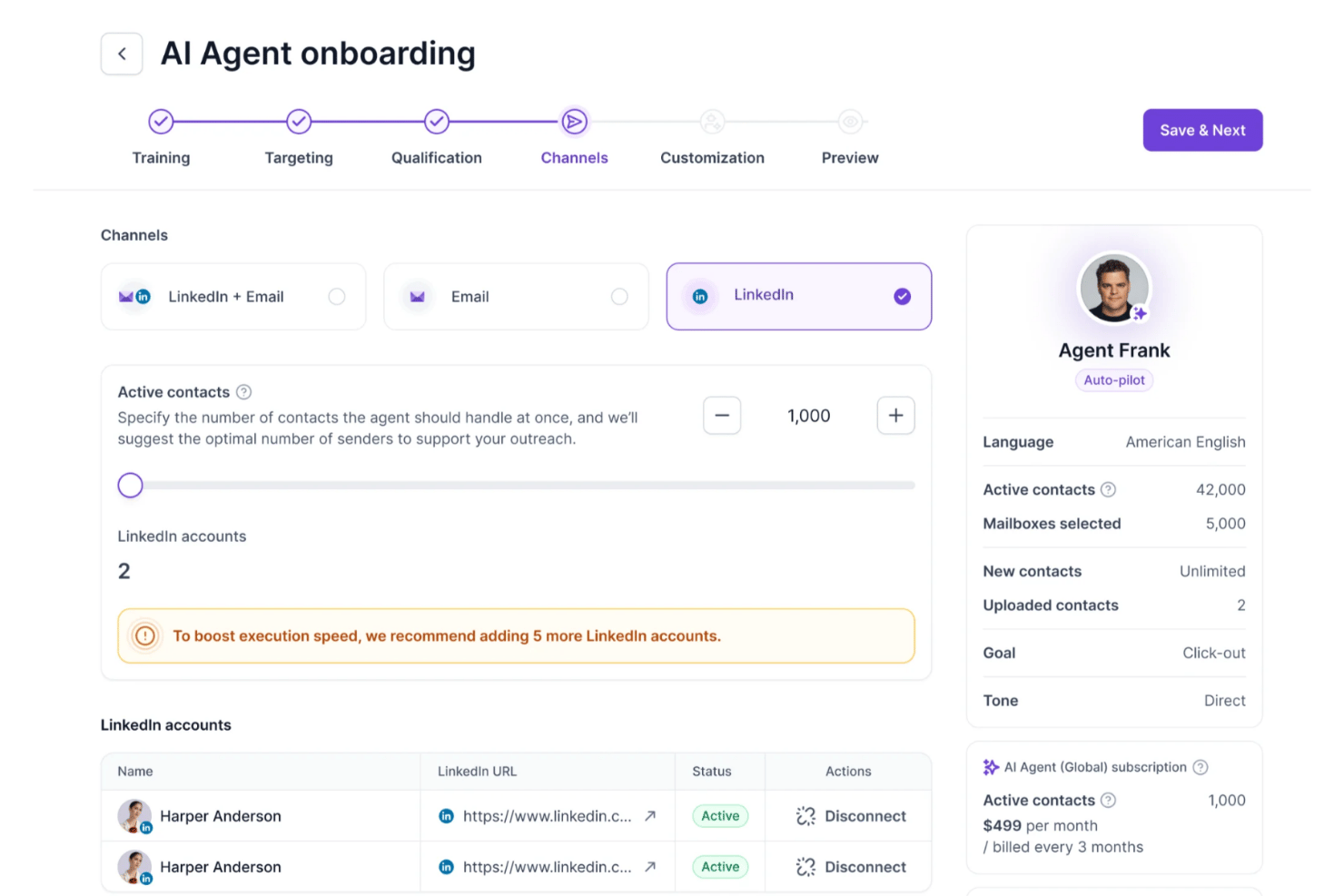
Agent Frank is an AI SDR agent by Salesforge that autonomously handles outbound prospecting, multi-channel email and LinkedIn sequencing, reply management, and meeting booking across 20+ languages.
Who Is Agent Frank Best For?
Agent Frank is a strong fit for international sales teams and growth-stage companies running high-volume outbound across multiple languages and regions.
Why I Picked Agent Frank
Agent Frank earns its spot on my shortlist because of how it handles multi-language outreach at volume—executing sequences across 20+ languages with nine configurable tonality styles, so prospects receive messaging in their native language rather than a translated afterthought. I've found the combination of Leadsforge's 500M+ contact database and signal-based triggers (funding rounds, hiring activity, tech installs) particularly strong for keeping pipelines full without manual list-building between campaigns.
Agent Frank Key Features
- Auto-Pilot and Co-Pilot modes: Toggle between fully autonomous outreach execution and a human-approval workflow where Agent Frank drafts messages for your review before sending.
- Primebox unified inbox: Consolidates email and LinkedIn replies in one inbox with AI-based sentiment tagging to categorize threads as positive, negative, OOO, or unsubscribed.
- CRM bidirectional sync: Native integrations with Salesforce and HubSpot automatically update contact records, deal stages, and pipeline data based on reply labels and engagement activity.
- Warmforge inbox warm-up: Monitors inbox health, tracks Heat Score, and runs automated warm-up sequences.
Salesforge Agent Frank Integrations
Salesforge Agent Frank integrates with Salesforce, HubSpot, Pipedrive, Attio, folk, GoHighLevel, RB2B, Make, Zapier, webhooks, and offers developer tools including its API, MCP server, and CLI.
Pros and Cons
Pros:
- Delivers intent-based signals for outreach timing
- Unlimited mailbox and LinkedIn sender access
- Multi-language support for over 20 languages
Cons:
- Nuanced objections often require human review
- No phone or SMS outreach channels

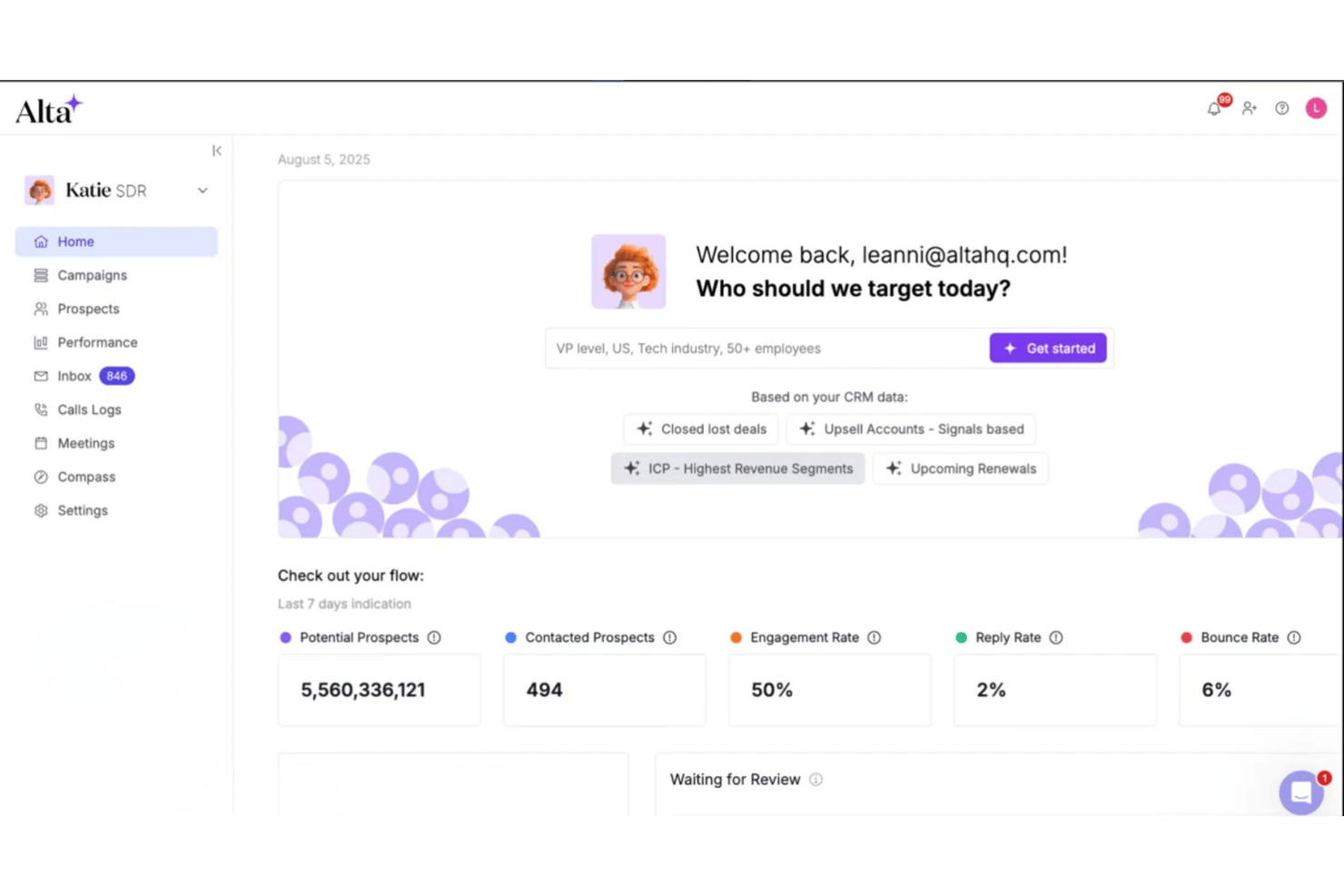
Katie by Alta is an AI SDR agent that handles autonomous prospecting, multi-channel outreach across email, LinkedIn, SMS, WhatsApp, and voice, and end-to-end reply management—including objection handling and meeting booking.
Who Is Katie Best For?
Katie is a strong fit for mid-market and enterprise sales teams running multi-channel outbound across email, LinkedIn, SMS, WhatsApp, and voice.
Why I Picked Katie
Katie earns its spot on my shortlist because no other AI SDR agent I've tested reaches as many channels with the same level of per-prospect research built in. I love that Katie pulls from 50+ data sources, including funding signals, job changes, and technographic shifts, to craft messages that reference two or more prospect-specific details per outreach. In practice, that means a single sequence can move across email, LinkedIn, SMS, WhatsApp, and voice without ever losing that personalized context.
Katie Key Features
- Signal-based outreach triggers: Monitors 50+ data sources for buying signals and automatically initiates outreach at those moments.
- Automated A/B sequence testing: Tests subject lines, message copy, timing, and sequence order, then self-optimizes based on engagement data.
- Autonomous reply management: Interprets inbound replies, handles objections, answers prospect questions, and books meetings.
- Bidirectional CRM sync: Logs every interaction, reply, and meeting booked into Salesforce or HubSpot in real time, keeping contact records clean and current.
Katie Integrations
Katie bidirectionally integrates with Salesforce and HubSpot, along with connections to Google Ads, Meta, Slack, and other data sources. It also integrates with tools like Calendly for automated meeting scheduling.
Pros and Cons
Pros:
- Autonomous reply handling with meeting booking
- Hyper-personalized multi-channel outbound at scale
- Signal-based triggers from 50+ data sources
Cons:
- Initial setup requires significant configuration time
- No public trial or self-serve tier

Best for automated multichannel outreach and bookings
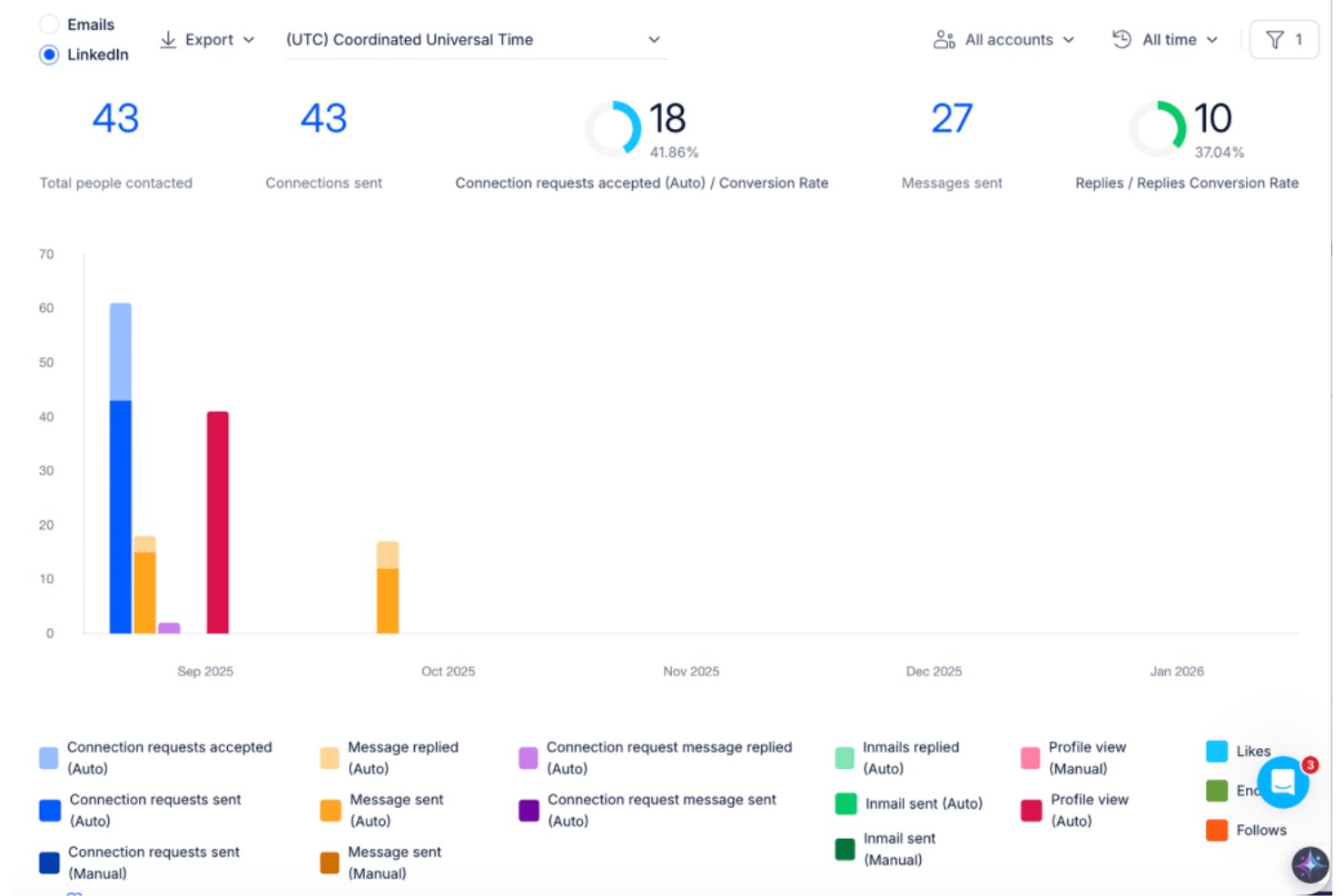
Jason AI SDR by Reply is an AI sales development agent built on the Reply.io platform that runs autonomous multichannel outreach across email, LinkedIn, calls, SMS, and WhatsApp, with a built-in B2B contact database, reply handling, and meeting booking.
Who Is Jason AI SDR Best For?
Jason AI SDR is a strong fit for revenue operations and sales development teams that run high-volume outbound across multiple channels and want one platform to handle prospecting, outreach, and meeting booking end-to-end.
Why I Picked Jason AI SDR
Jason AI SDR earns its spot on my shortlist because it's one of the few AI SDR agents that runs fully autonomous outreach across email, LinkedIn, calls, SMS, and WhatsApp from a single platform, without requiring you to stitch together separate tools. I particularly like Evergreen Mode, which continuously pulls new contacts from a 1B+ database into active sequences so your outreach never stalls. The built-in reply handling, with automatic meeting booking via Google Calendar and Calendly, means qualified prospects move to booked calls without any rep involvement.
Jason AI SDR Key Features
- AI Playbooks: Upload sales decks, PDFs, and writing samples to train Jason on your specific tone, messaging strategy, and style.
- Intent signal monitoring: Tracks hiring activity, tech stack changes, LinkedIn engagement, and website visitor behavior to trigger timely outreach.
- Approval Mode: Gates every AI-drafted message behind a human review step before anything is sent to a prospect.
- Built-in email deliverability infrastructure: Includes automatic DNS configuration, mailbox warm-up, and inbox rotation across unlimited mailboxes per campaign.
Jason AI SDR Integrations
- Jason AI SDR integrates with Salesforce, HubSpot, Pipedrive, Copper, Google Calendar, and Calendly. API and Zapier connections are also available.
Pros and Cons
Pros:
- Continuous lead generation with evergreen mode
- Built-in deliverability infrastructure with mailbox rotation
- AI-driven multichannel outreach from one platform
Cons:
- LinkedIn automation is less advanced than competitors
- Personalization can be generic for niche ICPs
Best for building custom, multi-agent sales workflows
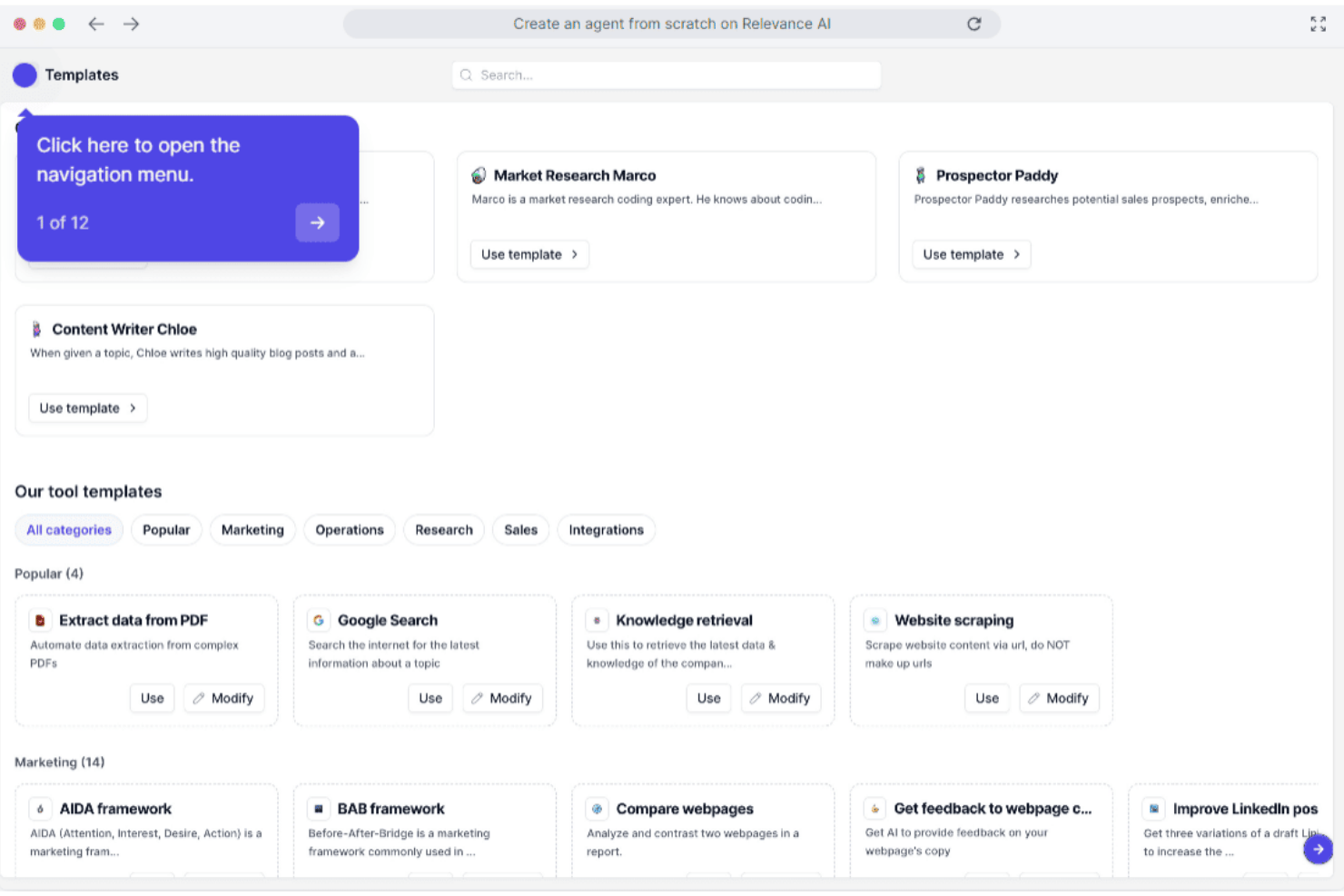
Relevance AI is a no-code AI agent platform built around Bosh, its autonomous SDR/BDR agent, which handles prospect research, personalized multi-channel outreach, reply management, and meeting booking across both inbound and outbound sales motions.
Who Is Relevance AI Best For?
Relevance AI is a strong fit for enterprise sales and RevOps teams that need to build and control a fully customized, multi-agent outbound and inbound sales system rather than deploy a fixed, out-of-the-box AI SDR tool.
Why I Picked Relevance AI
Relevance AI earns its spot on my shortlist because it's genuinely built for teams that need to design their own AI sales system from scratch, not just activate a fixed product. I like that Bosh, its core SDR/BDR agent, lets you configure every layer: the ICP definition, outreach SOPs, objection handling logic, and escalation rules. It also pulls prospect research from LinkedIn, G2, Glassdoor, and CRM history simultaneously to build per-contact value propositions.
Relevance AI Key Features
- Multi-channel outreach sequencing: Runs automated outreach across email, LinkedIn, and WhatsApp, managing multi-touch follow-up sequences across all three channels.
- Human-in-the-loop approval mode: Before going fully autonomous, Bosh operates in an approval mode where your team reviews and signs off on outreach before it sends.
- AE handoff note generation: Automatically generates a structured handoff summary for the account executive taking the call.
- Built-in email warmup: Bosh includes a native email warmup process with a structured ramp schedule and SPF, DKIM, and DMARC configuration.
Relevance AI Integrations
Relevance AI offers 2,000+ native integrations, including Salesforce, HubSpot, Gmail, Outlook, LinkedIn, WhatsApp, Google Calendar, Microsoft Calendar, Snowflake, and Zendesk. It also supports integrations through Zapier.
Pros and Cons
Pros:
- Human-in-the-loop approval mode for governance
- Fully customizable outreach and response workflows
- Deep prospect research from multiple external sources
Cons:
- Enterprise-only access for flagship SDR agent
- Requires significant human oversight to maintain

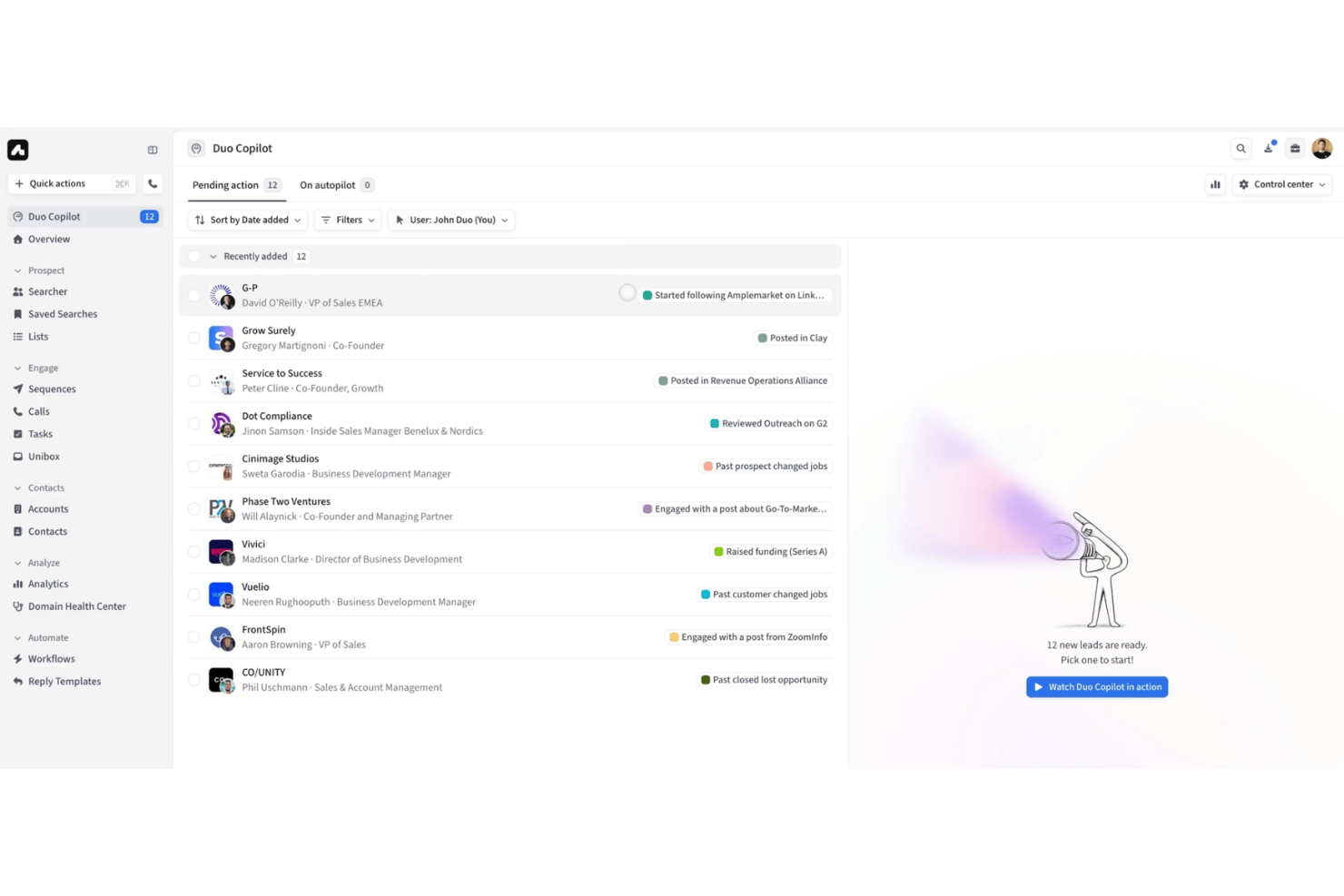
Duo (Duo Copilot) is an AI sales agent by Amplemarket that combines signal-based lead sourcing, automated research, and multichannel sequence generation across email, LinkedIn, phone, SMS, and AI voice.
Who Is Duo Best For?
Duo is a strong fit for SDR and BDR teams at funded startups and mid-market companies that need signal-based prospecting built into their existing Salesforce or HubSpot workflow.
Why I Picked Duo
I've included Duo in my top picks because its Signal Agent is genuinely built for inbound qualification scenarios, scanning 100+ real-time triggers like champion job changes, competitor negative reviews, and Slack community joins to surface and route leads before your team even knows to look for them. When a prospect visits your site or moves to a new company, Duo detects it, researches the contact automatically, and routes the lead based on territory logic. I also like that Duo Inbox drafts contextual replies to inbound responses, complete with objection handling and calendar links, keeping reps in the loop without losing momentum.
Duo Key Features
- Autopilot mode: Lets admins configure specific buying signals to trigger fully automated lead activation and sequence execution without rep review.
- Deliverability suite: Includes native email warm-up, domain health monitoring, inbox placement testing, and a spam checker across all plans.
- Duo Voice: Generates AI-personalized voice messages at scale, with voice cloning so outreach sounds like the rep.
- Bidirectional CRM sync: Native two-way integration with Salesforce and HubSpot, including auto activity logging, field mapping, and exclusion lead list management.
Duo Integrations
- Duo offers native integrations with Salesforce, HubSpot, Gmail, and Microsoft 365, Clay, SendSpark, CloudTalk, Nooks, Orum, Trellus, and Salesfinity. It also supports Zapier and an API for custom integrations.
Pros and Cons
Pros:
- Includes full deliverability infrastructure native to the platform
- Delivers AI-personalized outreach for every prospect
- Detects 100+ real-time buying intent signals
Cons:
- Reply drafting feature only in highest tier
- Human review required before sending most replies

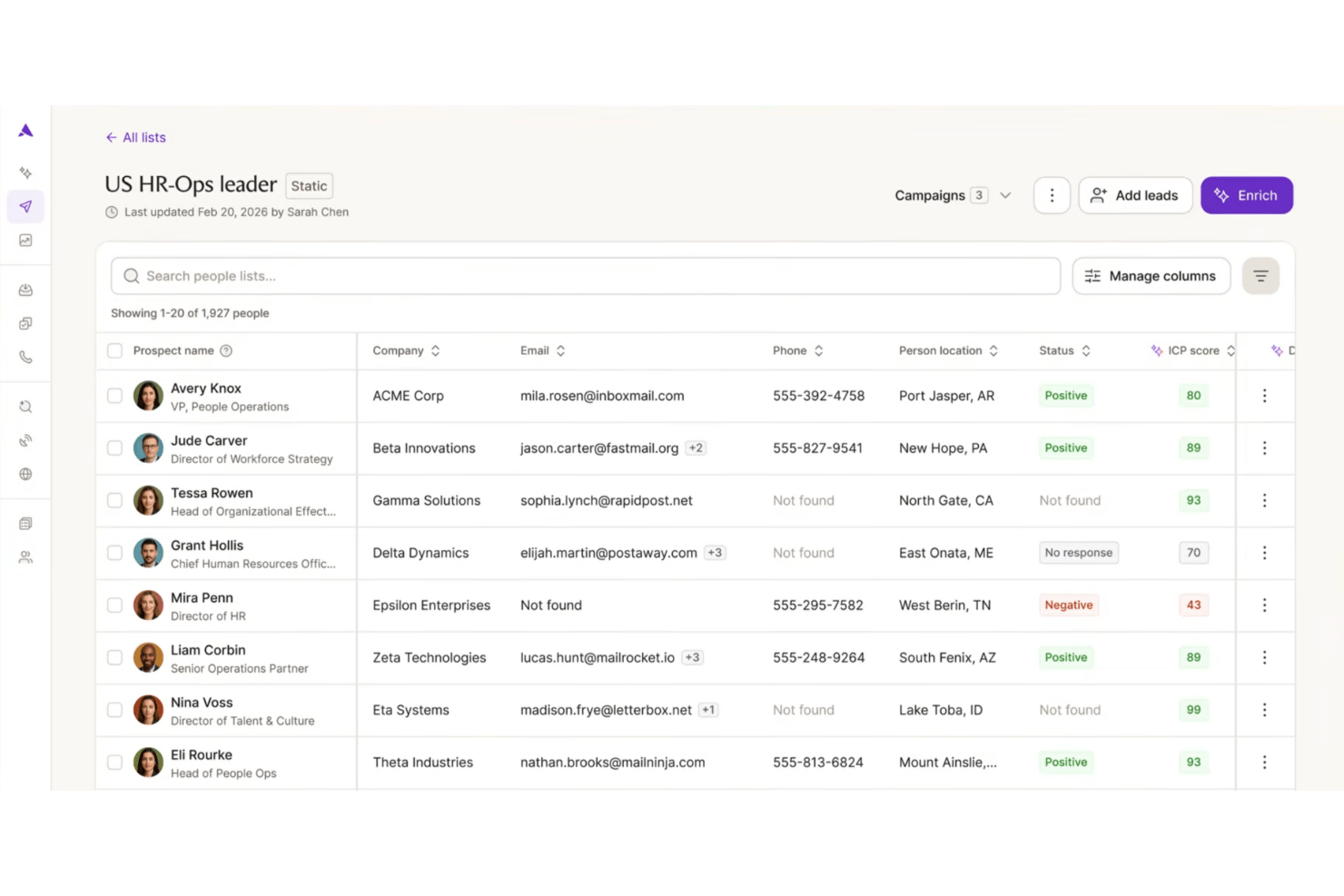
Ava is an AI SDR agent built by Artisan that autonomously handles prospect sourcing, multi-channel outreach across email and LinkedIn, inbound reply management, and meeting booking directly to calendar.
Who Is Ava Best For?
Ava is a strong fit for sales teams that want to hand off the entire sales funnel loop—from prospecting to booked meetings—without adding SDR headcount.
Why I Picked Ava
Ava earns its spot on my shortlist because of how far it takes autonomous reply handling, specifically the ability to read inbound replies, classify intent, handle objections, and book directly to calendar without a human ever stepping in. I've found the "autonomy dial" especially useful here, since it lets you lock down which stages require approval and which Ava runs solo. The Watchtower pixel is another feature I keep coming back to, as it auto-enrolls site visitors into outbound sequences the moment they show interest.
Ava Key Features
- Multivariate A/B testing: Automatically tests variations of subject lines, CTAs, and copy across active sequences, then self-optimizes based on conversion performance.
- Watchtower visitor identification pixel: Detects site visitors at the person level (US) or company level (global) and auto-enrolls them into outbound sequences.
- Intent signal triggering: Monitors funding rounds, leadership changes, new hires, and tech stack shifts to trigger personalized outreach at the right time.
- Built-in deliverability management: Includes DNS configuration, mailbox health monitoring, inbox placement testing, and per-mailbox send limits.
Ava Integrations
Ava offers native integrations with Salesforce, HubSpot, Slack, Gmail, and Outlook. It also supports webhooks for custom data ingestion from proprietary sources.
Pros and Cons
Pros:
- Real-time outbound triggered by intent signals
- Unique emails generated from multi-source research
- Fully autonomous reply handling and meeting booking
Cons:
- No autonomous cold calling or SMS outreach
- AI-generated emails can sound generic
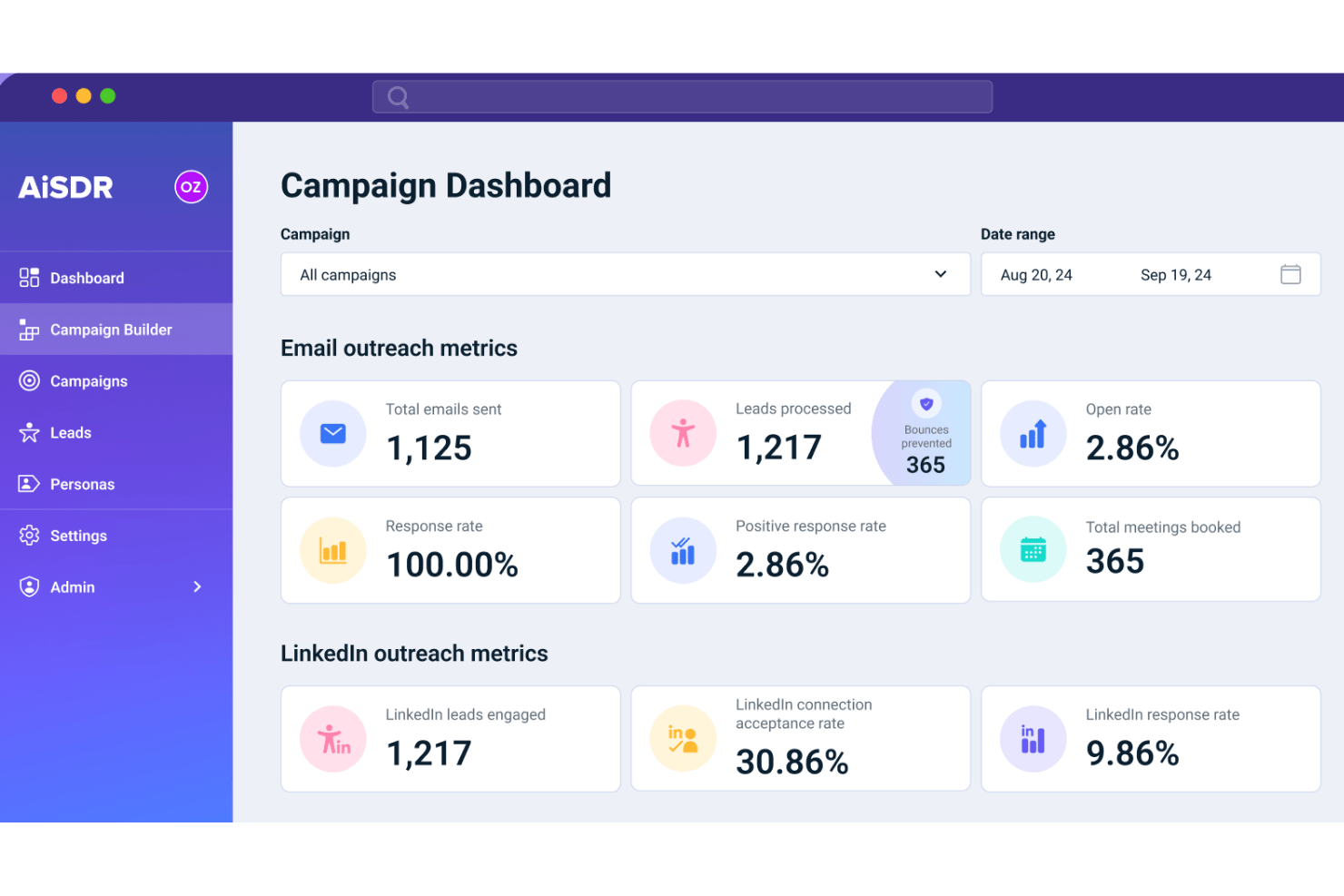
AiSDR is an SDR agent that handles outbound prospecting, multi-channel sequencing, and autonomous reply management across email, LinkedIn, and phone—with built-in deliverability infrastructure included.
Who Is AiSDR Best For?
AiSDR is a strong fit for revenue teams that run high-volume outbound and want deliverability infrastructure managed for them rather than bolted on separately.
Why I Picked AiSDR
AiSDR earns its spot on my shortlist because it's the only AI SDR agent I've found that bundles deliverability infrastructure into the platform, covering domain provisioning, SPF/DKIM/DMARC setup, mailbox warm-up, and inbox rotation without requiring a separate tool like Instantly or Mailreach. I also like that its Live AI Lead Search pulls from a 300M+ contact database using real-time intent signals like funding rounds, job changes, and LinkedIn engagement, so outreach goes out at the right moment rather than to a stale list.
AiSDR Key Features
- Ami AI strategist: Reads your website and creates up to five ready-to-launch campaign plays with audience and messaging in 20 minutes.
- Autonomous reply handling: Replies to inbound messages within 5–10 minutes, 24/7, managing objections, FAQs, out-of-office replies, and meeting bookings.
- Multi-channel sequence builder: Runs coordinated cadences across email, LinkedIn, and phone from one interface.
- Co-pilot mode: Drafts outbound messages for human review before sending, keeping control with your team.
AiSDR Integrations
AiSDR integrates with HubSpot, Salesforce, Gmail, Outlook, Aircall, Calendly, and LinkedIn/Sales Navigator. It also offers a public API and webhook support for custom connections.
Pros and Cons
Pros:
- Automates reply handling within minutes
- Generates GTM plays from your website
- Manages deliverability with built-in infrastructure
Cons:
- Agent often struggles to handle nuanced objections
- Complex initial setup
Other AI SDR Agents
Here are some additional platforms that didn’t make it onto my shortlist, but are still worth checking out:
- Jazon
For running autonomous SDR agents on local cloud
- Alice
For hyper-personalized social seller engagement
- Salesloft
For enterprise account cadence management
- Agentforce
For Salesforce-native inbound SDR
- Regie.ai
For signal-triggered outbound with audit trails
- Apollo
For AI prospecting across 275M+ contacts
- Warmly
For signal-driven inbound and outbound unification
- Persana AI
For outbound triggered by 75+ buying signals
- SDRx
For outbound built on enrichment waterfall data


How I Evaluate AI SDR Agents
To earn a spot on this list, a tool needs to deliver genuine AI value—not just automations with an AI label slapped on them. I split my evaluation into two layers: the core functionality every tool must meet to qualify, and the differentiating factors that separate a good pick from the right one for your stack.
Core Functionality (Table Stakes for This List)
When I'm selecting tools for my list, I rank each one on a scale from 0 (does not offer the functionality) to 5 (excels in this area) for each core functionality listed below. I then calculate the tool's total score into a percentage, using 65% as a benchmark to help assess its overall fit for the list.
- Autonomous prospecting: I evaluate whether the agent can independently source and enrich contacts matching your ICP across multiple data providers, rather than requiring manual list uploads for every campaign.
- AI personalized outreach: Each tool gets checked for how deeply it researches prospects before writing messages—pulling from LinkedIn profiles, company news, or hiring signals instead of just swapping in a first name.
- Multi-channel sequencing: I look for coordinated cadences across at least two channels like email and LinkedIn, with logic branching that adapts the sequence based on prospect behavior.
- Autonomous reply handling: The agent's ability to interpret inbound replies and take next steps matters here—whether that's handling objections, answering questions, or booking a meeting without a human in the loop.
- CRM and stack integration: Bidirectional sync with Salesforce or HubSpot is the baseline I check for, along with how well the tool connects to existing sales engagement platforms and enrichment tools in your stack.
- Agent configuration and guardrails: I look at how much control you get over ICP definitions, messaging tone, playbooks, and approval workflows to keep outreach on-brand and give RevOps visibility into what the agent is doing.
Once I have a list of tools that meet the criteria, I consider what sets each platform apart.
Differentiating Factors (What Sets Vendors Apart)
Here's how I compare and contrast different vendors:
Standout Features
I look for built-in deliverability infrastructure—mailbox provisioning, domain rotation, and automated warm-up—so RevOps isn't stitching together separate tools to protect sender reputation. Intent signal triggers matter just as much: I evaluate whether the agent fires sequences based on real buying signals like funding rounds or job changes, not just static lists. I also check for attribution with native holdout testing, since proving net-new sales pipeline is what keeps budget flowing.
Beyond Features
I evaluate how each vendor handles deliverability risk ownership—specifically whether they provision and manage secondary sending domains, monitor inbox placement, and auto-pause unhealthy mailboxes on your behalf. That operational burden falls on RevOps if the vendor doesn't own it. I also check human-in-the-loop governance, like message-level approval gates and full audit logs per lead, since one off-brand email to a key account can undo months of pipeline work. Total cost of ownership matters too: I compare pricing models against a fully loaded human SDR and flag hidden costs like enrichment credits or domain fees that inflate spend as volume scales.
How to Choose an AI SDR Agent
Use this table to match your top priority with must-have features across platforms:
| If your priority is... | Look for... |
|---|---|
| Automated, data-driven prospecting | Cross-provider contact enrichment and sourcing |
| True multi-channel outreach | Integrated email, LinkedIn, and phone sequencing |
| Detailed RevOps analytics | Native reporting and campaign attribution |
| Handling replies and objections | GPT-powered inbound response workflows |
| CRM data integrity and sync | Bidirectional Salesforce or HubSpot integration |
How to Vet Your Shortlist
- Demo Enrichment Coverage: Upload a real ICP list of 50+ accounts and review both matched contact volume and depth of enrichment within 2 business days.
- Sequence Customization Test: Build a sample cadence targeting two channels and request a logic branch review artifact or workflow diagram from the vendor in your first week.
- Reply Handling Simulation: Submit 10 sample reply scenarios and have the agent process and log next steps, with message audit trails, before committing.
- Integration Proof: Request a test integration with your live Salesforce or HubSpot sandbox and verify sync accuracy (lead, activity, stage) within 5 business days.
- Tradeoff to Decide: You often need to pick between deep native channel coverage (fewer APIs, more consistency) and broader “bring your own data/tools” flexibility—decide based on what fits your RevOps model.
What Are AI SDR Agents?
AI SDR or sales agents are artificial intelligence-powered software that automate sales development tasks, such as prospecting, outreach, lead qualification, reply handling, and meeting booking. These agents use data enrichment, multi-channel sequencing, and CRM integration to manage top-of-funnel activities with minimal manual input.
By taking over repetitive sales development work, these agents help revenue operations teams focus on strategy, improve pipeline visibility, and support smarter resource allocation.
Features of AI SDR Agents
Key features to look for when selecting an AI sales agent:
- Autonomous Prospecting: Automatically sources and enriches contacts matching your ideal customer profile (ICP).
- Hyper-Personalized Outreach: Uses real-time buyer signals and company data to tailor messages at scale.
- Multi-Channel Sequencing: Coordinates automated cadences across channels like email and LinkedIn based on user engagement.
- Autonomous Reply Handling: Interprets replies, addresses objections, and books meetings without manual intervention.
- Seamless CRM Integration: Syncs bidirectionally with platforms like Salesforce and HubSpot to keep records updated.
- Agent Guardrails & Control: Offers granular oversight over ICP parameters, tone, and approval workflows to protect brand voice.
- Intent-Signal Triggers: Launches outreach based on real-time events like funding rounds, hiring, or product usage.
- Deliverability Infrastructure: Manages domain rotation, inbox warm-ups, and reputation protection to maximize inbox placement.
- Message-Level Governance: Includes human-in-the-loop approval gates and audit logs for quality control.
- Native Analytics: Tracks performance and pipeline attribution directly in-platform to optimize campaigns.
Benefits of AI SDR Agents
Using an AI SDR platform provides several benefits for your team and your business. Here are a few you can look forward to:
- Automated prospecting at scale: Source and enrich contacts from multiple providers, so you skip manual list building before each campaign.
- Personalized outreach: Research prospects using real-time signals and company data, ensuring every message is relevant and specific.
- Multi-channel engagement: Coordinate outreach across email, LinkedIn, and other channels with adaptive logic that responds to prospect actions.
- Autonomous reply management: Handle inbound replies, objections, questions, and meeting booking, reducing lead follow-up delays.
- Native CRM and tech stack integration: Sync contacts, activities, and updates with Salesforce or HubSpot in real time for data accuracy.
- Deliverability and compliance safeguards: Mailbox provisioning, domain rotation, and message approvals protect sender reputation and ensure compliance.
- Actionable analytics and attribution: Report campaign performance and pipeline contribution, helping you adjust strategy and prove ROI.
Costs and Pricing of AI SDR Platforms
Selecting the right AI agent to run your sales workflow requires an understanding of the various pricing models and plans available. Costs vary based on features, team size, add-ons, and more. The table below summarizes common plans, their average prices, and typical features included:
Plan Comparison Table for AI SDR Agents
| Plan Type | Average Price | Common Features |
|---|---|---|
| Free Plan | $0-$25/user/month | Basic prospecting, limited outreach volume, entry-level AI personalization, and single-channel sequence support. |
| Personal Plan | $25-$75/user/month | Multi-channel sequencing, moderate contact enrichment, basic CRM integration, and simple reply handling. |
| Business Plan | $75-$150/user/month | Advanced enrichment, AI-driven outreach, logic-based sequencing, deliverability tools, and integrations with leading CRMs. |
| Enterprise Plan | $150-$400/user/month | Custom configuration, full audit trails, advanced analytics, dedicated onboarding, holdout testing, and priority support. |
AI SDR Agents FAQs
Here are some answers to common questions about virtual SDR agents:
Can AI SDR agents fully replace human SDRs?
No, AI agents can automate a lot of prospecting, outreach, and reply handling, but they can’t fully replace human SDRs for high-stakes negotiations or relationship-building. Most RevOps teams use these agents to free up humans for nuanced conversations and creative strategies, while the AI handles routine processes and outreach.
How do AI SDR agents handle reply management?
They interpret inbound replies and automate next steps like objection handling, answering basic questions, or booking meetings if possible. You’ll usually find options to set approval workflows or require human review for sensitive replies, so you control when and how the agent acts in different reply scenarios.
What should I watch for when evaluating deliverability features?
Check if the vendor offers mailbox provisioning, domain rotation, and automated warm-up. These features help keep your outreach out of spam folders. Also, see if the platform automatically pauses unhealthy mailboxes and monitors inbox placement.
Can I customize AI SDR outreach sequences for my ICP?
Yes, most AI SDR platforms let you define your ideal customer profile (ICP), set up custom messaging, tweak tone, and adjust logic-branch workflows. Test this by creating multi-channel cadences and asking for a workflow diagram or a logic review, especially if your sequences are complex or require multiple branching scenarios.
Do AI SDR agents sync bi-directionally with Salesforce or HubSpot?
Yes, sync with Salesforce or HubSpot is a core feature for most agentic platforms. Look for bi-directional integration, not just data export. You want contact creation, activity logging, and stage/status updates to flow both ways, so your CRM always matches what’s happening in your outbound workflows and reporting stays accurate.