

10 Best Channel Partner Enablement Tools in 2026

Best Channel Partner Enablement Tools Shortlist


Channel partner enablement tools give your business a way to support, train, and empower partners to drive more sales and deliver better customer experiences. If you’re looking to accelerate revenue growth while making partner management less chaotic, the right platform makes all the difference.
Choosing from today’s fast-evolving tools can be tough; each offers a different mix of onboarding, training, content, and integration options that impact how well your sales enablement programs work. Here, you’ll find clear, up-to-date picks to help you compare options and confidently select the channel partner enablement tool that fits your strategy.
Why Trust Our Software Reviews
We’ve been testing and reviewing RevOps software since 2022. As RevOps leaders ourselves, we know how critical and difficult it is to make the right decision when selecting software.
We invest in deep research to help our audience make better software purchasing decisions. We’ve tested more than 2,000 tools for different RevOps use cases and written over 1,000 comprehensive software reviews. Learn how we stay transparent & our software review methodology.
Best Channel Partner Enablement Tools Summary
This comparison chart summarizes pricing details for my top channel partner enablement tools selections to help you find the best one for your budget and business needs.
| Tool | Best For | Trial Info | Price | ||
|---|---|---|---|---|---|
| 1 | Best for multi-portal training | Free demo available | Pricing upon request | Website | |
| 2 | Best for interactive content sales | Free demo available | Pricing upon request | Website | |
| 3 | Best for AI-powered learning paths | Free demo available | Pricing upon request | Website | |
| 4 | Best for rapid deployment | Free demo available | From $1,899/month (billed annually) | Website | |
| 5 | Best for learning engagement analytics | Free demo available | Pricing upon request | Website | |
| 6 | Best for modular enterprise programs | Free demo available | Pricing upon request | Website | |
| 7 | Best for customizable onboarding | Free demo available | Pricing upon request | Website | |
| 8 | Best for aligning sales and marketing | Free demo available | Pricing upon request | Website | |
| 9 | Best for native Salesforce integration | Free demo available | From $25/member/month (billed annually) | Website | |
| 10 | Best for automated rewards | Free demo available | Pricing upon request | Website |
Best Channel Partner Enablement Tools Reviews
Below are my detailed summaries of the best channel partner enablement tools that made it onto my shortlist. My reviews offer a detailed look at the features, integrations, and best use cases of each platform to help you find the best one for you.
Best for multi-portal training
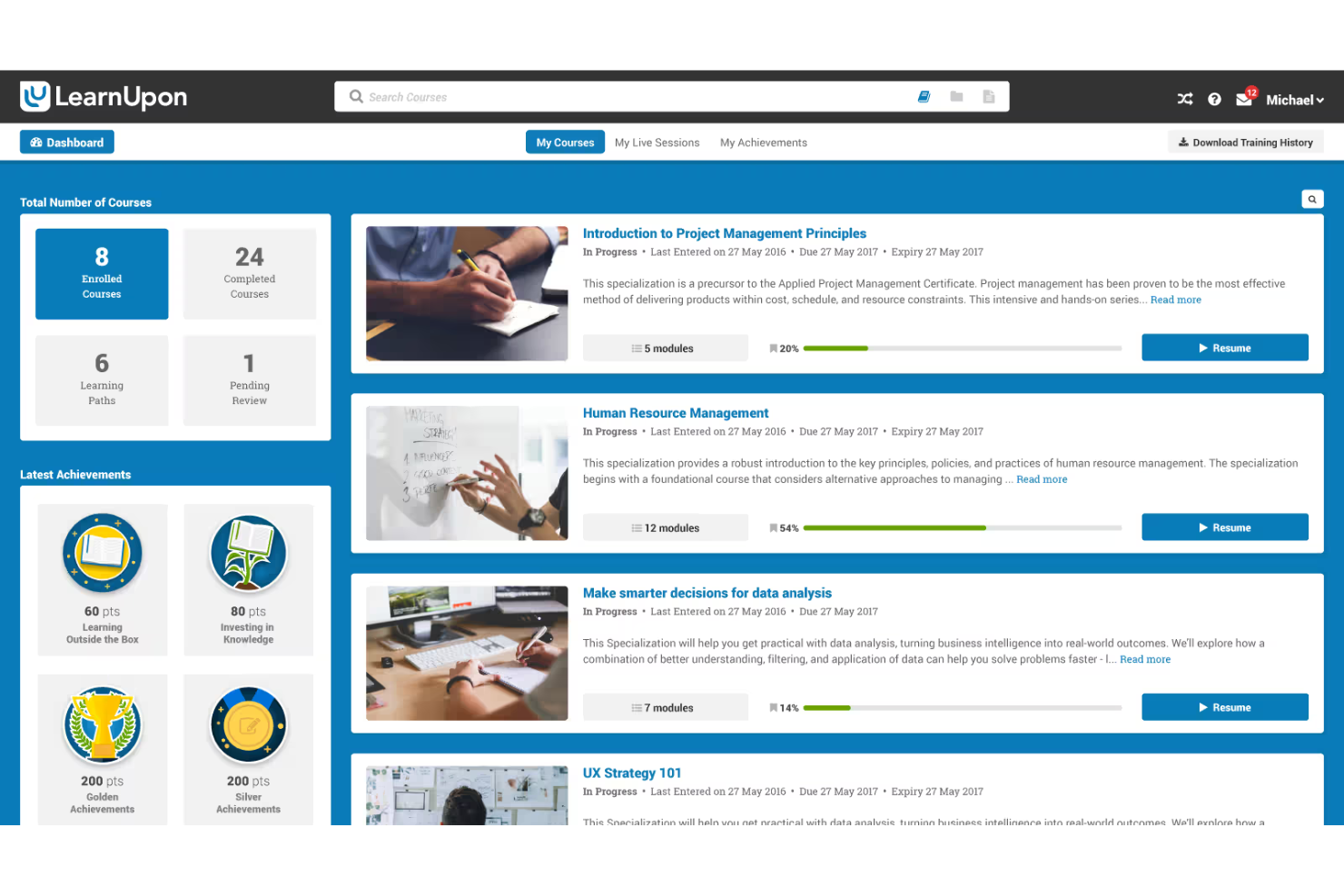
LearnUpon is a learning management system built for partner training that lets you deliver, automate, and track structured learning programs across partner networks using portals, catalogs, and certification tools.
Who Is LearnUpon Best For?
LearnUpon is a strong fit for mid-market and enterprise companies that train multiple distinct partner groups, like resellers, distributors, and affiliates, under one platform.
Why I Picked LearnUpon
I've included LearnUpon in my top picks because its portal system is the most purpose-built for managing multiple distinct partner audiences I've seen. Each portal gets its own branding, URL, content library, and user base, all managed from a single admin account.
I also rely on the course licensing feature, which lets me deploy one updated course version across portals simultaneously, cutting out redundant content management work.
LearnUpon Key Features
- Learning paths: Sequence courses into structured, multi-step training programs that guide partners through onboarding or product certification in a set order.
- Automated enrollment rules: Trigger course enrollments automatically based on user attributes like partner type, region, or group membership.
- Exam and assessment builder: Create graded quizzes and exams with pass/fail thresholds to validate partner knowledge before certification.
- Partner training dashboard: Give managers a real-time view of partner completion rates, assessment scores, and overall training progress across groups.
LearnUpon Integrations
LearnUpon offers native integrations with BambooHR, Zoom, Microsoft Teams, Slack, Shopify, Gong, Intercom, and Okta, among others, spanning CRM, HRIS, webinar, ecommerce, and access management categories. It also connects with Zapier and provides an API with webhooks for custom integrations.
Pros and Cons
Pros:
- Dedicated customer success manager included
- Automated certification and recertification workflows
- Separate branded portals per partner group
Cons:
- Mobile application lacks an offline learning mode
- Native course builder is basic

Highspot
Best for interactive content sales

Highspot is a partner and channel enablement platform that centralizes content management, on-demand training, learning paths, certification, and AI-powered sales plays for resellers, distributors, and alliance partners.
Who Is Highspot Best For?
Highspot is a strong fit for mid-market to enterprise B2B technology companies that sell through indirect channels and need partners to deliver consistent, on-brand sales conversations.
Why I Picked Highspot
Highspot earns its spot on my shortlist because of how it handles partner content delivery. The Digital Sales Rooms feature lets partners build live, branded microsites that buyers interact with directly, and I can see exactly which assets get opened, how long buyers spend on them, and what questions they raise.
That buyer engagement data feeds back into what I surface in partner playbooks, so the content cycle stays grounded in actual deal activity rather than guesswork.
Highspot Key Features
- AI-powered content search: Partners find and share on-brand materials through an AI-driven search that surfaces the most relevant assets by context.
- Role-based access controls: Configure content and resource visibility by partner tier, type, or region to keep the right materials in front of the right partners.
- AI-driven role play: Partners practice sales scenarios through AI-simulated conversations before engaging real buyers.
- Scorecards and partner activity tracking: View individual partner engagement levels and compare performance across partner groups to spot coaching gaps.
Highspot Integrations
Highspot offers 100+ integrations, including native integrations with Salesforce, Box, Confluence, Google Workspace, Hubspot, Microsoft Teams, Okta, Salesforce, Oracle Eloqua, Slack, and Snowflake. An API is available for custom integrations.
Pros and Cons
Pros:
- Segments content access by partner tier
- AI search understands intent beyond exact keywords
- Tracks which partner content drives closed deals
Cons:
- System analytics reporting feels unintuitive
- Content discovery degrades as library volume grows
Docebo
Best for AI-powered learning paths

Docebo is an AI-powered learning management system built for extended enterprise training, covering partner onboarding, certification, and personalized learning path delivery across external audiences.
Who Is Docebo Best For?
Docebo is a strong fit for enterprise companies with large, distributed partner networks that need to scale structured training programs across multiple regions or tiers.
Why I Picked Docebo
I picked Docebo as one of the best because of how its AI handles learning path personalization at scale. The AI engine analyzes each partner's role, certifications, and existing completions, then automatically assigns the next relevant course without a manager having to intervene manually.
I also rely on Docebo's Channels feature to organize content by partner tier, so resellers and distributors each see a curated library that matches where they are in the onboarding process.
Docebo Key Features
- Branded learning portals: Build white-labeled training environments for each partner brand or region.
- Certification management: Issue, track, and expire partner certifications directly within the platform.
- Gamification tools: Add badges, leaderboards, and points to partner training to increase course completion.
- Advanced reporting: Generate detailed reports on partner learning progress, completions, and assessment scores.
Docebo Integrations
Docebo offers 400+ integrations through its marketplace, including off-the-shelf, connector-based, and custom options. Verified integrations include Salesforce, HubSpot, Microsoft Teams, Dropbox, BambooHR, ADP Workforce Now, Amazon S3, Gong, Credly, and Accredible. An API is available for custom integrations, and Docebo Connect serves as a low-code integration platform for building custom connectors.
Pros and Cons
Pros:
- Available in over 40 languages for global partners
- AI automates enrollments, translations, and content tagging
- Serves partner, customer, and internal audiences simultaneously
Cons:
- Advanced analytics and key integrations cost extra
- System setup requires a high technical learning curve


Channeltivity is a partner relationship management (PRM) platform built for technology companies, covering partner recruitment, training and certification, deal registration, lead distribution, MDF management, and joint business planning.
Who Is Channeltivity Best For?
Channeltivity is a strong fit for mid-market technology companies building out an indirect channel program and needing a dedicated PRM up and running quickly.
Why I Picked Channeltivity
The platform ships with pre-built enablement workflows that move new partners through application, approval, and contract signing without any custom configuration. I also use the built-in LMS to set up learning paths and certifications on day one, so partners are trained and selling before most teams finish configuring a competing tool.
The Joint Business Planning module is ready to go out of the box, too, with configurable templates for target account lists, SWOT analyses, and KPIs.
Channeltivity Key Features
- Deal registration: Partners submit and track new opportunities directly through the portal, with configurable approval workflows.
- MDF management: Partners request co-marketing funds, upload proof of performance, and track claim status through a built-in approval process.
- Partner locator: A public-facing, searchable directory lets end customers find certified resellers by location or specialty.
- Co-branded asset management: Partners can access and download marketing materials customized with their logo and contact details from a shared content library.
Channeltivity Integrations
Channeltivity offers native integrations with Salesforce, HubSpot, Zoho, and Microsoft Dynamics 365, covering deal registration, lead distribution, referral, and organization sync workflows. It also supports SAML 2.0 single sign-on and connects with Zapier. An API is available for custom integrations.
Pros and Cons
Pros:
- Configurable deal registration approval workflows
- Built-in LMS with partner certifications
- Pre-built wizard setup launches portals fast
Cons:
- Limited multi-region process differentiation
- Advanced through-partner marketing features missing

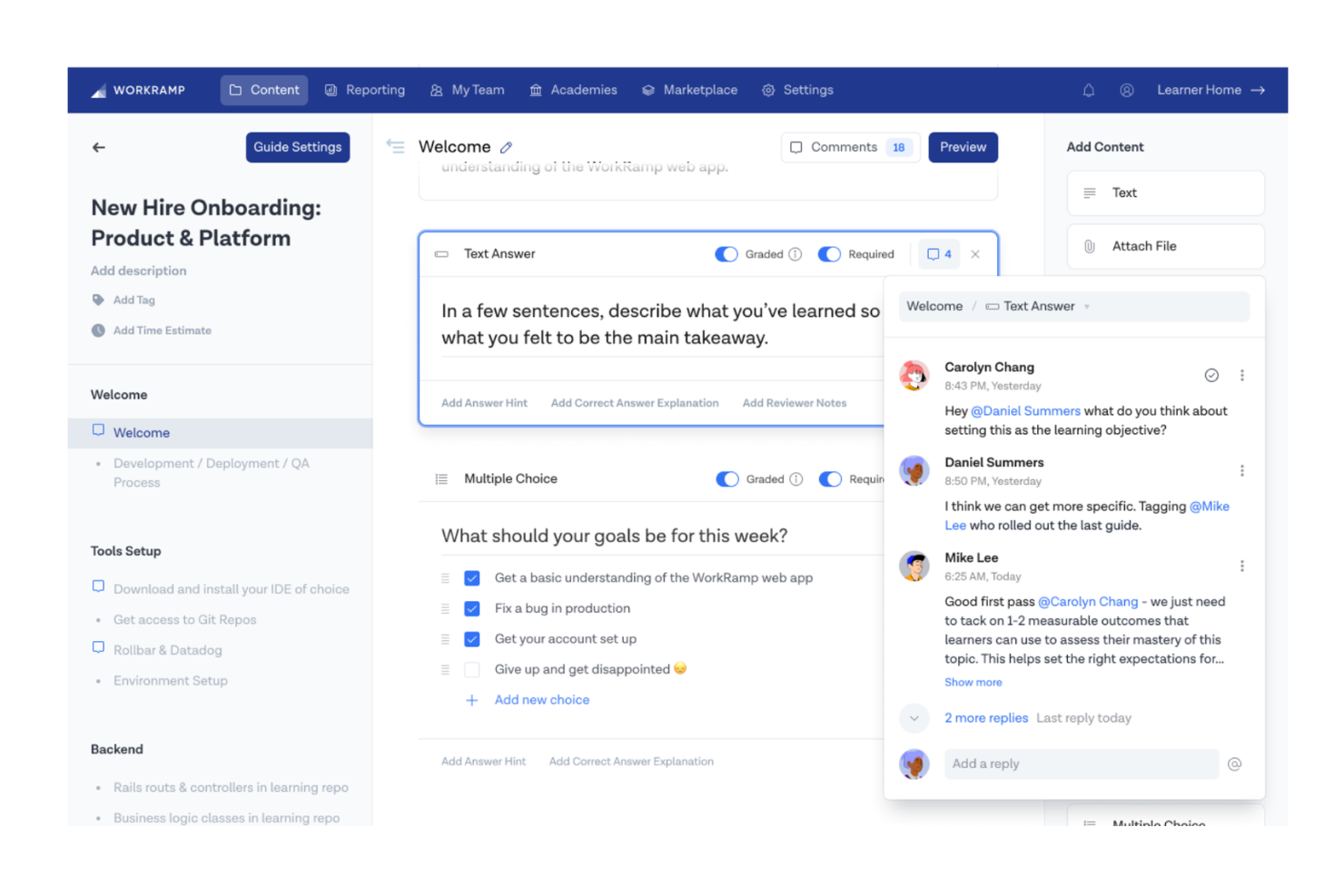
WorkRamp is a customer and partner learning platform that combines AI-driven course creation, branded academy hosting, partner enablement, and engagement tracking across training programs.
Who Is WorkRamp Best For?
WorkRamp is a strong fit for B2B SaaS companies whose revenue teams need to tie partner training activity directly to pipeline and retention data.
Why I Picked WorkRamp
WorkRamp earns its spot on my shortlist because its Analytics Studio gives me something most LMPs can't: AI-prompted visualizations that connect partner training activity to business outcomes. I can see exactly which partners are engaging, where they're dropping off, and how training completion correlates to pipeline data from Salesforce.
The Salesforce sync is what makes this genuinely useful, because training metrics show up in the same place I'm already tracking partner revenue performance.
WorkRamp Key Features
- AI course creation: Build multi-format training content, including courses, events, and resources, using AI-assisted authoring tools.
- Branded academy hosting: Host a white-labeled partner academy on your own domain with custom theming and SSO.
- Certifications and LinkedIn publishing: Issue partner certifications upon course completion, with direct publishing to LinkedIn profiles.
- E-commerce and SEO tools: Sell training content directly and optimize academy pages for organic search traffic.
WorkRamp Integrations
WorkRamp offers native integrations with Salesforce, Slack, Zoom, Microsoft Teams, Microsoft Outlook, Google Meet, and HiBob for its employee learning cloud. For its customer and partner academy, it integrates with Facebook Pixel, Google Tag Manager, Intercom, LinkedIn Insight, Pendo, and Quantum Metric. It's available on Zapier and provides an API for custom integrations.
Pros and Cons
Pros:
- Unified platform for partner and customer training
- Dedicated customer success manager included
- AI-assisted course builder speeds content creation
Cons:
- Custom corporate branding options are limited
- Native SCORM package integration feels clunky


ZINFI is a partner enablement platform that covers content management, LMS-based certification, video training, and co-brandable asset generation across reseller, distributor, and ecosystem partner programs.
Who Is ZINFI Best For?
ZINFI is a strong fit for enterprise technology vendors managing large, multi-tier channel programs across multiple regions and partner types.
Why I Picked ZINFI
I've included ZINFI in my top picks because its modular UPM architecture lets me activate only the enablement layers my program actually needs. What I find most useful is the tier-gated content system: partners at Silver, Gold, and Platinum levels each see only the assets their tier qualifies for, without any manual access management.
I also like that when a partner completes a certification in the LMS, it auto-triggers a tier upgrade that instantly updates commission eligibility and unlocks premium campaigns downstream.
ZINFI Key Features
- Deal registration management: Partners submit and track deal registrations directly through the portal, with configurable approval workflows.
- MDF request and claims tracking: Partners apply for market development funds, upload proof of performance, and track claim status in one place.
- Co-branded asset builder: Partners generate pre-approved, brand-compliant collateral by adding their logo and contact details to templated materials.
- Partner locator: A searchable, embeddable directory that lets end customers find certified partners by region, tier, or specialization.
ZINFI Integrations
ZINFI offers a broad set of integrations across CRM, collaboration, LMS, conversation intelligence, and payment platforms, including Salesforce, HubSpot, Microsoft Dynamics 365, Zoho CRM, Slack, Microsoft Teams, Zoom, Docebo, Gong, and Stripe Connect. An API is available for custom integrations, and Zapier support is not clearly documented.
Pros and Cons
Pros:
- Configurable modules for each program type
- Built-in through-channel marketing automation
- Covers the full partner lifecycle in one platform
Cons:
- Portal interface design feels dated
- Setup requires a steep learning curve

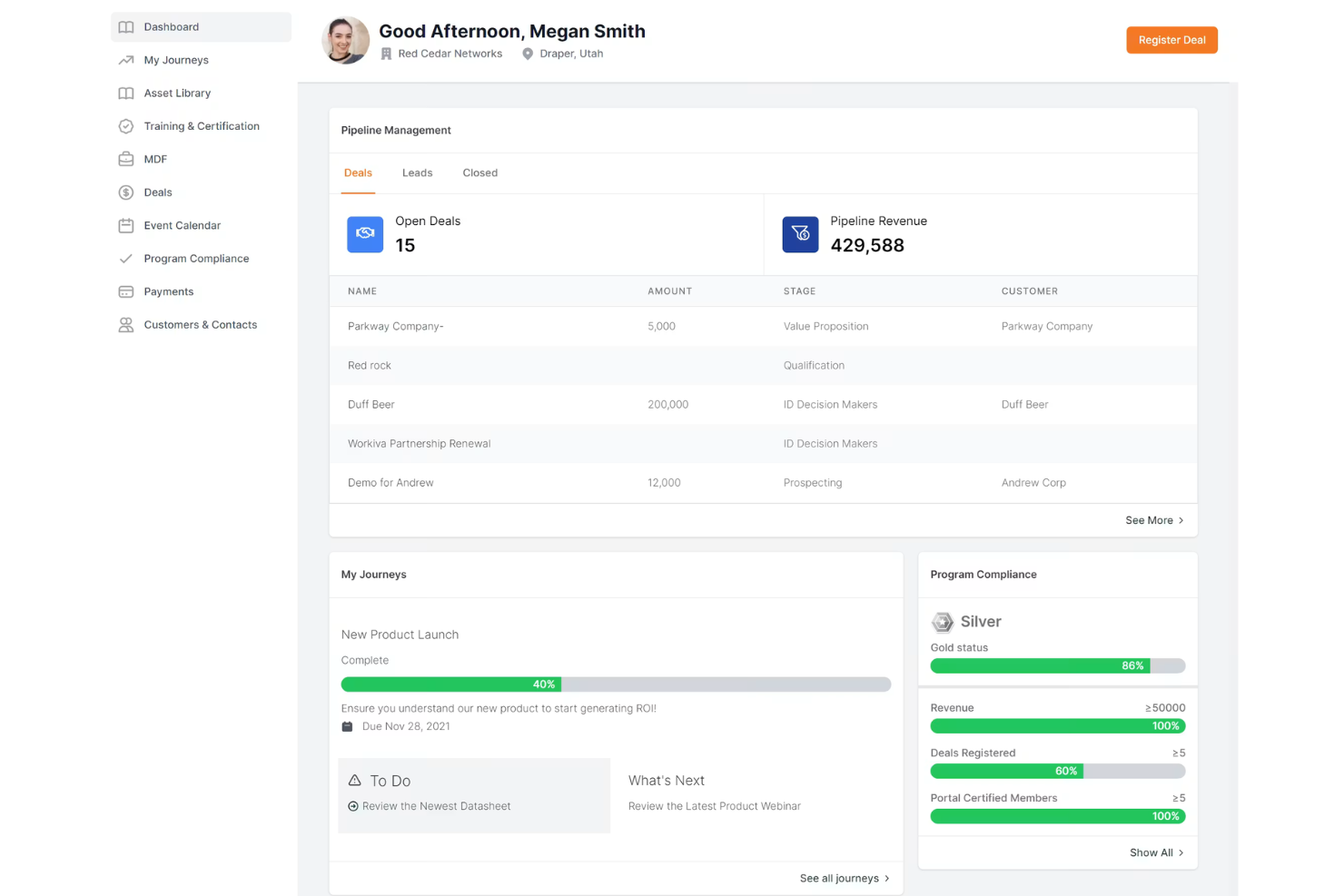
Impartner is a partner relationship management (PRM) platform that handles the full partner lifecycle, from recruitment and onboarding to deal registration, co-branded marketing, training, and partner analytics.
Who Is Impartner Best For?
Impartner is a strong fit for mid-market and enterprise companies running structured, multi-tier channel programs across technology, manufacturing, or SaaS.
Why I Picked Impartner
I picked Impartner as one of the best because its Journey Builder tool gives you genuine control over how each partner segment experiences onboarding. You can build segment-specific tracks, from resellers to MSPs, that guide each partner automatically from portal access through to their first revenue-generating deal.
I also like that the Training and Certification Management feature lets you layer in the right depth of training for each tier, so partners aren't getting irrelevant content. The code-free setup means my team can configure and update these journeys without waiting on developers.
Impartner Key Features
- Deal registration: Partners can submit and track deals directly through the portal, giving your team visibility into the pipeline.
- Market development funds (MDF) management: Lets you create, allocate, and track co-marketing funds with built-in approval workflows.
- Partner locator: A branded, embeddable directory that helps end customers find the right certified partner by region or specialty.
- Performance analytics dashboard: Tracks partner activity, deal progress, and program engagement across tiers in a single view.
Impartner Integrations
Impartner offers native integrations with Salesforce, HubSpot, Microsoft Dynamics 365, Crossbeam, and PartnerTap. Beyond those, Impartner's Orchestration Studio is a native iPaaS application that provides pre-built connectors to external applications for building advanced, visual workflows across your tech stack. Impartner also connects with Zapier and offers an API for custom integrations.
Pros and Cons
Pros:
- Flexible no-code portal and workflow builder
- Strong native Salesforce CRM sync
- Tailored portal experiences per partner tier
Cons:
- Initial platform implementation is highly complex
- Admin interface feels dated for new users


Mindmatrix Bridge is a partner relationship management and channel enablement platform that combines PRM, through-partner marketing automation, sales playbooks, asset management, and co-selling tools across direct, channel, and alliance partner networks.
Who Is Mindmatrix Best For?
Mindmatrix Bridge is a strong fit for mid-market and enterprise technology vendors, including MSPs, VARs, and ISV ecosystems, that manage large, multi-tier partner networks across both transactional and alliance channels.
Why I Picked Mindmatrix
I picked Mindmatrix Bridge as one of the best because it's one of the few platforms that genuinely connects sales and marketing activity across the entire partner journey. I particularly like how sales playbooks and marketing playbooks work together, automatically mapping assets and campaigns to buyer journey stages so partners get the right message and collateral without having to hunt for it.
That alignment is reinforced by a shared asset management system, which keeps brand, messaging, and content consistent across every partner touchpoint.
Mindmatrix Key Features
- Deal and lead registration: Manage deal registration with conflict elimination, round-robin or priority lead routing, and on-behalf registration for marketing admins.
- MDF management: Partners apply for market development funds directly through the partner portal, with vendor-side visibility into fund usage and approval workflows.
- Partner LMS: Build and manage course catalogs, certification programs, and training curricula, with tracking for partner performance and completion during onboarding.
- Incentives and rewards management: Design and manage channel incentive programs using partner activity data, MDF usage, and deal registration metrics to inform reward decisions.
Mindmatrix Integrations
Mindmatrix integrates with Salesforce, Microsoft Dynamics, HubSpot, Oracle, NetSuite, SugarCRM, Zoho, ConnectWise, Autotask, and Sage, with support for distributed CRM integration across both vendor and partner-level CRM systems.
Pros and Cons
Pros:
- Co-branded content templates for partners
- Concierge support included for partner campaigns
- Through-partner marketing automation built in
Cons:
- Partner portal UI can feel overwhelming
- Mobile interface requires excessive clicks

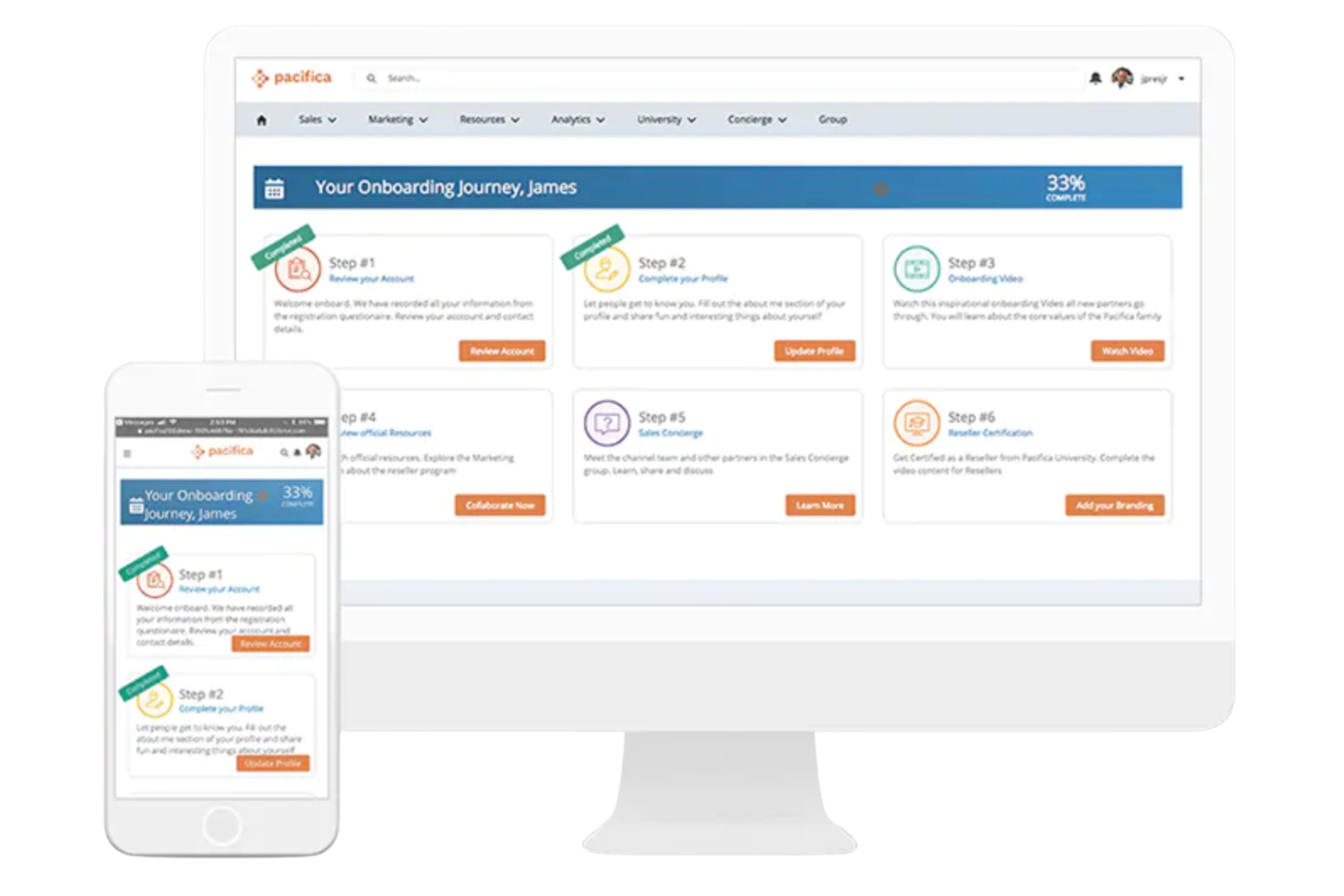
Built on the Salesforce platform, Salesforce PRM is a partner relationship management solution that handles deal registration, partner onboarding, co-branded marketing, and channel sales tracking inside a native Salesforce environment.
Who Is Salesforce PRM Best For?
Salesforce PRM is a natural fit for enterprise sales teams already running their CRM on Salesforce who want to extend that same environment to manage channel partners.
Why I Picked Salesforce PRM
Salesforce PRM earns its spot on my shortlist because it's the only PRM that lives entirely inside Sales Cloud, with no middleware or data syncing required. I particularly like Partner Connect, which lets partners log and track co-sell deals from their own CRM and automatically syncs updates back into Salesforce in real time.
Pipeline Inspection is another feature I use to give channel managers a live view of every partner opportunity without ever leaving the CRM.
Salesforce PRM Key Features
- Deal registration: Partners submit and track new opportunities directly through the partner portal.
- Lead distribution: Automatically routes qualified leads to the right partners based on defined assignment rules.
- Market development funds (MDF) management: Partners can request, track, and report on co-marketing funds through a built-in approval workflow.
- Partner portal builder: Uses Experience Cloud to create branded, self-service portals with custom page layouts and content.
Salesforce PRM Integrations
Salesforce PRM is built natively inside the Salesforce ecosystem, so it connects directly with Sales Cloud, Experience Cloud, Slack, and Agentforce without additional setup. You can extend it further through thousands of apps on the AgentExchange marketplace, and an API is available for custom integrations.
Pros and Cons
Pros:
- Automated MDF requests and approvals
- Real-time deal tracking via Pipeline Inspection
- Einstein AI scores partner leads automatically
Cons:
- Sharing rules and data visibility setup is complex
- User licenses can be quite expensive

PartnerStack
Best for automated rewards

PartnerStack is a partner relationship management platform built for B2B SaaS companies, covering partner recruitment, program management, commission tracking, and automated payouts across reseller, referral, and affiliate channels.
Who Is PartnerStack Best For?
PartnerStack is a strong fit for B2B SaaS companies running multi-tier partner programs that include resellers, affiliates, and referral partners simultaneously.
Why I Picked PartnerStack
PartnerStack earns its spot on my shortlist because no other PRM I've used automates the full rewards cycle as completely. I can configure commission rules by partner group, so resellers, affiliates, and referral partners each get the right rate without any manual calculation.
When a deal closes, PartnerStack automatically triggers the payout and processes it directly through the platform, so partners get paid on schedule without my team touching it.
PartnerStack Key Features
- PartnerStack Marketplace: A built-in network where B2B partners can discover and apply to join your program directly.
- Partner onboarding workflows: Customizable sequences that guide new partners through training and program activation steps.
- Performance reporting: Dashboards that track clicks, leads, and conversions by partner, program, or date range.
- Custom partner portal: A branded self-service space where partners access referral links, resources, and deal tracking.
PartnerStack Integrations
PartnerStack offers native integrations with Salesforce, HubSpot, and Pipedrive for syncing leads and deals to your CRM. It also connects with Stripe, Recurly, Chargebee, Maxio, and Paddle for payment tracking via webhooks. The platform includes a Workato-powered integration suite that lets you build low-code automations across additional apps like Slack and Google Sheets. An API and webhooks are available for custom integrations.
Pros and Cons
Pros:
- Global payouts across 70+ countries
- Supports multi-program types in one dashboard
- Built-in marketplace recruits partners automatically
Cons:
- Payout holding periods vary by program
- Premium pricing tiers are relatively expensive
Other Channel Partner Enablement Tools
Here are some additional channel partner enablement tools options that didn’t make it onto my shortlist, but are still worth checking out:
- Exec
For interactive AI pitch simulations
- TalentLMS
For scalable training
- Magentrix
For customizable portals
- MindTickle
For skills-based assessments
- Kiflo
For multi-tier management
- Introw
For content-driven assets
- Seismic
For content automation
- Crossbeam
For ecosystem data sharing
- Litmos
For rapid course authoring
- Channelscaler
For white-label training
- xAmplify
For automated outreach


How I Evaluate Channel Partner Enablement Tools for CROs
I split my evaluation into baseline criteria—like deal registration and partner portal capabilities—and differentiators that separate the vendors worth recommending from the rest.
Core Functionality (Table Stakes For This List)
When I'm selecting tools for my list, I rank each one on a scale from 0 (does not offer the functionality) to 5 (excels in this area) for each core functionality listed below. Then, I calculate the tool's total score into a percentage. Each tool needs to achieve a minimum total score of 65% to be considered for inclusion.
- Partner Portal Access: I evaluate whether each tool gives partners a self-service hub where they can find resources, submit deals, and track progress without pinging your team constantly.
- Partner Onboarding & Training: Structured learning paths and certifications matter here—I look for tools that let you build role-specific ramp programs rather than dumping PDFs into a shared folder.
- Content & Asset Management: Your partners need current, approved collateral at their fingertips. I check for co-branding capabilities, version control, and organized libraries with permission-based access.
- Deal Registration & Pipeline Tracking: This is where RevOps visibility lives. I evaluate how each tool handles registration workflows, approval routing, and partner-sourced pipeline attribution back to your CRM.
- Partner Performance Analytics: Dashboards and scorecards should surface partner-level revenue, engagement, and enablement KPIs that a CRO can actually act on during a quarterly business review.
- CRM & RevOps Integration: I look at how cleanly each tool syncs with platforms like Salesforce or HubSpot, including bi-directional data flow for opportunities, contacts, and attribution fields.
Once I have a list of tools that meet the criteria, I consider what sets each platform apart.
Differentiating Factors (What Sets Vendors Apart)
Here's how I compare and contrast different vendors:
Standout Features
Ecosystem mapping is a big one—I look for tools that visualize overlapping accounts across your partner network so your CRO can spot co-sell opportunities before they go cold. Partner journey automation also separates the strong platforms from the rest, triggering nudges and next-best-actions based on tier or engagement stage. I evaluate MDF management capabilities too, since tracking fund requests, approvals, and ROI in one place saves RevOps teams from chasing spreadsheets across dozens of partners.
Beyond Features
RevOps tech stack fit matters a lot here. I check whether a tool connects cleanly with your existing CRM, MAP, and CPQ systems—because partner data that lives outside Salesforce or HubSpot is partner data your CRO won't trust. Scalability across partner types is another factor I weigh, especially for teams running reseller, referral, and tech alliance programs under one roof. Deployment speed also counts; I look at how quickly a team can stand up a working portal and onboard their first partner cohort without months of professional services.
How to Choose Channel Partner Enablement Tools
It’s easy to get bogged down in long feature lists and complex pricing structures. To help you stay focused as you work through your unique software selection process, here’s a checklist of factors to keep in mind:
| Factor | What to Consider |
|---|---|
| Scalability | Will the tool support your expected growth in partner count, geographic reach, and deal volume over the next 2-3 years? Avoid solutions with strict limits or unclear upgrade paths. |
| Integrations | Does the tool connect to CRMs, ERPs, or marketing automation platforms your partners and team already use? Verify native connections and assess what will require custom development. |
| Customizability | Can you tailor portals, workflows, and incentives to fit your branding and processes without expensive vendor services or excessive delays? Check if changes can be made in-house. |
| Ease of use | Is the interface straightforward for both your team and partners, or will heavy training be needed? Simple dashboards and self-service tools help accelerate adoption. |
| Implementation and onboarding | How long will it take to get partners onboarded and using the system? Ask about data migration, sandbox environments, and typical timeframes for your company's size. |
| Cost | What are the total costs for onboarding, licenses, integrations, support, and configuration? Ensure there are no hidden fees and that pricing is predictable as you scale. |
| Security safeguards | Does the tool offer role-based access, SSO, data encryption, and audit logs? Confirm protection for sensitive deal data and partner information. |
| Support availability | What’s included for customer support—hours, channels, escalation process, and success management? Consider global time zones and coverage for partner-facing issues. |
What are Channel Partner Enablement Tools?
Channel partner enablement tools are software platforms that help businesses equip, train, and support external sales or service partners throughout the partner lifecycle. These tools centralize resources, manage onboarding, track partner performance, automate co-marketing efforts, and optimize communication.
Their primary purpose is to ensure partners have quick access to the collateral, training, and support they need to drive collaborative revenue growth.
Features
When selecting channel partner enablement tools, keep an eye out for the following key features:
- Partner onboarding: Optimizes the process of registering and onboarding new partners, often with guided workflows, custom forms, and automated approval steps.
- Deal registration: Lets partners submit and track sales opportunities, helping vendors avoid channel conflicts and ensuring leads are properly managed throughout the funnel.
- Co-branded collateral: Allows users to generate sales and marketing materials personalized with both vendor and partner branding, ensuring consistency while enabling customization.
- Learning management system: Provides access to training courses, certifications, quizzes, and tracking tools so partners can build product knowledge and demonstrate competency.
- Portal customization: Enables you to tailor dashboards, menus, and partner experiences to highlight relevant content and workflows for different partner types or tiers.
- Performance analytics: Delivers dashboards and reports on partner activity, deal statuses, certification completions, and campaign performance to monitor engagement and ROI.
- Incentive management: Handles the setup and tracking of rewards, rebates, MDF programs, and performance-based bonuses to encourage desired partner behaviors.
- Asset management: Centralizes all sales decks, datasheets, videos, and other collateral in an organized library, making it easy for partners to find, preview, and download content.
- Automated communications: Sends scheduled updates, reminders, and promotional campaigns to partners via email or notifications, reducing manual outreach.
- Multi-language support: Offers portal access and resources in multiple languages to serve a geographically diverse partner network.
Common Channel Partner Enablement Tools AI Features
Beyond the standard channel partner enablement tools features listed above, many of these solutions are incorporating AI with features like:
- Partner scoring and segmentation: Uses AI to analyze partner performance, engagement, and market activity to automatically rank, segment, and prioritize partners for targeted programs or resources.
- Predictive deal insights: Applies machine learning to historical sales and engagement data to forecast which deals are most likely to close, helping both vendors and partners focus on the highest-value opportunities.
- AI-driven content recommendations: Suggests relevant sales and marketing collateral to partners based on their vertical, region, deal stage, and past behaviors, saving time and improving collateral utilization.
- Automated lead qualification: Analyzes lead data and partner-submitted deals to predict fit and assign scores, quickly highlighting the most promising opportunities for follow-up.
- Chatbots for partner support: Provides instant, AI-powered assistance and answers to partner questions within the portal, reducing support load and improving the partner experience.
Benefits
Implementing channel partner enablement tools provides several benefits for your team and your business. Here are a few you can look forward to:
- Faster partner onboarding: Guided workflows and centralized resources help partners ramp up quickly, reducing time-to-value and administrative workload.
- Consistent brand messaging: Co-branded collateral and centralized asset libraries ensure partners always use up-to-date, approved materials in every customer-facing interaction.
- Improved deal visibility: Deal registration and analytics features allow you to track partner pipeline activity, helping with forecasting and conflict resolution.
- Higher partner engagement: Automated communications, incentive management, and customizable portals keep partners informed and motivated to participate in key programs.
- Data-driven decision making: Built-in analytics and AI-enabled insights reveal which partners, campaigns, or assets are driving results, supporting smarter allocation of resources.
- Easier compliance management: Portal controls, access rights, and audit logs help maintain regulatory compliance and protect sensitive information across your partner network.
- Scalable partner programs: Flexible features and automation allow your partner ecosystem to grow without adding manual processes or complexity for your team.
Costs and Pricing
Selecting channel partner enablement tools requires an understanding of the various pricing models and plans available. Costs vary based on features, team size, add-ons, and more. The table below summarizes common plans, their average prices, and typical features included in channel partner enablement tools solutions:
Plan Comparison Table for Channel Partner Enablement Tools
| Plan Type | Average Price | Common Features |
|---|---|---|
| Free Plan | $0 | Basic partner onboarding, limited asset storage, email support, and community access. |
| Personal Plan | $15-$40/user/month | Single admin portal, standard training modules, basic reporting, and self-serve knowledge base. |
| Business Plan | $40-$100/user/month | Custom partner portals, deal registration, co-branded collateral tools, analytics dashboards, and integrations. |
| Enterprise Plan | $100-$200/user/month | Advanced automation, AI-powered insights, multi-tier management, custom workflows, priority support, and enterprise security. |
Channel Partner Enablement Tools FAQs
Here are some answers to common questions about channel partner enablement tools:
How do channel partner enablement tools differ from partner relationship management (PRM) software?
Channel partner enablement tools focus on training, content delivery, and partner engagement, while PRM software typically offers broader features for managing partner onboarding, contracts, and lifecycle workflows. Many modern solutions combine enablement and PRM features into a single platform.
Can channel partner enablement tools integrate with CRM systems?
Yes, most channel partner enablement tools offer native or API-based integrations with popular CRM platforms. This lets you sync partner activity, deal registrations, and contact records for accurate reporting and easier collaboration across systems.
What types of training can be delivered through these tools?
You can deliver self-paced courses, onboarding modules, product certifications, and even interactive webinars. Look for solutions with built-in learning management systems that track completion, test knowledge, and manage certifications for partner reps.
Are channel partner enablement tools suitable for global partner networks?
Yes, many tools support multi-language portals, region-specific content, and flexible user roles—making them a good fit for organizations managing partners across different countries or regions.
How do these tools help improve partner engagement?
Channel partner enablement tools offer features like automated communications, gamified incentives, and performance dashboards. These help keep partners informed, motivated, and aligned with your programs and business goals.