

I 10 migliori software di gamification delle vendite nel 2026

10 I migliori software per la gamification delle vendite: selezione


Con così tanti software diversi per la gamification delle vendite disponibili, capire quale sia quello giusto per te è difficile. Sai di voler coinvolgere e motivare i tuoi team di vendita trasformando le attività commerciali in sfide competitive, ma devi capire quale strumento sia il migliore.
Ci penso io! In questo articolo ti aiuterò a rendere semplice la tua scelta, condividendo le mie esperienze personali nell'utilizzo di decine di diversi strumenti per la gamification delle vendite con vari team e account, insieme alla mia selezione dei migliori software per la gamification delle vendite.
Perché fidarsi dei nostri consigli sui software
Le nostre recensioni riflettono il nostro giudizio indipendente, non un discorso di vendita. Scopri come manteniamo la trasparenza.
Per questa guida, abbiamo valutato gli strumenti attraverso test pratici e ricerche indipendenti, assegnando un punteggio agli strumenti in base ai nostri criteri di selezione.
Le nostre recensioni riflettono il nostro giudizio editoriale umano, non un discorso di vendita.
Riepilogo dei migliori software per la gamification delle vendite
Questa tabella comparativa riassume i dettagli dei prezzi dei migliori software per la gamification delle vendite che ho selezionato, per aiutarti a trovare quello più adatto al tuo budget e alle esigenze della tua azienda.
| Tool | Best For | Trial Info | Price | ||
|---|---|---|---|---|---|
| 1 | Ideale per una piattaforma aziendale completa per gestire le esigenze del brand | Demo gratuita disponibile | Prezzi personalizzati disponibili | Website | |
| 2 | Ideale per sfruttare i fattori psicologici che motivano i tuoi venditori | Demo gratuita disponibile | Prezzi personalizzati disponibili | Website | |
| 3 | Ideale per la gamification delle vendite focalizzata sulla ritenzione della conoscenza | Demo gratuita disponibile | Prezzo personalizzato disponibile | Website | |
| 4 | Ideale per analizzare le performance di vendita, monitorare le tendenze e individuare le opportunità di crescita | Demo gratuita disponibile | Prezzi personalizzati disponibili | Website | |
| 5 | Ideale per integrare la gamification con gli obiettivi di vendita | Dimostrazione gratuita disponibile | Prezzo su richiesta | Website | |
| 6 | Ideale per risparmiare tempo con incentivi e template pronti all'uso | Piani gratuiti disponibili | Da $399/mese | Website | |
| 7 | Ideale per incentivare sia i team vendita che recruiting | Demo gratuita disponibile | Da $545/mese | Website | |
| 8 | Il migliore software di incentivazione alle vendite per rivenditori con team di prima linea | Not available | Da $199/mese | Website | |
| 9 | Ideale per soluzioni complete di gestione delle vendite | Not available | Prezzi personalizzati disponibili | Website | |
| 10 | Ideale per micro-learning, stimoli comportamentali e formazione virtuale | Prova gratuita disponibile | Prezzi personalizzati disponibili | Website |
Recensioni dei migliori software per la gamification delle vendite
Di seguito trovi i miei riepiloghi dettagliati dei migliori software per la gamification delle vendite entrati nella mia selezione. Le mie recensioni offrono un’analisi approfondita delle funzionalità principali, dei pro & contro, delle integrazioni e dei casi d’uso ideali di ogni strumento, per aiutarti a trovare quello più adatto a te.

Displai
Ideale per una piattaforma aziendale completa per gestire le esigenze del brand

Raydiant è una piattaforma tutto-in-uno che può offrire tutto, dai display video, menu digitali integrati con POS, chioschi self-service e gamification delle vendite con premi, per garantire un'esperienza positiva sia per i clienti che per il personale. Questo strumento può fornirti contenuti personalizzati e contenuti da app partner che puoi visualizzare su schermi alimentati dall'IA.
Perché ho scelto Raydiant: Ho scelto questo strumento perché offre molto di più della sola gamification delle vendite, e propone alcune delle esperienze incentivanti più complete possibili. Raydiant ti permette di collegarti a Square e Phenium per assicurarti di avere accesso a software di altissimo livello che ti aiuta a creare esperienze ancora più coinvolgenti per i tuoi dipendenti in più sedi.
Funzionalità principali e integrazioni di Raydiant
Funzionalità principali includono un'app mobile che mostra classifiche e competizioni affinché i dipendenti possano controllare il proprio stato in qualsiasi momento, modelli di design che ti forniscono gli strumenti per creare esperienze in negozio per i clienti e chioschi self-service che ottimizzano l'efficienza dei dipendenti.
Le integrazioni includono BrightSign, DS Menu, Leyline, MapsPeople, Phenium, Poly, RetailNext, Soundtrack Your Brand, Square e Toast.
Pros and Cons
Pros:
- Vengono aggiunte frequentemente nuove funzionalità alla piattaforma
- Assistenza clienti competente e cordiale
- Interfaccia utente facile da navigare
Cons:
- Il supporto clienti può essere lento
- Tutti i dati e le funzionalità possono sembrare complessi da imparare

Ideale per sfruttare i fattori psicologici che motivano i tuoi venditori
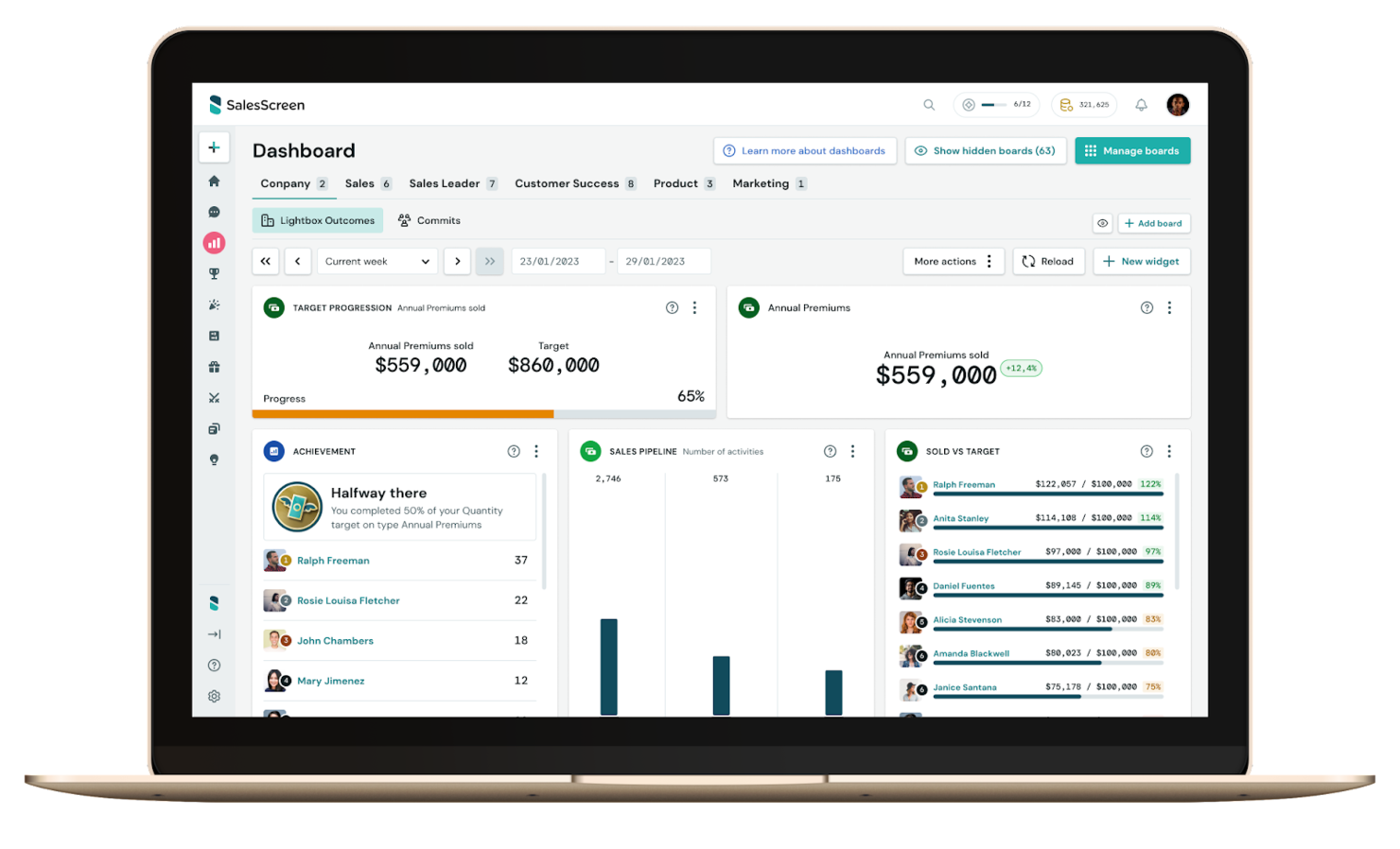
Questo software per la performance di vendita dà priorità alla visualizzazione e alla gamification per aiutare la tua azienda a costruire un ambiente di lavoro più produttivo, con meno turnover e un team più coinvolto. Integrandosi con il tuo CRM, SalesScreen fornisce aggiornamenti in tempo reale per competizioni, classifiche, concorsi e riconoscimenti tra colleghi.
Perché ho scelto SalesScreen: Questo software di gamification ha attirato la mia attenzione perché utilizza metriche psicologiche per determinare cosa motiva di più ogni membro del team. Offre percorsi di incentivazione per diversi tipi di personalità, tra cui Achievers, Socialites, Explorers e Killers. SalesScreen consiglia quale percorso utilizzare, con incentivi che vanno da badge di nicchia a feed sociali.
Caratteristiche e integrazioni distintive di SalesScreen
Le caratteristiche distintive includono oltre dieci modelli di competizione preimpostati con tornei a eliminazione, blitz di un giorno e lotterie, oltre a premi e badge personalizzati per premiare traguardi e risultati.
Le integrazioni includono Chorus, Lessonly, HubSpot CRM, Outreach, Pipedrive CRM, Salesforce Sales Cloud, Seismic, Slack, Strava e SugarCRM.
Pros and Cons
Pros:
- Navigazione intuitiva e interfaccia facile da usare
- Team di assistenza clienti proattivo e competente
- Personalizzazione semplificata con modelli predefiniti
Cons:
- Libreria limitata di immagini e modelli per i contest
- Integrazione limitata con piattaforme di chat interne

Ideale per la gamification delle vendite focalizzata sulla ritenzione della conoscenza
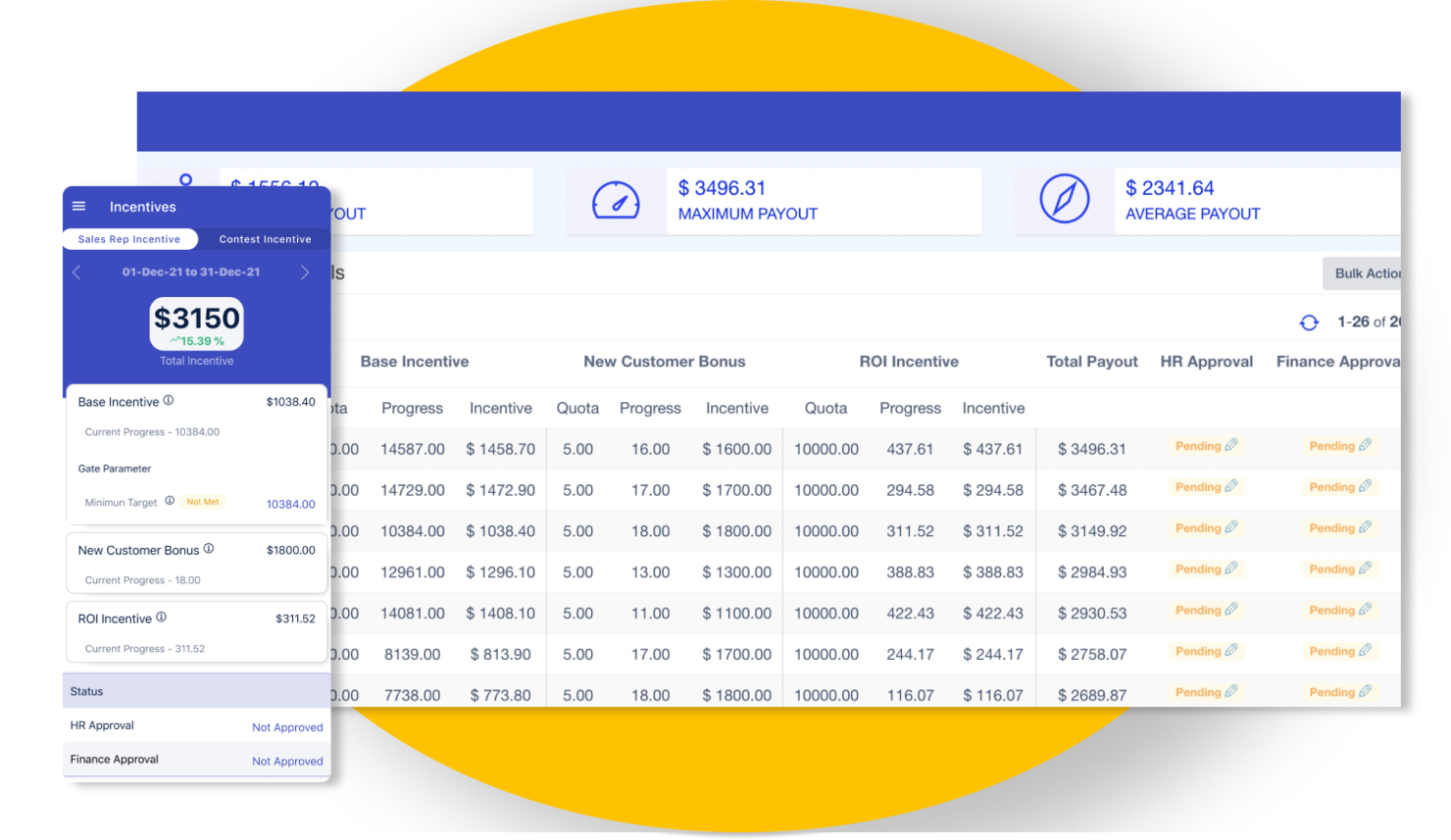
Come piattaforma basata sul web per la gamification delle vendite, SmartWinnr si concentra sull'assicurare una comunicazione uniforme con i clienti e sul mantenere la tua squadra di vendita sempre aggiornata sulle conoscenze di prodotto, aumentando al contempo le vendite. Questa piattaforma sfrutta quiz guidati dall’IA, coaching continuo, KPI gamificati e rinforzi per favorire la conoscenza.
Perché ho scelto SmartWinnr: Questa piattaforma di formazione e gamification ha catturato la mia attenzione perché pone molta enfasi sulla ritenzione della conoscenza. Attraverso micro-training, apprendimento personalizzato e SmartQuizz, il tuo team ha frequenti opportunità di apprendimento per assicurarsi di essere sempre aggiornato su prodotti e servizi.
Caratteristiche distintive e integrazioni di SmartWinnr
Le caratteristiche distintive includono classifiche in tempo reale legate alle prestazioni nei quiz che aiutano i membri del team a tenere traccia dei propri successi e percorsi di apprendimento strutturati in base alle esigenze, competenze e performance di ogni individuo.
Le integrazioni includono HubSpot CRM, Microsoft Dynamics e Salesforce Sales Cloud.
Pros and Cons
Pros:
- Piattaforma agile che si adatta al tuo team
- Il supporto clienti backend è competente
- Disponibile in diverse lingue europee
Cons:
- Il servizio clienti deve creare i tuoi report personalizzati
- Le funzionalità avanzate potrebbero richiedere formazione da parte del supporto clienti

Spinify
Ideale per analizzare le performance di vendita, monitorare le tendenze e individuare le opportunità di crescita
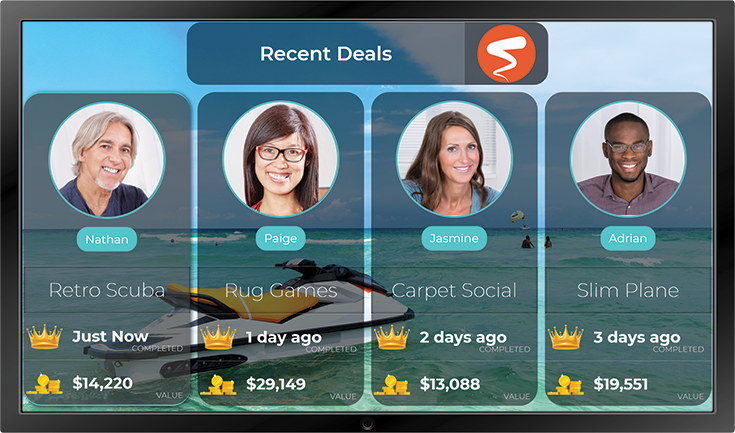
Questa piattaforma di gamification sfrutta le tecniche Octalysis e principi psicologici per stimolare la motivazione e migliorare le prestazioni del team e dei singoli. Spinify monitora queste metriche per individuare tendenze e aree di miglioramento, consentendo a te e ai tuoi manager di offrire coaching personalizzato a ogni membro del team.
Perché ho scelto Spinify: Questa piattaforma ha attirato la mia attenzione grazie alla sua intelligenza artificiale abilitata a Chat GPT. SpinifyGPT funziona come un assistente AI in grado di personalizzare i giochi e fornire raccomandazioni di gamification sulla base delle metriche di performance della squadra. Ogni volta che sei a corto di idee, Spinify GPT può intervenire con risposte.
Caratteristiche distintive e integrazioni di Spinify
Caratteristiche distintive includono la creazione di tracciamenti personalizzati di obiettivi e metriche con messaggi di riconoscimento automatici e approfondimenti di coaching personalizzati per ogni team e individuo, al fine di migliorare le performance.
Le integrazioni includono Bullhorn, Google Sheets, JobAdder, Microsoft Excel, Pipedrive CRM, Outreach, Salesforce Sales Cloud, Slack, SQL e Zapier.
Pros and Cons
Pros:
- Facile configurazione di utenti e canali
- Creazione semplice di competizioni e contest
- Strumenti di tracciamento e analisi eccellenti
Cons:
- Prezzi personalizzati possono portare a strumenti inutilizzati
- Branding limitato, mancanza di font e layout personalizzati

Ambition
Ideale per integrare la gamification con gli obiettivi di vendita
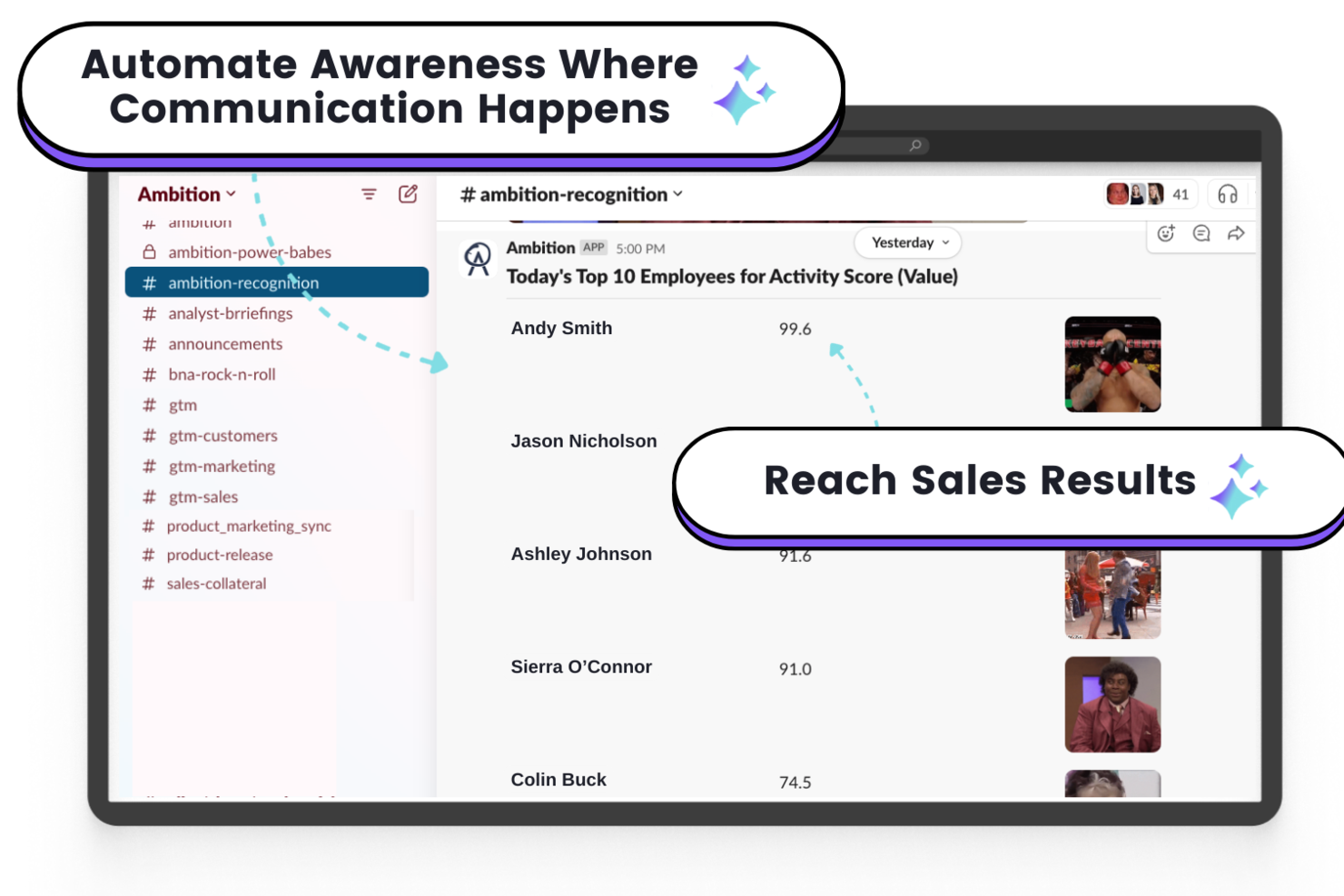
Ambition trasforma la dinamica dei team di vendita integrando la gamification nelle operazioni quotidiane, rendendolo una scelta attraente per le organizzazioni che desiderano aumentare la motivazione e le prestazioni. Pensato per manager e team di vendita di diversi settori, Ambition offre monitoraggio in tempo reale e competizioni personalizzabili che si allineano agli indicatori chiave di performance (KPI) della tua azienda. Favorendo una cultura competitiva e potenziando la responsabilità del team, Ambition risolve le sfide legate alla produttività e all’engagement nelle vendite, rivelandosi uno strumento prezioso per chi desidera stimolare un vero cambiamento comportamentale.
Perché ho scelto Ambition
Ho scelto Ambition per la sua capacità unica di integrare senza soluzione di continuità la gamification con la gestione della performance di vendita, rispondendo direttamente alle esigenze dei team di vendita che puntano a migliorare motivazione e responsabilità. Il punto di forza di Ambition sono le sue competizioni personalizzabili e le classifiche leader, che offrono visibilità in tempo reale sulle metriche di performance. Questo motiva non solo i rappresentanti di vendita, ma allinea anche i loro sforzi agli obiettivi dell’organizzazione. Inoltre, la funzione di tracciamento automatico degli obiettivi assicura che i risultati vengano riconosciuti prontamente, stimolando una cultura di riconoscimento e miglioramento continuo.
Caratteristiche principali di Ambition
Oltre ai suoi robusti elementi di gamification, ho trovato anche diverse altre funzionalità che ne aumentano il valore come strumento di gamification delle vendite.
- Premi: Questa funzione consente programmi di premi flessibili, permettendo il riconoscimento automatico o discrezionale da parte del manager dei successi di vendita.
- Orchestrazione del coaching: Offre programmi di coaching strutturati che si integrano perfettamente con la gamification, migliorando le prestazioni complessive del team.
- Intelligenza delle prestazioni: Fornisce insight basati sui dati per decisioni più informate, fondamentali per ottimizzare le strategie di vendita.
- Avvisi di celebrazione: Notifiche automatiche che evidenziano risultati e traguardi, favorendo una cultura di riconoscimento e motivazione.
Integrazioni di Ambition
Le integrazioni includono Salesforce, Slack, Microsoft Teams, Zoom, Gong, Google Calendar, Outreach, Salesloft, HubSpot e API per integrazioni personalizzate.
Pros and Cons
Pros:
- Concorsi personalizzabili che motivano il comportamento di vendita
- Visibilità in tempo reale sulle metriche di performance
- Integrazione approfondita con Salesforce e CRM
Cons:
- Complessità nella configurazione per i nuovi team
- Il prezzo può limitarne l’uso per team più piccoli

Arcade
Ideale per risparmiare tempo con incentivi e template pronti all'uso
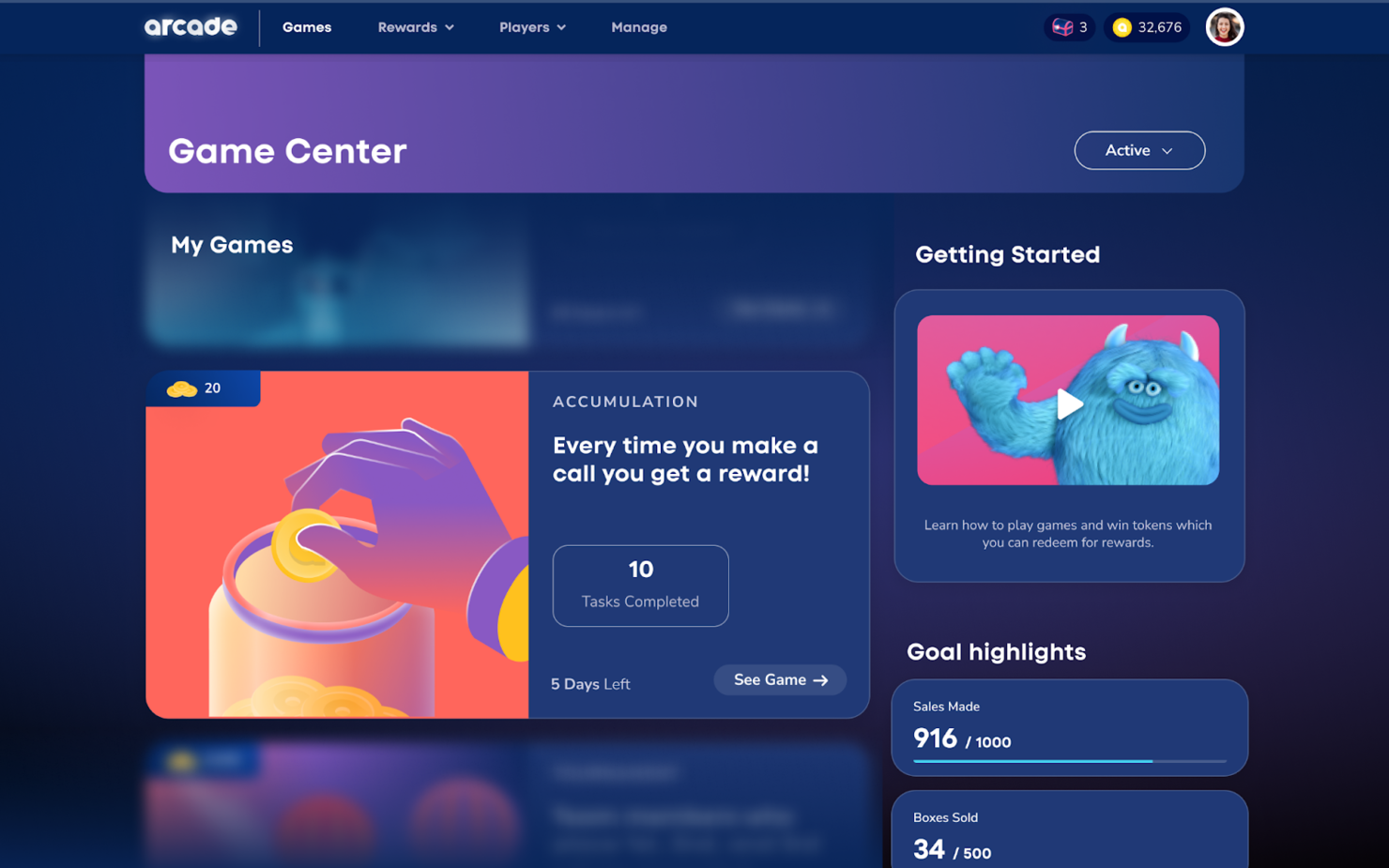
Questa piattaforma cloud per il coinvolgimento dei dipendenti è progettata per offrire ai responsabili delle vendite una vasta gamma di tecniche di gamification insieme a strumenti di comunicazione e collaborazione. Motiva i dipendenti con concorsi, classifiche e premi, offrendo anche chat individuali, riunioni di squadra, feed social e sondaggi.
Perché ho scelto Arcade: Ho scelto questo strumento per la mia lista perché è una piattaforma dedicata interamente alla gamification, invece di essere un CRM con la gamification integrata. Questa soluzione gamification-first si concentra su una splendida visualizzazione dei dati, competizioni di vendita divertenti e posizionamenti in classifica per mantenere il team motivato. Con una piattaforma piacevole da vedere e divertente da usare, i tuoi dipendenti avranno davvero voglia di accedere.
Caratteristiche principali e integrazioni di Arcade
Caratteristiche principali comprendono un'app nativa per iOS e Android che garantisce ai membri del team la possibilità di partecipare da qualsiasi dispositivo, automazioni per aggiornamenti in tempo reale che forniscono al tuo team di vendita notifiche grafiche coinvolgenti e soluzioni di gamification uniche per team di vendita interni ed esterni.
Le integrazioni includono B2B Soft, Gmail, HubSpot CRM, Pipedrive CRM, Revel Systems, RQ Retail Management, Salesforce Sales Cloud, Slack, Square POS e Vend.
Pros and Cons
Pros:
- La piattaforma è molto semplice da usare
- La navigazione è intuitiva e facile da usare
- L'interfaccia ha una grafica e un design bellissimi
Cons:
- Le dashboard non sono completamente personalizzabili
- L'app può essere lenta su dispositivi mobili con un sistema operativo obsoleto
Ideale per incentivare sia i team vendita che recruiting
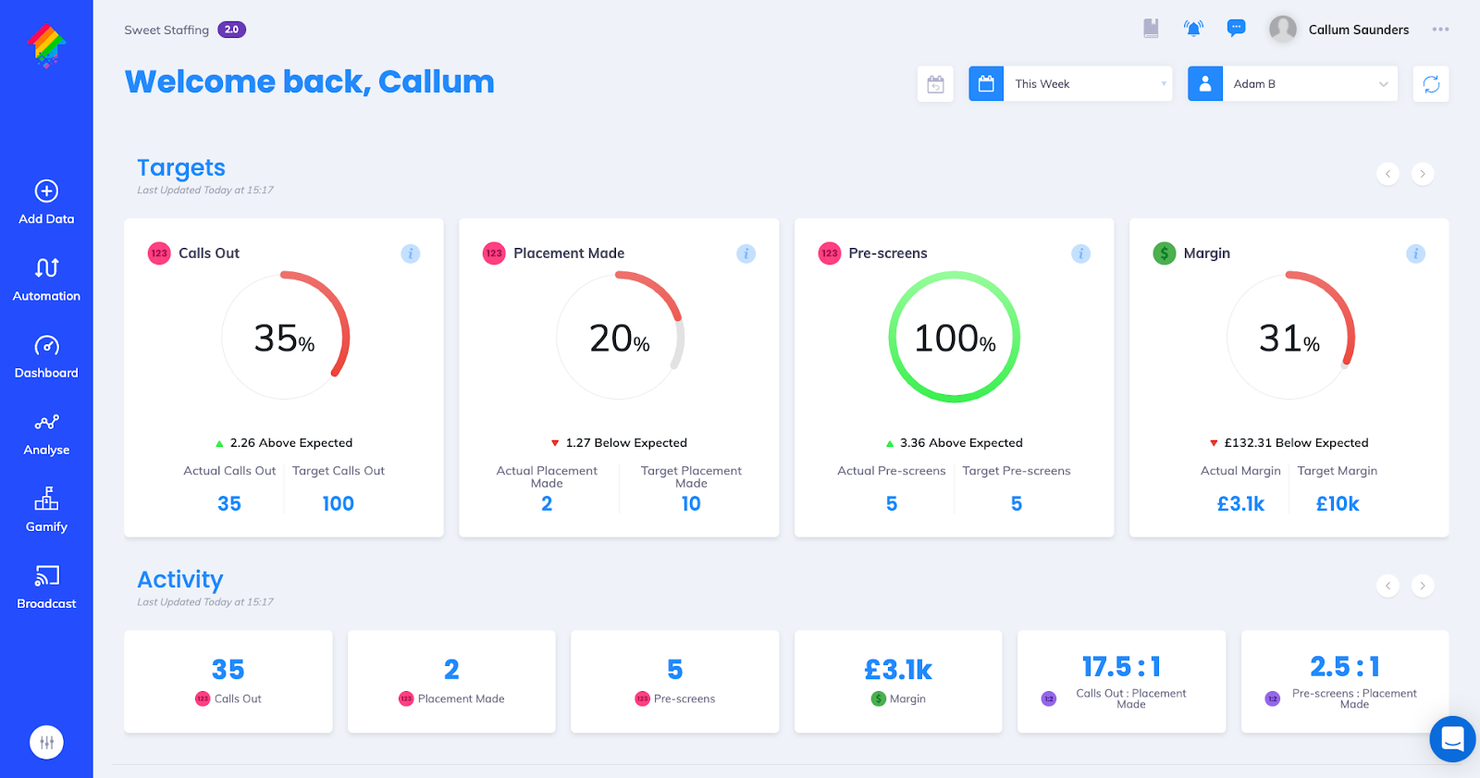
Questa piattaforma di performance per le vendite è ideale per i team in crescita che attribuiscono grande importanza anche al reclutamento. OneUp Sales raccoglie dati in tempo reale da tutti i tuoi sistemi chiave, inclusi VOIP e CRM, per fornire ai manager informazioni chiare, metriche KPI e report automatizzati che garantiscono visibilità in tutta l'organizzazione.
Perché ho scelto OneUp Sales: Questo strumento è nella mia lista perché dà priorità a forme di riconoscimento che funzionano per ogni team, inclusi vendita e recruiting. Celebra i successi di squadra o individuali su TV e app di messaggistica (come MS Teams) con visualizzazione dei dati, classifiche, video, immagini e premi.
Funzionalità e integrazioni principali di OneUp Sales
Funzionalità principali includono dashboard personalizzabili per ogni membro del team per mettere in risalto le metriche più importanti, classifiche in tempo reale che estraggono dati live dai tuoi strumenti per generare risultati automatici e trigger personalizzati che avviano le celebrazioni su tutti i dispositivi in rete.
Le integrazioni includono Access Recruitment CRM, Aircall, Bullhorn CRM, HubSpot CRM, Jobadder, Loxo, Microsoft Dynamics 365, RingCentral, Salesforce Sales Cloud e Vincere.
Pros and Cons
Pros:
- Supporto clienti continuo durante l'onboarding
- Facile creare incentivi per team o individui
- Fornisce informazioni sulle opportunità perse
Cons:
- La funzione ‘Targets’ è in beta ed è ancora un po’ macchinosa
- Una funzionalità approfondita richiede formazione aggiuntiva

Il migliore software di incentivazione alle vendite per rivenditori con team di prima linea
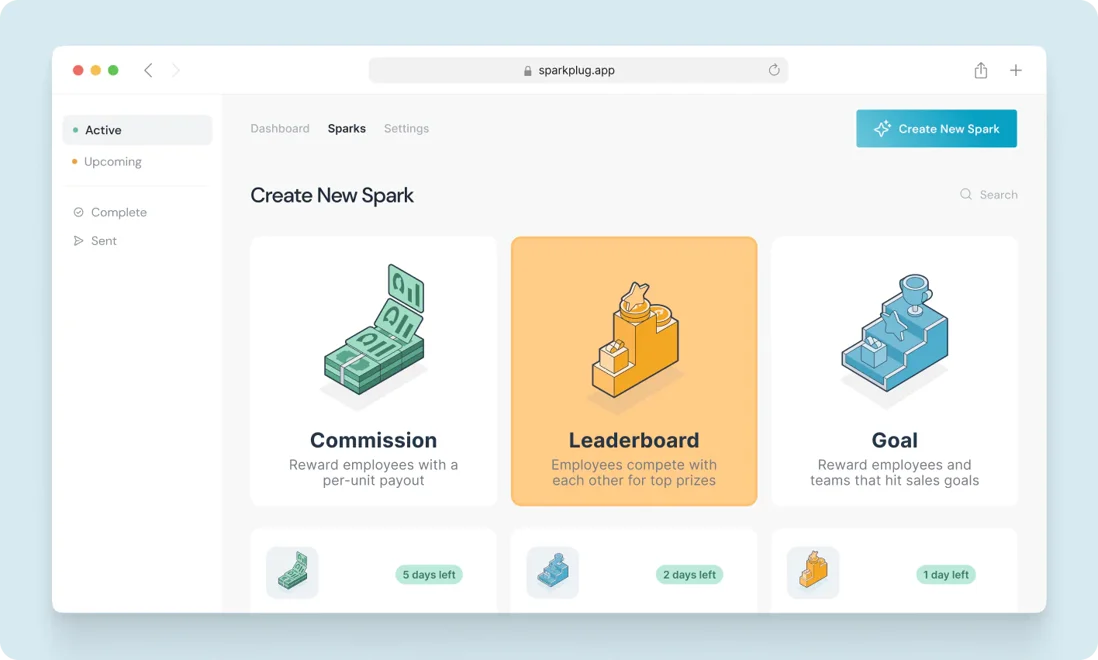
Progettato appositamente per i rivenditori specializzati, i marchi CPG e i ristoranti, SparkPlug è ideale per le attività fisiche con sistemi POS. Una volta connesso, SparkPlug può automatizzare ogni aspetto dell'implementazione e della scalabilità del tuo nuovo programma di incentivazione con pagamenti gestiti, strumenti per la promozione commerciale e incentivi sulle vendite sponsorizzati da fornitori per i dipendenti.
Perché ho scelto SparkPlug: Ho inserito questa piattaforma nella mia lista perché offre funzionalità che rispondono alle esigenze degli addetti alle vendite di prima linea. SparkPlug si distingue per le sue soluzioni orientate alla ristorazione, che incoraggiano la vendita di prodotti target, come antipasti, bevande, specialità della settimana e altri articoli a margine elevato nel menu. SparkPlug automatizza anche i pagamenti e il monitoraggio delle classifiche.
Funzionalità e integrazioni principali di SparkPlug
Le funzionalità principali includono pagamenti tramite portafoglio virtuale che i dipendenti possono riscattare via Venmo, carta regalo Visa o ACH, integrazione diretta con il tuo sistema POS per aggiornamenti in tempo reale e incentivi creati appositamente per i dipendenti del settore retail e ristorazione.
Le integrazioni includono Alleaves, Biotrack, Blaze, Cova, Flowhub, Dutchie, LeafLogix, Meadow, Revel, Square e Toast. L'API di SparkPlug ti collega in modo sicuro a qualsiasi POS per un'integrazione senza problemi.
Pros and Cons
Pros:
- Implementazione rapida e semplice
- Assistenza clienti cordiale e competente
- Intuitivo per responsabili e venditori
Cons:
- Gli incentivi sponsorizzati dai fornitori possono essere macchinosi
- Nessuna funzione chat per l'assistenza clienti

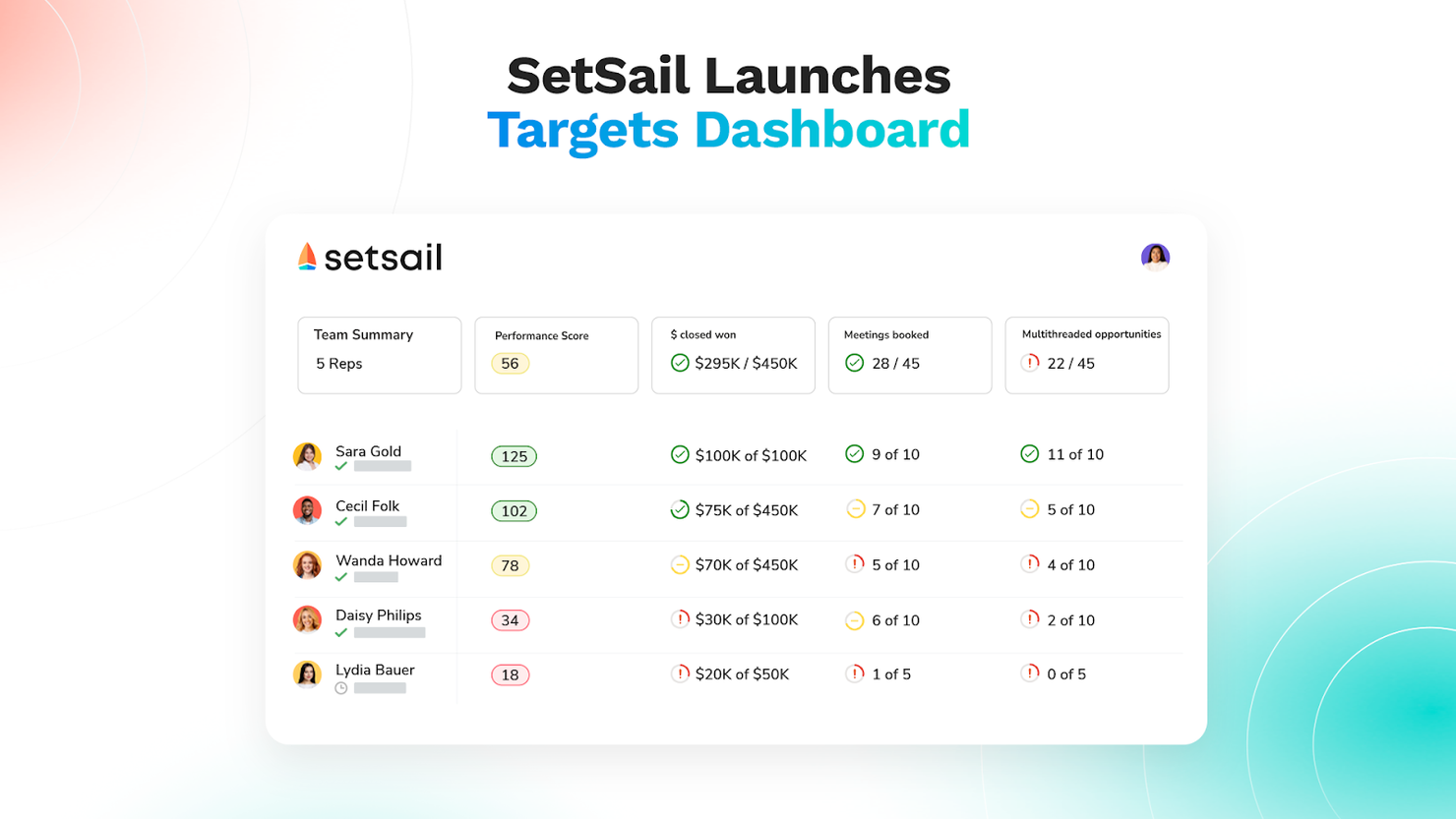
SetSail è una soluzione unica per la gestione delle vendite perché è costruita come una piattaforma di vendita basata su segnali che interpreta e centralizza i dati tra i tuoi strumenti e team. Grazie a questi dati, SetSail può individuare attività e tendenze tra i tuoi migliori venditori per diffondere quei comportamenti vincenti in tutta l'organizzazione. Alimentato da intelligenza artificiale e scienze comportamentali, SetSail trasforma i dati di vendita in segnali di acquisto.
Perché ho scelto SetSail: Mi piace questo strumento perché fornisce ai manager intuizioni che migliorano le prestazioni del team di vendita, mostrandoti quali rappresentanti stanno rimanendo indietro per aiutarti ad affrontare tempestivamente le criticità, schede di valutazione con le performance dei rappresentanti per un feedback in tempo reale e lo stato degli account secondo metriche e traguardi personalizzati. Con analisi guidate dall'IA, puoi godere di una visibilità potenziata in tutta l'organizzazione.
Funzionalità e integrazioni principali di SetSail
Funzionalità principali includono la creazione personalizzata settimanale di SPIFF per incentivare i rappresentanti a completare attività di alto valore, classifiche pubbliche per mostrare i top performer e incoraggiare le vendite tra i membri del team meno performanti, e coaching guidato basato sulle attività di vendita personali.
Integrazioni includono Chorus, Gmail, Gong, Google Calendar, Microsoft Dynamics, Outreach, Salesforce Sales Cloud, SalesLoft e Zoom.
Pros and Cons
Pros:
- Interfaccia utente semplice e intuitiva
- Le tempistiche dei concorsi sono personalizzabili per competizioni giornaliere, settimanali e mensili
- Team di supporto clienti dedicato
Cons:
- Opzioni di personalizzazione self-service limitate
- Il monitoraggio di KPI e parametri potrebbe essere più preciso

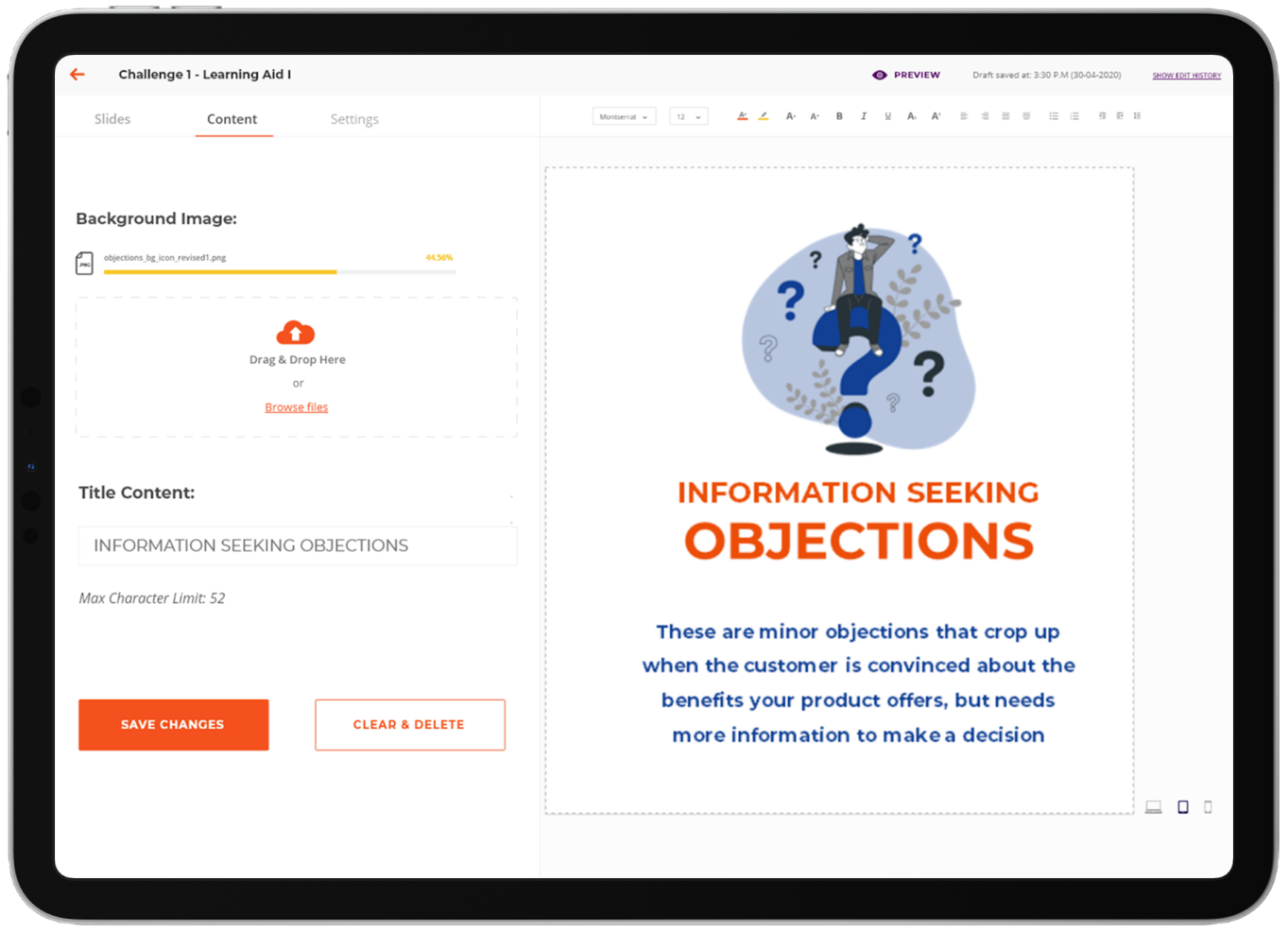
Come piattaforma di abilitazione alle vendite e apprendimento, Master-O utilizza la gamification per migliorare la formazione e l’onboarding del tuo team. Corsi interattivi con quiz divertenti e traguardi unici ti consentono di modificare i contenuti esistenti per personalizzare ogni percorso di apprendimento con porzioni in pillole per ogni membro del team di vendita — siano essi neofiti o membri esperti.
Perché ho scelto Master-O: Questa piattaforma ha attirato la mia attenzione perché aiuta i responsabili delle vendite a pianificare i flussi di lavoro per la formazione sia virtuale che in presenza, con moduli personalizzati, feedback e coaching per colmare le lacune di competenze, migliorare la conoscenza dei prodotti e potenziare le capacità di vendita. È uno strumento utile per membri del team di qualsiasi livello di esperienza e abilità.
Caratteristiche distintive e integrazioni di Master-O
Le caratteristiche distintive includono enablement delle vendite basato sul ruolo per lezioni e formazioni personalizzate, strumenti di valutazione basati sul gioco che forniscono dettagli sulle lacune di competenze e dashboard di performance che permettono ai rappresentanti di vendita di confrontare le performance.
Le integrazioni includono Microsoft Teams, Salesforce Sales Cloud, SAP, oltre ad altri sistemi CRM, ERP e LMS di terze parti.
Pros and Cons
Pros:
- Giochi basati sulle competenze, inclusa la conoscenza del prodotto e le abilità di vendita
- Facile da navigare con un'interfaccia intuitiva
- La formazione è personalizzata e facile da assimilare
Cons:
- È necessaria formazione per sfruttare a pieno il sistema
- Stile di gioco limitato da competenza a competenza
Altri software per la gamification delle vendite
Ecco alcune opzioni aggiuntive di software per la gamification delle vendite che non sono entrate nella mia selezione, ma che vale comunque la pena prendere in considerazione:
- PitchMonster
Il migliore per simulazioni di role-play nelle vendite alimentate da AI
- Bunchball Nitro
Il miglior strumento cloud per le aziende
- Cloudapps Revenue Intelligence
Ideale per la gamification motivazionale guidata dall'IA


Come valuto i software di gamification per le vendite
Divido la mia valutazione in due livelli: criteri fondamentali irrinunciabili come classifiche in tempo reale e sincronizzazione con il CRM, e i fattori differenzianti che distinguono uno strumento base per i concorsi da uno progettato per un'organizzazione di vendita in crescita.
Funzionalità principali (requisiti minimi per questa lista)
Quando seleziono gli strumenti per la mia lista, assegno a ciascuno un punteggio da 0 (funzionalità assente) a 5 (eccellente in quest’area) per ognuna delle funzionalità principali elencate di seguito. Poi calcolo il punteggio totale dello strumento come percentuale. Ogni strumento deve raggiungere un punteggio totale minimo del 65% per essere preso in considerazione.
- Classifiche & ranking: Cerco classifiche in tempo reale che possano essere filtrate per KPI come chiamate fissate, contratti chiusi o pipeline generata a livello di singoli e team.
- Concorsi & competizioni: Che si tratti di uno SPIF settimanale o di una sfida tra due venditori su una trattativa, valuto quanti formati di concorsi lo strumento supporta e quanto sia facile configurarli.
- Premi & riconoscimenti: Verifico se i rappresentanti guadagnano punti, badge o premi materiali al raggiungimento di traguardi, e quanto sia automatizzato il processo di distribuzione.
- Integrazione CRM & dati: Lo strumento dovrebbe recuperare dati dal vivo dal tuo CRM (Salesforce, HubSpot, Dynamics, ecc.) così che classifiche e concorsi si aggiornino senza inserimento manuale dei dati.
- Dashboard di prestazione: Valuto se le dashboard offrono a manager e agenti una visione chiara dei progressi, con opzioni per visualizzarle su TV in ufficio o condividerle nei canali di team.
- Monitoraggio obiettivi & KPI: Gli amministratori dovrebbero poter definire e assegnare quote personalizzate o obiettivi di attività a livello di rappresentante, team o organizzazione e tracciarne l’avanzamento.
Una volta che ho una lista di strumenti che soddisfano questi criteri, considero ciò che distingue ogni piattaforma.
Fattori di differenziazione (cosa distingue i fornitori)
Ecco come confronto i diversi fornitori:
Caratteristiche distintive
L’analisi comportamentale è un grande elemento di differenziazione. Cerco strumenti che correlino le attività gamificate ai risultati di fatturato, mostrando se un concorso ha effettivamente generato pipeline o semplicemente gonfiato metriche vanitose. Anche un'app mobile nativa è importante per i team vendite sul campo che hanno bisogno di verificare le classifiche e ricevere notifiche sui concorsi lontano dalla scrivania. Il riconoscimento tra pari aggiunge una dimensione in più: i rappresentanti che celebrano le vittorie dei colleghi aumentano il coinvolgimento in modo che le sole classifiche top-down non possono replicare.
Oltre le funzionalità
La profondità dell’integrazione è cruciale. Valuto se lo strumento si collega nativamente con il tuo CRM, Slack o Teams e piattaforme di sales engagement affinché aggiornamenti sui concorsi e riconoscimenti fluiscano direttamente dove gli agenti già lavorano. La velocità di implementazione è un altro fattore: template predefiniti e risorse di onboarding aiutano i team RevOps a lanciare programmi in pochi giorni, non mesi. Controllo anche quanto bene una piattaforma si adatti alla crescita su più team, territori o business unit, poiché uno strumento che funziona per 20 agenti ma cede a 500 può creare problemi da affrontare in seguito.
Come scegliere un software per la gamification delle vendite
È facile perdersi in lunghi elenchi di funzionalità e strutture tariffarie complesse. Per aiutarti a rimanere concentrato mentre affronti il tuo esclusivo processo di selezione del software, ecco una lista di fattori da tenere a mente:
| Fattore | Cosa considerare |
|---|---|
| Scalabilità | Il software può crescere insieme al tuo team? Valuta se può gestire più utenti o dati con la crescita delle vendite. Cerca piani flessibili adatti a team di dimensioni diverse. |
| Integrazioni | Funziona con gli strumenti che già utilizzi? Verifica che si integri con il tuo CRM, gli strumenti di comunicazione e le piattaforme di analisi per un'integrazione fluida del flusso di lavoro. |
| Possibilità di personalizzazione | Puoi adattarlo alle tue esigenze? Valuta se puoi personalizzare dashboard, report e ruoli utente in base al flusso di lavoro e agli obiettivi del tuo team. |
| Facilità d'uso | Il tuo team lo adotterà facilmente? Cerca interfacce intuitive e una navigazione semplice. Una curva di apprendimento ripida può ostacolarne l'adozione. |
| Implementazione e avviamento | Quanto velocemente puoi iniziare? Valuta il supporto disponibile per l'avviamento, come video di formazione, tour del prodotto e dimostrazioni dal vivo, per garantire una transizione fluida. |
| Costo | Rientra nel tuo budget? Confronta i piani tariffari e verifica la presenza di costi nascosti. Considera il costo in rapporto alle funzionalità offerte e alle esigenze del tuo team. |
| Misure di sicurezza | Sono presenti protezioni per i dati? Assicurati che il software rispetti gli standard di protezione dei dati e offra crittografia, controlli degli accessi e aggiornamenti di sicurezza regolari. |
| Disponibilità dell'assistenza | Potrai ricevere aiuto quando ne avrai bisogno? Verifica la disponibilità dell'assistenza clienti, inclusi gli orari di servizio e i canali come chat, email o telefono. |
Tendenze nel software di gamificazione delle vendite per 2026
Il software di gamificazione delle vendite è diventato fondamentale per motivare i team di vendita, aumentare la produttività e promuovere un ambiente di lavoro competitivo ma collaborativo. Ecco cosa rivelano le ultime tendenze sul panorama del software di gamificazione delle vendite:
- Integrazione con tecnologie avanzate: L'integrazione dell'intelligenza artificiale e dell'apprendimento automatico per sfide e ricompense personalizzate indica uno spostamento verso strategie di gamificazione più intelligenti e adattive. Questo approccio aumenta il coinvolgimento degli utenti adattando le esperienze alle preferenze individuali e alla cronologia delle prestazioni.
- Maggiore attenzione ad analisi e reportistica: Si osserva una tendenza crescente verso funzionalità di analisi avanzate che forniscono informazioni più approfondite sulle prestazioni del team e sulle metriche di coinvolgimento. Queste funzionalità basate sui dati aiutano i responsabili a perfezionare le strategie e a individuare le aree che necessitano di miglioramenti o riconoscimenti.
- Personalizzazione e flessibilità migliorate: La domanda di piattaforme di gamificazione personalizzabili è in aumento, consentendo alle organizzazioni di allineare il software ai propri processi di vendita, obiettivi e culture specifici. Questa flessibilità garantisce che le strategie di gamificazione siano ben accolte dai membri del team, favorendo un maggiore coinvolgimento e una più ampia partecipazione.
- Maggiore attenzione all'esperienza mobile: Con l'espansione dei ruoli di vendita da remoto e in mobilità, le soluzioni di gamificazione pongono l'accento su design e funzionalità ottimizzati per i dispositivi mobili. Questa tendenza risponde alla necessità di accedere agli strumenti di gamificazione in qualsiasi momento e ovunque, garantendo un coinvolgimento e una partecipazione continui.
- Integrazione con piattaforme di vendita e CRM: L'integrazione fluida con gli strumenti di vendita e CRM esistenti rimane una caratteristica fondamentale. Garantisce che le iniziative di gamificazione siano profondamente integrate nelle attività quotidiane e nei flussi di lavoro dei team di vendita, offrendo un'esperienza coerente e senza ostacoli.
Per i responsabili delle operazioni sui ricavi che stanno valutando un software di gamificazione delle vendite, queste tendenze sottolineano l'importanza di scegliere una soluzione che non solo motivi e coinvolga, ma che si integri anche perfettamente con i flussi di lavoro esistenti e fornisca informazioni utili all'azione. Il software di gamificazione giusto dovrebbe adattarsi alle dinamiche specifiche del vostro team di vendita, garantendo un coinvolgimento duraturo e prestazioni migliori.
Che cos'è il software di gamificazione delle vendite?
Il software di gamificazione delle vendite è uno strumento digitale che incorpora elementi tipici dei giochi nel processo di vendita per motivare i team di vendita. Trasforma le attività e gli obiettivi di vendita in attività competitive, utilizzando funzionalità come punti, classifiche, distintivi e ricompense.
Questo software si integra con i sistemi di vendita e CRM, applicando strategie di gioco agli obiettivi e alle attività di vendita reali e rendendo così l'ambiente di vendita più interattivo e piacevole.
Funzionalità
Quando scegliete un software di gamificazione delle vendite, prestate attenzione alle seguenti funzionalità chiave:
- Classifiche: Mostrano le posizioni dei membri del team per promuovere una sana competizione e motivare i rappresentanti di vendita a migliorare le proprie prestazioni.
- Sistemi di ricompensa: Offrono incentivi e riconoscimenti per il raggiungimento degli obiettivi di vendita, aumentando il morale e il coinvolgimento del team.
- Monitoraggio delle prestazioni: Tiene sotto controllo i progressi individuali e del team per identificare i punti di forza e le aree di miglioramento.
- Integrazione con il CRM: Si collega senza interruzioni ai sistemi CRM esistenti per ottimizzare il flusso dei dati e migliorare l'accuratezza della reportistica.
- Sfide personalizzabili: Adatta le sfide e gli obiettivi alle esigenze e ai traguardi specifici del tuo team, mantenendolo allineato e concentrato.
- Analisi in tempo reale: Forniscono informazioni aggiornate sulle attività e sui risultati di vendita, consentendo di prendere decisioni rapidamente.
- Disponibilità di un'app mobile: Consente l'accesso in mobilità, garantendo che i rappresentanti di vendita possano rimanere coinvolti e informati ovunque si trovino.
- Informazioni basate sull'intelligenza artificiale: Utilizzano l'intelligenza artificiale per identificare tendenze e opportunità, aiutando i team a ottimizzare le proprie strategie.
- Tour interattivi del prodotto: Agevolano l'inserimento e la formazione con tour guidati che consentono agli utenti di familiarizzare rapidamente con la piattaforma.
- Integrazione con i social media: Sfrutta le piattaforme social per condividere i risultati e promuovere un senso di comunità tra i membri del team.
Vantaggi
L'implementazione di un software di gamificazione delle vendite offre diversi vantaggi al vostro team e alla vostra azienda. Eccone alcuni:
- Maggiore motivazione: Utilizzando classifiche e sistemi di ricompensa, i team rimangono motivati e determinati a raggiungere i propri obiettivi di vendita.
- Maggiore coinvolgimento: Le sfide interattive e il feedback in tempo reale mantengono i membri del team attivamente coinvolti e impegnati nelle loro attività.
- Prestazioni migliorate: Il monitoraggio delle prestazioni identifica le aree di miglioramento, aiutando i rappresentanti commerciali a concentrarsi sul rafforzamento delle proprie competenze.
- Migliore collaborazione: L'integrazione dei social media favorisce un senso di comunità, incoraggiando i membri del team a condividere i risultati e a sostenersi a vicenda.
- Inserimento più rapido: I tour interattivi dei prodotti e le risorse formative facilitano l'inserimento dei nuovi assunti, permettendo loro di acquisire rapidamente le competenze necessarie e contribuire.
- Informazioni basate sui dati: Le analisi basate sull'intelligenza artificiale offrono informazioni preziose, consentendo ai team di prendere decisioni informate e ottimizzare le proprie strategie.
- Flessibilità e accessibilità: La disponibilità di un'app mobile garantisce che i membri del team possano rimanere connessi e produttivi, indipendentemente da dove si trovino.
Costi e prezzi
La scelta di un software per la gamification delle vendite richiede la comprensione dei vari modelli e piani tariffari disponibili. I costi variano in base alle funzionalità, alle dimensioni del team, ai componenti aggiuntivi e ad altri fattori. La tabella seguente riepiloga i piani più comuni, i relativi prezzi medi e le funzionalità tipicamente incluse nelle soluzioni software per la gamification delle vendite:
Tabella comparativa dei piani per il software di gamification delle vendite
| Tipo di piano | Prezzo medio | Funzionalità comuni |
|---|---|---|
| Piano gratuito | $0 | Classifiche di base, sistemi di ricompensa limitati e analisi essenziali. |
| Piano personale | $10-$30/utente/mese | Classifiche avanzate, sfide personalizzabili e integrazione CRM di base. |
| Piano aziendale | $40-$70/utente/mese | Analisi complete, integrazione CRM completa e accesso all'applicazione mobile. |
| Piano per grandi aziende | $80-$150/utente/mese | Informazioni basate sull'intelligenza artificiale, assistenza dedicata e ampie opzioni di personalizzazione. |
Domande frequenti sul software di gamification delle vendite
Qual è il prossimo passo:
Se stai cercando informazioni sul software di gamification delle vendite, contatta gratuitamente un consulente SoftwareSelect per ricevere consigli personalizzati.
Compili un modulo e fai una breve conversazione durante la quale il consulente approfondirà le tue esigenze specifiche. Dopodiché riceverai una selezione ristretta di software da valutare. Ti assisterà anche durante l'intero processo di acquisto, comprese le trattative sul prezzo.