

Le 10 migliori alternative a SugarCRM per i team di vendita nel 2026

Migliori alternative a SugarCRM - Selezione


SugarCRM è uno strumento di gestione delle relazioni con i clienti (CRM) progettato per aiutare le aziende a gestire le proprie esigenze di vendita, marketing e assistenza clienti. Offre funzionalità di personalizzazione e integrazione, risultando una scelta flessibile per molte organizzazioni.
Tuttavia, nonostante questi vantaggi, alcuni utenti trovano complessa la gestione di SugarCRM e cercano alternative più intuitive. Per questo motivo, ho compilato un elenco delle migliori alternative a SugarCRM per aiutare le aziende a trovare una soluzione più in linea con le proprie esigenze e a migliorare l'efficienza della gestione dei clienti.
Che cos'è SugarCRM?
SugarCRM è un software di gestione delle relazioni con i clienti progettato per aiutare le aziende a gestire e analizzare le interazioni con i clienti e i relativi dati durante l'intero ciclo di vita del cliente. I team di vendita, i reparti marketing e i professionisti dell'assistenza clienti lo utilizzano per migliorare la fidelizzazione dei clienti, aumentare la crescita delle vendite e accrescere la soddisfazione dei clienti.
Riepilogo delle alternative a SugarCRM
Abbiamo analizzato i prezzi e la disponibilità di prove gratuite e versioni demo, così puoi effettuare un confronto fianco a fianco molto più semplice.
| Tool | Best For | Trial Info | Price | ||
|---|---|---|---|---|---|
| 1 | Ideale per una gestione aziendale completa tutto-in-uno | Prova gratuita di 7 giorni e piano gratuito disponibile | Da $39/mese | Website | |
| 2 | Ideale per l'integrazione con Google Workspace | Demo gratuita + prova gratuita di 14 giorni disponibile | A partire da $9/utente/mese (fatturazione annuale) | Website | |
| 3 | Ideale per automazione integrata di vendite e marketing | Piano gratuito disponibile | Da $8.99/utente/mese (fatturato annualmente) | Website | |
| 4 | Ideale per la gestione unificata di vendite e assistenza | Demo gratuita disponibile | A partire da $30/utente/mese (fatturazione annuale) | Website | |
| 5 | Ideale per la flessibilità dell'open-source | Prova gratuita di 30 giorni + demo gratuita disponibile | Download gratuito | Website | |
| 6 | Ideale per i team di vendita delle piccole imprese | Prova gratuita di 14 giorni + demo gratuita disponibile | Da $35/utente/mese (fatturato annualmente) | Website | |
| 7 | Ideale per marketing e vendite integrati | Piano gratuito disponibile | Da $11.04/utente/mese (fatturato annualmente) | Website | |
| 8 | Ideale per CRM scalabile e integrazione con il marketing | Prova gratuita disponibile | Da $29/utente/mese (fatturato annualmente) | Website | |
| 9 | Ideale per l'automazione delle vendite facile da usare | Prova gratuita di 14 giorni | Da $13/utente/mese (fatturazione annuale) | Website | |
| 10 | Ideale per soluzioni CRM personalizzabili | Prova gratuita di 14 giorni + demo gratuita disponibile | Da $15/utente/mese (fatturato annualmente) | Website |
Perché Fidarsi delle Nostre Recensioni Software
Testiamo e recensiamo software RevOps dal 2022. In quanto leader RevOps, sappiamo quanto sia fondamentale (e difficile) scegliere il software giusto. Investiamo in ricerche approfondite per aiutare il nostro pubblico a prendere decisioni più consapevoli nell’acquisto di software. Abbiamo testato oltre 2.000 strumenti per diversi casi d’uso RevOps e abbiamo scritto più di 1.000 recensioni dettagliate.Scopri come manteniamo la trasparenza & la nostra metodologia di valutazione dei software.
Recensioni delle migliori alternative a SugarCRM
In questa analisi, esaminerò diverse alternative a SugarCRM e illustrerò i vantaggi e gli svantaggi, le funzionalità e i casi d’uso migliori di ciascuno strumento.

Flowlu
Ideale per una gestione aziendale completa tutto-in-uno
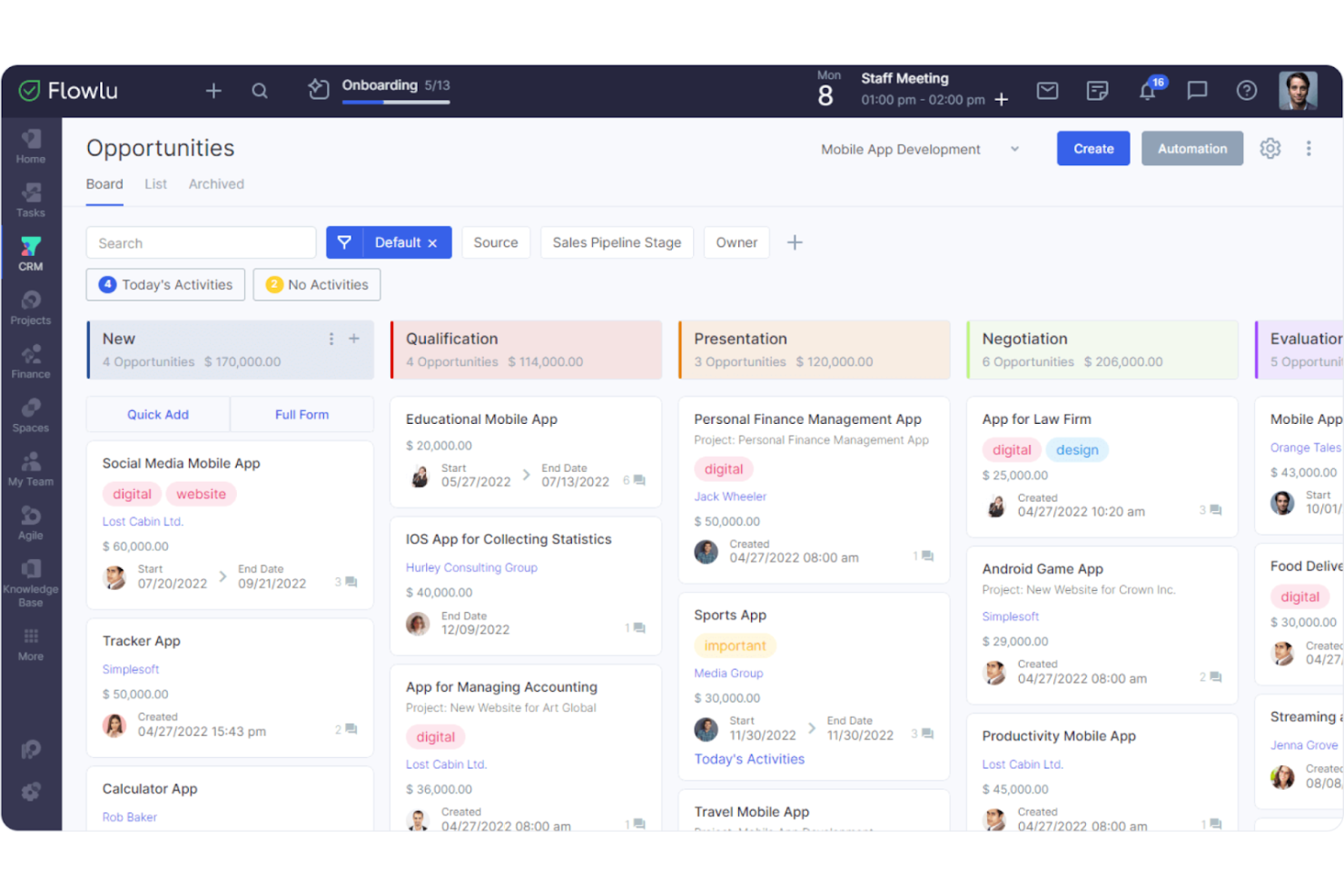
Flowlu è uno strumento CRM e di gestione progetti tutto-in-uno progettato per le piccole imprese. Le sue funzionalità semplificano le operazioni aziendali, rendendolo ideale per la gestione delle piccole imprese.
Perché è una valida alternativa a SugarCRM: Ho scelto Flowlu perché combina CRM, gestione dei progetti e strumenti finanziari, il che lo rende un'alternativa versatile a SugarCRM, soprattutto per le aziende che desiderano consolidare più funzioni in un'unica piattaforma.
Funzionalità principali e integrazioni:
Funzionalità includono gestione dei lead, monitoraggio dei progetti, gestione finanziaria e fatturazione. Offre anche strumenti di collaborazione e opzioni personalizzabili per adattarsi a specifiche esigenze aziendali.
Integrazioni includono PayPal, Stripe, QuickBooks, Xero, Zapier, Google Drive, Google Calendar e Google Contacts.
Pros and Cons
Pros:
- Suite completa di strumenti per piccole imprese
- Personalizzabile per esigenze aziendali specifiche
- Funzionalità avanzate di gestione finanziaria
Cons:
- Il supporto clienti può essere lento a volte
- Potrebbe essere necessario un periodo di apprendimento per i nuovi utenti
Ideale per l'integrazione con Google Workspace

Copper è una soluzione CRM che migliora la gestione delle relazioni con i clienti centralizzando le informazioni di contatto, monitorando le trattative e automatizzando i flussi di lavoro. È ideale per l'integrazione con Google Workspace, garantendo una sincronizzazione costante di email, eventi di calendario e documenti.
Perché è una buona alternativa a SugarCRM: Ho scelto Copper CRM per questa lista grazie alla sua profonda integrazione con Google Workspace, un grande vantaggio per le aziende che già utilizzano gli strumenti Google. Questa integrazione rende più semplice la gestione delle relazioni con i clienti direttamente da Gmail e da altre app Google, offrendo un flusso di lavoro più snello rispetto a SugarCRM.
Funzionalità e integrazioni principali:
Le funzionalità includono organizzazione dei contatti, monitoraggio delle trattative, gestione dei flussi di lavoro, automazione delle attività e accesso da mobile. Queste funzionalità aiutano le aziende a gestire in modo più efficace ed efficiente le relazioni con i clienti.
Le integrazioni includono Google Workspace, Slack, Zendesk, HubSpot, QuickBooks, Docusign, Mailchimp, RingCentral, Xero e Trello.
Pros and Cons
Pros:
- Interfaccia intuitiva
- Funzionalità di automazione delle attività
- Strumenti di reportistica analitica
Cons:
- Curva di apprendimento elevata
- Opzioni di personalizzazione limitate

Ideale per automazione integrata di vendite e marketing

Agile CRM è un software di gestione delle relazioni con i clienti tutto-in-uno, progettato per piccole e medie imprese. Fornisce strumenti di automazione per vendite e marketing.
Perché è una buona alternativa a SugarCRM: Ho scelto Agile CRM per questa lista perché offre una suite di funzionalità che copre vendite, marketing e servizio clienti, rendendolo un'alternativa versatile a SugarCRM. Il suo modello di prezzo intuitivo e le ampie integrazioni lo rendono una buona scelta per le aziende.
Funzionalità principali & Integrazioni:
Le funzionalità includono gestione dei contatti, monitoraggio delle trattative, telefonia, pianificazione degli appuntamenti, gestione dei progetti e gamification per aumentare le performance di vendita. Le sue capacità di automazione del marketing includono un designer di flussi di lavoro drag-and-drop, un builder di landing page, integrazione con i social media e strumenti di email marketing.
Le integrazioni includono Google Apps, Xero, Twilio, RingCentral, LinkedIn, Facebook, Twitter, Shopify, Stripe, Mandrill e SendGrid.
Pros and Cons
Pros:
- Set completo di funzionalità per vendite, marketing e servizio clienti
- Flussi di lavoro personalizzabili
- Supporto clienti solido
Cons:
- Curva di apprendimento più ripida per i nuovi utenti
- Problemi di prestazioni occasionali con grandi quantità di dati

Ideale per la gestione unificata di vendite e assistenza

Vtiger CRM offre una piattaforma unificata per i team di marketing, vendite e assistenza. Fornisce una visione a 360 gradi dei dati dei clienti e integra queste funzioni per migliorare la collaborazione tra i team e la gestione delle relazioni con i clienti.
Perché è una valida alternativa a SugarCRM: Ho scelto Vtiger CRM come alternativa a SugarCRM per il suo approccio nell'unificare le funzioni di vendita e assistenza. La sua struttura tariffaria flessibile e l'ampio set di funzionalità lo rendono adatto a imprese di varie dimensioni e settori.
Caratteristiche salienti e integrazioni:
Le funzionalità includono automazione avanzata, accesso mobile e una notevole conformità alla sicurezza dei dati. Offre inoltre strumenti di reportistica e analisi per aiutare le aziende a prendere decisioni basate sui dati.
Le integrazioni includono Microsoft Teams, Microsoft Outlook, Zapier, Mailchimp, Xero, QuickBooks, Webex, Dropbox e Google Workspace.
Pros and Cons
Pros:
- Funzionalità solide per vendite e assistenza
- Opzioni di prezzo flessibili
- Forte conformità alla sicurezza dei dati
Cons:
- Può essere complesso da configurare inizialmente
- Alcune funzionalità avanzate possono richiedere formazione aggiuntiva

SuiteCRM
Ideale per la flessibilità dell'open-source
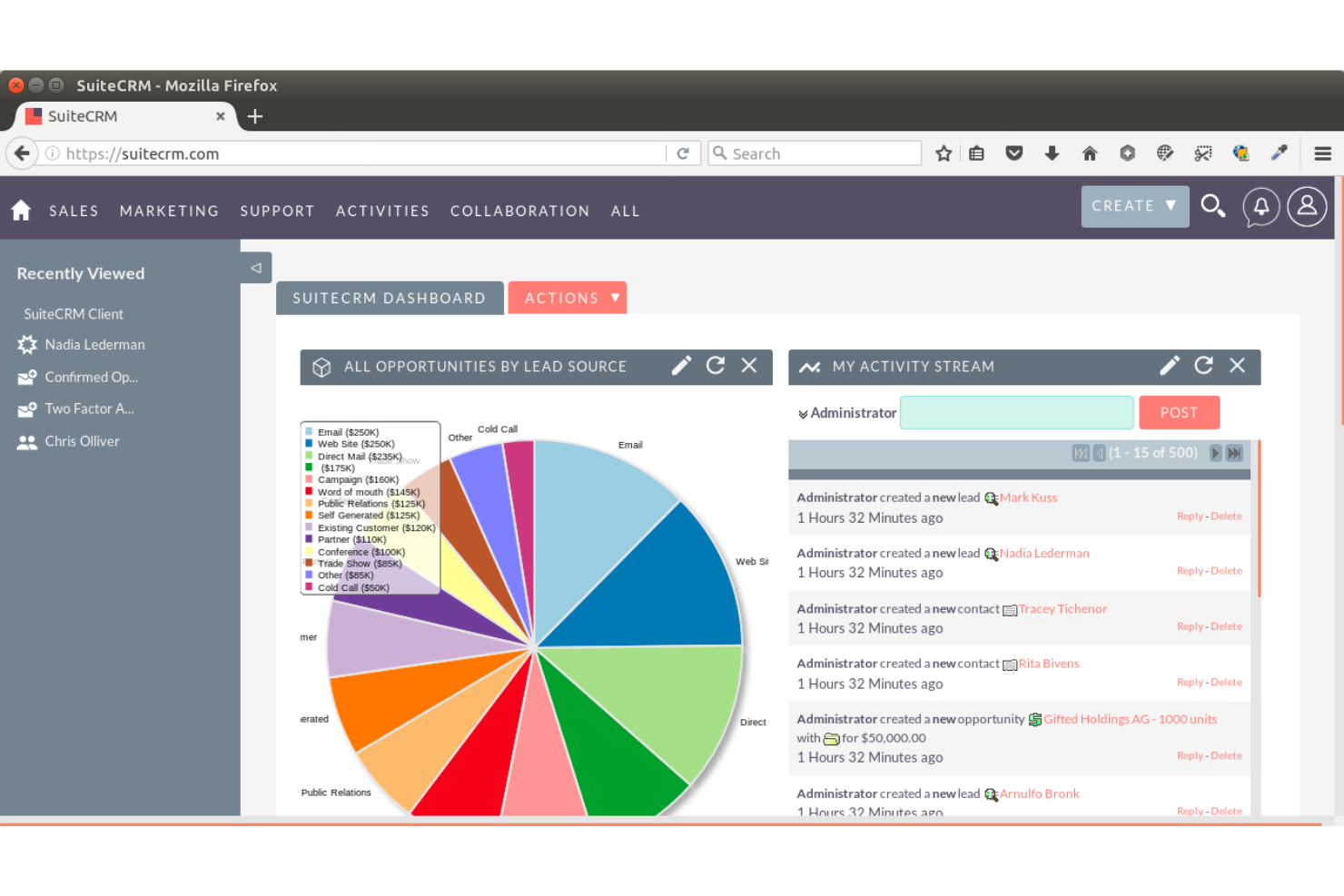
SuiteCRM è una soluzione CRM open-source che migliora il coinvolgimento dei clienti e l'efficienza operativa. È ideale per la flessibilità dell'open-source perché consente personalizzazione e opzioni di integrazione, rendendolo adattabile a diverse esigenze aziendali.
Perché è una buona alternativa a SugarCRM: Ho scelto SuiteCRM per questa lista perché offre un elevato grado di flessibilità, fondamentale per le aziende che desiderano adattare il CRM alle proprie necessità specifiche. La sua natura open-source permette un miglioramento continuo e aggiornamenti guidati dalla comunità, rendendolo una valida alternativa a SugarCRM.
Funzionalità principali & integrazioni:
Le funzionalità includono modelli di dati personalizzabili, strumenti di reportistica e dashboard che offrono approfondimenti su vendite e servizio clienti. Automatizza inoltre la segmentazione dei clienti e il marketing mirato, facilitando la generazione di lead e la qualità del servizio.
Le integrazioni includono Microsoft Outlook, Thunderbird, Google Calendar, Mailchimp, QuickBooks, Xero, Joomla, WordPress, Drupal e Magento.
Pros and Cons
Pros:
- Altamente personalizzabile e flessibile
- Forte supporto dalla comunità
- Solidi strumenti di reportistica
Cons:
- Funzionalità di base limitate rispetto ai CRM proprietari
- L'interfaccia utente può risultare meno intuitiva

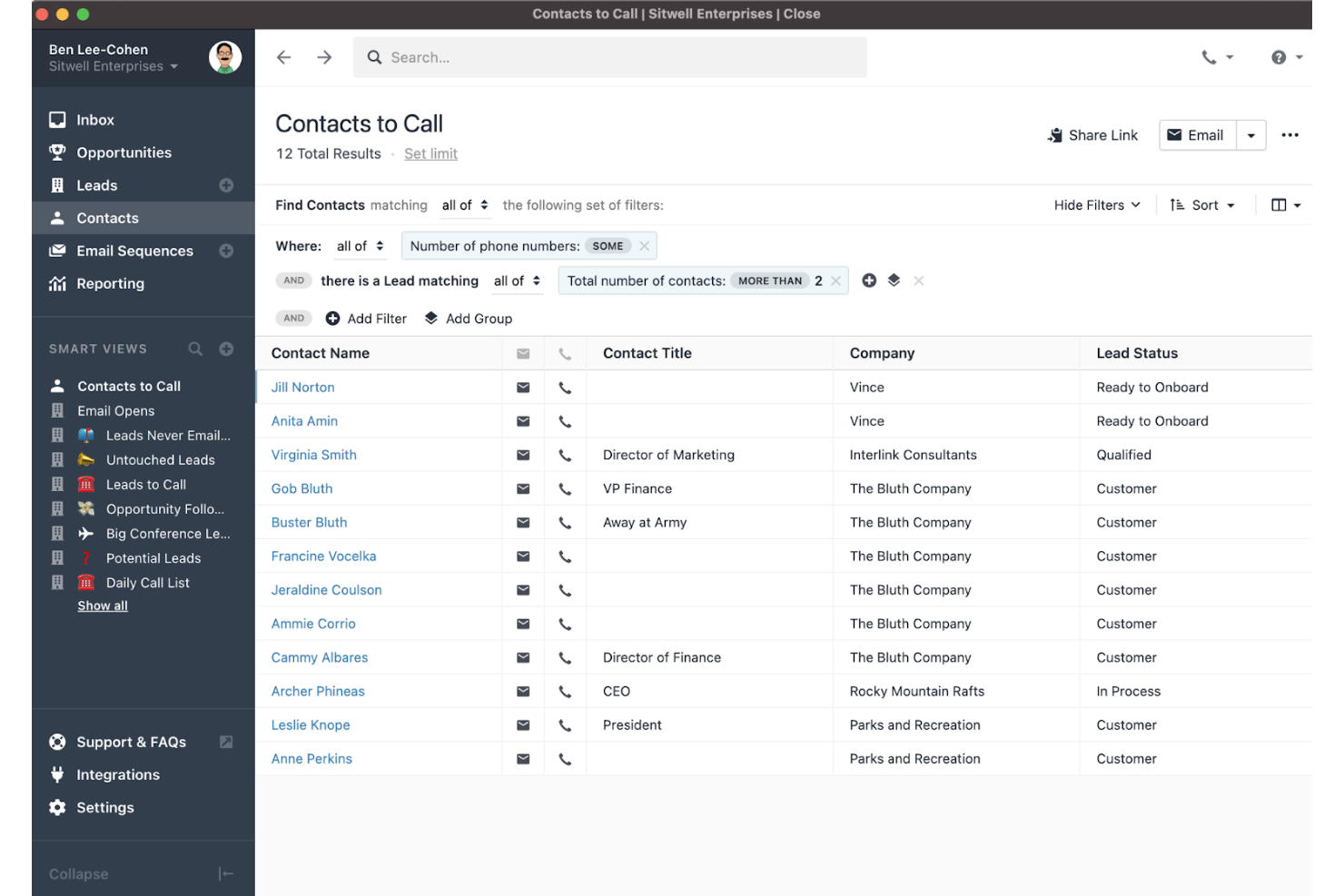
Close è uno strumento CRM progettato per aiutare i team di vendita delle piccole imprese a gestire in modo efficiente i loro processi di vendita. È ideale per i team di vendita delle piccole imprese perché offre un'interfaccia snella e funzionalità pensate specificamente per soddisfare le esigenze di team di vendita di dimensioni ridotte, aiutandoli a concludere affari più rapidamente.
Perché è una buona alternativa a SugarCRM: Ho scelto Close per questa lista perché si concentra su velocità ed efficienza, elementi essenziali per i team di vendita delle piccole imprese. La sua capacità di integrare diversi strumenti di vendita in un'unica piattaforma lo rende anche una valida alternativa a SugarCRM.
Caratteristiche principali e integrazioni:
Le funzionalità includono chiamate integrate, sincronizzazione delle email e automazione delle attività, che aiutano i team di vendita a gestire i processi di lavoro in modo più efficace. La piattaforma offre anche reportistica e analisi per monitorare le prestazioni.
Le integrazioni includono Slack, Zapier, Zoom, Google Workspace, Mailchimp, Zendesk, HubSpot, QuickBooks, Stripe e Intercom.
Pros and Cons
Pros:
- Interfaccia intuitiva
- Chiamate integrate e sincronizzazione email
- Solida reportistica e analisi
Cons:
- Opzioni di personalizzazione limitate
- Principalmente focalizzato sulle vendite, meno sul supporto


EngageBay CRM è una soluzione CRM tutto-in-uno che integra funzionalità di marketing, vendite e supporto. È ideale per marketing e vendite integrati perché combina queste funzioni in un'unica piattaforma, consentendo alle aziende di semplificare i processi e migliorare l'efficienza.
Perché è una valida alternativa a SugarCRM: Ho scelto EngageBay CRM per questa lista perché è un'alternativa versatile a SugarCRM. L'accessibilità economica e la gamma di funzionalità la rendono una soluzione conveniente per imprese di diverse dimensioni.
Funzionalità e integrazioni principali:
Le funzionalità comprendono automazione del marketing, email marketing, automazione delle vendite, telefonia, pipeline di trattative multiple e sequenze di modelli email. Dispone inoltre di un sistema di supporto per l'esperienza cliente con ticketing, automazione dell'helpdesk e strumenti per il feedback dei clienti.
Le integrazioni includono Zapier, Xero, QuickBooks, Mailgun, SendGrid, Twilio, Stripe, Google Workspace, Office 365, LinkedIn e Shopify.
Pros and Cons
Pros:
- Soluzione completa tutto-in-uno
- Altamente scalabile
- Assistenza clienti eccellente
Cons:
- Opzioni di personalizzazione avanzata limitate
- Occasionali problemi di prestazioni con grandi quantità di dati


Insightly è una piattaforma CRM scalabile che migliora le relazioni con i clienti e favorisce la crescita aziendale. È ideale per l'integrazione scalabile tra CRM e marketing perché i suoi strumenti unificano vendite, marketing e gestione dei progetti.
Perché è una valida alternativa a SugarCRM: Ho scelto Insightly per le sue capacità di integrazione e la sua scalabilità, che lo rendono adatto ad aziende di diverse dimensioni. La sua piattaforma unificata per CRM e marketing aiuta a semplificare le operazioni e a migliorare il coinvolgimento dei clienti, aspetto importante per le aziende in crescita.
Funzionalità principali & integrazioni:
Le funzionalità includono gestione delle pipeline, monitoraggio dei lead e automazione del marketing. Questi strumenti aiutano le aziende a ottimizzare i processi di vendita e a migliorare il coinvolgimento con i clienti.
Le integrazioni comprendono QuickBooks Online, Xero, Sage, Workday, ADP Workforce Now, BambooHR, ZoomInfo, Gong, Docusign e WordPress.
Pros and Cons
Pros:
- Forti capacità di integrazione
- Scalabile per aziende di dimensioni diverse
Cons:
- Strumenti CRM e di marketing
- Opzioni di personalizzazione limitate
- Curva di apprendimento per i nuovi utenti


Nutshell CRM è uno strumento di automazione delle vendite facile da usare che semplifica i processi di vendita per i team B2B. La sua interfaccia intuitiva e le sue funzionalità mirano a rendere più snelli i compiti di vendita.
Perché è una buona alternativa a SugarCRM: Ho scelto Nutshell CRM per la sua facilità d'uso e le sue capacità di automazione delle vendite. Si distingue come valida alternativa a SugarCRM perché offre un'esperienza utente più intuitiva e si integra con gli strumenti più diffusi, rendendo più semplice per i team adottarlo e utilizzarlo in modo efficace.
Funzionalità e integrazioni principali:
Le funzionalità includono una potente automazione delle vendite, una gestione personalizzabile delle pipeline e reportistica/analisi avanzata. Include anche la sincronizzazione di email e calendario per mantenere organizzate le attività di vendita.
Le integrazioni includono 123 Form Builder, 3CX, ActiveCampaign, Asana, Aweber, Box, Callhippo, Constant Contact, Dropbox, Google Drive, Gravity Forms, HubSpot, Zendesk, Zapier e Slack.
Pros and Cons
Pros:
- Interfaccia utente intuitiva
- Funzionalità di automazione delle vendite
- Eccellenti capacità di integrazione
Cons:
- Opzioni di personalizzazione limitate
- L'app mobile potrebbe essere migliorata


Apptivo è una piattaforma CRM versatile che semplifica i processi aziendali e migliora le prestazioni di vendita. È ideale per soluzioni CRM personalizzabili grazie all'ampia gamma di funzionalità e alla flessibilità, che permettono alle aziende di adattare la piattaforma alle proprie esigenze specifiche.
Perché è una buona alternativa a SugarCRM: Apptivo rappresenta una buona alternativa a SugarCRM perché offre funzionalità come la gestione dei lead, la fatturazione e l'automazione dei flussi di lavoro, che possono essere adattate ai diversi requisiti aziendali.
Caratteristiche principali & Integrazioni:
Le funzionalità includono gestione di lead e contatti, monitoraggio delle opportunità e reportistica personalizzabile. La piattaforma supporta inoltre l'automazione dei flussi di lavoro e si integra con strumenti popolari come G-Suite e QuickBooks.
Le integrazioni includono G Suite, Office 365, Slack, QuickBooks, Xero, Dropbox, PayPal, Stripe, RingCentral e Zapier.
Pros and Cons
Pros:
- Elevata personalizzazione
- Suite completa di applicazioni
- Ottime capacità di integrazione
Cons:
- Può risultare complesso da configurare
- L'assistenza clienti può essere lenta
Altre alternative a SugarCRM
Di seguito è riportato un elenco di ulteriori alternative a SugarCRM che abbiamo valutato, ma che non sono rientrate nella selezione principale. Vale comunque la pena dare loro un’occhiata!
- Spotler CRM
Ideale per l'automazione del marketing B2B
- Creatio CRM
Ideale per la gestione di lead e opportunità
- Bigin by Zoho CRM
Ideale per la gestione semplice delle pipeline


Recensioni correlate sui software per le operazioni sui ricavi
Se non hai ancora trovato ciò che cerchi, dai un'occhiata a questi strumenti correlati che abbiamo testato e valutato.
- Software CRM
- Software per le vendite
- Software per la gestione dei lead
- Software di business intelligence
- Software per la gestione dei contratti
- Sistema di gestione dei ricavi
Come Valuto le Alternative a SugarCRM
Valuto ogni opzione su due livelli: le basi imprescindibili di un CRM come il monitoraggio delle trattative e la previsione delle vendite, e poi i fattori distintivi — IA, integrazioni e gestione dei dati — che determinano la soluzione più adatta.
Funzionalità Core (Requisiti Minimi per Questa Lista)
Quando seleziono gli strumenti per la mia lista, valuto ciascuno su una scala da 0 (non offre la funzionalità) a 5 (eccelle in quest'area) per ogni funzionalità di base elencata di seguito. Successivamente, calcolo il punteggio totale dello strumento come percentuale. Ogni strumento deve raggiungere un punteggio totale minimo del 65% per poter essere incluso.
- Gestione Contatti & Account: Cerco una visione unificata del cliente che colleghi contatti, account e cronologia delle attività, così i team RevOps possono tracciare ogni interazione dal primo contatto al rinnovo.
- Monitoraggio Pipeline & Opportunità: Ogni strumento dovrebbe permetterti di configurare le fasi delle trattative, creare più pipeline e assegnare valori ponderati, affinché le previsioni riflettano realmente il modo in cui vende il tuo team.
- Automazione Vendite & Workflow: Valuto se la piattaforma supporta costruttori di workflow multi-step per attività come instradamento dei lead, catene di approvazione e sequenze di follow-up attivate dai cambiamenti nelle fasi delle trattative.
- Reportistica & Analisi dei Ricavi: Dashboard e strumenti di previsione devono andare oltre i report predefiniti. Verifico la presenza di costruttori di report personalizzati, analisi delle tendenze delle pipeline e la capacità di suddividere i ricavi per segmento o commerciale.
- Personalizzazione & Estendibilità: Il CRM dovrebbe supportare oggetti, campi e moduli personalizzati insieme a un'API pubblica e un marketplace di app. Piattaforme come Salesforce e HubSpot gestiscono questo in modo diverso, quindi valuto profondità e flessibilità.
- Allineamento Marketing & Servizio: Cerco moduli nativi di automazione marketing e assistenza clienti oppure integrazioni di prima parte ben strutturate, che permettano ai RevOps di avere un modello dati condiviso lungo tutto il ciclo di vita del cliente.
Una volta che ho un elenco di strumenti che rispettano questi criteri, considero ciò che rende unica ogni piattaforma.
Fattori Differenzianti (Cosa Distingue i Fornitori)
Questo è il mio metodo per mettere a confronto i diversi fornitori:
Funzionalità Distintive
La valutazione delle trattative guidata dall'IA e le raccomandazioni sul prossimo passo migliore possono rivoluzionare il modo in cui i team RevOps danno priorità al lavoro sulle pipeline, quindi valuto quanto a fondo ogni piattaforma integra le analisi predittive. Anche l'intelligenza sui ricavi è importante: strumenti che catturano automaticamente le attività dei commerciali e segnalano le trattative a rischio offrono reale visibilità ai responsabili delle previsioni. Verifico inoltre la presenza di un CPQ integrato, perché i colli di bottiglia sulle offerte tra vendite e finanza rallentano i processi commerciali in modi che un CRM autonomo non può risolvere.
Oltre le Funzionalità
Il costo totale di proprietà è una considerazione importante: valuto i requisiti minimi di licenze, i costi aggiuntivi per ambienti di test e l'accesso alle API, e come le funzionalità avanzate di RevOps siano suddivise tra le diverse edizioni. Conta anche la profondità delle integrazioni con l'ecosistema RevOps più ampio. Un CRM che si connette nativamente a strumenti come Marketo, Gong o Outreach evita al tuo team di dover costruire soluzioni temporanee e fragili. Valuto inoltre il supporto alla migrazione, compresa la presenza di partner certificati e strumenti per la migrazione dei dati che aiutino le aziende a passare da Sugar senza perdere lo storico delle pipeline.
Perché cercare un'alternativa a SugarCRM
Potresti cercare un'alternativa a SugarCRM per affrontare uno dei seguenti problemi.
- Complessità: SugarCRM può essere difficile da navigare e utilizzare in modo efficace.
- Costo elevato: la struttura dei prezzi di SugarCRM potrebbe non essere accessibile per tutte le aziende.
- Curva di apprendimento ripida: imparare a utilizzare e implementare il software richiede tempo e impegno significativi.
- Personalizzazione limitata: alcuni utenti ritengono che le opzioni di personalizzazione non siano sufficienti per le loro esigenze.
- Problemi di integrazione: potrebbe non integrarsi con gli altri strumenti e le altre piattaforme utilizzati.
Le alternative a SugarCRM offrono funzionalità e vantaggi che affrontano questi problemi, fornendo interfacce più intuitive, prezzi convenienti e migliori capacità di integrazione. Queste alternative possono allinearsi più strettamente alle esigenze della tua azienda e migliorare l'efficienza complessiva.
Funzionalità principali di SugarCRM
Ecco alcune funzionalità chiave di SugarCRM che il tuo software alternativo dovrebbe essere in grado di replicare o migliorare per adattarsi alle tue esigenze.
- Sistemi di gestione dei preventivi: semplificano il ciclo di vendita consentendo di creare preventivi in modo rapido e semplice.
- Report e dashboard CRM: forniscono strumenti per monitorare le metriche di marketing, vendite e assistenza clienti, trasformando i dati in informazioni utili per prendere decisioni.
- Previsioni di vendita: migliorano la visibilità e la prevedibilità delle prestazioni aziendali per i singoli utenti e i responsabili delle decisioni.
- SugarBPM: uno strumento di automazione dei flussi di lavoro che aumenta l'efficienza e la produttività automatizzando i processi rivolti ai clienti.
- Personalizzazione e configurazione: consentono alle aziende di adattare il CRM alle proprie esigenze specifiche, riconoscendo che ogni azienda è unica.
- App CRM mobile: consente di accedere ai dati CRM ovunque ci si trovi, con o senza connessione.
- Gestione delle campagne CRM: consente di creare e monitorare campagne di marketing multicanale.
- Supporto multilingue e multivaluta: supporta oltre 30 lingue e offre un framework per lingue aggiuntive.
- CRM per la gestione dei progetti: consente di gestire in modo efficiente i progetti tra vari dipartimenti.
- Team, ruoli e sicurezza: garantiscono che l'accesso ai dati sia specifico per ruolo, migliorando la sicurezza.
Qual è il prossimo passo?
Vuoi portare la tua strategia RevOps a un livello superiore? Iscriviti alla newsletter di The CRO Club per ricevere consigli di esperti, recensioni di software e altre risorse che ti aiuteranno a ottenere una crescita prevedibile su larga scala.