

10 QuickBooks Online Alternatives for Accounting in 2026

Best QuickBooks Online Alternatives Shortlist


If you're managing revenue operations, you know how essential the right accounting software is for your team. Maybe you're realizing that QuickBooks Online, developed by Intuit, doesn't fit your needs anymore, even though you've been using it for years. You may be looking for something with more specialized features, better scalability, or improved compliance options.
In my experience, finding the right tool can make all the difference in managing bank accounts, balance sheets, and other financial tasks efficiently. I've independently tested and reviewed a range of alternatives to QuickBooks Online to help you choose effective accounting tools. The goal is to provide you with an unbiased overview of the best options available.
In this article, I'll guide you through the best accounting software options that could suit your business needs, whether you're self-employed or scaling operations.
What Is QuickBooks Online?
QuickBooks Online is cloud-based accounting software designed to help businesses manage their financial tasks efficiently from any location. Typically used by accountants, small business owners, and finance teams, it offers value by simplifying bookkeeping and providing real-time financial insights. Invoicing, expense tracking, and payroll capabilities help you organize your finances and make informed decisions. QuickBooks Online is a versatile tool that supports automated financial management and reporting for businesses of various sizes.
Best QuickBooks Online Alternatives Summary
This comparison chart summarizes pricing details for my top QuickBooks alternative selections to help you find the best one for your budget and business needs.
| Tool | Best For | Trial Info | Price | ||
|---|---|---|---|---|---|
| 1 | Best for freelancers and invoicing | 30-day free trial | From $23/month | Website | |
| 2 | Best for small business growth | 30-day free trial available | From $2.50/month | Website | |
| 3 | Best for beginner-friendly accounting | 30-day free trial | From $40/month | Website | |
| 4 | Best for simple small-team bookkeeping | Free plan + 30-day free trial available | From $15/month | Website | |
| 5 | Best for Zoho app integration | Free plan + free demo available | From $15/month (billed annually) | Website | |
| 6 | Best for real-time financial insights | Free demo available | Pricing upon request | Website | |
| 7 | Best for global compliance | Free demo available | Pricing upon request | Website | |
| 8 | Best for enterprise planning | Free demo available | From $210/user/month (billed annually) | Website | |
| 9 | Best for inventory control | 30-day free trial | From $124.42/month | Website | |
| 10 | Best for desktop accounting power | 30-day free trial available | From $20/month | Website |

Why Trust Our Software Recommendations
Our reviews reflect our independent judgment—not a sales pitch. Learn how we stay transparent.
For this guide, we evaluated tools using hands-on testing and independent research, scoring tools using our selection criteria.
Our reviews reflect our human editorial judgment, not a sales pitch.
Best QuickBooks Online Alternatives Reviews
Below are my detailed summaries of the best QuickBooks Online alternatives that made it onto my shortlist. My reviews offer a detailed look at the key features, pros and cons, integrations, and ideal use cases of each tool to help you find the best one for you.

Best for freelancers and invoicing
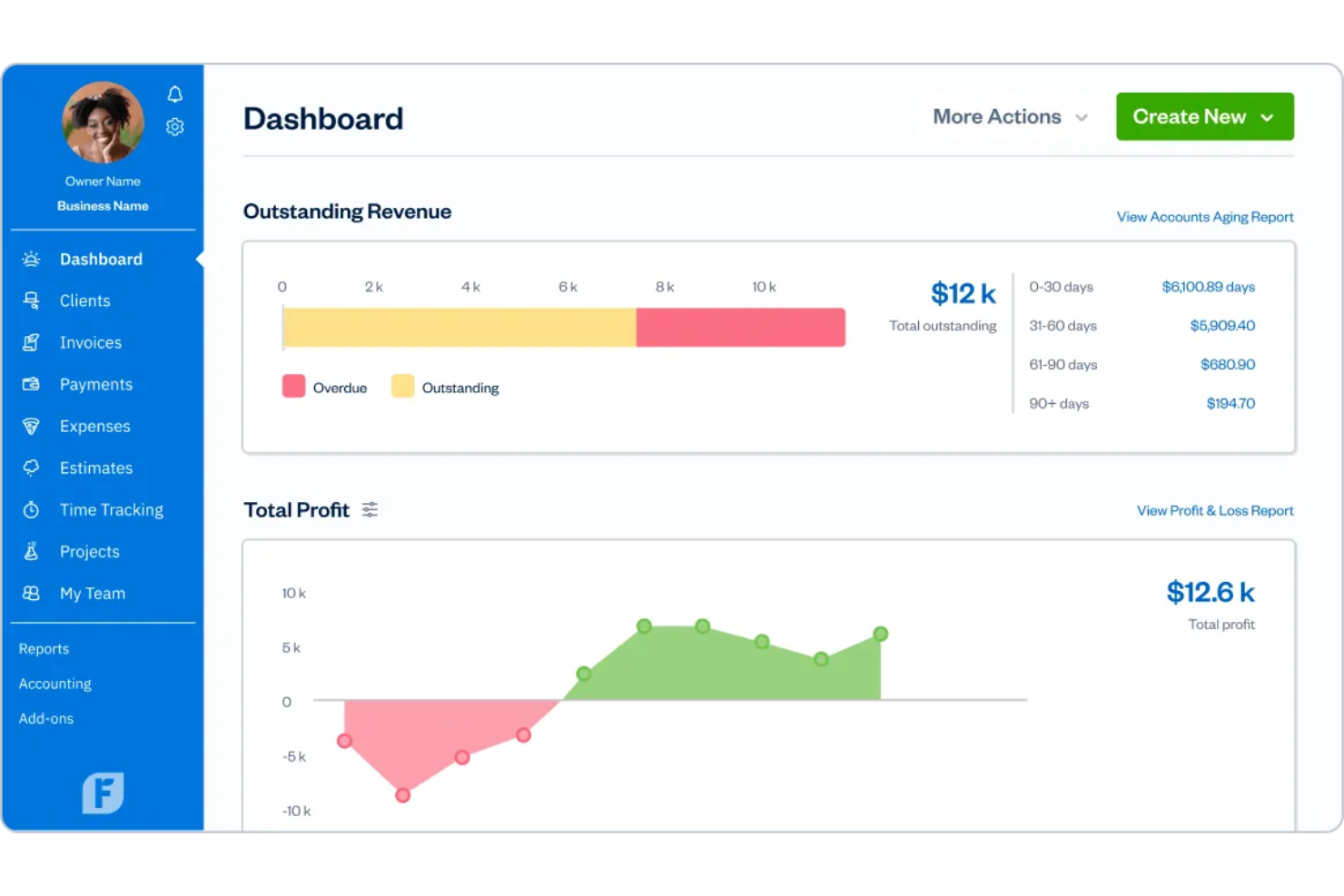
FreshBooks is accounting software tailored for freelancers and small business owners who need to manage their finances effectively. It focuses on invoicing, expense tracking, and time tracking to refine business operations.
Why it's a good QuickBooks alternative: FreshBooks is ideal for freelancers and solopreneurs, allowing you to quickly create professional invoices. Built-in time tracking and expense management let you monitor billable hours and expenses, while financial reporting tools help you understand your business's financial health.
Standout Features and Integrations:
Features include project management tools that let you organize tasks and collaborate with clients. The estimate feature allows you to send detailed quotes to clients before starting work. FreshBooks also offers a client portal where customers can view invoices and make payments directly.
Integrations include Stripe, Shopify, Gusto, Zapier, PayPal, and more.
Pros and Cons
Pros:
- Financial reporting capabilities
- Built-in time tracking
- Tailored for freelancers
Cons:
- Basic inventory management
- Limited scalability for larger businesses
Xero
Best for small business growth
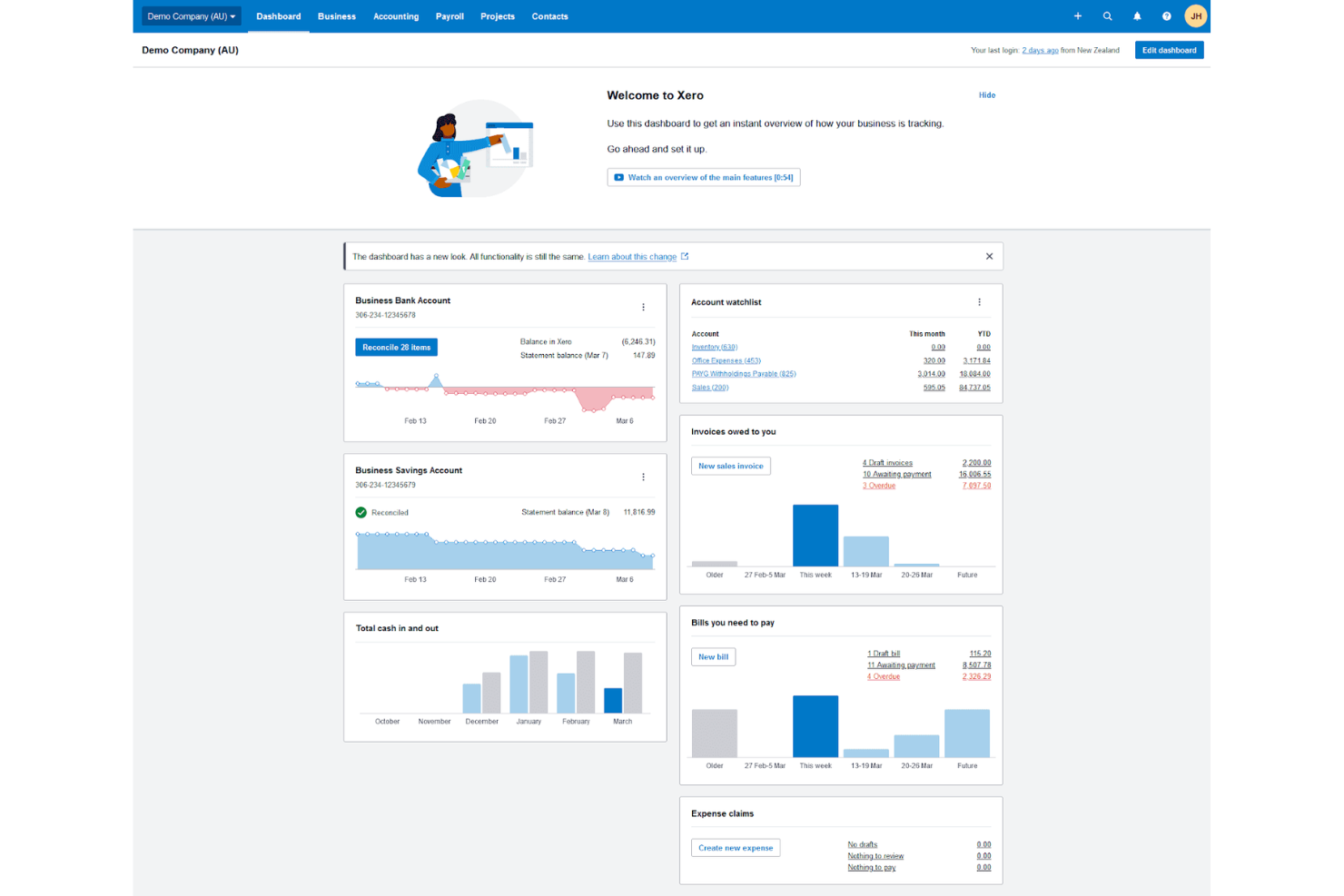
Xero is an accounting software solution designed to help small businesses, entrepreneurs, and e-commerce site owners manage their finances effectively. Small business owners, accountants, and financial teams can use it for invoicing, expense management, payroll, and bank account reconciliations.
Why it's a good QuickBooks alternative: Xero offers small businesses innovative tools that set it apart from QuickBooks. It provides built-in balance sheets, an intuitive dashboard, a user-friendly interface, and support for Stripe, PayPal, and payment processing without significant add-ons. The platform's multi-currency and automatic tax calculation capabilities further increase its appeal for global business operations.
Standout Features and Integrations:
Features include real-time bank reconciliation, which lets you track your finances as transactions occur, and allows you to customize financial reports to meet specific business needs. Xero also offers automatic tax calculations, which simplify compliance.
Integrations include HubSpot, Gusto, Mailchimp, Stripe, Square, PayPal, Shopify, and more.
Pros and Cons
Pros:
- Multi-currency support
- Automatic tax calculations
- Real-time bank reconciliation
Cons:
- Limited offline access
- Limited customer support options

Wave
Best for beginner-friendly accounting
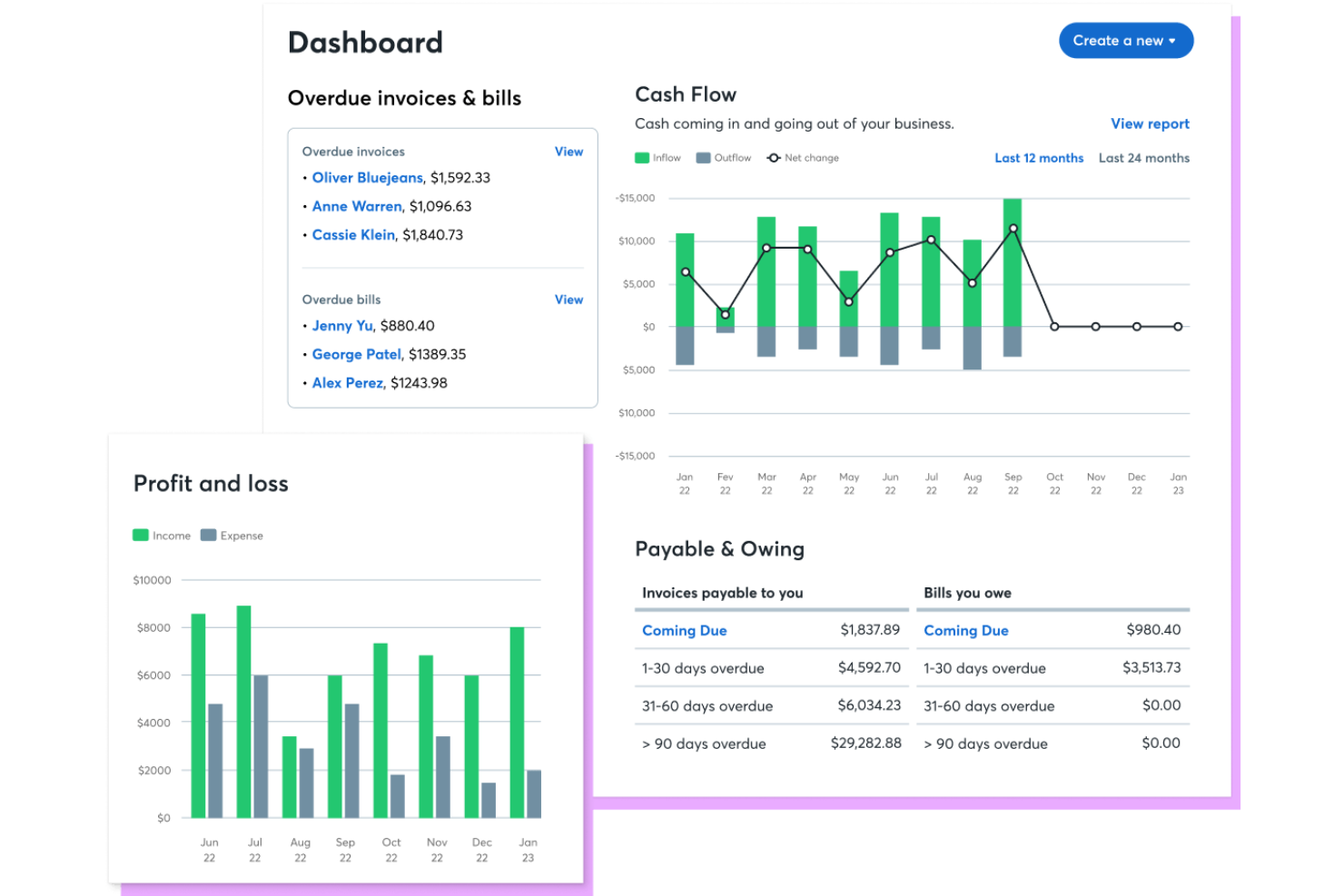
The Wave accounting software is an all-in-one solution for small businesses, freelancers, and self-employed users who need a simple way to manage their finances. It helps users with invoicing, expense tracking, financial reporting, credit card payments, and basic payment processing without complex ERP systems.
Why it's a good QuickBooks alternative: Wave is particularly suitable for non-accountants who require a straightforward business management solution. Its intuitive interface and simple invoicing make it accessible for users with little accounting knowledge. This makes it an attractive choice for those who want to handle their finances without the complexity of QuickBooks Desktop or Online.
Standout Features and Integrations:
Features include automatic transaction categorization, which helps you stay organized by quickly sorting expenses. Receipt scanning allows you to capture and store receipts digitally, which simplifies expense tracking. Wave also offers customizable invoicing, allowing you create professional recurring invoices that suit your brand.
Integrations include PayPal, Etsy, Zapier, Stripe, and more.
Pros and Cons
Pros:
- Professional invoice customization
- Automatic transaction categorization
- No accounting experience necessary
Cons:
- Strictly single-entry tax
- No live phone support

ZipBooks
Best for simple small-team bookkeeping

ZipBooks is online accounting software aimed at small businesses and freelancers. It focuses on invoicing, expense tracking, and financial reporting to simplify financial management for users.
Why it's a good QuickBooks alternative: ZipBooks offers a user-friendly interface and straightforward features, making it suitable for those without accounting experience. It provides intelligent insights into your business's financial health without the complexity of more advanced tools. The software's invoicing capabilities are simple and efficient, allowing you to create and send invoices quickly.
Standout Features and Integrations:
Features include automated billing, reducing the time spent on manual invoicing. The software also offers a color-coded dashboard that gives you a visual overview of your financial status, while the simple time-tracking tool improves billing accuracy.
Integrations include PayPal, Square, Stripe, Slack, and more.
Pros and Cons
Pros:
- Automated billing features
- Basic project management
- User-friendly for non-accountants
Cons:
- Bank reconciliation limitations
- Android app not available

Best for Zoho app integration

Zoho Books is an online accounting software designed for small to medium-sized businesses. It helps users manage finances, automate business workflows, and collaborate across departments.
Why it's a good QuickBooks alternative: Zoho Books is ideal for businesses already using Zoho apps. Its automated workflows and customizable templates support efficient financial management. With capabilities such as multi-currency handling and project tracking, it caters to diverse business needs. Zoho Books provides detailed financial reports that help you make informed decisions.
Standout Features and Integrations:
Features include inventory management, which helps you monitor stock levels and manage orders effectively. The client portal allows your customers to view invoices and make payments directly. Zoho Books also offers a detailed audit trail, ensuring transparency in financial transactions.
Integrations include Zoho CRM, Zoho Projects, Zoho Expense, PayPal, Stripe, and more.
Pros and Cons
Pros:
- Customizable templates
- Detailed financial reports
- Automated workflows
Cons:
- Customer support can be slow
- Limited third-party integrations

Best for real-time financial insights
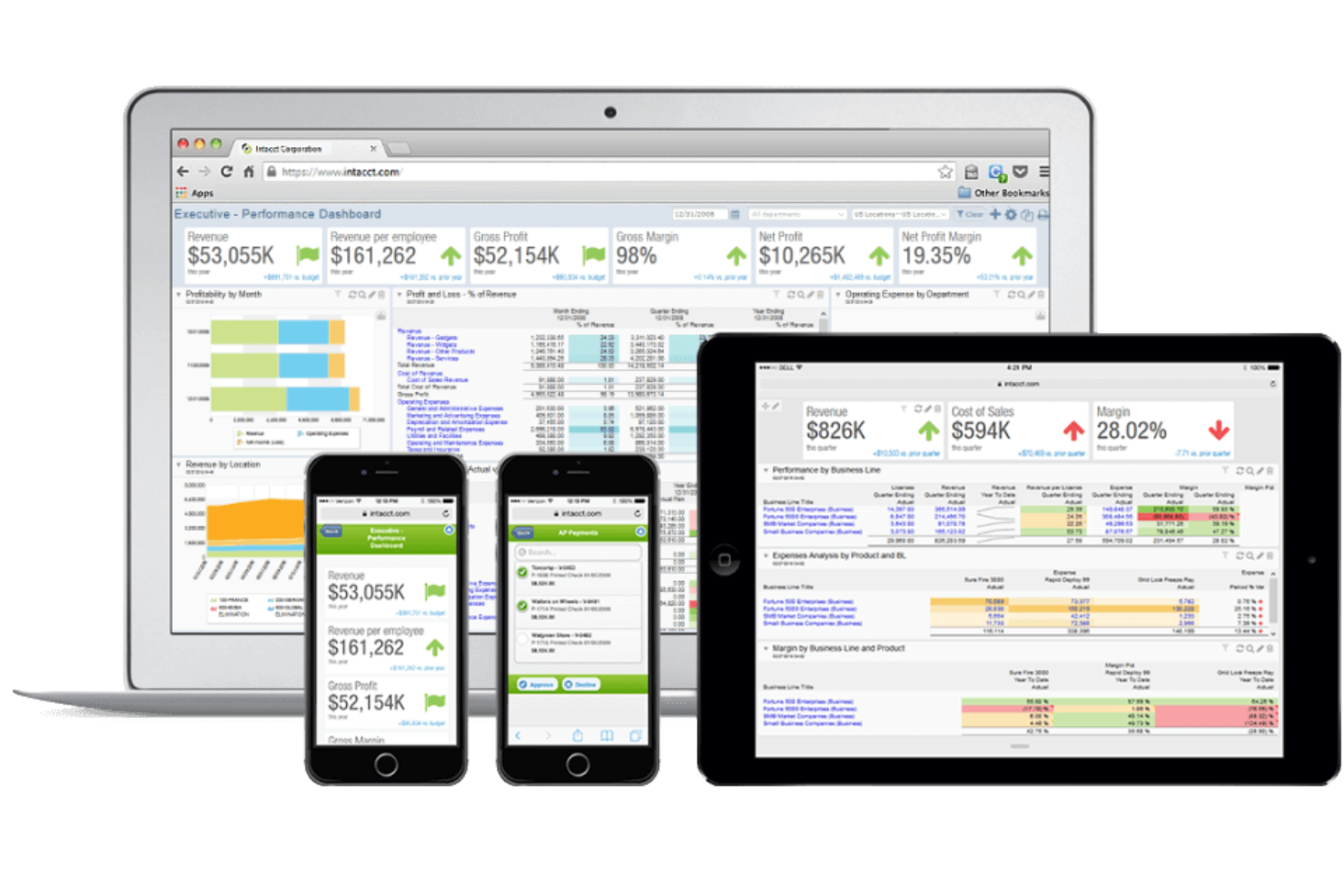
Sage Intacct is cloud-based financial management software designed for growing businesses and finance teams. It provides solutions for core financials, accounting, and reporting to improve business performance.
Why it's a good QuickBooks alternative: Sage Intacct offers real-time financial insights that help your team make data-driven decisions. The advanced reporting and analytics provide a deeper understanding of your financial health, while the automation of complex financial processes reduces manual effort and errors. Multi-entity management and global consolidations are ideal for businesses operating in several locations.
Standout Features and Integrations:
Features include project accounting that simplifies project cost and revenue tracking. The time and expense management feature helps you monitor employee time and expenses, while accounts payable automation reduces manual invoice processing.
Integrations include Salesforce, ADP, BILL, Expensify, Avalara, MineralTree, and more.
Pros and Cons
Pros:
- Automation of complex processes
- Multi-entity management
- Real-time financial insights
Cons:
- Feature limitations for small businesses
- Add-ons and licensing fees

Certinia
Best for global compliance

Certinia Financial Management Cloud is a cloud-based financial management solution aimed at large enterprises and global organizations. It offers tools for financial planning, analysis, and compliance management.
Why it's a good QuickBooks alternative: Certinia Financial Management Cloud excels in global compliance support, helping your team adhere to international regulations. The software offers advanced analytics to provide insights into financial performance. Certinia's automation capabilities reduce manual tasks, improving overall efficiency.
Standout Features and Integrations:
Features include customizable dashboards that allow you to visualize key financial metrics, while audit trails ensure transparency and accountability for financial transactions. Certinia also provides advanced budgeting tools to help you plan and manage your finances effectively.
Integrations include Salesforce, ADP, SAP Concur, and more.
Pros and Cons
Pros:
- Customizable dashboards
- Automation reduces manual tasks
- Strong global compliance support
Cons:
- High cost for smaller businesses
- Cluttered UI can feel overwhelming


Microsoft 365 Dynamics Finance is a cloud-based financial management solution that targets large enterprises and global organizations. It focuses on automating and managing financial operations, budgeting, and compliance.
Why it's a good QuickBooks alternative: Microsoft 365 Dynamics Finance excels in enterprise resource planning, offering powerful tools for large-scale financial management, including budgeting and financial forecasting capabilities. Real-time financial insights help your team make informed strategic decisions.
Standout Features and Integrations:
Features include extensive financial reporting capabilities, which provide detailed insights into your business's financial performance. The software supports global financial management, helping you handle multi-currency and multi-language operations effectively. It also offers powerful risk management tools to identify and mitigate potential financial risks.
Integrations include Power BI, Office 365, Azure, Outlook, and more.
Pros and Cons
Pros:
- Global financial management
- Extensive financial reporting
- Detailed enterprise resource planning
Cons:
- Needs pros for deep customization
- Version shifts can break tweaks

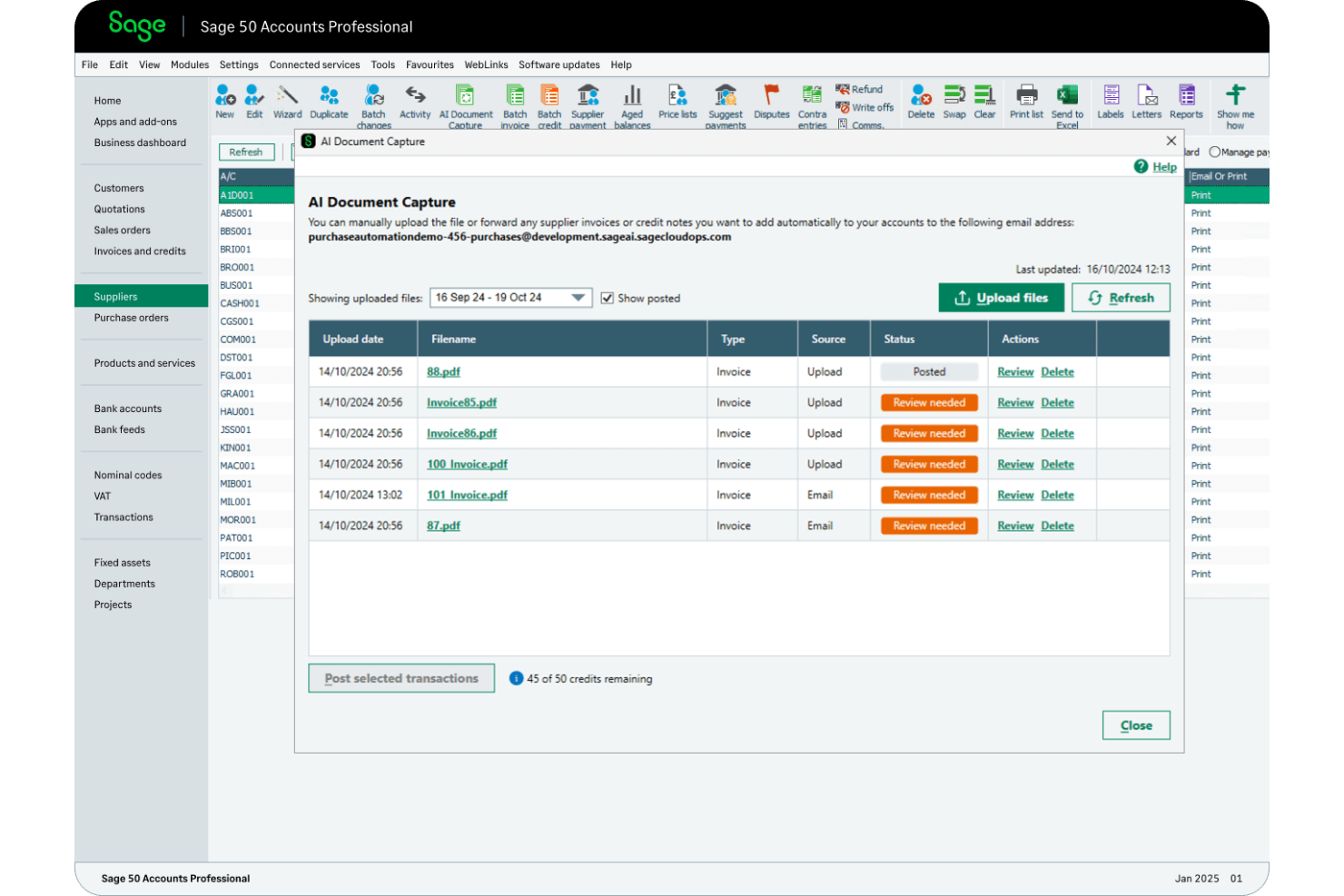
Sage 50 Accounting is accounting software designed for small to medium-sized businesses. It provides solutions for invoicing, inventory management, and financial reporting.
Why it's a good QuickBooks alternative: Sage 50 Accounting offers detailed inventory management capabilities and advanced reporting tools to provide insight into your financial data. The software supports job costing to track project expenses and profitability, as well as extensive payroll management tools.
Standout Features and Integrations:
Features include cash flow management and budgeting tools to help you set and monitor financial goals for your business. Sage 50 Accounting also offers audit trails, providing transparency and security in your financial transactions.
Integrations include Microsoft 365, PayPal, Stripe, AutoEntry, and more.
Pros and Cons
Pros:
- Strong cash flow management
- Advanced reporting tools
- Detailed inventory management
Cons:
- Occasional bugs
- Manual updates and desktop limitations


AccountEdge is desktop accounting software designed for small to medium-sized businesses to help with tasks such as invoicing, payroll, and inventory management.
Why it's a good QuickBooks alternative: AccountEdge offers a solid desktop solution for those who prefer offline accounting. The powerful payroll capabilities make it ideal for businesses that need detailed payroll management. The software also supports extensive inventory tracking and customizable reporting, allowing you to tailor your financial processes to your business needs.
Standout Features and Integrations:
Features include time billing, which lets you track billable hours and manage time-based invoicing, and multi-currency support to help you handle international transactions. The software also offers advanced search capabilities, allowing you to quickly find specific transactions or records.
Integrations include UPS, Stripe, Square, Zapier, and more.
Pros and Cons
Pros:
- Offline desktop solution
- Detailed inventory tracking
- Extensive payroll capabilities
Cons:
- Requires software installation
- Limited cloud functionality
Other QuickBooks Online Alternatives
Here are some additional QuickBooks Online alternatives that didn’t make it onto my shortlist, but are still worth checking out:
- Accounting Seed
For Salesforce accounting
- NetSuite Cloud Accounting
For scalable cloud finance
- Odoo
For customizable business app
- Expensify
For expense management
- OnPay
For small business payroll
- Workamajig
For creative agencies
- Gusto
For payroll processing
- Square
For mobile invoicing
- G-Accon
For Google Sheets integration
- Taxfyle
For on-demand tax services


How I Evaluate QuickBooks Online Alternatives
I split my evaluation into two layers: the core capabilities every tool must have—like revenue recognition, billing automation, and CRM sync—and the differentiators that determine fit.
Core Functionality (Table Stakes For This List)
When I'm selecting tools for my list, I rank each one on a scale from 0 (does not offer the functionality) to 5 (excels in this area) for each core functionality listed below. Then, I calculate the tool's total score into a percentage. Each tool needs to achieve a minimum total score of 65% to be considered for inclusion.
- General Ledger & Accounting: I look for a true double-entry GL with AP/AR, bank reconciliation, and a customizable chart of accounts that supports dimensional tagging for departments or product lines.
- Invoicing & Billing Automation: Each tool's ability to handle recurring billing, subscription invoicing, and payment collection matters here—especially automated dunning workflows.
- Revenue Recognition: I evaluate whether the platform automates ASC 606 schedules, tracks deferred revenue, and handles contract modifications like mid-term upgrades or downgrades.
- Financial Reporting & Dashboards: Real-time dashboards that surface RevOps metrics like MRR, ARR, and net revenue retention are what I check for beyond standard financial statements.
- CRM & Revenue Stack Integrations: The tool should connect to platforms like Salesforce, HubSpot, Stripe, or CPQ systems with bi-directional sync to keep deal and invoice data aligned.
- Multi-Entity & Multi-Currency Support: I check whether the platform consolidates financials across subsidiaries and handles intercompany eliminations and foreign exchange adjustments.
Once I have a list of tools that meet this criteria, I consider what sets each platform apart.
Differentiating Factors (What Sets Vendors Apart)
Here's how I compare and contrast different vendors:
Standout Features
Native SaaS metrics tracking is a big differentiator. I look for platforms that surface MRR, ARR, churn, and LTV without requiring a separate BI tool. Usage-based billing engines also matter for teams managing hybrid pricing models with tiered or consumption-based components. Embedded payments and AR automation round things out. Tools with built-in dunning sequences and cash application save RevOps teams from stitching together separate payment workflows.
Beyond Features
Implementation speed matters when you're migrating off QuickBooks Online mid-quarter. I check whether a platform offers migration tooling and historical data imports that won't force your team into weeks of manual re-entry. Scalability is equally important—I evaluate whether a tool can grow with you from a single entity to multiple subsidiaries without requiring a full re-platform. Compliance and security round out my evaluation. SOC 2 Type II certification and role-based access controls are what I look for to keep financial data audit-ready.
Why Look for a QuickBooks Online Alternative?
While QuickBooks is a good choice of accounting software, there are several reasons some users seek alternative solutions. You might be looking for a QuickBooks Online alternative because:
- You need more advanced reporting features
- Your business operates in multiple countries
- You require industry-specific functionalities
- Your team needs better user permissions control
- You want more affordable pricing plans
- Your business is growing and needs scalability
If any of these sound like you, you've come to the right place. My list includes several accounting software options that are better suited for teams facing these challenges with QuickBooks and looking for alternative solutions.
QuickBooks Online Key Features
Here are some of the key features of QuickBooks Online to help you compare them with alternative solutions:
- Invoicing: Create and send invoices with customizable templates to get paid faster.
- Expense tracking: Monitor income and expenses, and capture receipts using the mobile app.
- Cloud accounting: Access your accounting data securely from anywhere with cloud storage.
- Financial reporting: Generate custom reports to assess your business performance.
- Automation: Save time by automating invoice tracking and payment reminders.
- Data security: Protect your data with encryption, password protection, and multi-factor authentication.
- Multi-currency support: Handle international transactions in multiple currencies.
- Integration: Connect with various third-party apps to expand functionality.
- Client access: Allow clients to invite you to view their data for real-time insights.
- Ongoing support: Benefit from 24/7 support and access to dedicated account teams.
What's Next:
If you're in the process of researching accounting software, connect with a SoftwareSelect advisor for free recommendations.
You fill out a form and have a quick chat where they get into the specifics of your needs. Then you'll get a shortlist of software to review. They'll even support you through the entire buying process, including price negotiations.