
Seasoned sales leader shares how to fix the most expensive sales problem with AI
Ankit Kedia
Fractional CRO and Advisor
Ankit Kedia explains how AI improves pipeline accuracy by capturing sales conversations, spotting deal risks early, and helping managers coach reps while keeping judgment human.
Key Takeaways
Forecast Accuracy: AI improves forecast accuracy by grounding deal reviews in recorded conversations, revealing risks weeks before quarter-end surprises.
Human Judgment: AI supports pricing, coaching, and relationship decisions, but leaders must retain context and final judgment.
Workflow Gains: AI streamlines sales preparation, call documentation, risk detection, follow-up, and coaching while reps review outputs and decide.
Adoption Reality: Successful AI adoption depends less on software selection than involving reps, proving value, and changing daily workflows.
Learnable Skills: Conversation analysis makes top performers’ questions, objection handling, and coaching behaviors visible, teachable, and scalable across teams.
Ankit Kedia has led B2B sales teams at tech companies for 20 years. He's currently a fractional CRO and advisor.
We sat down with Ankit to learn how he's using AI to fix what he calls "sales' most expensive problem." Here's what he said.
Freeing people for the work that only people can do
I'm Ankit Kedia. I work as a Fractional CRO and advisor, helping companies turn their sales into something scalable instead of running on a few star reps and a lot of luck.
My path here was not a straight line. I trained as an electrical engineer at NTU Singapore, and I've never built a single circuit. I started my career in finance instead: equity research, a hedge fund trading desk, then private equity. The work was good, but I kept noticing the same thing in every deal. The companies that won knew how to sell. So, I eventually decided to move into sales, and I've never looked back.
Over the last 20 years, I've built and led B2B sales teams across North America, APAC, and EMEA, sold in 13 countries, and served as Head of Sales at SurveyMonkey and DropThought. Selling in that many markets teaches you quickly that people are the whole game. Working in so many countries taught me that a pitch that closes in San Francisco might not work in Tokyo, and no framework saves you; only understanding the human across the table helps.
Which brings me to AI, and to be honest, I came to it late. Two decades in sales, and I only started using these tools seriously a year ago. But I've found that AI is a brilliant junior teammate. It clears the busywork, sharpens the prep, and hands me back time, but it cannot sit on the calls and get the deal for us by winning the trust of the client. That part is still ours, and I believe it will always be.
So, I see this moment simply. The leaders who win will use AI to free their people for the exact work that only people can do.
More Articles
How AI improves the accuracy of deal reviews

I changed how I run deal reviews. It used to be the most frustrating hour of my week, and AI quietly fixed it.
Before, pipeline reviews went like this: A rep would tell me a deal was closing this month, and my gut would say the number was soft, but I couldn't prove it. Last week's call lived in someone's memory, the CRM showed a stage update with no real context, and no one ever wrote down a verbal commitment from two reviews ago.
We'd argue based on optimism, and the forecast would slip anyway. A Clari study found that 57% of forecast inaccuracies traced back to the gap between what reps said on calls and what actually made it into the CRM. That number matched exactly what I'd felt for 20 years.
So, I started using conversation intelligence tools — mainly Gong — to pull the truth out of actual conversations instead of relying on what people remembered. These tools transcribe every customer call and flag real risk signals. On top of that, I use an AI assistant to pressure-test the pipeline before every review and plainly tell me which deals look real.
Because of these tools, I catch slipping deals weeks earlier, when there's still time to do something about them, instead of on the last day of the quarter when it's too late.
Where to draw the line with AI in revenue
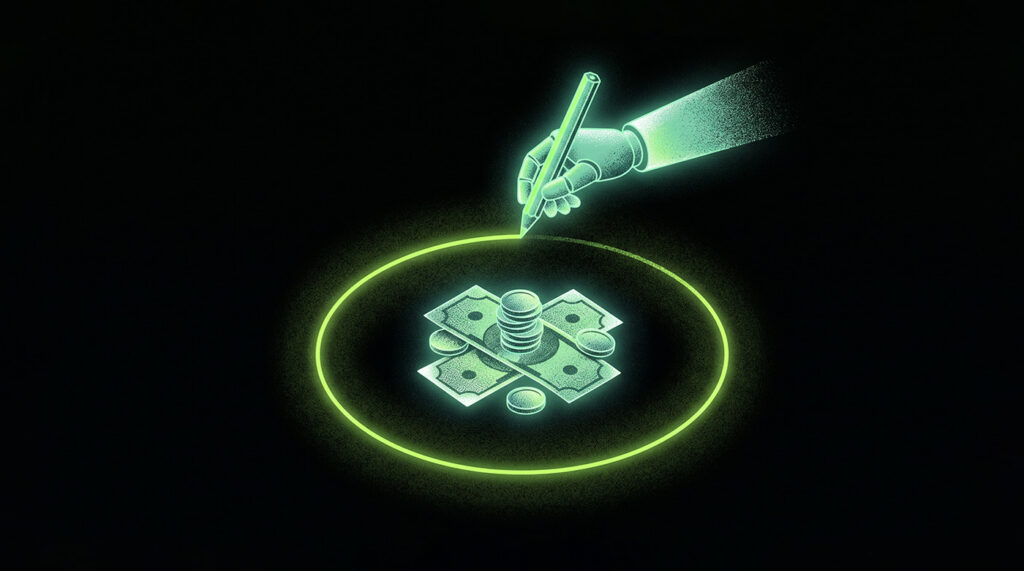
But here's the caveat. AI doesn't make the judgment call; it just puts the facts on the table faster. Deciding what to do about a wobbling deal — that's still the human sitting in the chair, and it always will be.
AI cannot determine pricing strategy. It can show me what similar deals closed at, but pricing a big enterprise deal requires judgment based on relationships and understanding how badly the buyer needs it.
Another area is anything involving people or nuanced judgment. This includes coaching a struggling rep and trusting a deal your gut says is off even when numbers look fine. AI can inform those moments, but it can't make the call.
Simply put, I let AI tell me what is happening and where to look, but I don't let it decide what to do about it.
The reason is straightforward. AI excels at patterns but struggles with context. It can see a deal looks risky, but it cannot know the buyer just lost their budget owner, or that the CEO is nervous about signing before their board meeting, or that a rep is one honest conversation away from turning things around.
Revenue is ultimately a series of human decisions made under pressure and uncertainty, and I am not willing to outsource those.
A real-world deal review and coaching workflow
I'll discuss my deal review and coaching workflow. It has four stages, and AI impacts each stage, but a human still makes the decisions.
- Before the calls even happen: When a rep has an important upcoming call, the tools pull together everything that matters: the account's recent news, the buyer's role and history, and where the deal stands, so the rep walks in briefed. This used to require an hour of manual digging, but tools now make it a two-minute read.
- During and right after the call: Gong processes every customer call. It records, transcribes, and analyzes the conversation, then writes key details directly into the CRM: the deal stage, the next steps, and who attended. This solves sales' most expensive problem: No one remembers verbal updates, and pipeline decisions last for quarters. Now, nothing gets lost between what was said and what's on record.
- Before my review: The same tools automatically flag real risk signals: a champion who's gone quiet, a new stakeholder who suddenly appeared, a close date that's already slipped twice. Additionally, I use an AI assistant, usually Claude, to analyze the entire pipeline and plainly tell me which deals are real and which ones we're hoping into existence. So, I enter every review already knowing where to push, instead of discovering problems live.
- After the review: The AI drafts follow-up recaps and next-step tasks from the actual call context, which the rep reviews and sends. Because every call is captured, I can coach from what really happened, playing back the exact moment a rep talked past an objection, instead of coaching from a secondhand summary. This makes the coaching far more concrete.
The AI drafts follow-up recaps and next-step tasks from the actual call context, which the rep reviews and sends. This makes the coaching far more concrete.

How AI can make lazy habits easier to indulge
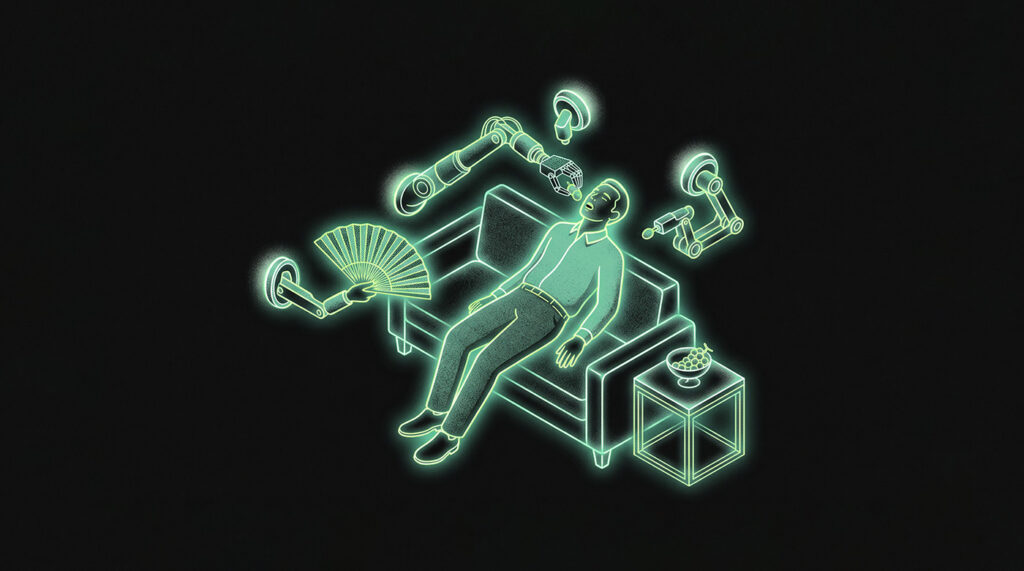
The good parts of AI are often oversold, so here's the honest picture.
First, the biggest win has been time and clarity. My deal reviews are now based on evidence. Forecast conversations are far less emotional. The prep work that used to take a couple of hours now takes a fraction of that.
Across the teams I've worked with, the pattern has been consistent: less time reporting on the pipeline, more time working it.
Now, for the bad, because there's plenty:
The first mistake was over-trusting the AI scores. Early on, a deal that AI rated as healthy didn't turn out because the tool couldn't see that the buyer's champion was having trouble convincing the internal team. The numbers looked fine right up until the deal died, and that taught me to treat AI's confidence as a starting point, but never a verdict.
The second is the "sameness" problem. When everyone automates their outreach with the same tools, everything starts to sound identical, and buyers notice. I've seen reply rates on automated outreach go down across the industry for exactly this reason. The teams leaning hardest on automation to sound personal often end up sounding the most generic.
The third is that AI makes it very easy to feel productive while avoiding hard conversations. I've had to watch for that in myself and in the teams I coach.
So, AI has made the good operators noticeably faster and sharper, but it has also made the lazy habits easier to indulge. It's a multiplier for revenue leaders, and what it multiplies depends entirely on the judgment of the person using it.
How AI makes intangible sales skills more learnable
For most of my career, I believed the best selling was almost artisanal: the instinct to read a room, the perfectly judged follow-up, the sense of when to push and when to wait — all of that lived in your top few people's heads, and you couldn't really copy it.
You could hire for it and coach it a little, but mostly, you just hoped to find more of those rare people. AI, however, forced me to rethink that.
Because when you record and analyze every call, the things your best rep does that used to feel like magic become visible and specific. The exact questions they ask early, the way they handle a certain objection, how they slow down instead of speeding up when a buyer goes quiet — they're patterns, and once you see them clearly, you can teach them to the rest of the team in a way never before possible.

Ankit Shares
For most of my career, I believed the best selling was almost artisanal: AI, however, forced me to rethink that.
So the thing I'd written off as unteachable instinct proved to be, in large part, a set of learnable behaviors I just couldn't observe at scale until now.
And I'm not saying selling has become a formula. The human judgment at the top of the game is still real and still rare, but the gap between your best rep and your average one is smaller and more closeable than I believed for 20 years. Much of what I used to call talent was really just visibility, and now we have it.
That's a genuinely hopeful shift, and it changed how I think about building a team.
How to improve AI adoption in revenue teams
I wish I'd known that the tools are the easy part; the hard part is getting people to change how they work.
When I started, I made the classic mistake: I assumed good AI tools would automatically deliver value. Buy the software, roll it out, watch things improve. So, I focused all my energy on picking the right platforms and almost none on the humans who'd have to use them.
But what happened is what happens to most teams. Teams adopted the tools on paper but ignored them in practice. Reps kept working the way they always had, left the fancy AI features untouched, and a few people resented the whole thing as something done to them rather than for them.
If I'd understood that going in, I'd have flipped the order entirely. I'd have spent far less time agonizing over which tool to buy, because most serious ones are good enough, and far more time on the change itself. Bringing the team in early, showing each person how it makes their day easier rather than just making their manager's reporting cleaner, and picking one or two workflows to nail before piling on more.
Five pieces of advice for CROs
As far as advice, here are a few things I wish someone had told me earlier.
- Adopt AI aggressively, but clearly define its purpose. The wins are real, and CROs who ignore these tools will fall behind those who use them. AI offers speed and clarity, not a replacement for judgment. Use it to see your pipeline faster, prep sharper, and free your team from busywork.
- Don't cut your team and call it an AI strategy. AI should make your good people more effective; it shouldn't be an excuse to lose them. If your plan is to replace humans, you've misunderstood where deals are won.
- Protect against sameness. When everyone in your market uses the same tools to automate outreach, output converges, and buyers tune it out. Winning teams will use AI to buy back time, then spend it being more human, more present, and more genuinely useful to buyers than the competition.
- Coach your team through the change instead of just handing them tools. Most reps barely use the AI already in their stack. Buying the software is the easy part; getting people to change how they work is the real job, and that's a leadership problem.
- Stay close to the deals yourself. As a leader, it's tempting to run everything through dashboards now because they are better than ever, but the best signal remains a real conversation with a real buyer. Don't let the tools distance you from your actual responsibility.
Stay close to the deals yourself. As a leader, it’s tempting to run everything through dashboards now because they are better than ever, but the best signal remains a real conversation with a real buyer. Don’t let the tools distance you from your actual responsibility.
Follow Along
You can follow Ankit Kedia's work on LinkedIn, X, and Instagram.
More expert interviews to come on The CRO Club!