
Inside a CRO’s AI-Powered Marketing Workflow
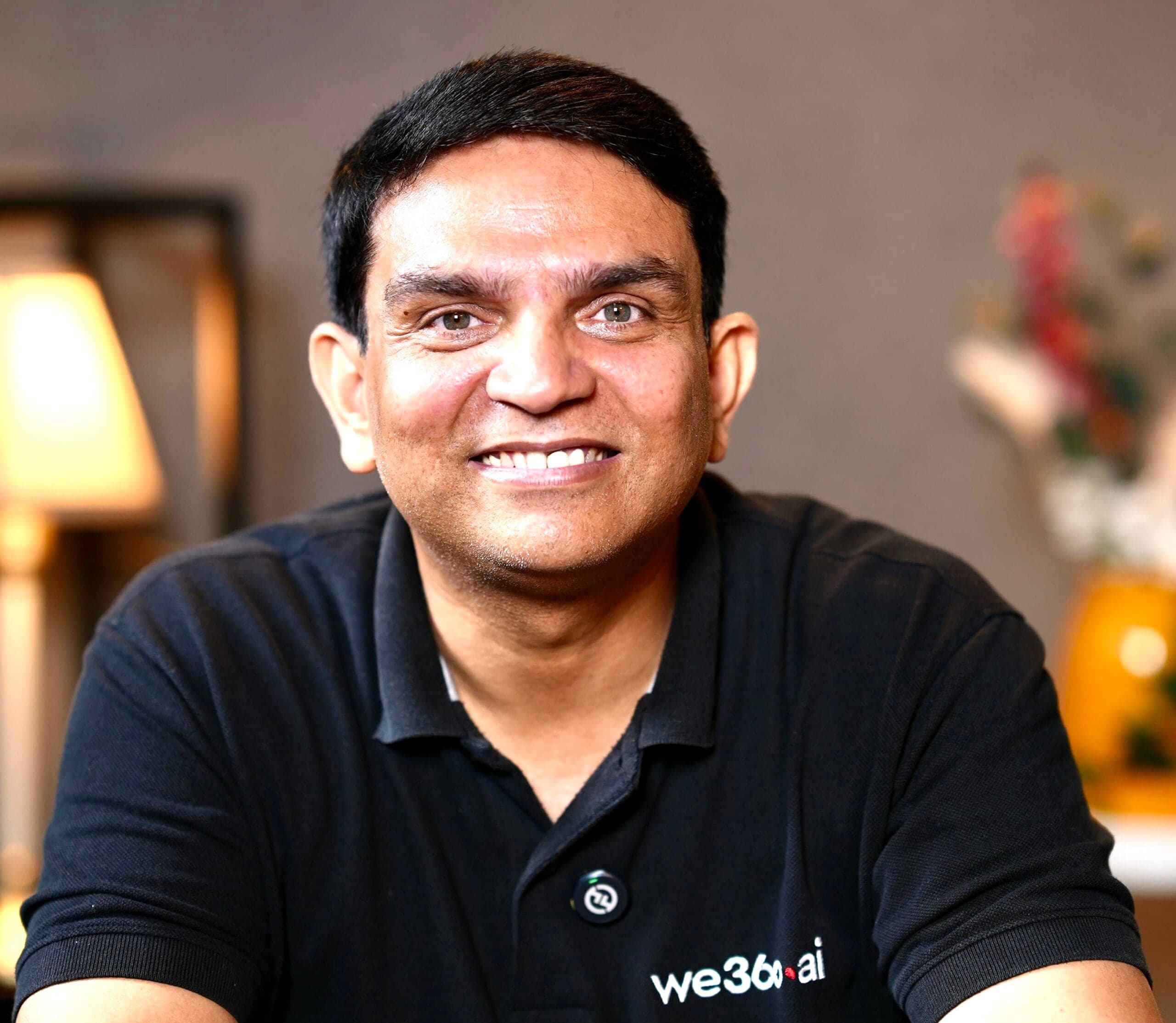
Swapnil Tripathi
Co-Founder and CRO at we360.ai

Discover a CRO’s AI-driven revenue workflow for research, outreach, and lead nurturing, and why human relationships remain critical to closing and retaining customers.
Key Takeaways
Hook: Career Transition: Swapnil Tripathi shifted from sales management to cofounding we360.ai, leveraging AI in performance marketing.
Hook: AI Utilization: AI enables deep account insights, enhancing hyper-personalization and improving conversion rates in sales outreach.
Hook: Sales Optimization: Focusing on optimizing the sales journey leads to better outcomes than merely increasing lead volume.
Hook: Human Oversight: AI aids revenue processes, but human oversight is essential to prevent errors and maintain relationships.
Hook: Caution Advised: CROs should approach AI cautiously, avoiding unnecessary team reductions and managing token usage effectively.
Swapnil Tripathi had a 23-year career in sales management before becoming an entrepreneur. With one successful exit under his belt, he is now the cofounder and CRO of a B2B SaaS called we360.ai.
We sat down with him to understand how he's using AI in performance marketing. He gave us the workflow.
A Growth Architect
I consider myself a revenue growth architect. I first experienced person-to-person sales during a 17-year career in life insurance before becoming an entrepreneur.
Today, I am the cofounder and Chief Revenue Officer of we360.ai, a B2B SaaS company. We offer workforce analytics software. We currently serve over 10,000 companies. Our primary markets are India and North America.
We started our GTM with performance marketing, primarily Google Ads, but we have slowly shifted to outbound. We have a sales team of 25 people, comprising account executives, account managers, key account managers, and sales development representatives.
Our US GTM is primarily partnership-driven; we have identified strategic partners there. We also focus on collaborating with similar products that share a similar ICP.
More Articles
How AI-Driven Hyper-Personalization Transforms Revenue
As a non-tech person, AI has completely changed how I approach revenue.
But the biggest change AI has brought to our organization is hyper-personalization. Previously, personalization only included names or company names. Now, AI helps us conduct deep research into accounts. Our outreach is highly personalized, and it has changed the game for us.
The biggest change AI has brought to our organization is hyper-personalization. Previously, personalization only included names or company names. Now, AI helps us conduct deep research into accounts.
The same applies to inbound. Previously, when a company approached us, our research focused on identifying decision-makers on the buying committee. But with AI, we now conduct deep research into accounts, uncovering details like statements key decision makers have made that helped us frame our outreach conversations more effectively.
All in all, hyper-personalization alone has improved our demo-to-trial conversion from 15-20% to almost 35%. Our sales cycle has also shortened by 15-20%.
How Performance Marketing Workflows Can Be Set Up
Here's our performance marketing workflow.
A person sees our Google ad and fills out the form. An integration immediately creates a deal in HubSpot, and the company URL is populated into a designated Google Sheet.
We use all of HubSpot's AI capabilities, so the CRM identifies potential stakeholders and fetches their names, mobile numbers, and LinkedIn URLs from the data management platform. Once stakeholder data is enhanced, it also gives us a quality score and prioritized strategic accounts.
We vet our list with Gemini, conducting deep research into the company via the URL in the Google Sheet. It finds pain points and growth aspirations. And another Gemini Gem creates highly personalized content, which is added to the Google Sheet. All of this is updated in HubSpot via Zapier.
We use Claude for automations, including highly personalized emails. The system sends stakeholders welcome emails showcasing the product's value. Meanwhile, the person who filled out the form receives a hyper-personalized email detailing the value they will gain by attending the demo. We automatically follow up until the person joins the demo.
Why Optimizing the Sales Journey Is More Important Than Outbound Volume

Sometimes, we CROs are so hellbent on getting more leads that we forget to focus on what we do with those leads. And then the whole process goes haywire. I urge CROs to change this mindset.
Instead of focusing on generating more leads, we must optimize the sales journey. With a highly optimized sales journey, we can leverage AI to guide the client step-by-step through any doubts, questions, or hesitations they have.
This will lead to better results. After all, which would you prefer: 50 meetings that convert two clients or 15 meetings that convert five clients?
That's the game. I'm not saying we should totally ignore volume, but optimizing the entire sales process will yield better results.
Why AI Informs Revenue Decisions While Humans Lead

AI clearly wins at research and providing account insights. We leverage AI for deal scoring, data enrichment, and email outreach. But it can't do everything.
Humans must still handle pricing, understand customer requirements, manage customizations, and request forecasting.
Automations often require human intervention as well. Far too often, AI fails to perform them properly.
Why CROs Must Keep Humans in the Loop
When starting processes, a human in the loop will always help.
If you leave the entire outreach process to AI unsupervised, it might hallucinate and provide information to the management of the target account that could work against you.
Swapnil Shares
Do not blindly automate the entire process; instead, monitor it for at least the first two or three months after implementation.
Do not blindly automate the entire process; instead, monitor it for at least the first two or three months after implementation.
And do not remove critical team members immediately after AI implementation. Instead, enhance your team members' capabilities with AI.
Why Revenue Teams Need GTM Engineers
Speaking of teams, the GTM engineer is a critical profile that we brought into our organization due to AI.
When we use multiple AI platforms, they all need to work together. A GTM engineer makes that happen, which is essential — at least for my revenue team.
Why Losing the Human Touch Is a Risk in AI Sales

The biggest risk I see with AI in revenue organizations is that we lose the human touch.
Having a human touch in the sales cycle is sometimes critical. Here's an example.
An email trail revealed that we were close to losing a client because they were dissatisfied. We had automated the entire renewal process, but I decided it needed a human touch. I picked up the phone and talked to the CTO of that company.
Due to my good relationship with him, we saved this client. The CTO mentioned they were looking for other options, so we might have lost this client if we had depended entirely on AI.
Why CROs Must Be Cautious
My most critical advice to all CROs is to ignore the AI hype about removing team members. A Rep+AI model is best for now. Do not act prematurely.
The biggest risk I see with AI in revenue organizations is that we lose the human touch. My most critical advice to all CROs is to ignore the AI hype about removing team members. A Rep+AI model is best for now. Do not act prematurely.
I'd also say that you should be frugal with your token usage. I didn't understand token consumption patterns when I started, and I burned a lot of money.
Follow Along
You can follow Swapnil Tripathi's work on LinkedIn. And check out we360.ai.
More expert interviews to come on The CRO Club!