
Reseña de Drift: Ventajas, Desventajas, Funciones y Precios
Drift destaca por su compromiso en tiempo real con los compradores, pero no es una solución universal. Aquí te cuento dónde sobresale Drift—y dónde podría no encajar en tu estrategia de ventas.

Analizamos las herramientas de forma independiente, y las comisiones ayudan a financiar nuestras pruebas. Consulta nuestra política de transparencia, nuestra metodología, o sugiere una herramienta.
Drift is a sales engagement software built for revenue teams that want to engage buyers in real time through AI-powered chat and conversational automation. I'd consider it when your pipeline depends on inbound website traffic and you need to convert that intent the moment it shows up. If you're choosing between Drift and Outreach, Drift is the stronger fit for teams prioritizing real-time buyer engagement on-site, while Outreach skews toward managing outbound email cadences and rep activity at scale.
Drift Evaluation Summary
4.4/5
- Pricing upon request
- Free demo available
Por qué confiar en nuestras recomendaciones de software
6,700+
Reviews
20
Industry experts
16+
Evaluation factors
14
Years
Nuestras reseñas reflejan nuestro criterio independiente, no un discurso de ventas. Descubra cómo mantenemos la transparencia.
Para esta guía, evaluamos las herramientas mediante pruebas prácticas e investigación independiente, puntuando las herramientas según nuestros criterios de selección.
Nuestras reseñas reflejan nuestro criterio editorial humano, no un discurso de ventas.
Drift Overview
Drift is a strong choice if you want real-time chat and meeting scheduling built into your sales engagement workflow. Its interface is intuitive, onboarding is quick, and integrations cover most CRM and calendar needs. Pricing can be higher than some alternatives, but the conversational tools and support justify it for teams focused on live buyer engagement.
If you’re judging by ease of use and fast deployment, Drift stands out. I’d suggest it’s best for sales teams that prioritize immediate buyer responses and want to unify chat, meetings, and automation in one place.
Pros
- Meeting scheduling is built directly into chat workflows.
- Personalized conversations increase website conversion rates.
- Real-time AI chat instantly qualifies and routes leads.
Cons
- Some users report inconsistent chat agent accuracy.
- Advanced features require a significant investment.
- Pricing is higher than many sales engagement tools.
Is Drift Right For Your Needs?
Who Would be a Good Fit for Drift?
Drift is a strong choice for teams that rely on high-velocity sales cycles, prioritize real-time buyer engagement, or need to qualify leads instantly. You’ll get the most value if your business depends on website conversations, fast meeting scheduling, and AI-powered chat to drive the pipeline.
Drift’s conversational tools and automation are especially useful for industries with complex buyer journeys or where speed to lead is critical.
- Customer Success TeamsIntegrated chat supports proactive outreach and faster customer resolutions.
- Demand Generation TeamsReal-time engagement tools help convert high-intent website visitors.
- Marketing DepartmentsConversational landing pages and chatbots boost campaign conversion rates.
- Enterprise Sales TeamsDrift’s advanced routing and analytics support large teams with complex territories.
- B2B Tech SalesAI chatbots and meeting scheduling accelerate sales cycles and reduce manual follow-up.
- SaaS StartupsDrift’s instant chat and lead routing help capture and qualify inbound interest quickly.
Who Would be a Bad Fit for Drift?
Drift isn’t ideal for teams with low website traffic, simple sales cycles, or those who don’t need real-time engagement. If your business relies more on outbound sales, has a limited budget, or doesn’t need advanced chat automation, you might find Drift’s features excessive or its pricing hard to justify.
- Outbound-Only SalesDrift’s strengths in inbound engagement don’t help outbound-focused teams.
- SolopreneursCost and feature set are overkill for single-person operations.
- Manufacturing CompaniesComplex, offline sales processes don’t benefit from live chat tools.
- Field Sales TeamsDrift’s web chat focus doesn’t support in-person or offline sales.
- Nonprofit OrganizationsPricing and feature set may exceed typical nonprofit needs.
- Small Local BusinessesDrift’s advanced chat features are unnecessary for low-volume lead flow.
Cómo Probamos y Evaluamos Herramientas
Hemos pasado años construyendo, refinando y mejorando nuestro sistema de pruebas y evaluación de software. La rúbrica está diseñada para capturar las complejidades de la selección de software y lo que hace que una herramienta sea efectiva, centrándose en aspectos críticos del proceso de toma de decisiones. A continuación, puede ver exactamente cómo funcionan nuestras pruebas y evaluación a través de siete criterios. Esto nos permite ofrecer una evaluación imparcial del software basada en la funcionalidad principal, características destacadas, facilidad de uso, incorporación, soporte al cliente, integraciones, opiniones de los clientes y relación calidad-precio.
Funcionalidad Principal (25% de la puntuación final)
El punto de partida de nuestra evaluación es siempre la funcionalidad principal de la herramienta. ¿Tiene las características y funciones básicas que un usuario esperaría ver? ¿Alguna de esas funciones principales está restringida a planes de precios superiores? En esencia, esperamos que una herramienta cumpla con las capacidades básicas de sus competidores.
Características Destacadas (25% de la puntuación final)
A continuación, evaluamos características poco comunes que van más allá de la funcionalidad principal que suelen ofrecer herramientas similares. Una puntuación alta refleja funciones especializadas o únicas que hacen que el producto sea más rápido, eficiente o aporte un valor adicional al usuario. También evaluamos lo fácil que es integrar la herramienta con las demás del stack tecnológico para ampliar la utilidad y el alcance del software. Las herramientas que ofrecen integraciones nativas, conexiones de terceros y acceso API para crear integraciones personalizadas reciben las mejores puntuaciones.
Facilidad de Uso (10% de la puntuación final)
Consideramos qué tan rápido y fácil es realizar las tareas definidas en la funcionalidad principal usando la herramienta. El software que obtiene una alta puntuación está bien diseñado, es intuitivo de usar, ofrece aplicaciones móviles, proporciona plantillas y hace que tareas relativamente complejas parezcan sencillas.
Incorporación (10% de la puntuación final)
Sabemos lo importante que es la rápida adopción por parte del equipo de una nueva plataforma, por lo que evaluamos lo fácil que es aprender y utilizar una herramienta con una formación mínima. Evaluamos qué tan rápido un miembro del equipo puede configurarse y empezar a usar la herramienta sin experiencia previa. Las soluciones con puntuación alta indican que se requiere poco o ningún soporte.
Soporte al Cliente (10% de la puntuación final)
Revisamos cuán rápido y sencillo es encontrar ayuda y resolver problemas a través de teléfono, chat en vivo o base de conocimientos. Las herramientas y compañías que brindan soporte en tiempo real obtienen las mejores puntuaciones, mientras que los chatbots reciben las peores.
Opiniones de Clientes (10% de la puntuación final)
Además de nuestras propias pruebas y evaluaciones, consideramos el puntaje neto de promotores de los clientes actuales y anteriores. Revisamos su probabilidad, si tuvieran la opción, de volver a elegir la herramienta para la funcionalidad principal. Un software con puntuación alta refleja un puntaje neto de promotores elevado por parte de clientes actuales o anteriores.
Relación Calidad-Precio (10% de la puntuación final)
Por último, considerando todos los demás criterios, revisamos el precio promedio de los planes de nivel inicial frente a las funciones principales y consideramos el valor de los otros criterios de evaluación. El software que ofrece más, por menos, obtendrá una puntuación más alta.
Core Features
AI Chatbots
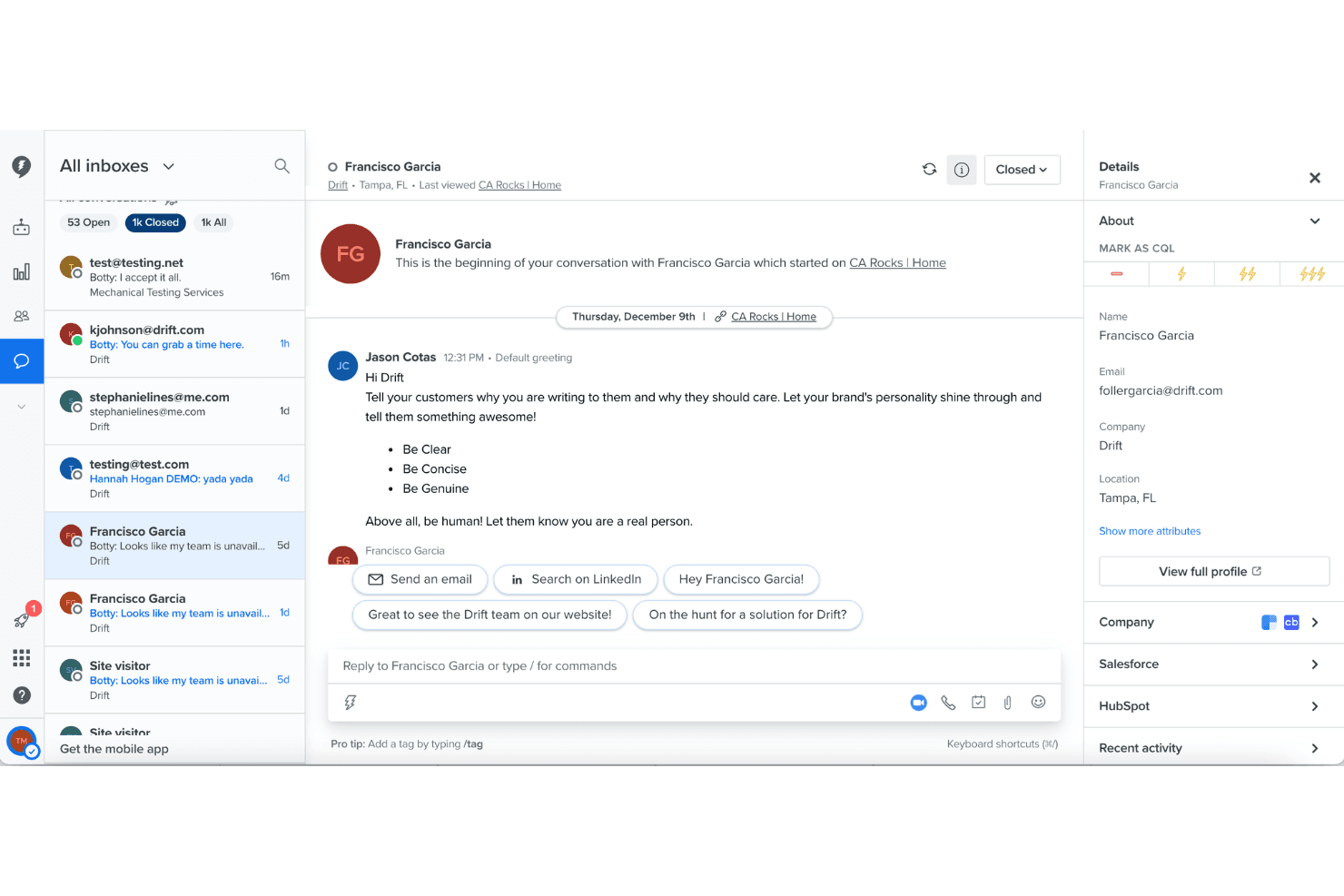
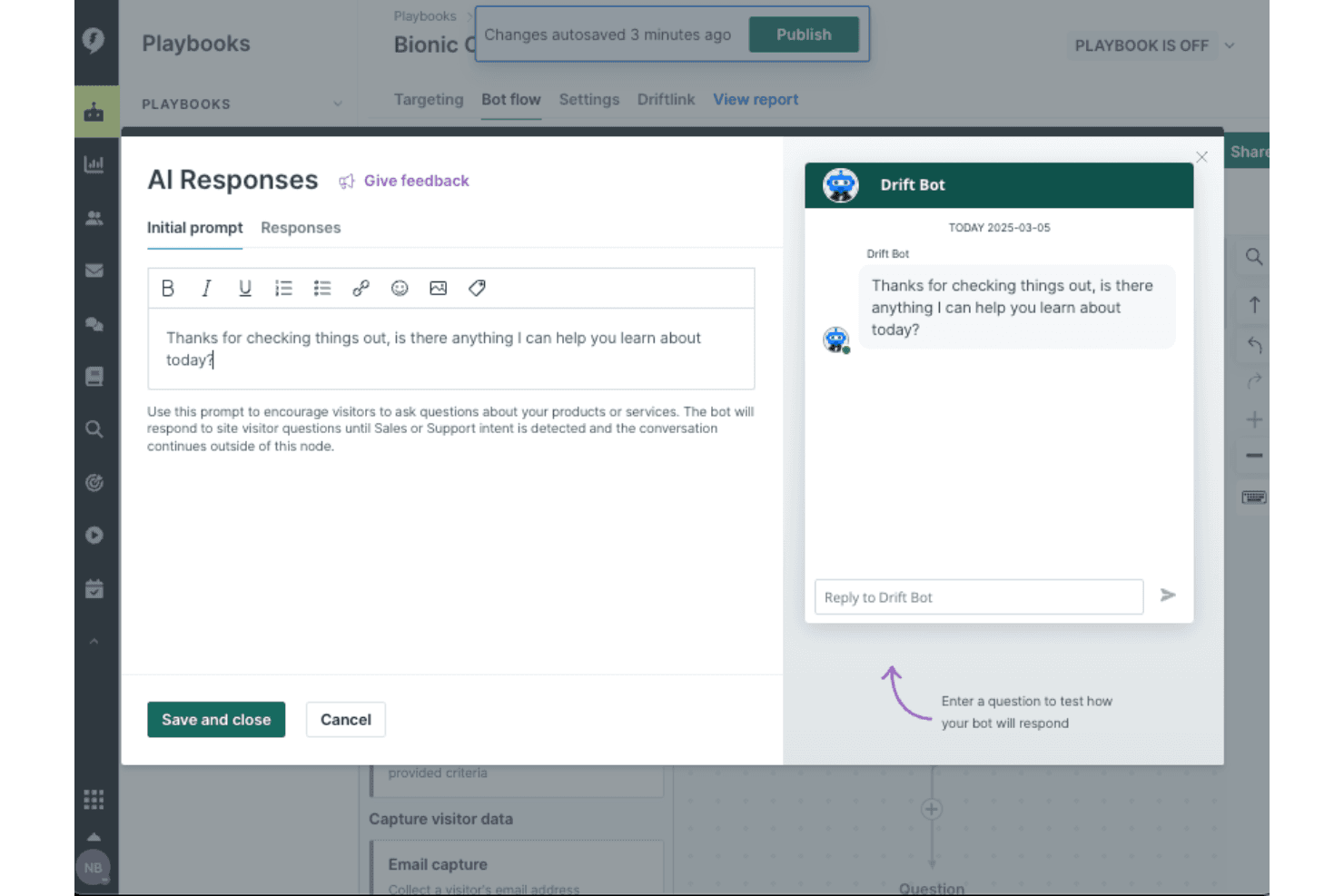
Automate lead qualification and routing with real-time, conversational AI. These bots engage visitors instantly and capture key details for your sales team.
Live Chat
Connect sales reps with website visitors for immediate conversations. This feature helps answer questions and book meetings while buyers are most engaged.
Meeting Scheduler
Let prospects book meetings directly from chat or email. Drift syncs with your calendar to eliminate back-and-forth scheduling.
Playbooks
Build automated chat flows that guide visitors based on their behavior and profile. Use playbooks to personalize outreach and drive more conversions.
Conversation Analytics
Track chat performance, engagement rates, and conversion metrics in one dashboard. These insights help you optimize messaging and team response times.
Lead Routing
Automatically assign leads to the right rep based on rules you set. This ensures fast follow-up and supports complex sales territories.
Ease of Use
Drift is easy to navigate, with a clean interface and intuitive chat setup that most teams can deploy quickly. Users often mention how simple it is to build playbooks and manage conversations without technical help. The in-app guidance and clear analytics dashboards make onboarding straightforward, even for new users.
Some advanced features require a bit of setup, but overall, Drift’s usability stands out for busy sales and marketing teams.
Integrations
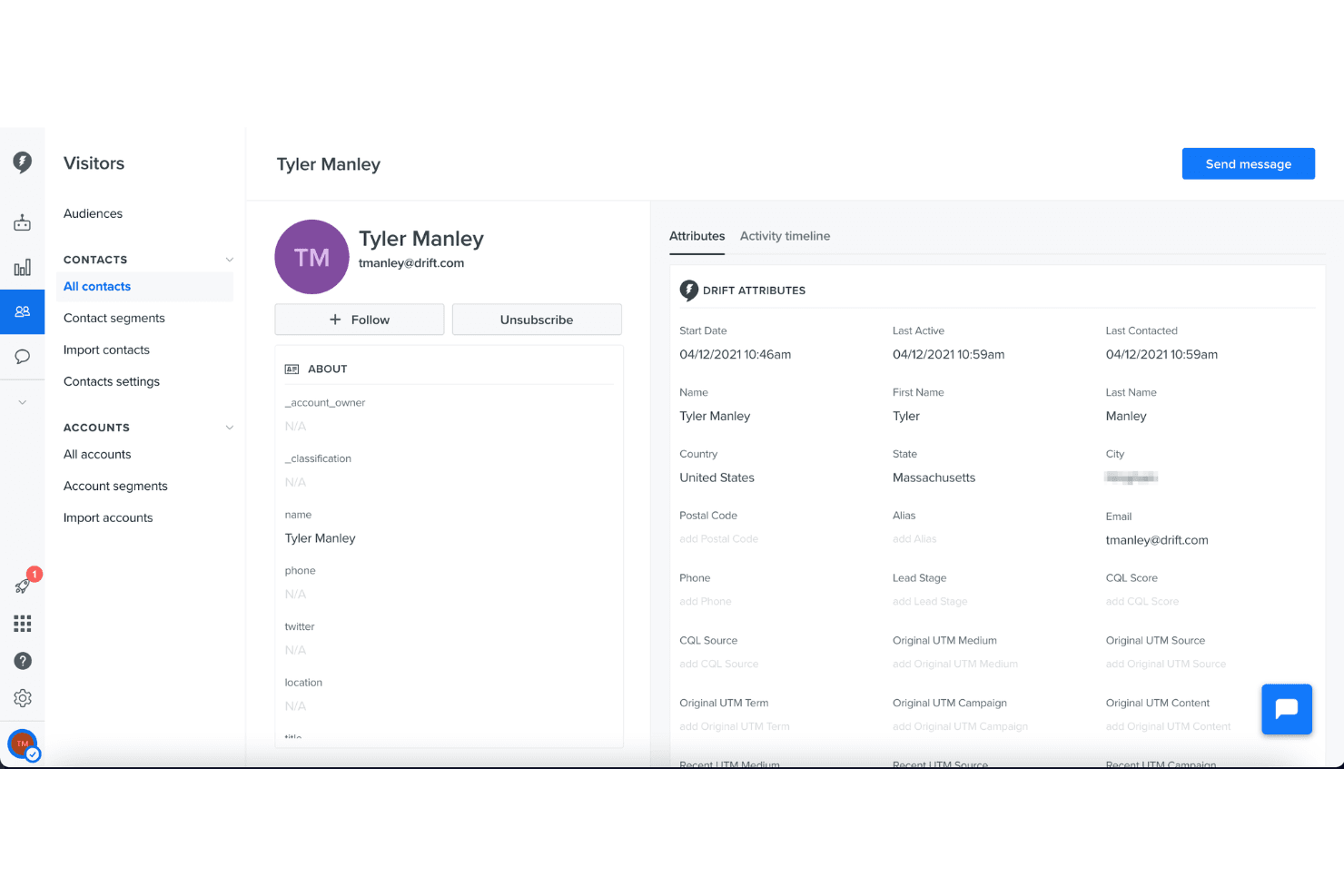
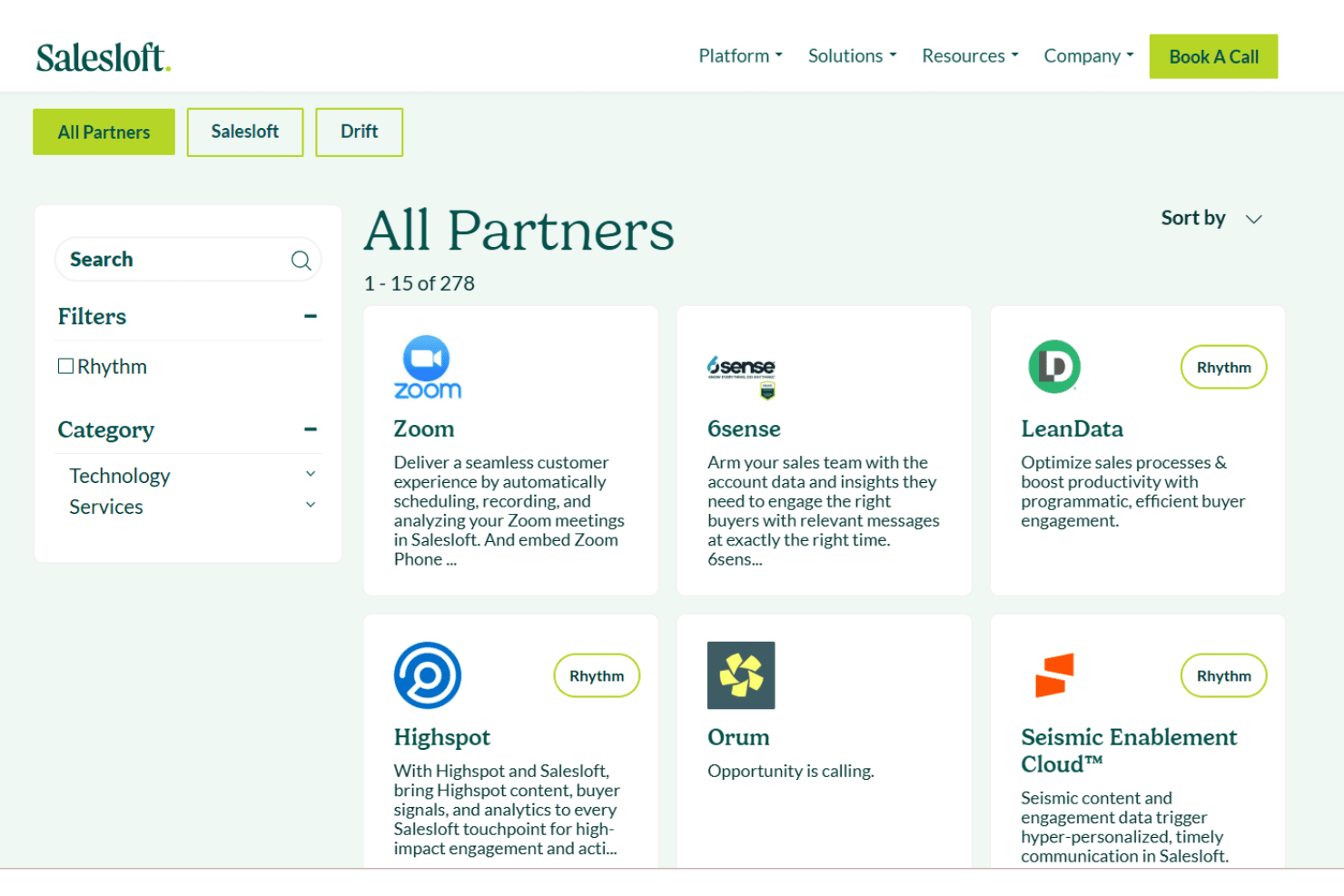
Drift integrates with Salesforce, HubSpot, Marketo, Eloqua, Pardot, Google Calendar, Outlook, Slack, Zoom, and Salesloft, among others.
Drift also offers an API and connects with third-party integration tools for expanded functionality.
Drift Specs
- A/B Testing: No
- Analytics: No
- API: Yes
- Audience Targeting: Yes
- Automated Conversion: No
- Batch Permissions & Access: No
- Behavioral Tracking: No
- Brand Management: Yes
- Campaign Management: No
- Contact Management: Yes
- Contact Sharing: No
- Conversion Tracking: No
- CRM Integration: No
- Customer Management: No
- Dashboards: No
- Data Export: No
- Data Import: Yes
- Email Integration: No
- External Integrations: Yes
- Keyword Tracking: No
- Landing Pages: No
- Lead Management: No
- Lead Scoring: Yes
- Link Tracking: No
- Marketing Automation: Yes
- Multi-User: Yes
- Notifications: Yes
- Password & Access Management: No
- Social-Media Integration: No


