

Salesmate Test 2026: Vorteile, Nachteile, Funktionen und Preise
Salesmate überzeugt als flexibles, einfach zu bedienendes CRM für wachsende Teams und unterstützt mit starker Automatisierung und nahtlosen Integrationen skalierbare Arbeitsabläufe.

Wir bewerten Tools unabhängig, und Provisionen helfen, unsere Tests zu finanzieren. Sehen Sie unsere transparente Richtlinie, unsere Methodik oder schlagen Sie ein Tool vor.
Salesmate is a CRM software built for sales teams that need pipeline management, built-in calling, and two-way texting without stitching together separate tools. I'd mainly consider it if you're running an inside sales operation and want more native communication features than Pipedrive offers, without the cost and complexity of a full marketing platform like HubSpot.
Salesmate Evaluation Summary

4.7/5
- From $23/user/month (billed annually)
- 15-day free trial
Warum Sie unseren Software-Empfehlungen vertrauen können
6,700+
Reviews
20
Industry experts
16+
Evaluation factors
14
Years
Unsere Bewertungen spiegeln unser unabhängiges Urteilsvermögen wider – keine Verkaufsstrategie. Erfahren Sie, wie wir transparent bleiben.
Für diesen Leitfaden haben wir Tools mithilfe von praktischen Tests und unabhängiger Recherche bewertet und dabei unsere Bewertungskriterien angewendet.
Unsere Bewertungen spiegeln unser menschliches redaktionelles Urteilsvermögen wider, keine Verkaufsstrategie.
Salesmate Overview
If you’re judging Salesmate against other CRM software, I think you’ll find its clean interface, quick onboarding, and built-in calling features set it apart for small and midsize teams. The automation and integration options are strong for the price, and support is responsive.
While it doesn’t offer the deep customization or analytics you might want for complex enterprise needs, it’s a smart pick if you’re selecting a CRM to unify sales and marketing without a steep learning curve. For example, teams moving from spreadsheets or juggling multiple tools will notice a big improvement in workflow clarity.
Pros
- Responsive customer support with live chat and video options.
- Automation journeys simplify repetitive sales and marketing tasks.
- Built-in calling and texting features for sales outreach.
Cons
- Add-on costs can increase total price for growing teams.
- Some reporting features lack advanced customization.
- Email deliverability can be inconsistent for bulk campaigns.
Is Salesmate Right For Your Needs?
Who Would be a Good Fit for Salesmate?
Salesmate is a smart choice for teams that want built-in calling, automation, and a clean interface without the complexity of enterprise platforms. It’s especially useful for small to midsize businesses, sales-driven organizations, and companies that need to unify sales and marketing in one place. If you’re looking for a CRM that’s easy to onboard, supports outbound outreach, and offers responsive support, Salesmate is likely to fit your workflow.
- Small Business OwnersAffordable pricing and simple setup make it accessible for small business needs.
- Insurance BrokersIntegrated calling and reminders help brokers stay on top of renewals and outreach.
- AgenciesShared pipelines and activity tracking make it easy for agencies to manage multiple clients.
- B2B Sales TeamsPipeline management and deal tracking are tailored for multi-stage B2B sales cycles.
- SaaS StartupsAutomation journeys help SaaS teams nurture leads and onboard users efficiently.
- Real Estate TeamsSalesmate’s built-in calling and texting streamline client follow-ups and property updates.
Who Would be a Bad Fit for Salesmate?
Salesmate isn’t the best choice for large enterprises, highly regulated industries, or teams that need deep analytics and customization. If your business relies on advanced reporting, complex workflows, or industry-specific compliance, you’ll likely find Salesmate’s feature set limiting compared to more specialized or enterprise-focused CRMs.
- Data-Heavy Marketing TeamsReporting and segmentation tools may not meet complex marketing analytics needs.
- Manufacturing CompaniesLimited support for inventory, order management, or production tracking.
- Field Service TeamsNo native field service management or mobile offline capabilities.
- Financial ServicesMissing advanced security and compliance tools needed for financial regulations.
- Healthcare ProvidersIt doesn’t offer HIPAA compliance or healthcare-specific workflow features.
- Large EnterprisesSalesmate lacks the advanced analytics and deep customization large enterprises require.
Wie wir Tools testen & bewerten
Wir haben Jahre damit verbracht, unser System zur Softwarebewertung und -prüfung aufzubauen, zu verfeinern und kontinuierlich zu verbessern. Der Bewertungsmaßstab ist darauf ausgelegt, die Feinheiten der Software-Auswahl und die Effektivität eines Tools abzubilden, wobei der Fokus auf entscheidende Aspekte des Auswahlprozesses gelegt wird. Nachfolgend können Sie genau sehen, wie unser Test- und Bewertungssystem anhand von sieben Kriterien funktioniert. Dadurch sind wir in der Lage, eine objektive Einschätzung der Software auf Basis von Kernfunktionalität, besonderen Merkmalen, Benutzerfreundlichkeit, Onboarding, Kundensupport, Integrationen, Kundenbewertungen und Preis-Leistungs-Verhältnis zu geben.
Kernfunktionalität (25% der Gesamtnote)
Unser Bewertungsprozess beginnt immer mit der Kernfunktionalität eines Tools. Verfügt es über die grundlegenden Funktionen und Merkmale, die ein Nutzer erwarten würde? Sind einige dieser Kernfunktionen nur in teureren Tarifen verfügbar? Grundsätzlich erwarten wir, dass ein Tool mit den Grundfunktionen seiner Wettbewerber mithalten kann.
Besondere Merkmale (25% der Gesamtnote)
Im nächsten Schritt bewerten wir außergewöhnliche Zusatzfunktionen, die über den üblichen Funktionsumfang hinausgehen. Eine hohe Bewertung spiegelt spezialisierte oder einzigartige Eigenschaften wider, welche das Produkt schneller, effizienter oder für den Nutzer wertvoller machen. Wir bewerten außerdem, wie einfach sich andere typische Tools zur Erweiterung der Funktionalität und des Nutzens integrieren lassen. Lösungen mit zahlreichen nativen Integrationen, Drittanbieter-Anbindungen und API-Zugängen für eigene Anpassungen schneiden am besten ab.
Benutzerfreundlichkeit (10% der Gesamtnote)
Wir berücksichtigen, wie schnell und einfach sich Aufgaben mit der Kernfunktionalität durch das Tool erledigen lassen. Hoch bewertete Software ist gut gestaltet, intuitiv bedienbar, bietet mobile Apps, Vorlagen und gestaltet sogar komplexe Aufgaben einfach.
Onboarding (10% der Gesamtnote)
Uns ist wichtig, wie schnell Teams eine neue Plattform übernehmen, daher bewerten wir, wie leicht ein Tool ohne umfangreiche Schulungen erlernbar und nutzbar ist. Wir betrachten, wie schnell Teammitglieder ohne Vorerfahrung loslegen können. Hoch bewertete Lösungen zeichnen sich dadurch aus, dass nur wenig oder keine Unterstützung notwendig ist.
Kundensupport (10% der Gesamtnote)
Wir prüfen, wie schnell und einfach es ist, Unterstützung per Telefon, Live-Chat oder Wissensdatenbank zu erhalten. Anbieter, die Echtzeit-Support bieten, erzielen die besten Noten, während Chatbots am schlechtesten abschneiden.
Kundenbewertungen (10% der Gesamtnote)
Zusätzlich zu unseren eigenen Tests berücksichtigen wir den Net Promoter Score von aktuellen und früheren Kunden. Wir prüfen, ob Nutzer das Tool für die Kernfunktionalitäten erneut wählen würden. Eine hohe Softwarebewertung spiegelt einen hohen Weiterempfehlungswert aktueller oder früherer Kunden wider.
Preis-Leistungs-Verhältnis (10% der Gesamtnote)
Abschließend bewerten wir unter Berücksichtigung aller Kriterien den durchschnittlichen Preis für Einstiegs-Tarife im Verhältnis zu den Kernfunktionen und dem Wert der übrigen Kriterien. Software, die mehr Leistung für weniger Geld bietet, erzielt eine höhere Bewertung.
Core Features
Pipeline Management
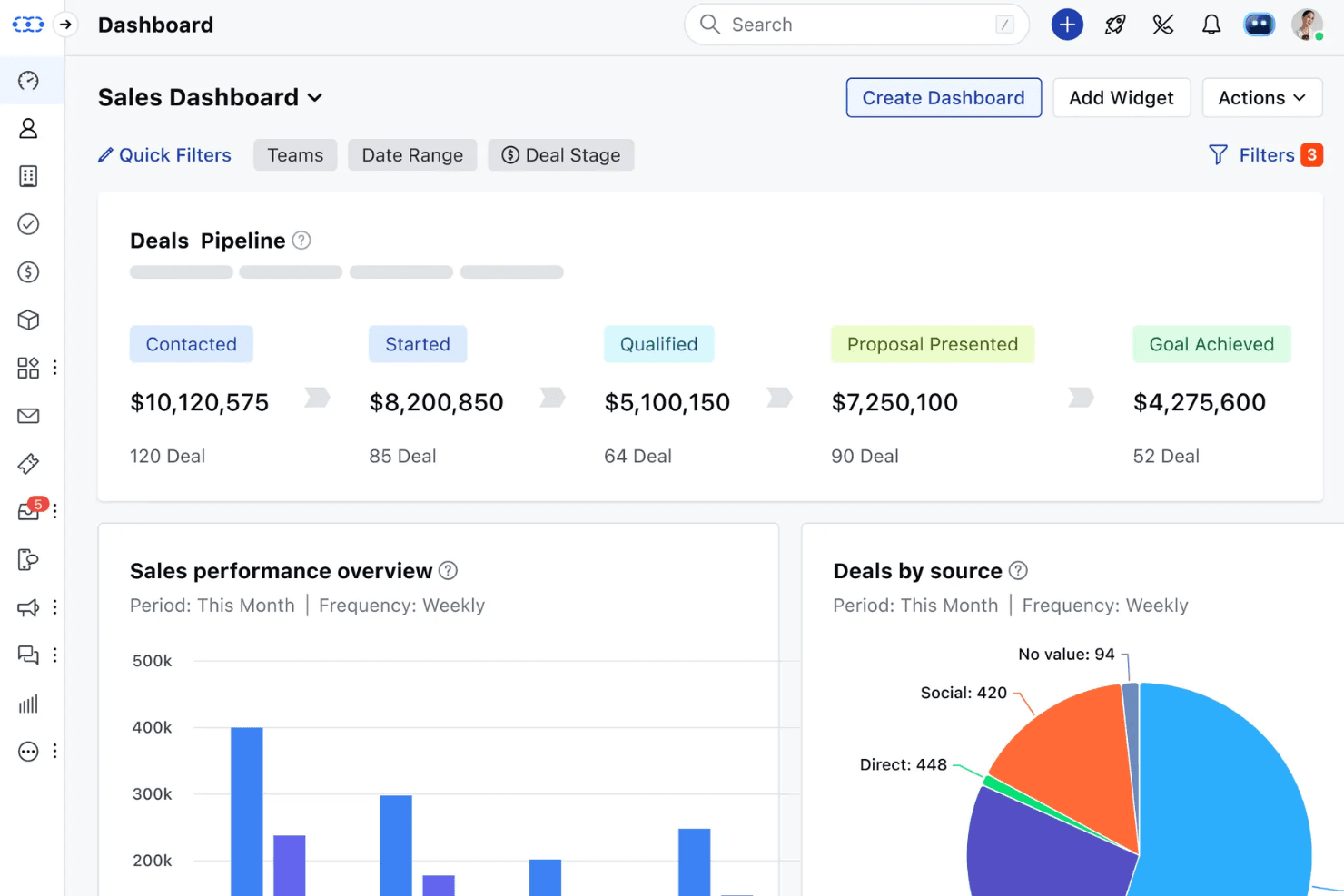
Visual pipelines let you track deals by stage and drag-and-drop to update progress. You can customize stages to match your sales process.
Built-In Calling and Texting
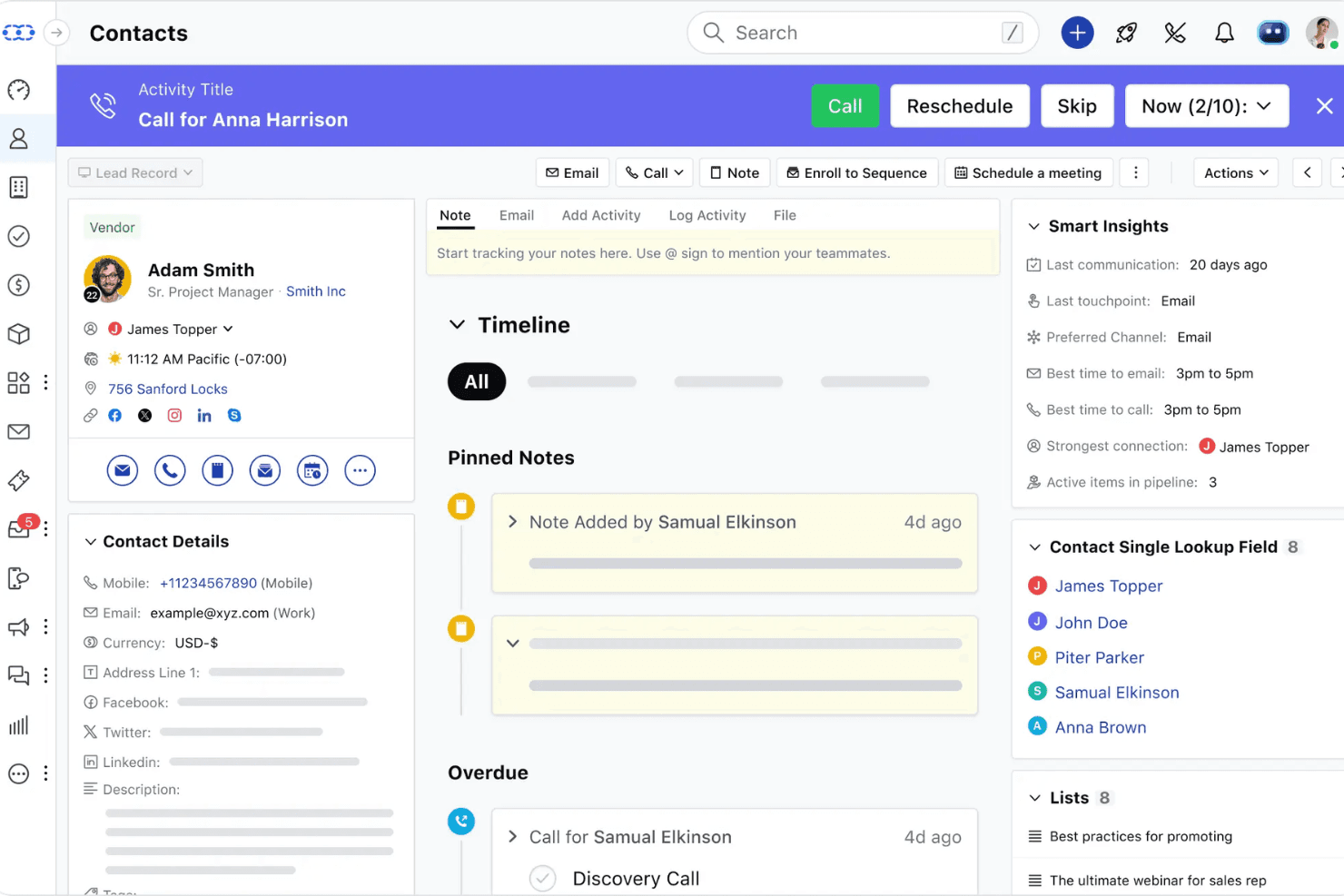
Make calls and send texts directly from the CRM, with automatic logging. This helps sales teams keep all outreach and follow-ups in one place.
Sales Automation Journeys
Automate repetitive tasks like lead assignment, follow-ups, and email sequences. Users can build workflows with triggers and actions to save time.
Email Campaigns and Tracking
Send bulk emails, track opens and clicks, and schedule follow-ups. Real-time analytics show which messages drive engagement.
Activity and Task Management
Assign tasks, set reminders, and log meetings or calls for each contact. This keeps teams organized and ensures nothing falls through the cracks.
Reporting and Analytics
Access dashboards for sales performance, pipeline health, and activity tracking. Reports are easy to generate, though customization is somewhat limited.
Ease of Use
Salesmate is one of the more approachable CRM platforms, with a clean interface and intuitive navigation that new users pick up quickly. Onboarding is straightforward, and features like drag-and-drop pipelines and built-in calling are easy to access without digging through menus.
Many users mention that setup takes just a few hours, not days, and ongoing support is responsive. I think teams looking for a no-fuss CRM will appreciate how little training is needed to get started.
Integrations
Salesmate integrates with Active Campaign, Aweber, Big Commerce, Shopify, Zoom, DocuSign, Microsoft Teams, Xero, PandaDoc, and RingCentral, among others.
Salesmate also offers an open API and connects with third-party integration tools like Zapier, Make, and Integrately.

Salesmate Specs
- 2-Factor Authentication: No
- API: Yes
- Calendar Management: Yes
- Call Tracking: Yes
- Campaign Management: No
- Click-to-Dial: Yes
- Contact Management: Yes
- Contact Sharing: Yes
- Custom Data Forms: No
- Customer Management: Yes
- Dashboard: Yes
- Data Export: Yes
- Data Import: Yes
- Data Visualization: Yes
- Email Integration: Yes
- External Integrations: Yes
- File Sharing: Yes
- File Transfer: No
- Google Apps Integration: Yes
- Lead Management: Yes
- Lead Scoring: Yes
- Marketing Automation: No
- Mobile App: No
- Multi-User: Yes
- Notifications: Yes
- Pipeline Management: Yes
- Sales Automation: Yes
- Scheduling: Yes
- Social-Media Integration: No
- Task Scheduling/Tracking: Yes
- Third-Party Plugins/Add-Ons: Yes


