


Apollo vs. Lusha: Comparison and Reviews for 2026


Poor prospect data can slow down pipeline long before reps even start outreach. When contact details are incomplete, enrichment happens in separate tools, or teams lack a clear way to act on buyer signals, prospecting becomes harder to scale.
If you’re choosing between Apollo and Lusha, the key difference is how far each platform goes beyond the data itself. Both fall within the sales intelligence software category, but Apollo combines B2B data, enrichment, outreach, and AI-driven execution, while Lusha focuses on delivering B2B data and intelligence for GTM teams and AI agents.
In this article, I’ll compare Apollo and Lusha across features, pricing, security, integrations, use cases, and ease of use to help you choose the better fit for your sales team.
Apollo.io vs. Lusha: An Overview
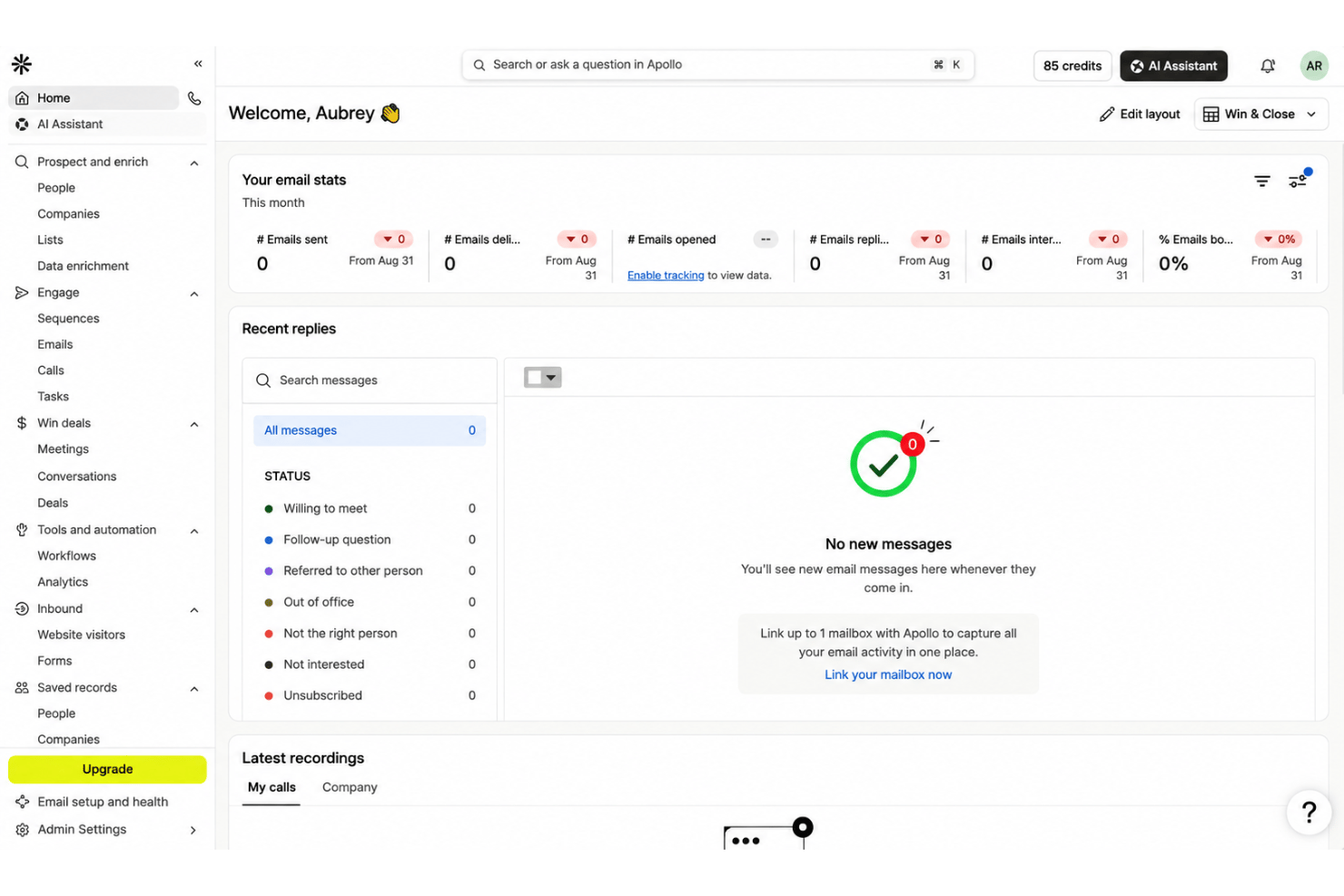
Apollo.io
Lusha

Why Trust Our Software Reviews
We’ve been testing and reviewing RevOps software since 2022. As RevOps leaders ourselves, we know how critical and difficult it is to make the right decision when selecting software.
We invest in deep research to help our audience make better software purchasing decisions. We’ve tested more than 2,000 tools for different RevOps use cases and written over 1,000 comprehensive software reviews. Learn how we stay transparent & our software review methodology.
Apollo.io vs. Lusha Pricing Comparison
| Apollo.io | Lusha | |
|---|---|---|
| Free Trial | 14-day free trial | Free plan available |
| Pricing | From $49/user/month (billed annually) | From $37.45/month (billed annually) |
Apollo vs. Lusha Pricing & Hidden Costs
Apollo uses a transparent tier-based pricing model with a permanent free plan and published paid tiers that scale by credits, automation, outreach, AI capabilities, and enterprise controls. Costs can increase with heavier credit usage or optional add-ons such as Inbound and Advanced Dialer. Lusha, on the other hand, also uses a credit-based tiered model, with plans scaling by annual credit volume, seats, enrichment, API access, intent data, and team controls, plus a customizable Scale option for larger organizations.
Choosing between the two largely comes down to whether you want Apollo’s broader GTM functionality across its plans or Lusha’s pricing, which is centered more directly on data credits, enrichment, and access.
Apollo.io vs. Lusha Feature Comparison
| Apollo.io | Lusha | |
|---|---|---|
| API | ||
| Contact Management | ||
| Conversion Tracking | ||
| Dashboard | ||
| Data Export | ||
| Data Import | ||
| Email Integration | ||
| External Integrations | ||
| Google Apps Integration | ||
| Lead Management | ||
| Lead Scoring | ||
| Marketing Automation | ||
| Multi-User | ||
| Notifications | ||
| Workflow Management |
Apollo vs. Lusha Integrations
| Integration | Apollo | Lusha |
|---|---|---|
| Salesforce | ✅ | ✅ |
| HubSpot | ✅ | ✅ |
| Asana | ✅ | ❌ |
| Outreach | ✅ | ✅ |
| Slack | ✅ | ✅ |
| Pipedrive | ✅ | ✅ |
| Klaviyo | ✅ | ❌ |
| Claude | ✅ | ✅ |
| ChatGPT | ✅ | ✅ |
| API | ✅ | ✅ |
| Zapier | ✅ | ✅ |
Both Apollo and Lusha offer broad integrations across CRM, prospecting, enrichment, and workflow tools. Apollo focuses on connecting data, enrichment, outreach, and execution across a wider GTM stack, while Lusha centers on feeding reliable prospect data into the systems sales teams already use. Overall, Apollo leans toward a more connected data-to-execution workflow, while Lusha prioritizes flexible data access across existing sales tools.
Apollo vs. Lusha Security, Compliance & Reliability
| Factor | Apollo | Lusha |
|---|---|---|
| Data Privacy | Supports GDPR as both processor and controller, plus CCPA, CPRA, and the EU-US Data Privacy Framework, with privacy documentation in its Trust Center. | Supports GDPR and CCPA/CPRA, with DPAs, data-subject rights, and documented opt-out controls. |
| Regulatory Compliance | Maintains SOC 2 Type 2, ISO 27001, and CASA Tier 2 compliance, with annual third-party penetration testing. | Maintains SOC 2 Type II and several ISO certifications, including ISO 27001 and ISO 27701. |
| Encryption & Security | Encrypts data in transit and at rest, with controls for vulnerability management, backups, endpoint security, monitoring, and incident response. | Uses TLS for data in transit and AES-256 encryption at rest, alongside ongoing security monitoring. |
| Access Controls | Offers SSO on Organization plans, plus audit logging, access monitoring, password controls, and administrative security measures. | Supports SSO, role-based access controls, audit logs, and secure API authentication. |
| Reliability & Recovery | Publishes live system status and documents business continuity and disaster recovery, with a six-hour RTO and 24-hour RPO. | Uses redundant infrastructure and public status monitoring, backed by a 99.95% uptime SLA. |
Overall, both platforms offer solid security, privacy, and compliance foundations, but they emphasize different areas. Apollo provides more visibility into operational security through documented controls for access monitoring, penetration testing, incident response, and disaster recovery, including defined RTO and RPO targets. Lusha, meanwhile, supports established privacy practices and a broad range of security and ISO certifications, making it well suited to teams with formal compliance requirements.
Apollo vs. Lusha Ease of Use
| Factor | Apollo | Lusha |
|---|---|---|
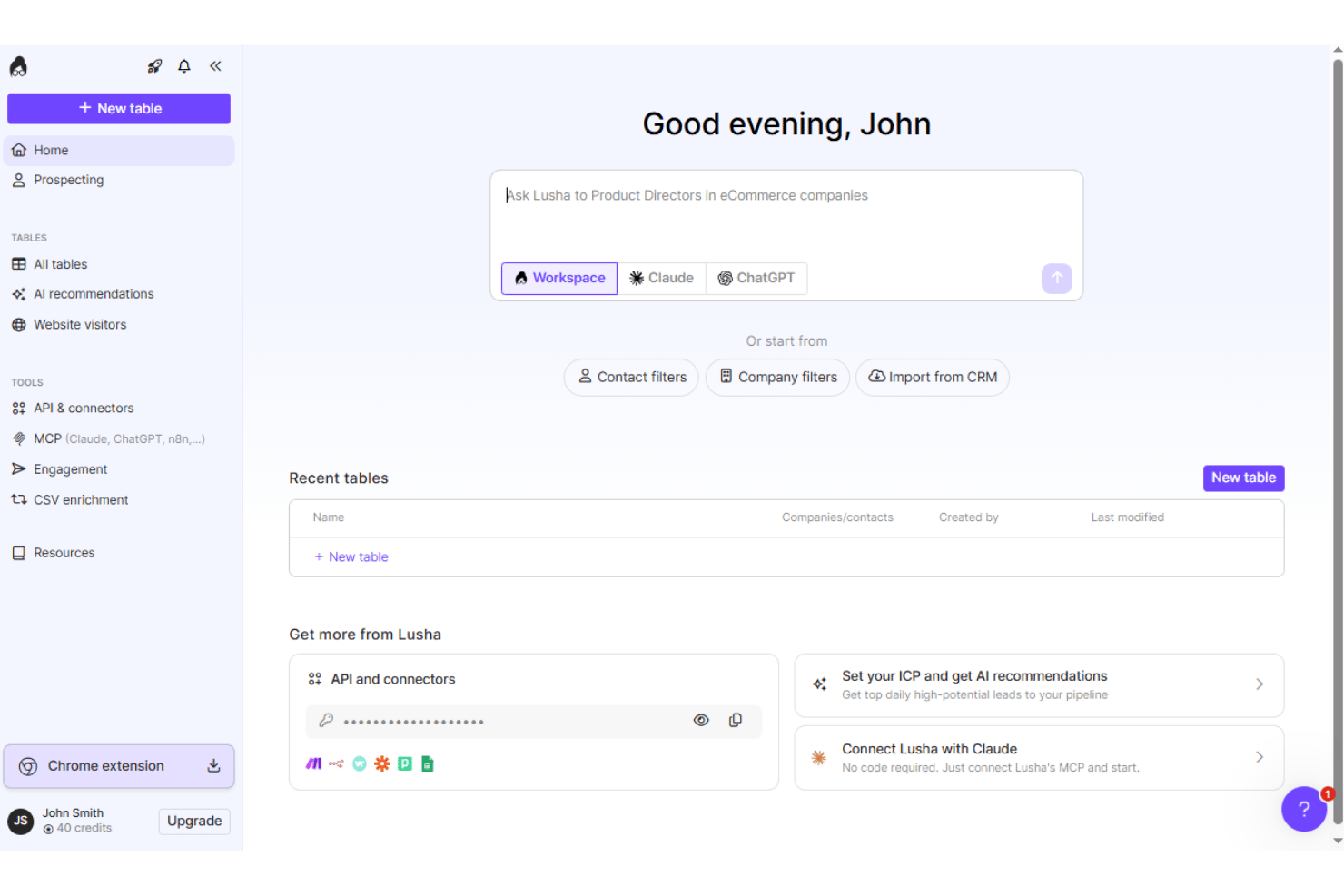
| User Interface | Brings prospecting, enrichment, outreach, calling, and pipeline tools into one workspace, though the breadth can make the interface feel busy at first. | Uses a clean interface centered on search, enrichment, and contact discovery, with fewer modules to learn. |
| Onboarding | Supports self-service setup for smaller teams, while paying customers receive structured onboarding with a dedicated Onboarding Manager. | Offers a relatively quick setup process, particularly for teams mainly using search, enrichment, and the browser extension. |
| Daily Workflow | Lets reps move from prospect research and enrichment into sequences, calls, and follow-up without switching platforms. | Keeps prospecting lightweight, with fast contact reveals, filtering, and enrichment built around existing sales workflows. |
| Support Resources | Provides Apollo Academy, a knowledge base, in-app AI Assistant, and ongoing support, with added guidance for qualifying larger accounts. | Provides a help center, product guidance, and customer support for setup and day-to-day use. |
| Setup & Integration | Basic setup is straightforward, while CRM mapping, deliverability configuration, and advanced automation can require more planning. | Browser extension and standard integrations are relatively simple to adopt, while API and advanced enrichment workflows require additional setup. |
From an ease-of-use perspective, Apollo gives teams one workspace for prospecting, enrichment, outreach, calling, and follow-up, which can reduce tool switching once the setup is in place. Its broader feature set does come with a learning curve, especially for advanced automation and CRM workflows. Lusha keeps things simpler by focusing on contact discovery, enrichment, and quick prospecting. I’d lean toward Apollo for teams that want data and execution in one system, while Lusha fits teams that mainly want fast access to B2B data.
Apollo.io vs Lusha: Pros & Cons
Apollo.io
- Offers a large B2B database with real-time verification and waterfall enrichment across additional providers.
- Includes email deliverability tools such as warmup, bounce monitoring, and automatic pausing on high bounce rates.
- Integrates with Claude, ChatGPT, and Perplexity for prospecting and enrichment inside existing AI workflows.
- Credit usage across contact reveals, enrichment, and AI actions can be difficult to predict.
- Data accuracy can vary, especially for mobile numbers and contacts outside North America.
- Enterprise admin controls and company hierarchy features are still less mature than some legacy platforms.
Lusha
- Provides direct dial phone numbers for key decision-makers
- Transparent per-credit pricing without annual contracts
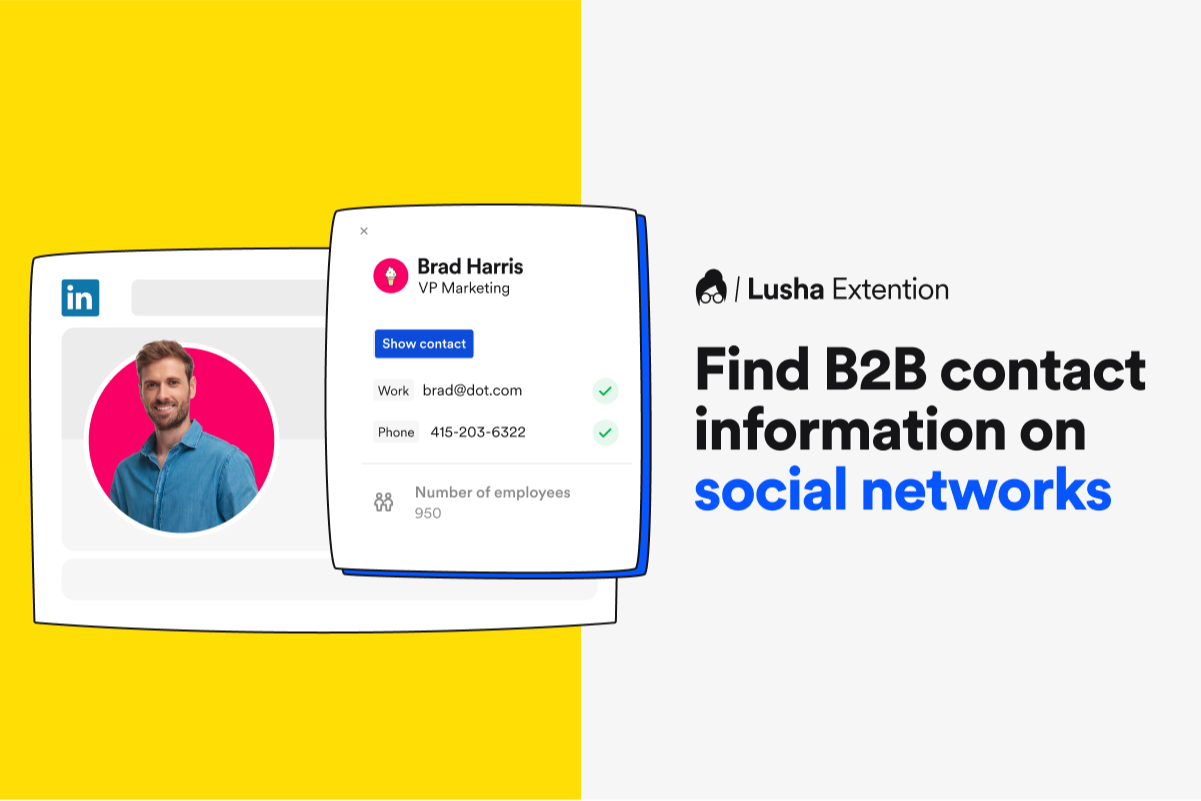
- Browser extension enables quick data discovery on LinkedIn
- Data coverage is limited outside North America and Europe
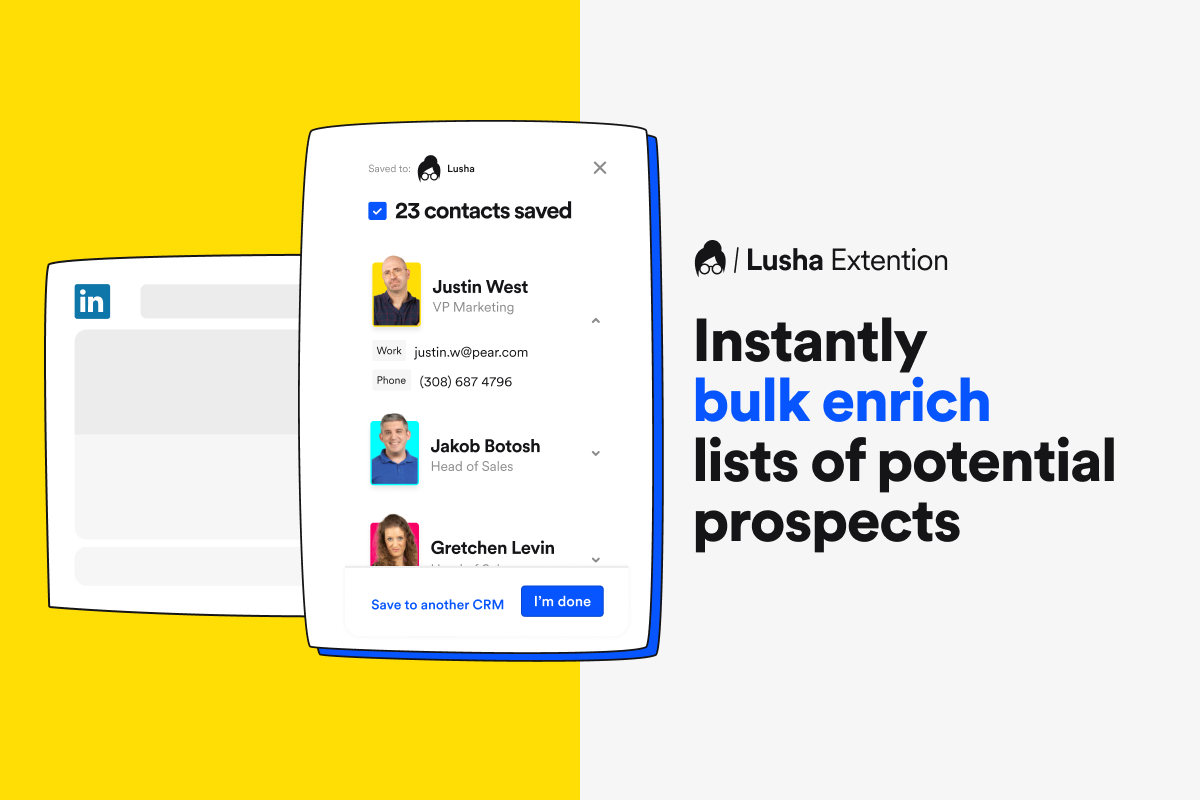
- No bulk enrichment or advanced reporting capabilities
- Credits can run out quickly with high-volume prospecting
Best Use Cases for Apollo.io and Lusha
Apollo.io
- SaaS and Software Companies Apollo helps SaaS teams identify target accounts, enrich prospect data, run outbound sequences, and build pipeline.
- Mid-Market Sales Teams Growing sales teams can use Apollo for prospecting, lead scoring, sequencing, calling, meetings, and CRM enrichment without stitching together several tools.
- Revenue Operations Teams RevOps teams can manage enrichment, lead routing, workflow automation, analytics, and CRM data quality while keeping sales execution connected.
- B2B Agencies and Consultancies Agencies and professional services firms can build targeted lists, enrich contact data, and run repeatable outreach across different markets.
- Recruiting and Staffing Firms Recruiting and staffing firms can use Apollo’s database, filters, enrichment, and outreach tools to identify and engage business professionals, though it is not designed to replace an applicant tracking system.
- Founders and Small Sales Teams Smaller teams can access prospecting, contact data, sequencing, and enrichment without investing in a large sales stack.
Lusha


- Tech Startups Early-stage companies can start prospecting instantly without dedicating time to complex data integrations or long ramp-ups.
- SMB Sales Teams Sales teams in small to midsize businesses get fast access to verified emails and direct numbers, supporting lean prospecting efforts.
- Outbound SDR Teams SDRs focused on outbound can click-to-unlock contact data from LinkedIn, helping them maintain prospecting volume with predictable credit tracking.
- Recruitment Agencies Recruiters find direct line and email info efficiently, shortening candidate outreach times without heavy training or IT involvement.
- CRM-Integrated Workflows Businesses using CRMs like Salesforce or HubSpot benefit from push-button lead enrichment and synced data across platforms.
- B2B SaaS Companies B2B SaaS firms with clear target roles or accounts can fuel targeted campaigns and ABM directly from LinkedIn profiles.
Who Should Use Apollo, and Who Should Use Lusha?
If you’re looking for a sales intelligence platform that combines B2B data, enrichment, outreach, calling, automation, and pipeline execution, Apollo is likely the better fit for your team. It’s ideal for SaaS companies, mid-market sales teams, agencies, recruiters, and smaller sales orgs that want to manage more of the prospecting-to-outreach workflow in one system.
If, instead, your main priority is finding verified contact data quickly with minimal setup, Lusha may be the better match. It works well for tech startups, SMB sales teams, outbound SDRs, recruiters, and B2B SaaS companies that rely heavily on LinkedIn, Salesforce, or HubSpot for prospecting and enrichment.
Differences Between Apollo.io and Lusha
| Apollo.io | Lusha | |
|---|---|---|
| AI Workflow Approach | Uses AI Assistant and MCP to support research, enrichment, prospecting, and actions across Apollo and external AI tools. | Uses AI to help teams work with B2B data and make that intelligence available to GTM workflows and AI agents. |
| Email Deliverability | Includes email warmup, mailbox and domain purchasing, bounce analytics, deliverability monitoring, and automatic pausing when bounce rates rise. | Supports outbound workflows but does not center its platform around built-in mailbox, domain, and deliverability infrastructure. |
| Enrichment Approach | Uses native B2B data plus waterfall enrichment across 12+ additional providers to fill gaps and improve record coverage. | Focuses on enriching existing contacts and companies with verified contact details, firmographics, roles, and other sales intelligence. |
| Platform Scope | Combines B2B data, enrichment, prospecting, outreach, calling, meetings, conversation intelligence, and deal execution in one GTM system. | Positions itself primarily as a B2B data and intelligence layer that supplies trusted prospect data to GTM teams, workflows, and AI agents. |
| Sales Engagement | Supports multi-step sequences, calling, workflow automation, and follow-up alongside its native prospecting data. | Includes automated email sequencing and sales productivity features, but its core experience remains centered on finding and activating prospect data. |
| Read Apollo.io ReviewOpens new window | Read Lusha ReviewOpens new window |
Similarities Between Apollo.io and Lusha
| Buying Intent & Signals | Both platforms surface intent or signal-based insights that help sales teams identify accounts showing potential buying interest and prioritize prospects that may be more relevant to engage. |
|---|---|
| CRM & Workflow Connectivity | Both connect prospect and enrichment data with CRM and sales workflows through integrations, APIs, and automation options, helping teams keep records updated and reduce repetitive manual work. |
| Company Intelligence | Both platforms provide firmographic and account-level data such as industry, company size, location, and other business attributes to support segmentation, ICP targeting, and more informed prospecting. |
| Contact Discovery | Both Apollo and Lusha help sales teams find verified business emails and direct phone numbers from large B2B databases, making it easier to identify and reach relevant decision-makers without relying on manual research. |
| Prospect Search | Both offer advanced search and filtering by criteria such as title, seniority, company, industry, and geography so teams can build prospect lists around specific buyer profiles. |
| Read Apollo.io ReviewOpens new window Read Lusha ReviewOpens new window | |