

Recensione di Creatio CRM: vantaggi, svantaggi, funzionalità principali e prezzi spiegati
Creatio CRM combines AI-powered automation with flexible sales, marketing, and service workflows, making it a strong CRM software choice for enterprises with complex revenue operations. Find out if it’s the right fit in my expert review.

Recensiamo gli strumenti in modo indipendente e le commissioni aiutano a finanziare i nostri test. Consulta la nostra politica sulla trasparenza, la nostra metodologia o suggerisci uno strumento.
Managing revenue operations across sales, marketing, and service gets harder as teams grow and processes become more complex. Disconnected systems, rigid workflows, and manual handoffs can make it difficult for revenue leaders to maintain visibility, respond quickly, and keep teams aligned around the customer journey.
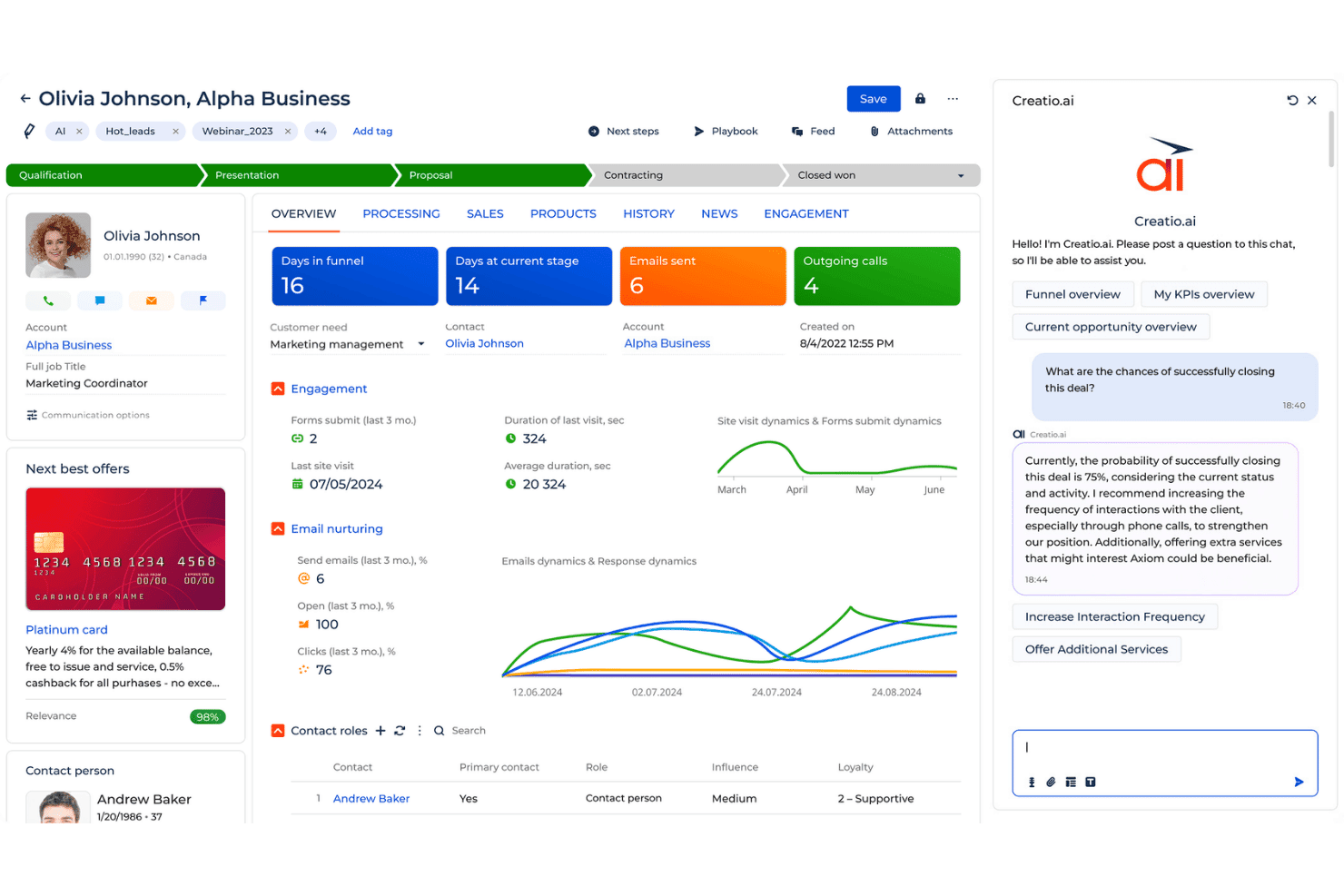
Creatio CRM is CRM software designed for organizations that need more flexibility in how they manage sales, marketing, and service processes, combining AI-powered automation, configurable workflows, and no-code tools in a single platform. It can help teams automate routine work, improve visibility across customer interactions, and adapt CRM processes as business needs change.
In this review, I evaluate Creatio CRM to help you decide whether it fits your revenue operations.
Creatio CRM Evaluation Summary
4.7/5
- From $40/user/month (billed annually)
- Free demo available
Perché fidarsi dei nostri consigli sui software
6,700+
Reviews
20
Industry experts
16+
Evaluation factors
14
Years
Le nostre recensioni riflettono il nostro giudizio indipendente, non un discorso di vendita. Scopri come manteniamo la trasparenza.
Per questa guida, abbiamo valutato gli strumenti attraverso test pratici e ricerche indipendenti, assegnando un punteggio agli strumenti in base ai nostri criteri di selezione.
Le nostre recensioni riflettono il nostro giudizio editoriale umano, non un discorso di vendita.
Creatio CRM Overview
In my opinion, Creatio CRM stands out for how much control it gives enterprises over complex sales, marketing, and service processes. Its AI, no-code automation, forecasting, and configurable workflows let revenue teams shape the CRM around their processes rather than the other way around. The tradeoff is a steeper learning curve and more involved implementation than simpler CRM tools.
Pros
- No-code tools let revenue teams adapt sales, marketing, and service workflows without relying on developers for every change.
- Predictive, generative, and agentic AI can assist with lead response, recommendations, forecasting, and routine CRM work.
- Flexible workflows, custom objects, applications, and integrations make Creatio well suited to complex enterprise CRM environments.
Cons
- Highly configurable implementations require more upfront planning around workflows, data models, integrations, and user experiences.
- Administrators and power users may need time to learn Creatio’s no-code development and process automation capabilities.
- Smaller teams with basic contact management or pipeline needs may find the platform broader than necessary.
Is Creatio CRM Right For Your Needs?
Who Would be a Good Fit for Creatio CRM?
Creatio CRM is a strong fit for midsize and large organizations that need flexible CRM software across sales, marketing, and service. It is particularly compelling for teams with complex workflows that want AI and no-code automation without forcing every process into a rigid CRM structure.
- Banking and Financial ServicesBanks, credit unions, insurers, and mortgage providers can use Creatio to automate customer-facing workflows across sales, marketing, and service.
- Manufacturing and DistributionManufacturers and distributors can use Creatio to manage complex account relationships and automate sales and service processes across teams.
- Telecom CompaniesTelecom organizations can use Creatio to manage high-volume customer interactions and coordinate sales and service workflows across channels.
- Retail and Consumer GoodsRetail and CPG teams can use Creatio for customer segmentation, campaign management, engagement, and service workflows across brands and markets.
- High-Tech and Business ServicesB2B teams with longer sales cycles can use Creatio to manage opportunities, automate handoffs, and maintain visibility across revenue functions.
- Large Multi-Team EnterprisesEnterprises can use Creatio to connect sales, marketing, and service teams through shared customer data, configurable workflows, and AI automation.
Who Would be a Bad Fit for Creatio CRM?
Creatio CRM may be more platform than you need if your CRM requirements are simple or highly prescriptive. Smaller teams and point-solution buyers may get better value from lighter tools with less configuration and implementation effort.
- Very Small BusinessesTeams with only a few users may find Creatio too broad for basic customer records and pipeline tracking.
- Basic Sales CRM BuyersOrganizations that only need contact management, deal tracking, and simple follow-ups may be better served by a lighter CRM.
- Point-Solution BuyersCompanies looking only for ticketing, workflow automation, or another single-purpose tool may not need Creatio’s broader CRM capabilities.
- Teams Wanting a Fixed Out-of-the-Box CRMOrganizations that prefer predefined processes with minimal configuration may find Creatio more flexible than necessary.
- Organizations With Minimal Automation NeedsTeams with straightforward customer processes may struggle to justify Creatio’s broader AI, no-code, and workflow automation capabilities.
- Teams Without Capacity for a Configurable ImplementationOrganizations that want a near-instant deployment with little planning or administration may find Creatio too demanding to implement.
Come Testiamo e Valutiamo gli Strumenti
Abbiamo trascorso anni a costruire, perfezionare e migliorare il nostro sistema di valutazione e test dei software. Il nostro metodo è pensato per cogliere le sfumature della selezione software e ciò che rende uno strumento efficace, concentrandosi sugli aspetti critici del processo decisionale. Qui sotto puoi vedere esattamente come funzionano i nostri test e la valutazione sui sette criteri. Ci permette di fornire una valutazione imparziale del software in base alla funzionalità principale, alle caratteristiche distintive, facilità d’uso, onboarding, assistenza clienti, integrazioni, recensioni degli utenti e rapporto qualità-prezzo.
Funzionalità Principali (25% del punteggio finale)
Il punto di partenza per la nostra valutazione è sempre la funzionalità di base dello strumento. Possiede le caratteristiche e le funzioni che un utente si aspetterebbe di trovare? Alcune di queste funzioni di base sono limitate ai piani tariffari più costosi? Per noi uno strumento deve almeno essere alla pari con le capacità minime offerte dai concorrenti.
Caratteristiche Distintive (25% del punteggio finale)
Successivamente, valutiamo le funzionalità insolite o esclusive che vanno oltre le funzioni core normalmente presenti in strumenti simili. Un punteggio elevato riflette una presenza di caratteristiche particolari o uniche che rendono il prodotto più veloce, efficace o danno un valore aggiunto all’utente. Valutiamo anche la facilità di integrazione con altri strumenti tipici del tech stack per espanderne funzionalità e utilità. Gli strumenti che offrono numerose integrazioni native, connessioni di terze parti e accesso API per costruire integrazioni personalizzate ottengono i punteggi migliori.
Facilità d’Uso (10% del punteggio finale)
Consideriamo quanto sia rapido e intuitivo svolgere le attività fondamentali tramite lo strumento. I software con i punteggi più alti hanno un design ben pensato, sono intuitivi, offrono app mobili, forniscono modelli predefiniti e semplificano anche le attività più complesse.
Onboarding (10% del punteggio finale)
Sappiamo quanto sia importante che un nuovo strumento venga rapidamente adottato dal team, quindi valutiamo la facilità di apprendimento con un minimo di formazione. Valutiamo quanto velocemente un membro del team può iniziare a usare lo strumento senza esperienza. Le soluzioni con i punteggi più alti richiedono poco o nessun supporto iniziale.
Assistenza Clienti (10% del punteggio finale)
Analizziamo quanto sia facile e veloce risolvere problemi e ricevere assistenza tramite telefono, chat dal vivo o knowledge base. Gli strumenti e le aziende che offrono supporto in tempo reale ottengono i punteggi migliori, mentre i chatbot ottengono i peggiori.
Recensioni dei Clienti (10% del punteggio finale)
Oltre ai nostri test, consideriamo il net promoter score da clienti attuali e passati. Valutiamo la probabilità che gli utenti sceglierebbero nuovamente lo strumento per le funzionalità principali. Un punteggio elevato riflette un alto net promoter score da parte dei clienti.
Rapporto Qualità-Prezzo (10% del punteggio finale)
Infine, considerando tutti gli altri criteri, esaminiamo il prezzo medio dei piani base rispetto alle funzionalità principali e agli altri fattori valutativi. I software che offrono di più a un costo inferiore ottengono un punteggio più alto.
Core Features
AI-Native CRM
Use predictive, generative, and agentic AI across sales, marketing, and service. Teams can get recommendations, automate routine work, and use AI assistance directly within everyday CRM processes.
Sales Automation and Forecasting
Manage leads, opportunities, accounts, orders, and sales processes while tracking pipeline health and forecasts. Revenue teams can automate follow-ups and use real-time data to support sales planning.
Marketing Automation
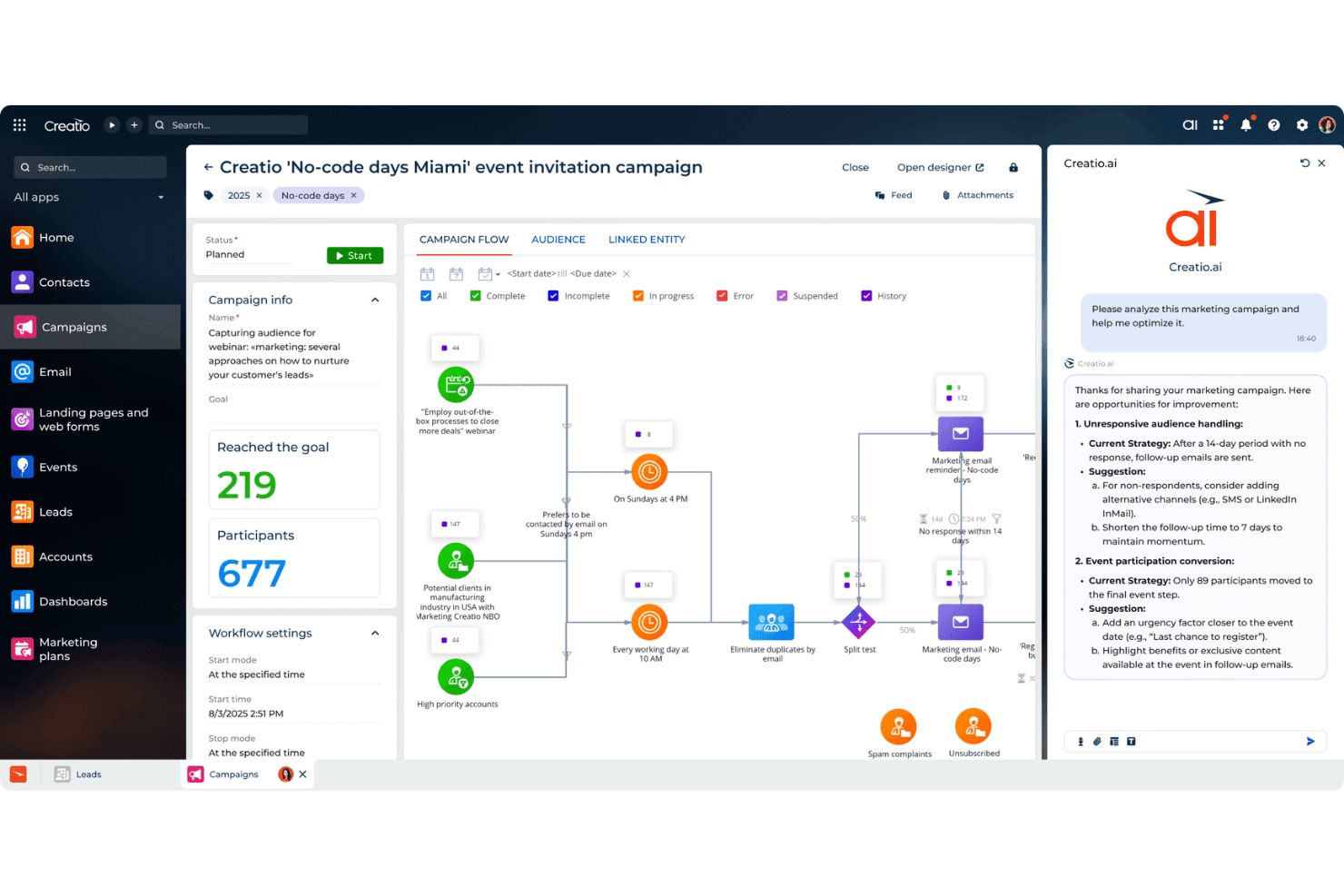
Segment audiences, manage campaigns, personalize outreach, and track lead conversion. Marketing teams can connect engagement activity with pipeline generation and coordinate follow-up with sales.
Customer 360 View
Centralize account, contact, interaction, and activity data to create a shared customer view. Sales, marketing, and service teams can use the same context throughout the customer lifecycle.
Service and Case Management
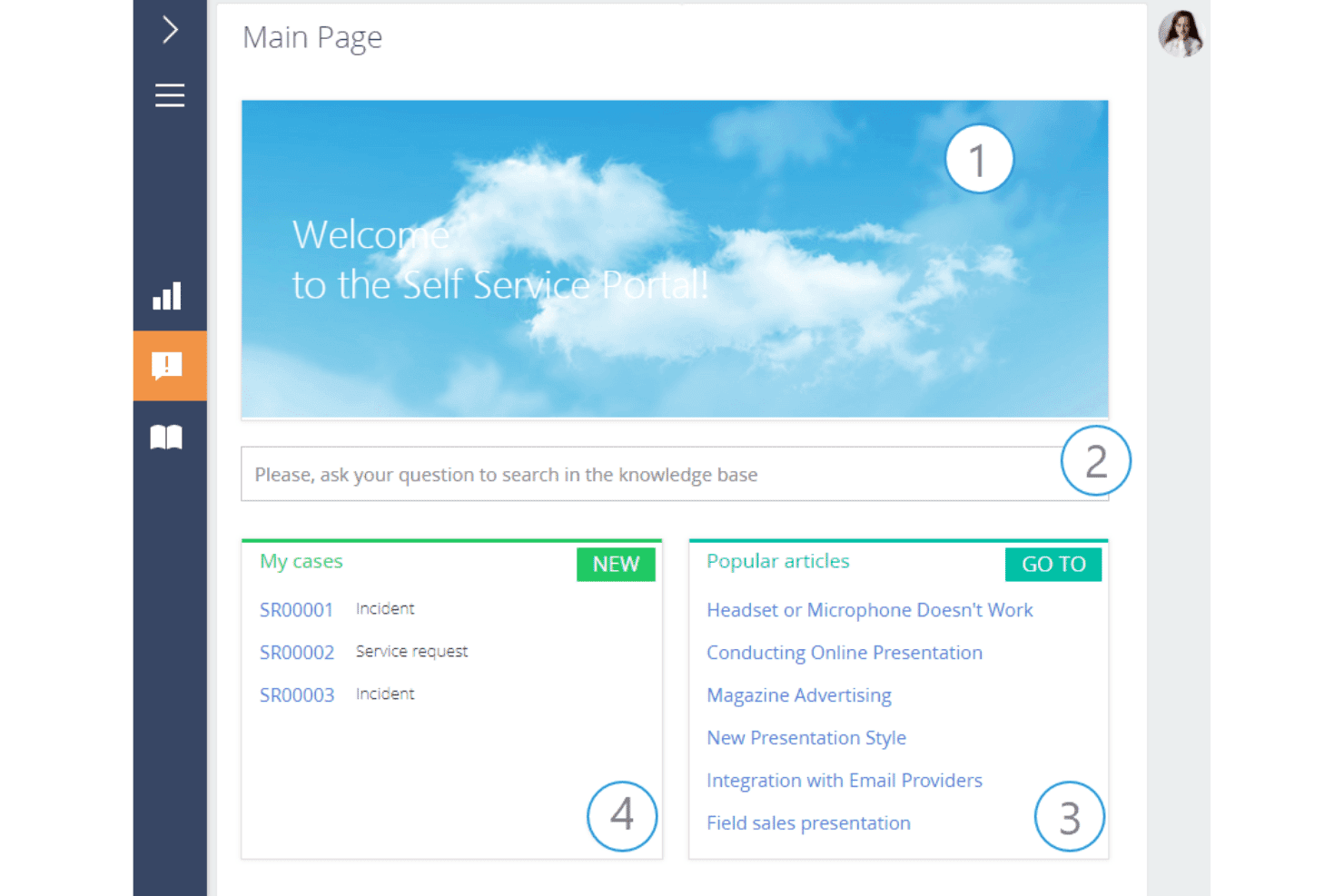
Manage customer cases with omnichannel support, SLA tracking, knowledge management, and agent workspaces. Automated workflows help standardize routing, escalation, and resolution.
CRM Analytics and Reporting
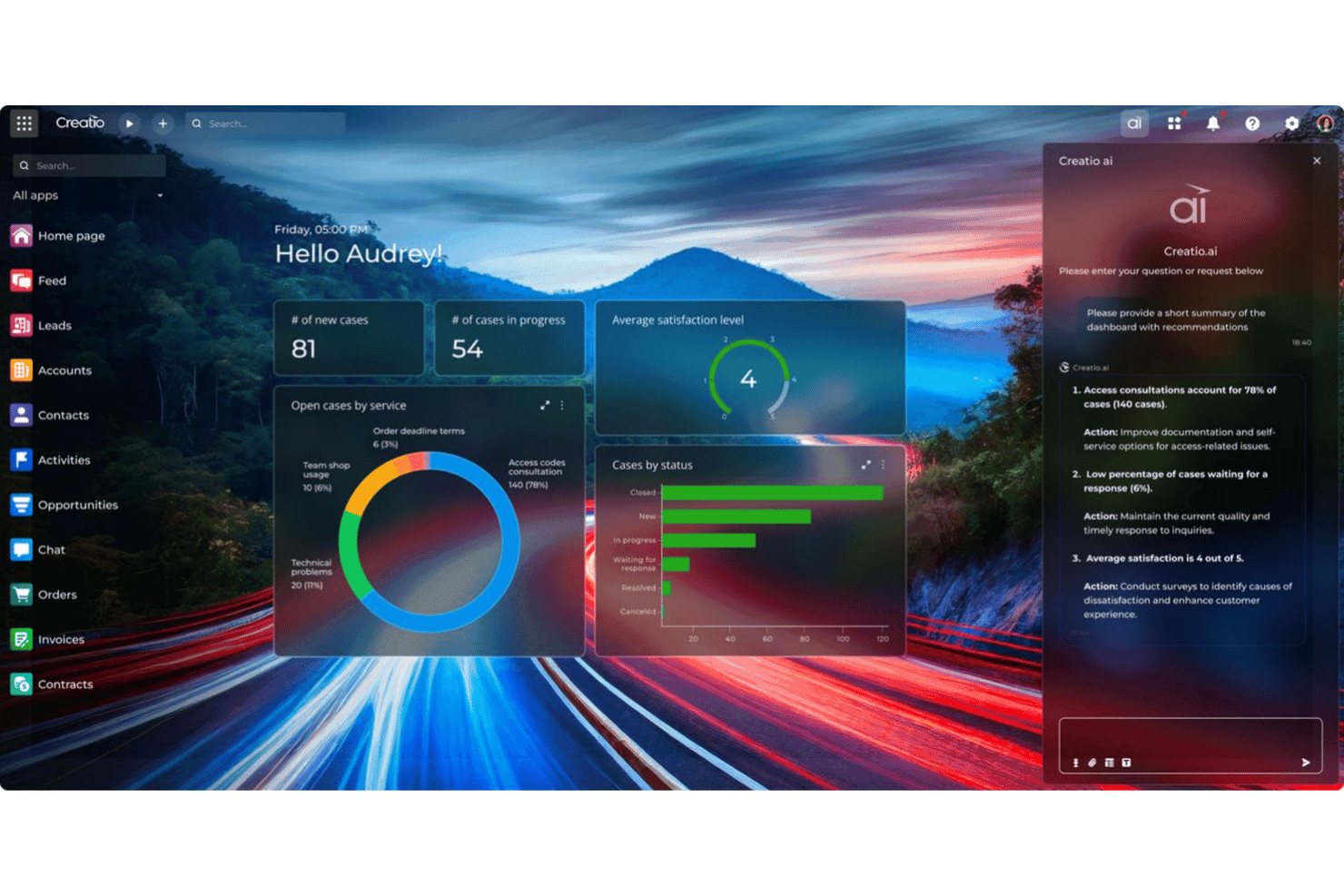
Track pipeline, campaign performance, customer activity, and team KPIs through configurable dashboards and reporting. Revenue leaders can use these insights to monitor performance and identify areas that need attention.

Standout Features
Human and AI Agent Workflow Orchestration
Creatio lets employees and AI agents work within the same business processes rather than treating AI as a separate assistant. Agents can support users during everyday work or autonomously execute defined processes based on goals and policies.
No-Code Composable CRM Architecture
Combine CRM, workflow automation, AI, and no-code application development within the same platform. Teams can customize workflows, applications, and data models while connecting Creatio with other enterprise technologies and AI models.
Ease of Use
For an enterprise CRM this configurable, Creatio CRM is relatively approachable. Its no-code tools reduce the development work needed to adjust workflows and applications, but administrators and power users should still expect a learning curve as automation, integrations, and custom processes become more complex.
Onboarding
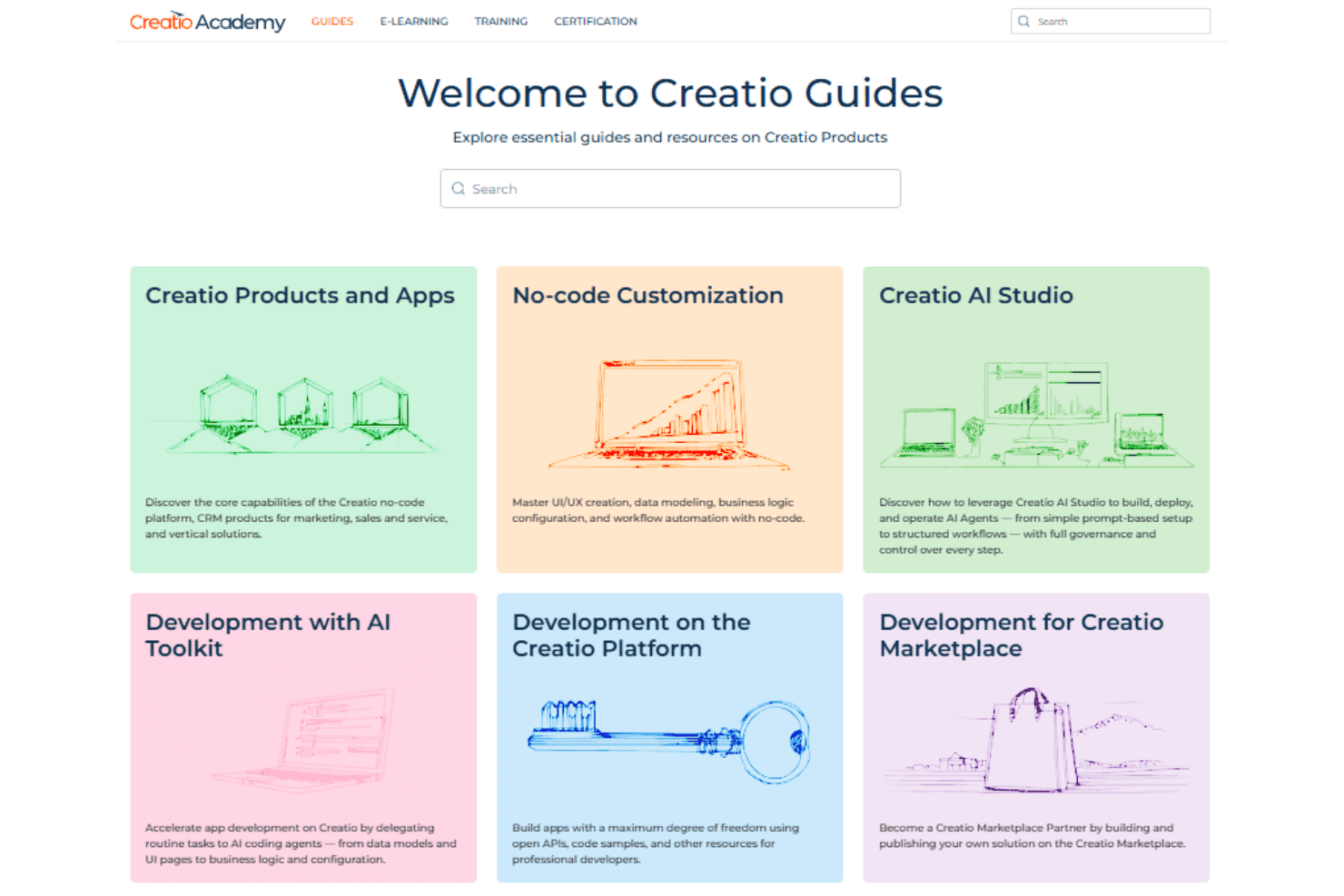
Creatio CRM takes a guided approach to onboarding, which suits a platform with this much room for customization. Implementation can cover process design, data migration, integrations, testing, and user enablement, with delivery handled by Creatio, a certified partner, or an internal team. Creatio Academy supports ongoing learning, though larger deployments will naturally take longer to roll out.
Customer Support
Creatio CRM combines direct technical support with self-service resources through Creatio Academy and its user Community. That mix gives teams options for troubleshooting and ongoing learning, but support coverage varies by plan, with 24/7 coverage reserved for Premium Support.
Integrations
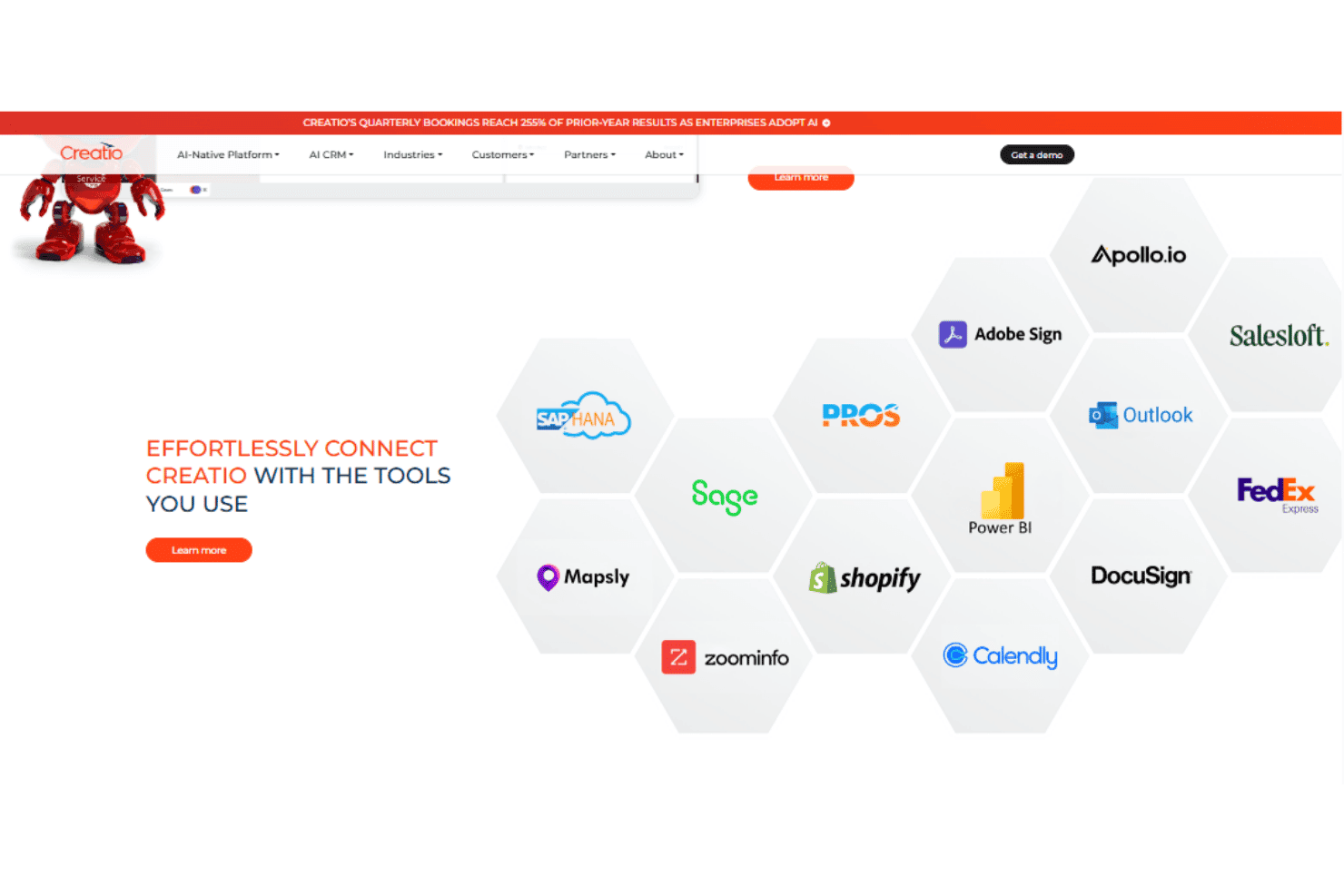
Creatio CRM offers native integrations with Microsoft Exchange and Microsoft 365, Google mail, calendar, and contacts, Facebook Messenger, WhatsApp, Telegram, and supported telephony services such as Webitel, Asterisk, Cisco Finesse, and Avaya.
Creatio CRM also supports REST, SOAP, OData, and other API-based connections for additional enterprise systems and custom workflows.
Value for Money
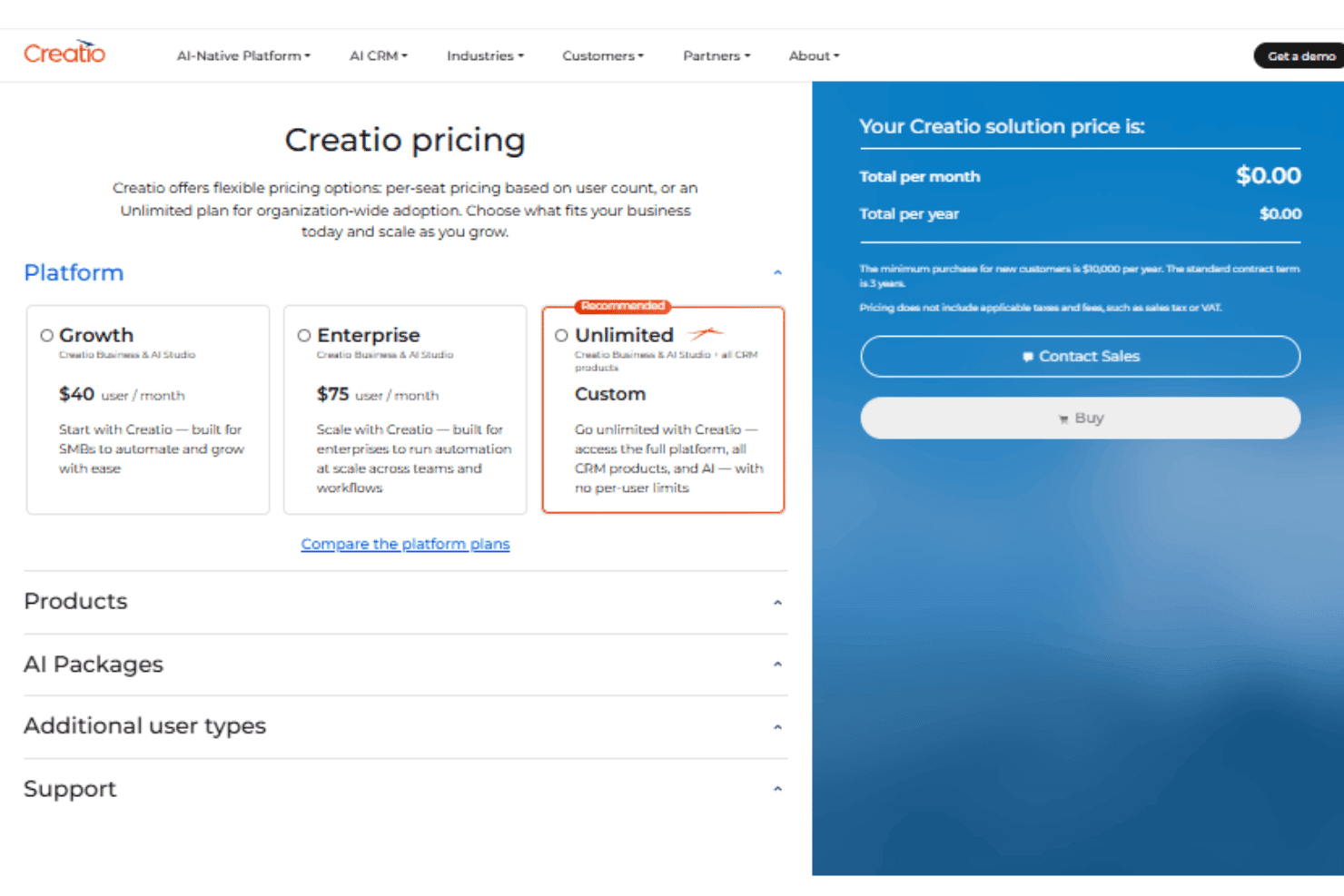
Creatio CRM offers good value for organizations that will make extensive use of its AI, no-code, and workflow automation capabilities. Its modular model lets buyers combine a platform plan with Sales, Marketing, and Service products as needed, while AI-native capabilities are included at no additional cost. The tradeoff is commitment: the annual minimum and standard three-year contract make more sense for a substantial, long-term CRM deployment than a lightweight rollout.
- Growth: Includes Creatio Business and AI Studio with the core no-code, workflow automation, and AI capabilities for building and automating business processes.
- Enterprise: Includes Creatio Business and AI Studio with greater capacity for enterprise-scale automation across teams and workflows.
- Unlimited: Includes the full Creatio platform, all CRM products, and AI capabilities with organization-wide access and no per-user limits.
- CRM Products: Sales, Marketing, and Service can be added depending on which customer-facing functions the organization needs.
New Product Updates from Creatio CRM
 Opens new window
Creatio CRM Adds AI, WhatsApp, Analytics, and Design Updates
Creatio CRM adds expanded AI coding agents, a native WhatsApp Meta Cloud API channel, Freedom UI pivot tables, a new Email Template Designer, and a no-code Theme Designer. These updates give teams additional ways to build apps, manage conversations, analyze data, and customize the platform. Highlights include:
- AI App Development: Build workplaces, dashboards, widgets, business rules, and pivot tables using natural-language requests.
- Native WhatsApp: Connect WhatsApp Business through the Meta Cloud API and manage conversations in Agent Inbox.
- Pivot Table Analytics: Analyze cross-tabulated data across Freedom UI dashboards, forms, lists, and home pages.
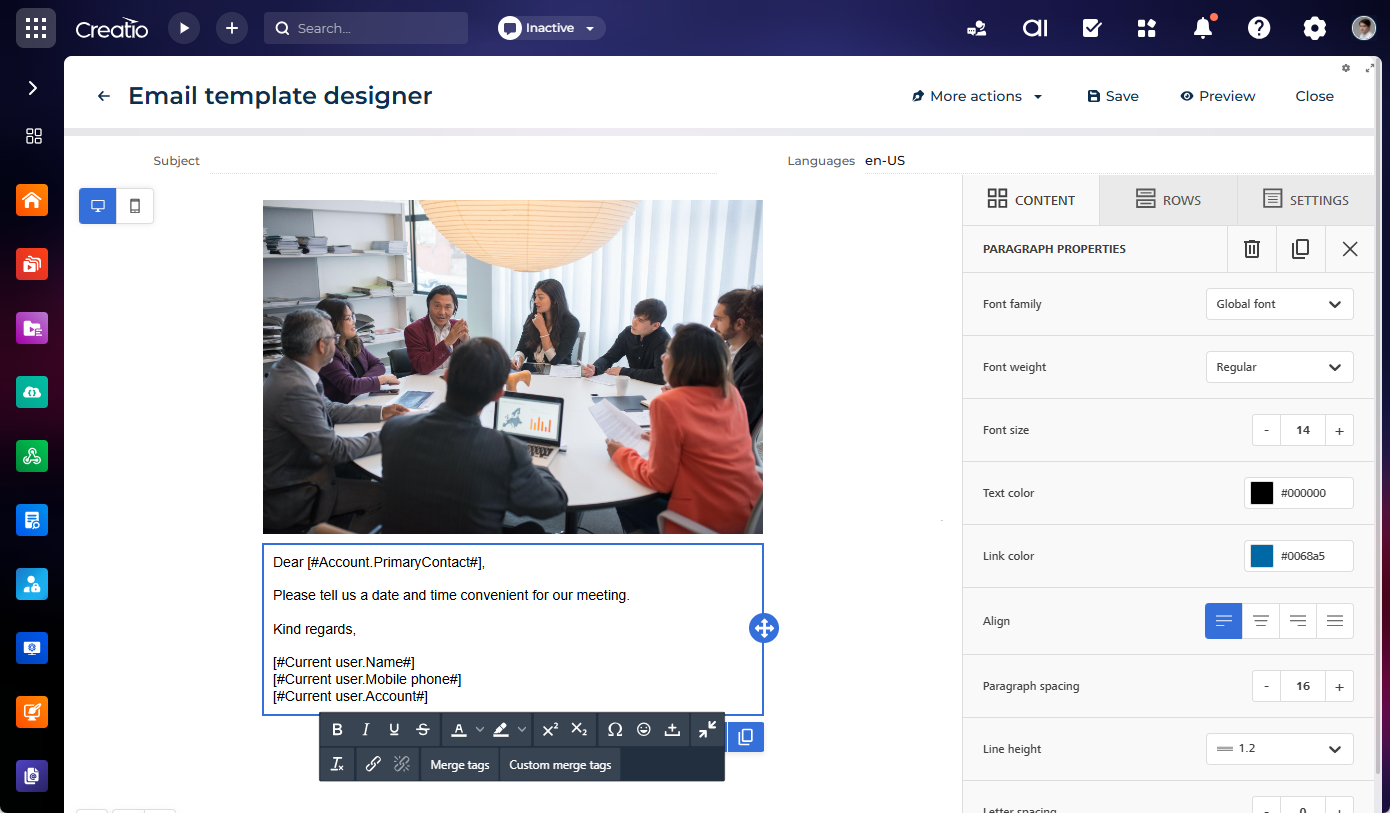
- Email Template Designer: Build service and transactional emails with a visual drag-and-drop editor.
- Theme Designer: Create and edit custom themes visually with live previews and configurable color palettes.
Visit Creatio CRM’s official site for more details.
Creatio CRM Specs
- 2-Factor Authentication: Yes
- API: Yes
- Calendar Management: Yes
- Call Tracking: Yes
- Campaign Management: Yes
- Click-to-Dial: Yes
- Contact Management: Yes
- Contact Sharing: Yes
- Custom Data Forms: Yes
- Customer Management: Yes
- Dashboard: Yes
- Data Export: Yes
- Data Import: Yes
- Data Visualization: Yes
- Email Integration: Yes
- External Integrations: Yes
- File Sharing: Yes
- File Transfer: Yes
- Google Apps Integration: Yes
- Lead Management: Yes
- Lead Scoring: Yes
- Marketing Automation: Yes
- Mobile App: Yes
- Multi-User: Yes
- Notifications: Yes
- Pipeline Management: Yes
- Sales Automation: Yes
- Scheduling: Yes
- Social-Media Integration: Yes
- Task Scheduling/Tracking: Yes
- Third-Party Plugins/Add-Ons: Yes
Creatio CRM FAQs
Creatio CRM Company Overview & History
Creatio is a global software company headquartered in Boston, Massachusetts. Founded in 2014 by Katherine Kostereva, who continues to serve as CEO, the company develops AI-powered CRM, workflow automation, and no-code technology for midsize and large organizations. Creatio serves thousands of customers in more than 100 countries and has a local presence across 25 countries.
Creatio CRM Major Milestones
- 2014: Creatio was founded by Katherine Kostereva as a CRM and business process automation company.
- 2019: The company rebranded from bpm’online to Creatio.
- 2022: Creatio launched version 8.0 Atlas, expanding its no-code and composable application development capabilities.
- 2024: Creatio raised $200 million at a $1.2 billion valuation in a minority investment round.
- 2026: Creatio was named the only Visionary in Gartner’s Magic Quadrant for CRM Sales Platforms.