

Recensione Close CRM: Vantaggi, Svantaggi, Funzionalità e Prezzi


Close CRM is a CRM software built for inside sales teams that need built-in calling, email sequencing, and SMS without stitching together third-party tools. I'd consider it a strong fit if your team's day-to-day revolves around outbound sales activity and pipeline execution. If you're deciding between Close CRM and HubSpot, Close CRM gives you a tighter, more sales-focused experience out of the box, whereas HubSpot wraps its CRM inside a broader marketing platform that can feel like more than you need if closing deals is your primary goal.
Close CRM Evaluation Summary
- From $35/user/month (billed annually)
- 14-day free trial
Perché fidarsi dei nostri consigli sui software
Le nostre recensioni riflettono il nostro giudizio indipendente, non un discorso di vendita. Scopri come manteniamo la trasparenza.
Per questa guida, abbiamo valutato gli strumenti attraverso test pratici e ricerche indipendenti, assegnando un punteggio agli strumenti in base ai nostri criteri di selezione.
Le nostre recensioni riflettono il nostro giudizio editoriale umano, non un discorso di vendita.
Close CRM Overview
If you’re judging CRM software for high-velocity sales teams, Close CRM stands out for its built-in calling, automated workflows, clear interface, and email automation. I think onboarding is quicker here than with many platforms, and pricing is straightforward. You may find the integration marketplace less extensive, and deeper customization options limited compared to some competitors. Still, if your team prioritizes activity tracking, follow-ups, and fast access to pipeline data, Close CRM is an excellent pick. I’d suggest it’s ideal for small to mid-sized inside sales teams focused on outbound or remote workflows.
pros
-
Built-in calling and SMS keep sales activity centralized.
-
Automated follow-up sequences boost rep efficiency.
-
Pipeline dashboard offers real-time visibility for teams.
cons
-
Reporting features are less advanced than some competitors.
-
No built-in marketing automation for campaigns.
-
Limited native mobile app compared to peers.
-

Prisync
Visit WebsiteThis rating combines scores from multiple user review sites to reflect overall customer sentiment about the product.4.7 -
Expedite Commerce
Visit Website -
QuickBooks Online
Visit WebsiteThis rating combines scores from multiple user review sites to reflect overall customer sentiment about the product.4




Come Testiamo e Valutiamo gli Strumenti
Abbiamo trascorso anni a costruire, perfezionare e migliorare il nostro sistema di valutazione e test dei software. Il nostro metodo è pensato per cogliere le sfumature della selezione software e ciò che rende uno strumento efficace, concentrandosi sugli aspetti critici del processo decisionale. Qui sotto puoi vedere esattamente come funzionano i nostri test e la valutazione sui sette criteri. Ci permette di fornire una valutazione imparziale del software in base alla funzionalità principale, alle caratteristiche distintive, facilità d’uso, onboarding, assistenza clienti, integrazioni, recensioni degli utenti e rapporto qualità-prezzo.
Funzionalità Principali (25% del punteggio finale)
Il punto di partenza per la nostra valutazione è sempre la funzionalità di base dello strumento. Possiede le caratteristiche e le funzioni che un utente si aspetterebbe di trovare? Alcune di queste funzioni di base sono limitate ai piani tariffari più costosi? Per noi uno strumento deve almeno essere alla pari con le capacità minime offerte dai concorrenti.
Caratteristiche Distintive (25% del punteggio finale)
Successivamente, valutiamo le funzionalità insolite o esclusive che vanno oltre le funzioni core normalmente presenti in strumenti simili. Un punteggio elevato riflette una presenza di caratteristiche particolari o uniche che rendono il prodotto più veloce, efficace o danno un valore aggiunto all’utente. Valutiamo anche la facilità di integrazione con altri strumenti tipici del tech stack per espanderne funzionalità e utilità. Gli strumenti che offrono numerose integrazioni native, connessioni di terze parti e accesso API per costruire integrazioni personalizzate ottengono i punteggi migliori.
Facilità d’Uso (10% del punteggio finale)
Consideriamo quanto sia rapido e intuitivo svolgere le attività fondamentali tramite lo strumento. I software con i punteggi più alti hanno un design ben pensato, sono intuitivi, offrono app mobili, forniscono modelli predefiniti e semplificano anche le attività più complesse.
Onboarding (10% del punteggio finale)
Sappiamo quanto sia importante che un nuovo strumento venga rapidamente adottato dal team, quindi valutiamo la facilità di apprendimento con un minimo di formazione. Valutiamo quanto velocemente un membro del team può iniziare a usare lo strumento senza esperienza. Le soluzioni con i punteggi più alti richiedono poco o nessun supporto iniziale.
Assistenza Clienti (10% del punteggio finale)
Analizziamo quanto sia facile e veloce risolvere problemi e ricevere assistenza tramite telefono, chat dal vivo o knowledge base. Gli strumenti e le aziende che offrono supporto in tempo reale ottengono i punteggi migliori, mentre i chatbot ottengono i peggiori.
Recensioni dei Clienti (10% del punteggio finale)
Oltre ai nostri test, consideriamo il net promoter score da clienti attuali e passati. Valutiamo la probabilità che gli utenti sceglierebbero nuovamente lo strumento per le funzionalità principali. Un punteggio elevato riflette un alto net promoter score da parte dei clienti.
Rapporto Qualità-Prezzo (10% del punteggio finale)
Infine, considerando tutti gli altri criteri, esaminiamo il prezzo medio dei piani base rispetto alle funzionalità principali e agli altri fattori valutativi. I software che offrono di più a un costo inferiore ottengono un punteggio più alto.
Core Features
Built-In Calling and SMS
Make and log calls or texts directly from the CRM. Every interaction is tracked, so sales activity and notes stay in one place.
Email Automation
Create sequences for automated prospect follow-up and outreach. This keeps your pipeline moving without manual reminders.
Search and Filter
Quickly find leads, contacts, or deals using advanced search and filter tools. You can segment and target prospects based on nearly any criteria.
Sales Pipeline Management
Customizable pipelines let you track deals by stage with drag-and-drop ease. Get an instant view of what needs your team’s attention next.
Lead and Activity Tracking
Automatically record every sales activity, including calls, emails, and tasks. You always know who engaged last and what’s due next.
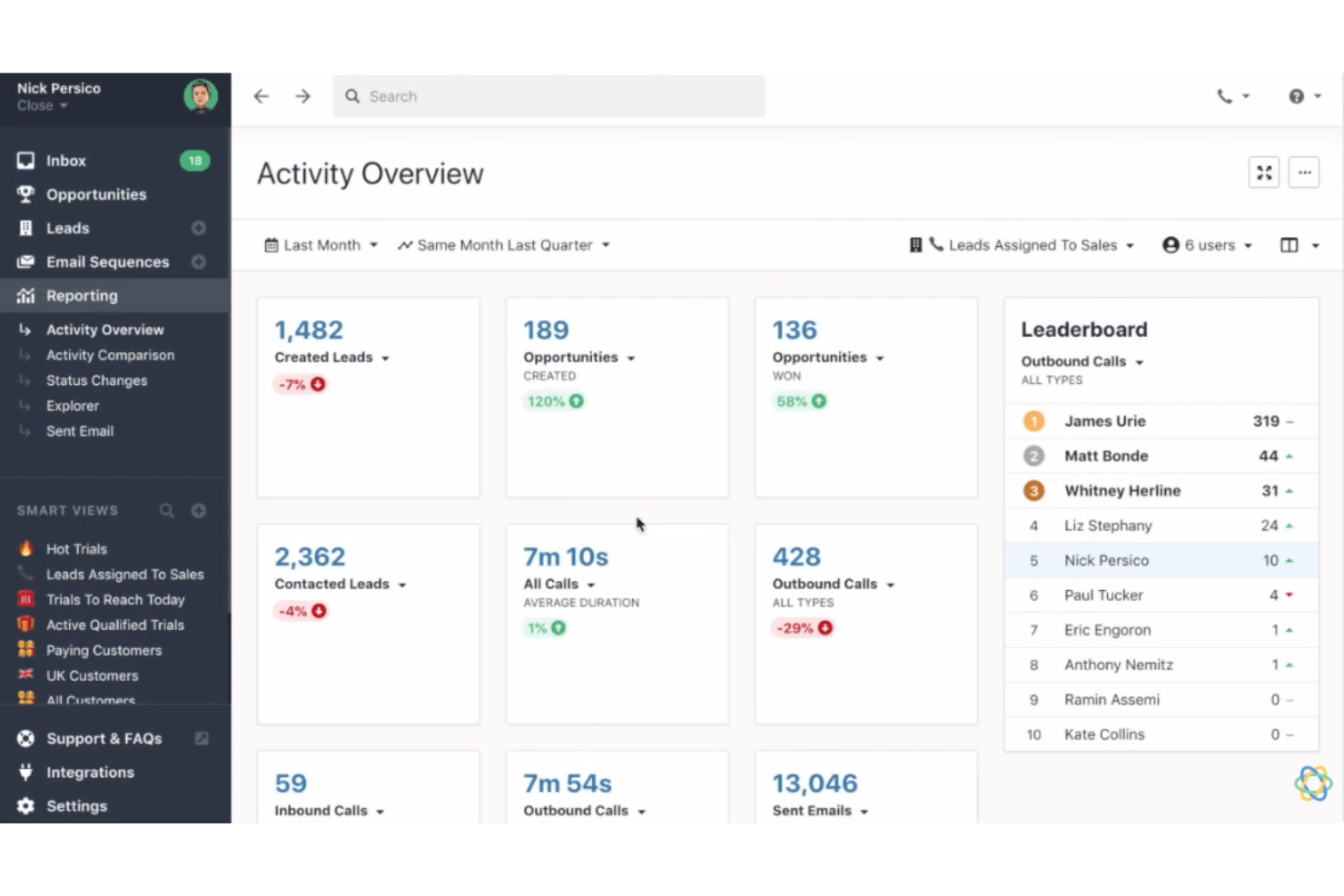
Reporting and Dashboard
Visual dashboards show sales metrics and team performance in real time. Share insights across your team to improve forecasting and results.
Ease of Use
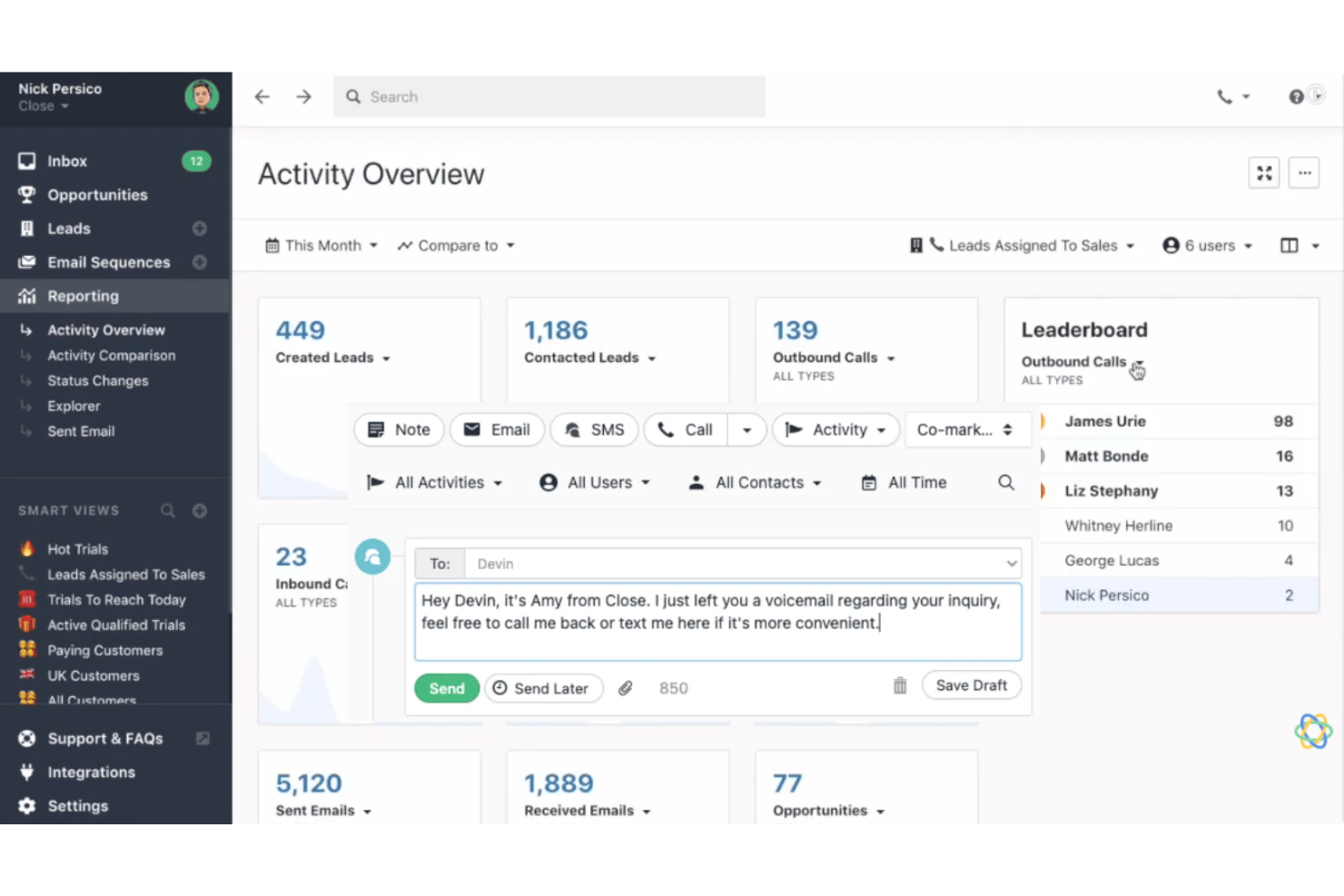
Close CRM feels refreshingly straightforward, thanks to its clean layout and focus on sales activities. You don’t waste time clicking through menus—core actions like calling, emailing, and updating deals are easily accessible. Most users say setup and daily workflows are intuitive, so their teams adopt it quickly with little formal training.
Integrations
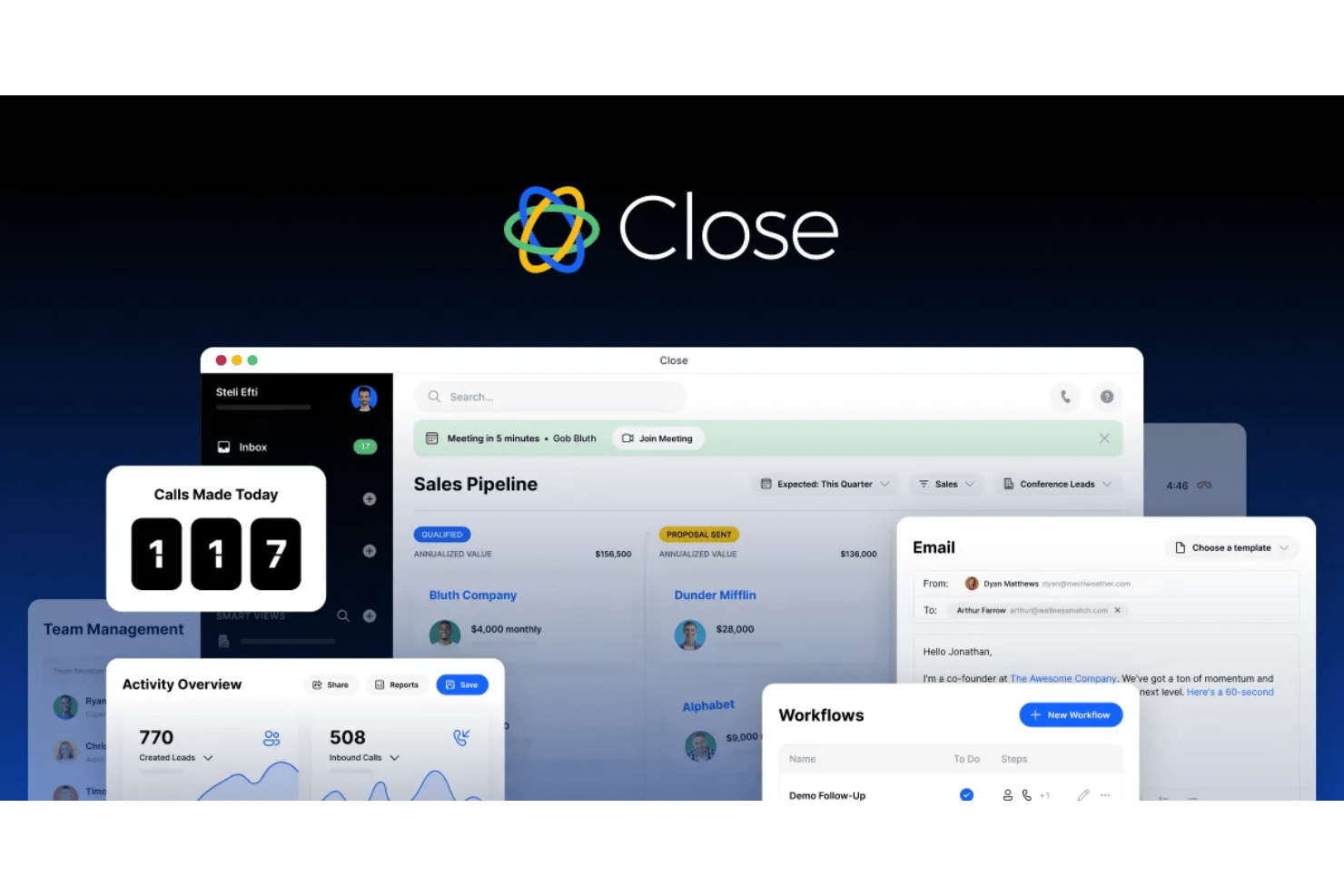
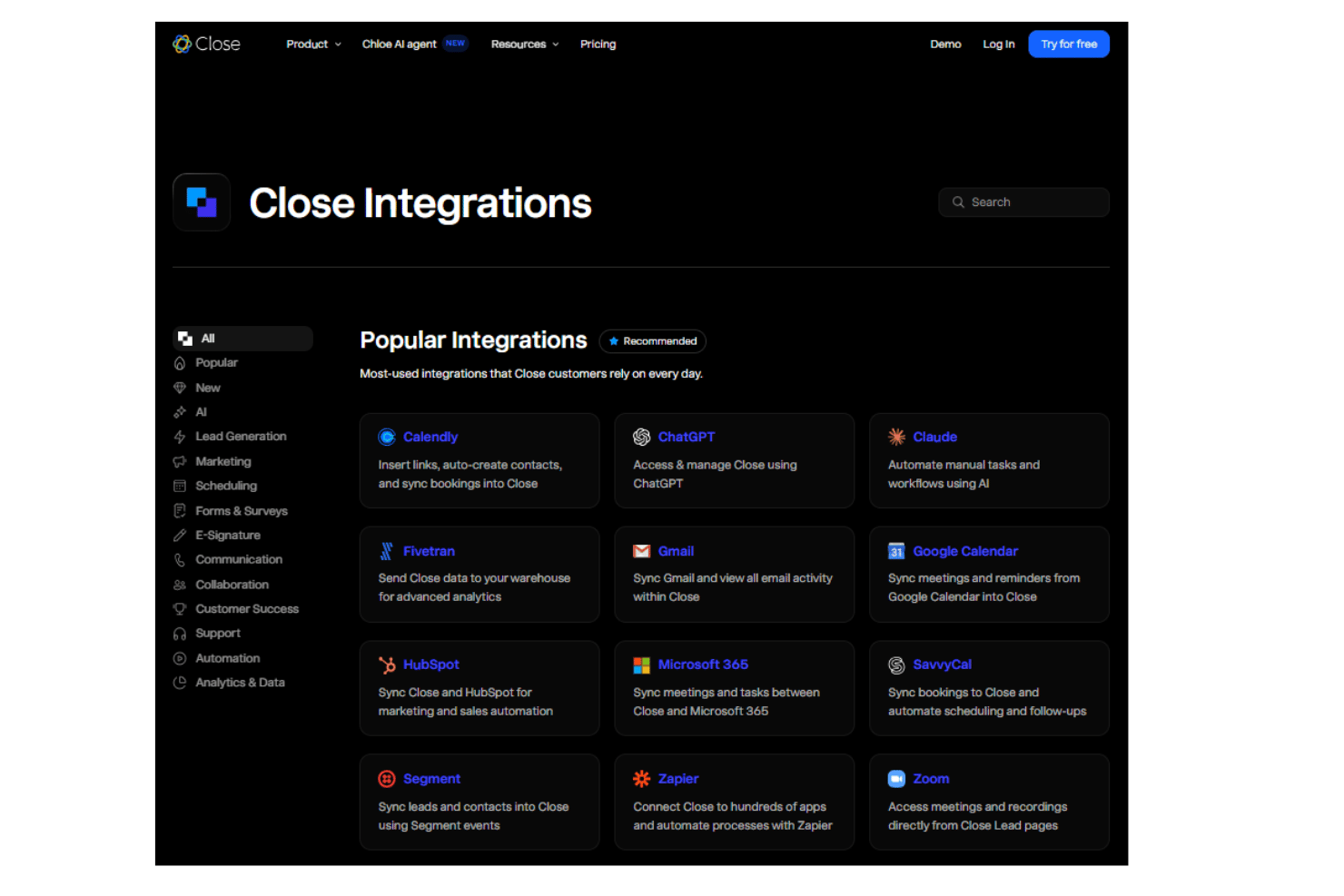
Close CRM integrates with Zoom, Slack, Mailchimp, Zapier, Google Workspace, Microsoft 365, Help Scout, Calendly, HubSpot, and ChatGPT, among others.
It also offers a public API and connects with popular third-party integration platforms.
Close CRM Specs
- 2-Factor Authentication
- Accounts Payable
- Accounts Receivable
- API
- Approval Workflows
- Balance Sheet
- Billing/Invoicing
- Budgeting
- Calendar Management
- Comparative Reporting
- CRM Integration
- Custom Reports
- Customer Management
- Dashboard
- Data Export
- Data Import
- Data Visualization
- Expense Tracking
- External Integrations
- Forecasting
- General Account Ledger
- Historical Data Analysis
- Inventory Tracking
- Multi-Currency
- Multi-User
- Notifications
- P&L
- Payroll
- Scenario Planning
- Scheduling
- Supplier Management
- Tax Management
- Time Management