
Recensione Agile CRM: Pro, Contro, Funzionalità e Prezzi
Agile CRM si distingue per il suo design intuitivo e i prezzi accessibili, diventando la scelta preferita per le piccole e medie imprese che cercano una gestione efficiente delle relazioni con i clienti.

Recensiamo gli strumenti in modo indipendente e le commissioni aiutano a finanziare i nostri test. Consulta la nostra politica sulla trasparenza, la nostra metodologia o suggerisci uno strumento.
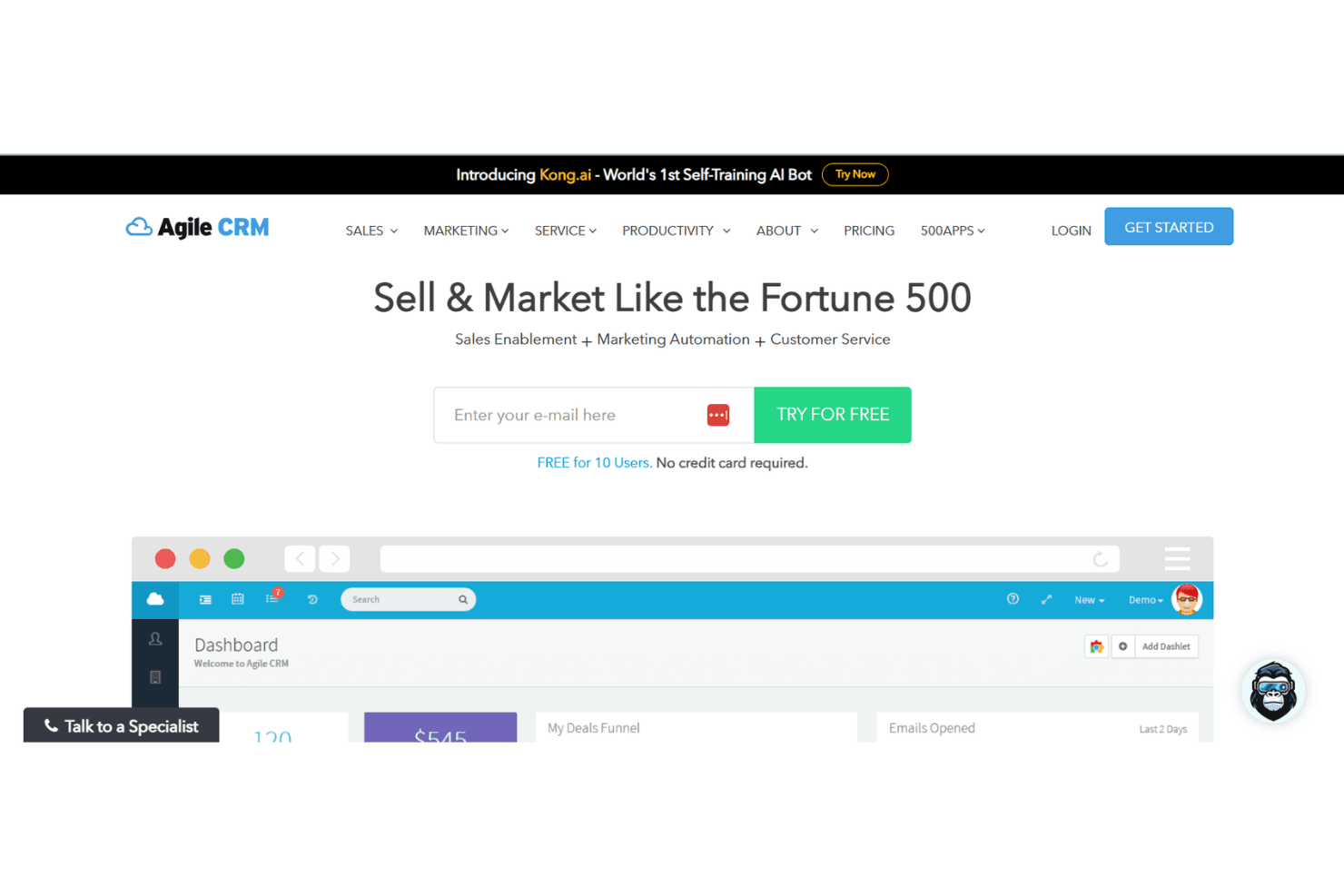
Agile CRM is an all-in-one CRM software that combines contact management, marketing automation, and helpdesk tools in a single platform. It's a natural fit for small to mid-sized businesses that need to manage sales, marketing, and customer support without buying separate tools for each. If you're weighing it against HubSpot, Agile CRM is worth a serious look when budget is a real constraint—you get comparable cross-functional coverage at a fraction of the cost.
Agile CRM Evaluation Summary
4.3/5
- From $8.99/user/month
- Free plan available
Perché fidarsi dei nostri consigli sui software
6,700+
Reviews
20
Industry experts
16+
Evaluation factors
14
Years
Le nostre recensioni riflettono il nostro giudizio indipendente, non un discorso di vendita. Scopri come manteniamo la trasparenza.
Per questa guida, abbiamo valutato gli strumenti attraverso test pratici e ricerche indipendenti, assegnando un punteggio agli strumenti in base ai nostri criteri di selezione.
Le nostre recensioni riflettono il nostro giudizio editoriale umano, non un discorso di vendita.
Agile CRM Overview
In my opinion, Agile CRM is a solid choice for small to medium businesses. It offers a comprehensive suite of features at a competitive price. While its interface might not be as polished as some competitors, it makes up for it with functionality and excellent customer support. It's particularly useful for teams looking for an all-in-one solution without breaking the bank. However, if top-tier integrations or advanced customization are your priorities, you might find other platforms like HubSpot or Salesforce more fitting. Agile CRM excels in delivering value, especially for those who prioritize straightforward onboarding and reliable support.
Pros
- You can automate your sales and marketing tasks easily.
- It offers great customer service and support.
- Your team will find the onboarding process straightforward.
Cons
- The interface can feel a bit dated compared to others.
- You might find the customization options limited.
- It lacks some advanced features found in top-tier CRMs.
Is Agile CRM Right For Your Needs?
Who Would be a Good Fit for Agile CRM?
Agile CRM is a solid choice for small to medium-sized businesses, especially in tech and consulting industries. Your sales and marketing teams will benefit from its automation features, simplifying daily tasks. If you're a startup or a growing company, you'll appreciate the straightforward onboarding and strong customer support. Agile CRM's user-friendly design makes it a smart pick for teams that need a reliable CRM without the complexity of bigger platforms, especially for small businesses.
- Small Tech StartupsAgile CRM offers easy automation for your sales and marketing, perfect for limited resources.
- Consulting FirmsYou can manage client relationships efficiently with its straightforward interface and support.
- Marketing DepartmentsAutomate campaigns and track leads with ease, boosting your team's productivity.
- Sales TeamsStreamline your sales process with its task management and lead scoring features.
- Advanced Marketing TeamsYou may need more sophisticated metric tracking tools than what's available in Agile CRM.
Who Would be a Bad Fit for Agile CRM?
Agile CRM might not suit large enterprises or businesses needing extensive customization and advanced integrations. Your team could struggle with its limited customization options and the lack of complex features found in top-tier CRMs. If your work requires intricate workflows or heavy data analysis, you might find other software like Salesforce or HubSpot more accommodating. Agile CRM's simplicity, while beneficial to some, might not meet the demands of larger, more complex operations.
- Large EnterprisesYour complex needs for customization and advanced integrations might not be met.
- Financial ServicesYou could find the lack of advanced data analysis tools limiting for your work.
- Healthcare ProvidersYour specific compliance and data management needs might not be fully supported.
- E-commerce GiantsYour high-volume transaction and inventory management could overwhelm its capabilities.
- High-Tech R&DYour need for intricate project management features might not be satisfied.
Come Testiamo e Valutiamo gli Strumenti
Abbiamo trascorso anni a costruire, perfezionare e migliorare il nostro sistema di valutazione e test dei software. Il nostro metodo è pensato per cogliere le sfumature della selezione software e ciò che rende uno strumento efficace, concentrandosi sugli aspetti critici del processo decisionale. Qui sotto puoi vedere esattamente come funzionano i nostri test e la valutazione sui sette criteri. Ci permette di fornire una valutazione imparziale del software in base alla funzionalità principale, alle caratteristiche distintive, facilità d’uso, onboarding, assistenza clienti, integrazioni, recensioni degli utenti e rapporto qualità-prezzo.
Funzionalità Principali (25% del punteggio finale)
Il punto di partenza per la nostra valutazione è sempre la funzionalità di base dello strumento. Possiede le caratteristiche e le funzioni che un utente si aspetterebbe di trovare? Alcune di queste funzioni di base sono limitate ai piani tariffari più costosi? Per noi uno strumento deve almeno essere alla pari con le capacità minime offerte dai concorrenti.
Caratteristiche Distintive (25% del punteggio finale)
Successivamente, valutiamo le funzionalità insolite o esclusive che vanno oltre le funzioni core normalmente presenti in strumenti simili. Un punteggio elevato riflette una presenza di caratteristiche particolari o uniche che rendono il prodotto più veloce, efficace o danno un valore aggiunto all’utente. Valutiamo anche la facilità di integrazione con altri strumenti tipici del tech stack per espanderne funzionalità e utilità. Gli strumenti che offrono numerose integrazioni native, connessioni di terze parti e accesso API per costruire integrazioni personalizzate ottengono i punteggi migliori.
Facilità d’Uso (10% del punteggio finale)
Consideriamo quanto sia rapido e intuitivo svolgere le attività fondamentali tramite lo strumento. I software con i punteggi più alti hanno un design ben pensato, sono intuitivi, offrono app mobili, forniscono modelli predefiniti e semplificano anche le attività più complesse.
Onboarding (10% del punteggio finale)
Sappiamo quanto sia importante che un nuovo strumento venga rapidamente adottato dal team, quindi valutiamo la facilità di apprendimento con un minimo di formazione. Valutiamo quanto velocemente un membro del team può iniziare a usare lo strumento senza esperienza. Le soluzioni con i punteggi più alti richiedono poco o nessun supporto iniziale.
Assistenza Clienti (10% del punteggio finale)
Analizziamo quanto sia facile e veloce risolvere problemi e ricevere assistenza tramite telefono, chat dal vivo o knowledge base. Gli strumenti e le aziende che offrono supporto in tempo reale ottengono i punteggi migliori, mentre i chatbot ottengono i peggiori.
Recensioni dei Clienti (10% del punteggio finale)
Oltre ai nostri test, consideriamo il net promoter score da clienti attuali e passati. Valutiamo la probabilità che gli utenti sceglierebbero nuovamente lo strumento per le funzionalità principali. Un punteggio elevato riflette un alto net promoter score da parte dei clienti.
Rapporto Qualità-Prezzo (10% del punteggio finale)
Infine, considerando tutti gli altri criteri, esaminiamo il prezzo medio dei piani base rispetto alle funzionalità principali e agli altri fattori valutativi. I software che offrono di più a un costo inferiore ottengono un punteggio più alto.
Core Features
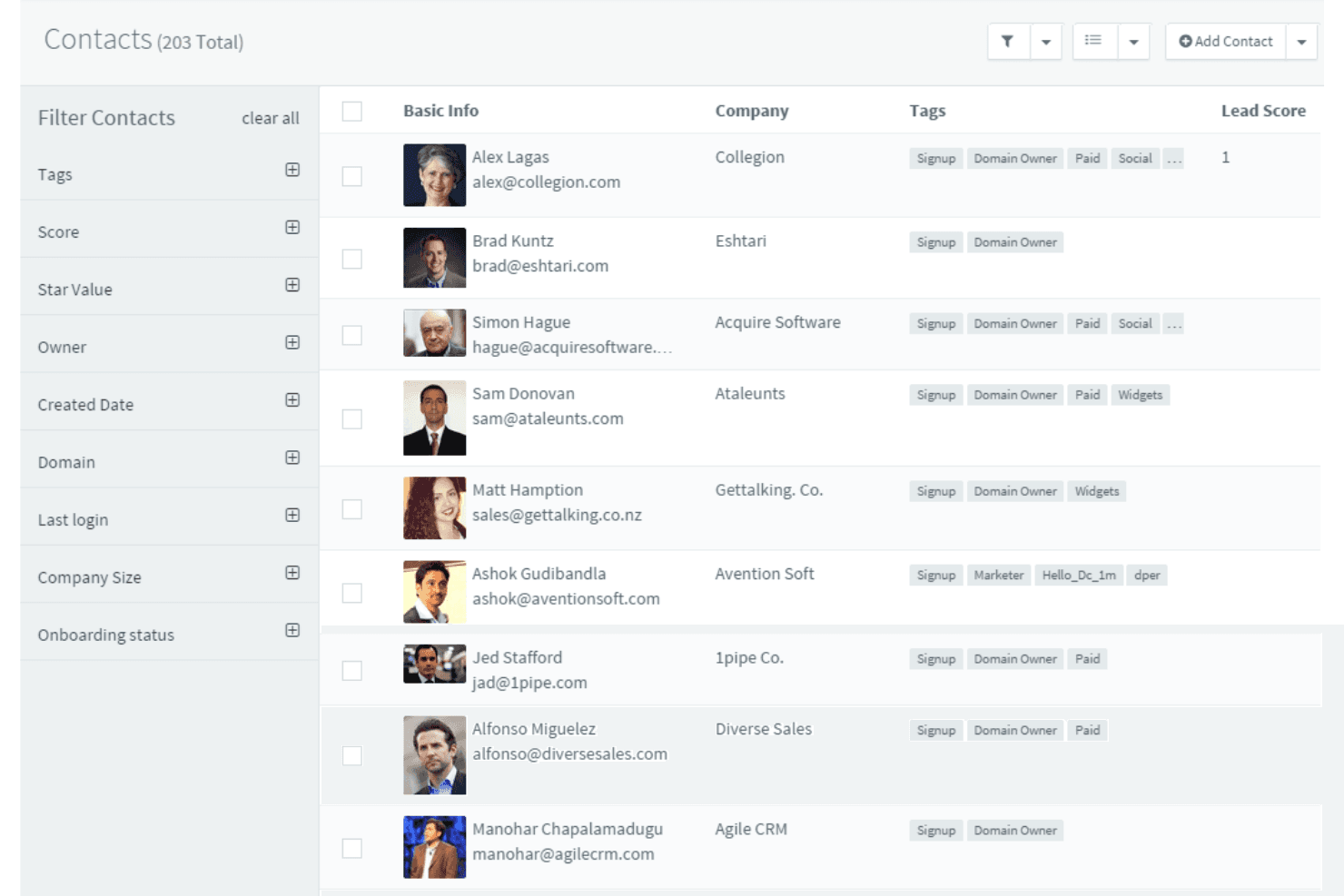
Contact Management: You can store and organize your customer data in one place. It's easy to track interactions and update information.
Email Campaigns: Send personalized email campaigns with ease. Agile CRM lets you automate follow-ups, and drive traffic to your landing pages, saving your team time.
Lead Scoring: Prioritize your leads based on their behavior and engagement. This helps your sales team focus on the most promising prospects.
Task Management: Keep track of your daily tasks and deadlines. Your team can stay organized and efficient with built-in reminders.
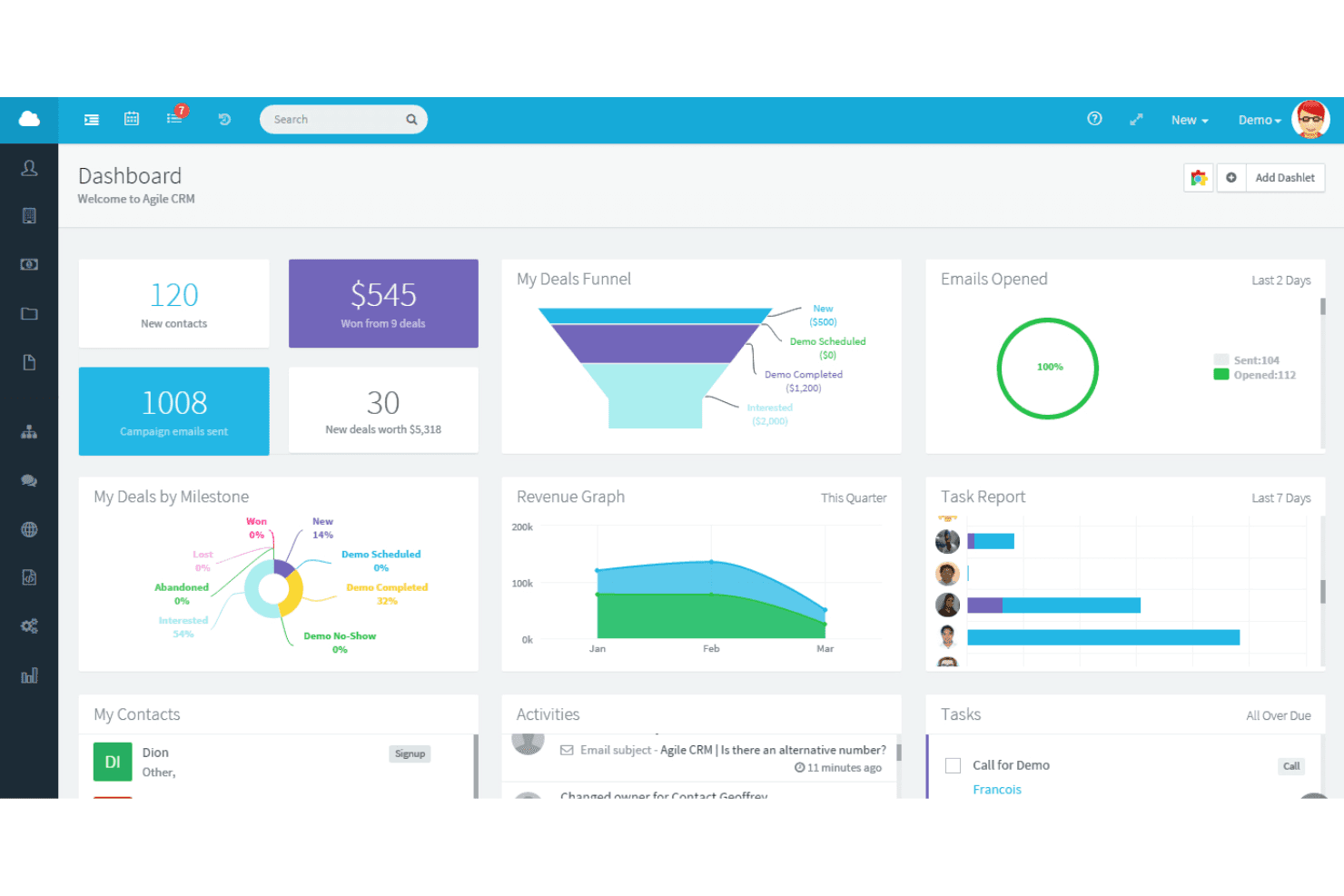
Sales Tracking: Monitor your sales pipeline in real-time from start to finish. You can see where each deal stands and what actions to take next.
Customer Support Ticketing: Manage customer inquiries with a simple ticketing system. Your support team can respond quickly and track issues until resolved.
Ease of Use
Agile CRM is easy to navigate, making it user-friendly for your team. The interface is straightforward, allowing you to quickly find what you need. You won't get lost in complicated menus, and the drag-and-drop features make setting up workflows simple. While it might not have the flashiest design, its simplicity is a plus for those who value functionality over aesthetics. Your team will appreciate the minimal learning curve, which gets them up and running fast.
Integrations
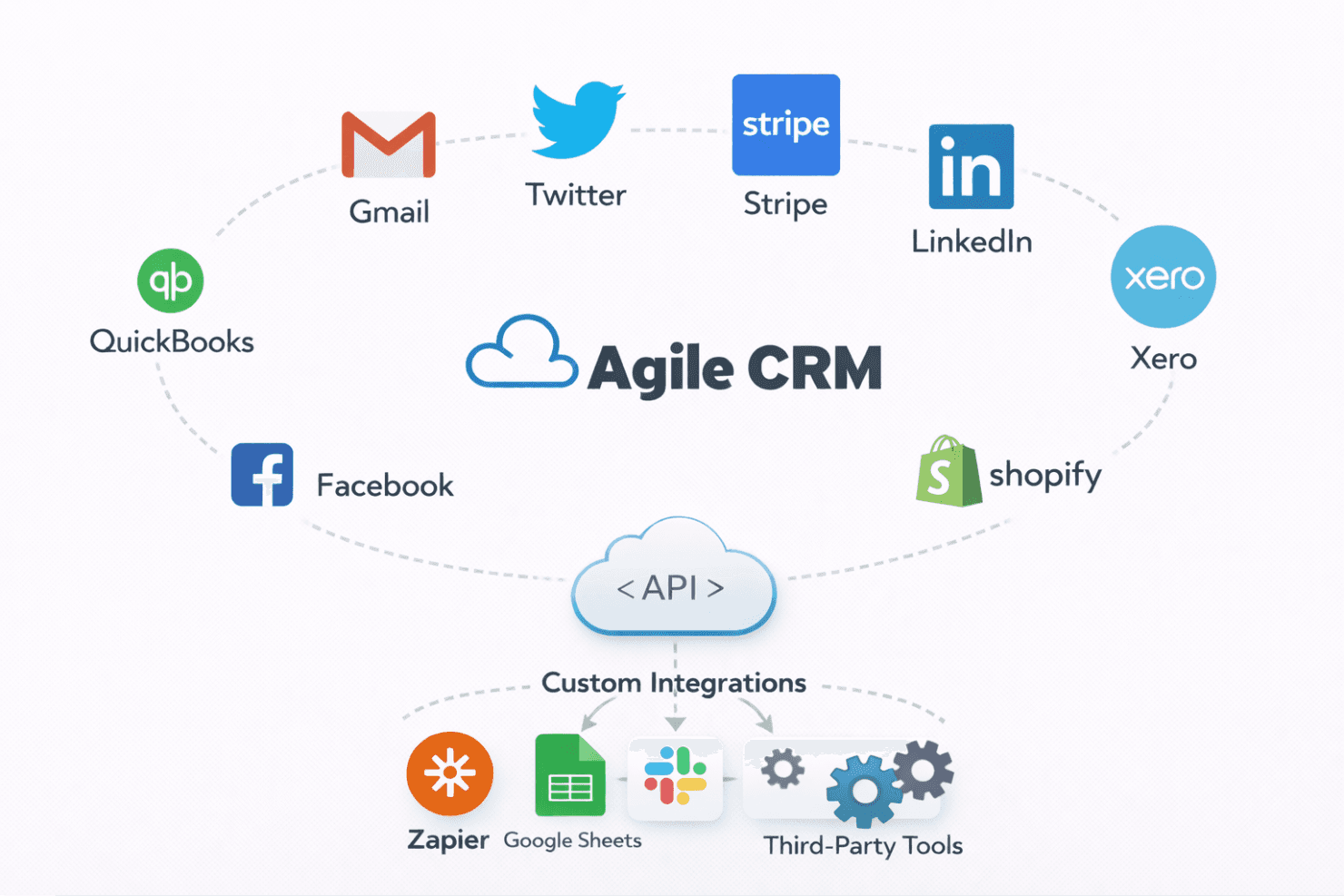
Agile CRM integrates with Gmail, Stripe, LinkedIn, Xero, Shopify, Twilio, Facebook, and QuickBooks.
Agile CRM also offers a REST API and connects with Zapier, allowing your team to build custom integrations and connect with third-party tools.
Agile CRM Specs
- 2-Factor Authentication: No
- API: Yes
- Calendar Management: Yes
- Call Tracking: Yes
- Campaign Management: No
- Click-to-Dial: Yes
- Contact Management: Yes
- Contact Sharing: Yes
- Custom Data Forms: No
- Customer Management: Yes
- Dashboard: Yes
- Data Export: No
- Data Import: No
- Data Visualization: No
- Email Integration: Yes
- External Integrations: No
- File Sharing: No
- File Transfer: No
- Google Apps Integration: Yes
- Lead Management: Yes
- Lead Scoring: Yes
- Marketing Automation: Yes
- Mobile App: No
- Multi-User: Yes
- Notifications: Yes
- Pipeline Management: Yes
- Sales Automation: No
- Scheduling: Yes
- Social-Media Integration: No
- Task Scheduling/Tracking: Yes
- Third-Party Plugins/Add-Ons: Yes


