

Salesforce CRM Testbericht: Vorteile, Nachteile, Funktionen und Preise
Salesforce CRM überzeugt durch seine anpassbaren Funktionen und Integrationsmöglichkeiten und positioniert sich als vielseitige Lösung für unterschiedliche Geschäftsanforderungen.

Wir bewerten Tools unabhängig, und Provisionen helfen, unsere Tests zu finanzieren. Sehen Sie unsere transparente Richtlinie, unsere Methodik oder schlagen Sie ein Tool vor.
Salesforce CRM is a crm software built for sales teams that need to manage complex pipelines, automate workflows, and track revenue across large or fast-scaling organizations. I'd consider it when your team needs deeper customization, more advanced reporting, and a broader integration ecosystem than something like HubSpot can support at scale.
Salesforce CRM Evaluation Summary
4.2/5
- From $25/user/month
- 30-day free trial
Warum Sie unseren Software-Empfehlungen vertrauen können
6,700+
Reviews
20
Industry experts
16+
Evaluation factors
14
Years
Unsere Bewertungen spiegeln unser unabhängiges Urteilsvermögen wider – keine Verkaufsstrategie. Erfahren Sie, wie wir transparent bleiben.
Für diesen Leitfaden haben wir Tools mithilfe von praktischen Tests und unabhängiger Recherche bewertet und dabei unsere Bewertungskriterien angewendet.
Unsere Bewertungen spiegeln unser menschliches redaktionelles Urteilsvermögen wider, keine Verkaufsstrategie.
Salesforce CRM Overview
In my opinion, Salesforce CRM is among the best CRM software for businesses needing advanced customization and integration. Its standout features, such as reporting and sales automation, make it a strong contender in the CRM market. However, its complexity can be a hurdle for smaller teams without dedicated resources. Its pricing may seem steep, but its extensive feature set justifies the cost for larger enterprises. If your team values flexibility and extensive third-party integrations, Salesforce CRM is a great option.
Pros
- Customizable dashboards let your team tailor views to fit specific needs.
- The advanced reporting tools help you analyze customer data and other key metrics to make informed decisions.
- Its automation features save you time by reducing repetitive tasks.
Cons
- The interface can be overwhelming for new users.
- Setup and customization have a learning curve.
- Some users find navigation less intuitive compared to other CRM systems, such as HubSpot.
Is Salesforce CRM Right For Your Needs?
Who Would be a Good Fit for Salesforce CRM?
Salesforce CRM is suitable for large enterprises in industries such as finance, health care, and tech, where complex data integration is vital. If your team needs advanced customization and powerful analytics, Salesforce CRM delivers with its strong reporting and automation features. It's especially beneficial for organizations with dedicated resources to handle its setup and learning curve, maximizing its potential.
- Large EnterprisesSalesforce CRM's advanced customization and data management capabilities are ideal for large companies needing detailed analytics and reporting.
- Health Care IndustryIts ability to handle complex data and compliance needs makes Salesforce CRM a strong choice for health care organizations.
- Finance SectorWith detailed reporting tools, Salesforce CRM helps finance teams track and analyze transactions effectively.
- Sales TeamsAutomation features in Salesforce CRM save time by reducing repetitive tasks, boosting sales productivity.
- Marketing DepartmentsSalesforce CRM's analytics tools and pre-built email templates can assist teams with marketing campaigns.
- Tech StartupsFor tech startups needing flexibility and scalability, Salesforce CRM offers extensive customization options to grow with your business.
Who Would be a Bad Fit for Salesforce CRM?
Salesforce CRM isn't ideal for small businesses or startups with limited budgets and resources. Its complex setup and learning curve can overwhelm smaller teams that lack dedicated IT support. If your business needs a simple, quick-to-deploy CRM without extensive customization, Salesforce might not meet your needs. Organizations prioritizing ease of use and straightforward navigation might find Salesforce's interface cumbersome.
- Small BusinessesThe complexity and cost of Salesforce CRM can be overwhelming for small businesses with fewer resources.
- Non-Tech StartupsStartups without tech expertise may struggle with Salesforce CRM's setup and customization requirements, preferring a more user-friendly platform.
- FreelancersFreelancers needing simple client management may find Salesforce CRM's features excessive and costly.
- Nonprofit OrganizationsNonprofits with tight budgets might find Salesforce CRM's pricing and complexity prohibitive.
- Retail StoresRetail stores looking for quick and easy CRM solutions may not need Salesforce CRM's extensive capabilities.
- Solo EntrepreneursSolo entrepreneurs often don't require the advanced features Salesforce CRM offers, making it an impractical choice.
Wie wir Tools testen & bewerten
Wir haben Jahre damit verbracht, unser System zur Softwarebewertung und -prüfung aufzubauen, zu verfeinern und kontinuierlich zu verbessern. Der Bewertungsmaßstab ist darauf ausgelegt, die Feinheiten der Software-Auswahl und die Effektivität eines Tools abzubilden, wobei der Fokus auf entscheidende Aspekte des Auswahlprozesses gelegt wird. Nachfolgend können Sie genau sehen, wie unser Test- und Bewertungssystem anhand von sieben Kriterien funktioniert. Dadurch sind wir in der Lage, eine objektive Einschätzung der Software auf Basis von Kernfunktionalität, besonderen Merkmalen, Benutzerfreundlichkeit, Onboarding, Kundensupport, Integrationen, Kundenbewertungen und Preis-Leistungs-Verhältnis zu geben.
Kernfunktionalität (25% der Gesamtnote)
Unser Bewertungsprozess beginnt immer mit der Kernfunktionalität eines Tools. Verfügt es über die grundlegenden Funktionen und Merkmale, die ein Nutzer erwarten würde? Sind einige dieser Kernfunktionen nur in teureren Tarifen verfügbar? Grundsätzlich erwarten wir, dass ein Tool mit den Grundfunktionen seiner Wettbewerber mithalten kann.
Besondere Merkmale (25% der Gesamtnote)
Im nächsten Schritt bewerten wir außergewöhnliche Zusatzfunktionen, die über den üblichen Funktionsumfang hinausgehen. Eine hohe Bewertung spiegelt spezialisierte oder einzigartige Eigenschaften wider, welche das Produkt schneller, effizienter oder für den Nutzer wertvoller machen. Wir bewerten außerdem, wie einfach sich andere typische Tools zur Erweiterung der Funktionalität und des Nutzens integrieren lassen. Lösungen mit zahlreichen nativen Integrationen, Drittanbieter-Anbindungen und API-Zugängen für eigene Anpassungen schneiden am besten ab.
Benutzerfreundlichkeit (10% der Gesamtnote)
Wir berücksichtigen, wie schnell und einfach sich Aufgaben mit der Kernfunktionalität durch das Tool erledigen lassen. Hoch bewertete Software ist gut gestaltet, intuitiv bedienbar, bietet mobile Apps, Vorlagen und gestaltet sogar komplexe Aufgaben einfach.
Onboarding (10% der Gesamtnote)
Uns ist wichtig, wie schnell Teams eine neue Plattform übernehmen, daher bewerten wir, wie leicht ein Tool ohne umfangreiche Schulungen erlernbar und nutzbar ist. Wir betrachten, wie schnell Teammitglieder ohne Vorerfahrung loslegen können. Hoch bewertete Lösungen zeichnen sich dadurch aus, dass nur wenig oder keine Unterstützung notwendig ist.
Kundensupport (10% der Gesamtnote)
Wir prüfen, wie schnell und einfach es ist, Unterstützung per Telefon, Live-Chat oder Wissensdatenbank zu erhalten. Anbieter, die Echtzeit-Support bieten, erzielen die besten Noten, während Chatbots am schlechtesten abschneiden.
Kundenbewertungen (10% der Gesamtnote)
Zusätzlich zu unseren eigenen Tests berücksichtigen wir den Net Promoter Score von aktuellen und früheren Kunden. Wir prüfen, ob Nutzer das Tool für die Kernfunktionalitäten erneut wählen würden. Eine hohe Softwarebewertung spiegelt einen hohen Weiterempfehlungswert aktueller oder früherer Kunden wider.
Preis-Leistungs-Verhältnis (10% der Gesamtnote)
Abschließend bewerten wir unter Berücksichtigung aller Kriterien den durchschnittlichen Preis für Einstiegs-Tarife im Verhältnis zu den Kernfunktionen und dem Wert der übrigen Kriterien. Software, die mehr Leistung für weniger Geld bietet, erzielt eine höhere Bewertung.
Core Features
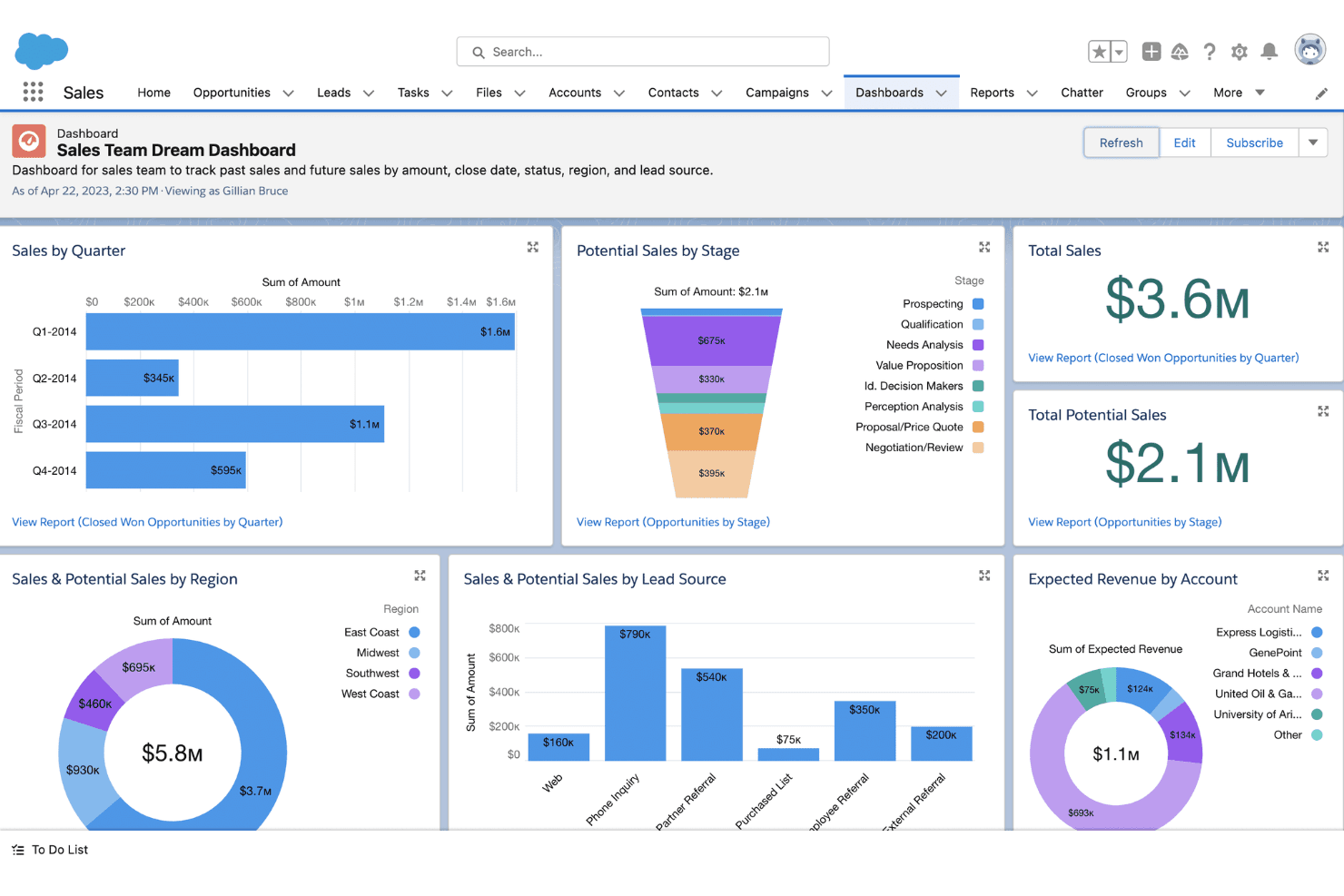
Contact Management: Salesforce CRM lets you store and organize detailed customer information in one place. Your team can access contact history and interactions.
Lead Management: Track and follow up on your leads, from acquisition to conversion, with Salesforce's lead management tools. You can assign and prioritize leads to boost your sales efforts.
Opportunity Tracking: Keep an eye on your sales pipeline with real-time opportunity tracking. This helps you manage deals and forecast sales effectively.
Task Automation: Automate repetitive tasks to save time and increase productivity. Set up workflows to handle routine processes without manual intervention.
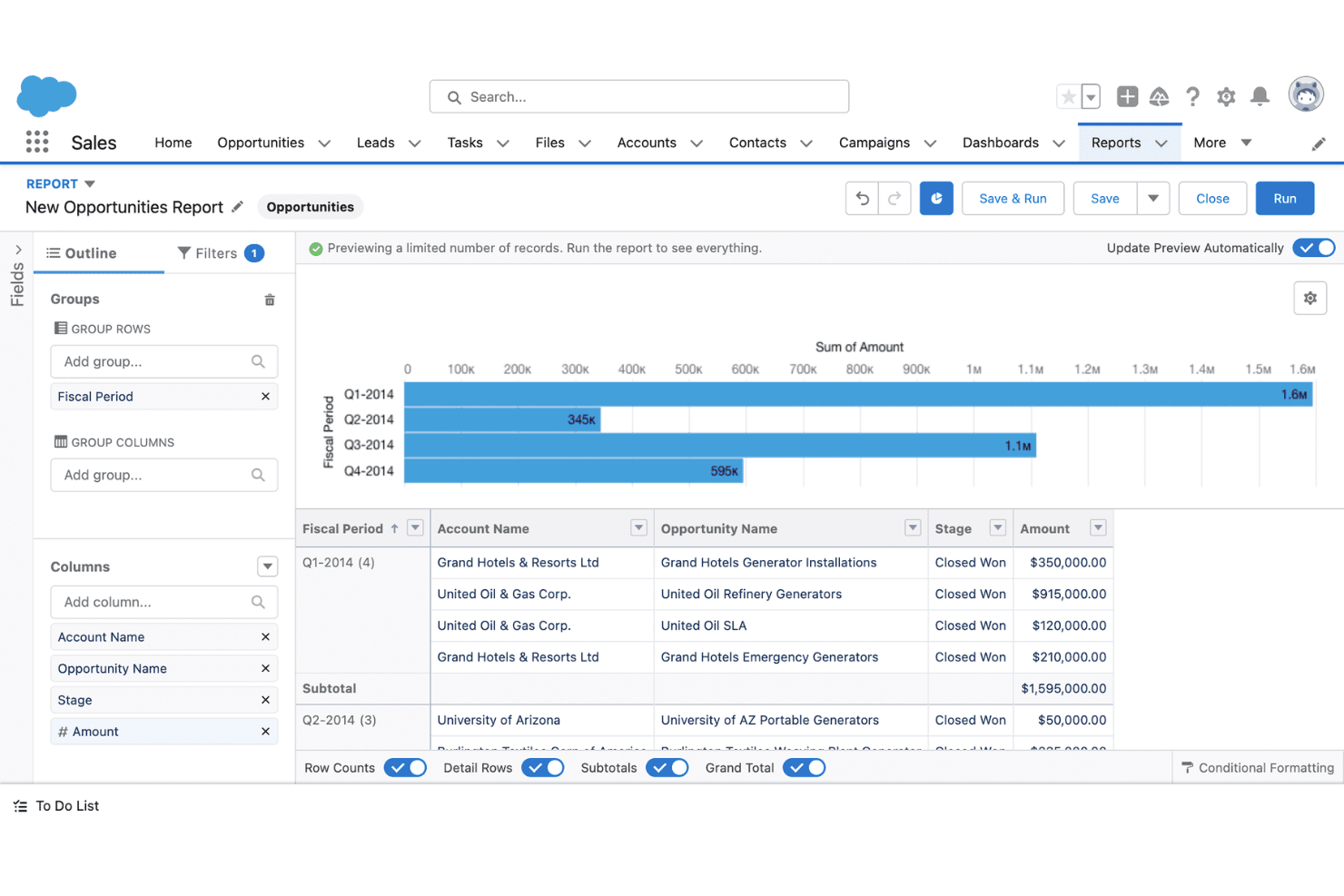
Reporting and Analytics: Use customizable reports and dashboards to gain in-depth insights into your sales performance and make data-driven decisions with ease.
Mobile Access: Access Salesforce CRM on the go with its mobile app. This ensures your team stays connected, no matter where they are.
Ease of Use
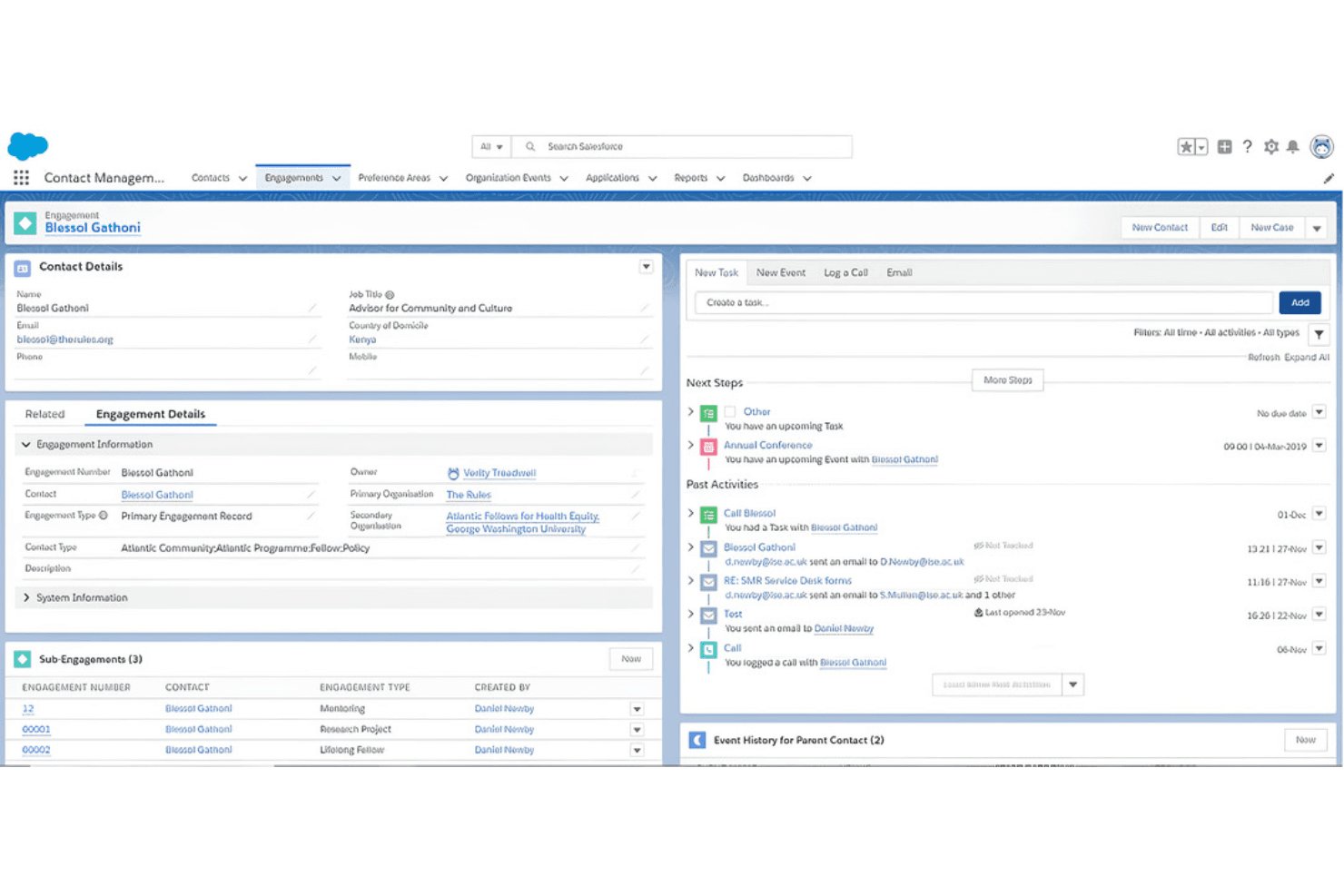
Salesforce CRM can be challenging for new users due to its complex interface and extensive features. While its customization options offer flexibility, they also add a learning curve that might overwhelm smaller teams. However, once you get the hang of it, the platform's powerful tools make managing customer relationships more efficient. With time and resources, your team can unlock its full potential, but be prepared for an initial adjustment period.
Integrations
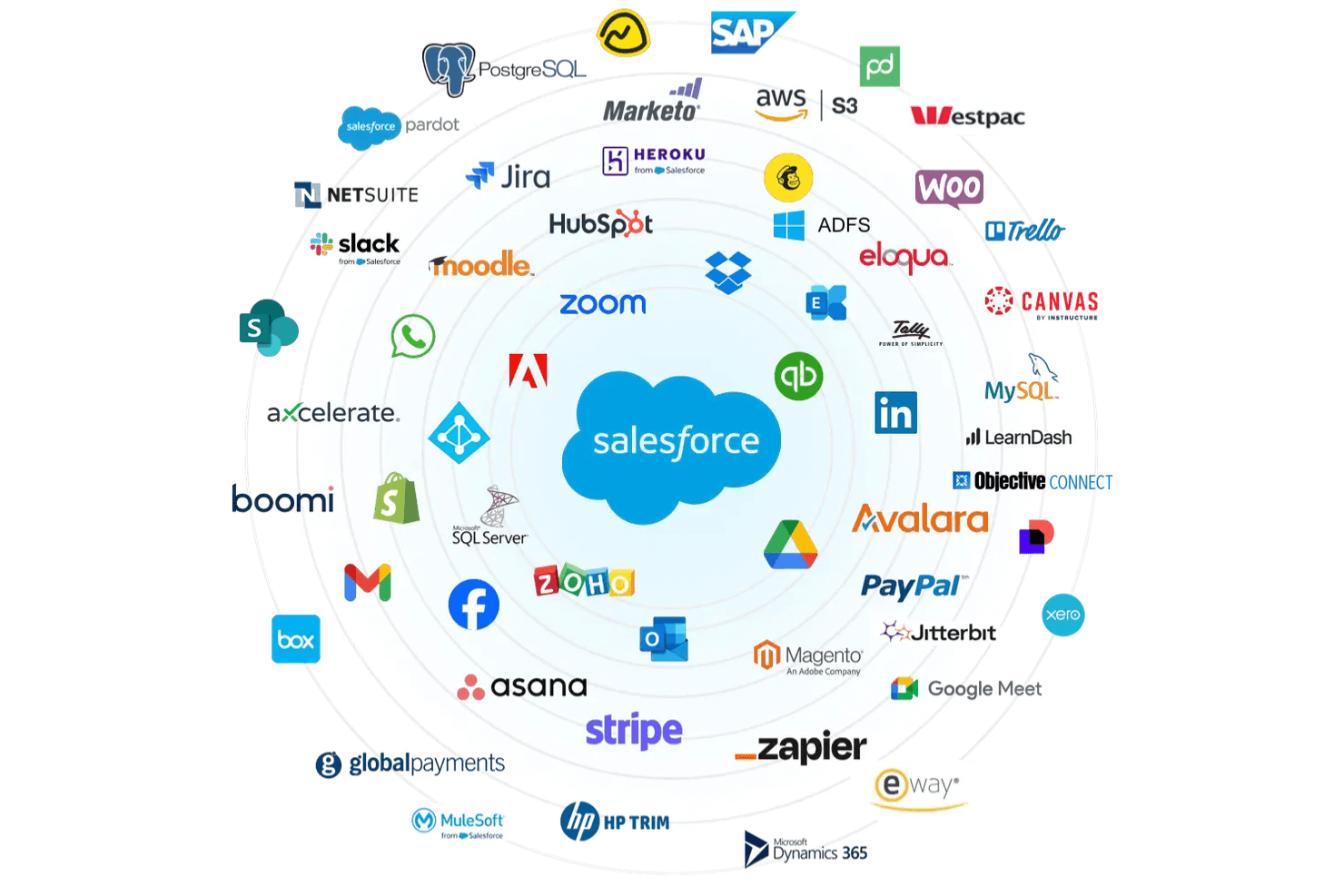
Salesforce CRM integrates with platforms such as Slack, Microsoft Outlook, Google Workspace, Mailchimp, QuickBooks, Dropbox, Docusign, LinkedIn, and Jira.
Salesforce CRM also offers an API for custom integrations and connects with third-party integration tools.
Salesforce CRM Specs
- 2-Factor Authentication: Yes
- API: Yes
- Calendar Management: Yes
- Call Tracking: Yes
- Campaign Management: Yes
- Click-to-Dial: Yes
- Contact Management: Yes
- Contact Sharing: Yes
- Custom Data Forms: Yes
- Customer Management: Yes
- Dashboard: Yes
- Data Export: Yes
- Data Import: Yes
- Data Visualization: Yes
- Email Integration: Yes
- External Integrations: Yes
- File Sharing: Yes
- File Transfer: Yes
- Google Apps Integration: Yes
- Lead Management: Yes
- Lead Scoring: Yes
- Marketing Automation: No
- Mobile App: Yes
- Multi-User: Yes
- Notifications: Yes
- Pipeline Management: Yes
- Sales Automation: Yes
- Scheduling: Yes
- Social-Media Integration: No
- Task Scheduling/Tracking: Yes
- Third-Party Plugins/Add-Ons: Yes


