

Oracle NetSuite Bewertung: Vorteile, Nachteile, Funktionen und Preise erklärt
Nach meinen Tests von Oracle NetSuite für das Umsatzmanagement habe ich festgestellt, dass seine wahre Stärke in der Vereinheitlichung von Finanzen und Automatisierung liegt – es sorgt für Klarheit, wenn Komplexität das Wachstum bedroht.

Wir bewerten Tools unabhängig, und Provisionen helfen, unsere Tests zu finanzieren. Sehen Sie unsere transparente Richtlinie, unsere Methodik oder schlagen Sie ein Tool vor.
Oracle NetSuite is a revenue management system built into a full cloud ERP, covering revenue recognition, billing, financial close, and compliance reporting in one platform. It's worth considering if your team needs to manage complex revenue schedules and multi-element arrangements alongside core financials. If you're weighing it against something like Zuora, NetSuite is the stronger choice when revenue management is part of a broader operational and financial picture—not just a standalone subscription billing problem.
Oracle NetSuite Evaluation Summary
4.2/5
- Pricing upon request
- Free demo available
Warum Sie unseren Software-Empfehlungen vertrauen können
6,700+
Reviews
20
Industry experts
16+
Evaluation factors
14
Years
Unsere Bewertungen spiegeln unser unabhängiges Urteilsvermögen wider – keine Verkaufsstrategie. Erfahren Sie, wie wir transparent bleiben.
Für diesen Leitfaden haben wir Tools mithilfe von praktischen Tests und unabhängiger Recherche bewertet und dabei unsere Bewertungskriterien angewendet.
Unsere Bewertungen spiegeln unser menschliches redaktionelles Urteilsvermögen wider, keine Verkaufsstrategie.
Oracle NetSuite Overview
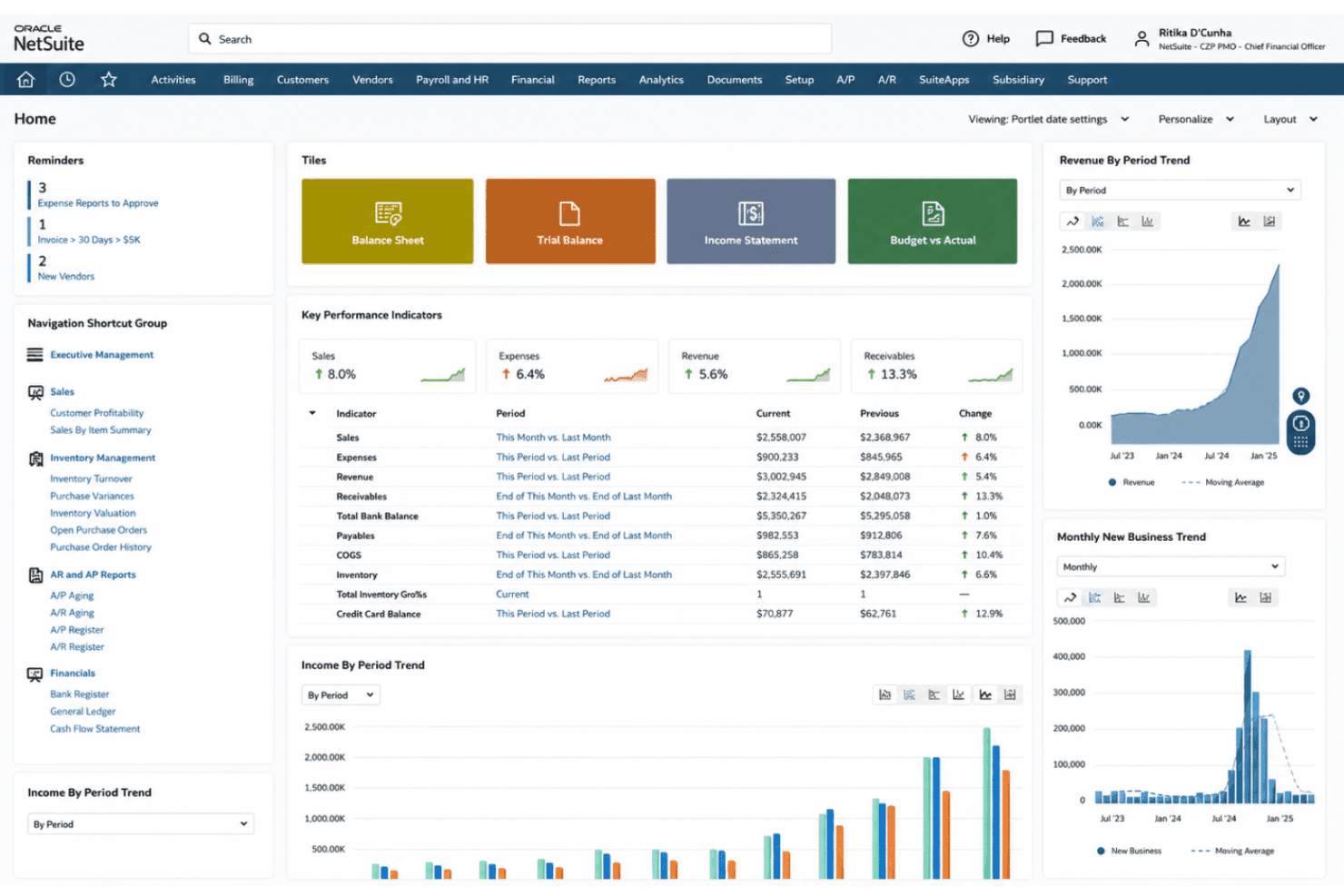
In my experience, Oracle NetSuite stands out for its deep automation, customizable revenue recognition, and reliable integrations, especially for businesses juggling global entities or shifting pricing models. Pricing is on the higher side and onboarding takes time—so I’d recommend choosing it if you need unified workflows and a complete view of financial performance versus the fastest setup or the lowest entry cost. I think finance-driven teams and growing companies seeking enterprise resource planning and revenue management in one platform will get the most value, especially if they already work with multiple business units or have complex compliance requirements.
Pros
- Automates multi-element revenue recognition for diverse contract types
- Provides real-time dashboards for compliance and revenue visibility
- Supports advanced audit trails and complex regulatory standards
Cons
- Pricing is higher than most similar solutions
- Customization and reporting often require expert configuration
- Initial setup is lengthy for most growing businesses
Is Oracle NetSuite Right For Your Needs?
Who Would be a Good Fit for Oracle NetSuite?
Oracle NetSuite is a great option for companies with complex requirements, multi-entity structures, or global operations that need unified workflows, automated compliance, and custom rule engines. The solution really shines for finance, accounting, project management, and RevOps teams in industries where regulatory demands, advanced analytics, or consolidated reporting are essential. Businesses planning for rapid growth and teams needing Oracle NetSuite ERP as a full-suite revenue management platform are going to get the most value.
- Multi-Subsidiary EnterprisesNetSuite’s global entity management makes it easy to consolidate revenue and comply with local rules worldwide.
- SaaS ProvidersAutomated subscription billing, usage-based revenue tracking, and audit-ready compliance suit software and recurring revenue models.
- Manufacturing FirmsAdvanced inventory, order management, and contract revenue scheduling work together for true end-to-end finance operations.
- Large Retail ChainsRetailers can handle complex billing, point-of-sale integration, and unified reporting across multiple storefronts and fulfillment types.
- Finance DepartmentsAccounting and finance teams, including CFOs, benefit from real-time dashboards, KPIs, compliance workflows, and advanced audit tracking.
- Publicly Traded CompaniesBuilt-in controls for ASC 606 and IFRS 15 help meet strict reporting deadlines and regulatory scrutiny.
Who Would be a Bad Fit for Oracle NetSuite?
Oracle NetSuite can be overkill for smaller businesses, teams with simple needs, or industries that don’t require detailed revenue controls or compliance management. The time and expertise needed for setup often outweigh the benefits for lean teams or those without a technical background. If you don’t need consolidated financials, advanced rule engines, or audit-level workflows, simpler or less expensive tools might fit better.
- Small StartupsStartups with a single revenue stream and basic invoicing don’t need NetSuite’s extensive automation and complexity.
- FreelancersSolo operators face long onboarding times and pay for features far beyond their needs.
- Nonprofit OrganizationsUnless they require global consolidation or complex grants, most nonprofits don’t need advanced revenue scheduling or compliance tools.
- Local Service FirmsPlumbers, small agencies, or local shops gain little from functions designed for high volume, multi-entity, or regulated industries.
- Teams with Limited ITTeams lacking tech resources or ERP experience are going to struggle with setup and configuration demands.
- Simple Project TeamsDepartments needing only basic billing or project financials might find NetSuite’s multi-layered controls and dashboards excessive.
Wie wir Tools testen & bewerten
Wir haben Jahre damit verbracht, unser System zur Softwarebewertung und -prüfung aufzubauen, zu verfeinern und kontinuierlich zu verbessern. Der Bewertungsmaßstab ist darauf ausgelegt, die Feinheiten der Software-Auswahl und die Effektivität eines Tools abzubilden, wobei der Fokus auf entscheidende Aspekte des Auswahlprozesses gelegt wird. Nachfolgend können Sie genau sehen, wie unser Test- und Bewertungssystem anhand von sieben Kriterien funktioniert. Dadurch sind wir in der Lage, eine objektive Einschätzung der Software auf Basis von Kernfunktionalität, besonderen Merkmalen, Benutzerfreundlichkeit, Onboarding, Kundensupport, Integrationen, Kundenbewertungen und Preis-Leistungs-Verhältnis zu geben.
Kernfunktionalität (25% der Gesamtnote)
Unser Bewertungsprozess beginnt immer mit der Kernfunktionalität eines Tools. Verfügt es über die grundlegenden Funktionen und Merkmale, die ein Nutzer erwarten würde? Sind einige dieser Kernfunktionen nur in teureren Tarifen verfügbar? Grundsätzlich erwarten wir, dass ein Tool mit den Grundfunktionen seiner Wettbewerber mithalten kann.
Besondere Merkmale (25% der Gesamtnote)
Im nächsten Schritt bewerten wir außergewöhnliche Zusatzfunktionen, die über den üblichen Funktionsumfang hinausgehen. Eine hohe Bewertung spiegelt spezialisierte oder einzigartige Eigenschaften wider, welche das Produkt schneller, effizienter oder für den Nutzer wertvoller machen. Wir bewerten außerdem, wie einfach sich andere typische Tools zur Erweiterung der Funktionalität und des Nutzens integrieren lassen. Lösungen mit zahlreichen nativen Integrationen, Drittanbieter-Anbindungen und API-Zugängen für eigene Anpassungen schneiden am besten ab.
Benutzerfreundlichkeit (10% der Gesamtnote)
Wir berücksichtigen, wie schnell und einfach sich Aufgaben mit der Kernfunktionalität durch das Tool erledigen lassen. Hoch bewertete Software ist gut gestaltet, intuitiv bedienbar, bietet mobile Apps, Vorlagen und gestaltet sogar komplexe Aufgaben einfach.
Onboarding (10% der Gesamtnote)
Uns ist wichtig, wie schnell Teams eine neue Plattform übernehmen, daher bewerten wir, wie leicht ein Tool ohne umfangreiche Schulungen erlernbar und nutzbar ist. Wir betrachten, wie schnell Teammitglieder ohne Vorerfahrung loslegen können. Hoch bewertete Lösungen zeichnen sich dadurch aus, dass nur wenig oder keine Unterstützung notwendig ist.
Kundensupport (10% der Gesamtnote)
Wir prüfen, wie schnell und einfach es ist, Unterstützung per Telefon, Live-Chat oder Wissensdatenbank zu erhalten. Anbieter, die Echtzeit-Support bieten, erzielen die besten Noten, während Chatbots am schlechtesten abschneiden.
Kundenbewertungen (10% der Gesamtnote)
Zusätzlich zu unseren eigenen Tests berücksichtigen wir den Net Promoter Score von aktuellen und früheren Kunden. Wir prüfen, ob Nutzer das Tool für die Kernfunktionalitäten erneut wählen würden. Eine hohe Softwarebewertung spiegelt einen hohen Weiterempfehlungswert aktueller oder früherer Kunden wider.
Preis-Leistungs-Verhältnis (10% der Gesamtnote)
Abschließend bewerten wir unter Berücksichtigung aller Kriterien den durchschnittlichen Preis für Einstiegs-Tarife im Verhältnis zu den Kernfunktionen und dem Wert der übrigen Kriterien. Software, die mehr Leistung für weniger Geld bietet, erzielt eine höhere Bewertung.
Core Features
Automated Revenue Recognition
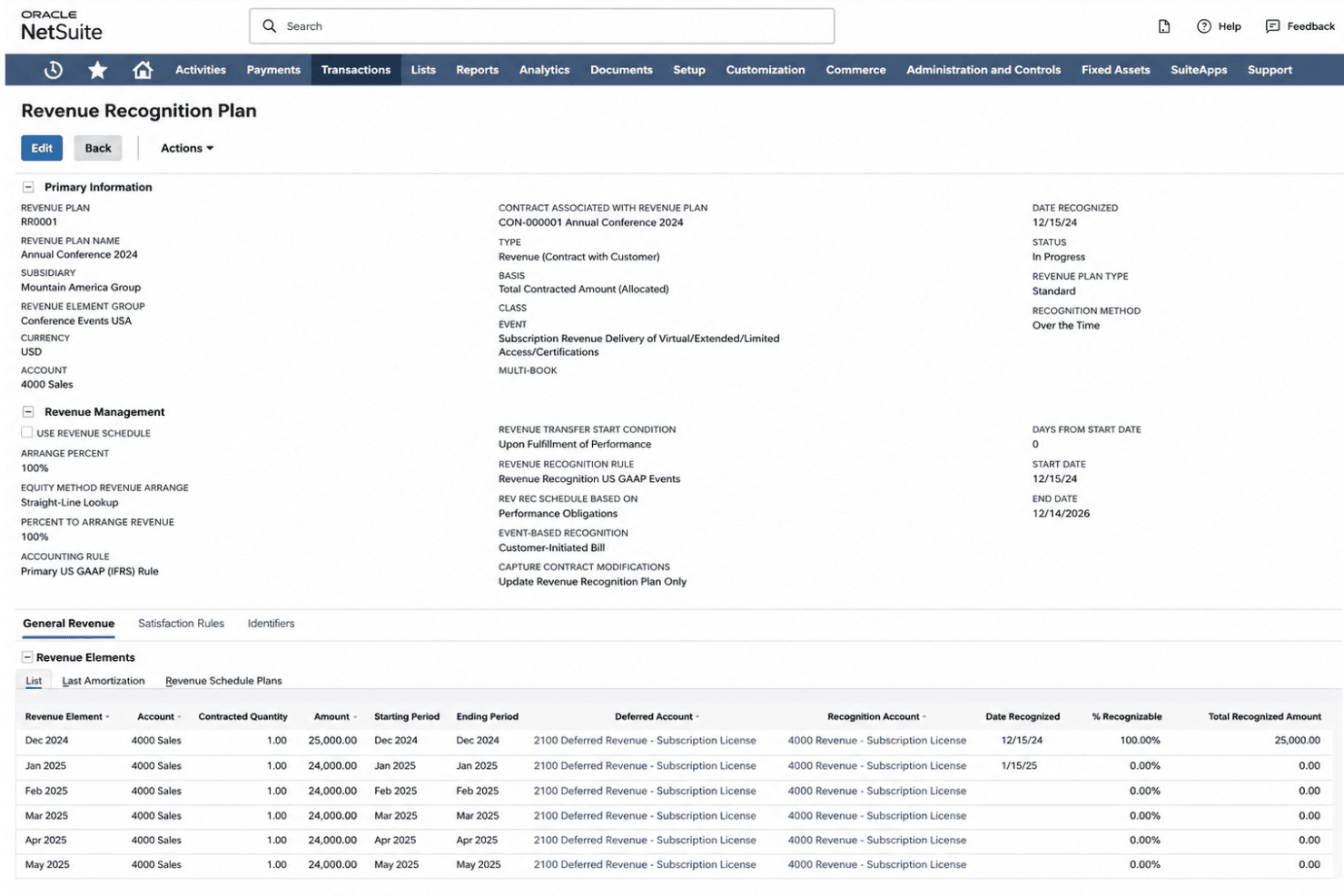
NetSuite recognizes revenue automatically based on contract terms and events. You can manage subscription billing, usage charges, and multi-element arrangements without spreadsheets.
Real-Time Revenue Reporting
This feature delivers real-time reporting dashboards with drill-down analytics. Finance teams can track actuals, liabilities, and forecasts side by side.
Compliance Management
NetSuite includes built-in controls for ASC 606 and IFRS 15 compliance. Regulatory changes, tax management, and audit requests are managed through fully tracked processes.
Contract Management
Manage contract creation, amendments, renewals, and terminations all in one place. This keeps your billing, accounts payable, and revenue schedules accurate even with frequent contract changes.
Revenue Forecasting
Generate projectable revenue models and budgeting frameworks based on open deals, current contracts, and deferred revenue. You get clear pipeline-to-cashflow visibility for leadership reviews.
Automated Billing
The system supports flexible billing cycles, usage ratings, and milestone-based invoicing. This minimizes manual intervention and errors during complex billing periods, keeping accounts receivable current.
Ease of Use
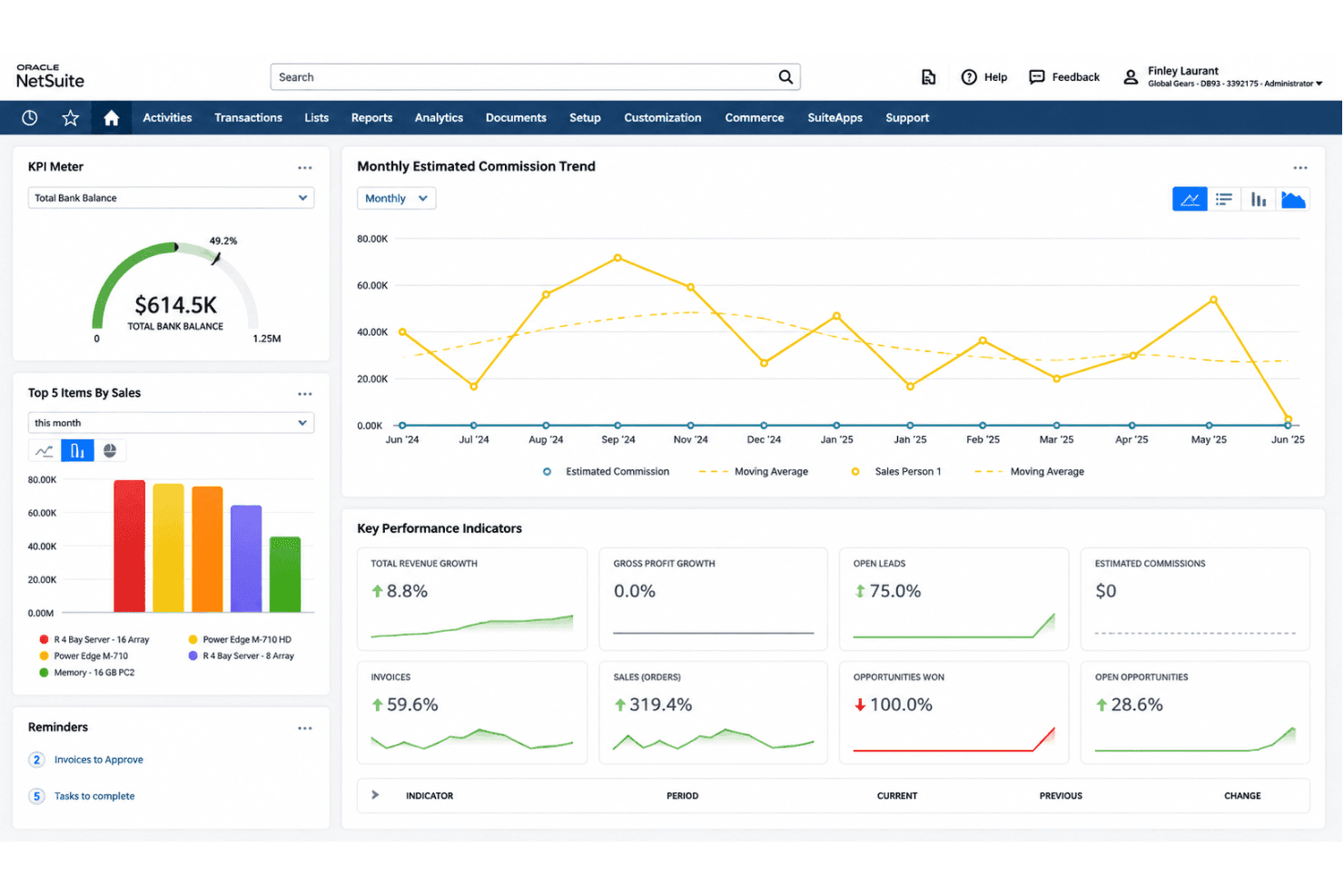
Oracle NetSuite is packed with options, but users often say the interface feels dense and takes real effort to master. Once set up, I think the customizable dashboards, powerful rule engines, and audit trails justify the initial learning curve, especially for teams handling complex or global revenue processes. Still, expect onboarding to take time, especially for teams at the start of their digital transformation journey who aren’t yet familiar with advanced finance software.
Integrations
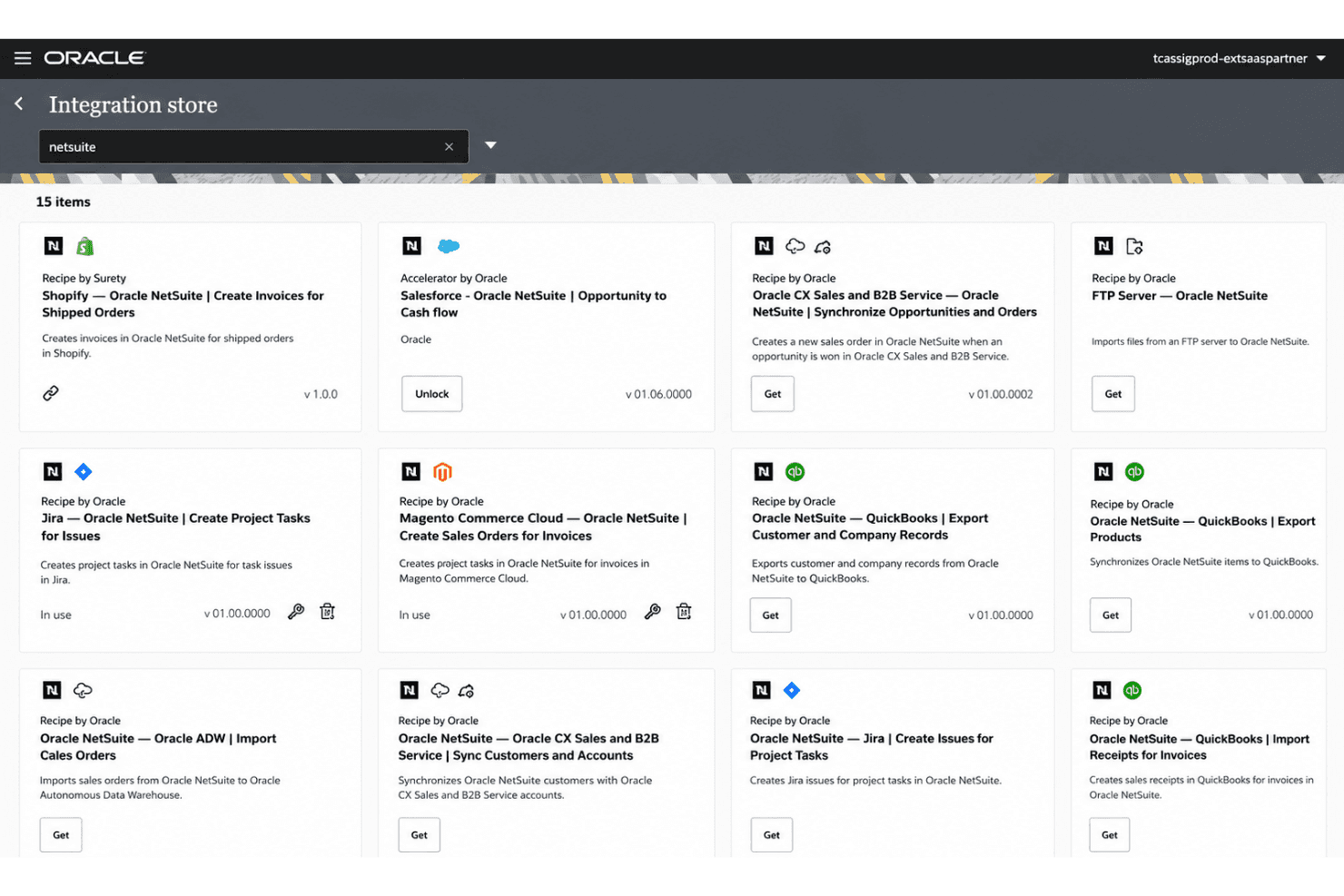
Oracle NetSuite integrates with Salesforce, Shopify, and Microsoft Office 365, among others.
NetSuite also offers a robust API and connects with third-party integration platforms—including Celigo and the NetSuite Connector—for extended connectivity. The SuiteApps marketplace further expands what’s possible, giving you access to a broad ecosystem of pre-built integrations across HR, finance, logistics, and more.
Notable commerce connections include Amazon, enabling unified order and inventory data across platforms. Teams migrating from QuickBooks or Xero will find dedicated migration tools and significantly deeper feature depth in the transition.
Oracle NetSuite Specs
- API: Yes
- Approval Workflows: Yes
- Audit Trail: Yes
- Budgeting: Yes
- Calendar Management: Yes
- Compliance Tracking: Yes
- Custom Reports: Yes
- Customer Management: Yes
- Dashboard: Yes
- Data Export: Yes
- Data Import: Yes
- Data Visualization: Yes
- Document Management: Yes
- Expense Tracking: Yes
- External Integrations: Yes
- Forecasting: Yes
- Inventory Tracking: Yes
- Multi-Currency: Yes
- Multi-User: Yes
- Notifications: Yes
- Prioritization: Yes
- Process Reporting: Yes
- Project Management: Yes
- Resource Management: Yes
- Risk Assessment: Yes
- Roadmapping: Yes
- Scheduling: Yes
- Supplier Management: Yes
- Third-Party Plugins/Add-Ons: Yes
- Workflow Management: Yes