


Creatio CRM im Vergleich mit Microsoft Dynamics 365: Ausführlicher Vergleich & Bewertungen für 2026
Creatio CRM und Microsoft Dynamics 365 unterstützen beide komplexe Umsatzprozesse, unterscheiden sich jedoch bei ihren Ansätzen für KI, Anpassung und Automatisierung. Finden Sie heraus, welches CRM besser zu Ihren Arbeitsabläufen und Wachstumsplänen passt.

Wir bewerten Tools unabhängig, und Provisionen helfen, unsere Tests zu finanzieren. Sehen Sie unsere transparente Richtlinie, unsere Methodik oder schlagen Sie ein Tool vor.
As customer data, sales activity, and service workflows spread across teams, your CRM software needs to do more than organize contacts. In practice, teams also need automation, visibility, and enough flexibility to adapt processes as business needs change.
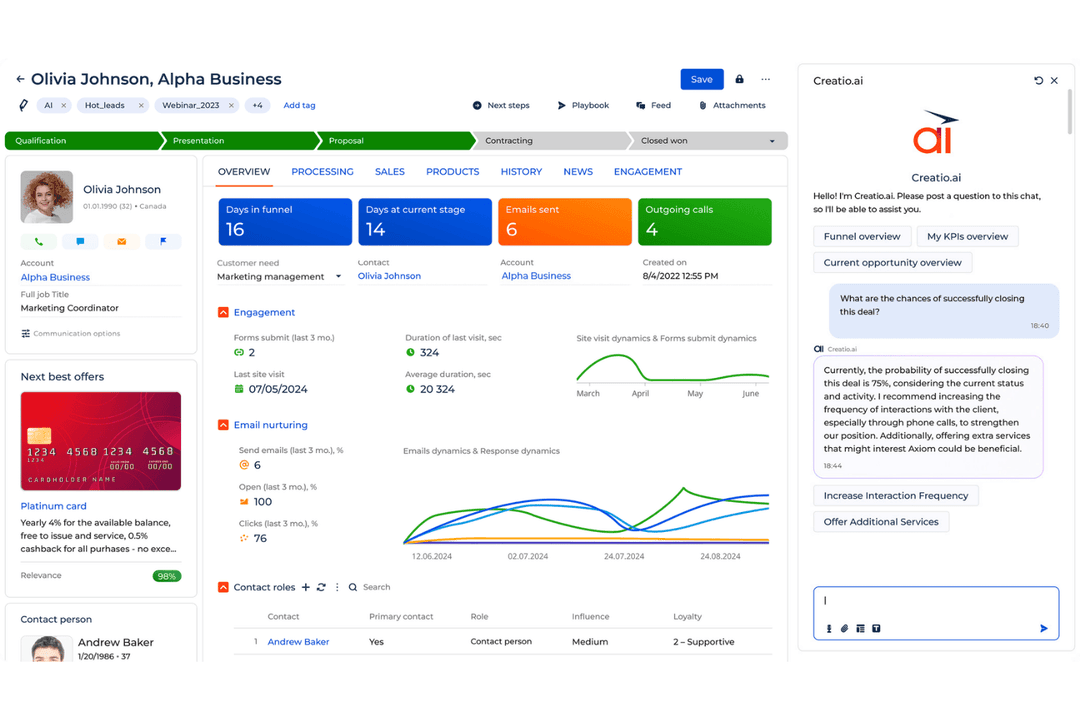
Creatio CRM brings sales, marketing, service, no-code customization, and AI-driven workflow automation into one CRM platform. Meanwhile, Microsoft Dynamics 365 combines CRM capabilities with Microsoft’s business applications and ecosystem.
In this comparison, I look at features, pricing, security, integrations, ease of use, and real-world CRM needs to help you decide which platform fits your team.
Creatio CRM
4.7/5
- 14-day free trial
- From $40/user/month (billed annually)
Microsoft Dynamics 365
4.6/5
- 30-day free trial
- From $65/user/month (billed annually)
Warum Sie unseren Software-Empfehlungen vertrauen können
6,700+
Reviews
20
Industry experts
16+
Evaluation factors
14
Years
Unsere Bewertungen spiegeln unser unabhängiges Urteilsvermögen wider – keine Verkaufsstrategie. Erfahren Sie, wie wir transparent bleiben.
Für diesen Leitfaden haben wir Tools mithilfe von praktischen Tests und unabhängiger Recherche bewertet und dabei unsere Bewertungskriterien angewendet.
Unsere Bewertungen spiegeln unser menschliches redaktionelles Urteilsvermögen wider, keine Verkaufsstrategie.
| Creatio CRM | Microsoft Dynamics 365 | |
|---|---|---|
| Free Trial | 14-day free trial | 30-day free trial |
| Pricing | From $40/user/month (billed annually) | From $65/user/month (billed annually) |
Preisgestaltung und versteckte Kosten von Creatio CRM im Vergleich zu Microsoft Dynamics 365
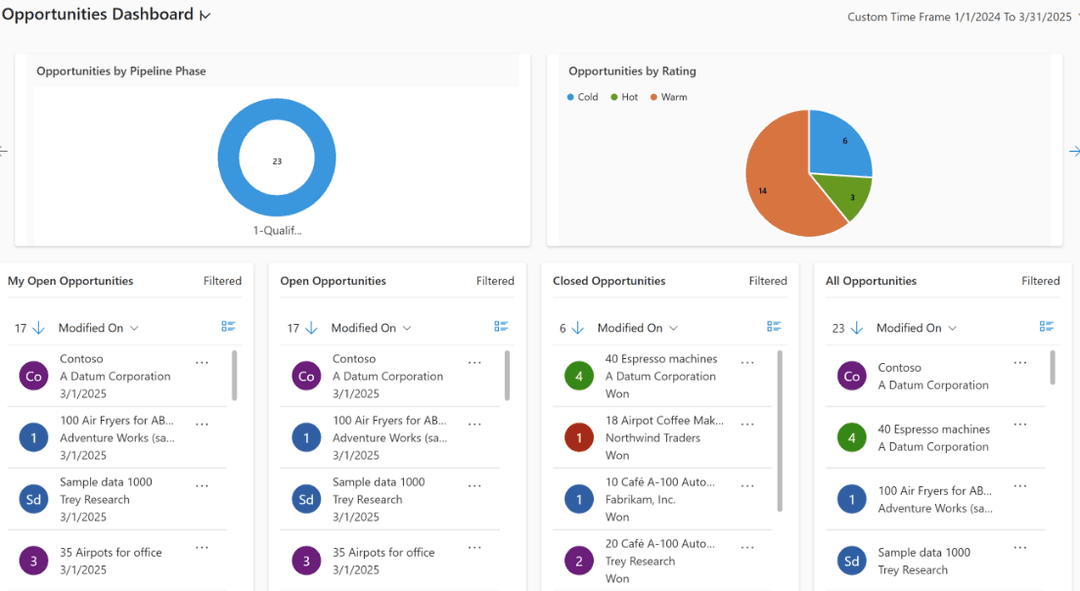
Creatio CRM verwendet eine modulare Preisgestaltung pro Benutzer, bei der Vertriebs-, Marketing- und Servicefunktionen je nach Bedarf zur zentralen Creatio-Plattform hinzugefügt werden. Die Kosten können durch einen höheren KI-Verbrauch, Implementierung, Integrationen, Speicherplatz und professionelle Dienstleistungen steigen. Microsoft Dynamics 365 hingegen bepreist seine CRM- und Geschäftsanwendungen separat. Unternehmen, die Sales, Customer Insights, Customer Service oder andere Dynamics-Apps nutzen, benötigen daher möglicherweise mehrere Lizenzen sowie Implementierungs-, Speicher- und Partnerdienstleistungen.
Die entscheidende Frage bei der Preisgestaltung ist, wie viele CRM-Funktionen und unterstützende Dienstleistungen Ihre Einführung letztendlich erfordern wird. Creatio kann für Unternehmen geeignet sein, die ihre Lösung auf einer einzigen konfigurierbaren CRM-Plattform aufbauen möchten, während Dynamics 365 eine genauere Betrachtung der Kombination aus Apps, Lizenzen und unterstützenden Microsoft-Diensten erfordert, von denen Ihre Einführung abhängt.
| Creatio CRM | Microsoft Dynamics 365 | |
|---|---|---|
| API | Yes | Yes |
| Calendar Management | Yes | Yes |
| Customer Management | Yes | Yes |
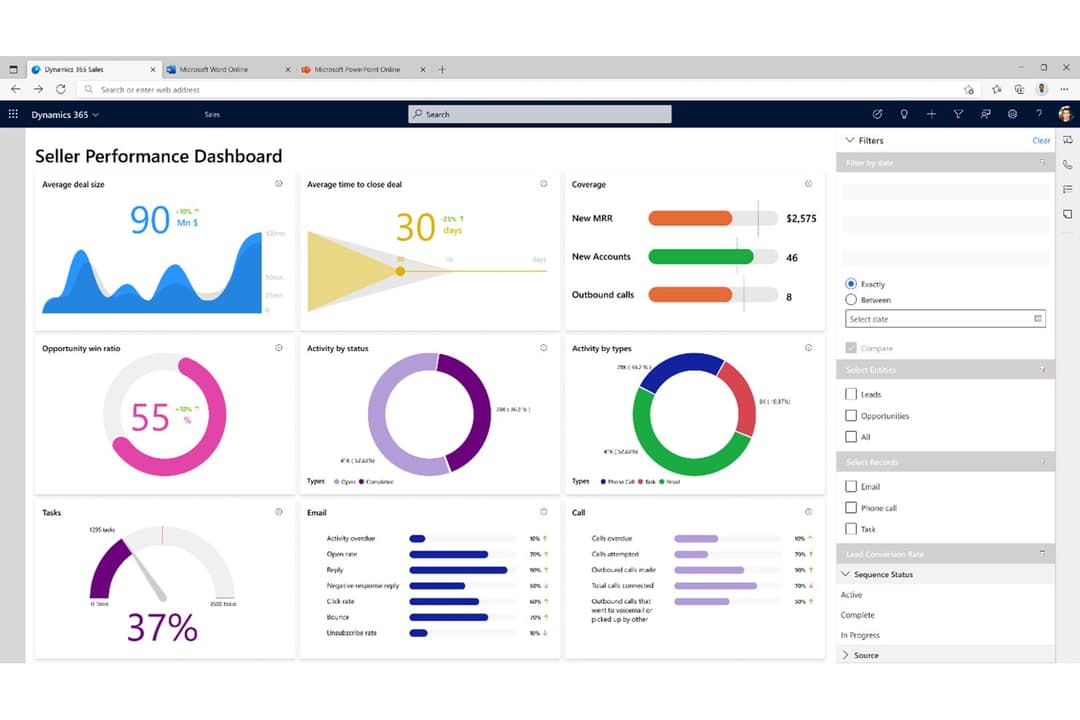
| Dashboard | Yes | Yes |
| Data Export | Yes | Yes |
| Data Import | Yes | Yes |
| Data Visualization | Yes | Yes |
| External Integrations | Yes | Yes |
| Multi-User | Yes | Yes |
| Notifications | Yes | Yes |
| Scheduling | Yes | Yes |
| Task Scheduling/Tracking | Yes | Yes |
| Third-Party Plugins/Add-Ons | Yes | Yes |
| Integration | Creatio CRM | Microsoft Dynamics 365 |
|---|---|---|
| IntegrationOutlook | Creatio CRM✅ | Microsoft Dynamics 365✅ |
| IntegrationGmail | Creatio CRM✅ | Microsoft Dynamics 365✅ |
| IntegrationMicrosoft Teams | Creatio CRM✅ | Microsoft Dynamics 365✅ |
| IntegrationLinkedIn | Creatio CRM✅ | Microsoft Dynamics 365✅ |
| IntegrationSalesforce | Creatio CRM✅ | Microsoft Dynamics 365✅ |
| IntegrationSlack | Creatio CRM✅ | Microsoft Dynamics 365✅ |
| IntegrationQuickBooks | Creatio CRM✅ | Microsoft Dynamics 365✅ |
| IntegrationPower BI | Creatio CRM✅ | Microsoft Dynamics 365✅ |
| IntegrationMailchimp | Creatio CRM✅ | Microsoft Dynamics 365✅ |
| IntegrationAPI | Creatio CRM✅ | Microsoft Dynamics 365✅ |
| IntegrationZapier | Creatio CRM✅ | Microsoft Dynamics 365✅ |
Sowohl Creatio CRM als auch Microsoft Dynamics 365 unterstützen umfassende Integrationsökosysteme durch native Verbindungen, APIs und Konnektoren von Drittanbietern. Creatio CRM legt den Schwerpunkt auf flexible Verbindungen zwischen CRM, Workflow-Automatisierung und externen Geschäftssystemen, während Microsoft Dynamics 365 besonders gut in den Microsoft-Stack passt und sich über die Power Platform sowie Partnerintegrationen weiter ausbauen lässt. Insgesamt bietet Creatio mehr Flexibilität in heterogenen Technologieumgebungen, während Dynamics 365 eine natürliche Wahl für Unternehmen ist, die bereits auf Microsoft-Tools standardisiert sind.
| Faktor | Creatio CRM | Microsoft Dynamics 365 |
|---|---|---|
| FaktorDatenverschlüsselung | Creatio CRMVerwendet Verschlüsselung, sicheres Hosting, Prüfprotokollierung und Datenverwaltungskontrollen bei Cloud- und On-Premises-Bereitstellungen. | Microsoft Dynamics 365Verschlüsselt Kundendaten im Ruhezustand und während der Übertragung innerhalb der Cloud-Infrastruktur von Microsoft. |
| FaktorEinhaltung gesetzlicher Vorschriften | Creatio CRMVerfügt über SOC 2 Type II- und ISO/IEC 27001-Zertifizierungen sowie Kontrollen zur Unterstützung der DSGVO-Konformität und des Umgangs mit regulierten Daten. | Microsoft Dynamics 365Unterstützt wichtige globale Rahmenwerke, darunter DSGVO, SOC und ISO, sowie branchenspezifische Compliance-Anforderungen. |
| FaktorBenutzerzugriffskontrolle | Creatio CRMUnterstützt native Authentifizierung, SAML 2.0 SSO, MFA und granulare RBAC auf Objekt-, Datensatz- und Vorgangsebene. | Microsoft Dynamics 365Verwendet Microsoft Entra ID, rollenbasierte Sicherheit und granulare Berechtigungen in den Dynamics-Anwendungen. |
| FaktorZuverlässigkeit | Creatio CRMBietet Cloud-SLAs auf Unternehmensniveau, mehrere Bereitstellungsregionen in AWS und Azure sowie eine On-Premises-Option für zusätzliche Kontrolle über die Bereitstellung. | Microsoft Dynamics 365Läuft auf der Cloud-Infrastruktur von Microsoft mit SLAs auf Unternehmensniveau und Ausfallsicherheitskontrollen. |
| FaktorPrüfung und Governance | Creatio CRMProtokolliert administrative Vorgänge und Datenoperationen zur Nachverfolgbarkeit und bietet Governance-Richtlinien und -Kontrollen zur Unterstützung von Überwachung und Compliance. | Microsoft Dynamics 365Bietet Überwachung, Prüfungen und administrative Governance in Dynamics 365. |
Insgesamt legt Creatio CRM größeren Wert auf granulare Berechtigungen, Prüfbarkeit, flexible Bereitstellung und Kontrolle darüber, wie Kundendaten in Workflows verwaltet werden. Microsoft Dynamics 365 baut dagegen auf dem Cloud-Sicherheits- und Compliance-Framework von Microsoft auf. Letztlich eignen sich beide Lösungen gut für CRM-Umgebungen in Unternehmen, unterscheiden sich jedoch bei Governance und Bereitstellungsansätzen.
| Faktor | Creatio CRM | Microsoft Dynamics 365 |
|---|---|---|
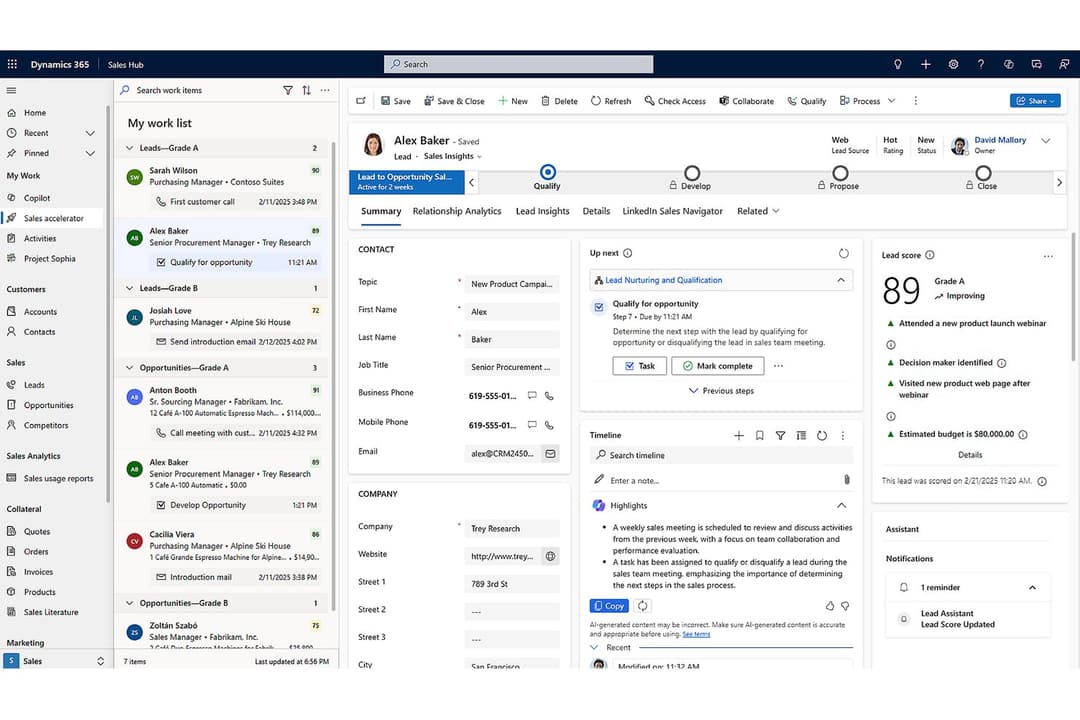
| FaktorBenutzeroberfläche | Creatio CRMKonfigurierbare Benutzeroberfläche mit visuellen Werkzeugen zur Anpassung von Dashboards, Seiten und Workflows. | Microsoft Dynamics 365Bietet eine funktionsreiche Benutzeroberfläche, die sich an den CRM-Anwendungen und -Prozessen von Microsoft orientiert. |
| FaktorEinrichtung | Creatio CRMUnterstützt eine geführte Implementierung, Prozesskonfiguration, Vorlagen und No-Code-Tools zur Anpassung des CRM an geschäftliche Anforderungen. | Microsoft Dynamics 365Die Konfiguration kann je nach Bereitstellung mehrere Anwendungen, Einstellungen und Verwaltungstools umfassen. |
| FaktorLernkurve | Creatio CRMVisuelle Builder und die Ressourcen der Creatio Academy machen die grundlegende Konfiguration zugänglich, auch wenn komplexe Unternehmenseinrichtungen weiterhin Fachkenntnisse erfordern. | Microsoft Dynamics 365Vertrautheit mit dem Microsoft-Ökosystem kann hilfreich sein, während eine erweiterte CRM-Konfiguration möglicherweise spezielle Schulungen erfordert. |
| FaktorAnpassung | Creatio CRMNo-Code-Tools ermöglichen es Geschäftsteams, Workflows, Datenmodelle und CRM-Erlebnisse mit geringerem Bedarf an individueller Entwicklung zu konfigurieren. | Microsoft Dynamics 365Bietet umfangreiche Konfigurations- und Entwicklungsmöglichkeiten über Dynamics 365 und Microsoft Power Platform. |
Aus Sicht der Benutzerfreundlichkeit stellt Creatio CRM die visuelle Konfiguration und No-Code-Tools in den Mittelpunkt. Dadurch können Geschäftsteams mehr Verantwortung für alltägliche CRM-Änderungen übernehmen. Microsoft Dynamics 365 bietet dagegen eine strukturierte Benutzererfahrung, die eng mit dem Geschäftsanwendungs-Ökosystem von Microsoft verbunden ist. Letztlich eignet sich Creatio möglicherweise für Teams, die konfigurierbare Workflows und No-Code-Administration priorisieren, während sich Dynamics 365 für Unternehmen vertraut anfühlen kann, die bereits intensiv mit Microsoft-Tools arbeiten.
Creatio CRM
- No-code tools let revenue teams adapt sales, marketing, and service workflows without relying on developers for every change.
- Predictive, generative, and agentic AI can assist with lead response, recommendations, forecasting, and routine CRM work.
- Flexible workflows, custom objects, applications, and integrations make Creatio well suited to complex enterprise CRM environments.
- Highly configurable implementations require more upfront planning around workflows, data models, integrations, and user experiences.
- Administrators and power users may need time to learn Creatio’s no-code development and process automation capabilities.
- Smaller teams with basic contact management or pipeline needs may find the platform broader than necessary.
Microsoft Dynamics 365
- It offers deep customization options for your specific business needs.
- The analytics and reporting tools are powerful and insightful.
- It's highly scalable to grow with your business.
- The user interface can feel outdated and cumbersome.
- Your team may face a steep learning curve initially.
- Updates and changes can sometimes disrupt your workflow.
Creatio CRM
- Banking and Financial ServicesBanks, credit unions, insurers, and mortgage providers can use Creatio to automate customer-facing workflows across sales, marketing, and service.
- Manufacturing and DistributionManufacturers and distributors can use Creatio to manage complex account relationships and automate sales and service processes across teams.
- Telecom CompaniesTelecom organizations can use Creatio to manage high-volume customer interactions and coordinate sales and service workflows across channels.
- Retail and Consumer GoodsRetail and CPG teams can use Creatio for customer segmentation, campaign management, engagement, and service workflows across brands and markets.
- High-Tech and Business ServicesB2B teams with longer sales cycles can use Creatio to manage opportunities, automate handoffs, and maintain visibility across revenue functions.
- Large Multi-Team EnterprisesEnterprises can use Creatio to connect sales, marketing, and service teams through shared customer data, configurable workflows, and AI automation.
Microsoft Dynamics 365
- Large EnterprisesIts scalability and integration with Microsoft products make it perfect for large companies needing extensive data management.
- Finance IndustryThe powerful analytics and reporting tools give financial teams the insights they need for better decision-making.
- Retail BusinessesDynamics 365 helps retail teams track customer interactions and manage inventory efficiently.
- Manufacturing CompaniesIts customization options allow manufacturers to tailor processes to fit unique production workflows.
- Sales TeamsSales professionals can use its robust CRM features to manage client relationships and track sales pipelines.
- IT DepartmentsIT teams will find its customization and integration capabilities ideal for creating tailored tech solutions.
Wer sollte Creatio CRM nutzen und wer Microsoft Dynamics 365?
Wenn Sie ein CRM suchen, das Geschäftsteams an komplexe Vertriebs-, Marketing- und Service-Workflows anpassen können, ohne stark von Entwicklern abhängig zu sein, ist Creatio CRM wahrscheinlich die bessere Wahl. Es eignet sich gut für mittelgroße und große Unternehmen, die No-Code-Anpassungen, KI-gestützte Automatisierung und Raum für die langfristige Erweiterung von CRM-Prozessen benötigen, insbesondere in Branchen mit stärker spezialisierten Workflows.
Wenn Ihr Unternehmen hingegen bereits intensiv mit Microsoft-Produkten arbeitet und CRM-Funktionen benötigt, die eng an diese Umgebung angebunden sind, könnte Microsoft Dynamics 365 sinnvoller sein. Die Lösung eignet sich besonders gut für große Unternehmen in Bereichen wie Finanzwesen, Einzelhandel und Fertigung sowie für datenorientierte Teams, die auf Microsoft-Tools, Analysen und verbundene Geschäftsanwendungen angewiesen sind.
| Creatio CRM | Microsoft Dynamics 365 | |
|---|---|---|
| AI Workflow Model | Creatio CRM Brings people and AI agents into the same workflows, with agents able to assist users or execute defined processes autonomously. | Microsoft Dynamics 365 Uses Copilot and agents to support sales, service, and other CRM activities within the Microsoft ecosystem. |
| Business Scope | Creatio CRM Focuses on AI-powered CRM and workflow automation across sales, marketing, and service, with industry-specific workflows on the same platform. | Microsoft Dynamics 365 Extends beyond CRM into ERP and operational apps for organizations that want customer and back-office processes under one vendor. |
| Customization Approach | Creatio CRM Combines CRM, AI, workflow automation, and no-code development so teams can visually adapt workflows, applications, and data models. | Microsoft Dynamics 365 Uses Dynamics configuration tools and Power Platform to customize CRM processes, apps, and business logic. |
| Deployment Flexibility | Creatio CRM Supports cloud deployment across multiple regions as well as on-premises deployment. | Microsoft Dynamics 365 Primarily operates within Microsoft’s cloud and Azure environment. |
| Ecosystem Alignment | Creatio CRM Uses an open, composable architecture designed to connect with a range of enterprise systems and AI models. | Microsoft Dynamics 365 Fits especially well for organizations already using Microsoft tools such as Outlook, Excel, Teams, and Power BI. |
| Contact & Account Management | Both centralize customer and company records, interaction history, and account activity so teams can maintain a consistent view of relationships across the revenue cycle. |
|---|---|
| Customer Service Management | Both support case tracking, assignment, service workflows, and resolution monitoring, giving customer-facing teams a structured way to manage support activity. |
| Lead & Opportunity Management | Both support lead qualification, opportunity tracking, pipeline stages, and sales activity management to help teams move deals from initial interest through close. |
| Mobile CRM Access | Both offer mobile access to customer data, sales activity, and service workflows, making them suitable for remote teams and employees who need CRM access away from their desks. |
| Sales Forecasting & Analytics | Both provide forecasting, dashboards, and reporting tools that help CROs monitor pipeline health, identify risks, and make decisions based on current sales performance. |