

10 Best Ecommerce Pricing Software Reviewed in 2026

Best Ecommerce Pricing Software Shortlist


Pricing plays a direct role in revenue, margins, and competitiveness for any ecommerce business. But keeping prices aligned with market conditions, competitor activity, and customer demand is increasingly difficult to manage manually. Ecommerce pricing software helps teams respond faster by using data to inform pricing decisions and reduce reliance on guesswork.
I’ve tested and reviewed a range of pricing platforms. This list includes both pure ecommerce pricing tools and enterprise pricing platforms used by ecommerce, omnichannel, and B2B retailers. In this article, I’ll share my top picks for ecommerce pricing software, highlighting the features that help teams manage price changes, protect margins, and stay competitive.
By the end, you’ll have a clearer view of which tools fit your business model and pricing strategy, making it easier to choose a solution that supports growth and long-term performance.
Why Trust Our Software Recommendations
Our reviews reflect our independent judgment—not a sales pitch. Learn how we stay transparent.
For this guide, we evaluated tools using hands-on testing and independent research, scoring tools using our selection criteria.
Our reviews reflect our human editorial judgment, not a sales pitch.
Best Ecommerce Pricing Software Summary
This comparison chart summarizes pricing details for my top ecommerce pricing software selections to help you find the best one for your budget and business needs.
| Tool | Best For | Trial Info | Price | ||
|---|---|---|---|---|---|
| 1 | Best with automated pricing workflows | Free demo available | Pricing upon request | Website | |
| 2 | Best with explainable AI-driven pricing decisions | Free plan + free demo | From $379/month | Website | |
| 3 | Best for AI-driven pricing insights | Free demo available | Pricing upon request | Website | |
| 4 | Best for global market analysis | Free demo available | Pricing upon request | Website | |
| 5 | Best for B2B pricing solutions | Free demo + 14-day free trial available | Pricing upon request | Website | |
| 6 | Best for dynamic pricing updates | Free trial available | From $299/month | Website | |
| 7 | Best for product-matching pricing intelligence | Free demo available | Pricing upon request | Website | |
| 8 | Best for real-time price tracking | 7-day free trial + free demo available | From 49€/month (billed annually) | Website | |
| 9 | Best for small to midsize businesses | Free plan + free trial available | From $49/month | Website | |
| 10 | Best for AI-powered retail price intelligence | Free demo available | Pricing upon request | Website |
Best Ecommerce Pricing Software Reviews
Below are my detailed summaries of the best ecommerce pricing software that made it onto my shortlist. My reviews offer a detailed look at the key features, pros and cons, integrations, and ideal use cases of each tool to help you find the best one for you.

Yieldigo
Best with automated pricing workflows
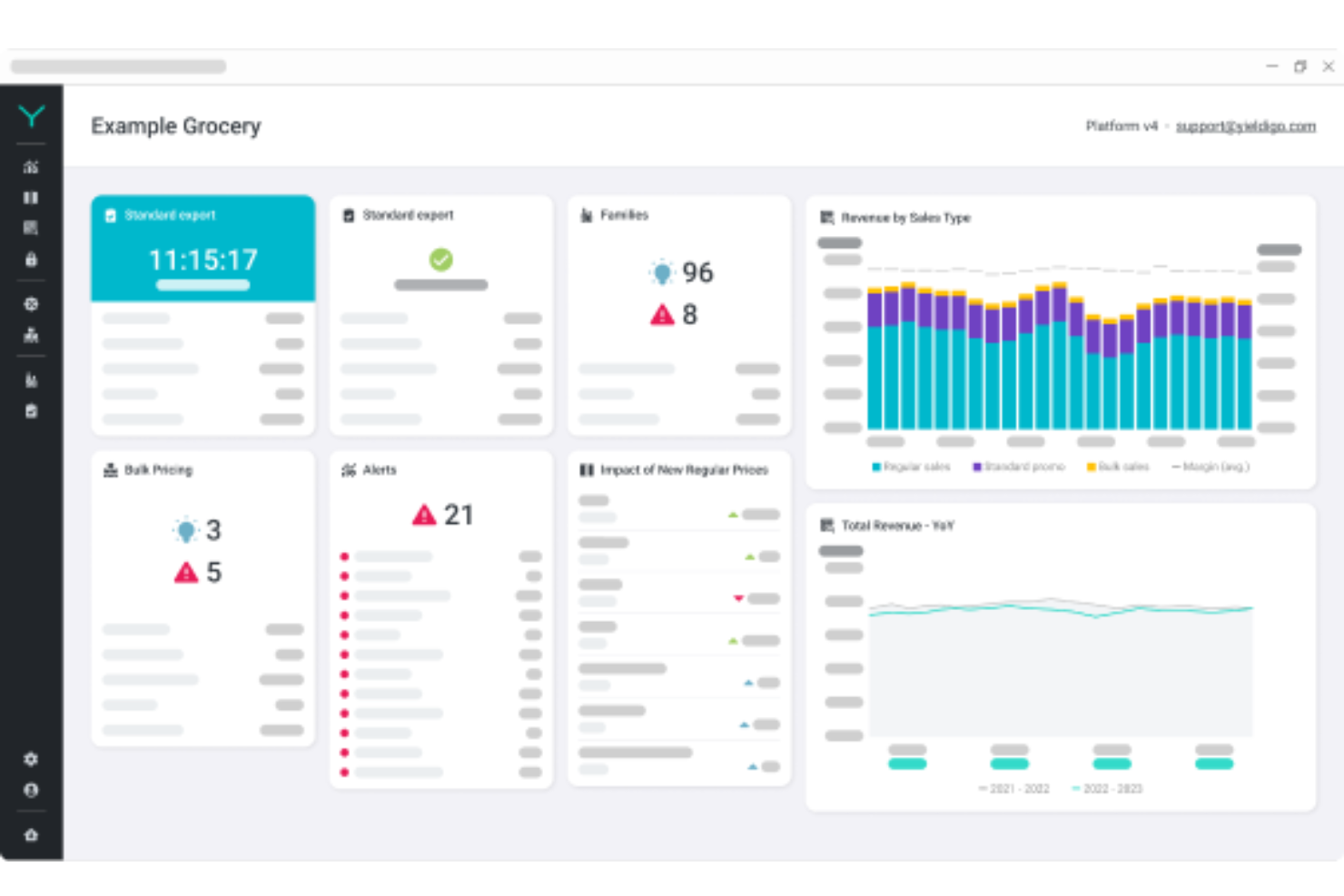
Yieldigo offers a data-driven pricing platform designed for retailers and ecommerce businesses looking to optimize their pricing strategies. The software appeals to teams managing large product catalogs and complex pricing requirements across multiple channels. Yieldigo helps users address challenges like dynamic market shifts, margin protection, and maintaining price consistency at scale.
Who Is Yieldigo Best For?
Yieldigo is a good fit for retail and ecommerce teams—especially those in mid-sized to large organizations—who need advanced pricing automation and optimization across complex product assortments.
Why I Picked Yieldigo
When I evaluated ecommerce pricing software, I looked for tools that could automate complex pricing tasks without constant manual intervention. Yieldigo stands out for its automated pricing workflows, which let users set up rules and triggers that adjust prices in real time based on market data, inventory levels, and competitor activity.
I appreciate how the platform’s workflow engine can handle large product assortments and multiple pricing scenarios, reducing the risk of errors and missed opportunities. This makes Yieldigo especially useful for ecommerce teams that need to react quickly to changing market conditions while maintaining control over pricing strategy.
Yieldigo Key Features
Some other features that make Yieldigo valuable for ecommerce pricing teams include:
- AI-driven price optimization: The platform uses artificial intelligence to analyze sales data and recommend optimal prices for each product.
- Scenario simulation: Users can model different pricing strategies and forecast their impact before making changes live.
- Centralized pricing dashboard: Yieldigo provides a unified dashboard for monitoring, managing, and adjusting prices across all channels.
- Competitor price monitoring: The tool tracks competitor pricing in real time, allowing users to respond quickly to market changes.
Yieldigo Integrations
Integrations are not publicly listed; however, many custom integrations can be configured through Yieldigo's API or via secure SFTP data transfer.
Pros and Cons
Pros:
- Includes automated competitor price monitoring
- Supports centralized pricing management across channels
- Provides scenario simulation for pricing strategies
Cons:
- Advanced features may require technical expertise
- Fewer pre-built ecommerce platform integrations
New Product Updates from Yieldigo

Yieldigo Adds Export Scheduling and Promotions Overview
Yieldigo adds export scheduling with exclusion periods and a Promotions Overview for product-level promotion timelines. These updates improve pricing operations and promotion visibility. For more information, visit Yieldigo’s official site.
 .
.
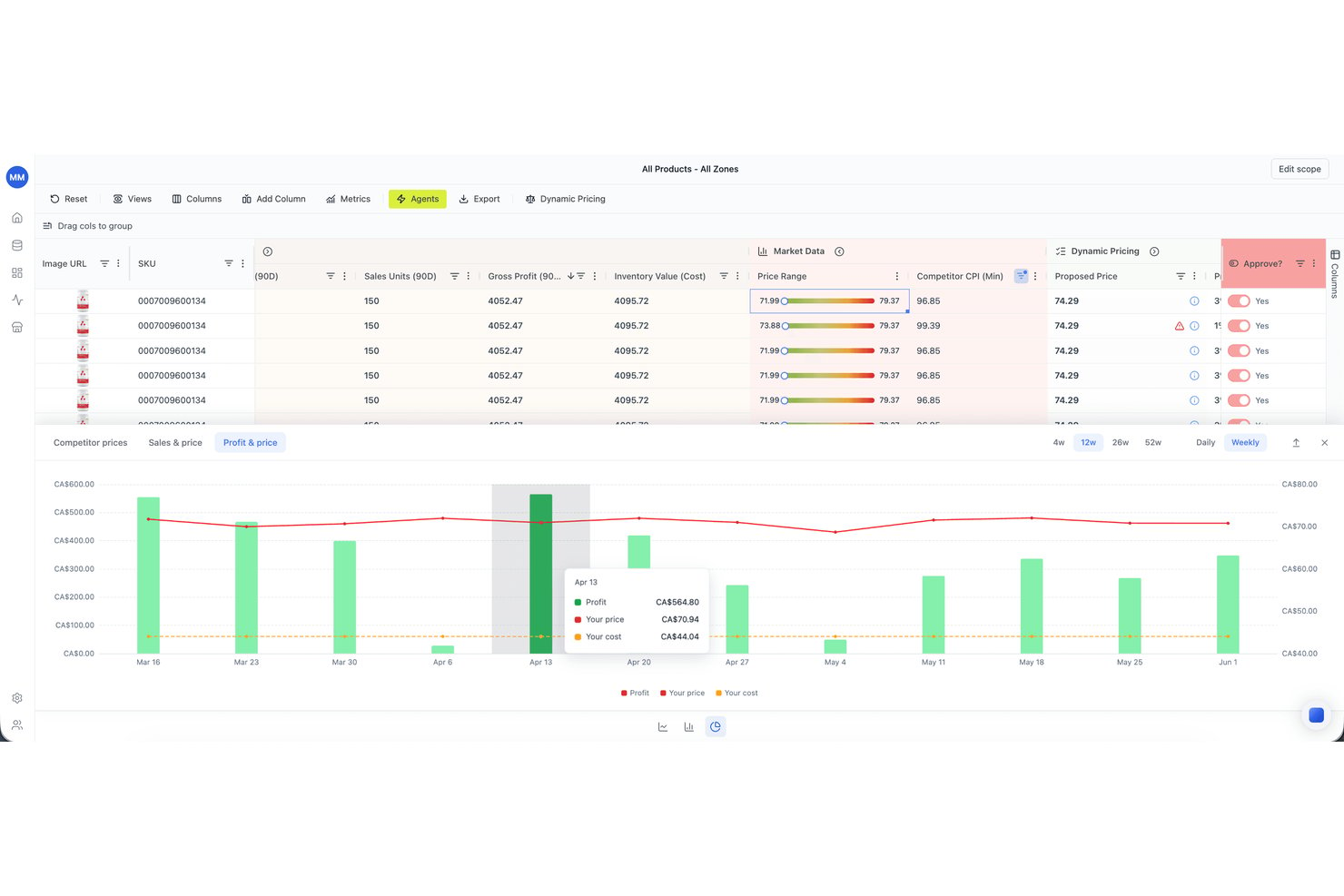
RetailGrid is an AI-driven ecommerce pricing platform built for mid-market retailers that combines dynamic repricing, competitor price monitoring, rule-based pricing strategies, and elasticity-based price optimization in a spreadsheet-native workspace.
Who Is RetailGrid Best For?
RetailGrid is a strong fit for pricing analysts and category managers who need auditable AI recommendations without relying on an IT team or implementation partner.
Why I Picked RetailGrid
I picked RetailGrid because every AI price recommendation comes with a visible confidence score and a plain-language explanation of the reasoning behind it. Pricing analysts can interrogate why the platform suggests a markdown on a slow-moving SKU before approving it, rather than trusting opaque output. I also like that the Price Elasticity and GMROI Optimization agents work together, grounding recommendations in both demand data and inventory returns at the same time.
RetailGrid Key Features
- Spreadsheet-native workspace: Enables pricing teams to manage and edit large product catalogs using familiar grid-based tools.
- Multi-channel price orchestration: Lets users coordinate and update prices across online stores, regions, and channels from a central interface.
- Shopify and Magento integrations: Connects directly to major ecommerce platforms for automated SKU syncing and price updates.
- Built-in dashboards: Provides real-time views into margin, price changes, and competitive position with configurable analytics.
RetailGrid Integrations
RetailGrid offers native integrations with Shopify and Magento. An API is available for custom integrations.
Pros and Cons
Pros:
- Handles up to 200,000 SKUs natively
- Built-in grid interface for batch editing prices
- Confidence scores and explanations on every recommendation
Cons:
- Competitor price refresh limited to every 4 hours
- No native Amazon Seller Central integration

Best for AI-driven pricing insights

Intelligence Node is a dynamic pricing software and analytics platform tailored for retailers and brands seeking data-driven pricing decisions. It helps businesses by offering real-time competitive insights and pricing analytics to optimize their pricing strategies.
Why I picked Intelligence Node: With AI-driven insights that help you make informed pricing decisions, this platform tracks billions of products daily, giving you a detailed view of market trends. Its pricing engine allows you to implement intelligent pricing rules based on real-time data. Customizable reports and dashboards help you monitor performance effectively.
Standout features and integrations:
Features include visual merchandising analytics, which help you understand product placement effectiveness. The platform offers price elasticity analysis to gauge customer response to price changes, and its trend forecasting tools provide insights into future market shifts.
Integrations are not publicly listed.
Pros and Cons
Pros:
- Trend forecasting tools
- Real-time data tracking
- AI-driven insights
Cons:
- Complex learning process
- Pricing details are not transparent

Best for global market analysis

NetRivals is a pricing intelligence platform designed for retailers and brands aiming to gain insights from global market data. It helps businesses by providing real-time price monitoring and market analysis to inform pricing strategies.
Why I picked NetRivals: It offers extensive global market analysis, which is practical if your business operates in multiple regions. The platform monitors millions of products across various markets, providing comprehensive data. Its dynamic pricing capabilities allow you to adjust prices based on real-time market conditions, and customizable dashboards and reports help you keep track of your pricing performance.
Standout features and integrations:
Features include image recognition technology that helps you identify products across different markets. You can organize your product catalogue using filters and custom tags, and the historical pricing data feature allows you to analyze market trends over time.
Integrations include Shopify, Adobe Commerce, WooCommerce, PrestaShop, Akeneo PIM, Shopware, Dropbox, Google Drive, and more.
Pros and Cons
Pros:
- Historical data analysis
- Customizable dashboards
- Extensive market coverage
Cons:
- Best suited to teams with dedicated pricing or analytics resources
- Limited integration


Vendavo is a pricing software tailored for B2B enterprises, helping them optimize pricing strategies and improve profitability. It serves industries such as manufacturing and distribution by offering solutions for pricing analysis and strategy development.
Why I picked Vendavo: With a focus on B2B pricing solutions, Vendavo is ideal for businesses needing complex pricing structures. The software offers margin and profit analysis tools, which help you understand the financial impact of pricing decisions. Its price setting and management features allow you to maintain competitive pricing across various markets. Advanced analytics provide insights into customer behavior and market trends.
Standout features and integrations:
Features include deal guidance tools that help you negotiate better terms with customers. The software offers rebate management to help streamline discount processes, and it also provides predictive analytics to anticipate market changes and adjust strategies accordingly.
Integrations include SugarCRM, Salesforce, Oracle, Microsoft Dynamics, Infor, Adobe Commerce, Shopify, BigCommerce, and more.
Pros and Cons
Pros:
- Predictive analytics tools
- Effective margin analysis
- Advanced analytics capabilities
Cons:
- Steep learning curve
- Complex implementation process
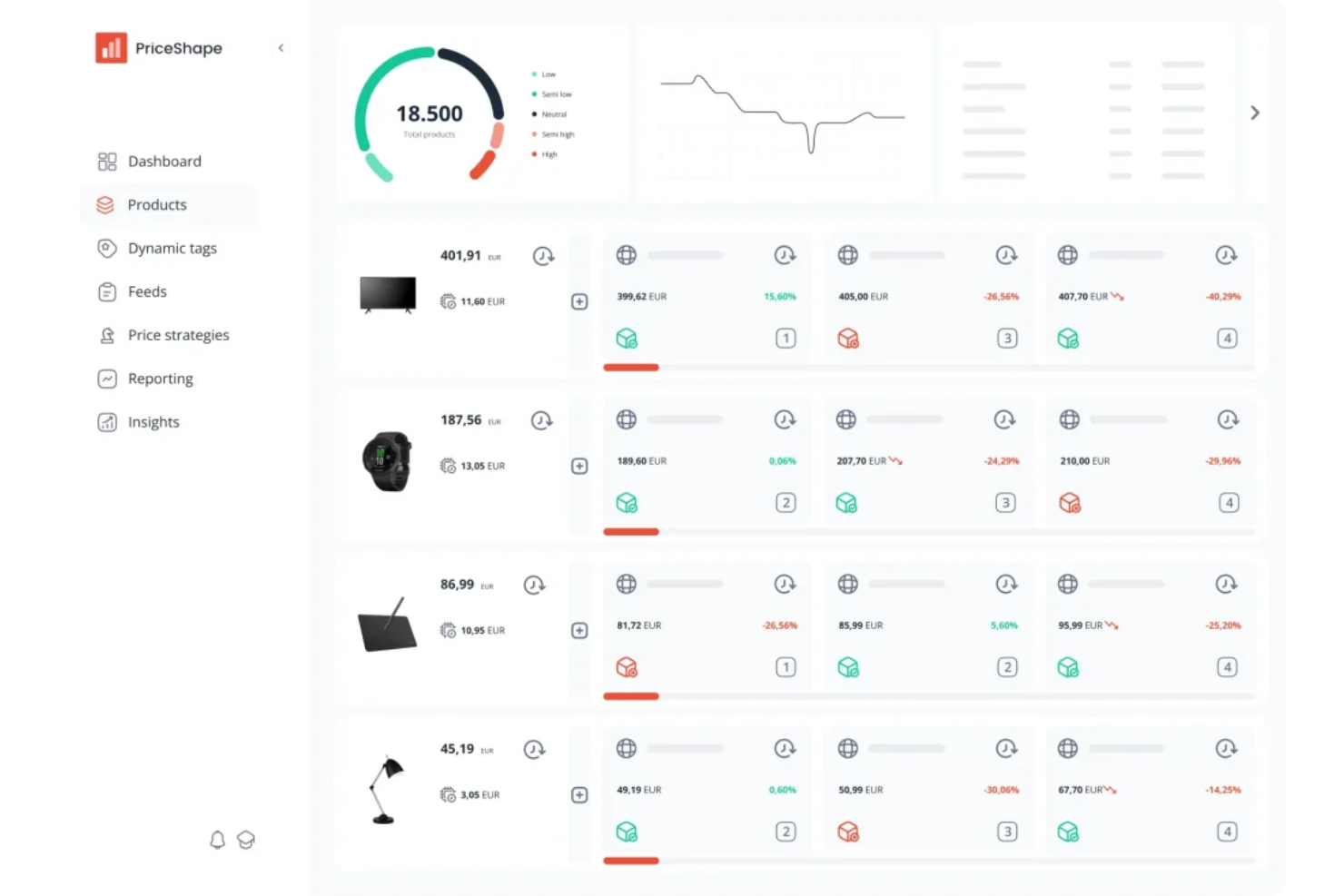
PriceShape is a pricing optimization tool designed for retailers and brands aiming to enhance their pricing strategies. It focuses on providing dynamic pricing updates and competitor monitoring to help businesses stay competitive.
Why I picked PriceShape: Its dynamic pricing capabilities allow you to adjust prices in real time based on market changes. The tool's competitor monitoring feature keeps you informed about pricing trends. Daily market scans ensure you have up-to-date information for smarter pricing decisions, and customizable dashboards make it easy to access the data you need.
Standout features and integrations:
Features include product performance analysis, which helps you understand which items are driving sales, intelligent pricing automation for setting rules for automatic price adjustments, and marketing optimization tools that help you allocate your budget effectively.
Integrations include Shopify, Tableau, Power BI, Google Data Studio, Google Analytics, and more.
Pros and Cons
Pros:
- Detailed competitor insights
- Customizable dashboards
- Real-time price adjustments
Cons:
- Complex for small businesses
- May require technical setup

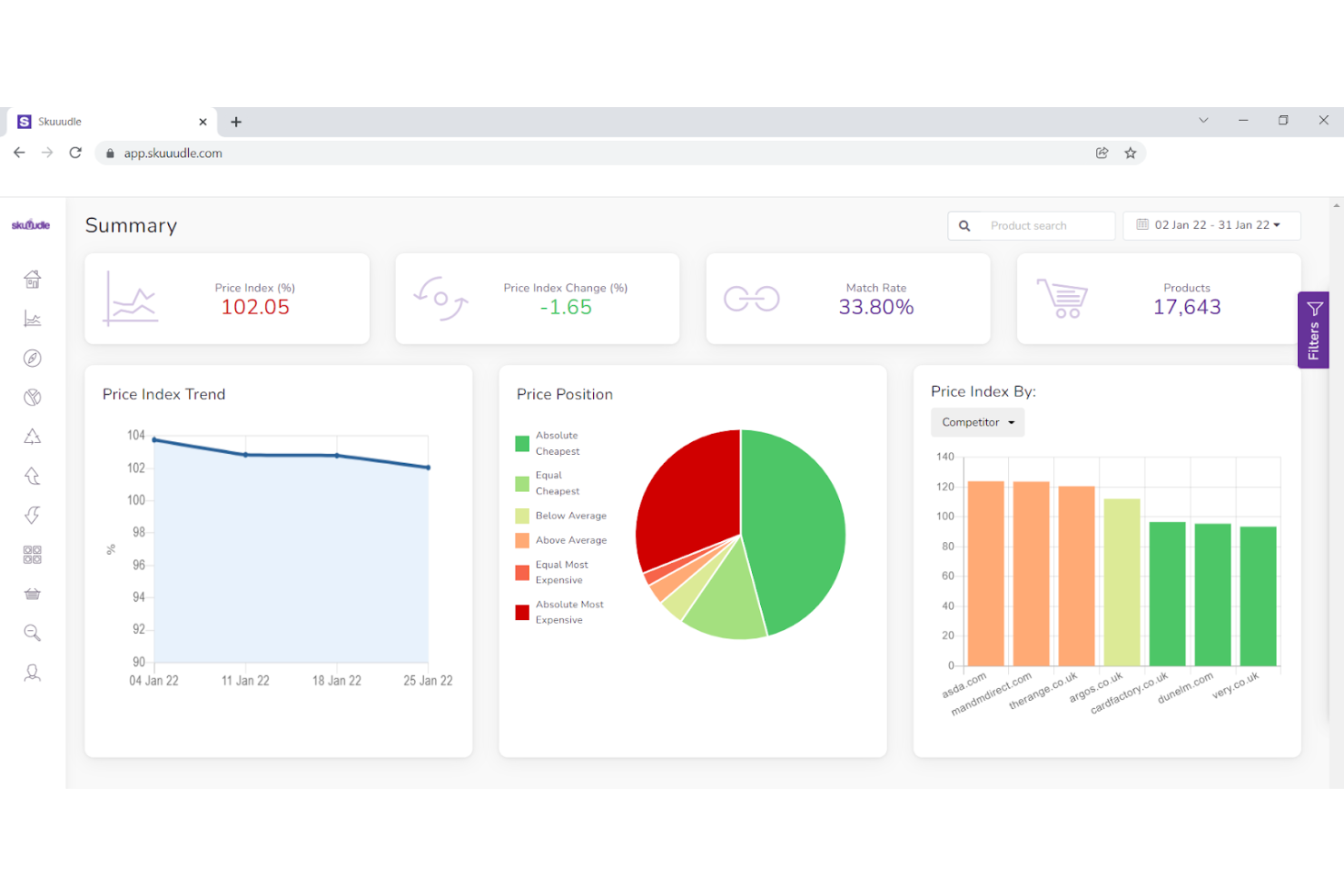
Skuuudle is a pricing intelligence tool designed for retailers and brands needing detailed product pricing insights. It assists businesses by providing competitive pricing data and market analysis to refine their pricing strategies.
Why I picked Skuuudle: It focuses on matching your products with those of your competitors, which provides valuable granular pricing details. The platform offers detailed competitor pricing analysis, allowing you to make informed decisions, and customizable pricing reports help you track price performance over time. Skuuudle's market analysis tools provide insights into industry trends, helping you stay competitive.
Standout features and integrations:
Features include a user-friendly dashboard that presents pricing data clearly. The software offers historical data tracking to analyze pricing changes over time and provides large-scale price scraping to help you stay aware of significant market shifts.
Integrations are not publicly listed.
Pros and Cons
Pros:
- User-friendly dashboard
- Historical data tracking
- Comprehensive market analysis
Cons:
- Large volume of data to review
- Limited integration


Boardfy is an e-commerce pricing software designed for businesses and brands to monitor competitor and distributor prices in real time. It's ideal for those needing dynamic pricing automation and price intelligence dashboards.
Why I picked Boardfy: It offers First-Mover Technology for tracking market trends, which helps you stay ahead of competitors, and its real-time price monitoring allows you to adjust your pricing strategies quickly. The dynamic pricing automation is user-friendly, making it accessible even if you're not tech-savvy. With campaign optimization tools for platforms such as Google Shopping, Boardfy offers a practical solution for managing your pricing.
Standout features and integrations:
Features include a user-friendly interface, dynamic pricing automation, and campaign optimization for Google Shopping. Its real-time price monitoring helps you keep up with competitors.
Integrations include Shopify, WooCommerce, Adobe Commerce, Amazon, Google Shopping, BigCommerce, Prestashop, eBay, OpenCart, FNAC, and more.
Pros and Cons
Pros:
- Dynamic pricing automation
- Easy setup process
- Real-time monitoring
Cons:
- Limited customization options
- Limited to certain e-commerce platforms
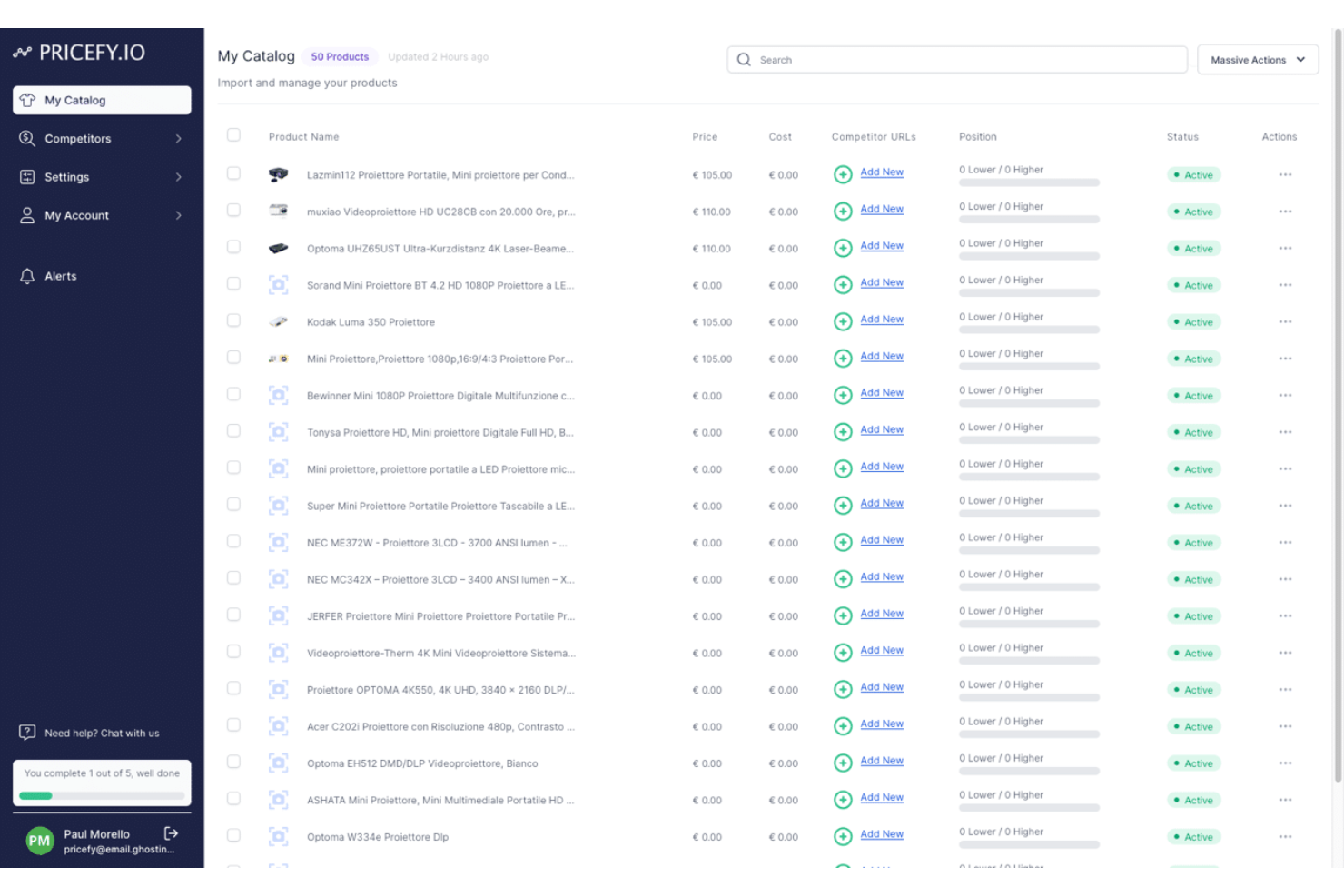
Pricefy is a pricing optimization tool tailored for small to midsize businesses looking to enhance their pricing strategies. It helps users manage and adjust prices based on market trends and competitor data.
Why I picked Pricefy: It offers features specifically designed for small to mid-size businesses, making it accessible and effective for those with limited resources. The platform provides easy-to-use price monitoring and adjustment tools. Pricefy's pricing rules and alerts ensure you stay competitive without needing complex configurations, and real-time data helps you make informed decisions quickly.
Standout features and integrations:
Features include customizable pricing rules that let you set parameters based on your business needs. The software offers a user-friendly interface that simplifies the process of monitoring price changes. Real-time alerts notify you of significant market shifts, allowing for quick adjustments.
Integrations include Shopify, WooCommerce, Adobe Commerce, BigCommerce, PrestaShop, Wix, and more.
Pros and Cons
Pros:
- Real-time market alerts
- Customizable pricing rules
- Easy-to-use interface
Cons:
- Limited advanced analytics
- Basic reporting features

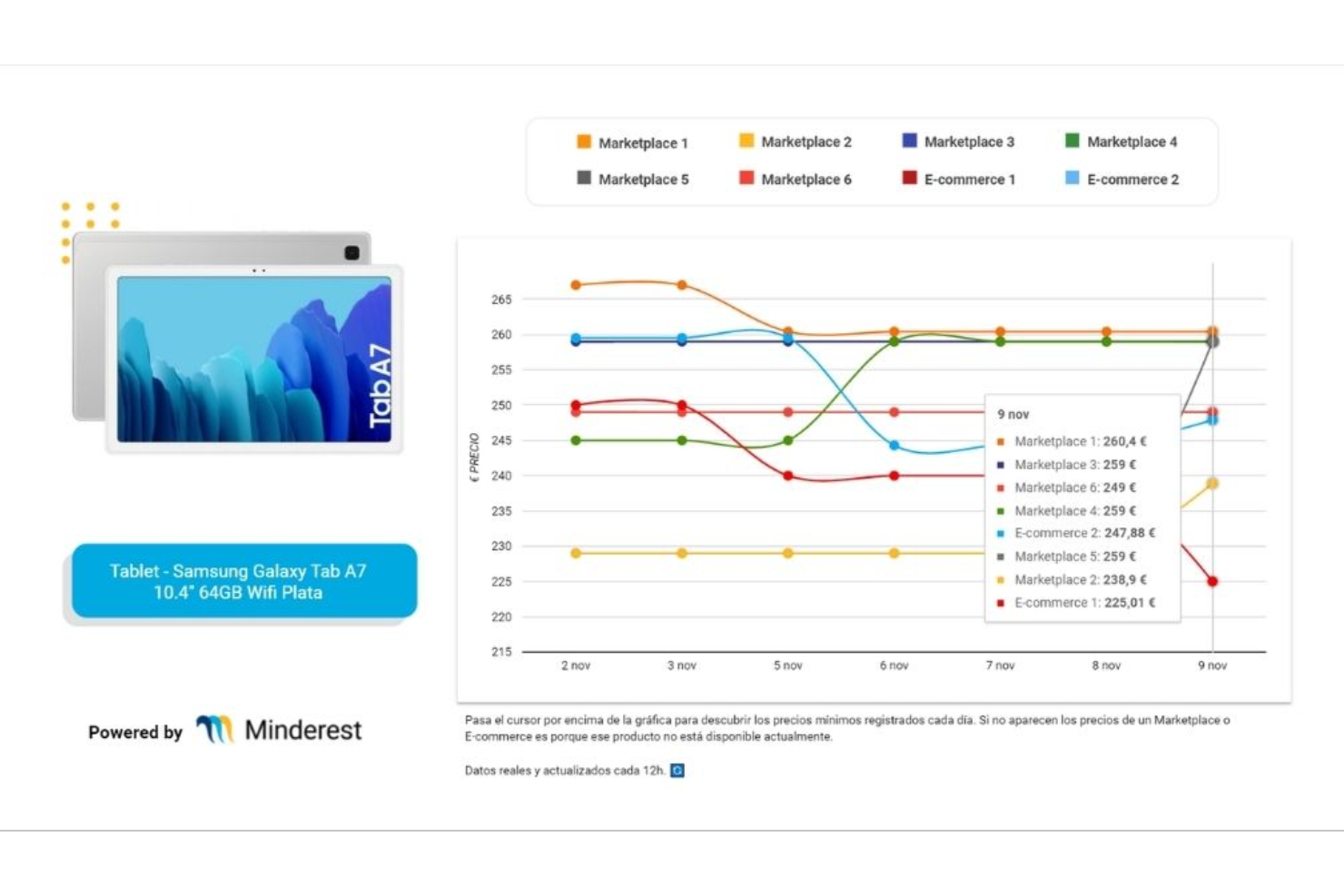
Minderest is a pricing intelligence platform tailored for retailers and brands looking to optimize their pricing strategies through market data. It helps businesses by offering detailed competitor analysis and pricing insights to refine pricing decisions.
Why I picked Minderest: It excels in providing AI-powered retail price intelligence, helping you stay competitive in dynamic markets. The platform offers comprehensive competitor pricing analysis, giving you a clear view of market trends, and its customizable reports allow you to track performance effectively. Additionally, Minderest price monitoring tools provide real-time updates, ensuring you make informed decisions.
Standout features and integrations:
Features include advanced analytics and dynamic pricing capabilities. This allows you to better understand pricing trends and consumer behavior and adjust prices based on real-time data. Its user-friendly dashboard provides a clear overview of all pricing activities.
Integrations include Shopify, Adobe Commerce, Power BI, PrestaShop, Tableau, Looker Studio, Google Shopping, and more.
Pros and Cons
Pros:
- AI-assisted dynamic pricing features
- Real-time price monitoring
- Comprehensive competitor analysis
Cons:
- Lengthy contract requirement
- Repricing options are limited in flexibility for complex or highly customized rules
Other Ecommerce Pricing Software
Here are some additional ecommerce pricing software options that didn’t make it onto my shortlist but are still worth checking out:
- PriceEdge
For custom pricing models
- Repricer
For marketplace price adjustments
- Price2Spy
For competitor price monitoring
- 7Learnings
For machine learning optimization
- Dealavo
For e-commerce price optimization
- Wiser
For large-scale pricing strategies
- Pricefx
For scalable pricing solutions
- Omnia
For omnichannel pricing
- Dynamic Pricing AI
For AI-driven pricing models
- Reactev
For real-time market analysis


Related Reviews
How I Evaluate ecommerce Pricing Software
I evaluate every tool across two layers: the baseline features it must have—like dynamic repricing and competitor tracking—and the differentiators that set the best apart.
Core Functionality (Table Stakes For This List)
When I'm selecting tools for my list, I rank each one on a scale from 0 (does not offer the functionality) to 5 (excels in this area) for each core functionality listed below. Then, I calculate the tool's total score into a percentage. Each tool needs to achieve a minimum total score of 65% to be considered for inclusion.
- Dynamic Repricing Engine: I look for automated price adjustments that fire based on real-time triggers—like a competitor dropping a price on a top-selling SKU or inventory dipping below a set threshold.
- Competitor Price Monitoring: The tool should track and match competitor products across marketplaces and retail sites, with updates frequent enough to act on before you lose the buy box.
- Rule-Based Pricing Strategies: I evaluate how flexible the rule builder is—whether you can layer conditions like margin floors, category-level caps, and seasonal overrides into a single strategy.
- Price Optimization & AI Recommendations: I check whether the platform goes beyond static suggestions and factors in demand elasticity, historical sales patterns, or predictive modeling to surface price points.
- Ecommerce Platform Integrations: Native connections to platforms like Shopify, BigCommerce, Magento, and Amazon matter here, especially bidirectional sync that pushes price updates and pulls catalog data.
- Pricing Analytics & Reporting: Dashboards should surface margin trends, revenue impact by SKU or category, and competitive positioning—not just a log of what prices changed and when.
Once I have a list of tools that meet this criteria, I consider what sets each platform apart.
Differentiating Factors (What Sets Vendors Apart)
Here's how I compare and contrast different vendors:
Standout Features
A/B price testing is a big differentiator—I look for tools that let you run controlled experiments on specific SKU groups before committing to a full rollout. Multi-channel price orchestration matters just as much, especially when you're managing different margin targets across your DTC site, Amazon, and wholesale accounts from one place. I also evaluate MAP compliance monitoring, since tracking whether resellers honor your pricing policies across dozens of listings saves hours of manual auditing.
Beyond Features
I check how well each tool fits into a RevOps tech stack—native connectors to your CRM, ERP, and BI tools mean pricing data actually flows into forecasts and pipeline reports. Scalability is another factor I weigh, since a tool that works for a 500-SKU catalog can fall apart at 100,000. I also evaluate AI transparency, because if your team can't explain why a price changed to leadership, even the smartest algorithm creates more problems than it solves.
How To Choose Ecommerce Pricing Software
It's easy to get bogged down in long feature lists and complex pricing structures. To help you stay focused as you work through your unique software selection process, here's a checklist of factors to keep in mind:
| Factor | What To Consider |
|---|---|
| Scalability | Can the software grow with your business? Consider if it can handle increased data and users without performance issues. Look for solutions that support future expansion. |
| Integrations | Does it integrate with your existing systems? Check compatibility with your ecommerce platform, CRM, and ERP to ensure seamless data flow and avoid manual data entry. |
| Customizability | Can you tailor the software to your specific needs? Evaluate if it allows you to create custom pricing rules and reports that fit your business model. |
| Ease of use | Is the software intuitive and easy to navigate? Look for a user-friendly interface that minimizes training time and helps your team get up to speed quickly. |
| Implementation and onboarding | How long does it take to implement? Consider the time and resources needed for setup and training. Look for vendors that offer comprehensive onboarding support. |
| Cost | Does the pricing fit your budget? Compare the cost against competitors and consider the value it offers. Look for transparent pricing with no hidden fees. |
| Security safeguards | Are data security measures in place? Ensure the software complies with data protection standards and offers features like encryption and access controls. |
What Is Ecommerce Pricing Software?
Ecommerce pricing software is a tool that helps businesses set and adjust prices for their online products based on market data and competitor analysis. Retailers, pricing analysts, and revenue managers typically use these tools to optimize pricing strategies and boost profitability. Automated pricing updates, competitor monitoring, and customizable pricing rules support informed decision-making and efficient pricing processes. Overall, these tools help businesses remain competitive and responsive in a dynamic market.
Features
When selecting ecommerce pricing software, keep an eye out for the following key features:
- Automated pricing updates: Automatically adjust prices based on real-time market data, helping you stay competitive without manual intervention.
- Competitor monitoring: Track competitor prices to gain insights into market trends and set informed and dynamic pricing strategies.
- Customizable pricing rules: Create specific rules tailored to your business needs, allowing for flexible and strategic price adjustments.
- Dynamic pricing capabilities: Adjust prices in real-time based on demand and market conditions with dynamic pricing tools to maximize revenue opportunities.
- Scenario planning tools: Test different pricing strategies before implementation to understand potential impacts on sales and profitability.
- Advanced analytics: Gain detailed insights into pricing performance and customer behavior to make data-driven decisions.
- Comprehensive reporting: Access detailed reports that provide a clear overview of pricing trends and performance metrics.
- User-friendly interface: Navigate the software easily with an intuitive design that minimizes the learning curve for your team.
- Real-time alerts: Receive notifications of significant market changes, enabling quick adjustments to pricing strategies.
- Historical data tracking: Analyze past pricing trends to inform future pricing decisions and strategies.
Benefits
Implementing ecommerce pricing software provides several benefits for your team and your business. Here are a few you can look forward to:
- Increased competitiveness: Automated pricing updates and competitor monitoring help you stay ahead in the market by adjusting prices in real time.
- Improved decision-making: Advanced analytics and scenario planning tools provide data-driven insights for setting effective pricing strategies.
- Enhanced efficiency: Customizable pricing rules, artificial intelligence automation tools, and dynamic pricing capabilities reduce manual workload, allowing your team to focus on strategic tasks.
- Better profitability: Real-time alerts and historical data tracking enable quick responses to market changes, maximizing revenue opportunities.
- Flexibility in pricing strategies: Customizable pricing rules offer the ability to tailor pricing strategies to specific market conditions and business needs.
- Greater market insights: Comprehensive reporting provides a clear view of pricing trends and performance, aiding in strategic planning.
- User-friendly experience: An intuitive interface ensures a quick learning curve, allowing your team to adopt the software with ease.
Costs & Pricing
Selecting ecommerce pricing software requires an understanding of the various pricing models and plans available. Costs vary based on features, team size, add-ons, and more. The table below summarizes common plans, their average prices, and typical features included in e.commerce pricing software solutions:
Plan Comparison Table for Ecommerce Pricing Software
| Plan Type | Average Price | Common Features |
|---|---|---|
| Free Plan | $0 | Basic competitor monitoring, limited reporting, and manual price updates. |
| Personal Plan | $25-$50/user/month | Automated pricing updates, competitor analysis, and custom pricing rules. |
| Business Plan | $75-$150/user/month | Dynamic pricing, advanced analytics, and scenario planning tools. |
| Enterprise Plan | $200-$500/user/month | Advanced reporting, real-time alerts, and full integration capabilities. |
Ecommerce Pricing Software FAQs
Here are some answers to common frequently asked questions about ecommerce pricing software:
How does ecommerce pricing software integrate with existing systems?
Ecommerce pricing software typically integrates with your current ecommerce platforms, CRMs, and ERPs. You’ll want to check if the software supports APIs or plug-ins for easy integration. For example, many tools work directly with platforms such as Shopify or Adobe Commerce, allowing you to automatically update prices and sync data.
Can ecommerce pricing software handle multiple currencies?
Yes, most ecommerce pricing software can manage multiple currencies, which is essential if you operate in different countries. You can set pricing rules based on currency fluctuations and local market conditions. Always verify if the tool updates exchange rates in real time to ensure accurate pricing.
Is training required to use ecommerce pricing software?
Yes, some training is usually needed, especially if the software offers advanced features. Many vendors provide training resources, including tutorials, webinars, and step-by-step guides. It’s a good idea to take advantage of these to help your team get up to speed quickly and make the most of the tool’s capabilities.
How do I know if ecommerce pricing software is right for my business?
To determine if it’s right for you, consider your pricing challenges and business goals. Evaluate whether the software’s features align with your needs, such as dynamic pricing or competitor monitoring. You might also want to test a demo version to see how it fits with your existing processes and team capabilities.
What's Next:
If you're in the process of researching ecommerce pricing software, connect with a SoftwareSelect advisor for free recommendations.
You fill out a form and have a quick chat where they get into the specifics of your needs. Then you'll get a shortlist of software to review. They'll even support you through the entire buying process, including price negotiations.