


Apollo vs. ZoomInfo: Comparison and Expert Reviews for 2026
Apollo and ZoomInfo are leading sales intelligence platforms, each taking a different approach to prospecting and GTM execution. Learn how their data, AI, outreach, and intent capabilities compare and which platform better fits your sales needs.

We review tools independently, and commissions help fund our testing. See our transparency policy, our methodology, or suggest a tool.
Poor prospect data and disconnected sales tools can quietly drag down pipeline performance. When contact records go stale, intent signals are hard to act on, or reps jump between multiple platforms just to prospect and follow up, it becomes harder to keep outreach focused and efficient.
If you’re trying to improve data quality, simplify your GTM stack, or get more value from your prospecting tools, choosing between Apollo and ZoomInfo can feel difficult. Both offer powerful sales intelligence software capabilities, but they take different approaches to data, intent, AI, and sales execution.
In this article, I’ll compare Apollo and ZoomInfo across features, pricing, security, use cases, and ease of use to help you choose the better fit.
Apollo.io
4.5/5
- Free plan + 14-day free trial + free demo available
- From $49/user/month (billed annually)
ZoomInfo
4.4/5
- Free trial available
- Pricing upon request
Why Trust Our Software Recommendations
6,700+
Reviews
20
Industry experts
16+
Evaluation factors
14
Years
Our reviews reflect our independent judgment—not a sales pitch. Learn how we stay transparent.
For this guide, we evaluated tools using hands-on testing and independent research, scoring tools using our selection criteria.
Our reviews reflect our human editorial judgment, not a sales pitch.
| Apollo.io | ZoomInfo | |
|---|---|---|
| Free Trial | Free plan + 14-day free trial + free demo available | Free trial available |
| Pricing | From $49/user/month (billed annually) | Pricing upon request |
Apollo vs. ZoomInfo Pricing & Hidden Costs
Apollo uses a more straightforward tier-based pricing model, with a free plan and paid tiers that scale by credits, automation, outreach, AI capabilities, and enterprise controls. Its public pricing makes it easier to estimate costs upfront, though credit usage and optional add-ons can affect total spend as activity grows. ZoomInfo, meanwhile, uses custom quote-based pricing, so final costs depend on the package and capabilities your team needs.
Choosing between the two largely comes down to whether you prefer Apollo’s more transparent pricing structure or ZoomInfo’s more customized, sales-led approach.
| Apollo.io | ZoomInfo | |
|---|---|---|
| API | Yes | Yes |
| Conversion Tracking | Yes | No |
| Custom Reports | Yes | No |
| Data Export | Yes | Yes |
| Data Import | Yes | Yes |
| Data Visualization | Yes | Yes |
| External Integrations | Yes | Yes |
| Forecasting | Yes | No |
| Multi-User | Yes | Yes |
| Notifications | Yes | Yes |
| Project Management | Yes | No |
| Integration | Apollo | ZoomInfo |
|---|---|---|
| IntegrationSalesforce | Apollo✅ | ZoomInfo✅ |
| IntegrationHubSpot | Apollo✅ | ZoomInfo✅ |
| IntegrationMarketo | Apollo✅ | ZoomInfo✅ |
| IntegrationMicrosoft Teams | Apollo✅ | ZoomInfo✅ |
| IntegrationClickUp | Apollo✅ | ZoomInfo✅ |
| IntegrationAirtable | Apollo✅ | ZoomInfo❌ |
| IntegrationClaude | Apollo✅ | ZoomInfo✅ |
| IntegrationChatGPT | Apollo✅ | ZoomInfo✅ |
| IntegrationAPI | Apollo✅ | ZoomInfo✅ |
| IntegrationZapier | Apollo✅ | ZoomInfo✅ |
Both Apollo and ZoomInfo offer broad integration ecosystems spanning CRM, sales engagement, workflow, and AI tools. Apollo puts more emphasis on connecting prospecting, enrichment, and execution across the GTM workflow, while ZoomInfo focuses on feeding its data and intelligence into established sales and marketing systems. Both also offer API access for custom workflows.
| Factor | Apollo | ZoomInfo |
|---|---|---|
| FactorData Privacy | ApolloGDPR compliant as both a processor and controller, with CCPA, CPRA, and EU-US Data Privacy Framework coverage. | ZoomInfoSupports GDPR and CCPA requirements with dedicated privacy controls and consent-management practices. |
| FactorEncryption | ApolloEncrypts data in transit and at rest, with additional safeguards documented through its Trust Center. | ZoomInfoUses encryption at rest and in transit, with enterprise authentication, monitoring, and access controls. |
| FactorRegulatory Compliance | ApolloSOC 2 Type 2 and ISO 27001 certified by A-LIGN, CASA Tier 2 compliant, and subject to annual third-party penetration testing. | ZoomInfoMaintains SOC 2 Type II and ISO 27001, ISO 27017, and ISO 27701 certifications alongside enterprise privacy controls. |
| FactorUptime & Reliability | ApolloPublishes real-time operational status publicly, while contractual uptime and support SLAs are available under contract. | ZoomInfoProvides monitored service availability with enterprise reliability commitments that may vary by contract. |
| FactorAccess Controls | ApolloOffers SSO on Organization plans, plus audit logging, access monitoring, vulnerability management, backups, and incident-response controls. | ZoomInfoSupports SSO, MFA, role-based permissions, audit logging, and enterprise user-management controls. |
Overall, both platforms offer strong enterprise security foundations. Apollo backs its platform with SOC 2 Type 2, ISO 27001, CASA Tier 2, GDPR compliance, annual third-party penetration testing, encryption in transit and at rest, and SSO on Organization plans. ZoomInfo also maintains a mature compliance program with SOC 2 Type II and multiple ISO certifications, plus enterprise access and monitoring controls. Apollo stands out for the level of security and operational detail available through its Trust Center, while ZoomInfo emphasizes governance across complex enterprise GTM environments.
| Factor | Apollo | ZoomInfo |
|---|---|---|
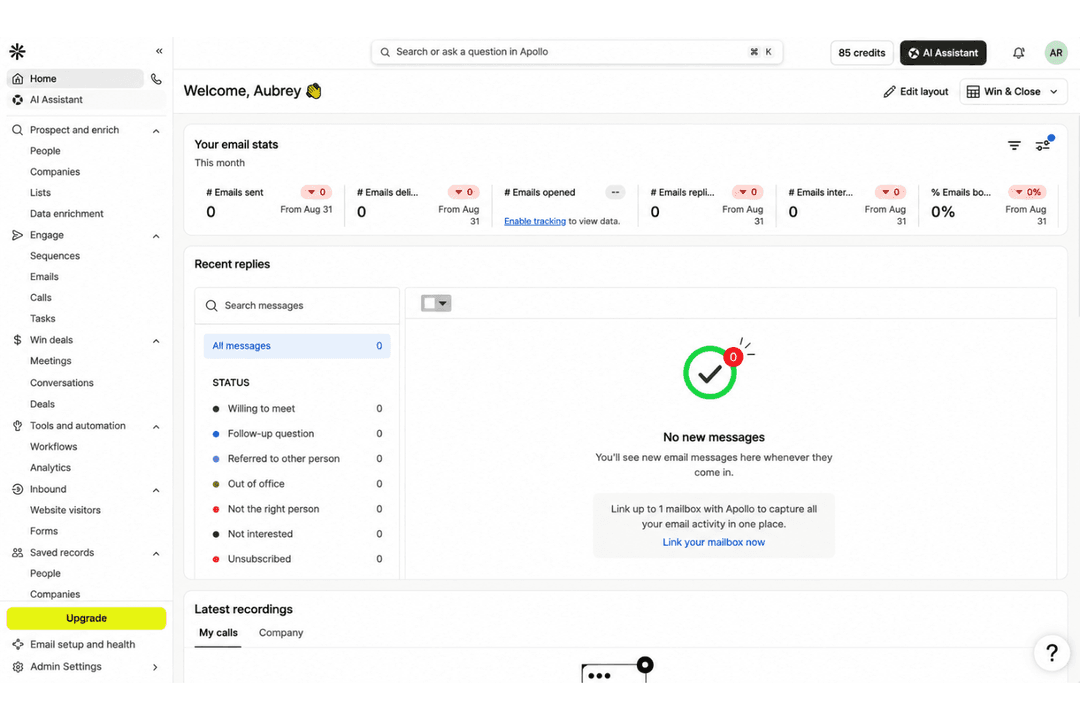
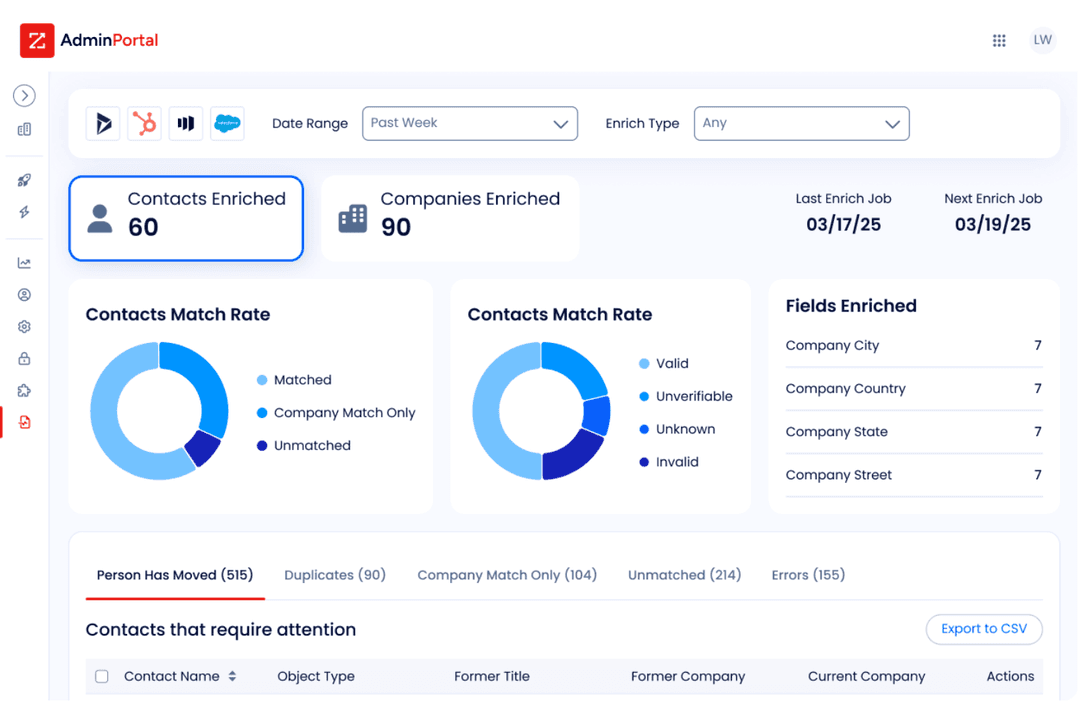
| FactorUser Interface | ApolloModern interface that keeps prospecting, enrichment, outreach, and pipeline tools connected, though the feature set can feel busy at first. | ZoomInfoFeature-dense interface organized around account research, GTM data, signals, and workflow tools. |
| FactorOnboarding | ApolloSmaller teams can self-serve, while paid customers receive structured onboarding with a dedicated Onboarding Manager. | ZoomInfoGuided onboarding supports setup, configuration, and adoption across sales and marketing teams. |
| FactorWorkflow Setup | ApolloSequences, enrichment, routing, and automation can be configured within the same platform with limited tool switching. | ZoomInfoConfigurable workflows connect data, intent signals, account research, and GTM processes across the platform. |
| FactorLearning Curve | ApolloCore prospecting and outreach are fairly quick to pick up, while automation, reporting, and enrichment require some additional learning. | ZoomInfoThe platform has a substantial feature set, so teams may need time to learn its account intelligence, workflows, and administrative settings. |
| FactorDay-to-Day Use | ApolloWorks well for teams that want to move quickly from prospect research into enrichment and outreach within the same workspace. | ZoomInfoSupports structured account research, prospect prioritization, and GTM planning for teams working with large volumes of sales intelligence. |
From an ease-of-use perspective, Apollo feels quick to pick up, especially for teams focused on prospecting, enrichment, and outreach in one workspace. ZoomInfo uses a feature-dense interface built around account research, signals, and structured GTM workflows, which can take time to learn. I’d lean toward Apollo for teams that want a fast ramp-up and limited tool switching, while ZoomInfo fits teams comfortable with a structured, process-driven setup.
Apollo.io
- Offers a large B2B database with real-time verification and waterfall enrichment across additional providers.
- Includes email deliverability tools such as warmup, bounce monitoring, and automatic pausing on high bounce rates.
- Integrates with Claude, ChatGPT, and Perplexity for prospecting and enrichment inside existing AI workflows.
- Credit usage across contact reveals, enrichment, and AI actions can be difficult to predict.
- Data accuracy can vary, especially for mobile numbers and contacts outside North America.
- Enterprise admin controls and company hierarchy features are still less mature than some legacy platforms.
ZoomInfo
- ZoomInfo offers your team unparalleled data accuracy to improve targeting.
- It provides comprehensive insights that empower your sales strategy.
- You can easily access detailed company profiles and contact information.
- Some users find the learning curve steep at first.
- Data updates can occasionally be slow, affecting real-time accuracy.
- The interface might feel cluttered for those new to sales intelligence tools.
Apollo.io
- SaaS and Software CompaniesApollo helps SaaS teams identify target accounts, enrich prospect data, run outbound sequences, and build pipeline.
- Mid-Market Sales TeamsGrowing sales teams can use Apollo for prospecting, lead scoring, sequencing, calling, meetings, and CRM enrichment without stitching together several tools.
- Revenue Operations TeamsRevOps teams can manage enrichment, lead routing, workflow automation, analytics, and CRM data quality while keeping sales execution connected.
- B2B Agencies and ConsultanciesAgencies and professional services firms can build targeted lists, enrich contact data, and run repeatable outreach across different markets.
- Recruiting and Staffing FirmsRecruiting and staffing firms can use Apollo’s database, filters, enrichment, and outreach tools to identify and engage business professionals, though it is not designed to replace an applicant tracking system.
- Founders and Small Sales TeamsSmaller teams can access prospecting, contact data, sequencing, and enrichment without investing in a large sales stack.
ZoomInfo
- Tech CompaniesZoomInfo provides your tech team with accurate data to identify and target key decision-makers effectively.
- Financial ServicesYour finance team can rely on ZoomInfo’s comprehensive insights for better prospecting and client engagement.
- Sales TeamsZoomInfo helps your sales team access detailed profiles and contact data to boost lead generation efforts.
- Marketing DepartmentsYour marketing team can use ZoomInfo to refine targeting strategies and improve campaign outcomes.
- Recruitment AgenciesRecruiters benefit from ZoomInfo’s detailed company insights and contact information for better talent acquisition.
- Business DevelopmentZoomInfo aids your business development efforts by identifying potential partners and expanding your network.
Who Should Use Apollo, and Who Should Use ZoomInfo?
If you’re looking for a sales intelligence platform that’s quick to adopt, easier to budget for, and built to handle prospecting, enrichment, outreach, and AI-assisted execution in one place, Apollo is likely the better fit. It works especially well for startups, SaaS teams, agencies, and growing sales organizations that want to reduce tool sprawl without giving up core prospecting and engagement capabilities.
If, instead, your team relies heavily on company intelligence, intent and buying signals, and detailed B2B data for account targeting, ZoomInfo may be the better choice. It’s a strong fit for established sales, marketing, business development, and recruiting teams, particularly in tech and financial services, that prioritize account research and structured enterprise workflows.
| Apollo.io | ZoomInfo | |
|---|---|---|
| AI Workflow Approach | Apollo.io AI Assistant and MCP support prospect research, enrichment, outreach, and GTM actions through Apollo and AI tools like Claude, ChatGPT, and Perplexity. | ZoomInfo Uses AI across account research, prospect prioritization, recommendations, and workflow execution within its GTM platform. |
| Email Deliverability | Apollo.io Includes email warmup, mailbox and domain purchasing, bounce analytics, deliverability monitoring, and automatic pausing on high bounce rates. | ZoomInfo Supports email engagement, but dedicated email infrastructure and deliverability management are not as central to the product. |
| Enrichment Approach | Apollo.io Uses real-time verification and waterfall enrichment across a dozen-plus additional providers to fill data gaps. | ZoomInfo Enriches records using its contact and company intelligence, including organizational, technographic, and firmographic data. |
| GTM Execution | Apollo.io Combines prospecting with native sequences, calling, meeting scheduling, inbound routing, conversation intelligence, and deal management. | ZoomInfo Centers on sales intelligence and account research, with engagement capabilities supporting its GTM suite. |
| Pricing & Adoption | Apollo.io Offers a permanent free plan, published paid tiers, and self-serve access, with structured onboarding for paying customers. | ZoomInfo Uses custom, sales-led pricing, with final costs based on the package and capabilities selected. |
| Advanced Prospect Search | Both let teams narrow prospects using criteria such as job title, seniority, industry, geography, company size, and technology use, making them useful for targeting specific ICPs. |
|---|---|
| B2B Contact & Company Data | Both provide large databases of business contacts and companies, including professional contact details, company profiles, job information, and firmographic data for building prospect lists. |
| Buying Intent Signals | Both surface intent and account-level signals that help sales teams identify organizations showing potential buying interest rather than relying only on static contact lists. |
| CRM Connectivity | Both connect with major CRM systems such as Salesforce and HubSpot, allowing teams to move prospect data into existing sales workflows and keep contact and account records updated. |
| Lead Scoring & Prioritization | Both help teams rank prospects using fit, engagement, or behavioral signals so reps can focus outreach on accounts and contacts with stronger conversion potential. |