


When you’re leading revenue growth for a SaaS company, it feels like every conversation revolves around one thing: leads. How many do we have? Are they qualified? How fast can we convert them into customers?
If you're not 100% clear on what sales leads actually are — or how they’re different from prospects or opportunities — you’re not alone. With so many acronyms flying around (MQLs, SQLs, PQLs, oh my), it’s easy to get lost in the jargon.
This guide will walk you through everything you need to know about sales leads, from defining them to breaking down the different types. You’ll also get clear, actionable strategies for generating, tracking, and converting leads into paying customers.
Let’s dive in.
What Are Sales Leads?
A sales lead is simply a person or business that has the potential to become a paying customer. They might have shown interest in your product (like signing up for a free trial) or they might be a name on a cold outreach list. What matters is that they fit your ideal customer profile and are someone your sales team can nurture toward a purchase using lead intelligence.
The key distinction here is interest vs. qualification. Just because someone shows interest doesn’t mean they’re qualified to buy. That's where your marketing and sales teams come in — they qualify the lead to ensure it's worth pursuing.

Author's Tip
The average quota attainment for B2B sales organizations is just 47%. That means you need a high volume of qualified sales leads to reach your revenue goals.
Types Of Sales Leads
Not all leads are created equal. Some are ready to buy today, while others are still window shopping. Here's a breakdown of the most common types of leads you’ll encounter in SaaS:
1. Marketing Qualified Lead (MQL)
An MQL is a lead who has interacted with your marketing but hasn’t shown intent to buy — yet. Maybe they downloaded an ebook or signed up for a webinar. They’ve shown interest, but they’re not ready to talk to sales just yet.
How to identify them: Look for leads who engage with gated content, open emails, or spend time on product pages.
2. Sales Qualified Lead (SQL)
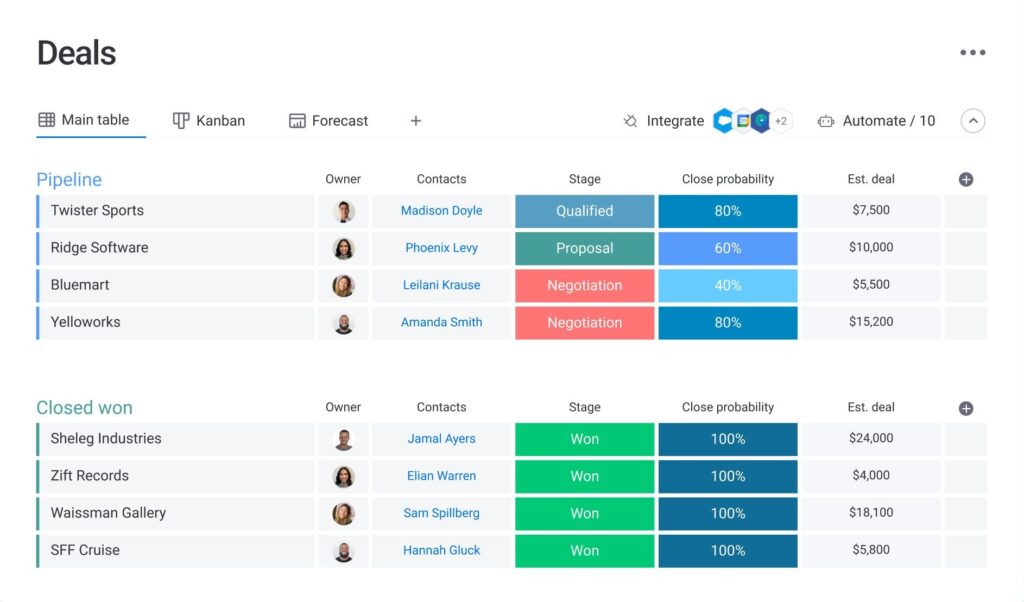
An SQL is a lead who is ready to talk to sales. They’ve been vetted (often by the marketing team) and fit your ideal customer profile. SQLs have crossed the line from "interested" to "ready to evaluate solutions."
How to identify them: They may request a demo, fill out a “Contact Sales” form, or respond positively to an outreach email.
Have an account? Log In
3. Product Qualified Lead (PQL)
A PQL has experienced your product firsthand. Think of someone who signed up for a free trial, used a freemium version, or explored a product tour. If they ask about paid features or usage limits, you’ve got a PQL on your hands.
How to identify them: Look for usage signals, like completing onboarding steps, hitting usage limits, or requesting premium features.
4. Service Qualified Lead (SQL)
Not to be confused with the "sales qualified lead," this type of SQL comes from existing customers. For example, a customer on your free plan might request an upgrade to a premium plan.
How to identify them: Look for direct requests to upgrade or clear intent (like clicking on "Upgrade" CTAs).
5. Expansion Qualified Lead (XQL)
If you’re in the SaaS space, this one should be on your radar. XQLs are existing customers who are ready to expand their relationship with your company — maybe by purchasing an add-on product or upgrading to a more advanced plan.
How to identify them: Look for signs of product adoption or increased usage. If users are exploring features that aren't in their plan, they might be primed for an upsell.
| Lead Type | How to Identify Them | Action for Your Sales Team |
|---|---|---|
| Lead TypeMQL | How to Identify ThemEngages with marketing materials like eBooks, webinars, or blog posts. Fills out forms or signs up for newsletters. | Action for Your Sales TeamNurture them with content, retargeting ads, and automated email sequences. Aim to convert them to an SQL. |
| Lead TypeSQL | How to Identify ThemRequests a demo, fills out a “Contact Sales” form, or responds to outreach with clear buying intent. | Action for Your Sales TeamPrioritize them for sales outreach. Schedule discovery calls, offer product demos, and customize your pitch. |
| Lead TypePQL | How to Identify ThemUses a free trial, freemium plan, or product tour. May ask about premium features or usage limits. | Action for Your Sales TeamStrike while it's hot — contact them quickly to offer an upgrade, demo, or personalized walkthrough. |
| Lead TypeSQL (Service) | How to Identify ThemExisting customer expresses interest in upgrading (e.g., clicking on "Upgrade" CTA or talking to support). | Action for Your Sales TeamUpsell them by presenting a tailored offer or highlighting premium features that meet their needs. |
| Lead Type(XQL) | How to Identify ThemExisting customer increases usage of the product (e.g., hitting usage caps) or explores new features. | Action for Your Sales TeamProactively engage with them. Highlight benefits of upgrading to a higher-tier plan or cross-sell related products. |
| Lead TypeCold Lead | How to Identify ThemNo prior engagement. May be sourced from cold outreach, prospecting lists, or paid ads. | Action for Your Sales TeamWarm them up with awareness content (like blog posts, infographics) before pitching directly. |
| Lead TypeWarm Lead | How to Identify ThemHas engaged with your brand but hasn’t signaled purchase intent. Examples: visiting the pricing page, downloading a resource, or following you on social media. | Action for Your Sales TeamEngage them with targeted retargeting ads, personalized follow-ups, and email marketing. Use social proof (like case studies) to push them toward SQL status. |
| Lead TypeHot Lead | How to Identify ThemTakes high-intent actions like requesting a demo, starting a free trial, or asking for pricing information. | Action for Your Sales TeamMove fast! Call or email them ASAP. These leads are ready to buy, so speed is crucial. Tailor your pitch to their specific needs. |
| Lead TypeReferral Lead | How to Identify ThemComes from a current customer or partner referral. Typically pre-qualified. | Action for Your Sales TeamPrioritize them like an SQL. Referrals are more likely to convert, so schedule a meeting right away. |
Sales Leads By Level of Awareness
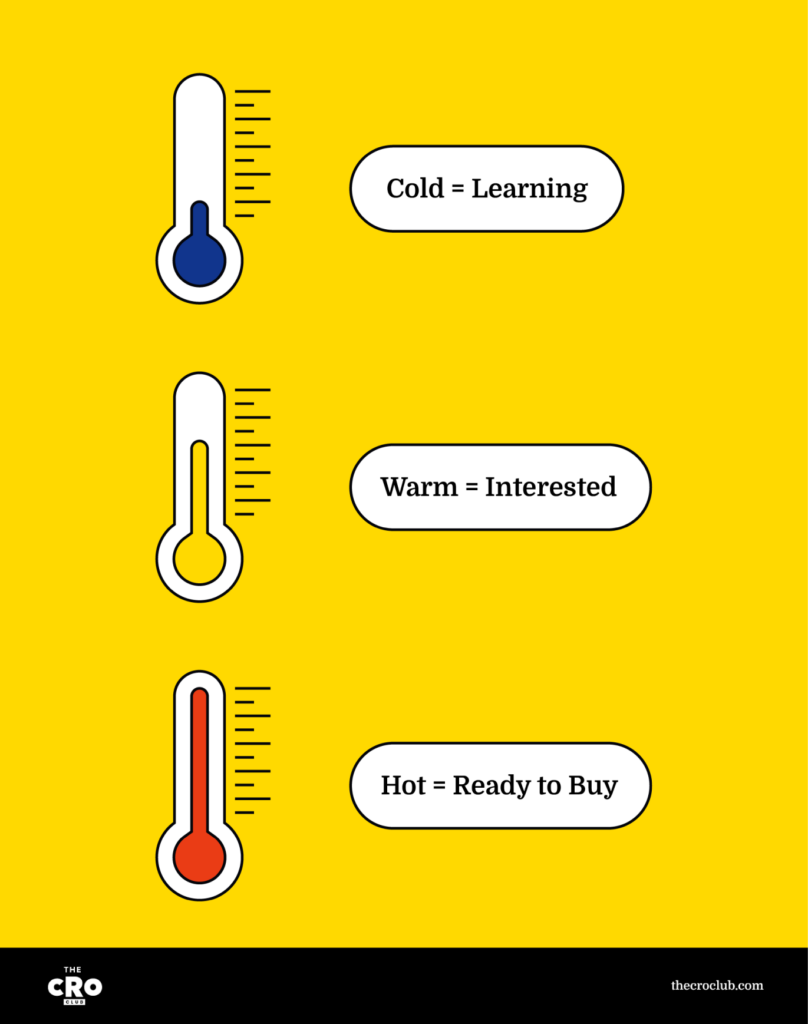
If you’ve ever heard the terms cold lead, warm lead, and hot lead, this section is for you. These categories reflect how "aware" a lead is of your product and their own needs.
This simplified way of approaching lead management might fit in better with your sales funnel or management style.
Cold Leads
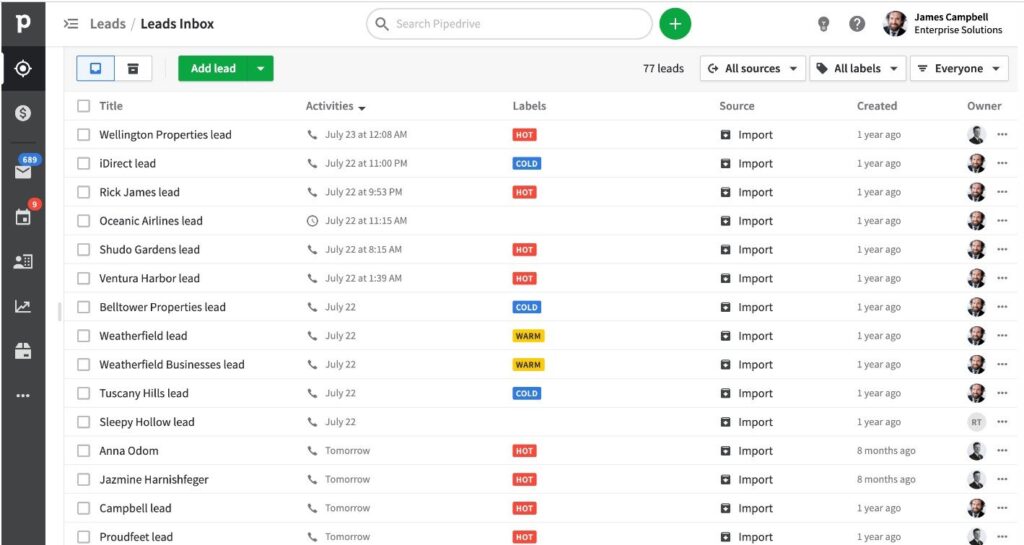
These leads have never heard of you. They’re typically part of a cold email or ad campaign. The goal here is to spark curiosity.
How to approach them: Personalized cold outreach or awareness-building ads (not a hard sales pitch).
Warm Leads
Warm leads know you exist and have engaged with your brand in some way (e.g., visiting your website, signing up for a webinar).
How to approach them: Use retargeting ads or follow-ups from the sales team to move them closer to SQL status.
Hot Leads
These are the golden leads — people actively showing interest in buying. They’ve taken high-intent actions like requesting a demo or starting a free trial.
How to approach them: Act quickly! Prioritize follow-ups and offer next steps like a demo or pricing discussion.
Difference Between Sales Leads and Prospects
If leads are the people who might be interested, then sales prospects are the people who’ve been qualified as a good fit. In short, here's the difference between leads and prospects: All prospects are leads, but not all leads are prospects.
Here’s a quick breakdown:
| Sales Lead | Sales Prospect |
|---|---|
| Sales LeadMay or may not be qualified | Sales ProspectHas been qualified as a potential customer |
| Sales LeadMay not know your brand | Sales ProspectKnows your brand and product |
| Sales LeadEarly-stage in the sales funnel | Sales ProspectMiddle-stage in the sales funnel |
Lead Generation Strategies for SaaS
If you want better leads, you need a better SaaS lead generation strategy. The two primary approaches you should know are inbound lead gen and outbound lead gen.
Inbound Lead Generation
Inbound leads come to you. The idea is to create content, offers, and experiences that attract leads naturally.
Best tactics for SaaS:
- Content marketing (blogs, case studies, guides)
- Free trials and product tours
- SEO (ranking for "how to" queries your ideal customers search)
Outbound Lead Generation
Outbound leads require you to go after them. Instead of waiting for them to find you, you reach out directly.
Best tactics for SaaS:
- Cold email campaigns
- Paid LinkedIn ads targeting your ICP
- Sales development reps (SDRs) doing outbound prospecting
How to Qualify and Manage Sales Leads
Once you’ve got a list of leads, now comes the hard part — qualifying them. Chasing after people who aren't ready to buy is a waste of time and money. You need to identify those most likely to convert fast. Here's how to do it.
Use Lead Scoring Systems
Lead scoring helps you prioritize leads. You can use models like BANT (Budget, Authority, Need, Timing) or MEDDIC (Metrics, Economic Buyer, Decision Criteria, Decision Process, Identify Pain, Champion).
More Articles
Use a CRM to Track Leads
Lead tracking is the secret to making sure no leads “fall through the cracks.” CRMs like Salesforce or HubSpot help you centralize all lead data, automate follow-ups, and track engagement. You can also get these benefits from sales leads software, and a few of my favorite lead management tools are either a part of a CRM system or integrate nicely.
Lead Nurturing Strategies to Increase Conversions
Not every lead is ready to buy immediately. That's why you need a lead nurturing strategy to keep them engaged and moving down your lead funnel.
Best nurturing tactics:
- Personalized email follow-ups
- Retargeting ads
- Offering exclusive content (like case studies)
Sales Leads are the Fuel for your Pipeline
Sales leads aren't just "names on a list." They're potential customers with unique levels of interest and intent. Your job is to sort, qualify, and convert them.
Want more tips on building your sales pipeline? Get expert advice, software reviews, and career resources in your inbox.