


Recensione di NetSuite CRM: Vantaggi, Svantaggi, Caratteristiche e Prezzi


NetSuite CRM is a CRM software built directly into the NetSuite ERP platform, designed for businesses that need sales, marketing, and customer data connected to their financial and operational systems in one place. I'd consider it if your team is already running NetSuite for finance or inventory and wants CRM data that stays in sync without a separate integration. That's where it has a clear edge over Salesforce—Salesforce is a stronger standalone CRM, but connecting it to your back-office data takes real configuration work that NetSuite simply doesn't require.
NetSuite CRM Evaluation Summary

- Pricing Upon Request
Perché fidarsi dei nostri consigli sui software
Le nostre recensioni riflettono il nostro giudizio indipendente, non un discorso di vendita. Scopri come manteniamo la trasparenza.
Per questa guida, abbiamo valutato gli strumenti attraverso test pratici e ricerche indipendenti, assegnando un punteggio agli strumenti in base ai nostri criteri di selezione.
Le nostre recensioni riflettono il nostro giudizio editoriale umano, non un discorso di vendita.
NetSuite CRM Overview
In my opinion, NetSuite CRM is a solid choice for businesses needing a robust CRM system with extensive integration capabilities. Its standout features and reliable customer support set it apart from many competitors, though its ease of use could be better. The software excels for mid-sized to large enterprises that require sophisticated tools and have the resources to manage its complexity. While pricing might seem steep, the value comes from its comprehensive suite of tools that can drive growth. If you’re judging based on functionality and integration, NetSuite CRM is worth considering, especially for teams ready to invest in training and onboarding.
pros
-
It offers comprehensive reporting tools to enhance your team's decision-making.
-
You get strong customer support to assist with any issues.
-
The software’s scalability suits your growing business needs.
cons
-
The user interface can feel outdated compared to newer CRM software.
-
Your team might face a steep learning curve during initial use.
-
Customization options are limited, which might not meet all your business needs.
-

Prisync
Visit WebsiteThis rating combines scores from multiple user review sites to reflect overall customer sentiment about the product.4.7 -
Expedite Commerce
Visit Website -
QuickBooks Online
Visit WebsiteThis rating combines scores from multiple user review sites to reflect overall customer sentiment about the product.4




Come Testiamo e Valutiamo gli Strumenti
Abbiamo trascorso anni a costruire, perfezionare e migliorare il nostro sistema di valutazione e test dei software. Il nostro metodo è pensato per cogliere le sfumature della selezione software e ciò che rende uno strumento efficace, concentrandosi sugli aspetti critici del processo decisionale. Qui sotto puoi vedere esattamente come funzionano i nostri test e la valutazione sui sette criteri. Ci permette di fornire una valutazione imparziale del software in base alla funzionalità principale, alle caratteristiche distintive, facilità d’uso, onboarding, assistenza clienti, integrazioni, recensioni degli utenti e rapporto qualità-prezzo.
Funzionalità Principali (25% del punteggio finale)
Il punto di partenza per la nostra valutazione è sempre la funzionalità di base dello strumento. Possiede le caratteristiche e le funzioni che un utente si aspetterebbe di trovare? Alcune di queste funzioni di base sono limitate ai piani tariffari più costosi? Per noi uno strumento deve almeno essere alla pari con le capacità minime offerte dai concorrenti.
Caratteristiche Distintive (25% del punteggio finale)
Successivamente, valutiamo le funzionalità insolite o esclusive che vanno oltre le funzioni core normalmente presenti in strumenti simili. Un punteggio elevato riflette una presenza di caratteristiche particolari o uniche che rendono il prodotto più veloce, efficace o danno un valore aggiunto all’utente. Valutiamo anche la facilità di integrazione con altri strumenti tipici del tech stack per espanderne funzionalità e utilità. Gli strumenti che offrono numerose integrazioni native, connessioni di terze parti e accesso API per costruire integrazioni personalizzate ottengono i punteggi migliori.
Facilità d’Uso (10% del punteggio finale)
Consideriamo quanto sia rapido e intuitivo svolgere le attività fondamentali tramite lo strumento. I software con i punteggi più alti hanno un design ben pensato, sono intuitivi, offrono app mobili, forniscono modelli predefiniti e semplificano anche le attività più complesse.
Onboarding (10% del punteggio finale)
Sappiamo quanto sia importante che un nuovo strumento venga rapidamente adottato dal team, quindi valutiamo la facilità di apprendimento con un minimo di formazione. Valutiamo quanto velocemente un membro del team può iniziare a usare lo strumento senza esperienza. Le soluzioni con i punteggi più alti richiedono poco o nessun supporto iniziale.
Assistenza Clienti (10% del punteggio finale)
Analizziamo quanto sia facile e veloce risolvere problemi e ricevere assistenza tramite telefono, chat dal vivo o knowledge base. Gli strumenti e le aziende che offrono supporto in tempo reale ottengono i punteggi migliori, mentre i chatbot ottengono i peggiori.
Recensioni dei Clienti (10% del punteggio finale)
Oltre ai nostri test, consideriamo il net promoter score da clienti attuali e passati. Valutiamo la probabilità che gli utenti sceglierebbero nuovamente lo strumento per le funzionalità principali. Un punteggio elevato riflette un alto net promoter score da parte dei clienti.
Rapporto Qualità-Prezzo (10% del punteggio finale)
Infine, considerando tutti gli altri criteri, esaminiamo il prezzo medio dei piani base rispetto alle funzionalità principali e agli altri fattori valutativi. I software che offrono di più a un costo inferiore ottengono un punteggio più alto.
Core Features
Contact Management: NetSuite CRM lets you store and manage customer information efficiently. Your team can access detailed contact histories, improving customer interactions.
Sales Forecasting: It provides accurate sales predictions to help your team plan better. You can make informed decisions with real-time data insights.
Lead Management: Track and manage leads from across the entire customer lifecycle. This helps your sales team prioritize and follow up effectively.
Opportunity Tracking: Your team can monitor sales opportunities through every stage of the pipeline, from initial lead to closed deal and sales order creation.
Customer Support Management: Manage customer service requests and issues efficiently. This feature helps your team resolve problems quickly, improving satisfaction.
Analytics and Reporting: Generate detailed reports using customizable templates to evaluate performance and metrics. Your team can use this to refine strategies and improve KPI performance.
Ease of Use
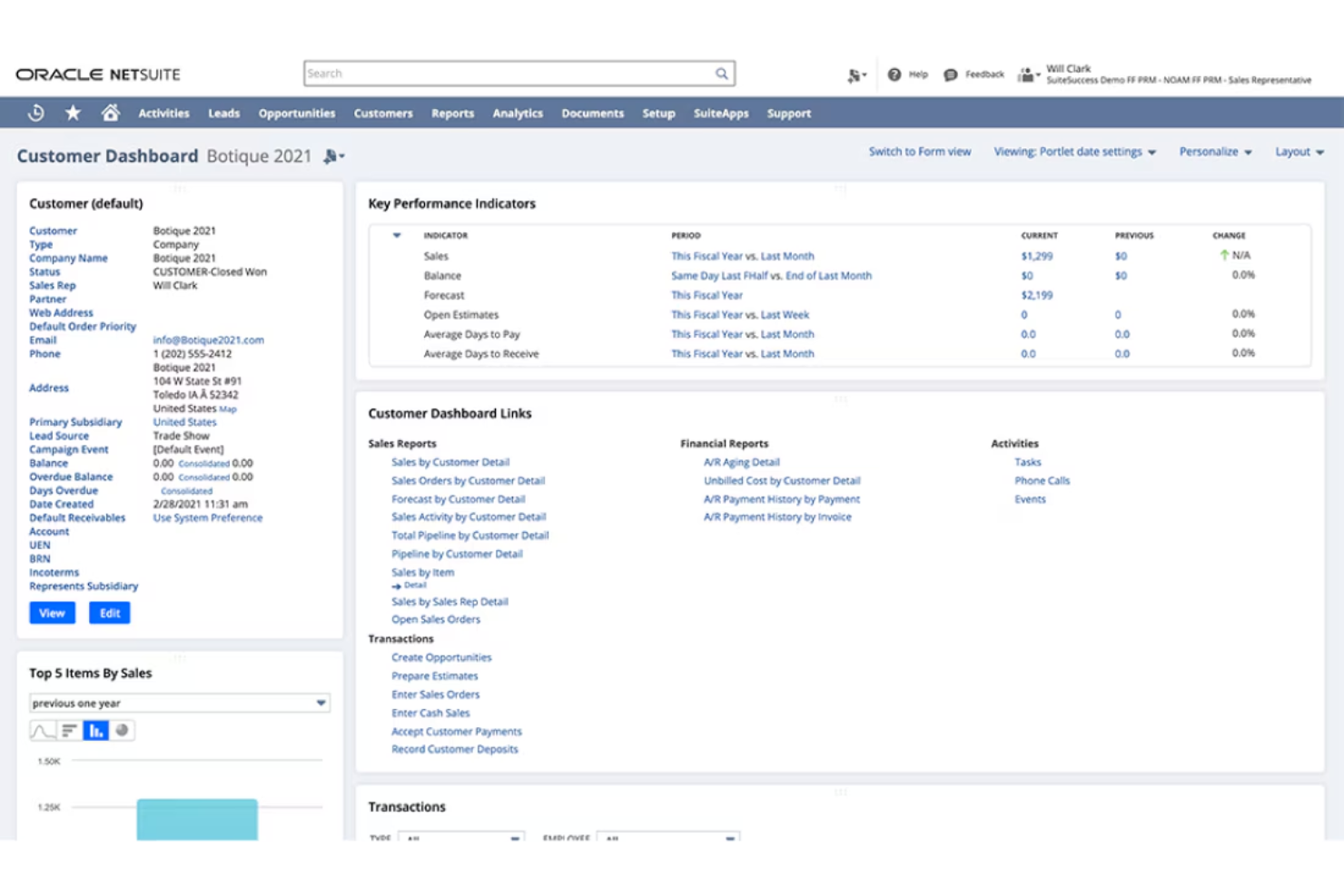
NetSuite CRM's ease of use can be challenging for new users. Its interface feels outdated, making navigation less intuitive compared to other CRMs. Your team might face a steep learning curve, especially during onboarding. However, once familiar, its powerful features and extensive capabilities can be rewarding. Detailed documentation and customer support can help, but expect to invest time in training to fully leverage its potential.
Integrations
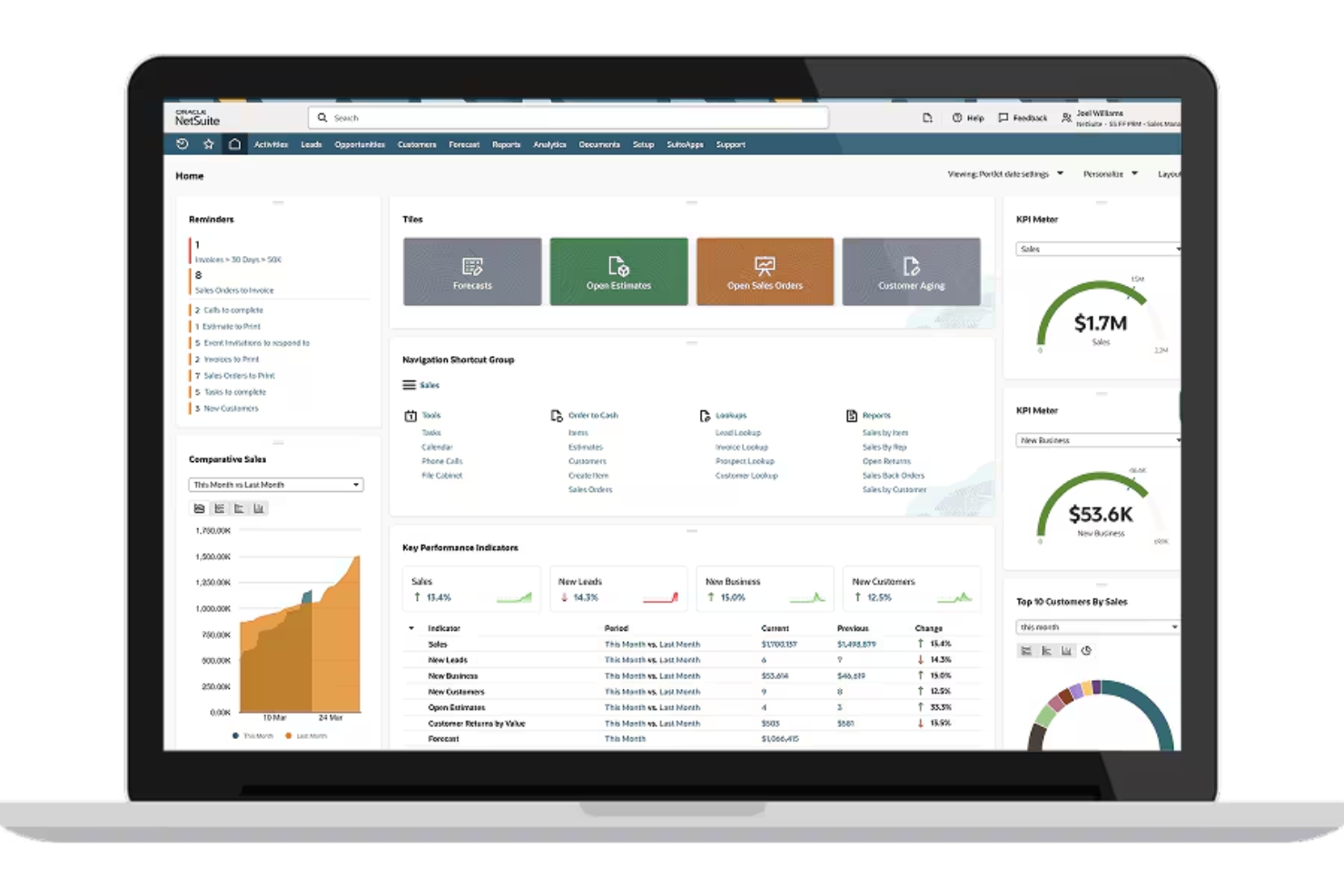
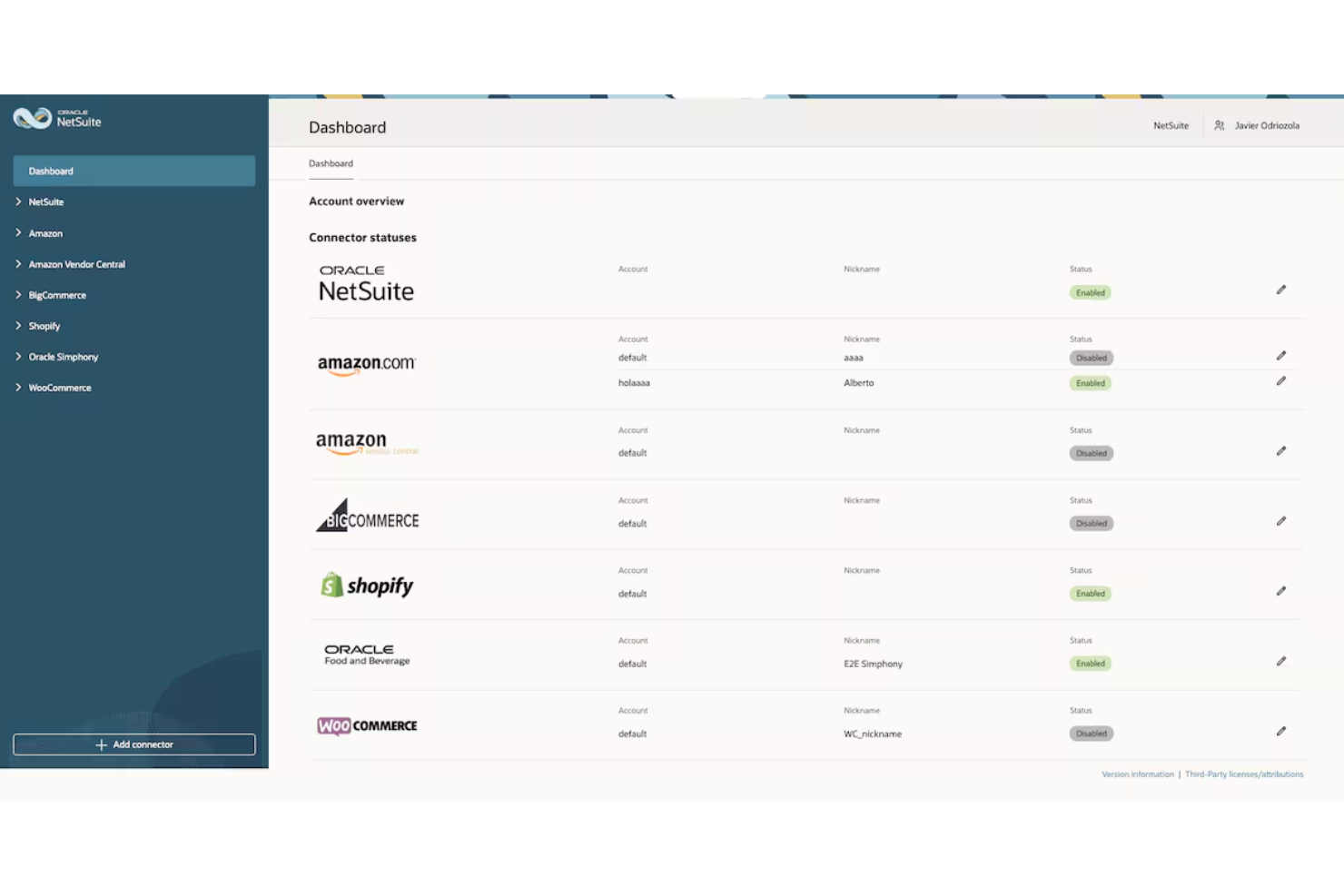
NetSuite CRM integrates with platforms such as Shopify, Magento, Amazon, WooCommerce, and Salesforce through official NetSuite Connectors, supporting seamless data flow across sales, ecommerce, and operations.
It also provides API access via its SuiteTalk web services and supports third-party integration tools, allowing businesses to build custom integrations and extend CRM capabilities beyond native connectors.
NetSuite CRM Specs
- A/B Testing
- Analytics
- API
- Audience Targeting
- Automated Conversion
- Batch Permissions & Access
- Behavioral Tracking
- Brand Management
- Campaign Management
- Contact Management
- Contact Sharing
- Conversion Tracking
- CRM Integration
- Customer Management
- Dashboards
- Data Export
- Data Import
- Email Integration
- External Integrations
- Keyword Tracking
- Landing Pages
- Lead Management
- Lead Scoring
- Link Tracking
- Marketing Automation
- Multi-User
- Notifications
- Password & Access Management
- Social-Media Integration