

Recensione di Less Annoying CRM: Pro, Contro, Caratteristiche e Prezzi Spiegati
Less Annoying CRM si distingue per la sua semplicità e la trasparenza dei prezzi, rendendolo ideale per piccoli team che cercano un CRM facile, senza fronzoli e senza l’ingombro di funzionalità complesse.

Recensiamo gli strumenti in modo indipendente e le commissioni aiutano a finanziare i nostri test. Consulta la nostra politica sulla trasparenza, la nostra metodologia o suggerisci uno strumento.
Less Annoying CRM is a CRM software built for small businesses that need contact management, pipeline tracking, and task follow-ups without a steep learning curve. I'd consider it if your team wants a no-fuss system that does the basics well—and doesn't want to pay for the layers of complexity that come with a tool like HubSpot.
Less Annoying CRM Evaluation Summary

4.9/5
- From $15/user/month
- 30-day free trial available
Perché fidarsi dei nostri consigli sui software
6,700+
Reviews
20
Industry experts
16+
Evaluation factors
14
Years
Le nostre recensioni riflettono il nostro giudizio indipendente, non un discorso di vendita. Scopri come manteniamo la trasparenza.
Per questa guida, abbiamo valutato gli strumenti attraverso test pratici e ricerche indipendenti, assegnando un punteggio agli strumenti in base ai nostri criteri di selezione.
Le nostre recensioni riflettono il nostro giudizio editoriale umano, non un discorso di vendita.
Less Annoying CRM Overview
If you’re judging CRM software on simplicity, transparent pricing, and fast onboarding, Less Annoying is hard to beat. The interface is clean, support is responsive, and you won’t get lost in endless configuration. While it lacks advanced automation and deep integrations, I think it’s a smart pick for small teams or solo operators who want to track contacts, pipelines, and tasks without a learning curve.
If you’re comparing options and value clarity over customization, Less Annoying stands out—especially for businesses that don’t need complex reporting or multi-system workflows.
Pros
- Simple contact, task, and pipeline management for small teams.
- Responsive, human customer support included for all users.
- Flat-rate pricing with no hidden fees or contracts.
Cons
- Limited automation and workflow customization options.
- Lacks advanced reporting and analytics features.
- No built-in mobile app for iOS or Android.
Is Less Annoying CRM Right For Your Needs?
Who Would be a Good Fit for Less Annoying CRM?
Less Annoying CRM is a smart choice for small businesses, solo professionals, and teams that want a straightforward CRM without the overhead of complex features or high costs. If your workflow centers on managing contacts, tracking simple pipelines, and keeping tasks organized, you’ll find Less Annoying’s flat-rate pricing and responsive support appealing. It’s especially well-suited for industries and roles where simplicity, transparency, and quick onboarding matter more than deep customization or advanced analytics.
- Real Estate AgentsContact and pipeline tracking is simple and tailored for relationship management.
- Nonprofit OrganizationsAffordable pricing and easy donor tracking fit tight budgets and small teams.
- Consulting FirmsProject and client tracking is clear without unnecessary features or clutter.
- FreelancersSolo users can manage leads and follow-ups without paying for extras.
- Small Retail ShopsBasic customer tracking and follow-up reminders help maintain repeat business.
- Education ProvidersSimple student and parent communication tracking without complex integrations.
Who Would be a Bad Fit for Less Annoying CRM?
Less Annoying CRM isn’t built for large enterprises, teams needing advanced automation, or industries that rely on deep integrations and analytics. If your business requires multi-step workflows, custom reporting, or a mobile app for field teams, you’ll likely find Less Annoying limiting. It’s not the right choice for organizations that need to connect their CRM to a wide range of external tools or require granular user permissions.
- Enterprise Sales TeamsNo advanced reporting, territory management, or multi-level permissions.
- SaaS CompaniesLacks product usage tracking, subscription management, and API depth.
- Field Service TeamsNo native mobile app for on-the-go access or updates.
- Marketing DepartmentsLimited campaign tracking, segmentation, and marketing automation features.
- Healthcare PracticesNo HIPAA compliance or industry-specific data security controls.
- Manufacturing FirmsNo inventory, order management, or supply chain integration capabilities.
Come Testiamo e Valutiamo gli Strumenti
Abbiamo trascorso anni a costruire, perfezionare e migliorare il nostro sistema di valutazione e test dei software. Il nostro metodo è pensato per cogliere le sfumature della selezione software e ciò che rende uno strumento efficace, concentrandosi sugli aspetti critici del processo decisionale. Qui sotto puoi vedere esattamente come funzionano i nostri test e la valutazione sui sette criteri. Ci permette di fornire una valutazione imparziale del software in base alla funzionalità principale, alle caratteristiche distintive, facilità d’uso, onboarding, assistenza clienti, integrazioni, recensioni degli utenti e rapporto qualità-prezzo.
Funzionalità Principali (25% del punteggio finale)
Il punto di partenza per la nostra valutazione è sempre la funzionalità di base dello strumento. Possiede le caratteristiche e le funzioni che un utente si aspetterebbe di trovare? Alcune di queste funzioni di base sono limitate ai piani tariffari più costosi? Per noi uno strumento deve almeno essere alla pari con le capacità minime offerte dai concorrenti.
Caratteristiche Distintive (25% del punteggio finale)
Successivamente, valutiamo le funzionalità insolite o esclusive che vanno oltre le funzioni core normalmente presenti in strumenti simili. Un punteggio elevato riflette una presenza di caratteristiche particolari o uniche che rendono il prodotto più veloce, efficace o danno un valore aggiunto all’utente. Valutiamo anche la facilità di integrazione con altri strumenti tipici del tech stack per espanderne funzionalità e utilità. Gli strumenti che offrono numerose integrazioni native, connessioni di terze parti e accesso API per costruire integrazioni personalizzate ottengono i punteggi migliori.
Facilità d’Uso (10% del punteggio finale)
Consideriamo quanto sia rapido e intuitivo svolgere le attività fondamentali tramite lo strumento. I software con i punteggi più alti hanno un design ben pensato, sono intuitivi, offrono app mobili, forniscono modelli predefiniti e semplificano anche le attività più complesse.
Onboarding (10% del punteggio finale)
Sappiamo quanto sia importante che un nuovo strumento venga rapidamente adottato dal team, quindi valutiamo la facilità di apprendimento con un minimo di formazione. Valutiamo quanto velocemente un membro del team può iniziare a usare lo strumento senza esperienza. Le soluzioni con i punteggi più alti richiedono poco o nessun supporto iniziale.
Assistenza Clienti (10% del punteggio finale)
Analizziamo quanto sia facile e veloce risolvere problemi e ricevere assistenza tramite telefono, chat dal vivo o knowledge base. Gli strumenti e le aziende che offrono supporto in tempo reale ottengono i punteggi migliori, mentre i chatbot ottengono i peggiori.
Recensioni dei Clienti (10% del punteggio finale)
Oltre ai nostri test, consideriamo il net promoter score da clienti attuali e passati. Valutiamo la probabilità che gli utenti sceglierebbero nuovamente lo strumento per le funzionalità principali. Un punteggio elevato riflette un alto net promoter score da parte dei clienti.
Rapporto Qualità-Prezzo (10% del punteggio finale)
Infine, considerando tutti gli altri criteri, esaminiamo il prezzo medio dei piani base rispetto alle funzionalità principali e agli altri fattori valutativi. I software che offrono di più a un costo inferiore ottengono un punteggio più alto.
Core Features
Contact Management
Store, organize, and search all your contacts in one place. Add custom fields and notes to keep relationship details front and center.
Pipeline Tracking
Visualize leads and deals as they move through your sales process. Drag-and-drop interface makes updating deal stages quick and intuitive.
Task and Calendar Management
Create tasks, set reminders, and view everything on a built-in calendar. Sync with Google Calendar for a unified schedule.
Team Collaboration
Share contacts, pipelines, and notes with your team. Assign tasks and see updates in real time for better coordination.
Custom Fields
Add fields tailored to your business needs, like referral sources or contract dates. This flexibility helps you capture the data that matters most.
Daily Agenda Emails
Receive a daily summary of your tasks and events by email. Stay on top of follow-ups and appointments without logging in.
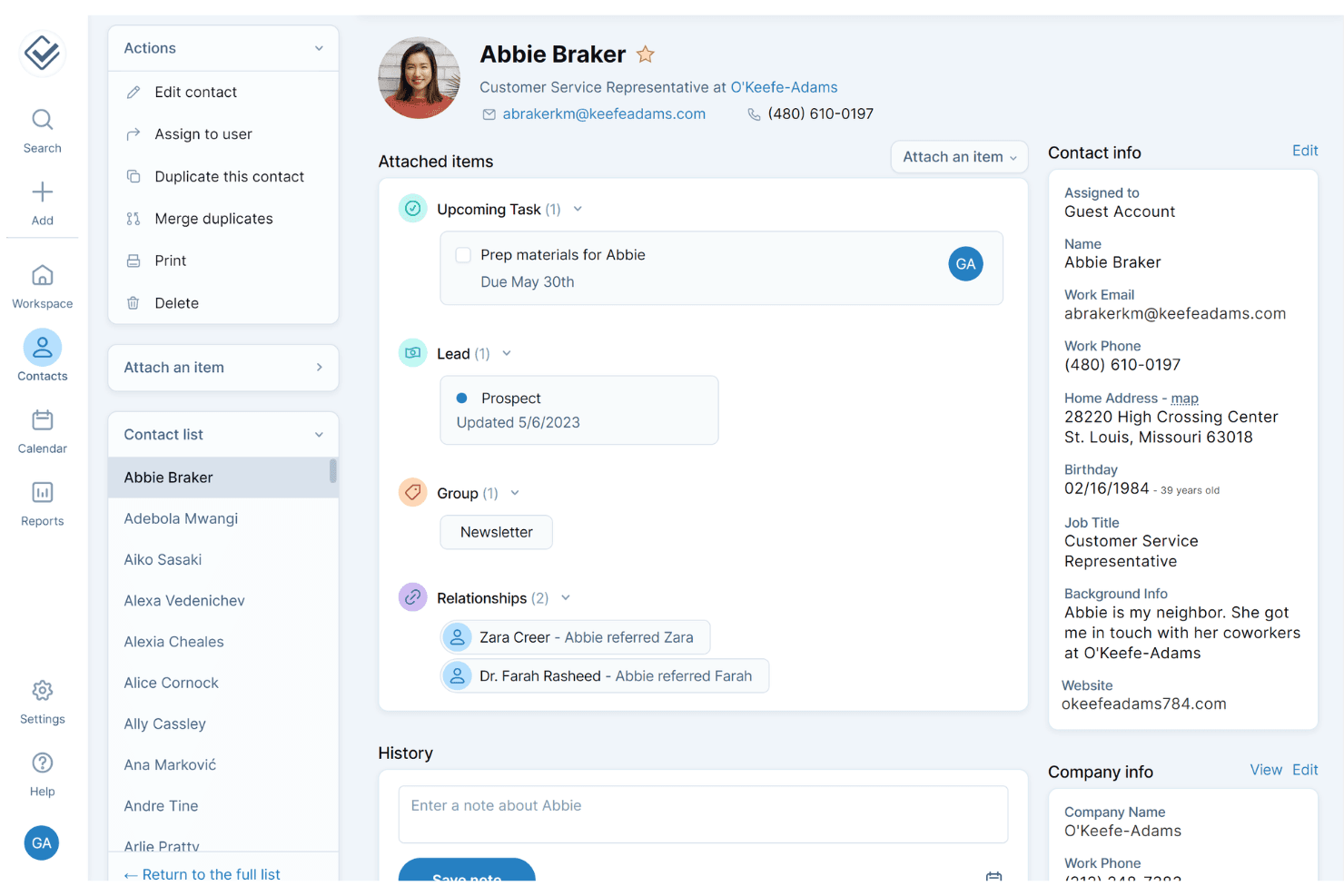
Ease of Use
Less Annoying CRM is one of the most approachable CRM software options I’ve used. The interface is clean, navigation is straightforward, and setup takes minutes—not hours. Users consistently mention how quickly they can add contacts, update pipelines, and find information without training or manuals. There’s no clutter or hidden menus, so even non-technical team members can get started right away. This simplicity makes it a favorite for small teams and solo users.
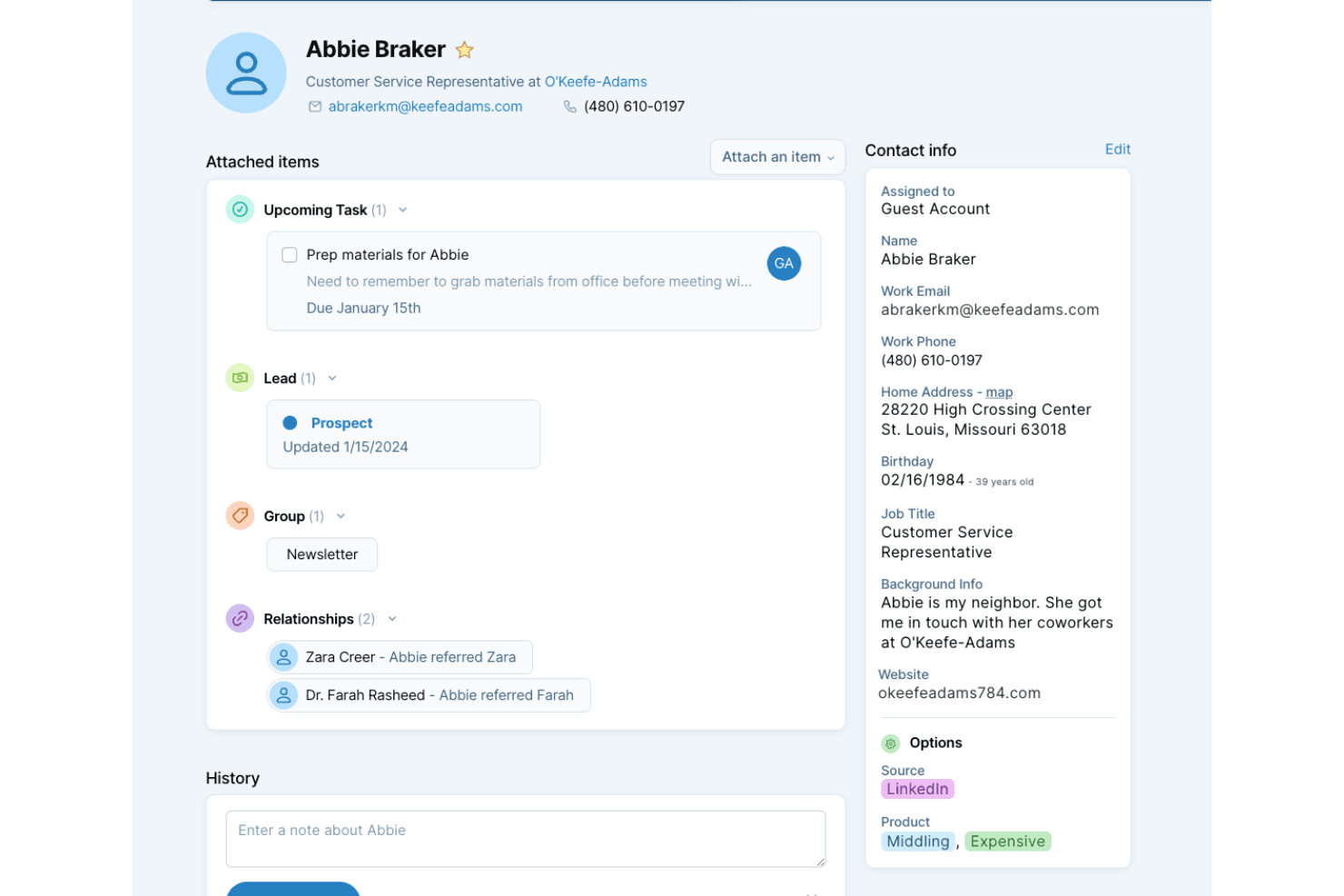
Integrations
Less Annoying CRM integrates with Mailchimp, Google Calendar, Outlook Calendar, Google Contacts, Zapier, QuickBooks Sync, Badger Maps, JustCall, Pabbly Connect, and LeadsBridge, among others.
Less Annoying CRM also offers an API and connects with thousands of other apps through Zapier and similar third-party integration tools.

Less Annoying CRM Specs
- 2-Factor Authentication: Yes
- API: Yes
- Calendar Management: Yes
- Call Tracking: No
- Campaign Management: No
- Click-to-Dial: Yes
- Contact Management: Yes
- Contact Sharing: Yes
- Custom Data Forms: No
- Customer Management: Yes
- Dashboard: Yes
- Data Export: Yes
- Data Import: Yes
- Data Visualization: Yes
- Email Integration: Yes
- External Integrations: Yes
- File Sharing: Yes
- File Transfer: No
- Google Apps Integration: No
- Lead Management: Yes
- Lead Scoring: Yes
- Marketing Automation: No
- Mobile App: No
- Multi-User: Yes
- Notifications: Yes
- Pipeline Management: Yes
- Sales Automation: Yes
- Scheduling: Yes
- Social-Media Integration: No
- Task Scheduling/Tracking: Yes
- Third-Party Plugins/Add-Ons: Yes


