
Recensione Heyflow 2026: Pro, Contro, Caratteristiche e Prezzi
Heyflow aiuta le aziende a catturare, qualificare e convertire lead con strumenti alimentati dall'intelligenza artificiale. Scopri come le sue funzioni di automazione migliorano i flussi di lavoro per la generazione di lead e trasformano i visitatori in potenziali clienti qualificati.

Recensiamo gli strumenti in modo indipendente e le commissioni aiutano a finanziare i nostri test. Consulta la nostra politica sulla trasparenza, la nostra metodologia o suggerisci uno strumento.
Heyflow is an AI lead generation software built to help RevOps leaders capture, qualify, and nurture leads without the bottlenecks of clunky forms or manual data entry. With revenue operations teams often bogged down by inconsistent data, slow response times, and the need to scale personalized engagement, Heyflow promises a no-code platform that blends automation, customizable flows, and AI-driven insights.
In this review, I’ll break down Heyflow’s features, best and worst use cases, pros and cons, and pricing to help you decide if it fits your revenue engine.
Heyflow Evaluation Summary
4.6/5
- From $56/month (billed annually)
- 14-day free trial
Perché fidarsi dei nostri consigli sui software
6,700+
Reviews
20
Industry experts
16+
Evaluation factors
14
Years
Le nostre recensioni riflettono il nostro giudizio indipendente, non un discorso di vendita. Scopri come manteniamo la trasparenza.
Per questa guida, abbiamo valutato gli strumenti attraverso test pratici e ricerche indipendenti, assegnando un punteggio agli strumenti in base ai nostri criteri di selezione.
Le nostre recensioni riflettono il nostro giudizio editoriale umano, non un discorso di vendita.
Heyflow Overview
In my experience, Heyflow stands out for its intuitive interface and flexible flow builder, making onboarding fast for teams that need quick deployment. Choosing Heyflow means you get strong lead capture options, dynamic personalization, and clear analytics, though integration options can feel limited if your tech stack is complex. Pricing is fair given the advanced AI capabilities, and support is responsive.
I think high-velocity marketing or sales teams who want drag-and-drop automation without heavy IT involvement will get the most value, especially if they’re focused on optimizing conversion paths and minimizing manual tasks.
Pros
- AI-driven lead qualification boosts response speed and accuracy
- Drag-and-drop builder creates fully custom flows with no code
- Visual analytics dashboard tracks conversion rates in real time
Cons
- No native support for advanced lead scoring algorithms
- Limited multilingual options for global campaign creation
- Lacks out-of-the-box CRM or email platform integrations
Is Heyflow Right For Your Needs?
Who Would be a Good Fit for Heyflow?
Heyflow is best for teams that want visually engaging, conversion-optimized lead flows without code. Marketing agencies, SaaS startups, and small to mid-sized sales teams will appreciate its quick setup and customization. Organizations in regulated industries needing secure file uploads or companies wanting branded, interactive lead capture experiences also stand to benefit.
Anyone aiming to streamline multi-step form experiences for high-quality lead qualification should consider Heyflow.
- Marketing AgenciesAgencies benefit from custom branding, white labeling, and advanced design controls for differentiated client experiences.
- SaaS StartupsSaaS teams can quickly build and iterate on signup flows without developer resources, responding fast to market feedback.
- Real Estate FirmsCustom file uploads and conditional logic make capturing qualified leads for property listings more efficient.
- Education ProvidersMulti-step forms simplify collecting student applications and documents while guiding prospects through course options.
- Customer Success TeamsInteractive flows support effective onboarding for new users, gathering key information for personalized outreach.
- Healthcare ClinicsSecure data capture and file upload features help clinics gather health details and required documents from new patients.
Who Would be a Bad Fit for Heyflow?
Heyflow isn’t ideal for large enterprises needing deep data integrations, global brands with complex multilingual requirements, or companies processing massive lead volumes. Teams requiring advanced analytics, scoring, or industry-specific compliance beyond what’s offered may feel limited.
It’s also not the best choice for resource-constrained businesses who need only basic, static forms or companies needing intricate workflow automation tied to numerous backend systems.
- Multinational CorporationsLimited multilingual support may not meet diverse, global localization needs.
- Enterprise IT DepartmentsComplex workflow automation and custom internal integrations go beyond Heyflow’s built-in capabilities.
- Financial InstitutionsRegulatory demands and advanced data handling requirements often exceed what Heyflow provides out-of-the-box.
- Small Local BusinessesThose with simple, static forms can use more basic or free options at lower cost.
- Large Ecommerce StoresHigh-volume transaction management and deep inventory integration are not features Heyflow supports.
- Data Science TeamsHeyflow lacks customizable, advanced analytics and personalized lead scoring tools crucial to data-driven teams.
Come Testiamo e Valutiamo gli Strumenti
Abbiamo trascorso anni a costruire, perfezionare e migliorare il nostro sistema di valutazione e test dei software. Il nostro metodo è pensato per cogliere le sfumature della selezione software e ciò che rende uno strumento efficace, concentrandosi sugli aspetti critici del processo decisionale. Qui sotto puoi vedere esattamente come funzionano i nostri test e la valutazione sui sette criteri. Ci permette di fornire una valutazione imparziale del software in base alla funzionalità principale, alle caratteristiche distintive, facilità d’uso, onboarding, assistenza clienti, integrazioni, recensioni degli utenti e rapporto qualità-prezzo.
Funzionalità Principali (25% del punteggio finale)
Il punto di partenza per la nostra valutazione è sempre la funzionalità di base dello strumento. Possiede le caratteristiche e le funzioni che un utente si aspetterebbe di trovare? Alcune di queste funzioni di base sono limitate ai piani tariffari più costosi? Per noi uno strumento deve almeno essere alla pari con le capacità minime offerte dai concorrenti.
Caratteristiche Distintive (25% del punteggio finale)
Successivamente, valutiamo le funzionalità insolite o esclusive che vanno oltre le funzioni core normalmente presenti in strumenti simili. Un punteggio elevato riflette una presenza di caratteristiche particolari o uniche che rendono il prodotto più veloce, efficace o danno un valore aggiunto all’utente. Valutiamo anche la facilità di integrazione con altri strumenti tipici del tech stack per espanderne funzionalità e utilità. Gli strumenti che offrono numerose integrazioni native, connessioni di terze parti e accesso API per costruire integrazioni personalizzate ottengono i punteggi migliori.
Facilità d’Uso (10% del punteggio finale)
Consideriamo quanto sia rapido e intuitivo svolgere le attività fondamentali tramite lo strumento. I software con i punteggi più alti hanno un design ben pensato, sono intuitivi, offrono app mobili, forniscono modelli predefiniti e semplificano anche le attività più complesse.
Onboarding (10% del punteggio finale)
Sappiamo quanto sia importante che un nuovo strumento venga rapidamente adottato dal team, quindi valutiamo la facilità di apprendimento con un minimo di formazione. Valutiamo quanto velocemente un membro del team può iniziare a usare lo strumento senza esperienza. Le soluzioni con i punteggi più alti richiedono poco o nessun supporto iniziale.
Assistenza Clienti (10% del punteggio finale)
Analizziamo quanto sia facile e veloce risolvere problemi e ricevere assistenza tramite telefono, chat dal vivo o knowledge base. Gli strumenti e le aziende che offrono supporto in tempo reale ottengono i punteggi migliori, mentre i chatbot ottengono i peggiori.
Recensioni dei Clienti (10% del punteggio finale)
Oltre ai nostri test, consideriamo il net promoter score da clienti attuali e passati. Valutiamo la probabilità che gli utenti sceglierebbero nuovamente lo strumento per le funzionalità principali. Un punteggio elevato riflette un alto net promoter score da parte dei clienti.
Rapporto Qualità-Prezzo (10% del punteggio finale)
Infine, considerando tutti gli altri criteri, esaminiamo il prezzo medio dei piani base rispetto alle funzionalità principali e agli altri fattori valutativi. I software che offrono di più a un costo inferiore ottengono un punteggio più alto.
Core Features
Visual Flow Builder
Design custom lead funnels with a simple drag-and-drop interface. Create logic-based journeys that guide users based on their responses.
AI-Powered Personalization
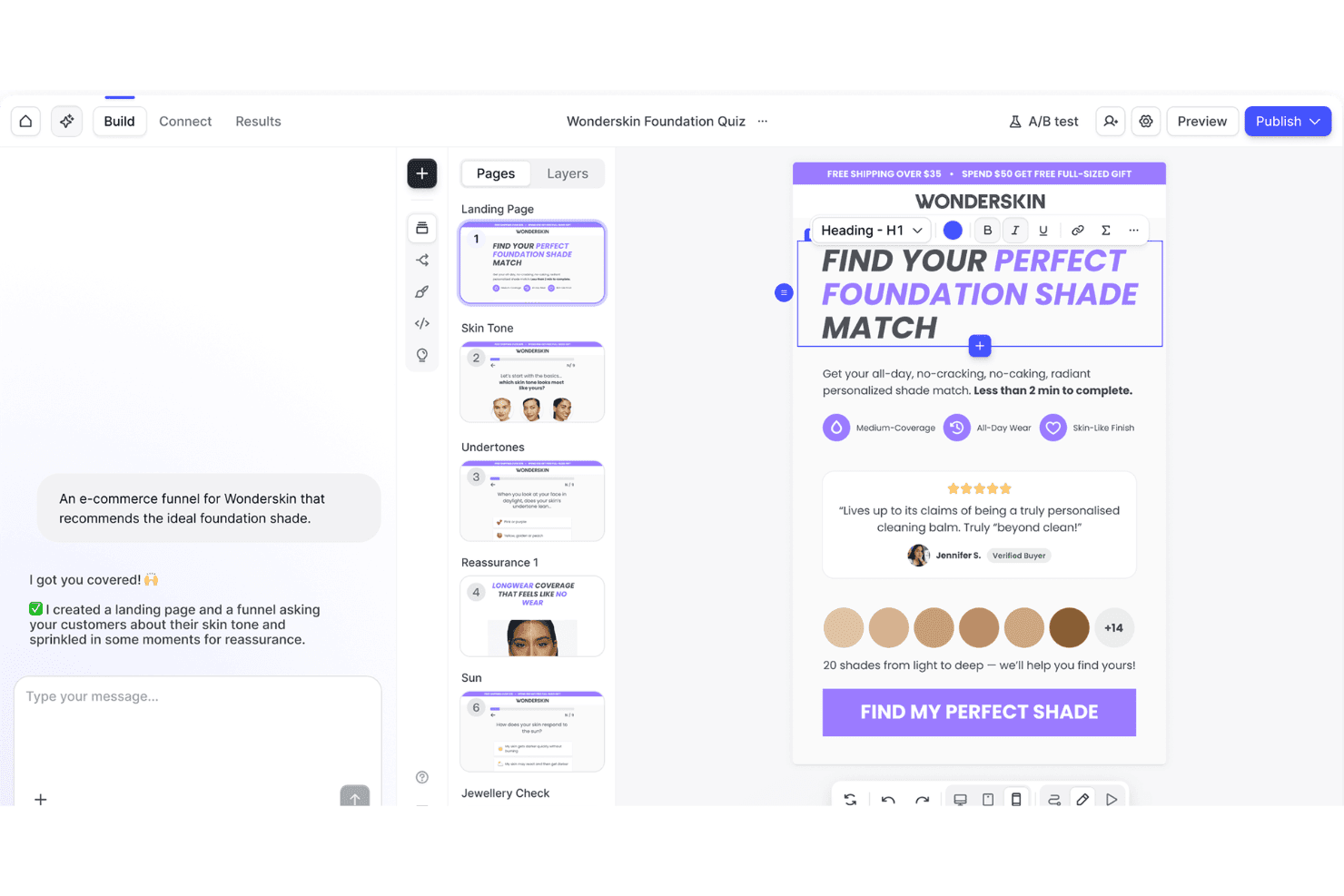
Automatically adapts questions and outputs for each visitor using AI. Boosts engagement by serving relevant content in real time.
Response Validation and Enrichment
Auto-validates lead data and enriches submissions using machine learning. Reduces manual review and delivers better-qualified leads to your pipeline.
Multi-Step Forms
Breaks complex lead capture into easy, conversational steps. Helps increase completion rates by minimizing user friction.
Real-Time Analytics
Get instant insights on completion rates and drop-off points. Identify where users convert or exit, so you can refine your flows quickly.
Conditional Logic
Set dynamic rules to show or hide questions based on prior answers. Personalizes every lead path and targets different segments automatically.
Ease of Use
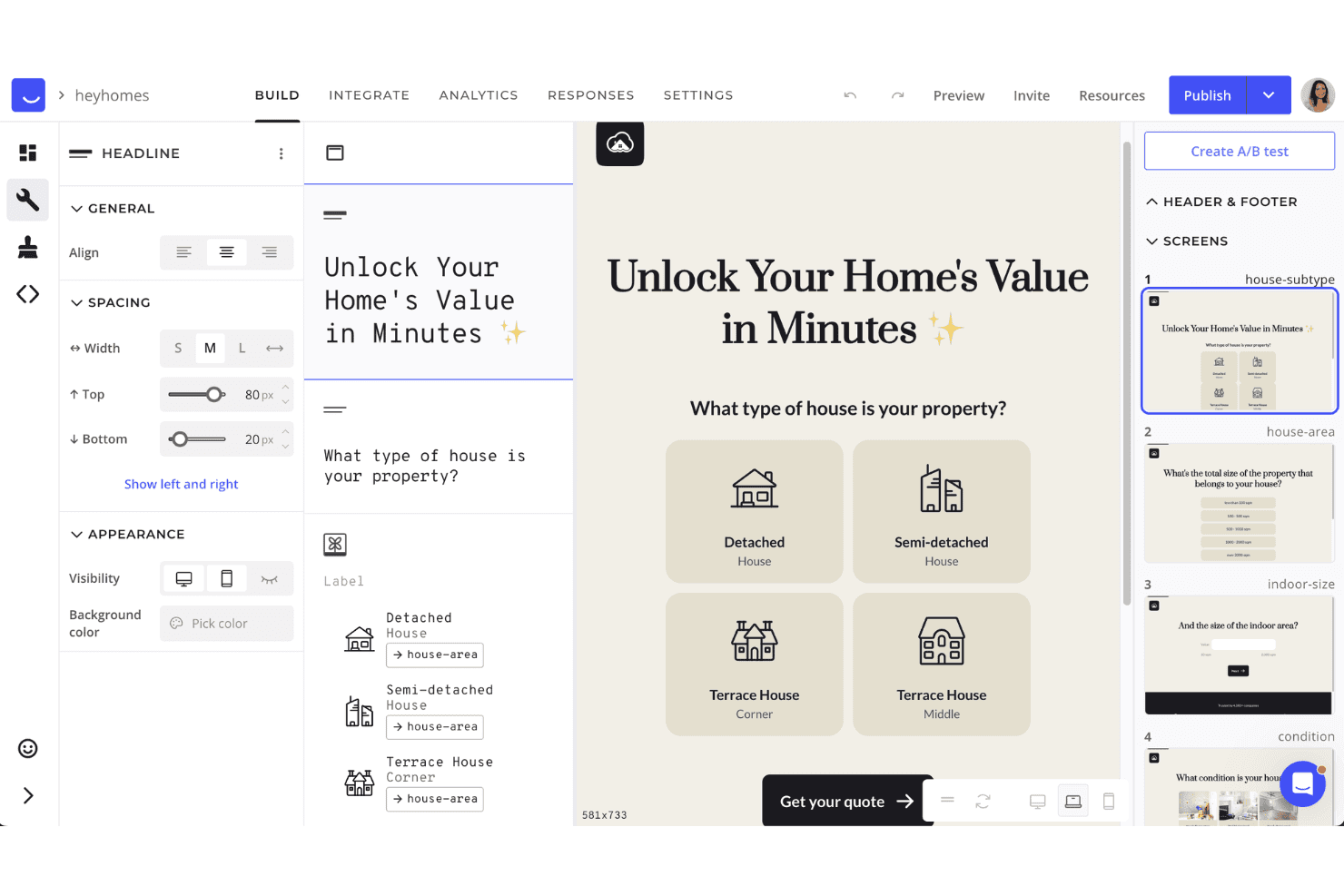
Heyflow’s interface is refreshingly visual and requires no coding, so you can launch new flows fast without technical help.
Users often mention how the step-by-step builder, real-time previews, and inline editing make it easy to design sophisticated lead paths. This hands-on approach makes iterating and optimizing flows much simpler than most alternatives.
Integrations
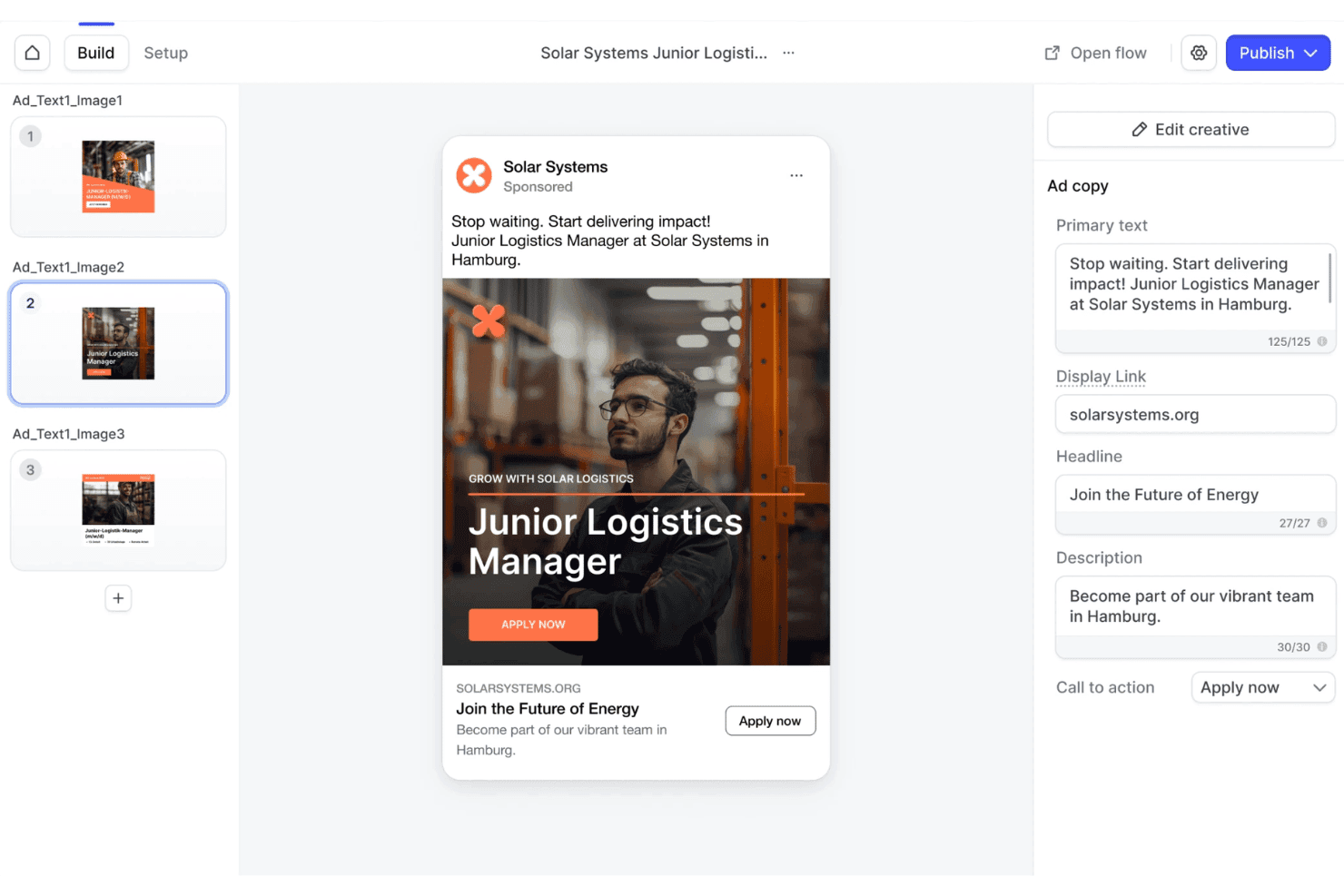
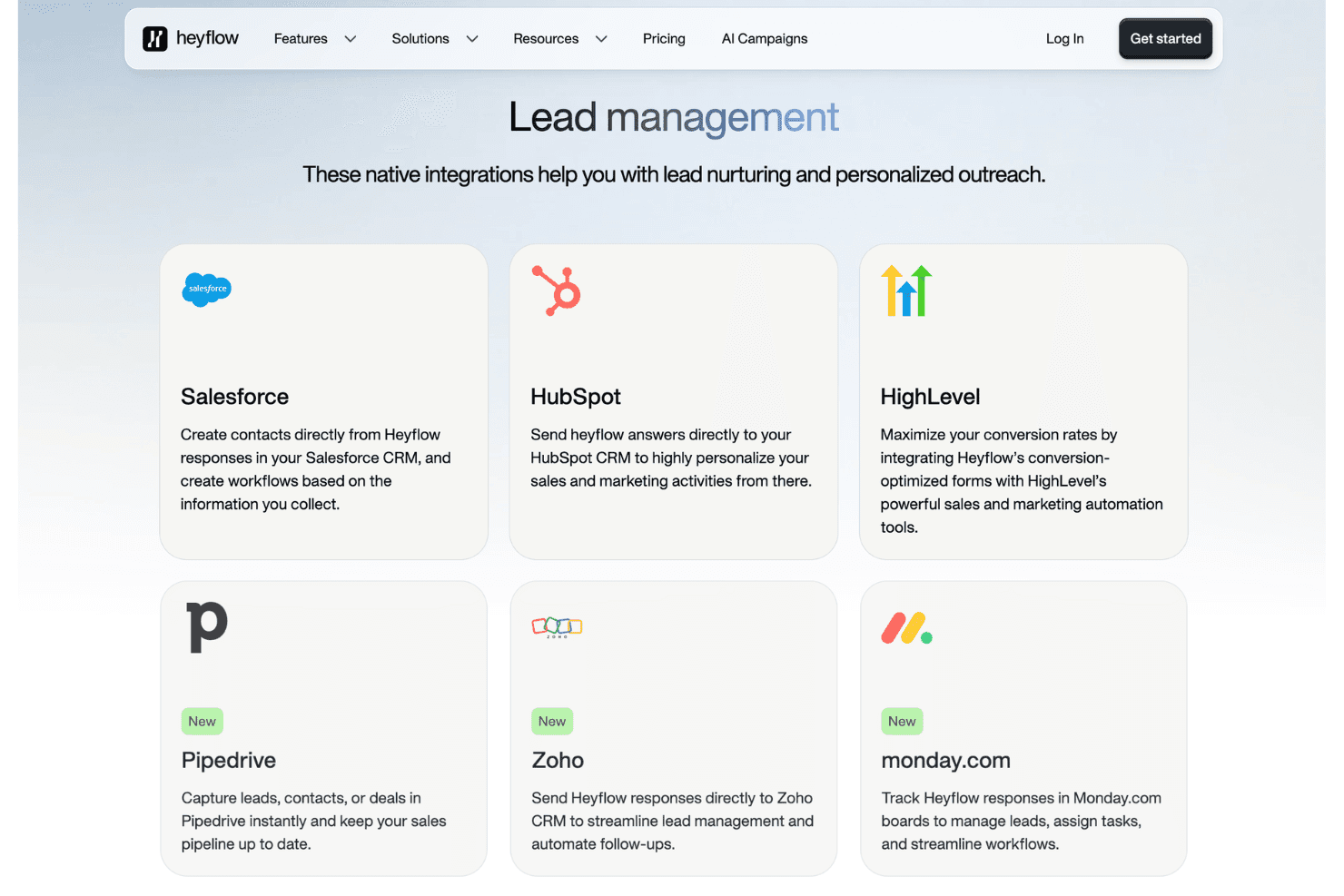
Heyflow integrates with HubSpot, Salesforce, Mailchimp, Google Sheets, Slack, Pipedrive, Zapier, Make, Webhooks, and Shopify.
Heyflow also offers a public API and connects with third-party integration tools like Zapier and Make.
Heyflow Specs
- A/B Testing: Yes
- API: Yes
- Data Export: Yes
- Data Import: Yes
- External Integrations: Yes
- Landing Pages: Yes
- Multi-User: Yes
- Third-Party Plugins/Add-Ons: Yes


