

Intuit Enterprise Suite vs. Sage Intacct: Confronto e Recensioni per il 2026
Intuit Enterprise Suite e Sage Intacct supportano entrambi la gestione delle entrate tramite reportistica finanziaria, previsione, visibilità del flusso di cassa e controlli operativi. Scopri come le loro funzionalità, prezzi, punti di forza e compromessi si confrontano nel 2026.

Recensiamo gli strumenti in modo indipendente e le commissioni aiutano a finanziare i nostri test. Consulta la nostra politica sulla trasparenza, la nostra metodologia o suggerisci uno strumento.
When revenue data lives across separate finance, payment, and reporting tools, even simple questions can take too long to answer. Teams need a clearer way to track performance, forecast cash flow, and understand what’s driving revenue as the business grows.
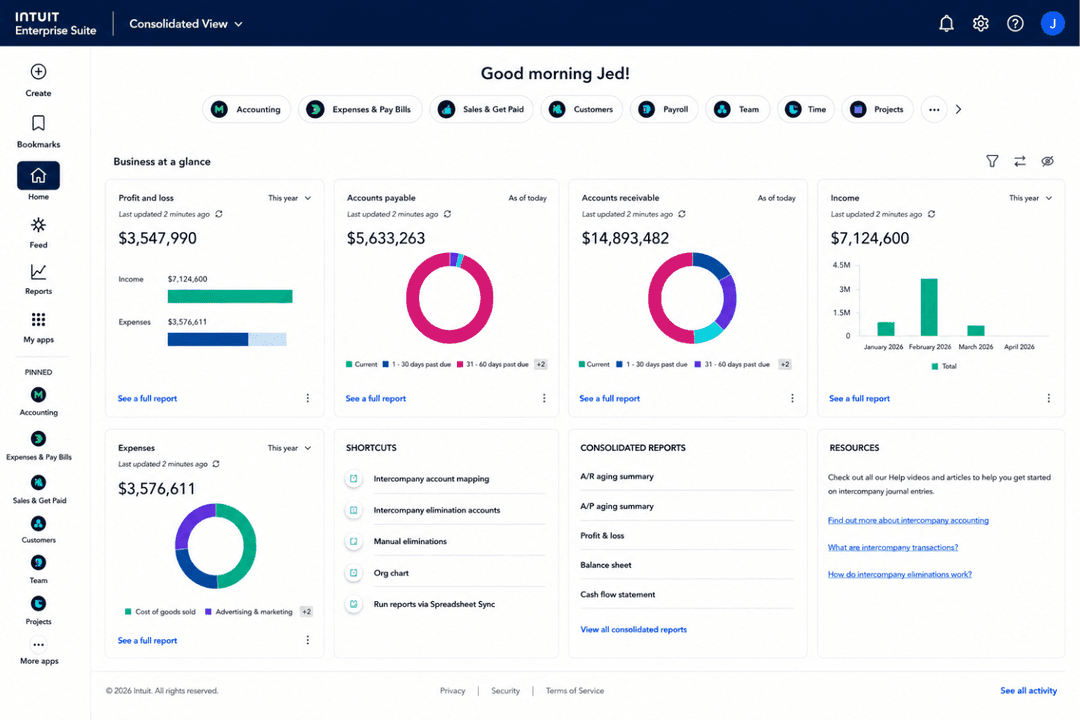
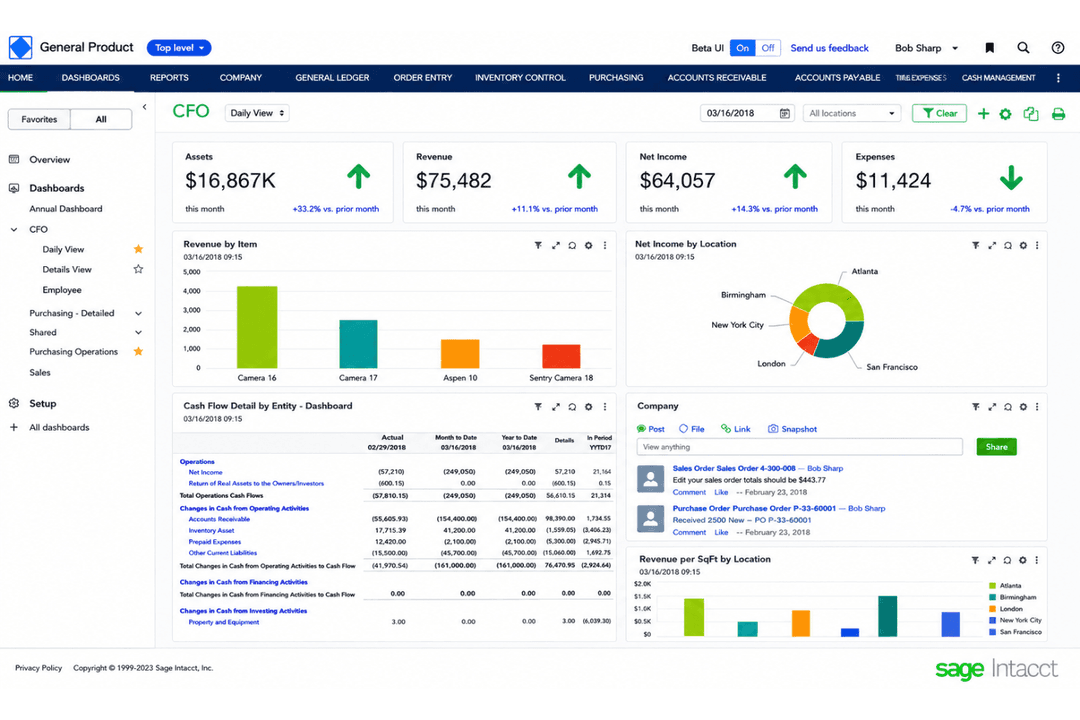
Intuit Enterprise Suite and Sage Intacct are both revenue management systems that help growing organizations improve financial visibility and control. Intuit Enterprise Suite focuses on revenue visibility, cash flow, payments, forecasting, and connected financial operations through the Intuit ecosystem, while Sage Intacct is more finance-focused with strong reporting, consolidations, dimensional accounting, and financial controls.
In this comparison, I’ll break down their features, pricing, pros and cons, security, ease of use, and ideal use cases to help you decide which platform fits your business best.
Intuit Enterprise Suite
4.6/5
- Free demo available
- Pricing upon request
Sage Intacct
4.3/5
- Free demo available
- From £1,200/month
Perché fidarsi dei nostri consigli sui software
6,700+
Reviews
20
Industry experts
16+
Evaluation factors
14
Years
Le nostre recensioni riflettono il nostro giudizio indipendente, non un discorso di vendita. Scopri come manteniamo la trasparenza.
Per questa guida, abbiamo valutato gli strumenti attraverso test pratici e ricerche indipendenti, assegnando un punteggio agli strumenti in base ai nostri criteri di selezione.
Le nostre recensioni riflettono il nostro giudizio editoriale umano, non un discorso di vendita.
| Intuit Enterprise Suite | Sage Intacct | |
|---|---|---|
| Free Trial | Free demo available | Free demo available |
| Pricing | Pricing upon request | From £1,200/month |
Suite Intuit Enterprise vs. Sage Intacct: prezzi e costi nascosti
Sia Intuit Enterprise Suite che Sage Intacct utilizzano una politica di prezzi personalizzata. Dovrai contattare ciascun fornitore per ottenere un preventivo. Intuit Enterprise Suite prevede prezzi flessibili su base contrattuale, calcolati in base a utenti, entità, funzionalità selezionate, componenti aggiuntivi, integrazioni e necessità di implementazione. Anche i prezzi di Sage Intacct sono su misura, con costi determinati da utenti, moduli, entità e funzionalità richieste.
Per quanto riguarda i costi nascosti, entrambe le piattaforme potrebbero richiedere ulteriori budget per implementazione, migrazione dati, formazione, integrazioni, configurazione dei flussi di lavoro, upgrade del supporto e lavoro amministrativo continuativo. I costi di Sage Intacct possono aumentare con l'aggiunta di moduli o con una maggiore complessità gestionale, mentre quelli di Intuit Enterprise Suite dipendono dalle esigenze di fatturato, reportistica e gestione operativa che l'organizzazione deve supportare. Chiedi a entrambi i fornitori una ripartizione completa dei costi oltre al canone di abbonamento base.
| Integrazione | Intuit Enterprise Suite | Sage Intacct |
|---|---|---|
| IntegrazioneShopify | Intuit Enterprise Suite✅ | Sage Intacct ✅ |
| IntegrazioneSalesforce | Intuit Enterprise Suite✅ | Sage Intacct ✅ |
| IntegrazionePayPal | Intuit Enterprise Suite✅ | Sage Intacct ✅ |
| IntegrazioneStripe | Intuit Enterprise Suite✅ | Sage Intacct ✅* |
| IntegrazioneDocuSign | Intuit Enterprise Suite✅ | Sage Intacct ✅* |
| IntegrazioneSquare | Intuit Enterprise Suite✅ | Sage Intacct ✅ |
| IntegrazioneAmazon Marketplace | Intuit Enterprise Suite✅ | Sage Intacct ✅* |
| IntegrazioneHubSpot | Intuit Enterprise Suite✅ | Sage Intacct ✅ |
| IntegrazioneKnowify | Intuit Enterprise Suite✅ | Sage Intacct ❌ |
| IntegrazioneWix | Intuit Enterprise Suite✅ | Sage Intacct ✅* |
| IntegrazioneAPI | Intuit Enterprise Suite✅ | Sage Intacct ✅ |
| IntegrazioneZapier | Intuit Enterprise Suite❌ | Sage Intacct ✅ |
*Disponibile tramite connettore di terze parti, partner Sage Intacct Marketplace, API o integrazione Zapier.
Insieme, Intuit Enterprise Suite e Sage Intacct coprono un'ampia gamma di integrazioni tra ecommerce, pagamenti, CRM, finanza e flussi di lavoro sui ricavi. Intuit Enterprise Suite è maggiormente incentrato sulle connessioni dirette con le app e sull'ecosistema più ampio di Intuit, mentre Sage Intacct supporta molte connessioni tramite partner di marketplace, connettori di terze parti, API o Zapier. Nel complesso, Intuit Enterprise Suite è più adatto a team che desiderano collegare ricavi, pagamenti e dati dei clienti con meno configurazioni, mentre Sage Intacct offre ai team guidati dalla finanza percorsi di integrazione più flessibili.
| Fattore | Intuit Enterprise Suite | Sage Intacct |
|---|---|---|
| FattoreCrittografia dei dati | Intuit Enterprise SuiteCrittografa i dati in transito e a riposo per proteggere i dati su ricavi, finanza, paghe e operazioni. | Sage IntacctUtilizza la crittografia per i dati in transito e a riposo per tutelare i dati finanziari e aziendali. |
| FattoreConformità normativa | Intuit Enterprise SuiteSostiene report SOC, pratiche certificate ISO 27001, PCI DSS per servizi di pagamento applicabili e documentazione VPAT. | Sage IntacctSupporta framework di conformità per ambienti finanziari e soggetti a regolamentazione. |
| FattoreAccesso Utente | Intuit Enterprise SuiteInclude controlli degli accessi basati sui ruoli per limitare l’accesso a dati sensibili relativi a ricavi e finanza. | Sage IntacctFornisce controlli d’accesso, autenticazione, logging di sicurezza e MFA per i sistemi critici. |
| FattoreTracciamento Audit & Attività | Intuit Enterprise SuiteSupporta le esigenze di audit tramite permessi, controlli finanziari, visibilità delle transazioni e supervisione della reportistica. | Sage IntacctOffre tracce di audit, registri di sicurezza e controlli orientati alla conformità. |
| FattoreUptime & Disponibilità | Intuit Enterprise SuiteOffre risorse di sicurezza enterprise, ma un SLA specifico sull’uptime di IES non è pubblicamente elencato. | Sage IntacctPubblica dettagli su disponibilità e recovery per i servizi coperti. |
Intuit Enterprise Suite copre i controlli fondamentali di cui hanno bisogno i team in crescita, inclusi crittografia, accesso basato sui ruoli, report SOC, pratiche certificate ISO 27001 e PCI DSS per i servizi di pagamento applicabili. Inoltre supporta le esigenze di audit tramite permessi, visibilità delle transazioni e controlli finanziari. Sage Intacct offre ulteriore documentazione per la compliance, ma Intuit Enterprise Suite garantisce ai team responsabili dei ricavi una copertura di sicurezza solida per la gestione di processi finanziari, reportistica, pagamenti e dati operativi.
| Fattore | Intuit Enterprise Suite | Sage Intacct |
|---|---|---|
| FattoreInterfaccia Utente | Intuit Enterprise SuiteEsperienza moderna in stile Intuit, familiare per i team abituati a QuickBooks e dashboard finanziari. | Sage IntacctWorkspace orientato alla finanza costruito attorno a reportistica, dashboard, dimensioni e controlli. |
| FattoreOnboarding | Intuit Enterprise SuiteImplementazione guidata con un customer success manager dedicato, supporto alla migrazione, formazione, configurazione dei report e collegamenti di sistema. | Sage IntacctOffre risorse per implementazione e formazione, concentrandosi spesso su strutture finanziarie, dimensioni ed esigenze di reporting. |
| FattoreLivello di apprendimento | Intuit Enterprise SuitePiù intuitivo per i team già abituati a Intuit, anche se la reportistica dei ricavi e la creazione di entità richiedono comunque pianificazione. | Sage IntacctPuò richiedere una formazione finanziaria più approfondita a causa della contabilità dimensionale, consolidamenti e configurazione reportistica. |
| FattoreAttività quotidiane | Intuit Enterprise SuiteAiuta i team a gestire visibilità sui ricavi, flussi di cassa, pagamenti, reportistica, approvazioni e workflow finanziari con una configurazione più agevole. | Sage IntacctOttimo per reportistica finance-driven, AP/AR, budgeting, consolidamenti e workflow orientati all’audit. |
| FattorePersonalizzazione | Intuit Enterprise SuiteSupporta workflow, report, permessi, integrazioni e processi aziendali configurabili senza una complessa struttura ERP. | Sage IntacctSupporta dashboard, report, dimensioni e ruoli personalizzabili, sebbene la configurazione possa richiedere più lavoro di amministrazione finanziaria. |
Dal punto di vista della facilità d’uso, Intuit Enterprise Suite è più accessibile per i team che vogliono visibilità sui ricavi, monitoraggio dei flussi di cassa, pagamenti, reportistica e workflow finanziari senza una configurazione complessa. Il suo onboarding guidato, il supporto dedicato al successo del cliente e l’esperienza in stile Intuit lo rendono semplice da adottare per team in crescita. Anche Sage Intacct è utilizzabile, ma la sua struttura più orientata alla finanza può richiedere più formazione e configurazione per i team che gestiscono dimensioni, consolidamenti e reportistica avanzata.
Intuit Enterprise Suite
- Connects revenue, cash flow, payments, and financial data for clearer visibility.
- Supports AI-powered reporting, forecasting, and insights for teams managing revenue performance.
- Helps manage multi-entity financial operations as the business grows.
- Setup requires planning around entities, reporting, workflows, and integrations.
- May be more than smaller teams need if they only want basic revenue tracking.
- Not a dedicated revenue tool, so advanced revenue recognition or subscription billing may require add-ons.
Sage Intacct
- Handles multi-entity consolidations with strong audit trails
- Automates ASC 606 revenue recognition requirements
- Offers highly customizable financial reporting and dashboards
- Advanced configuration often requires consulting or IT support
- Some users report slow response times in customer support
- UI can feel dated compared to modern finance platforms
Intuit Enterprise Suite
- Multi-Entity OrganizationsManage revenue and financial performance across multiple legal entities while consolidating reporting from one system.
- Professional Services FirmsTrack project revenue, manage financial performance, and improve visibility across teams and client work.
- Technology & SaaS CompaniesSupport growing revenue operations with AI-powered reporting, forecasting, and financial controls.
- Construction & Project-Based BusinessesManage project accounting, budgets, and revenue-related reporting for project-driven work.
- Manufacturing, Wholesale & DistributionMonitor revenue and financial performance across products, locations, and business units.
- Growing Mid-Market BusinessesUse enterprise-level financial management and reporting without taking on the full complexity of a traditional ERP.
Sage Intacct
- SaaS CompaniesHandles complex subscription billing, MRR/ARR reporting, and revenue recognition under ASC 606.
- Multi-Entity EnterprisesAutomates consolidations and supports intercompany transactions across locations or subsidiaries.
- Healthcare OrganizationsManages grants, multi-site operations, and regulatory compliance for healthcare accounting teams.
- Financial Services FirmsSupports detailed audit trails and robust controls for risk-sensitive, regulated environments.
- NonprofitsTracks restricted funds, grant revenue, and program-specific reporting with industry templates.
- Accounting ManagersProvides granular controls, custom dashboards, and real-time audit-ready data for proactive management.
Chi dovrebbe utilizzare Intuit Enterprise Suite e chi dovrebbe scegliere Sage Intacct?
Intuit Enterprise Suite è particolarmente adatto a imprese in crescita e in fase mid-market che necessitano di maggiore visibilità sui ricavi, tracciamento dei flussi di cassa, pagamenti, previsioni e reportistica finanziaria senza una struttura ERP complessa. Funziona in modo ideale per i team che già utilizzano l’ecosistema Intuit e vogliono flussi di lavoro collegati tra entrate e finanza, reportistica multi-entity, insight alimentati dall’AI e onboarding guidato.
Sage Intacct, invece, si adatta ai team finance-driven che richiedono una struttura contabile più profonda, consolidamenti, reportistica dimensionale, budgeting e controlli orientati all’audit. In generale, Intuit Enterprise Suite è preferibile per i team che cercano una soluzione più gestibile per la visibilità su dati finanziari e di ricavo, mentre Sage Intacct si adatta meglio a organizzazioni con esigenze finanziarie e di reporting più complesse.
| Intuit Enterprise Suite | Sage Intacct | |
|---|---|---|
| AI Focus | Intuit Enterprise Suite Uses Intuit AI Agents to support insights, workflow assistance, data cleanup, and financial operations. | Sage Intacct Uses AI more for finance-specific tasks like outlier detection, anomaly review, and accounting insights. |
| Ecosystem Fit | Intuit Enterprise Suite Built around Intuit tools for finance, payroll, payments, workforce management, marketing, and supported apps. | Sage Intacct Built around Sage’s finance ecosystem, with marketplace partners and accounting-focused integrations. |
| Implementation Approach | Intuit Enterprise Suite Uses guided onboarding with a dedicated customer success manager, migration help, training, and reporting setup. | Sage Intacct Often requires more finance-led setup around dimensions, consolidations, controls, and reporting structures. |
| Native Money Services | Intuit Enterprise Suite Includes payment processing, bill pay, and access to business lending through the Intuit ecosystem. | Sage Intacct Supports finance workflows, but some money movement capabilities may depend on partners or add-ons. |
| Product Orientation | Intuit Enterprise Suite Broader business management platform used for revenue visibility, cash flow, payments, forecasting, and financial operations. | Sage Intacct Accounting and financial management platform focused on finance structure, controls, reporting, and consolidations. |
| Audit & Compliance Support | Both support audit needs through financial controls, transaction visibility, permissions, and reporting oversight. |
|---|---|
| Cloud-Based Access | Both are cloud-based systems that help teams manage financial and revenue-related data online. |
| Multi-Entity Support | Both help organizations manage financial data across multiple entities, locations, or business units. |
| Reporting & Performance Tracking | Both help teams track financial performance, revenue trends, budgets, and business health through reports and dashboards. |
| User Permissions | Both include roles and permissions to help protect sensitive financial and revenue data. |