

Intuit Enterprise Suite vs. NetSuite: Confronto esperto e recensioni per il 2026
Intuit Enterprise Suite e NetSuite supportano entrambi la gestione dei ricavi tramite reportistica finanziaria, previsione, visibilità sul flusso di cassa e controlli operativi. Scopri come si confrontano le loro funzionalità, prezzi, punti di forza e compromessi nel 2026.

Recensiamo gli strumenti in modo indipendente e le commissioni aiutano a finanziare i nostri test. Consulta la nostra politica sulla trasparenza, la nostra metodologia o suggerisci uno strumento.
Revenue teams often struggle when billing, cash flow, forecasting, and reporting live across disconnected systems. As the business grows, it can become harder to track revenue performance, manage financial complexity, and keep sales, finance, and operations aligned.
Intuit Enterprise Suite and NetSuite are both revenue management system options that support growing organizations, but they approach the work differently. Intuit Enterprise Suite focuses on revenue visibility, cash flow, payments, forecasting, and financial operations through the Intuit ecosystem, while NetSuite supports more complex revenue processes such as revenue recognition, order-to-cash workflows, global operations, and financial management.
In this comparison, I’ll break down their features, pricing, pros and cons, security, ease of use, and ideal use cases to help you decide which platform fits your business best.
Intuit Enterprise Suite
4.6/5
- Free demo available
- Pricing upon request
Oracle NetSuite
4.2/5
- Free demo available
- Pricing upon request
Perché fidarsi dei nostri consigli sui software
6,700+
Reviews
20
Industry experts
16+
Evaluation factors
14
Years
Le nostre recensioni riflettono il nostro giudizio indipendente, non un discorso di vendita. Scopri come manteniamo la trasparenza.
Per questa guida, abbiamo valutato gli strumenti attraverso test pratici e ricerche indipendenti, assegnando un punteggio agli strumenti in base ai nostri criteri di selezione.
Le nostre recensioni riflettono il nostro giudizio editoriale umano, non un discorso di vendita.
| Intuit Enterprise Suite | Oracle NetSuite | |
|---|---|---|
| Free Trial | Free demo available | Free demo available |
| Pricing | Pricing upon request | Pricing upon request |
Intuit Enterprise Suite vs. NetSuite: Prezzi e Costi Nascosti
Sia Intuit Enterprise Suite sia NetSuite utilizzano prezzi personalizzati basati su preventivo, quindi dovrai contattare ogni fornitore per ottenere una stima precisa. Il prezzo di Intuit Enterprise Suite dipende da fattori come il numero di utenti, entità, funzionalità selezionate, componenti aggiuntivi, integrazioni e necessità di implementazione. Anche il prezzo di NetSuite può variare in base a utenti, moduli, personalizzazioni, livello di supporto e ambito di implementazione.
Per quanto riguarda i costi nascosti, entrambe le piattaforme potrebbero richiedere un budget aggiuntivo per la migrazione dei dati, formazione, configurazione dei report, definizione dei flussi di lavoro, integrazioni, supporto premium e attività amministrative continuative. NetSuite può diventare più costoso man mano che i team aggiungono moduli ERP, capacità globali o funzionalità avanzate di gestione dei ricavi, mentre i costi di Intuit Enterprise Suite dipendono da quanta complessità finanziaria, di ricavi e operativa l’organizzazione necessita di supportare. Per confrontarli in modo equo, chiedi a entrambi i fornitori un dettaglio completo dei costi oltre l’abbonamento base.
| Integrazione | Intuit Enterprise Suite | NetSuite |
|---|---|---|
| IntegrazioneShopify | Intuit Enterprise Suite✅ | NetSuite✅ |
| IntegrazioneSalesforce | Intuit Enterprise Suite✅ | NetSuite✅ |
| IntegrazionePayPal | Intuit Enterprise Suite✅ | NetSuite✅ |
| IntegrazioneStripe | Intuit Enterprise Suite✅ | NetSuite✅ |
| IntegrazioneDocuSign | Intuit Enterprise Suite✅ | NetSuite✅ |
| IntegrazioneSquare | Intuit Enterprise Suite✅ | NetSuite✅ |
| IntegrazioneAmazon Marketplace | Intuit Enterprise Suite✅ | NetSuite✅ |
| IntegrazioneHubSpot | Intuit Enterprise Suite✅ | NetSuite✅ |
| IntegrazioneKnowify | Intuit Enterprise Suite✅ | NetSuite❌ |
| IntegrazioneWix | Intuit Enterprise Suite✅ | NetSuite❌ |
| IntegrazioneAPI | Intuit Enterprise Suite✅ | NetSuite✅ |
Sia Intuit Enterprise Suite che NetSuite offrono integrazioni per i flussi di lavoro relativi a ricavi, pagamenti, CRM, ecommerce e finanza. Intuit Enterprise Suite si basa sull’ecosistema Intuit e sulle connessioni dirette con le app per una configurazione più semplice, mentre NetSuite supporta integrazioni più estese tramite il proprio ecosistema ERP e API. Nel complesso, Intuit Enterprise Suite si adatta a team che desiderano flussi di lavoro sui ricavi connessi, mentre NetSuite è più adatto a team con esigenze di sistema più complesse.
| Fattore | Intuit Enterprise Suite | NetSuite |
|---|---|---|
| FattoreCrittografia dei dati | Intuit Enterprise SuiteCrittografa i dati in transito e a riposo per proteggere dati finanziari, ricavi, paghe e operativi. | NetSuiteUtilizza crittografia e controlli di sicurezza cloud per proteggere dati finanziari e aziendali. |
| FattoreConformità normativa | Intuit Enterprise SuiteSupporta report SOC, pratiche certificate ISO 27001, PCI DSS per i servizi di pagamento applicabili e documentazione VPAT. | NetSuiteSupporta controlli SOC, ISO e PCI relativi alla sicurezza e conformità ERP cloud. |
| FattoreControlli di accesso utente | Intuit Enterprise SuiteInclude controlli di accesso basati sui ruoli per limitare l’accesso ai dati sensibili su ricavi, finanza e operatività. | NetSuiteFornisce permessi basati sui ruoli, politiche sulle password e controlli di accesso per gli utenti aziendali. |
| FattoreAudit e tracciamento attività | Intuit Enterprise SuiteSostiene le esigenze di audit tramite permessi, controlli finanziari, visibilità delle transazioni e supervisione dei report. | NetSuiteOffre tracciabilità completa e tracciamento delle attività su flussi di lavoro finanziari e operativi. |
| FattoreDisponibilità e uptime | Intuit Enterprise SuitePropone risorse di sicurezza a livello enterprise, sebbene un SLA specifico sull’uptime IES non sia reso pubblico. | NetSuitePubblica impegni sulla disponibilità dei servizi cloud per i servizi NetSuite coperti. |
Entrambe le piattaforme offrono solide basi di sicurezza per la gestione dei dati di ricavi e finanza. Intuit Enterprise Suite copre controlli chiave come crittografia, accesso basato sui ruoli, report SOC, pratiche certificate ISO 27001 e PCI DSS per i servizi di pagamento applicabili. NetSuite fornisce anch’essa sicurezza cloud, controlli di accesso, tracciamento audit e impegni pubblicati in tema di disponibilità. Nel complesso, Intuit Enterprise Suite offre alle squadre in crescita la copertura di sicurezza e conformità necessarie per le operazioni di ricavi e finanza, mentre NetSuite può essere più adatta ad aziende con esigenze di conformità globale più complesse.
| Fattore | Intuit Enterprise Suite | NetSuite |
|---|---|---|
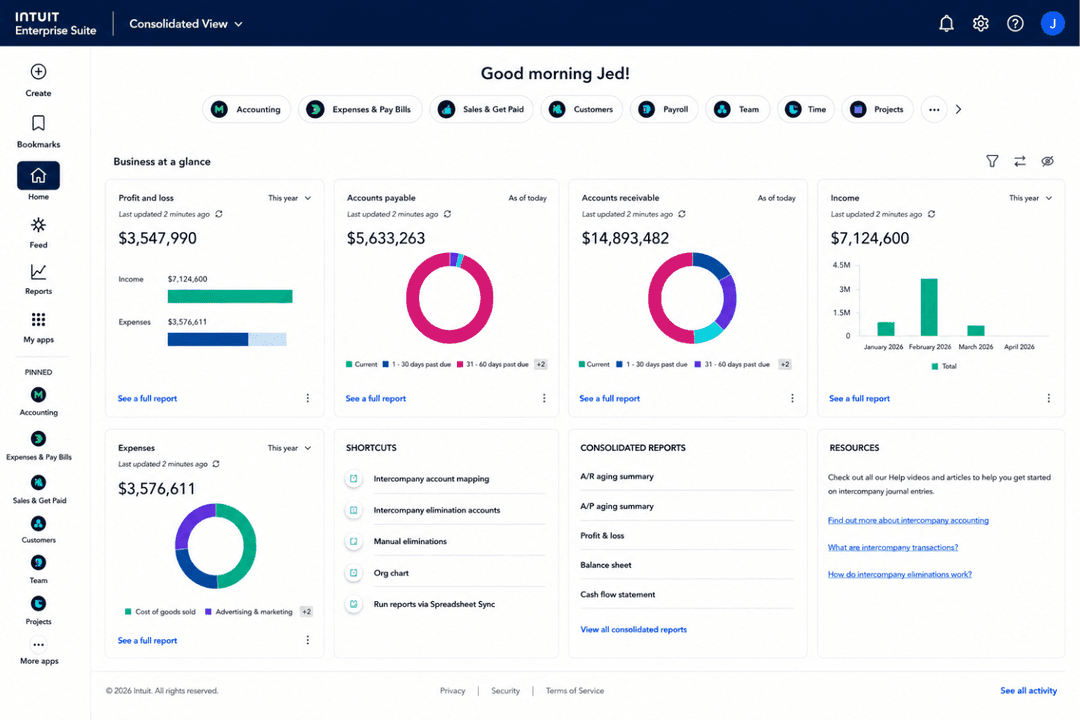
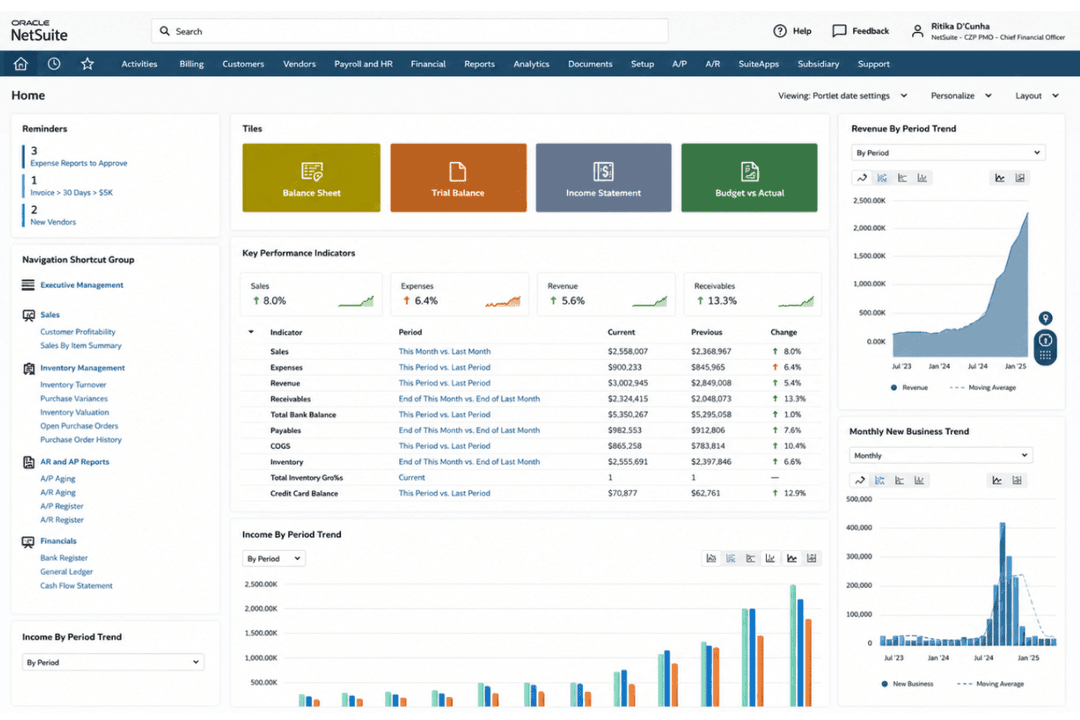
| FattoreInterfaccia utente | Intuit Enterprise SuiteInterfaccia moderna in stile Intuit, familiare per i team abituati a QuickBooks e dashboard finanziarie. | NetSuiteDashboard basati sui ruoli con numerosi controlli su finanza, ricavi, inventario e operatività. |
| FattoreOnboarding | Intuit Enterprise SuiteConfigurazione guidata con customer success manager dedicato, supporto per migrazione, formazione e risorse per l’implementazione. | NetSuiteOffre risorse di implementazione strutturate, ma la configurazione richiede maggiore pianificazione per la configurazione ERP più ampia. |
| FattoreAttività quotidiane | Intuit Enterprise SuiteAiuta i team a gestire visibilità sui ricavi, cash flow, pagamenti, reportistica, approvazioni e flussi di lavoro finanziari con meno complessità ERP. | NetSuiteSupporta flussi di lavoro ERP più estesi, che possono aggiungere ulteriori passaggi e lavoro amministrativo per gli utenti giornalieri. |
| FattoreRisorse di supporto | Intuit Enterprise SuiteFornisce supporto prodotto, guida customer success, formazione e risorse di servizi professionali. | NetSuiteOffre documentazione, formazione, risorse di supporto e assistenza tramite partner. |
| FattorePersonalizzazione | Intuit Enterprise SuiteSupporta report configurabili, flussi di lavoro, permessi, integrazioni e processi aziendali senza una complessa personalizzazione ERP. | NetSuitePropone ampia possibilità di personalizzazione, ma può richiedere una configurazione tecnica o supporto amministrativo aggiuntivo. |
Dal punto di vista della facilità d’uso, Intuit Enterprise Suite è più accessibile per i team che necessitano di visibilità sui ricavi, monitoraggio del cash flow, pagamenti, reportistica e workflow finanziari senza un’impostazione ERP complessa. L’onboarding guidato, il supporto dedicato e l’esperienza in stile Intuit facilitano l’adozione per squadre in crescita. NetSuite può sostenere processi ERP più estesi, ma ciò può richiedere maggiore configurazione, formazione e attività amministrativa. Nel complesso, Intuit Enterprise Suite è la soluzione più adatta per le squadre che cercano una gestione più semplice di ricavi e visibilità finanziaria.
Intuit Enterprise Suite
- Connects revenue, cash flow, payments, and financial data for clearer visibility.
- Supports AI-powered reporting, forecasting, and insights for teams managing revenue performance.
- Helps manage multi-entity financial operations as the business grows.
- Setup requires planning around entities, reporting, workflows, and integrations.
- May be more than smaller teams need if they only want basic revenue tracking.
- Not a dedicated revenue tool, so advanced revenue recognition or subscription billing may require add-ons.
Oracle NetSuite
- Automates multi-element revenue recognition for diverse contract types
- Provides real-time dashboards for compliance and revenue visibility
- Supports advanced audit trails and complex regulatory standards
- Pricing is higher than most similar solutions
- Customization and reporting often require expert configuration
- Initial setup is lengthy for most growing businesses
Intuit Enterprise Suite
- Multi-Entity OrganizationsManage revenue and financial performance across multiple legal entities while consolidating reporting from one system.
- Professional Services FirmsTrack project revenue, manage financial performance, and improve visibility across teams and client work.
- Technology & SaaS CompaniesSupport growing revenue operations with AI-powered reporting, forecasting, and financial controls.
- Construction & Project-Based BusinessesManage project accounting, budgets, and revenue-related reporting for project-driven work.
- Manufacturing, Wholesale & DistributionMonitor revenue and financial performance across products, locations, and business units.
- Growing Mid-Market BusinessesUse enterprise-level financial management and reporting without taking on the full complexity of a traditional ERP.
Oracle NetSuite
- Multi-Subsidiary EnterprisesNetSuite’s global entity management makes it easy to consolidate revenue and comply with local rules worldwide.
- SaaS ProvidersAutomated subscription billing, usage-based revenue tracking, and audit-ready compliance suit software and recurring revenue models.
- Manufacturing FirmsAdvanced inventory, order management, and contract revenue scheduling work together for true end-to-end finance operations.
- Large Retail ChainsRetailers can handle complex billing, point-of-sale integration, and unified reporting across multiple storefronts and fulfillment types.
- Finance DepartmentsAccounting and finance teams, including CFOs, benefit from real-time dashboards, KPIs, compliance workflows, and advanced audit tracking.
- Publicly Traded CompaniesBuilt-in controls for ASC 606 and IFRS 15 help meet strict reporting deadlines and regulatory scrutiny.
Chi dovrebbe scegliere Intuit Enterprise Suite e chi dovrebbe scegliere NetSuite?
Intuit Enterprise Suite è particolarmente indicata per aziende in crescita e realtà di medie dimensioni che necessitano di una migliore visibilità sui ricavi, monitoraggio del cash flow, pagamenti, previsioni e reportistica finanziaria, senza dover affrontare una configurazione ERP complessa. Funziona molto bene per i team che utilizzano già l’ecosistema Intuit e vogliono workflow di ricavi e finanza connessi, reportistica multi-entità, insight tramite intelligenza artificiale ed un’implementazione più gestibile.
NetSuite, invece, può essere adatto ad organizzazioni con processi di ricavi più complessi, in particolare per chi gestisce entità globali, workflow order-to-cash, inventario, riconoscimento dei ricavi o processi di business altamente personalizzati. In sintesi, Intuit Enterprise Suite è migliore per chi vuole maggior controllo e trasparenza finanziaria durante la crescita, mentre NetSuite è più adatto ad aziende che richiedono una copertura ERP più ampia.
| Intuit Enterprise Suite | Oracle NetSuite | |
|---|---|---|
| Ecosystem Fit | Intuit Enterprise Suite Built around Intuit tools for finance, payments, payroll, workforce management, marketing, and supported apps. | Oracle NetSuite Built around the NetSuite ERP ecosystem, with SuiteCloud, SuiteApps, and broader ERP extensions. |
| Global Operations Scope | Intuit Enterprise Suite Fits growing and mid-market organizations that need stronger financial control across entities or business units. | Oracle NetSuite Better suited to companies with complex global operations, multi-currency needs, and advanced revenue requirements. |
| Implementation Approach | Intuit Enterprise Suite Offers guided onboarding, customer success support, data migration, training, and a more manageable setup. | Oracle NetSuite Often requires more configuration for complex revenue models, global entities, and broader ERP workflows. |
| Pricing Structure | Intuit Enterprise Suite Uses flexible, contract-based pricing based on users, entities, modules, add-ons, and implementation needs. | Oracle NetSuite Uses subscription pricing that can vary by users, modules, customizations, and implementation scope. |
| Revenue Management Depth | Intuit Enterprise Suite Focuses on revenue visibility, cash flow, payments, forecasting, and financial operations. | Oracle NetSuite Includes dedicated revenue management capabilities such as revenue recognition, allocation, reclassification, and auditing. |
| Approval Workflows | Both support workflow automation for approvals, finance processes, and operational tasks. |
|---|---|
| Cloud-Based Access | Both are cloud-based systems that help teams manage financial and revenue-related data online. |
| Dashboards & Analytics | Both provide dashboards, analytics, and financial reports to help teams track performance and trends. |
| Third-Party Connectivity | Both support integrations and APIs to connect business data across key systems. |
| User Role Controls | Both include role-based permissions to help protect sensitive financial and revenue data. |