

NetSuite CRM -arvostelu: hyvät ja huonot puolet, ominaisuudet ja hinnoittelu
NetSuite CRM erottuu edukseen vankalla integroitujen liiketoiminnan hallintatyökalujen kokonaisuudellaan, mikä tekee siitä ihanteellisen kasvaville yrityksille, jotka tavoittelevat skaalautuvuutta.

We review tools independently, and commissions help fund our testing. See our transparency policy, our methodology, or suggest a tool.
NetSuite CRM is a CRM software built directly into the NetSuite ERP platform, designed for businesses that need sales, marketing, and customer data connected to their financial and operational systems in one place. I'd consider it if your team is already running NetSuite for finance or inventory and wants CRM data that stays in sync without a separate integration. That's where it has a clear edge over Salesforce—Salesforce is a stronger standalone CRM, but connecting it to your back-office data takes real configuration work that NetSuite simply doesn't require.
NetSuite CRM Evaluation Summary
4.2/5
- Pricing Upon Request
Why Trust Our Software Recommendations
6,700+
Reviews
20
Industry experts
16+
Evaluation factors
14
Years
Our reviews reflect our independent judgment—not a sales pitch. Learn how we stay transparent.
For this guide, we evaluated tools using hands-on testing and independent research, scoring tools using our selection criteria.
Our reviews reflect our human editorial judgment, not a sales pitch.
NetSuite CRM Overview
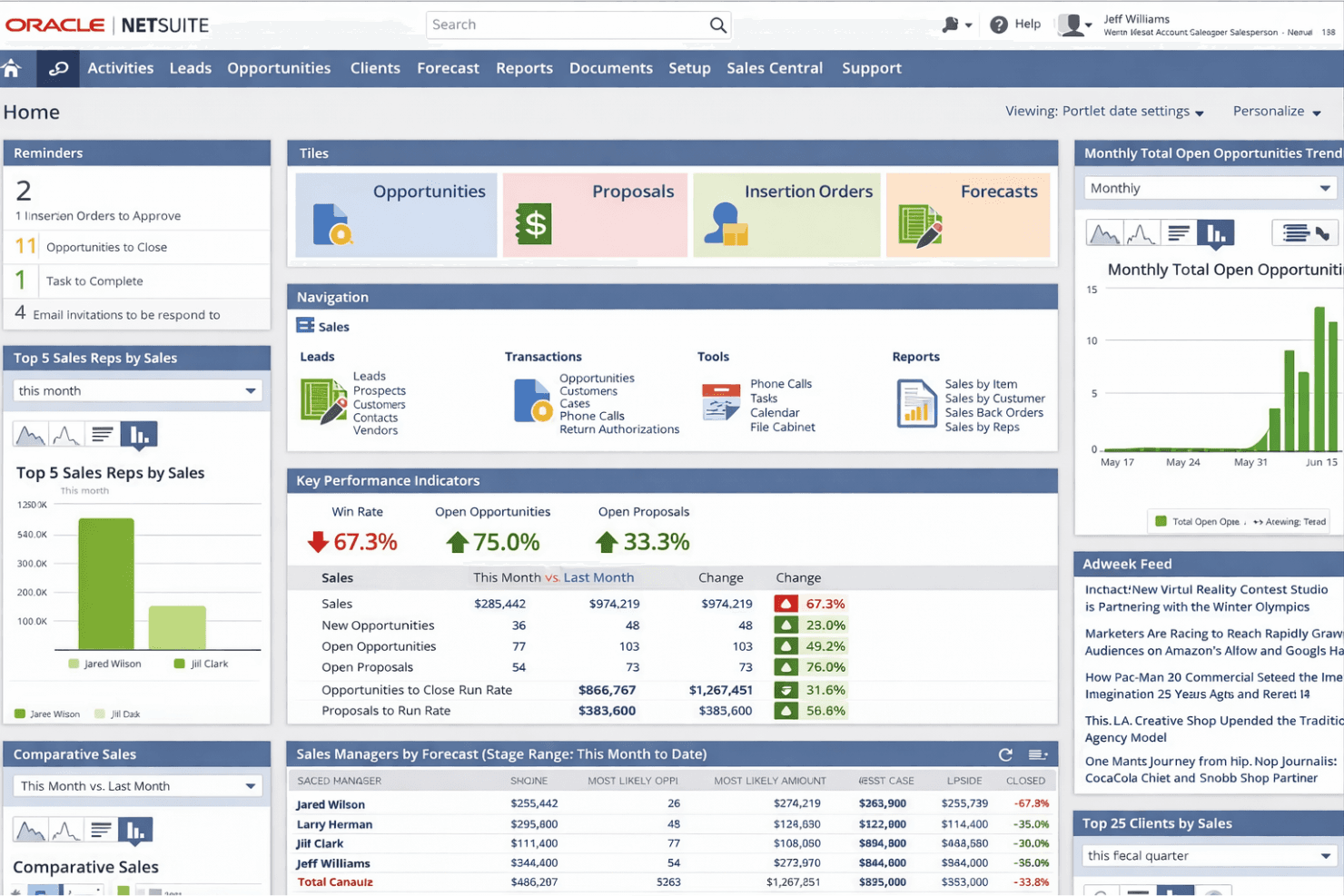
In my opinion, NetSuite CRM is a solid choice for businesses needing a robust CRM system with extensive integration capabilities. Its standout features and reliable customer support set it apart from many competitors, though its ease of use could be better. The software excels for mid-sized to large enterprises that require sophisticated tools and have the resources to manage its complexity. While pricing might seem steep, the value comes from its comprehensive suite of tools that can drive growth. If you’re judging based on functionality and integration, NetSuite CRM is worth considering, especially for teams ready to invest in training and onboarding.
Pros
- It offers comprehensive reporting tools to enhance your team's decision-making.
- You get strong customer support to assist with any issues.
- The software’s scalability suits your growing business needs.
Cons
- The user interface can feel outdated compared to newer CRM software.
- Your team might face a steep learning curve during initial use.
- Customization options are limited, which might not meet all your business needs.
Is NetSuite CRM Right For Your Needs?
Who Would be a Good Fit for NetSuite CRM?
NetSuite CRM is ideal for mid-sized to large businesses with a higher number of users who need strong reporting tools and customer support. It’s particularly suitable for industries like manufacturing and retail, where scalability and integrated business management are crucial. If your sales or marketing teams require detailed analytics and decision-making support, NetSuite CRM can meet those needs effectively. Its ability to handle complex business processes makes it a reliable choice for growing companies.
- Manufacturing BusinessesNetSuite CRM supports complex inventory and supply chain management, essential for manufacturing operations.
- Retail CompaniesRetail companies benefit from NetSuite CRM’s built-in order management, which connects customer data with sales orders and inventory workflows.
- Sales TeamsThe CRM provides robust analytics, allowing your sales team to track and optimize performance.
- Marketing DepartmentsWith marketing automation features and comprehensive reporting, marketing departments can better understand customer behavior and campaign success.
- Large EnterprisesNetSuite CRM scales well with business growth, making it suitable for large enterprises with evolving needs.
- Customer Service RolesStrong case management features and access to a comprehensive knowledge base help customer service teams resolve issues efficiently and improve customer experience.
Who Would be a Bad Fit for NetSuite CRM?
NetSuite CRM might not suit small businesses or startups with limited budgets or resources. Its complexity and learning curve can overwhelm teams without dedicated IT support. Industries that rely on highly customized CRM solutions might find NetSuite's customization options lacking. If your team values a modern, intuitive interface, NetSuite CRM may feel outdated compared to sleeker alternatives.
- Small StartupsThe high cost and complexity can be overwhelming for startups with limited resources.
- FreelancersFreelancers may find the extensive features unnecessary for managing their solo operations.
- NonprofitsNonprofits might struggle with the expense and complexity, preferring simpler, more affordable solutions.
- Creative AgenciesAgencies needing highly customizable solutions may find NetSuite's options limited.
- Tech-Savvy TeamsTeams preferring cutting-edge interfaces might find NetSuite's design outdated.
- Small RetailersSmall retailers might find NetSuite's capabilities excessive for their simpler needs.
How We Test & Score Tools
We’ve spent years building, refining, and improving our software testing and scoring system. The rubric is designed to capture the nuances of software selection and what makes a tool effective, focusing on critical aspects of the decision-making process.
Below, you can see exactly how our testing and scoring works across seven criteria. It allows us to provide an unbiased evaluation of the software based on core functionality, standout features, ease of use, onboarding, customer support, integrations, customer reviews, and value for money.
Core Functionality (25% of final scoring)
The starting point of our evaluation is always the core functionality of the tool. Does it have the basic features and functions that a user would expect to see? Are any of those core features locked to higher-tiered pricing plans? At its core, we expect a tool to stand up against the baseline capabilities of its competitors.
Standout Features (25% of final scoring)
Next, we evaluate uncommon standout features that go above and beyond the core functionality typically found in tools of its kind. A high score reflects specialized or unique features that make the product faster, more efficient, or offer additional value to the user.
We also evaluate how easy it is to integrate with other tools typically found in the tech stack to expand the functionality and utility of the software. Tools offering plentiful native integrations, 3rd party connections, and API access to build custom integrations score best.
Ease of Use (10% of final scoring)
We consider how quick and easy it is to execute the tasks defined in the core functionality using the tool. High scoring software is well designed, intuitive to use, offers mobile apps, provides templates, and makes relatively complex tasks seem simple.
Onboarding (10% of final scoring)
We know how important rapid team adoption is for a new platform, so we evaluate how easy it is to learn and use a tool with minimal training. We evaluate how quickly a team member can get set up and start using the tool with no experience. High scoring solutions indicate little or no support is required.
Customer Support (10% of final scoring)
We review how quick and easy it is to get unstuck and find help by phone, live chat, or knowledge base. Tools and companies that provide real-time support score best, while chatbots score worst.
Customer Reviews (10% of final scoring)
Beyond our own testing and evaluation, we consider the net promoter score from current and past customers. We review their likelihood, given the option, to choose the tool again for the core functionality. A high scoring software reflects a high net promoter score from current or past customers.
Value for Money (10% of final scoring)
Lastly, in consideration of all the other criteria, we review the average price of entry level plans against the core features and consider the value of the other evaluation criteria. Software that delivers more, for less, will score higher.
Core Features
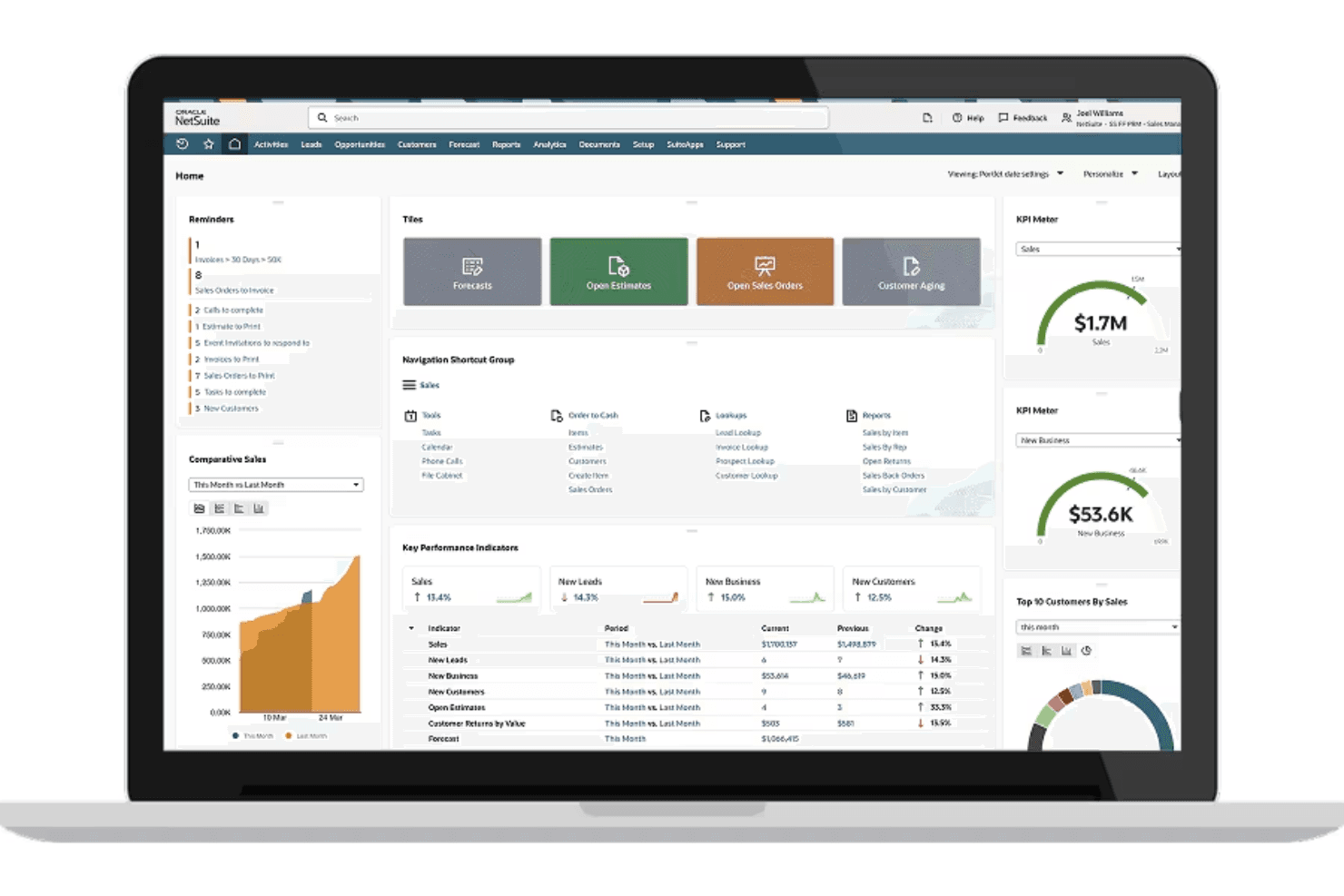
Contact Management: NetSuite CRM lets you store and manage customer information efficiently. Your team can access detailed contact histories, improving customer interactions.
Sales Forecasting: It provides accurate sales predictions to help your team plan better. You can make informed decisions with real-time data insights.
Lead Management: Track and manage leads from across the entire customer lifecycle. This helps your sales team prioritize and follow up effectively.
Opportunity Tracking: Your team can monitor sales opportunities through every stage of the pipeline, from initial lead to closed deal and sales order creation.
Customer Support Management: Manage customer service requests and issues efficiently. This feature helps your team resolve problems quickly, improving satisfaction.
Analytics and Reporting: Generate detailed reports using customizable templates to evaluate performance and metrics. Your team can use this to refine strategies and improve KPI performance.
Ease of Use
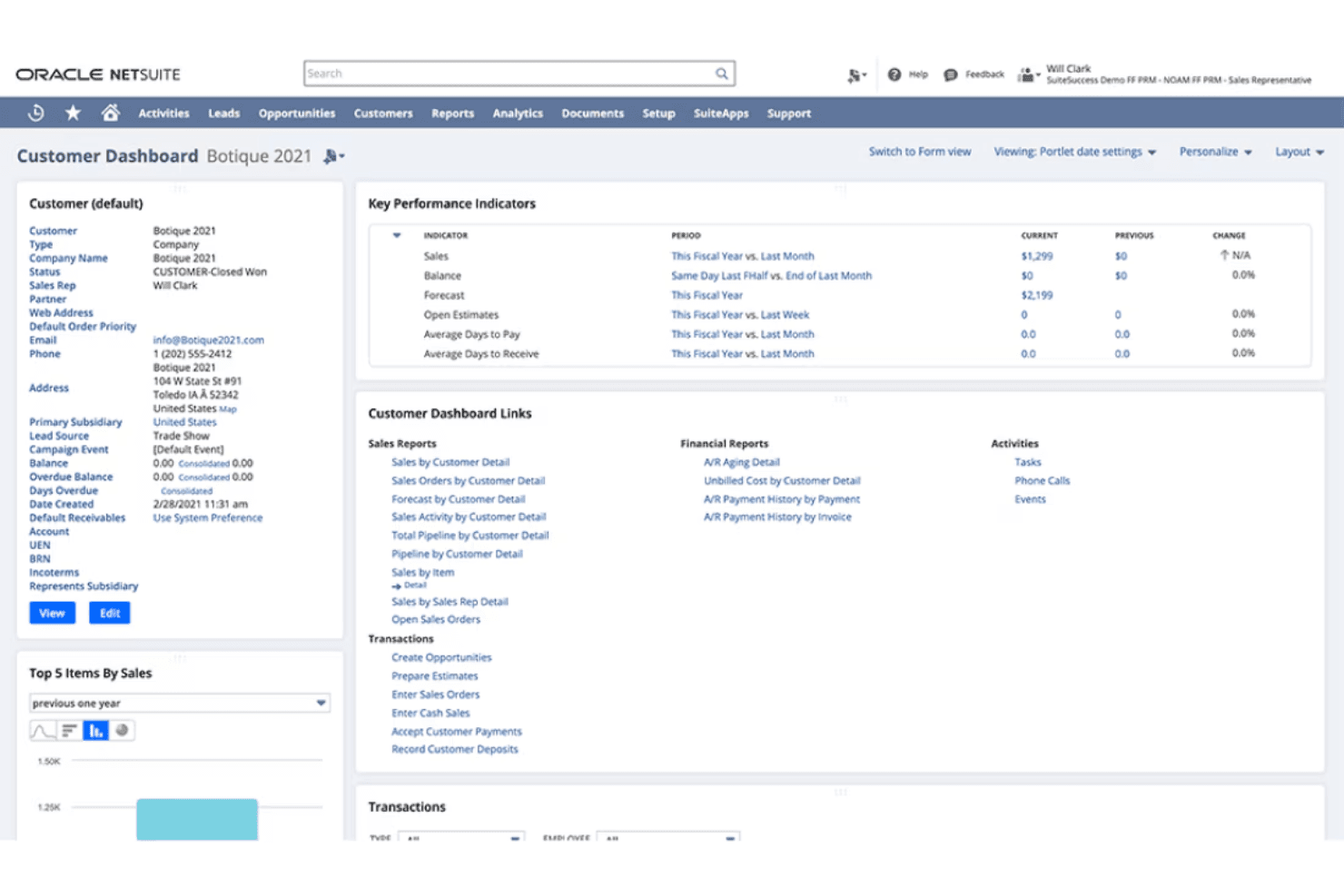
NetSuite CRM's ease of use can be challenging for new users. Its interface feels outdated, making navigation less intuitive compared to other CRMs. Your team might face a steep learning curve, especially during onboarding. However, once familiar, its powerful features and extensive capabilities can be rewarding. Detailed documentation and customer support can help, but expect to invest time in training to fully leverage its potential.
Integrations
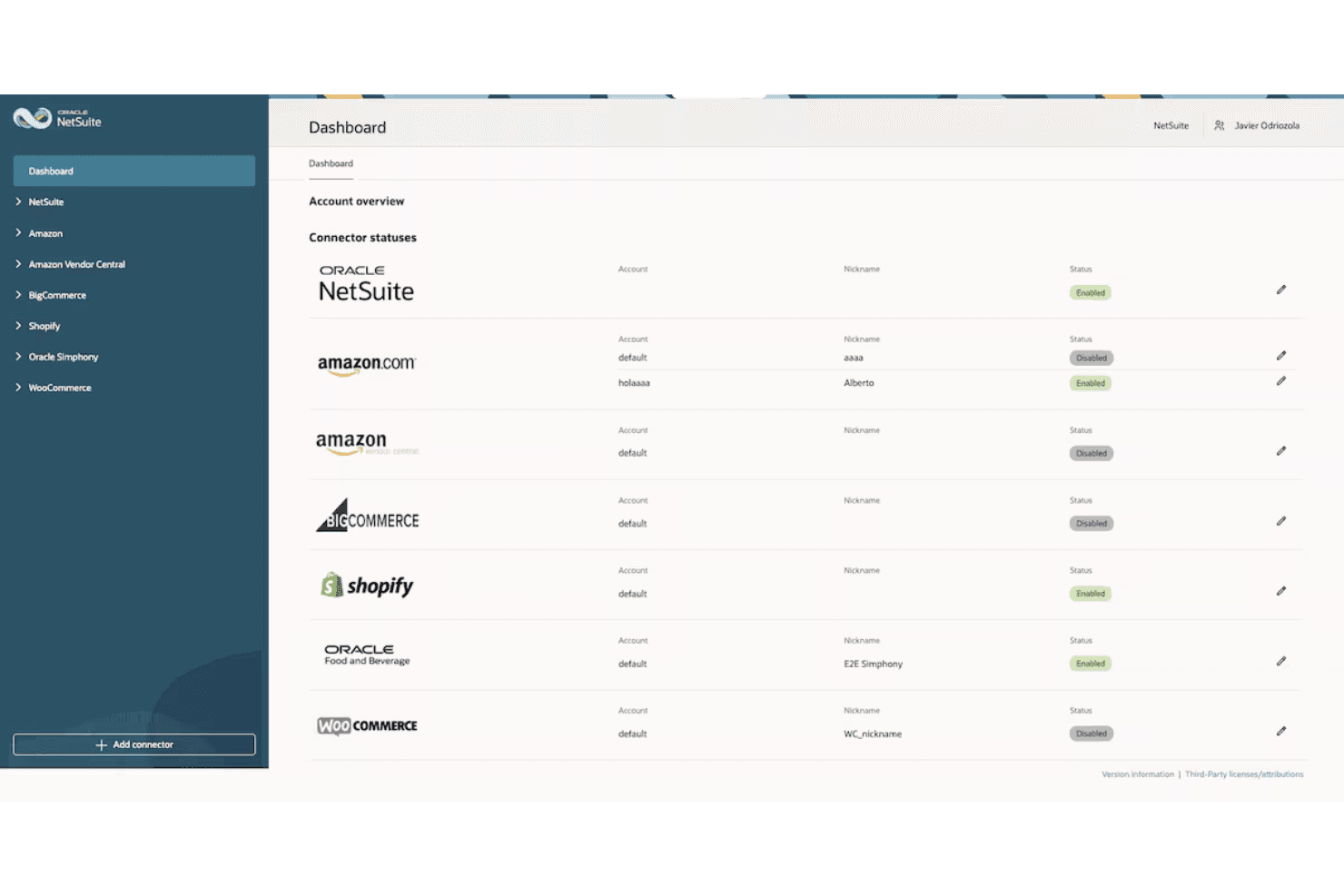
NetSuite CRM integrates with platforms such as Shopify, Magento, Amazon, WooCommerce, and Salesforce through official NetSuite Connectors, supporting seamless data flow across sales, ecommerce, and operations.
It also provides API access via its SuiteTalk web services and supports third-party integration tools, allowing businesses to build custom integrations and extend CRM capabilities beyond native connectors.
NetSuite CRM Specs
- A/B Testing: Yes
- Analytics: Yes
- API: Yes
- Audience Targeting: Yes
- Automated Conversion: Yes
- Batch Permissions & Access: Yes
- Behavioral Tracking: Yes
- Brand Management: Yes
- Campaign Management: Yes
- Contact Management: Yes
- Contact Sharing: Yes
- Conversion Tracking: Yes
- CRM Integration: Yes
- Customer Management: Yes
- Dashboards: Yes
- Data Export: Yes
- Data Import: Yes
- Email Integration: Yes
- External Integrations: Yes
- Keyword Tracking: Yes
- Landing Pages: Yes
- Lead Management: Yes
- Lead Scoring: Yes
- Link Tracking: Yes
- Marketing Automation: Yes
- Multi-User: Yes
- Notifications: Yes
- Password & Access Management: Yes
- Social-Media Integration: Yes


