

Reseña de Salesforce CRM: Ventajas, Desventajas, Características y Precios
Salesforce CRM destaca por sus funciones personalizables y sus capacidades de integración, lo que lo posiciona como una opción versátil para las diversas necesidades de negocio.

Analizamos las herramientas de forma independiente, y las comisiones ayudan a financiar nuestras pruebas. Consulta nuestra política de transparencia, nuestra metodología, o sugiere una herramienta.
Salesforce CRM is a crm software built for sales teams that need to manage complex pipelines, automate workflows, and track revenue across large or fast-scaling organizations. I'd consider it when your team needs deeper customization, more advanced reporting, and a broader integration ecosystem than something like HubSpot can support at scale.
Salesforce CRM Evaluation Summary
4.2/5
- From $25/user/month
- 30-day free trial
Por qué confiar en nuestras recomendaciones de software
6,700+
Reviews
20
Industry experts
16+
Evaluation factors
14
Years
Nuestras reseñas reflejan nuestro criterio independiente, no un discurso de ventas. Descubra cómo mantenemos la transparencia.
Para esta guía, evaluamos las herramientas mediante pruebas prácticas e investigación independiente, puntuando las herramientas según nuestros criterios de selección.
Nuestras reseñas reflejan nuestro criterio editorial humano, no un discurso de ventas.
Salesforce CRM Overview
In my opinion, Salesforce CRM is among the best CRM software for businesses needing advanced customization and integration. Its standout features, such as reporting and sales automation, make it a strong contender in the CRM market. However, its complexity can be a hurdle for smaller teams without dedicated resources. Its pricing may seem steep, but its extensive feature set justifies the cost for larger enterprises. If your team values flexibility and extensive third-party integrations, Salesforce CRM is a great option.
Pros
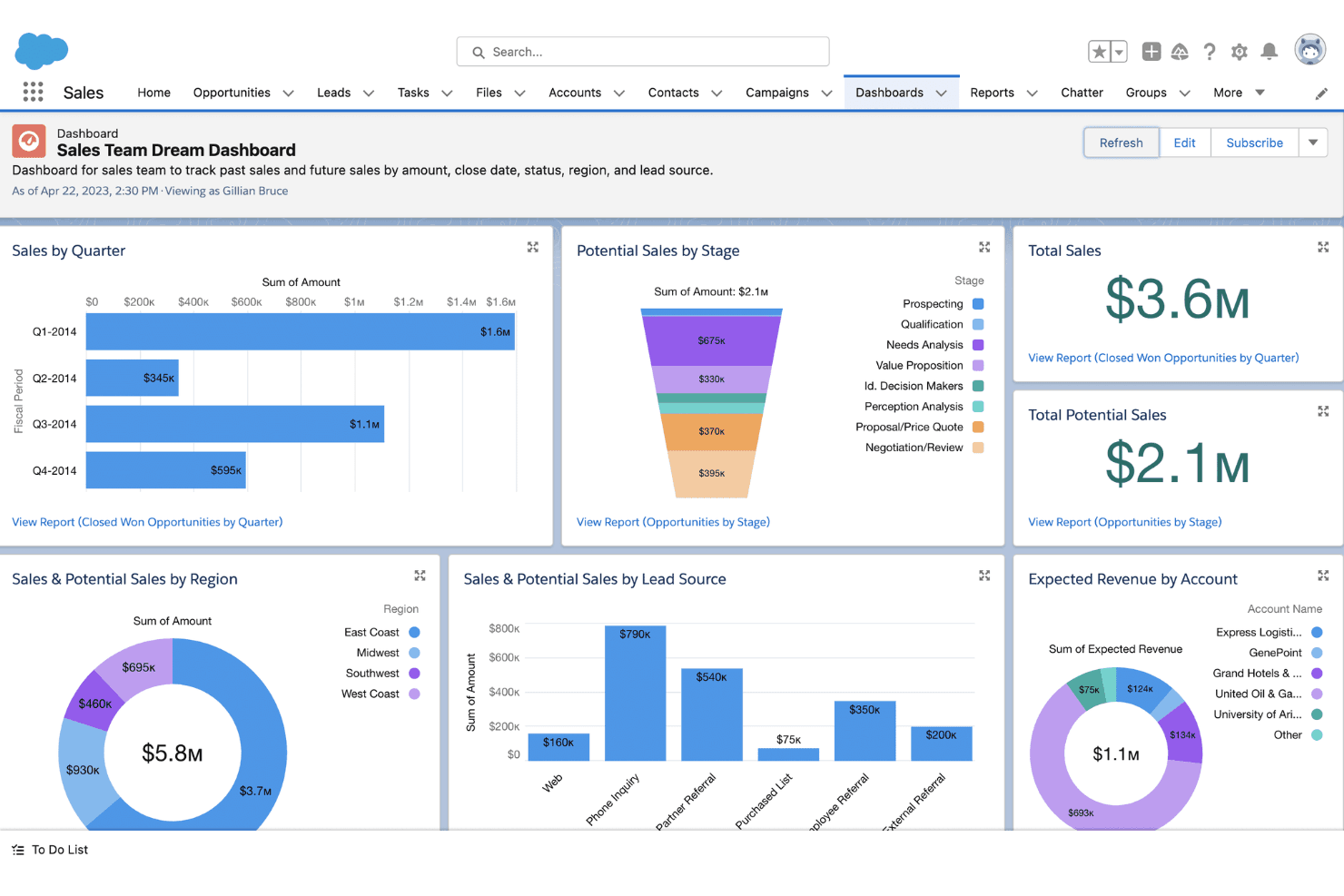
- Customizable dashboards let your team tailor views to fit specific needs.
- The advanced reporting tools help you analyze customer data and other key metrics to make informed decisions.
- Its automation features save you time by reducing repetitive tasks.
Cons
- The interface can be overwhelming for new users.
- Setup and customization have a learning curve.
- Some users find navigation less intuitive compared to other CRM systems, such as HubSpot.
Is Salesforce CRM Right For Your Needs?
Who Would be a Good Fit for Salesforce CRM?
Salesforce CRM is suitable for large enterprises in industries such as finance, health care, and tech, where complex data integration is vital. If your team needs advanced customization and powerful analytics, Salesforce CRM delivers with its strong reporting and automation features. It's especially beneficial for organizations with dedicated resources to handle its setup and learning curve, maximizing its potential.
- Large EnterprisesSalesforce CRM's advanced customization and data management capabilities are ideal for large companies needing detailed analytics and reporting.
- Health Care IndustryIts ability to handle complex data and compliance needs makes Salesforce CRM a strong choice for health care organizations.
- Finance SectorWith detailed reporting tools, Salesforce CRM helps finance teams track and analyze transactions effectively.
- Sales TeamsAutomation features in Salesforce CRM save time by reducing repetitive tasks, boosting sales productivity.
- Marketing DepartmentsSalesforce CRM's analytics tools and pre-built email templates can assist teams with marketing campaigns.
- Tech StartupsFor tech startups needing flexibility and scalability, Salesforce CRM offers extensive customization options to grow with your business.
Who Would be a Bad Fit for Salesforce CRM?
Salesforce CRM isn't ideal for small businesses or startups with limited budgets and resources. Its complex setup and learning curve can overwhelm smaller teams that lack dedicated IT support. If your business needs a simple, quick-to-deploy CRM without extensive customization, Salesforce might not meet your needs. Organizations prioritizing ease of use and straightforward navigation might find Salesforce's interface cumbersome.
- Small BusinessesThe complexity and cost of Salesforce CRM can be overwhelming for small businesses with fewer resources.
- Non-Tech StartupsStartups without tech expertise may struggle with Salesforce CRM's setup and customization requirements, preferring a more user-friendly platform.
- FreelancersFreelancers needing simple client management may find Salesforce CRM's features excessive and costly.
- Nonprofit OrganizationsNonprofits with tight budgets might find Salesforce CRM's pricing and complexity prohibitive.
- Retail StoresRetail stores looking for quick and easy CRM solutions may not need Salesforce CRM's extensive capabilities.
- Solo EntrepreneursSolo entrepreneurs often don't require the advanced features Salesforce CRM offers, making it an impractical choice.
Cómo Probamos y Evaluamos Herramientas
Hemos pasado años construyendo, refinando y mejorando nuestro sistema de pruebas y evaluación de software. La rúbrica está diseñada para capturar las complejidades de la selección de software y lo que hace que una herramienta sea efectiva, centrándose en aspectos críticos del proceso de toma de decisiones. A continuación, puede ver exactamente cómo funcionan nuestras pruebas y evaluación a través de siete criterios. Esto nos permite ofrecer una evaluación imparcial del software basada en la funcionalidad principal, características destacadas, facilidad de uso, incorporación, soporte al cliente, integraciones, opiniones de los clientes y relación calidad-precio.
Funcionalidad Principal (25% de la puntuación final)
El punto de partida de nuestra evaluación es siempre la funcionalidad principal de la herramienta. ¿Tiene las características y funciones básicas que un usuario esperaría ver? ¿Alguna de esas funciones principales está restringida a planes de precios superiores? En esencia, esperamos que una herramienta cumpla con las capacidades básicas de sus competidores.
Características Destacadas (25% de la puntuación final)
A continuación, evaluamos características poco comunes que van más allá de la funcionalidad principal que suelen ofrecer herramientas similares. Una puntuación alta refleja funciones especializadas o únicas que hacen que el producto sea más rápido, eficiente o aporte un valor adicional al usuario. También evaluamos lo fácil que es integrar la herramienta con las demás del stack tecnológico para ampliar la utilidad y el alcance del software. Las herramientas que ofrecen integraciones nativas, conexiones de terceros y acceso API para crear integraciones personalizadas reciben las mejores puntuaciones.
Facilidad de Uso (10% de la puntuación final)
Consideramos qué tan rápido y fácil es realizar las tareas definidas en la funcionalidad principal usando la herramienta. El software que obtiene una alta puntuación está bien diseñado, es intuitivo de usar, ofrece aplicaciones móviles, proporciona plantillas y hace que tareas relativamente complejas parezcan sencillas.
Incorporación (10% de la puntuación final)
Sabemos lo importante que es la rápida adopción por parte del equipo de una nueva plataforma, por lo que evaluamos lo fácil que es aprender y utilizar una herramienta con una formación mínima. Evaluamos qué tan rápido un miembro del equipo puede configurarse y empezar a usar la herramienta sin experiencia previa. Las soluciones con puntuación alta indican que se requiere poco o ningún soporte.
Soporte al Cliente (10% de la puntuación final)
Revisamos cuán rápido y sencillo es encontrar ayuda y resolver problemas a través de teléfono, chat en vivo o base de conocimientos. Las herramientas y compañías que brindan soporte en tiempo real obtienen las mejores puntuaciones, mientras que los chatbots reciben las peores.
Opiniones de Clientes (10% de la puntuación final)
Además de nuestras propias pruebas y evaluaciones, consideramos el puntaje neto de promotores de los clientes actuales y anteriores. Revisamos su probabilidad, si tuvieran la opción, de volver a elegir la herramienta para la funcionalidad principal. Un software con puntuación alta refleja un puntaje neto de promotores elevado por parte de clientes actuales o anteriores.
Relación Calidad-Precio (10% de la puntuación final)
Por último, considerando todos los demás criterios, revisamos el precio promedio de los planes de nivel inicial frente a las funciones principales y consideramos el valor de los otros criterios de evaluación. El software que ofrece más, por menos, obtendrá una puntuación más alta.
Core Features
Contact Management: Salesforce CRM lets you store and organize detailed customer information in one place. Your team can access contact history and interactions.
Lead Management: Track and follow up on your leads, from acquisition to conversion, with Salesforce's lead management tools. You can assign and prioritize leads to boost your sales efforts.
Opportunity Tracking: Keep an eye on your sales pipeline with real-time opportunity tracking. This helps you manage deals and forecast sales effectively.
Task Automation: Automate repetitive tasks to save time and increase productivity. Set up workflows to handle routine processes without manual intervention.
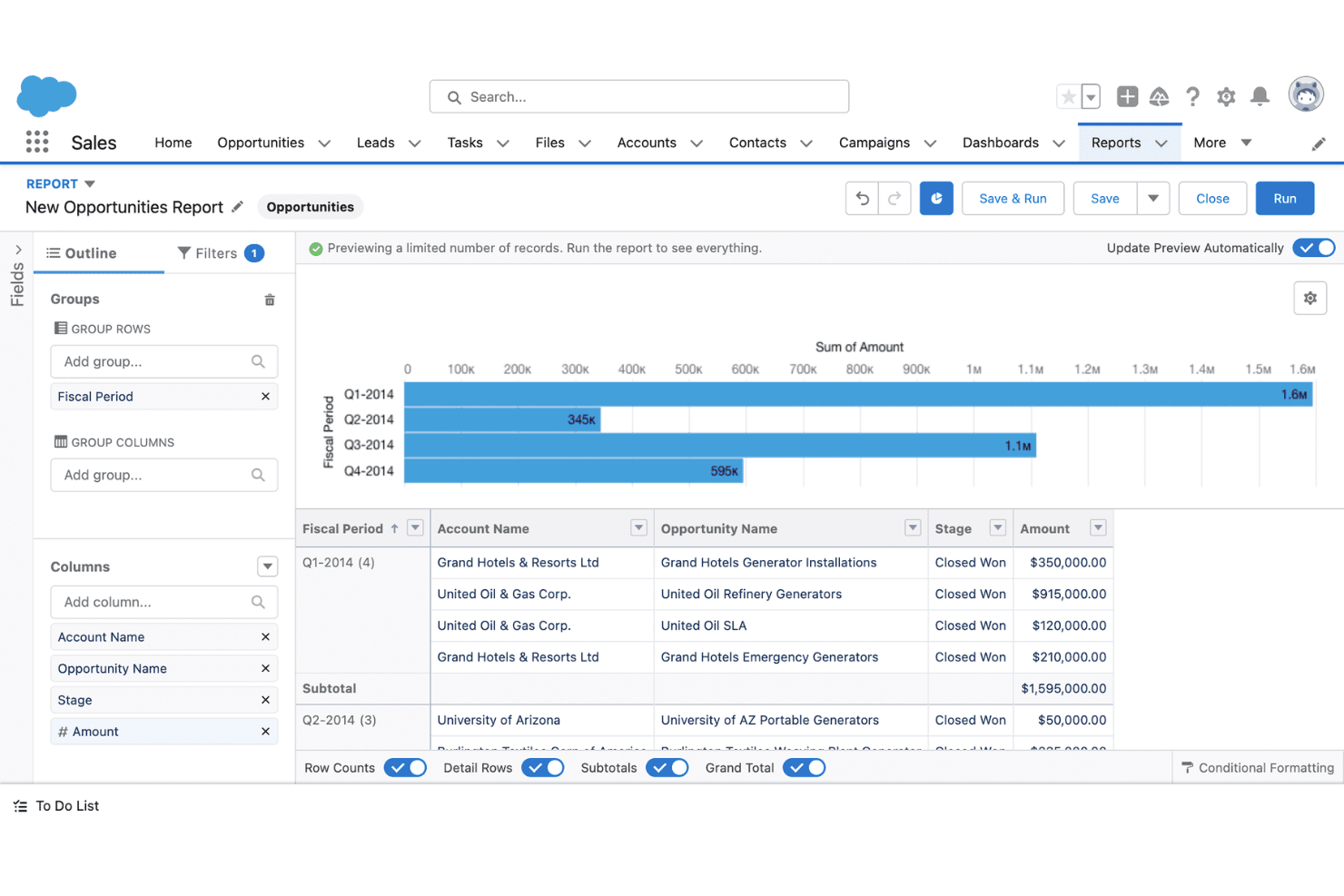
Reporting and Analytics: Use customizable reports and dashboards to gain in-depth insights into your sales performance and make data-driven decisions with ease.
Mobile Access: Access Salesforce CRM on the go with its mobile app. This ensures your team stays connected, no matter where they are.
Ease of Use
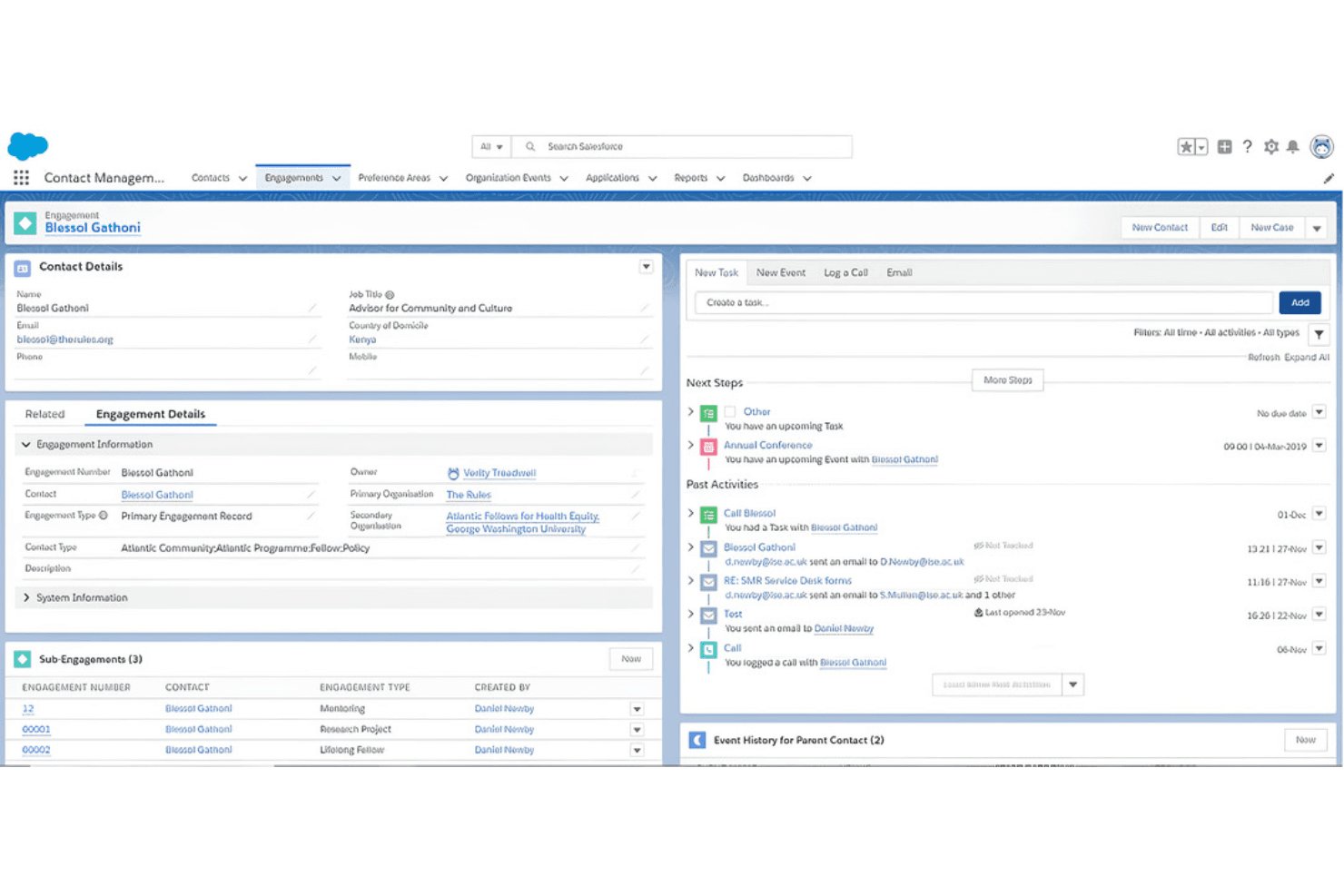
Salesforce CRM can be challenging for new users due to its complex interface and extensive features. While its customization options offer flexibility, they also add a learning curve that might overwhelm smaller teams. However, once you get the hang of it, the platform's powerful tools make managing customer relationships more efficient. With time and resources, your team can unlock its full potential, but be prepared for an initial adjustment period.
Integrations
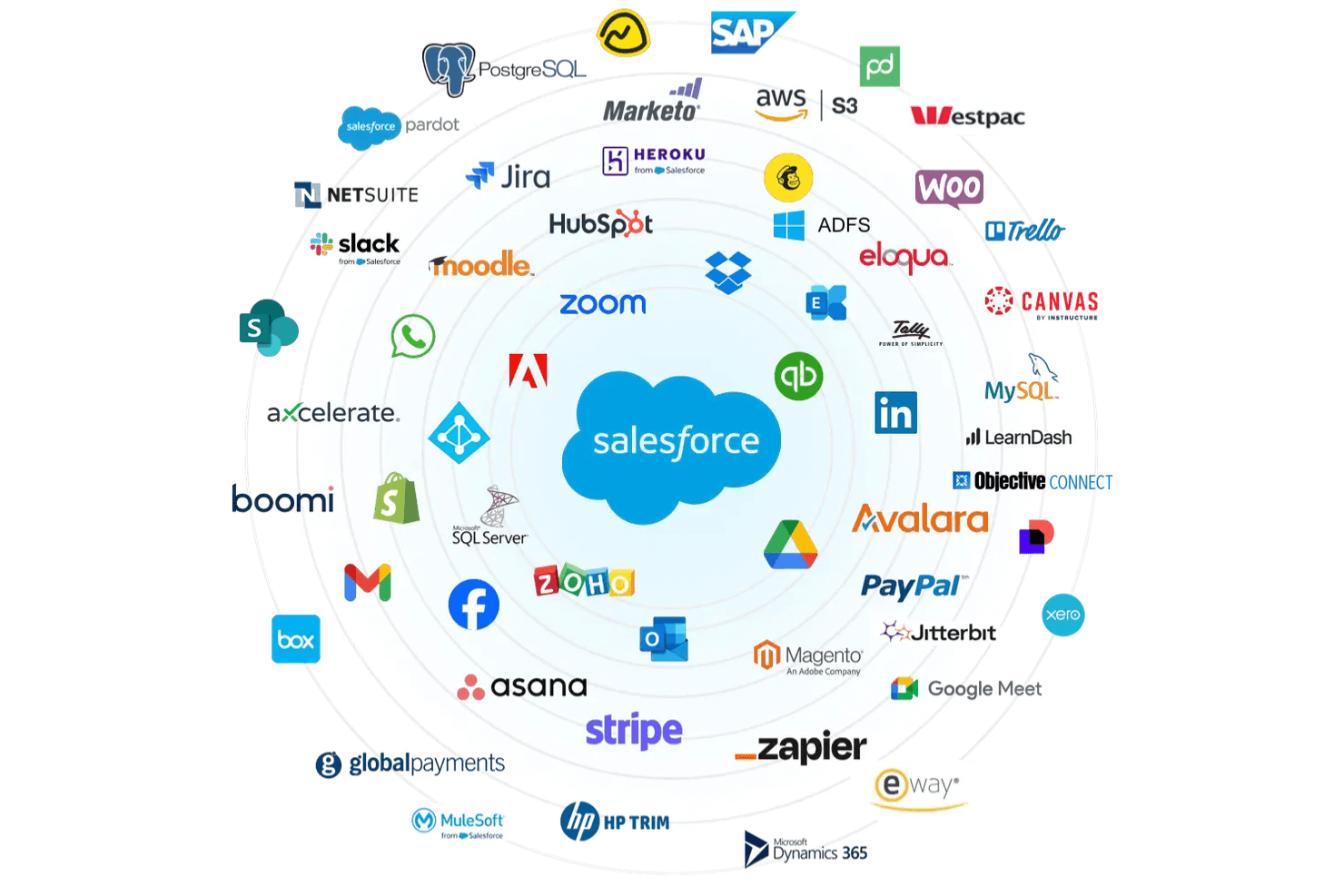
Salesforce CRM integrates with platforms such as Slack, Microsoft Outlook, Google Workspace, Mailchimp, QuickBooks, Dropbox, Docusign, LinkedIn, and Jira.
Salesforce CRM also offers an API for custom integrations and connects with third-party integration tools.
Salesforce CRM Specs
- 2-Factor Authentication: Yes
- API: Yes
- Calendar Management: Yes
- Call Tracking: Yes
- Campaign Management: Yes
- Click-to-Dial: Yes
- Contact Management: Yes
- Contact Sharing: Yes
- Custom Data Forms: Yes
- Customer Management: Yes
- Dashboard: Yes
- Data Export: Yes
- Data Import: Yes
- Data Visualization: Yes
- Email Integration: Yes
- External Integrations: Yes
- File Sharing: Yes
- File Transfer: Yes
- Google Apps Integration: Yes
- Lead Management: Yes
- Lead Scoring: Yes
- Marketing Automation: No
- Mobile App: Yes
- Multi-User: Yes
- Notifications: Yes
- Pipeline Management: Yes
- Sales Automation: Yes
- Scheduling: Yes
- Social-Media Integration: No
- Task Scheduling/Tracking: Yes
- Third-Party Plugins/Add-Ons: Yes


