

Reseña de Nutshell: Ventajas, Desventajas, Características y Precios Explicados
Voy al grano para mostrarte por qué el CRM inteligente de Nutshell equilibra la flexibilidad y la simplicidad: así obtienes funciones potentes sin abrumar a tu equipo de ventas.

Analizamos las herramientas de forma independiente, y las comisiones ayudan a financiar nuestras pruebas. Consulta nuestra política de transparencia, nuestra metodología, o sugiere una herramienta.
Businesses can quickly fall behind when customer data is scattered, follow-ups slip through the cracks, and teams rely on disconnected tools just to stay organized. Without the right CRM, even simple sales and marketing workflows become harder to manage and scale.
Nutshell is an all-in-one CRM software designed to help sales, marketing, and customer success teams stay aligned and keep data clean without getting bogged down by complexity. If you’re a revenue operations expert who’s tired of tangled systems, scattered reports, and the feeling that your CRM is working against you, Nutshell offers a refreshing alternative.
In this review, I’ll walk you through Nutshell’s features, how it fits different use cases, where it shines, where it falls short, and what you can expect to pay—so you can decide if it’s the right fit for you.
Nutshell Evaluation Summary
4.3/5
- From $13/user/month (billed annually)
- 14-day free trial + free demo available
Por qué confiar en nuestras recomendaciones de software
6,700+
Reviews
20
Industry experts
16+
Evaluation factors
14
Years
Nuestras reseñas reflejan nuestro criterio independiente, no un discurso de ventas. Descubra cómo mantenemos la transparencia.
Para esta guía, evaluamos las herramientas mediante pruebas prácticas e investigación independiente, puntuando las herramientas según nuestros criterios de selección.
Nuestras reseñas reflejan nuestro criterio editorial humano, no un discurso de ventas.
Nutshell Overview
In my view, Nutshell stands out for its simple interface, solid reporting, and fast setup—making it easier to choose over clunkier competitors. I think pricing is fair for teams who want flexible pipelines and automation but don’t need deep customization or an endless list of native integrations. The support team responds quickly, which I appreciate. If you’re judging CRMs for fast-growing, mid-sized sales teams or a company new to structured sales processes, you’ll likely find Nutshell hits the right balance between power and approachability.
Pros
- Sales automation workflows handle multi-step processes effectively
- Implementation and onboarding are streamlined for rapid deployment and adoption.
- Responsive support team resolves most issues promptly
Cons
- Nutshell isn’t as customizable as other enterprise solutions
- Marketing capabilities isn’t as robust as a dedicated marketing platform
- Limited native enterprise integrations
Is Nutshell Right For Your Needs?
Who Would be a Good Fit for Nutshell?
Nutshell is ideal for growing sales teams looking for pipeline visibility, quick setup, and easy-to-use automation without requiring a dedicated CRM administrator. It's well suited for small businesses, SaaS companies, agencies, B2B sales, remote and distributed teams, and organizations prioritizing unlimited contacts and a low learning curve.
- Small Sales TeamsSetup is fast, automation reduces manual work, and unlimited contacts keep costs predictable as you scale.
- B2B ServicesCustomizable pipelines and integrations with email and scheduling tools help manage leads from discovery through close.
- SaaS StartupsEasy-to-tweak workflows and email campaign features fit short sales cycles and lean teams.
- AgenciesPipeline views, contact segmentation, and shared activity histories help handle multiple client accounts.
- Distributed TeamsCloud access, mobile app, and straightforward collaboration features suit remote and hybrid work cultures.
- NonprofitsSimple donor management, bulk emailing, and custom fields support relationship-building without CRM complexity.
Who Would be a Bad Fit for Nutshell?
Nutshell is not suitable for highly regulated industries, large enterprises, organizations with extensive outbound calling needs, or those requiring advanced territory, commission, or deep marketing/project management tools. It also lacks built-in support ticketing features for post-sale service.
- Large EnterprisesLacks the granular permission controls and deep customization demanded by large corporate CRMs.
- Marketing Automation-centric TeamsTeams focused heavily on advanced marketing automation and nurture campaigns may find Nutshell’s sales-first feature set less specialized.
- Regulated IndustriesMissing tools for compliance, audit logging, and industry-specific data controls.
- Retail ChainsHas no point-of-sale, inventory tracking, or true multi-location selling support.
- Budget-Conscious TeamsBusinesses looking for a completely free CRM may find Nutshell unsuitable, since the platform requires a paid subscription to access its features and tools.
- Construction FirmsDoesn’t include built-in quoting, job costing, or project tracking tools common in those trades.
Cómo Probamos y Evaluamos Herramientas
Hemos pasado años construyendo, refinando y mejorando nuestro sistema de pruebas y evaluación de software. La rúbrica está diseñada para capturar las complejidades de la selección de software y lo que hace que una herramienta sea efectiva, centrándose en aspectos críticos del proceso de toma de decisiones. A continuación, puede ver exactamente cómo funcionan nuestras pruebas y evaluación a través de siete criterios. Esto nos permite ofrecer una evaluación imparcial del software basada en la funcionalidad principal, características destacadas, facilidad de uso, incorporación, soporte al cliente, integraciones, opiniones de los clientes y relación calidad-precio.
Funcionalidad Principal (25% de la puntuación final)
El punto de partida de nuestra evaluación es siempre la funcionalidad principal de la herramienta. ¿Tiene las características y funciones básicas que un usuario esperaría ver? ¿Alguna de esas funciones principales está restringida a planes de precios superiores? En esencia, esperamos que una herramienta cumpla con las capacidades básicas de sus competidores.
Características Destacadas (25% de la puntuación final)
A continuación, evaluamos características poco comunes que van más allá de la funcionalidad principal que suelen ofrecer herramientas similares. Una puntuación alta refleja funciones especializadas o únicas que hacen que el producto sea más rápido, eficiente o aporte un valor adicional al usuario. También evaluamos lo fácil que es integrar la herramienta con las demás del stack tecnológico para ampliar la utilidad y el alcance del software. Las herramientas que ofrecen integraciones nativas, conexiones de terceros y acceso API para crear integraciones personalizadas reciben las mejores puntuaciones.
Facilidad de Uso (10% de la puntuación final)
Consideramos qué tan rápido y fácil es realizar las tareas definidas en la funcionalidad principal usando la herramienta. El software que obtiene una alta puntuación está bien diseñado, es intuitivo de usar, ofrece aplicaciones móviles, proporciona plantillas y hace que tareas relativamente complejas parezcan sencillas.
Incorporación (10% de la puntuación final)
Sabemos lo importante que es la rápida adopción por parte del equipo de una nueva plataforma, por lo que evaluamos lo fácil que es aprender y utilizar una herramienta con una formación mínima. Evaluamos qué tan rápido un miembro del equipo puede configurarse y empezar a usar la herramienta sin experiencia previa. Las soluciones con puntuación alta indican que se requiere poco o ningún soporte.
Soporte al Cliente (10% de la puntuación final)
Revisamos cuán rápido y sencillo es encontrar ayuda y resolver problemas a través de teléfono, chat en vivo o base de conocimientos. Las herramientas y compañías que brindan soporte en tiempo real obtienen las mejores puntuaciones, mientras que los chatbots reciben las peores.
Opiniones de Clientes (10% de la puntuación final)
Además de nuestras propias pruebas y evaluaciones, consideramos el puntaje neto de promotores de los clientes actuales y anteriores. Revisamos su probabilidad, si tuvieran la opción, de volver a elegir la herramienta para la funcionalidad principal. Un software con puntuación alta refleja un puntaje neto de promotores elevado por parte de clientes actuales o anteriores.
Relación Calidad-Precio (10% de la puntuación final)
Por último, considerando todos los demás criterios, revisamos el precio promedio de los planes de nivel inicial frente a las funciones principales y consideramos el valor de los otros criterios de evaluación. El software que ofrece más, por menos, obtendrá una puntuación más alta.
Core Features
Pipeline Management
Customize multiple pipelines to match your sales process stages. Drag-and-drop deals between stages and use filters to manage priorities.
Reporting and Analytics
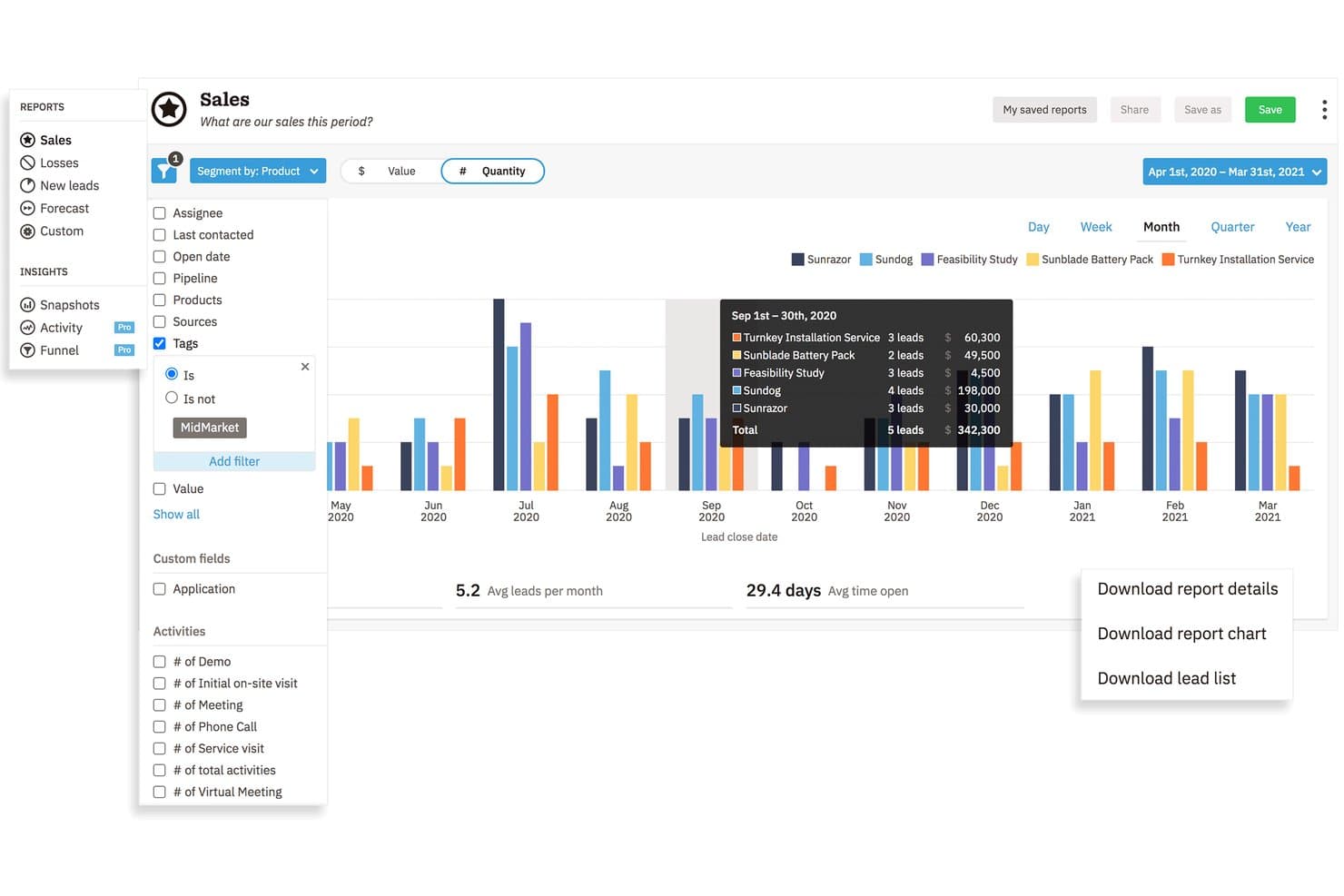
Build customizable sales and activity reports for individuals or teams. Visual dashboards make it easy to compare performance or spot bottlenecks.
Sales Automation
Automate repetitive tasks like assigning leads, sending emails, or updating deal statuses. Trigger complex workflows with simple rules that keep reps focused on selling.
Team Collaboration Tools
Log calls, emails, and meeting notes so everyone sees a full activity history. Tag teammates for follow-ups or handoffs on any lead or company record.
Contact and Lead Management
Store contacts, companies, and opportunities in a single, unified system. Import data in bulk and segment lists for targeted outreach.
Email Sync and Tracking
Connect business email accounts to auto-log conversations directly in Nutshell. Get notified when prospects open emails or click links.

Standout Features
AI Agents
Put AI-powered assistants to work inside your CRM to build pipelines, recommend next steps, and draft outreach. This allows your reps to focus on sales instead of busywork.
Web Form Builder
Create custom web forms to capture leads and automatically route them into pipelines. Use drag-and-drop tools to launch landing pages tailored to any campaign.

Ease of Use
Nutshell is one of the most intuitive CRMs you’ll find. The navigation is clean, setup is guided, and core workflows—like moving deals through pipelines or launching campaigns—take just a few clicks. Even power users note the layout makes everyday activities fast without losing track of details.

Onboarding
Nutshell’s onboarding is designed to get teams productive quickly, with guided in-app tutorials, white-glove data migration, and live support included for all customers. Small teams can typically get up and running within 5–10 business days, while larger or more complex implementations usually take just a few weeks.

Customer Support
Nutshell’s support is a standout, with users consistently praising quick replies from Nutshell’s US-based support team. The support team is hands-on with troubleshooting and proactive about follow-up, while monthly live webinars, an expansive knowledge base, walkthrough videos, and step-by-step guides make it easy for teams to learn and solve issues on their own.

Integrations
Nutshell natively integrates with Google Workspace, Microsoft 365, Calendly, Dialpad, Dropbox, Xero, Quickbooks Online, Slack, and Mailchimp, among others.
Nutshell also offers a REST API and connects with hundreds of third-party tools through Zapier.

Value for Money
Nutshell’s pricing hits a sweet spot for small and mid-sized sales teams, with optional add-ons available for expanded capabilities like advanced marketing features. Pricing is transparent, without hidden fees or mandatory multi-year contracts, and users can scale up or leave whenever they need without being locked into long-term commitments. Users also say they get strong value upfront while keeping advanced email marketing affordable compared to most alternatives.
- Foundation: Includes unlimited contacts, cloud storage, email & calendar sync, AI chatbot, and form builder.
- Growth: Adds activity reports, sales quotas, lead assignment rules, and custom stage goals.
- Pro: Offers five custom pipelines, advanced reporting, sales automation, and meeting scheduler.
- Business: Provides 10 custom pipelines, advanced meeting scheduler, auditlog and email templates.
- Enterprise: Includes unlimited pipelines, unlimited custom fields, SSO, and SQL data access.

Nutshell Specs
- 2-Factor Authentication: Yes
- API: Yes
- Calendar Management: Yes
- Call Tracking: Yes
- Campaign Management: Yes
- Click-to-Dial: Yes
- Contact Management: Yes
- Contact Sharing: Yes
- Custom Data Forms: Yes
- Customer Management: Yes
- Dashboard: Yes
- Data Export: Yes
- Data Import: Yes
- Data Visualization: Yes
- Email Integration: Yes
- External Integrations: Yes
- File Sharing: Yes
- File Transfer: Yes
- Google Apps Integration: Yes
- Lead Management: Yes
- Lead Scoring: Yes
- Marketing Automation: Yes
- Mobile App: Yes
- Multi-User: Yes
- Notifications: Yes
- Pipeline Management: Yes
- Sales Automation: Yes
- Scheduling: Yes
- Social-Media Integration: Yes
- Task Scheduling/Tracking: Yes
- Third-Party Plugins/Add-Ons: Yes
Nutshell FAQs
Nutshell Company Overview & History
Nutshell is a privately held software company headquartered in Ann Arbor, Michigan. Founded in 2009, it focuses exclusively on developing and supporting its namesake CRM platform for sales and marketing teams. The company is known for its tight-knit team and transparent approach to customer communications. Unlike many software vendors, Nutshell isn’t part of a larger holding company and does not own other products.
Nutshell Major Milestones
- 2009: Nutshell founded in Ann Arbor, Michigan by Andy Fowler and Guy Suter.
- 2010: Launch of the Nutshell CRM platform
- 2015: Major interface overhaul and launch of sales automation features
- 2020: Added integrated email marketing tools
- 2022: Achieved SOC 2 Type II certification for data security
- 2023: Rolled out Power AI features to automate sales processes