

Intuit Enterprise Suite vs. Sage Intacct: Vergleich und Bewertungen für 2026
Intuit Enterprise Suite und Sage Intacct unterstützen beide das Umsatzmanagement durch Finanzberichterstattung, Prognosen, Transparenz beim Cashflow und betriebliche Kontrolle. Erfahren Sie, wie sich ihre Funktionen, Preise, Stärken und Kompromisse im 2026 vergleichen lassen.

Wir bewerten Tools unabhängig, und Provisionen helfen, unsere Tests zu finanzieren. Sehen Sie unsere transparente Richtlinie, unsere Methodik oder schlagen Sie ein Tool vor.
When revenue data lives across separate finance, payment, and reporting tools, even simple questions can take too long to answer. Teams need a clearer way to track performance, forecast cash flow, and understand what’s driving revenue as the business grows.
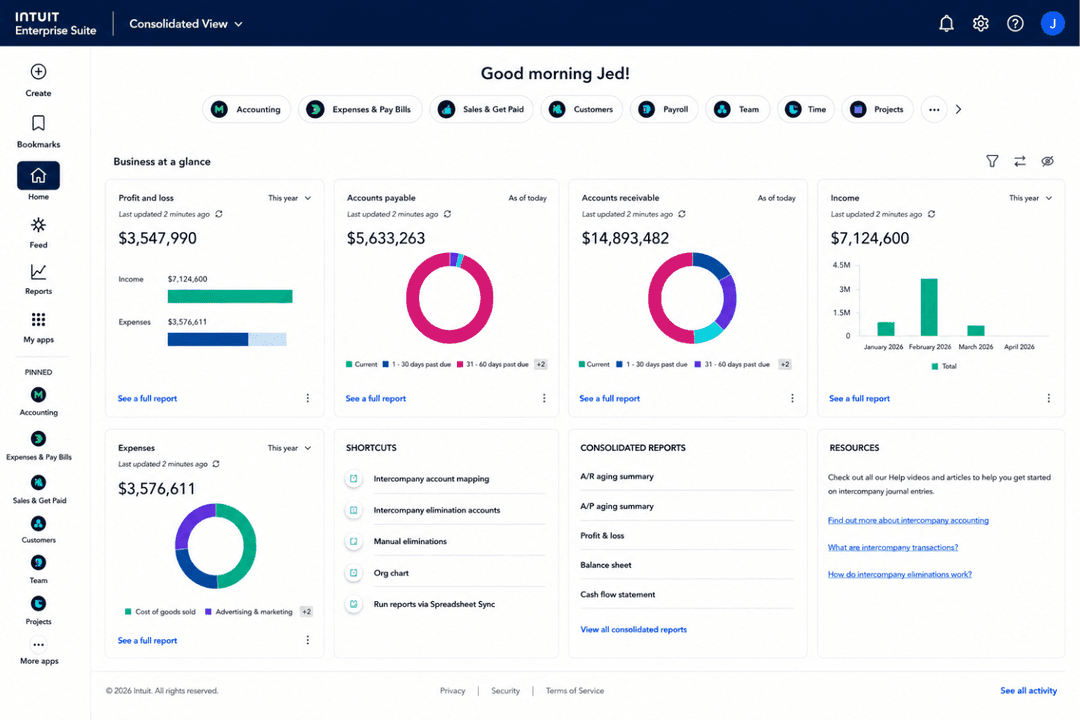
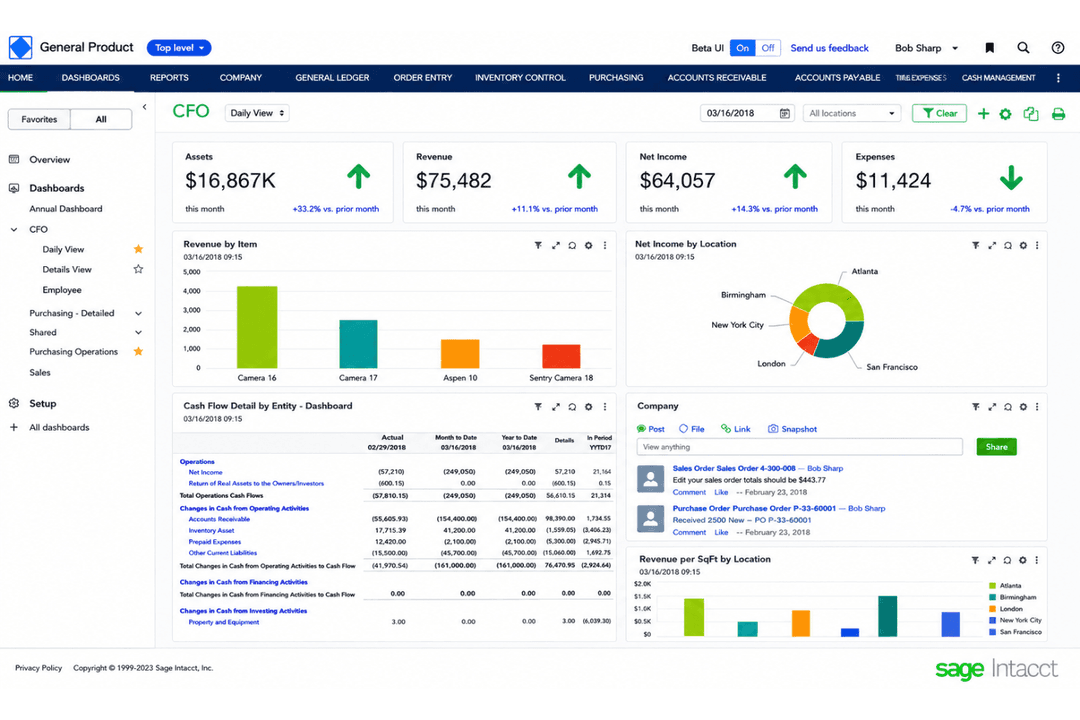
Intuit Enterprise Suite and Sage Intacct are both revenue management systems that help growing organizations improve financial visibility and control. Intuit Enterprise Suite focuses on revenue visibility, cash flow, payments, forecasting, and connected financial operations through the Intuit ecosystem, while Sage Intacct is more finance-focused with strong reporting, consolidations, dimensional accounting, and financial controls.
In this comparison, I’ll break down their features, pricing, pros and cons, security, ease of use, and ideal use cases to help you decide which platform fits your business best.
Intuit Enterprise Suite
4.6/5
- Free demo available
- Pricing upon request
Sage Intacct
4.3/5
- Free demo available
- From £1,200/month
Warum Sie unseren Software-Empfehlungen vertrauen können
6,700+
Reviews
20
Industry experts
16+
Evaluation factors
14
Years
Unsere Bewertungen spiegeln unser unabhängiges Urteilsvermögen wider – keine Verkaufsstrategie. Erfahren Sie, wie wir transparent bleiben.
Für diesen Leitfaden haben wir Tools mithilfe von praktischen Tests und unabhängiger Recherche bewertet und dabei unsere Bewertungskriterien angewendet.
Unsere Bewertungen spiegeln unser menschliches redaktionelles Urteilsvermögen wider, keine Verkaufsstrategie.
| Intuit Enterprise Suite | Sage Intacct | |
|---|---|---|
| Free Trial | Free demo available | Free demo available |
| Pricing | Pricing upon request | From £1,200/month |
Intuit Enterprise Suite vs. Sage Intacct Preise & Versteckte Kosten
Intuit Enterprise Suite und Sage Intacct arbeiten beide mit individueller Preisgestaltung, daher müssen Sie für ein Angebot jeweils den Anbieter kontaktieren. Intuit Enterprise Suite bietet eine flexible, vertragsbasierte Preisstruktur, die sich nach Anzahl der Nutzer, Unternehmenseinheiten, ausgewählten Funktionen, Add-ons, Integrationen und Implementierungsbedarf richtet. Auch die Preisgestaltung von Sage Intacct ist individuell und basiert auf Nutzeranzahl, Modulen, Unternehmenseinheiten und benötigter Funktionalität.
Bei versteckten Kosten kann für beide Plattformen ein zusätzliches Budget für Implementierung, Datenmigration, Schulungen, Integrationen, Workflows, Support-Upgrades und laufende Administration notwendig sein. Die Kosten für Sage Intacct können durch zusätzliche Module oder finanzielle Komplexität steigen, während sich die Kosten für Intuit Enterprise Suite nach Umsatz-, Reporting- und betrieblichen Anforderungen richten, die das Unternehmen abdecken muss. Bitten Sie beide Anbieter, eine vollständige Kostenaufschlüsselung über das Grundabonnement hinaus vorzulegen.
<div class="slate-p slate-selectable" data-slate-node="element" data-block-id="-Vap3Nfiej" data-slate-fragment="JTVCJTdCJTIyY2hpbGRyZW4lMjIlM0ElNUIlN0IlMjJ0ZXh0JTIyJTNBJTIySW50dWl0JTIwRW50ZXJwcmlzZSUyMFN1aXRlJTIwdW5kJTIwU2FnZSUyMEludGFjY3QlMjB1bnRlcnN0JUMzJUE4dHRlbiBiZWlkZSUgZGFzIFVtc2F0em1hbmFnZW1lbnQgdXJiZXJmaW5kZXQgbGljaCBGaW5hbnplYmVyaWNodHNlcnN0ZWxsdW5nLCBEYXNoYm9hcmRzLCBBdXRvbWF0aXNpZXJ1bmcgdn9sbGUgUi1lbnRpdMOpcyxUcmFuc3BwYXJlenolQW5kIGZpbmFuemllbGUgS29udHJvbC1NZWNobGFuaXNtZW4uIEludHVpdCBFbnRlcnByaXNlIFN1aXRlIGtvbmplenRyaWVydCBzaWNoIGF1ZiBVbXNhdHp0cmFuc3BhcmVuemUsIENhc2hmbG93LCdemWx1bmdlbiwgUmVjaG51bmdzYmVnbGVpY2h1bmcgLCBQcm9nbm9zZW4sIFdvcmtmbG93LUF1dG9tYXRpc2llcnVuZyB1bmQgS0ktZ2VzdMO8dHRlIEVpbnNpY2h0ZSBpbm5lcmhhbGXiZXMgSW50dWl0LUzDpGtvc3lzdGVtLiJdRCU1RCwyInR5cGUiOiJwIiwiaWQiOiJoTDB6UEh4cmEifSx7ImNoaWxkcmVuIjpbeyJ0ZXh0IjoiU2FnZSBJbnRhY2N0LCBtZXJrZW4gYXVmIEZpbmFuenZvcmxhc3VuZyBoZWJ0IGZvY3VzaWVyZW4sIG1pdCBTdMOkcmtlbiBpbiBSZXBvcnRpbmcsIEtvbnNvbGlkYXQsw58gRGltZW5zaW9uYWwlQWNjb3VudGluZywgQVAgdW5kIEFSMWZsdDEsIEJ1ZGdldGluZywgQXVkaXQtVHJhaWxzIHVuZCBLSXnDn2dlcmllcnRlIGRldGVrdGllci4gSW0gR2VzYW1tdCBlcndlaXNlbiBudXR6IERpZSBJbnR1aXQgRW50ZXJwcmlzZSBTdWl0ZSBkZW4gZ3LDvHNzZXJlbiBQYXNzIGZ1ciB3YWNoc2VuZW5kZSBUZWFtcyBoYXQgd2FjaHNlbiBtdyBSZXZlbnVlLCBQYXltZW50cywgQ2FzaGZsb3cgYW5kIGZpbmFuemllbCBPcGVyYXRpb25zIHZlcmJpbmRlbiwgd2VobiBTYWdlIEludGFjY3Qgb2RlciBzZWluIFR1bSBub2NoIGRlZXBlcmUgQWNjb3VudGluZyBzdHJ1a3R1cmVuIHVuZCBmaW5hbnpsZWlkZXRlIEdlYmFuZ2FiZW4uIn1dLCJ0eXBlIjoicCIsImlkIjoiLVZhcDNOZmllaiJ9XSwifQ==
| Intuit Enterprise Suite | Sage Intacct | |
|---|---|---|
| Accounts Payable | Yes | Yes |
| Accounts Receivable | Yes | Yes |
| API | Yes | Yes |
| Budgeting | Yes | Yes |
| Calendar Management | No | No |
| Customer Management | No | Yes |
| Dashboard | Yes | Yes |
| Data Export | Yes | Yes |
| Data Import | Yes | Yes |
| Data Visualization | Yes | Yes |
| Expense Tracking | Yes | Yes |
| External Integrations | Yes | Yes |
| Forecasting | Yes | Yes |
| General Account Ledger | Yes | Yes |
| Inventory Tracking | Yes | Yes |
| Multi-User | Yes | Yes |
| Notifications | Yes | Yes |
| Payroll | Yes | Yes |
| Supplier Management | Yes | Yes |
| Tax Management | Yes | Yes |
| Integration | Intuit Enterprise Suite | Sage Intacct |
|---|---|---|
| IntegrationShopify | Intuit Enterprise Suite✅ | Sage Intacct✅ |
| IntegrationSalesforce | Intuit Enterprise Suite✅ | Sage Intacct✅ |
| IntegrationPayPal | Intuit Enterprise Suite✅ | Sage Intacct✅ |
| IntegrationStripe | Intuit Enterprise Suite✅ | Sage Intacct✅* |
| IntegrationDocuSign | Intuit Enterprise Suite✅ | Sage Intacct✅* |
| IntegrationSquare | Intuit Enterprise Suite✅ | Sage Intacct✅ |
| IntegrationAmazon Marketplace | Intuit Enterprise Suite✅ | Sage Intacct✅* |
| IntegrationHubSpot | Intuit Enterprise Suite✅ | Sage Intacct✅ |
| IntegrationKnowify | Intuit Enterprise Suite✅ | Sage Intacct❌ |
| IntegrationWix | Intuit Enterprise Suite✅ | Sage Intacct✅* |
| IntegrationAPI | Intuit Enterprise Suite✅ | Sage Intacct✅ |
| IntegrationZapier | Intuit Enterprise Suite❌ | Sage Intacct✅ |
*Verfügbar über einen Drittanbieter-Konnektor, einen Sage Intacct Marketplace-Partner, eine API oder Zapier-Integration.
Zusammen decken Intuit Enterprise Suite und Sage Intacct eine breite Palette an Integrationen in den Bereichen E-Commerce, Zahlungen, CRM, Finanzen und Umsatz-Workflows ab. Intuit Enterprise Suite konzentriert sich stärker auf direkte App-Anbindungen und das breitere Intuit-Ökosystem, während Sage Intacct viele Verbindungen über Marktplatz-Partner, Drittanbieter-Konnektoren, APIs oder Zapier unterstützt. Insgesamt ist Intuit Enterprise Suite die bessere Wahl für Teams, die Umsatz-, Zahlungs- und Kundendaten mit weniger Einrichtungsaufwand verknüpfen möchten, während Sage Intacct Finanzteams flexiblere Integrationsmöglichkeiten bietet.
| Faktor | Intuit Enterprise Suite | Sage Intacct |
|---|---|---|
| FaktorDatenverschlüsselung | Intuit Enterprise SuiteVerschlüsselt Daten während der Übertragung und im Ruhezustand, um Umsatz-, Finanz-, Lohn- und operative Daten zu schützen. | Sage Intacct Verwendet Verschlüsselung für Daten während der Übertragung und im Ruhezustand, um Finanz- und Geschäftsdaten zu schützen. |
| FaktorRegulatorische Compliance | Intuit Enterprise SuiteUnterstützt SOC-Berichte, ISO 27001-zertifizierte Praktiken, PCI DSS für relevante Zahlungsdienste sowie VPAT-Dokumentation. | Sage Intacct Unterstützt Compliance-Rahmenwerke für Finanz- und regulierte Geschäftsumgebungen. |
| FaktorBenutzerzugriff | Intuit Enterprise SuiteEnthält rollenbasierte Zugriffskontrollen, um den Zugang zu sensiblen Umsatz- und Finanzdaten zu begrenzen. | Sage Intacct Bietet Zugangskontrollen, Authentifizierung, Sicherheitsprotokollierung und MFA für kritische Systeme. |
| FaktorAudit- & Aktivitätsverfolgung | Intuit Enterprise SuiteUnterstützt Audit-Anforderungen durch Berechtigungen, Finanzkontrollen, Transaktionssichtbarkeit und Überwachungsberichte. | Sage Intacct Bietet Audit-Trails, Sicherheitsprotokollierung und kontrollorientierte Sicherungsmechanismen für Compliance. |
| FaktorBetriebszeit & Verfügbarkeit | Intuit Enterprise SuiteBietet Ressourcen für Unternehmenssicherheit, aber eine spezifische IES-Verfügbarkeits-SLA ist nicht öffentlich gelistet. | Sage Intacct Veröffentlicht Angaben zur Verfügbarkeit und Wiederherstellung für abgedeckte Dienste. |
Die Intuit Enterprise Suite bietet die wichtigsten Kontrollen, die wachsende Teams benötigen – darunter Verschlüsselung, rollenbasierten Zugriff, SOC-Berichte, ISO 27001-zertifizierte Praktiken sowie PCI DSS für relevante Zahlungsdienste. Sie unterstützt außerdem Audit-Anforderungen mithilfe von Berechtigungen, Transaktionssichtbarkeit und Finanzkontrollen. Sage Intacct bietet zusätzliche Compliance-Dokumentation, doch die Intuit Enterprise Suite gewährleistet für Umsatzteams einen hohen Sicherheitsstandard beim Management finanzieller Workflows, Berichte, Zahlungen und operativer Daten.
| Faktor | Intuit Enterprise Suite | Sage Intacct |
|---|---|---|
| FaktorBenutzeroberfläche | Intuit Enterprise SuiteModernes Intuit-typisches Erlebnis, das Teams vertraut erscheint, die QuickBooks und Finanz-Dashboards nutzen. | Sage Intacct Finanzorientierter Arbeitsbereich, der auf Berichterstattung, Dashboards, Dimensionen und Kontrollen ausgelegt ist. |
| FaktorOnboarding | Intuit Enterprise SuiteGeführte Implementierung mit dediziertem Customer Success Manager, Unterstützung bei Migration, Schulung, Berichtseinrichtung und Systemanbindung. | Sage Intacct Bietet Implementierungs- und Schulungsressourcen, wobei die Einrichtung meist auf Finanzstrukturen, Dimensionen und Berichtsanforderungen ausgerichtet ist. |
| FaktorLernkurve | Intuit Enterprise SuiteFür Intuit-erfahrene Teams leichter zugänglich, dennoch erfordern Umsatzberichte und Einrichtungsprozesse für Organisationseinheiten Planung. | Sage Intacct Könnte mehr Finanztraining erfordern aufgrund dimensionaler Buchhaltung, Konsolidierungen und Konfiguration der Berichte. |
| FaktorAlltagsaufgaben | Intuit Enterprise SuiteUnterstützt Teams bei der Verwaltung von Umsatztransparenz, Cashflow, Zahlungen, Berichten, Genehmigungen und Finanzprozessen mit einem gut handhabbaren Setup. | Sage Intacct Stark für finanzgeleitete Berichte, Debitoren/Kreditoren, Budgetierung, Konsolidierungen und auditfokussierte Arbeitsabläufe. |
| FaktorAnpassungsfähigkeit | Intuit Enterprise SuiteErlaubt konfigurierbare Workflows, Berichte, Berechtigungen, Integrationen und Geschäftsprozesse ohne aufwendigen ERP-Aufbau. | Sage Intacct Unterstützt anpassbare Dashboards, Berichte, Dimensionen und Rollen, wobei die Einrichtung mehr administrativen Aufwand erfordern kann. |
In Bezug auf die Benutzerfreundlichkeit ist die Intuit Enterprise Suite leichter zugänglich für Teams, die Umsatztransparenz, Cashflow-Überwachung, Zahlungen, Berichte und Finanzprozesse ohne aufwendige Einrichtung benötigen. Das geführte Onboarding, dedizierte Customer-Success-Unterstützung und das Intuit-typische Nutzererlebnis erleichtern wachsenden Teams die Einführung. Auch Sage Intacct ist bedienbar, jedoch kann die finanzorientierte Struktur mehr Schulungs- und Konfigurationsaufwand bedeuten – besonders für Teams, die Dimensionen, Konsolidierungen und fortgeschrittene Berichterstattung verwalten.
Intuit Enterprise Suite
- Connects revenue, cash flow, payments, and financial data for clearer visibility.
- Supports AI-powered reporting, forecasting, and insights for teams managing revenue performance.
- Helps manage multi-entity financial operations as the business grows.
- Setup requires planning around entities, reporting, workflows, and integrations.
- May be more than smaller teams need if they only want basic revenue tracking.
- Not a dedicated revenue tool, so advanced revenue recognition or subscription billing may require add-ons.
Sage Intacct
- Handles multi-entity consolidations with strong audit trails
- Automates ASC 606 revenue recognition requirements
- Offers highly customizable financial reporting and dashboards
- Advanced configuration often requires consulting or IT support
- Some users report slow response times in customer support
- UI can feel dated compared to modern finance platforms
Intuit Enterprise Suite
- Multi-Entity OrganizationsManage revenue and financial performance across multiple legal entities while consolidating reporting from one system.
- Professional Services FirmsTrack project revenue, manage financial performance, and improve visibility across teams and client work.
- Technology & SaaS CompaniesSupport growing revenue operations with AI-powered reporting, forecasting, and financial controls.
- Construction & Project-Based BusinessesManage project accounting, budgets, and revenue-related reporting for project-driven work.
- Manufacturing, Wholesale & DistributionMonitor revenue and financial performance across products, locations, and business units.
- Growing Mid-Market BusinessesUse enterprise-level financial management and reporting without taking on the full complexity of a traditional ERP.
Sage Intacct
- SaaS CompaniesHandles complex subscription billing, MRR/ARR reporting, and revenue recognition under ASC 606.
- Multi-Entity EnterprisesAutomates consolidations and supports intercompany transactions across locations or subsidiaries.
- Healthcare OrganizationsManages grants, multi-site operations, and regulatory compliance for healthcare accounting teams.
- Financial Services FirmsSupports detailed audit trails and robust controls for risk-sensitive, regulated environments.
- NonprofitsTracks restricted funds, grant revenue, and program-specific reporting with industry templates.
- Accounting ManagersProvides granular controls, custom dashboards, and real-time audit-ready data for proactive management.
Wer sollte die Intuit Enterprise Suite und wer Sage Intacct nutzen?
Die Intuit Enterprise Suite ist besonders geeignet für wachsende und mittelständische Unternehmen, die mehr Transparenz bei Umsätzen, Cashflow-Überwachung, Zahlungen, Prognosen und Finanzberichterstattung benötigen, ohne ein umfangreiches ERP-System einzuführen. Sie eignet sich besonders für Teams, die bereits das Intuit-Ökosystem nutzen und vernetzte Workflows für Umsatz und Finanzen, Multi-Entity-Reporting, KI-gestützte Einblicke sowie geführte Implementierung wünschen.
Sage Intacct hingegen ist eher für finanzgetriebene Teams geeignet, die einer tieferen Buchhaltungsstruktur, Konsolidierungen, dimensionaler Berichterstattung, Budgetierung und kontrollorientierten Audit-Anforderungen nachkommen müssen. Insgesamt bietet die Intuit Enterprise Suite einen leichteren Weg zu Umsatz- und Finanztransparenz, während Sage Intacct besser für Organisationen mit komplexeren Finanz- und Reportinganforderungen geeignet ist.
| Intuit Enterprise Suite | Sage Intacct | |
|---|---|---|
| AI Focus | Intuit Enterprise Suite Uses Intuit AI Agents to support insights, workflow assistance, data cleanup, and financial operations. | Sage Intacct Uses AI more for finance-specific tasks like outlier detection, anomaly review, and accounting insights. |
| Ecosystem Fit | Intuit Enterprise Suite Built around Intuit tools for finance, payroll, payments, workforce management, marketing, and supported apps. | Sage Intacct Built around Sage’s finance ecosystem, with marketplace partners and accounting-focused integrations. |
| Implementation Approach | Intuit Enterprise Suite Uses guided onboarding with a dedicated customer success manager, migration help, training, and reporting setup. | Sage Intacct Often requires more finance-led setup around dimensions, consolidations, controls, and reporting structures. |
| Native Money Services | Intuit Enterprise Suite Includes payment processing, bill pay, and access to business lending through the Intuit ecosystem. | Sage Intacct Supports finance workflows, but some money movement capabilities may depend on partners or add-ons. |
| Product Orientation | Intuit Enterprise Suite Broader business management platform used for revenue visibility, cash flow, payments, forecasting, and financial operations. | Sage Intacct Accounting and financial management platform focused on finance structure, controls, reporting, and consolidations. |
| Audit & Compliance Support | Both support audit needs through financial controls, transaction visibility, permissions, and reporting oversight. |
|---|---|
| Cloud-Based Access | Both are cloud-based systems that help teams manage financial and revenue-related data online. |
| Multi-Entity Support | Both help organizations manage financial data across multiple entities, locations, or business units. |
| Reporting & Performance Tracking | Both help teams track financial performance, revenue trends, budgets, and business health through reports and dashboards. |
| User Permissions | Both include roles and permissions to help protect sensitive financial and revenue data. |