


Intuit Enterprise Suite vs. NetSuite: Expertenvergleich und Bewertungen für 2026
Intuit Enterprise Suite und NetSuite unterstützen beide das Umsatzmanagement durch Finanzberichterstattung, Prognosen, Transparenz bei den Geldflüssen und operative Kontrollen. Erfahren Sie, wie sich ihre Funktionen, Preise, Stärken und Kompromisse im 2026 vergleichen lassen.

Wir bewerten Tools unabhängig, und Provisionen helfen, unsere Tests zu finanzieren. Sehen Sie unsere transparente Richtlinie, unsere Methodik oder schlagen Sie ein Tool vor.
Revenue teams often struggle when billing, cash flow, forecasting, and reporting live across disconnected systems. As the business grows, it can become harder to track revenue performance, manage financial complexity, and keep sales, finance, and operations aligned.
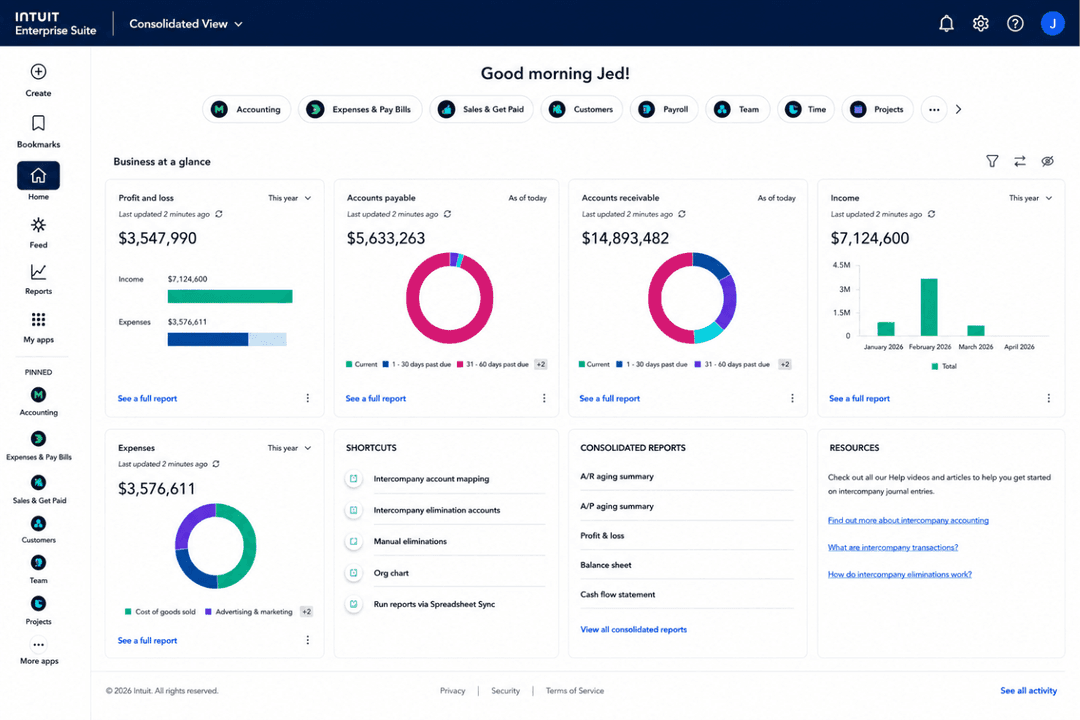
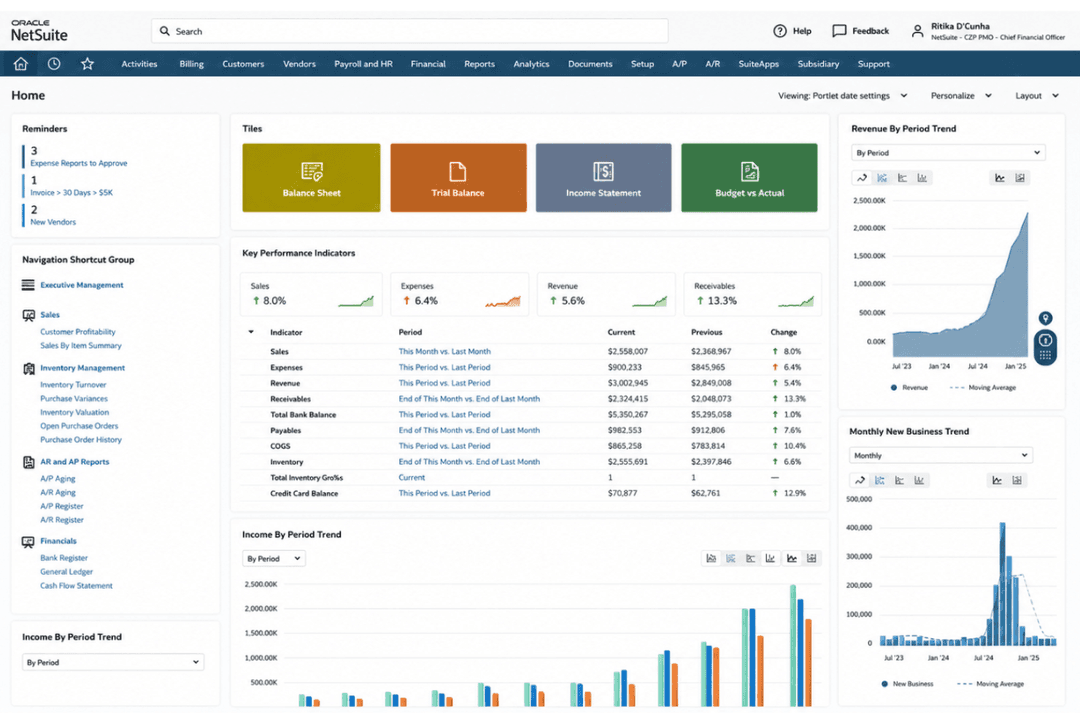
Intuit Enterprise Suite and NetSuite are both revenue management system options that support growing organizations, but they approach the work differently. Intuit Enterprise Suite focuses on revenue visibility, cash flow, payments, forecasting, and financial operations through the Intuit ecosystem, while NetSuite supports more complex revenue processes such as revenue recognition, order-to-cash workflows, global operations, and financial management.
In this comparison, I’ll break down their features, pricing, pros and cons, security, ease of use, and ideal use cases to help you decide which platform fits your business best.
Intuit Enterprise Suite
4.6/5
- Free demo available
- Pricing upon request
Oracle NetSuite
4.2/5
- Free demo available
- Pricing upon request
Warum Sie unseren Software-Empfehlungen vertrauen können
6,700+
Reviews
20
Industry experts
16+
Evaluation factors
14
Years
Unsere Bewertungen spiegeln unser unabhängiges Urteilsvermögen wider – keine Verkaufsstrategie. Erfahren Sie, wie wir transparent bleiben.
Für diesen Leitfaden haben wir Tools mithilfe von praktischen Tests und unabhängiger Recherche bewertet und dabei unsere Bewertungskriterien angewendet.
Unsere Bewertungen spiegeln unser menschliches redaktionelles Urteilsvermögen wider, keine Verkaufsstrategie.
| Intuit Enterprise Suite | Oracle NetSuite | |
|---|---|---|
| Free Trial | Free demo available | Free demo available |
| Pricing | Pricing upon request | Pricing upon request |
Intuit Enterprise Suite vs. NetSuite Preise & Versteckte Kosten
Intuit Enterprise Suite und NetSuite verwenden beide individuelle, angebotsbasierte Preisstrukturen. Sie müssen daher jeden Anbieter direkt kontaktieren, um ein genaueres Angebot zu erhalten. Die Preisgestaltung der Intuit Enterprise Suite hängt von verschiedenen Faktoren ab, wie beispielsweise der Anzahl der Nutzer, zu verwaltenden Einheiten, gewählten Funktionen, Add-ons, Integrationen und den Anforderungen an die Implementierung. Auch bei NetSuite variieren die Preise – je nach Nutzeranzahl, benötigten Modulen, Individualisierung, Support-Level und Umfang der Einführung.
Beide Plattformen können zusätzliche Budgetposten für Datenmigration, Schulungen, Berichterstellung, Workflow-Konfiguration, Integrationen, Premium-Support und laufende Administration erfordern. Bei NetSuite steigen die Kosten, wenn Teams weitere ERP-Module, internationale Funktionen oder fortgeschrittenes Umsatzmanagement hinzufügen. Bei der Intuit Enterprise Suite hängt der Preis davon ab, wie viel finanzielle, umsatzbezogene und operative Komplexität Ihr Unternehmen abbilden muss. Um beide Lösungen fair zu vergleichen, sollten Sie sich von beiden Anbietern einen vollständigen Kostenüberblick inklusive aller Nebenposten geben lassen – nicht nur über die Grundgebühr.
<div class="slate-p slate-selectable" data-slate-node="element" data-block-id="-uyoxo2cFu" data-slate-fragment="JTVCJTdCJTIyY2hpbGRyZW4lMjIlM0ElNUIlN0IlMjJ0ZXh0JTIyJTNBJTIySW50dWl0JTIwRW50ZXJwcmlzZSUyMFN1aXRlJTIwYW5kJTIwTmV0U3VpdGUlMjBib3RoJTIwc3VwcG9ydCUyMHJldmVudWUlMjBtYW5hZ2VtZW50JTIwdGhyb3VnaCUyMGZpbmFuY2lhbCUyMHJlcG9ydGluZyUyQyUyMGRhc2hib2FyZHMlMkMlMjB3b3JrZmxvdyUyMGF1dG9tYXRpb24lMkMlMjByb2xlLWJhc2VkJTIwYWNjZXNzJTJDJTIwYW5kJTIwbXVsdGktZW50aXR5JTIwdmlzaWJpbGl0eS4lMjBJbnR1aXQlMjBFbnRlcnByaXNlJTIwU3VpdGUlMjBmb2N1c2VzJTIwb24lMjByZXZlbnVlJTIwdmlzaWJpbGl0eSUyQyUyMGNhc2glMjBmbG93JTJDJTIwcGF5bWVudHMlMkMlMjBiaWxsJTIwcGF5JTJDJTIwZGltZW5zaW9uYWwlMjBmb3JlY2FzdGluZyUyQyUyMEFJLXBvd2VyZWQlMjBpbnNpZ2h0cyUyQyUyMGFuZCUyMGNvbm5lY3RlZCUyMGZpbmFuY2lhbCUyMG9wZXJhdGlvbnMlMjB0aHJvdWdoJTIwdGhlJTIwSW50dWl0JTIwZWNvc3lzdGVtLiUyMiU3RCU1RCUyQyUyMnR5cGUlMjIlM0ElMjJwJTIyJTJDJTIyaWQlMjIlM0ElMjJQR2ZFeE5HTFVMJTIyJTdEJTJDJTdCJTIyY2hpbGRyZW4lMjIlM0ElNUIlN0IlMjJ0ZXh0JTIyJTNBJTIyTmV0U3VpdGUlMkMlMjBtZWFud2hpbGUlMkMlMjBjb3ZlcnMlMjBhJTIwd2lkZXIlMjBzZXQlMjBvZiUyMEVSUCUyMGZ1bmN0aW9ucyUyQyUyMGluY2x1ZGluZyUyMG9yZGVyLXRvLWNhc2glMjB3b3JrZmxvd3MlMkMlMjByZXZlbnVlJTIwcmVjb2duaXRpb24lMkMlMjBpbnZlbnRvcnklMkMlMjBDUk0lMkMlMjBnbG9iYWwlMjBmaW5hbmNpYWwlMjBtYW5hZ2VtZW50JTJDJTIwYW5kJTIwYWR2YW5jZWQlMjBjdXN0b21pemF0aW9uLiUyME92ZXJhbGwlMkMlMjBJbnR1aXQlMjBFbnRlcnByaXNlJTIwU3VpdGUlMjBpcyUyMGElMjBzdHJvbmclMjBmaXQlMjBmb3IlMjBncm93aW5nJTIwdGVhbXMlMjB0aGF0JTIwd2FudCUyMGNsZWFyZXIlMjByZXZlbnVlJTIwYW5kJTIwY2FzaCUyMGZsb3clMjB2aXNpYmlsaXR5JTIwd2l0aG91dCUyMHRha2luZyUyMG9uJTIwdGhlJTIwZnVsbCUyMGNvbXBsZXhpdHklMjBvZiUyMGElMjB0cmFkaXRpb25hbCUyMEVSUCUyQyUyMHdoaWxlJTIwTmV0U3VpdGUlMjBtYXklMjBmaXQlMjBvcmdhbml6YXRpb25zJTIwdGhhdCUyMG5lZWQlMjBicm9hZGVyJTIwRVJQJTIwY292ZXJhZ2UgYWNyb3NzJTIwbWVyciUyMGtvbXBsZXglMjBnbG9iYWwlMjBvcGVyYXRpb25zLiUyMiU3RCU1RCUyQyUyMnR5cGUlMjIlM0ElMjJwJTIyJTJDJTIyaWQlMjIlM0ElMjItdXlveG8yY0Z1JTIyJTdEJTVE
| Intuit Enterprise Suite | Oracle NetSuite | |
|---|---|---|
| API | Yes | Yes |
| Budgeting | Yes | Yes |
| Calendar Management | No | Yes |
| Customer Management | No | Yes |
| Dashboard | Yes | Yes |
| Data Export | Yes | Yes |
| Data Import | Yes | Yes |
| Data Visualization | Yes | Yes |
| Expense Tracking | Yes | Yes |
| External Integrations | Yes | Yes |
| Forecasting | Yes | Yes |
| Inventory Tracking | Yes | Yes |
| Multi-User | Yes | Yes |
| Notifications | Yes | Yes |
| Project Management | Yes | Yes |
| Scheduling | No | Yes |
| Supplier Management | Yes | Yes |
| Third-Party Plugins/Add-Ons | Yes | Yes |
| Integration | Intuit Enterprise Suite | NetSuite |
|---|---|---|
| IntegrationShopify | Intuit Enterprise Suite✅ | NetSuite✅ |
| IntegrationSalesforce | Intuit Enterprise Suite✅ | NetSuite✅ |
| IntegrationPayPal | Intuit Enterprise Suite✅ | NetSuite✅ |
| IntegrationStripe | Intuit Enterprise Suite✅ | NetSuite✅ |
| IntegrationDocuSign | Intuit Enterprise Suite✅ | NetSuite✅ |
| IntegrationSquare | Intuit Enterprise Suite✅ | NetSuite✅ |
| IntegrationAmazon Marketplace | Intuit Enterprise Suite✅ | NetSuite✅ |
| IntegrationHubSpot | Intuit Enterprise Suite✅ | NetSuite✅ |
| IntegrationKnowify | Intuit Enterprise Suite✅ | NetSuite❌ |
| IntegrationWix | Intuit Enterprise Suite✅ | NetSuite❌ |
| IntegrationAPI | Intuit Enterprise Suite✅ | NetSuite✅ |
Sowohl die Intuit Enterprise Suite als auch NetSuite unterstützen Integrationen für Umsatz, Zahlungen, CRM, E-Commerce und Finanzprozesse. Die Intuit Enterprise Suite setzt auf das Intuit-Ökosystem sowie direkte Verbindungen zu Apps für eine übersichtlichere Integration, während NetSuite durch sein ERP-Ökosystem und APIs mehr Integrationsmöglichkeiten für komplexere Systeme bietet. Insgesamt eignet sich die Intuit Enterprise Suite für Teams, die vernetzte Umsatzprozesse wollen, während NetSuite für Unternehmen passt, die vielfältigere und anspruchsvollere Systemlandschaften abdecken müssen.
| Faktor | Intuit Enterprise Suite | NetSuite |
|---|---|---|
| FaktorDatenverschlüsselung | Intuit Enterprise SuiteVerschlüsselt Daten während der Übertragung und im Ruhezustand, um Finanz-, Umsatz-, Lohn- und Betriebsdaten zu schützen. | NetSuiteNutzt Verschlüsselung und Cloud-Sicherheitskontrollen, um Finanz- und Geschäftsdaten zu schützen. |
| FaktorRegulatorische Compliance | Intuit Enterprise SuiteUnterstützt SOC-Berichte, ISO 27001-zertifizierte Verfahren, PCI DSS für relevante Zahlungsdienste und VPAT-Dokumentation. | NetSuiteUnterstützt SOC-, ISO- und PCI-bezogene Kontrollen für Cloud-ERP-Sicherheit und Compliance. |
| FaktorBenutzerzugriffssteuerung | Intuit Enterprise SuiteEnthält rollenbasierte Zugriffskontrollen, um den Zugang zu sensiblen Umsatz-, Finanz- und Betriebsdaten zu beschränken. | NetSuiteBietet rollenbasierte Berechtigungen, Passwort-Richtlinien und Zugriffskontrollen für Geschäftsanwender. |
| FaktorAudit- & Aktivitätsverfolgung | Intuit Enterprise SuiteUnterstützt Prüfungsanforderungen durch Berechtigungen, Finanzkontrollen, Transaktionssichtbarkeit und Berichtsüberwachung. | NetSuiteBietet Prüfpfade und Aktivitätsverfolgung in Finanz- und Betriebsabläufen. |
| FaktorBetriebszeit & Verfügbarkeit | Intuit Enterprise SuiteBietet Sicherheitsressourcen auf Unternehmensebene, jedoch ist ein spezifisches IES-Uptime-SLA nicht öffentlich gelistet. | NetSuiteVeröffentlicht Zusagen zur Cloud-Service-Verfügbarkeit für unterstützte NetSuite-Dienste. |
Beide Plattformen bieten eine starke Sicherheitsgrundlage für das Management von Umsatz- und Finanzdaten. Die Intuit Enterprise Suite deckt wichtige Kontrollen wie Verschlüsselung, rollenbasierte Zugriffsrechte, SOC-Berichte, ISO 27001-zertifizierte Verfahren und PCI DSS für relevante Zahlungsdienste ab. NetSuite stellt ebenfalls Cloud-Sicherheit, Zugriffskontrollen, Audit-Verfolgung und veröffentlichte Verfügbarkeitszusagen bereit. Insgesamt bietet die Intuit Enterprise Suite wachsenden Teams die Sicherheits- und Compliance-Abdeckung, die sie für Umsatz- und Finanzprozesse benötigen, während NetSuite Organisationen mit komplexeren, globalen Compliance-Anforderungen besser entsprechen könnte.
| Faktor | Intuit Enterprise Suite | NetSuite |
|---|---|---|
| FaktorBenutzeroberfläche | Intuit Enterprise SuiteModerne Intuit-typische Oberfläche, die Teams vertraut vorkommt, die QuickBooks und Finanz-Dashboards nutzen. | NetSuiteRollenbasierte Dashboards mit vielen Steuerungsfunktionen für Finanzen, Umsatz, Lagerbestand und Betrieb. |
| FaktorOnboarding | Intuit Enterprise SuiteGeführte Einrichtung mit dediziertem Customer Success Manager, Migration, Schulung und Implementierungs-Ressourcen. | NetSuiteBietet strukturierte Implementierungsressourcen, jedoch kann die Einrichtung durch umfangreiche ERP-Konfiguration mehr Planung erfordern. |
| FaktorAlltagsaufgaben | Intuit Enterprise SuiteUnterstützt Teams bei der Verwaltung von Umsatz-Transparenz, Cashflow, Zahlungen, Berichten, Freigaben und Finanzprozessen mit weniger ERP-Komplexität. | NetSuiteUnterstützt umfassendere ERP-Workflows, die für tägliche Benutzer mehr Schritte und administrativen Aufwand bedeuten können. |
| FaktorSupport-Ressourcen | Intuit Enterprise SuiteBietet Produktsupport, Customer-Success-Betreuung, Schulungen und professionelle Dienstleistungen. | NetSuiteBietet Dokumentation, Schulungen, Support-Ressourcen und Partner-Unterstützung. |
| FaktorAnpassbarkeit | Intuit Enterprise SuiteUnterstützt konfigurierbare Berichte, Workflows, Berechtigungen, Integrationen und Geschäftsprozesse ohne aufwändigen ERP-Ausbau. | NetSuiteBietet weitreichende Anpassungen, kann aber mehr technische Einrichtung oder administrativen Support erfordern. |
Aus Sicht der Benutzerfreundlichkeit ist die Intuit Enterprise Suite für Teams, die Umsatztransparenz, Cashflow-Tracking, Zahlungen, Berichte und Finanzprozesse ohne umfangreiche ERP-Einrichtung benötigen, zugänglicher. Das geführte Onboarding, dedizierte Customer Success Unterstützung und die typische Intuit-Erfahrung erleichtern wachsenden Teams die Einführung. NetSuite kann umfassendere ERP-Prozesse abdecken, erfordert hierfür jedoch mehr Einrichtung, Schulung und administrativen Aufwand. Insgesamt ist die Intuit Enterprise Suite die bessere Lösung für Teams, die einen leichteren Einstieg in Umsatz- und Finanztransparenz wünschen.
Intuit Enterprise Suite
- Connects revenue, cash flow, payments, and financial data for clearer visibility.
- Supports AI-powered reporting, forecasting, and insights for teams managing revenue performance.
- Helps manage multi-entity financial operations as the business grows.
- Setup requires planning around entities, reporting, workflows, and integrations.
- May be more than smaller teams need if they only want basic revenue tracking.
- Not a dedicated revenue tool, so advanced revenue recognition or subscription billing may require add-ons.
Oracle NetSuite
- Automates multi-element revenue recognition for diverse contract types
- Provides real-time dashboards for compliance and revenue visibility
- Supports advanced audit trails and complex regulatory standards
- Pricing is higher than most similar solutions
- Customization and reporting often require expert configuration
- Initial setup is lengthy for most growing businesses
Intuit Enterprise Suite
- Multi-Entity OrganizationsManage revenue and financial performance across multiple legal entities while consolidating reporting from one system.
- Professional Services FirmsTrack project revenue, manage financial performance, and improve visibility across teams and client work.
- Technology & SaaS CompaniesSupport growing revenue operations with AI-powered reporting, forecasting, and financial controls.
- Construction & Project-Based BusinessesManage project accounting, budgets, and revenue-related reporting for project-driven work.
- Manufacturing, Wholesale & DistributionMonitor revenue and financial performance across products, locations, and business units.
- Growing Mid-Market BusinessesUse enterprise-level financial management and reporting without taking on the full complexity of a traditional ERP.
Oracle NetSuite
- Multi-Subsidiary EnterprisesNetSuite’s global entity management makes it easy to consolidate revenue and comply with local rules worldwide.
- SaaS ProvidersAutomated subscription billing, usage-based revenue tracking, and audit-ready compliance suit software and recurring revenue models.
- Manufacturing FirmsAdvanced inventory, order management, and contract revenue scheduling work together for true end-to-end finance operations.
- Large Retail ChainsRetailers can handle complex billing, point-of-sale integration, and unified reporting across multiple storefronts and fulfillment types.
- Finance DepartmentsAccounting and finance teams, including CFOs, benefit from real-time dashboards, KPIs, compliance workflows, and advanced audit tracking.
- Publicly Traded CompaniesBuilt-in controls for ASC 606 and IFRS 15 help meet strict reporting deadlines and regulatory scrutiny.
Für wen eignet sich Intuit Enterprise Suite und für wen NetSuite?
Die Intuit Enterprise Suite eignet sich ideal für wachsende und mittelständische Unternehmen, die mehr Umsatztransparenz, Cashflow-Überwachung, Zahlungen, Prognosen und Finanzberichte benötigen, ohne eine komplexe ERP-Lösung einzuführen. Besonders gut funktioniert sie für Teams, die bereits das Intuit-Ökosystem nutzen und vernetzte Umsatz- und Finanzworkflows, Multi-Entity-Reporting, KI-gestützte Analysen und eine einfachere Implementierung wünschen.
NetSuite andererseits eignet sich eher für Unternehmen mit komplexeren Umsatzprozessen, insbesondere bei der Verwaltung globaler Firmenstrukturen, Order-to-Cash-Prozessen, Lagerbeständen, Umsatzrealisierung oder hochgradig angepassten Geschäftsabläufen. Insgesamt bietet die Intuit Enterprise Suite Teams auf Wachstumskurs eine bessere Kontrolle über Umsätze und Finanzen, während NetSuite sich eher für Unternehmen mit umfangreicheren ERP-Anforderungen eignet.
| Approval Workflows | Both support workflow automation for approvals, finance processes, and operational tasks. |
|---|---|
| Cloud-Based Access | Both are cloud-based systems that help teams manage financial and revenue-related data online. |
| Dashboards & Analytics | Both provide dashboards, analytics, and financial reports to help teams track performance and trends. |
| Third-Party Connectivity | Both support integrations and APIs to connect business data across key systems. |
| User Role Controls | Both include role-based permissions to help protect sensitive financial and revenue data. |