

Évaluation d’ActiveCampaign : avantages, inconvénients, fonctionnalités et tarifs


ActiveCampaign is a CRM email marketing software built for teams that need behavioral email automation and contact management in one place. I'd mainly consider it if you want more sophisticated automation than a tool like Mailchimp provides, without committing to the broader (and pricier) marketing suite that comes with something like HubSpot.
ActiveCampaign Evaluation Summary
- From $15/month (billed annually)
- 14-day free trial
Pourquoi faire confiance à nos recommandations de logiciels
Nos avis reflètent notre jugement indépendant — et non un argumentaire de vente. Découvrez comment nous restons transparents.
Pour ce guide, nous avons évalué les outils grâce à des tests pratiques et une recherche indépendante, en notant les outils selon nos critères de sélection.
Nos avis reflètent notre jugement éditorial humain, et non un argumentaire de vente.
ActiveCampaign Overview
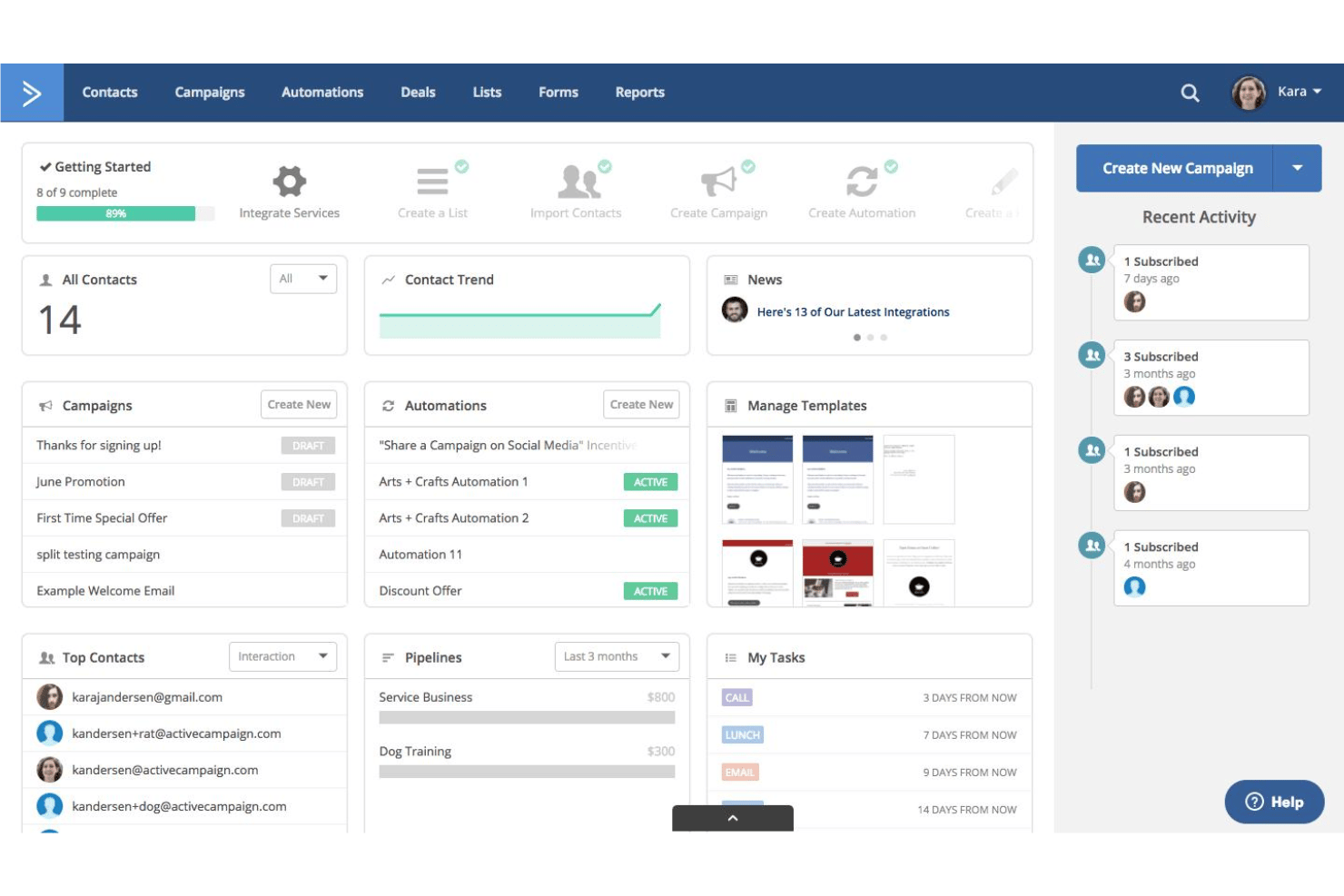
When judging crm email marketing software, I think ActiveCampaign stands out for its email automation depth and intuitive pipeline management, with a learning curve that’s manageable for most teams. The pricing is reasonable given features like conditional content, robust integration options, and flexible reporting. Compared to others, onboarding is smoother but the interface can feel crowded, and live support may not always be immediate. I’d suggest it’s a smart choice for operations teams who want advanced automation out of the box and value connecting marketing and sales in one place, especially if you’re managing multi-step workflows.
pros
-
Advanced automation builder handles complex, multi-step workflows.
-
Email deliverability is consistently ranked among the highest.
-
Dynamic content lets you personalize emails for every lead—a key advantage in any ActiveCampaign vs. HubSpot comparison for email engagement.
cons
-
Visual reporting features are less detailed than tools like Mailchimp or dedicated BI platforms.
-
List management can be confusing when juggling multiple audiences across different email campaigns.
-
The mobile app lacks many desktop features and can be a barrier for beginners exploring automation on the go.
Is ActiveCampaign Right For Your Needs?
Who Would be a Good Fit for ActiveCampaign?
ActiveCampaign is a strong choice for digital-first businesses, ecommerce brands, content creators, and teams seeking multi-channel automation with CRM crossover. Companies that want to connect marketing, sales, and personalized customer journeys will notice the value—ActiveCampaign pricing scales to match growth without locking teams into rigid contracts. Its automation, deep integrations, and advanced segmentation give mid-sized and growing teams the flexibility to build tailored, scalable campaigns across online channels.
-
Ecommerce Stores
ActiveCampaign gives ecommerce brands rule-based automations, product recommendation emails, and deep store integrations for abandoned cart follow-up.
-
SaaS Companies
SaaS teams benefit from behavior-triggered campaigns, CRM features, and onboarding automation to nurture leads and customers.
-
Digital Agencies
Agencies get multi-client support, advanced marketing automations, and white-labeling options for client work.
-
B2B Marketing Teams
The platform’s robust CRM, lead scoring, and automated deal tracking are well-suited for B2B nurturing.
-
Content Publishers
Content creators use segmentation and tagging to deliver personalized content journeys to readers or subscribers.
-
Growing SMBs
Mid-sized businesses value the advanced automation and contact management tools as they scale customer engagement.
Who Would be a Bad Fit for ActiveCampaign?
ActiveCampaign is less ideal for very small businesses without dedicated marketing resources, or teams needing an ultra-simple, low-volume email tool. Non-profits, single-service providers, or organizations wary of add-on costs and complex data hosting requirements may not find the feature depth or flexibility matches their needs. Its automation, while broad, may be more than needed for businesses just wanting basic email outreach.
-
Solo Consultants
Solo operators often find ActiveCampaign’s features too complex and pricing too steep for their needs.
-
Local Retail Shops
Many local retailers won’t use advanced automations or integrations, making simpler tools more cost-effective.
-
Non-Profit Organizations
ActiveCampaign’s pricing and feature set may be excessive for small non-profits needing basic campaigns.
-
Regulated Industries
Businesses in regulated sectors may find data hosting or security standards insufficient for strict compliance needs.
-
Event-Only Businesses
Firms running infrequent campaigns or one-off events don’t get the value from ongoing automation workflows.
-
Minimalist Marketers
Teams seeking only the simplest email send features can accomplish their goals with a leaner, less expensive tool.
Comment nous testons et notons les outils
Nous avons passé des années à construire, affiner et améliorer notre système de test et de notation des logiciels. La grille d’évaluation est conçue pour saisir toutes les nuances dans le choix d’un logiciel et pour identifier ce qui rend un outil efficace, en mettant l’accent sur les aspects essentiels du processus de décision. Vous trouverez ci-dessous le détail exact de notre méthode de test et de notation selon sept critères. Cela nous permet de fournir une évaluation impartiale des logiciels basée sur la fonctionnalité principale, les fonctionnalités remarquables, la facilité d’utilisation, l’onboarding, le support client, les intégrations, les avis clients et le rapport qualité-prix.
Fonctionnalités principales (25 % de la note finale)
Le point de départ de notre évaluation est toujours la fonctionnalité principale de l’outil. Dispose-t-il des fonctions et caractéristiques de base auxquelles un utilisateur peut s’attendre ? Certaines de ces fonctionnalités de base sont-elles réservées à des formules plus onéreuses ? Nous attendons d’un outil qu’il tienne la comparaison avec les capacités minimales de ses concurrents.
Fonctionnalités remarquables (25 % de la note finale)
Nous évaluons ensuite les fonctionnalités remarquables, rares ou originales, qui vont au-delà des fonctionnalités principales habituellement trouvées dans ce type d’outils. Un score élevé reflète des fonctionnalités spécialisées ou innovantes qui accélèrent le produit, l’optimisent ou apportent une valeur ajoutée à l’utilisateur. Nous évaluons également la facilité d’intégration de l’outil aux autres logiciels généralement présents dans l’écosystème technologique, afin d’étendre ses fonctionnalités et son utilité. Les outils qui offrent de nombreuses intégrations natives, connexions tierces et accès API pour des intégrations personnalisées obtiennent la meilleure note.
Facilité d’utilisation (10 % de la note finale)
Nous évaluons la rapidité et la facilité d’exécution des tâches principales à l’aide de l’outil. Les logiciels les mieux notés sont bien conçus, intuitifs, proposent des applis mobiles, fournissent des modèles et facilitent la réalisation de tâches complexes.
Onboarding (10 % de la note finale)
Nous savons combien il est important d’adopter rapidement une nouvelle plateforme en équipe. Nous évaluons donc la facilité de prise en main de l’outil avec un minimum de formation. Nous étudions la rapidité avec laquelle un membre peut être opérationnel et commencer à utiliser l’outil sans expérience préalable. Un score élevé indique qu’aucun ou très peu de support est requis.
Support client (10 % de la note finale)
Nous examinons la rapidité et la facilité avec lesquelles il est possible de sortir d’une impasse et de trouver de l’aide par téléphone, chat en direct ou base de connaissances. Les outils et entreprises qui proposent une assistance en temps réel obtiennent la meilleure note, tandis que les chatbots sont les moins bien notés.
Avis clients (10 % de la note finale)
Au-delà de nos propres tests et évaluations, nous prenons en compte le score net d’appréciation des clients actuels et passés. Nous examinons la probabilité qu’ils choisissent à nouveau l’outil pour ses fonctionnalités principales. Un score élevé reflète une forte satisfaction des clients actuels ou passés.
Rapport qualité-prix (10 % de la note finale)
Enfin, en tenant compte de tous les autres critères, nous comparons le prix moyen des forfaits d’entrée de gamme avec les fonctionnalités de base et évaluons la valeur ajoutée selon les autres critères. Un logiciel offrant plus pour moins sera mieux noté.
Core Features
Sales Automation
Automate deal updates, task assignments, and pipeline movement to streamline the sales process for busy sales teams. This ensures nothing slips; follow-ups trigger instantly and email sequences run without manual intervention.
Email Campaign Builder
Design, schedule, and send targeted campaigns with customizable templates. Users can preview emails on multiple devices before sending, making the email builder approachable for any skill level.
Lead Scoring
Score leads automatically based on behavior, open rates, or custom criteria to surface the highest-value contacts. Use custom fields and behavioral signals to prioritize outreach on the contacts most likely to convert.
Contact and Deal Management
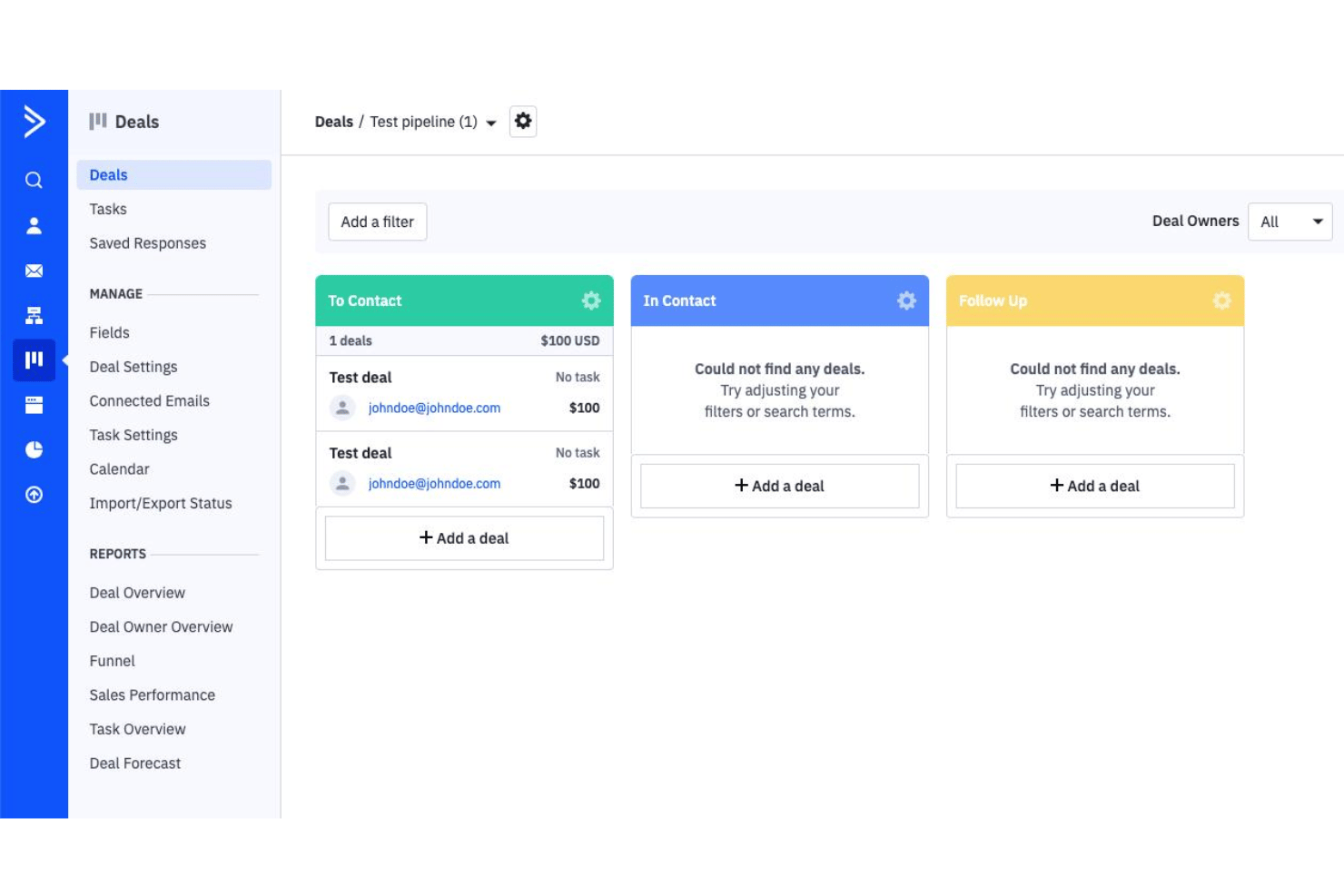
Track every contact, deal, and communication in one centralized CRM view. Easily view pipeline stages, trigger transactional emails, and update leads as they progress through each stage.
Dynamic Email Content
Customize sections of emails using full personalization functionality to match each recipient’s deal stage. Personalization increases relevance whether delivered via email or site message for every contact you reach.
Automated Segmentation
Automatically group contacts by behavior, demographics, or actions taken, then match them to targeted email templates. Send relevant content to each segment without manual sorting.
Standout Features
Predictive Sending
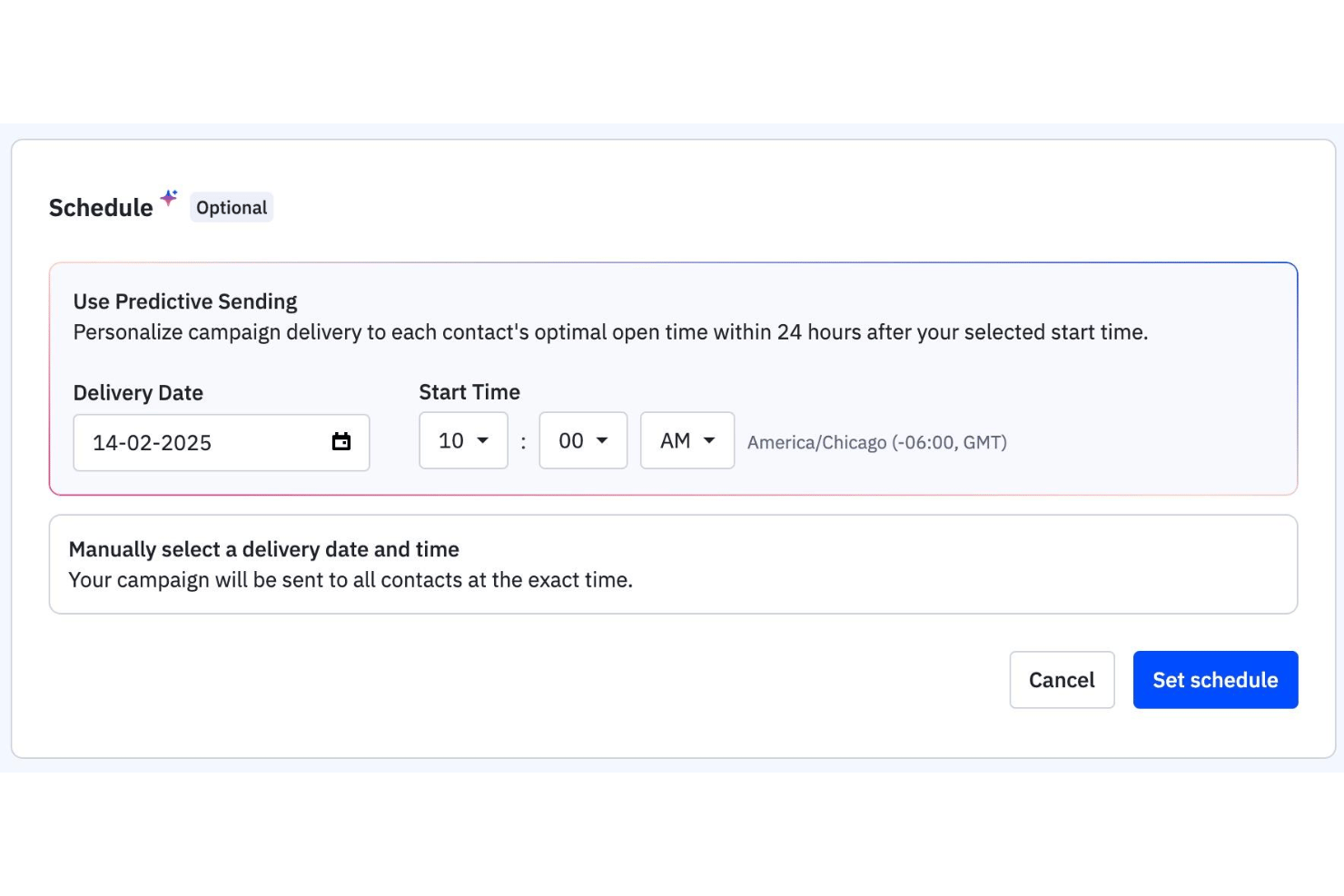
Predictive sending is a powerful automation that delivers emails at the exact moment each contact is most likely to engage. This feature uses machine learning to optimize open and click rates for every campaign.
Website and Event Tracking
ActiveCampaign tracks visitor activity across your website and logs custom events, outperforming most standalone marketing automation tools for behavioral data. You can trigger automations or segment contacts based on web activity—giving you behavioral intelligence that rivals platforms like HubSpot and Klaviyo.
Ease of Use
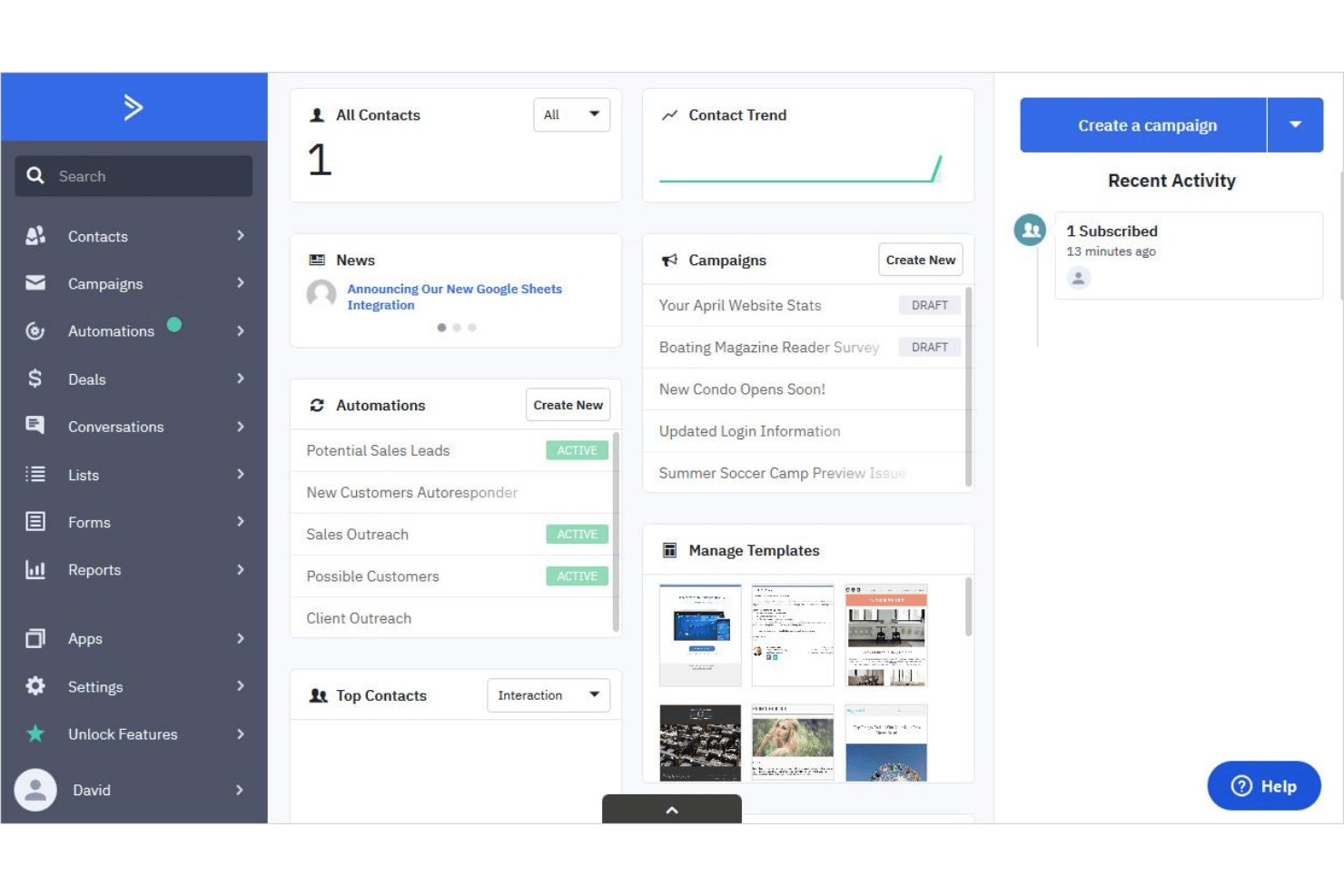
ActiveCampaign balances advanced automation with an interface most users can navigate after onboarding. The drag-and-drop workflow builder is especially practical, letting you visualize complex journeys. Some users mention the dashboard can feel crowded, but key actions like setting up campaigns, scoring leads, or managing deals are intuitive once you’re familiar. I think it’s approachable for most users, with advanced features for those wanting to push deeper into automation and analytics.
Onboarding
ActiveCampaign offers a guided setup and tailored onboarding checklists, so new users get started quickly. The in-app tutorials, webinars, and robust help center keep support accessible at every stage. I’ve seen users appreciate live chat for quick answers, but some feel the depth of this email marketing platform can be overwhelming without a dedicated onboarding coach. Overall, first-time users get plenty of resources to shorten the learning curve—and the 14-day free trial lets new teams explore the platform risk-free.
Customer Support
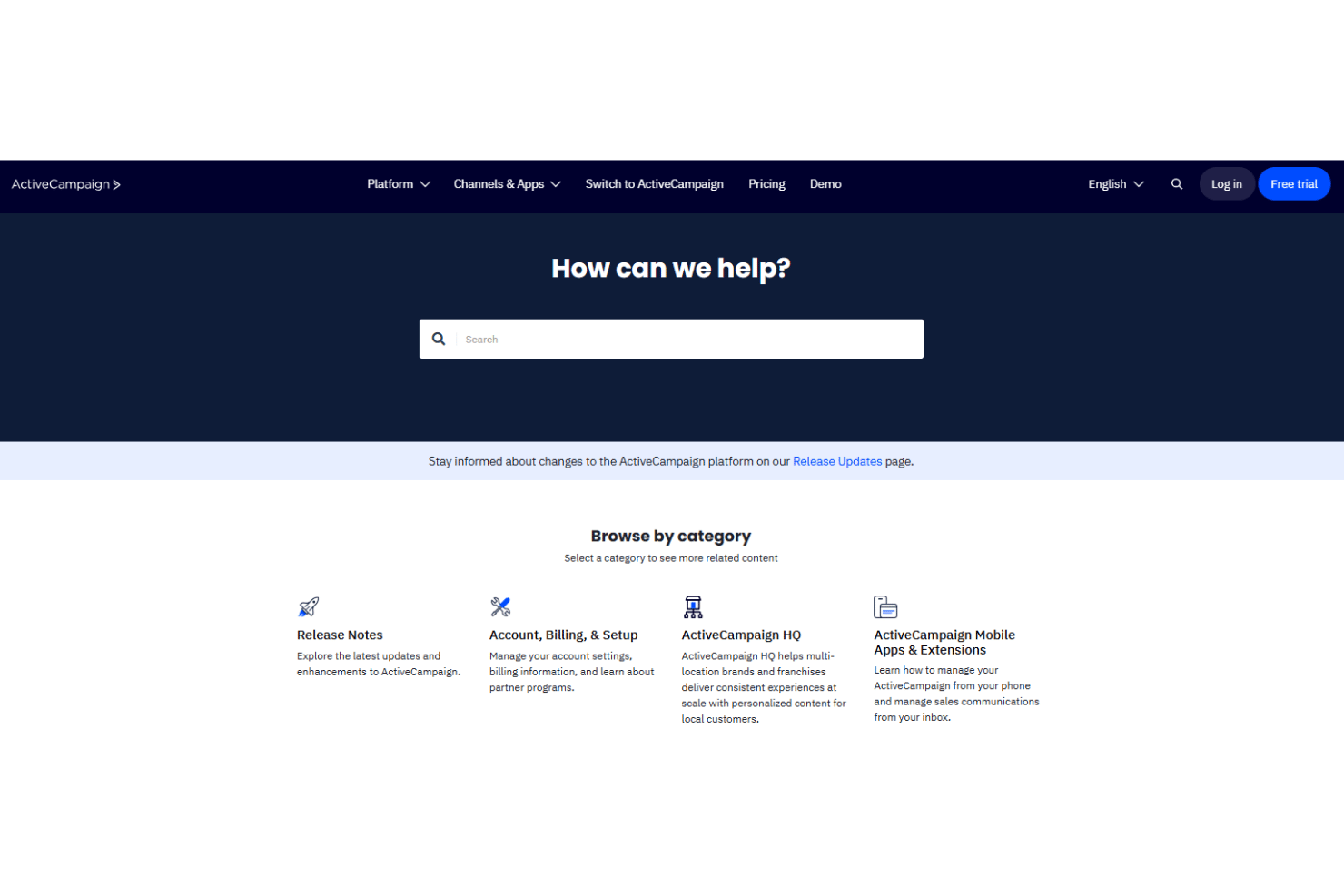
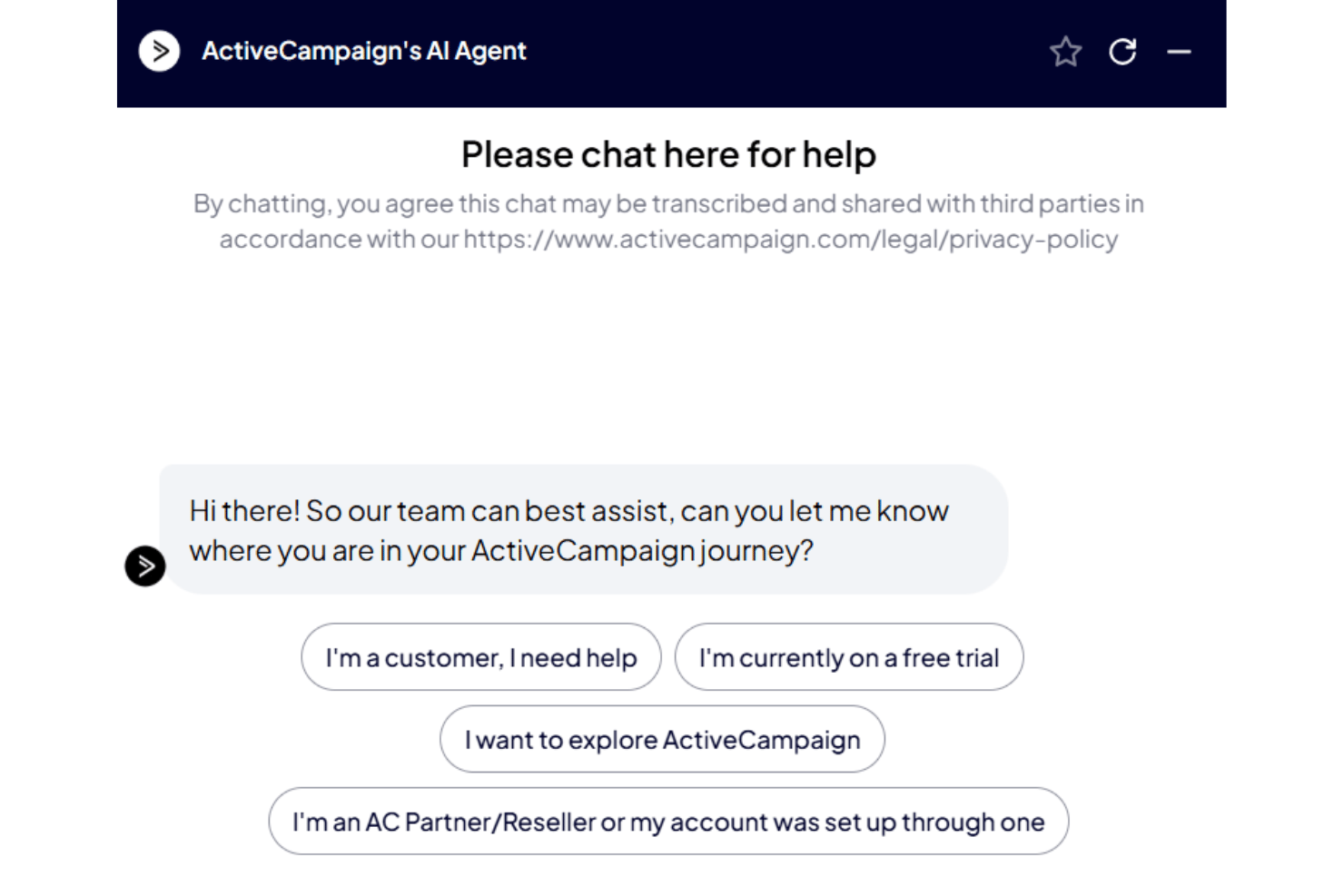
ActiveCampaign gives users live chat, email support, and an extensive knowledge base. The customer support team is responsive and knowledgeable, especially for workflow troubleshooting or deliverability questions. Some users mention wait times can be longer during busy hours, and those on the free plan may have limited access to priority chat support. I think the real strength is the mix of proactive webinars, community forums, and responsive agents.
Integrations
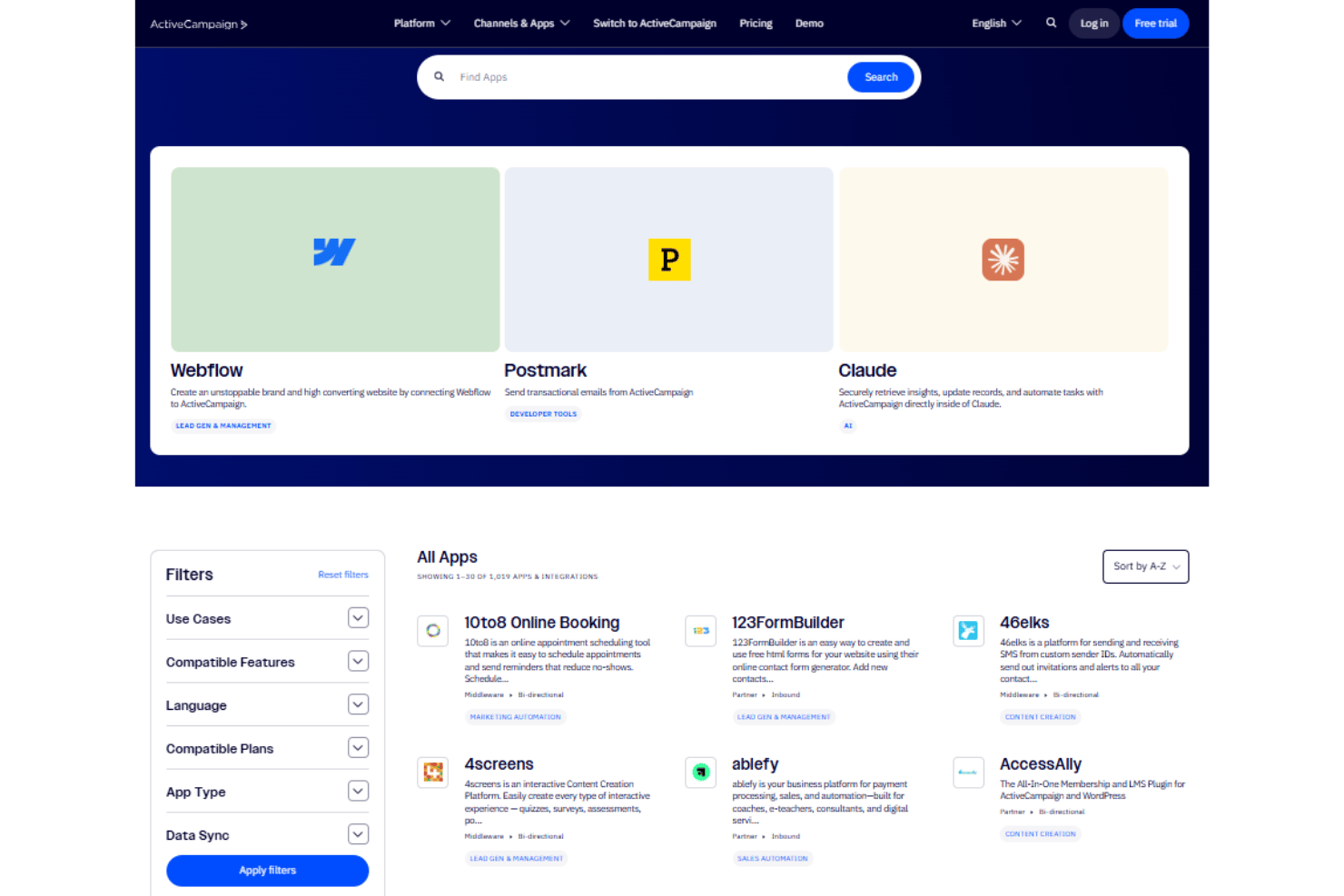
ActiveCampaign integrates with Shopify, WordPress, Salesforce, WooCommerce, Zapier, Google Analytics, Facebook, Magento, and Stripe, among others.
You also get access to a robust API and can connect ActiveCampaign with third-party integration tools for even broader compatibility.
Value for Money
ActiveCampaign is seen as fair value, especially for teams that use advanced automations and integrations. Some users mention costs climb as contacts grow, but most agree this email marketing tool’s deeper feature set and flexible plans justify the price for serious revenue teams.
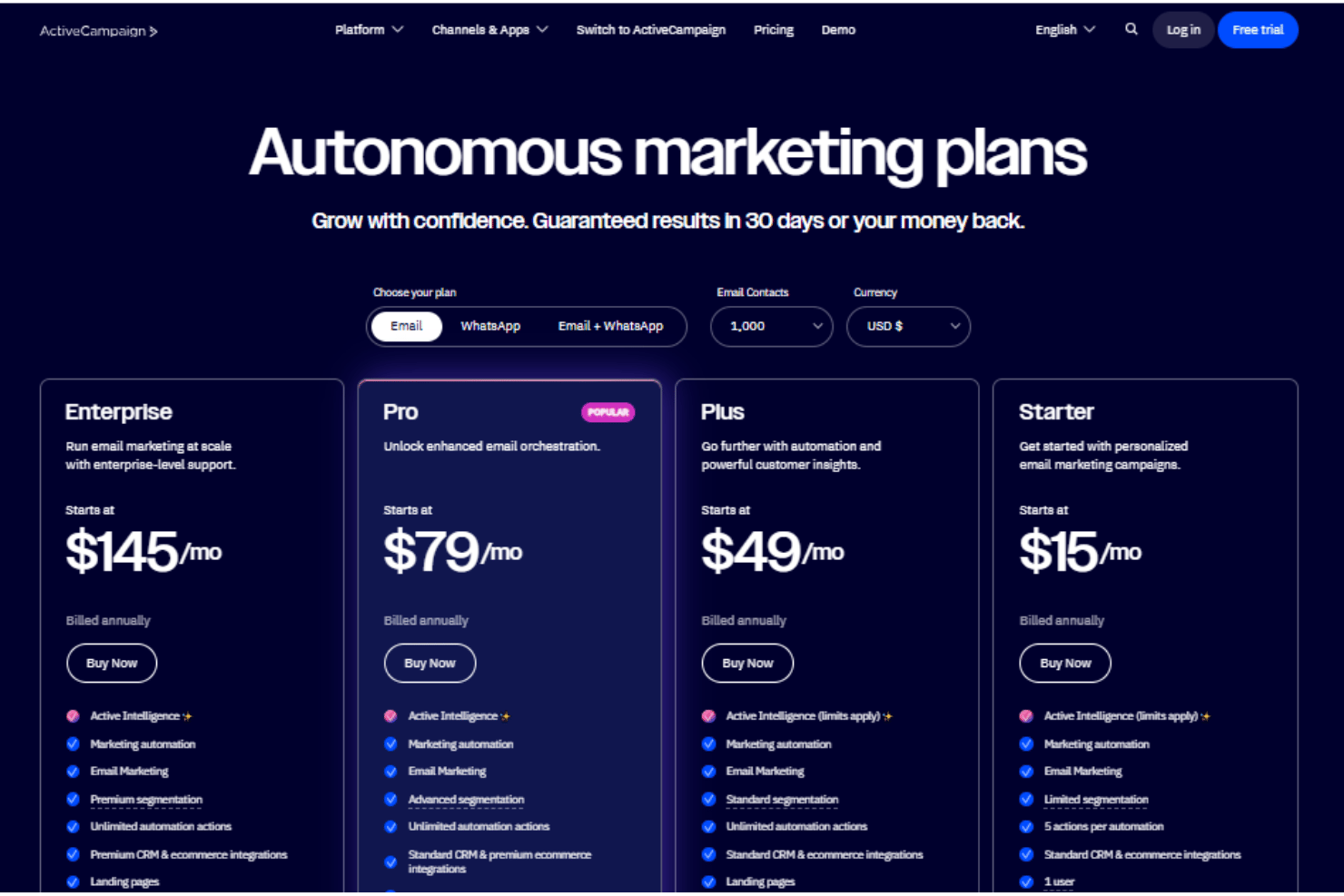
- Starter: Includes marketing automation, email marketing, and limited segmentation.
- Plus: Adds CRM integrations, standard segmentation, and landing pages.
- Pro: Offers predictive & condition content, attribution & conversion tracking, and more users.
- Enterprise: The enterprise plan provides custom objects, SSO, and a dedicated account team for full organizational support.
ActiveCampaign Specs
- A/B Testing
- Analytics
- API
- Audience Targeting
- Automated Conversion
- Batch Permissions & Access
- Behavioral Tracking
- Brand Management
- Campaign Management
- Contact Management
- Contact Sharing
- Conversion Tracking
- CRM Integration
- Customer Management
- Dashboards
- Data Export
- Data Import
- Email Integration
- External Integrations
- Keyword Tracking
- Landing Pages
- Lead Management
- Lead Scoring
- Link Tracking
- Marketing Automation
- Multi-User
- Notifications
- Password & Access Management
- Social-Media Integration
ActiveCampaign FAQs
How scalable is ActiveCampaign for growing teams?
What kind of data security and compliance controls does ActiveCampaign provide?
Can ActiveCampaign handle multi-channel marketing campaigns?
How customizable are the automation workflows in ActiveCampaign?
Does ActiveCampaign support multi-user roles and permissions?
What reporting and analytics capabilities does ActiveCampaign offer?
How does ActiveCampaign integrate with existing CRM, ecommerce, or other core systems?
What onboarding and ongoing support resources can users expect?
ActiveCampaign Company Overview & History
ActiveCampaign is a privately held company headquartered in Chicago, Illinois, serving online businesses of every size with a workforce of several hundred employees. The company is best known for its sales CRM and marketing automation platform, serving more than 150,000 businesses worldwide. ActiveCampaign is not publicly traded and focuses solely on its core product, without affiliations to or ownership of other major software brands. Its platform is recognized for innovating automation in marketing and CRM workflows.
ActiveCampaign Major Milestones
- 2003: Founded in Chicago, Illinois.
- 2013: Launches its cloud-based platform for marketing automation and CRM.
- 2020: Passes 100,000 customers worldwide.
- 2021: Raises $240 million in Series C funding, led by Tiger Global Management
- 2021: Surpasses $165 million in annual recurring revenue.