


Airtable-Bewertung: Vorteile, Nachteile, Funktionen und Preise erklärt


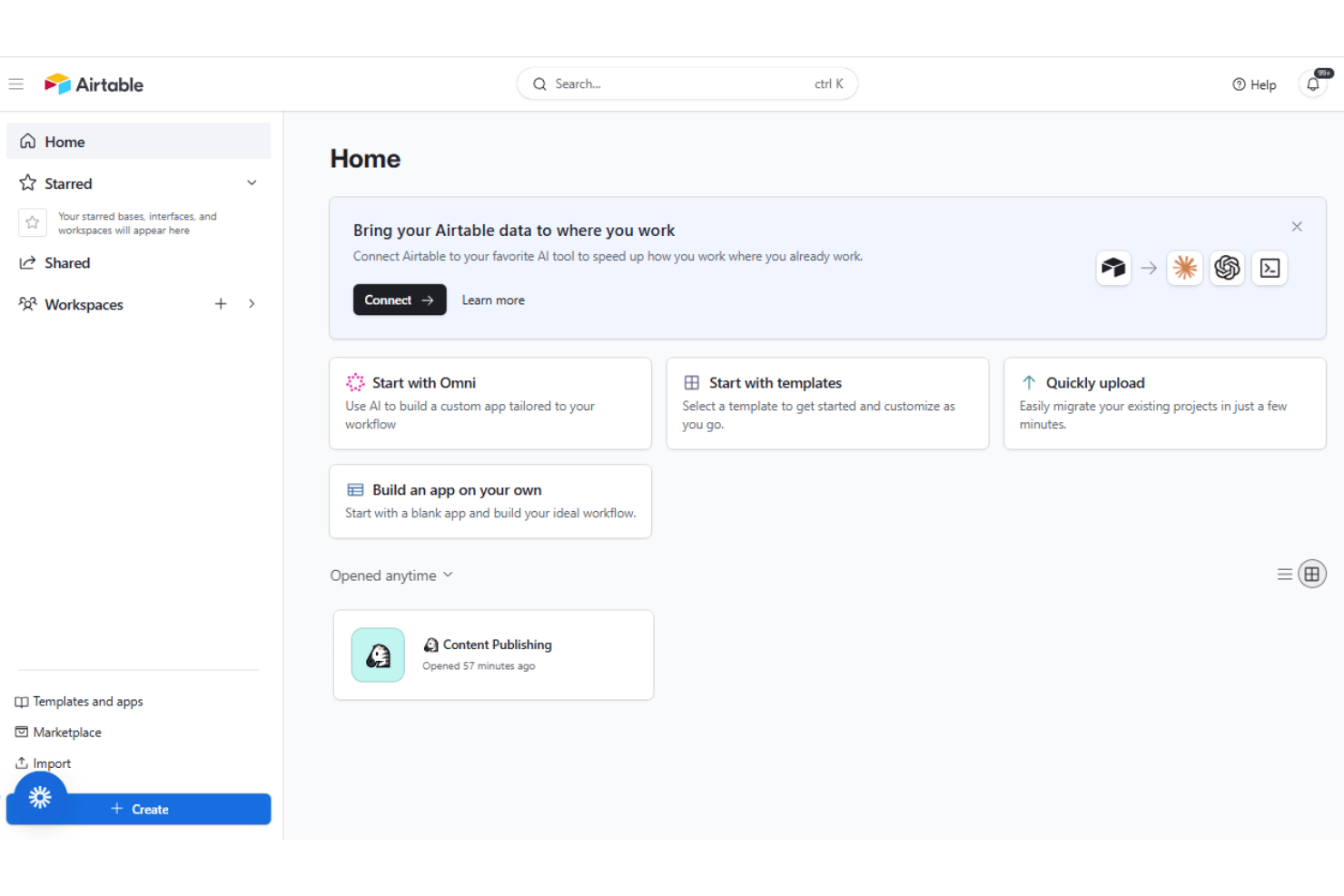
Airtable is a sales database software built for revenue operations teams who want more control, customization, and real-time visibility than traditional CRMs allow. If your team is frustrated by rigid workflows, scattered data, or disconnected tools, you might be looking for a database tool that doesn’t box you in. Airtable lets your team—whether startups or established orgs—design tailored pipelines, centralize deal activity, and adapt processes fast without deep technical skills.
In this in-depth review, I’ll walk you through Airtable’s key features for project management and sales ops, what it does well, the types of teams it fits best, and what you can expect to pay.
Airtable Evaluation Summary
- From $20/user/month
- Free plan + free demo + 14-day trial available
Warum Sie unseren Software-Empfehlungen vertrauen können
Unsere Bewertungen spiegeln unser unabhängiges Urteilsvermögen wider – keine Verkaufsstrategie. Erfahren Sie, wie wir transparent bleiben.
Für diesen Leitfaden haben wir Tools mithilfe von praktischen Tests und unabhängiger Recherche bewertet und dabei unsere Bewertungskriterien angewendet.
Unsere Bewertungen spiegeln unser menschliches redaktionelles Urteilsvermögen wider, keine Verkaufsstrategie.
Airtable Overview
I think Airtable stands out for flexibility, AI features, and user-friendly interface, letting you create sales pipelines that fit your exact process. When comparing pricing, you’ll find it’s affordable for small teams but can add up with advanced automation or integrations. In judging performance, custom views, fast onboarding, and a strong template library make a difference, but native reporting and deep support options lag behind the competition. I’d select Airtable for sales orgs that value process adaptability and want to link data from marketing or customer success without coding—especially those building unique workflows or experimenting with go-to-market models.
pros
-
Customizable pipelines and automation features fit unique sales processes and objects
-
Automations handle repetitive lead tracking and follow-up
-
Fast collaboration makes Airtable ideal for small businesses where sales, marketing, and CS teams work closely together
cons
-
Native reporting options are limited for pipeline analytics
-
No built-in advanced forecasting or quota management tools
-
Scaling to large teams can increase costs quickly beyond the free plan or team plan tier
-

Prisync
Visit WebsiteThis rating combines scores from multiple user review sites to reflect overall customer sentiment about the product.4.7 -
Expedite Commerce
Visit Website -
QuickBooks Online
Visit WebsiteThis rating combines scores from multiple user review sites to reflect overall customer sentiment about the product.4





Wie wir Tools testen & bewerten
Wir haben Jahre damit verbracht, unser System zur Softwarebewertung und -prüfung aufzubauen, zu verfeinern und kontinuierlich zu verbessern. Der Bewertungsmaßstab ist darauf ausgelegt, die Feinheiten der Software-Auswahl und die Effektivität eines Tools abzubilden, wobei der Fokus auf entscheidende Aspekte des Auswahlprozesses gelegt wird. Nachfolgend können Sie genau sehen, wie unser Test- und Bewertungssystem anhand von sieben Kriterien funktioniert. Dadurch sind wir in der Lage, eine objektive Einschätzung der Software auf Basis von Kernfunktionalität, besonderen Merkmalen, Benutzerfreundlichkeit, Onboarding, Kundensupport, Integrationen, Kundenbewertungen und Preis-Leistungs-Verhältnis zu geben.
Kernfunktionalität (25% der Gesamtnote)
Unser Bewertungsprozess beginnt immer mit der Kernfunktionalität eines Tools. Verfügt es über die grundlegenden Funktionen und Merkmale, die ein Nutzer erwarten würde? Sind einige dieser Kernfunktionen nur in teureren Tarifen verfügbar? Grundsätzlich erwarten wir, dass ein Tool mit den Grundfunktionen seiner Wettbewerber mithalten kann.
Besondere Merkmale (25% der Gesamtnote)
Im nächsten Schritt bewerten wir außergewöhnliche Zusatzfunktionen, die über den üblichen Funktionsumfang hinausgehen. Eine hohe Bewertung spiegelt spezialisierte oder einzigartige Eigenschaften wider, welche das Produkt schneller, effizienter oder für den Nutzer wertvoller machen. Wir bewerten außerdem, wie einfach sich andere typische Tools zur Erweiterung der Funktionalität und des Nutzens integrieren lassen. Lösungen mit zahlreichen nativen Integrationen, Drittanbieter-Anbindungen und API-Zugängen für eigene Anpassungen schneiden am besten ab.
Benutzerfreundlichkeit (10% der Gesamtnote)
Wir berücksichtigen, wie schnell und einfach sich Aufgaben mit der Kernfunktionalität durch das Tool erledigen lassen. Hoch bewertete Software ist gut gestaltet, intuitiv bedienbar, bietet mobile Apps, Vorlagen und gestaltet sogar komplexe Aufgaben einfach.
Onboarding (10% der Gesamtnote)
Uns ist wichtig, wie schnell Teams eine neue Plattform übernehmen, daher bewerten wir, wie leicht ein Tool ohne umfangreiche Schulungen erlernbar und nutzbar ist. Wir betrachten, wie schnell Teammitglieder ohne Vorerfahrung loslegen können. Hoch bewertete Lösungen zeichnen sich dadurch aus, dass nur wenig oder keine Unterstützung notwendig ist.
Kundensupport (10% der Gesamtnote)
Wir prüfen, wie schnell und einfach es ist, Unterstützung per Telefon, Live-Chat oder Wissensdatenbank zu erhalten. Anbieter, die Echtzeit-Support bieten, erzielen die besten Noten, während Chatbots am schlechtesten abschneiden.
Kundenbewertungen (10% der Gesamtnote)
Zusätzlich zu unseren eigenen Tests berücksichtigen wir den Net Promoter Score von aktuellen und früheren Kunden. Wir prüfen, ob Nutzer das Tool für die Kernfunktionalitäten erneut wählen würden. Eine hohe Softwarebewertung spiegelt einen hohen Weiterempfehlungswert aktueller oder früherer Kunden wider.
Preis-Leistungs-Verhältnis (10% der Gesamtnote)
Abschließend bewerten wir unter Berücksichtigung aller Kriterien den durchschnittlichen Preis für Einstiegs-Tarife im Verhältnis zu den Kernfunktionen und dem Wert der übrigen Kriterien. Software, die mehr Leistung für weniger Geld bietet, erzielt eine höhere Bewertung.
Core Features
Customizable Sales Pipelines
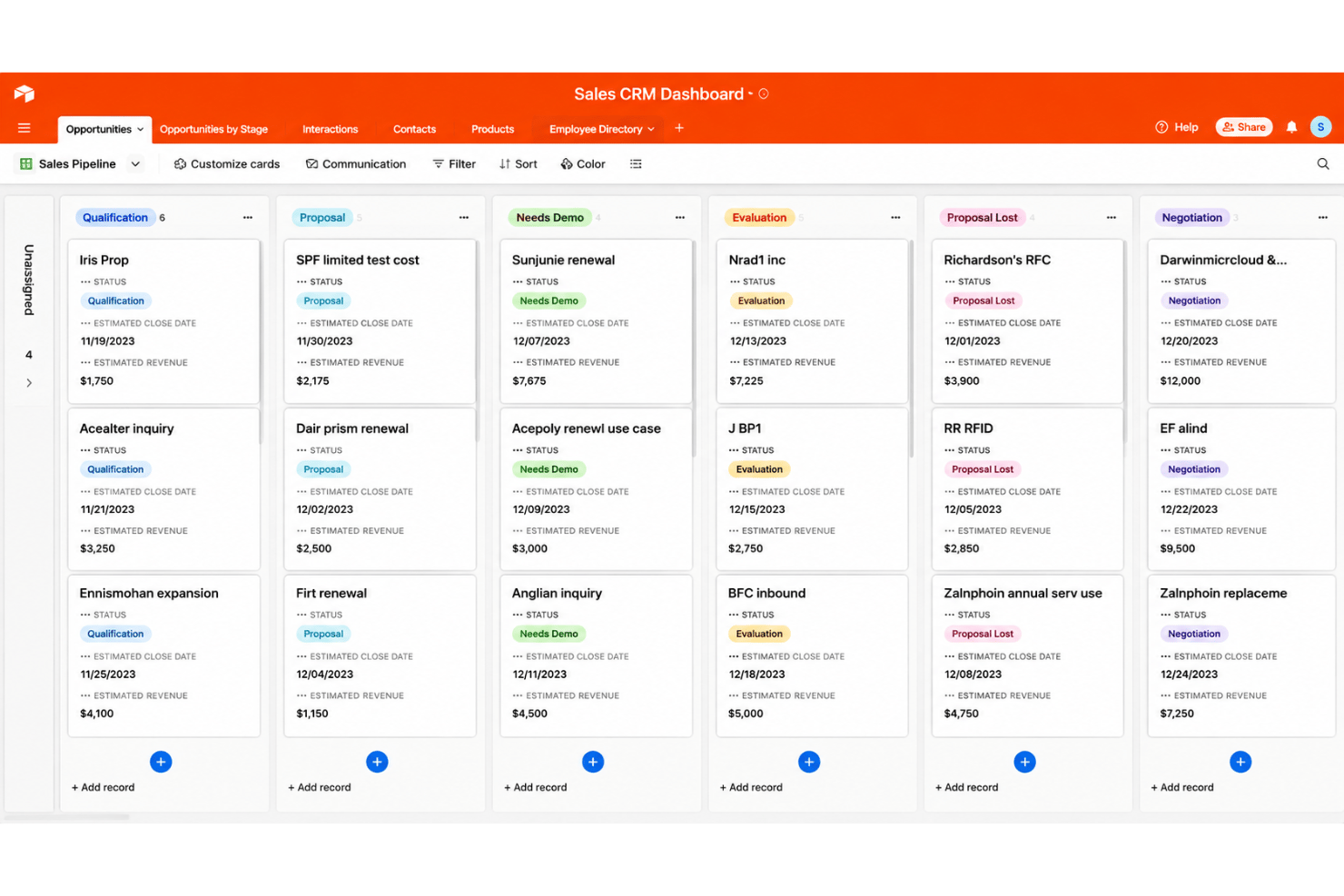
Design custom stages, fields, Gantt charts, gallery view, and Kanban board layouts for every sales cycle. Visualize deal flow in grid, kanban, or calendar layouts.
Automations for Lead Management
Trigger follow-ups, notifications, or record updates based on sales activity. Automate repetitive tasks with no-code rules.
Record Linking Across Departments
Connect sales records to marketing campaigns, customer success data, or service tickets. Keep customer context and data management unified without duplicating records.
Real-Time Collaboration and Comments
Assign, comment, and tag team members directly on records. Coordinate outreach and deal updates across collaborators without switching tools.
Custom Form Builders
Create branded forms for lead capture or qualification that route details straight into your database. Instantly notify stakeholders or trigger tasks from submitted form data.
Reporting Dashboards
Build dashboards with charts, summary blocks, and key sales metrics using live data. Track pipeline health, win rates, and rep activity at a glance.
AI-Powered Workflows
Use Airtable AI to summarize information, categorize data, and automate repetitive tasks directly within your workflows. Turn existing data into actionable insights while reducing manual work.
Ease of Use
Airtable’s usability impresses me—especially for sales teams upgrading from Microsoft Excel, Google Sheets, or basic spreadsheets—despite a sometimes steep learning curve for more advanced configuration. You can drag-and-drop to build custom views, automate outreach, and link records without code, making it approachable for non-admins. Users mention the platform’s learning curve feels fast, driven by templates and clear documentation. I’d judge Airtable easier to master for teams who want to tweak sales processes and collaborate in one workspace, but advanced reporting can feel less intuitive for pipeline-heavy teams.
Integrations
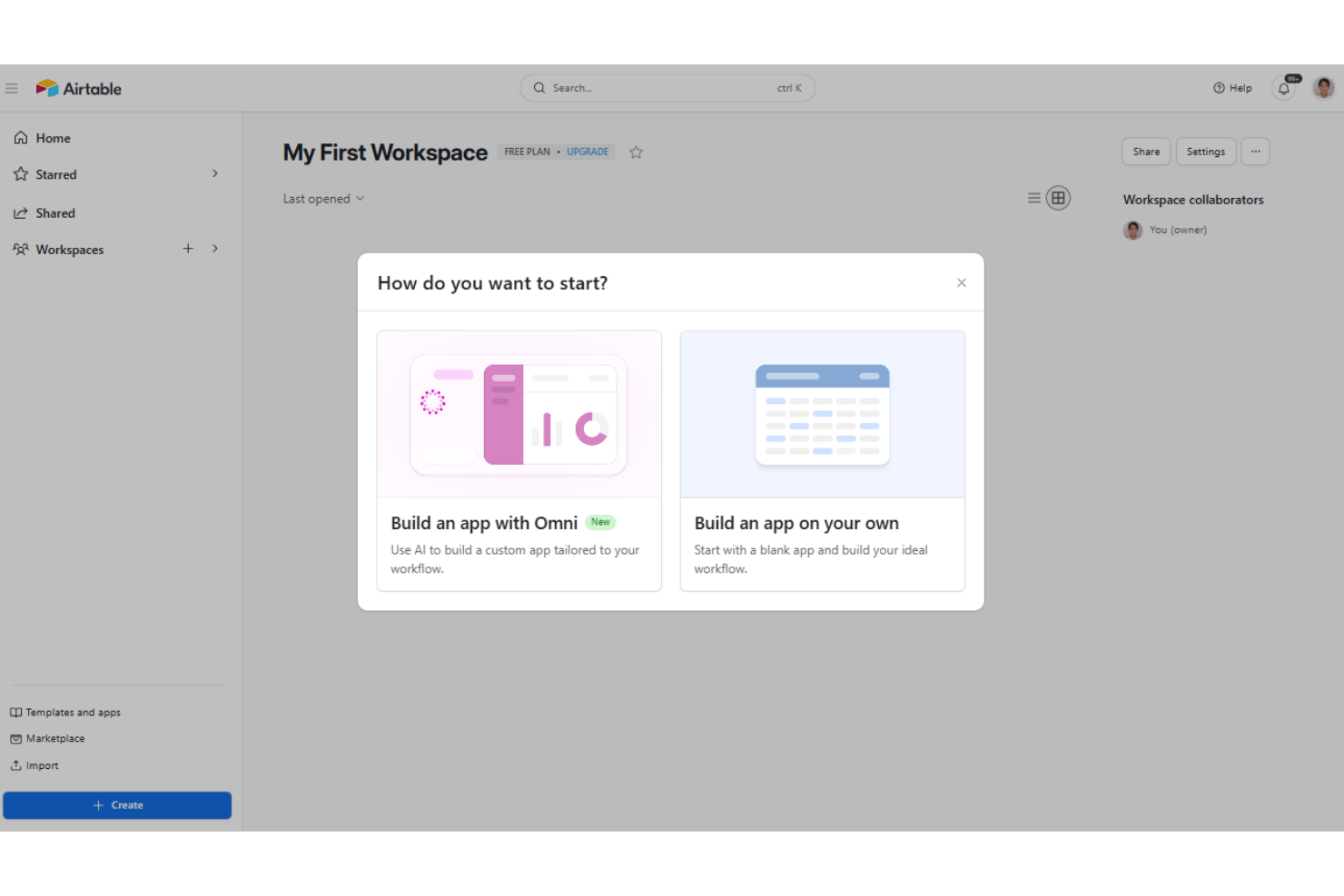
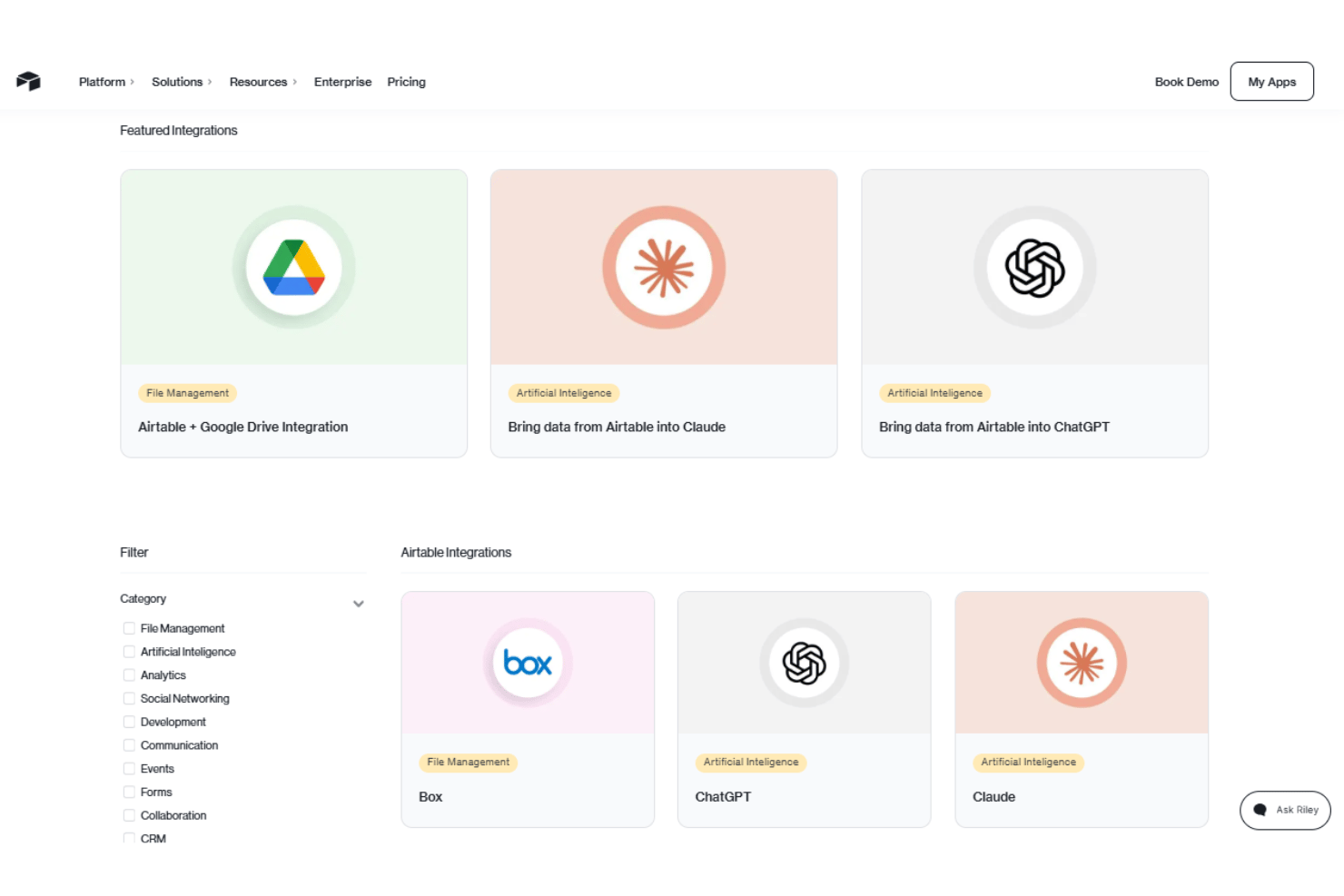
Airtable integrates with Box, ChatGPT, Claude, Dropbox, Databricks, GitHub, Google Workspace, Snowflake, Stripe, Slack, Salesforce, and Tableau, among others.
Airtable also offers a robust API and connects with third-party integration tools like Zapier.
Airtable Specs
- 2-Factor Authentication
- API
- Batch Permissions & Access
- Budgeting
- Calendar Management
- Contact Management
- Contact Sharing
- Customer Management
- Dashboard
- Data Export
- Data Import
- Data Visualization
- Email Integration
- Expense Tracking
- External Integrations
- Gantt Charts
- Google Apps Integration
- Multi-User
- Notifications
- Project Management
- Resource Management
- Scheduling
- Task Scheduling/Tracking
- Third-Party Plugins/Add-Ons
- Travel Management