

Sürekli değişen piyasa fiyatlarına ayak uydurmakta zorlanıyor musunuz? Yalnız değilsiniz. Bir ürün yöneticisi olarak, kârlılığı en üst düzeye çıkarırken rekabetçi kalmak için doğru fiyatı belirleme zorluğuyla karşı karşıyasınız. Dinamik fiyatlandırma yazılımı, piyasa talebine ve rakiplerin eylemlerine göre fiyatları uyarlayarak çözümünüz olabilir.
Yazılımları test etme ve inceleme deneyimimde, bu araçların yalnızca zamandan tasarruf sağlamakla kalmayıp karar verme süreçlerini de iyileştirdiğini gördüm. Bu makale, tarafsız ve kapsamlı araştırmalara dayanan içgörüler sunarak en iyi seçimlerimde size rehberlik edecek.
Her bir yazılımın ekibinizin ihtiyaçlarına nasıl uyabileceğini ve fiyatlandırma zorluklarının üstesinden gelmenize nasıl yardımcı olabileceğini keşfedeceksiniz. Günümüzde mevcut olan en iyi dinamik fiyatlandırma çözümlerine göz atalım.
Why Trust Our Software Recommendations
6,700+
Reviews
20
Industry experts
16+
Evaluation factors
14
Years
Our reviews reflect our independent judgment—not a sales pitch. Learn how we stay transparent.
For this guide, we evaluated tools using hands-on testing and independent research, scoring tools using our selection criteria.
Our reviews reflect our human editorial judgment, not a sales pitch.
Dinamik Fiyatlandırma Yazılımları Karşılaştırma Tablosu
Bu karşılaştırma tablosu, en iyi dinamik fiyatlandırma yazılımı seçimlerimin fiyatlandırma ayrıntılarını özetlemektedir:
Sorted by: Default
| Tool | Starting Price | Website | |
|---|---|---|---|
Best for omni-channel price alignment | 4.7 out of 5 | Pricing upon request Not available | Website |
Best with automated multibuy pricing rules | 4.6 out of 5 | Pricing upon request Free demo available | Website |
Best for retail pricing decisions with AI | Not rated | €349/month Free plan + free demo | Website |
Best for price tracking for small retailers | 4.7 out of 5 | $99/month 14-day free trial | Website |
Best for global price intelligence data | 4.5 out of 5 | Pricing upon request Free demo available | Website |
Best for vacation rental pricing | 4.5 out of 5 | $14.49/month Free demo + 30-day free trial available | Website |
Best for Amazon seller pricing and ads | 4.2 out of 5 | Pricing upon request 14-day free trial | Website |
Best for airline revenue optimization | Not rated | Pricing upon request Free demo available | Website |
Best for automated hotel room pricing | Not rated | $148.50/property/month Free demo + 14-day free trial available | Website |
Best for cost-to-serve industrial pricing | Not rated | Pricing upon request Free demo available | Website |


En İyi Dinamik Fiyatlandırma Yazılımları İncelemeleri
Aşağıda, kısa listeme giren en iyi dinamik fiyatlandırma yazılımlarının ayrıntılı özetlerini bulabilirsiniz. İncelemelerim, size en uygun aracı bulmanıza yardımcı olmak için her bir aracın temel özelliklerine, artılarına ve eksilerine, entegrasyonlarına ve ideal kullanım alanlarına ayrıntılı bir bakış sunmaktadır.
 Best for omni-channel price alignment
- Not available
- Pricing upon request
Visit WebsiteCustomer Rating:4.7/5
Quicklizard helps you eliminate price discrepancies between physical stores and digital storefronts Quicklizard is a dynamic pricing platform designed for retailers and brands managing complex pricing across multiple channels. It’s built for teams that need to react quickly to market changes and maintain pricing consistency at scale. If you’re looking to automate pricing decisions while keeping control over strategy and compliance, Quicklizard offers the flexibility and intelligence to support your goals.
Who Is Quicklizard Best For?
Quicklizard is a strong choice for retail and ecommerce teams in mid-sized to large organizations that need to manage and optimize pricing across multiple sales channels.
Why I Picked Quicklizard
For teams that need to keep pricing consistent across every sales channel, Quicklizard stands out for its omni-channel price alignment capabilities. I picked Quicklizard because it lets you synchronize pricing in real time across online stores, physical locations, and marketplaces, reducing the risk of price conflicts or customer confusion. The platform’s centralized pricing engine and automated update workflows ensure that any change you make is reflected everywhere you sell. This level of control is especially valuable for businesses managing complex product catalogs and multiple points of sale.
Quicklizard Key Features
Some other features that make Quicklizard a strong option for dynamic pricing management include:
- AI-driven price recommendations: The platform uses machine learning algorithms to suggest optimal prices based on real-time market and competitor data.
- Price elasticity modeling: Quicklizard analyzes historical sales and demand data to help you understand how price changes impact revenue and volume.
- Customizable pricing rules: You can set detailed rules and guardrails to ensure pricing stays within your business and compliance requirements.
- Automated competitor monitoring: The tool tracks competitor prices and market trends, allowing you to respond quickly to changes in your competitive landscape.
Quicklizard Integrations
Integrations include SAP, Oracle, Magento, Salesforce Commerce Cloud, Shopify, Kafka, Delavo, DataWeave, TGN, and Bright Data.
Pros and Cons
Pros:
- Supports both manual and automated pricing
- Real-time price updates across all channels
- Highly configurable rule-based pricing engine
Cons:
- Reporting features could be more customizable
- No free plan or public trial available
Learn more about Quicklizard: Best with automated multibuy pricing rules
- Free demo available
- Pricing upon request
Visit WebsiteCustomer Rating:4.6/5
Yieldigo Promo Planner with AI-powered discount optimization and margin insights. Yieldigo offers AI-driven dynamic pricing software designed for retailers and consumer goods companies looking to optimize complex pricing strategies. The platform helps pricing teams manage large product assortments, adapt to market changes, and automate pricing decisions. If your business needs to balance profitability, competitiveness, and operational efficiency, Yieldigo provides the tools to support data-driven pricing.
Who Is Yieldigo Best For?
Yieldigo is a good fit for retail pricing managers and commercial teams in medium to large retail and consumer goods companies seeking advanced, data-driven pricing optimization.
Why I Picked Yieldigo
For teams focused on optimizing promotions and complex discount structures, I picked Yieldigo because of its automated multibuy pricing rules. The platform allows you to set up and manage rules for multibuy offers, such as “buy two, get one free” or tiered discounts, directly within its pricing engine. Yieldigo’s AI-driven system automatically applies these rules across large product assortments, ensuring consistency and compliance with your pricing strategy. This makes it much easier to execute and monitor promotional campaigns without manual intervention.
Yieldigo Key Features
Some other features that make Yieldigo a strong choice for dynamic pricing include:
- AI-powered price optimization: The platform uses machine learning algorithms to recommend optimal prices based on demand, competition, and business goals.
- Scenario simulation: You can model and compare the impact of different pricing strategies before deploying them live.
- Real-time price updates: Yieldigo enables instant price changes across channels, ensuring your pricing stays current with market shifts.
- Flexible price zone management: The system supports creating and managing multiple pricing zones to tailor prices by region, store, or customer segment.
Yieldigo Integrations
Yieldigo connects to your ERP, POS, or data warehouse systems via secure SFTP transfers or APIs. An API is available for custom integrations. Native integrations are not currently listed.
Pros and Cons
Pros:
- Offers AI-driven price recommendations
- Provides scenario simulation for pricing strategies
- Handles complex price zone segmentation
Cons:
- Focuses mainly on retail and omni-channel use cases
- May require IT support for initial setup
Learn more about Yieldigo: Best for retail pricing decisions with AI
- Free plan + free demo
- From €349/month
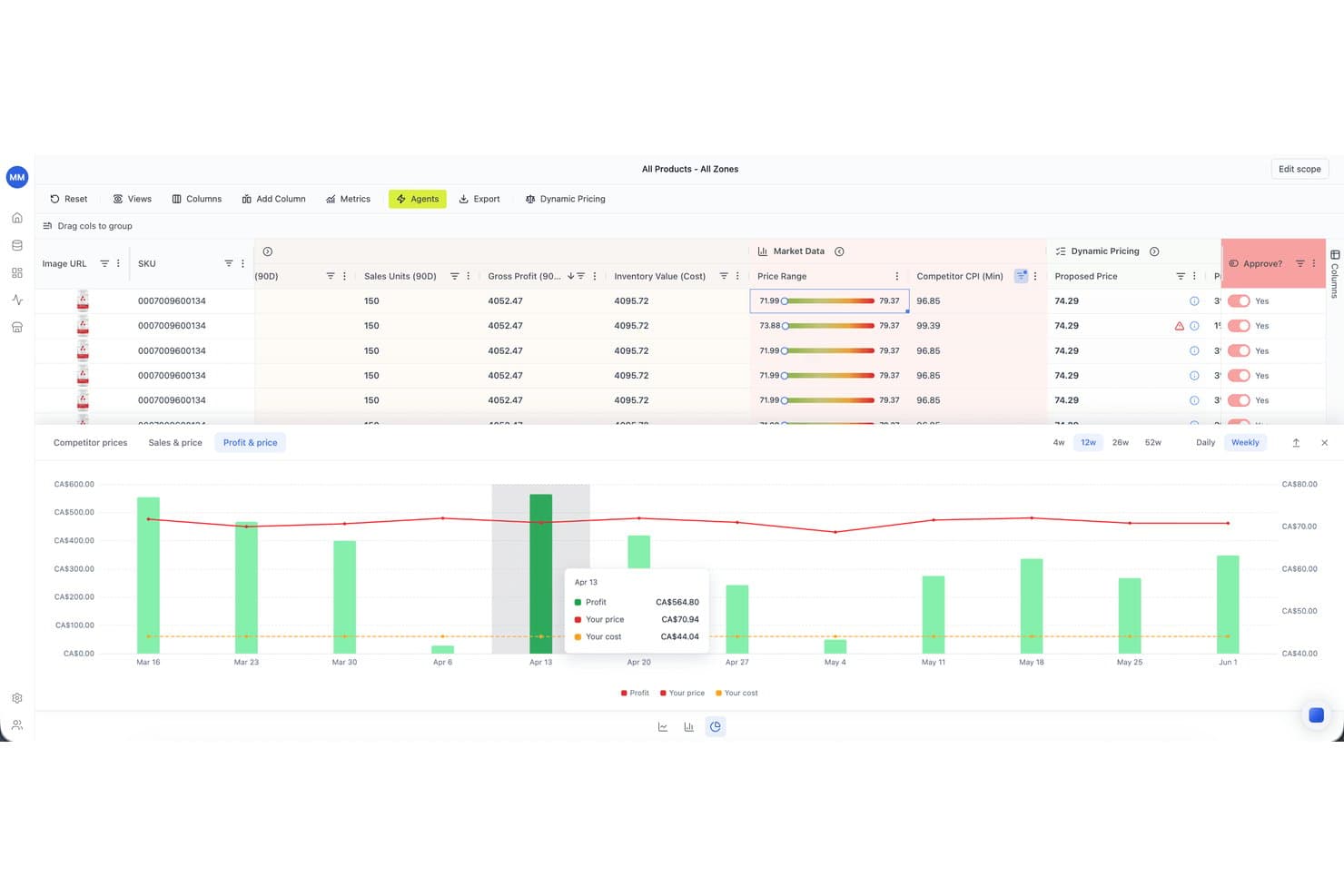
RetailGrid offers a dynamic pricing dashboard with competitor price tracking, proposed prices, profit charts, and one-click approval for automated repricing decisions. RetailGrid is a dynamic pricing platform for mid-market retailers that combines a rules-based pricing engine, AI-driven price optimization agents, competitor price monitoring, and elasticity modeling in a spreadsheet-style workspace.
Who Is RetailGrid Best For?
RetailGrid suits pricing teams at retail businesses generating between €10M and €500M in annual revenue who want to move beyond manual, spreadsheet-based pricing.
Why I Picked RetailGrid
RetailGrid earns its spot on my shortlist because of how it handles AI explainability in a way most pricing tools skip over entirely. Every price recommendation surfaces the exact rules applied, the math behind the output, and a margin impact preview before you commit. I also like the configurable autonomy model: you can set high-confidence SKUs to auto-apply while keeping sensitive categories in a human-review queue, with a full audit trail across both modes.
RetailGrid Key Features
- Agent-based pricing workflows: Modular AI agents handle rules-based pricing, elasticity analysis, and GMROI optimization.
- Competitor price monitoring layer: Tracks competitor prices across marketplaces and integrates directly into the pricing workspace.
- Spreadsheet-style data grid: Familiar interface for reviewing, filtering, and editing pricing recommendations by SKU.
- Direct ecommerce platform integrations: Built-in connections for Shopify, Magento, BigCommerce, WooCommerce, and ERP systems.
RetailGrid Integrations
RetailGrid offers native integrations with Shopify, Magento, BigCommerce, WooCommerce, Wix, and SAP Commerce Cloud, and provides an API for custom integrations.
Pros and Cons
Pros:
- Pricing audit trail with detailed rule history
- Supports region and channel-based zone pricing
- Explainable AI recommendations for every price change
Cons:
- Limited customer segment-based pricing models
- No deal desk or B2B quote workflows
Learn more about RetailGrid: Best for price tracking for small retailers
- 14-day free trial
- From $99/month
Visit WebsiteCustomer Rating:4.7/5
Prisync helps track competitor prices and automate dynamic pricing. Prisync is a competitor price tracking and dynamic pricing software designed for large and small e-commerce businesses. It helps you monitor competitor prices, automate pricing adjustments, and analyze price changes and stock availability.
Why I picked Prisync: It's tailored for small retailers who need efficient price management. Its standout feature is competitor price monitoring, which lets you stay competitive without constant manual input. Prisync also offers automated pricing adjustments, ensuring your prices are always optimized.
Standout features and integrations:
Features include a user-friendly dashboard, stock availability tracking, and flexible subscription plans for businesses of all sizes. The software provides detailed analytics on pricing trends, helping you make informed decisions. It also offers proactive customer support and a free onboarding service to maximize its benefits.
Integrations include Shopify, Google Shopping, Magento, WooCommerce, and more.
Pros and Cons
Pros:
- Responsive customer support team
- Daily competitor-price updates
- Intuitive price tracking interface
Cons:
- Responsive customer support team
- Time-intensive product setup
Learn more about Prisync: Best for global price intelligence data
- Free demo available
- Pricing upon request
Visit WebsiteCustomer Rating:4.5/5
Intelligence Node benchmarks competitors to guide pricing. Intelligence Node is a dynamic pricing and analytics platform for retailers and brands, focused on price optimization and competitive benchmarking. It helps businesses make informed pricing decisions to increase profitability and market positioning.
Why I picked Intelligence Node: It's tailored for price optimization and offers in-depth market insights. Real-time price tracking allows your team to stay competitive by adjusting prices quickly. The platform's competitive benchmarking provides a clear view of market trends and competitor strategies. With its data-driven approach, you can refine your pricing models for maximum effectiveness.
Standout features and integrations:
Features include a pricing audit tool that identifies gaps in pricing strategy. The software offers a personalized pricing engine to cater to specific customer segments. It also provides a visual merchandising tool to optimize product displays based on pricing data.
Integrations are not publicly listed.
Pros and Cons
Pros:
- High SKU data accuracy
- MAP monitoring included
- Ethical data scraping across global sites
Cons:
- No native inventory management features
- May drive aggressive pricing
Learn more about Intelligence Node: Best for vacation rental pricing
- Free demo + 30-day free trial available
- From $14.49/month
Visit WebsiteCustomer Rating:4.5/5
PriceLabs optimizes vacation rental pricing with automated revenue insights. PriceLabs is a dynamic pricing and revenue management tool tailored for vacation rentals, serving Airbnb hosts, Vrbo hosts, property managers, and hotels. It provides automated pricing, portfolio analytics, and market insights to maximize revenue potential.
Why I picked PriceLabs: It's specifically designed for vacation rentals, making it an ideal choice for your property management needs. The Hyper Local Pulse algorithm offers data-driven pricing that adapts to market changes. Customizable minimum stay recommendations help you optimize occupancy rates.
Standout features and integrations:
Features include the Listing Optimizer, which improves your Airbnb listing content for better visibility and bookings. The platform offers real-time reporting to track your property's performance. It also provides market dashboards for insights into local trends.
Integrations include Airbnb, Vrbo, Booking.com, Guesty, Hostfully, Escapia, Track, Streamline, Rentals United, and more.
Pros and Cons
Pros:
- Smart minimum stay length recommendations
- Strong channel manager integration
- Smart vacation pricing automation
Cons:
- Requires manual base price calibration
- Complex rule configuration
Learn more about PriceLabs: Best for Amazon seller pricing and ads
- 14-day free trial
- Pricing upon request
Visit WebsiteCustomer Rating:4.2/5
Feedvisor helps boost Amazon seller margins through pricing automation. Feedvisor is a dynamic pricing and intelligence platform tailored for Amazon sellers, focusing on price optimization and inventory management. It helps e-commerce businesses maximize profitability and improve their Amazon marketplace performance.
Why I picked Feedvisor: It's specifically designed for Amazon sellers, offering tools that optimize pricing and inventory. The repricer feature allows you to adjust prices in real time to stay competitive. The platform's inventory management feature ensures you maintain optimal stock levels.
Standout features and integrations:
Features include a revenue intelligence dashboard that provides a thorough view of your sales performance. The software offers advertising optimization tools to improve your Amazon ad campaigns. Additionally, it provides detailed analytics to help you understand customer behavior and market trends.
Integrations include Amazon Seller Central, Walmart Marketplace, Shopify, Amazon Advertising, Walmart Advertising, Google Ads, and more.
Pros and Cons
Pros:
- Strong analytics dashboards
- Automated Amazon Buy Box win optimization
- AI-powered Amazon repricing
Cons:
- Limited historical data import window
- Expensive for small sellers
Learn more about Feedvisor:

PROS helps manage airline pricing strategies to maximize revenue. PROS is a pricing and revenue management software tailored for the airline industry, focusing on dynamic pricing and sales optimization. It serves airlines by improving pricing strategies and overall revenue management.
Why I picked PROS: It's specifically designed for airlines, offering tailored solutions for complex pricing needs. The Revenue Management feature helps your team adjust prices in real time to maximize revenue. The software's dynamic pricing capabilities ensure you remain competitive in fluctuating markets. With its demand forecasting tools, you can better anticipate market trends and adjust strategies accordingly.
Standout features and integrations:
Features include a price optimization engine that tailors pricing strategies to market conditions. The software offers a sales effectiveness feature that improves sales performance through data insights. Additionally, it provides a customer segmentation tool to personalize pricing and promotions.
Integrations include SAP, Salesforce, Oracle, Microsoft Dynamics, Adobe, Enable, DocuSign, Google Flights, and more.
Pros and Cons
Pros:
- Enterprise optimization focus
- Aligns pricing with sales
- AI pricing guidance engine
Cons:
- Higher setup costs
- Longer implementation cycles
Learn more about PROS: Best for automated hotel room pricing
- Free demo + 14-day free trial available
- From $148.50/property/month (billed annually)

RoomPriceGenie adjusts room rates based on demand. RoomPriceGenie is a revenue management solution tailored for the hospitality industry, including hotels, bed and breakfasts, and serviced apartments. It focuses on real-time pricing optimization and automated room pricing to boost revenue.
Why I picked RoomPriceGenie: It's specifically crafted for the hospitality sector, offering tools to improve pricing strategies. The autopilot function lets your team make hands-off pricing adjustments. Real-time surge protection ensures you capitalize on demand spikes. The rate calendar provides a clear view of pricing trends and helps in planning.
Standout features and integrations:
Features include a group displacement calculator that helps evaluate group bookings against transient demand. The system offers detailed reporting and analytics to track performance. Additionally, its intuitive interface simplifies the management of pricing strategies.
Integrations include Mews, Cloudbeds, RoomRaccoon, Little Hotelier, RMS, Guestline, SiteMinder, Clock, and more.
Pros and Cons
Pros:
- Simple hospitality pricing focus
- Improves occupancy forecasting
- Automated hotel rate adjustments
Cons:
- Dependent on PMS integrations
- Limited for large portfolios
Learn more about RoomPriceGenie:

Zilliant helps elevate pricing accuracy for manufacturers. Zilliant is a pricing and sales optimization software designed for industrial sectors, helping businesses optimize their pricing strategies and improve sales effectiveness. It serves manufacturers, distributors, and service providers by offering data-driven pricing insights.
Why I picked Zilliant: It's tailored for industrial sectors, providing precise pricing strategies that align with business objectives. The Price IQ feature delivers dynamic pricing recommendations, ensuring competitive pricing. Margin IQ helps your team maintain healthy profit margins by providing actionable insights. The software's ability to integrate with existing systems makes it a versatile choice for large enterprises.
Standout features and integrations:
Features include a sales optimizer that identifies opportunities for cross-selling and upselling. The tool offers real-time pricing analytics to monitor market trends. Additionally, it provides customer-specific pricing, improving personalized sales strategies.
Integrations include SAP, Oracle, Salesforce, Conga, Enable, DataXstream, and more.
Pros and Cons
Pros:
- Integrates with sales systems
- Machine learning pricing guidance
- Scientific cost-plus markup optimization
Cons:
- Requires technical expertise
- Requires custom logic configuration work
Learn more about Zilliant:
Diğer Dinamik Fiyatlandırma Yazılımları
\u003cspan style=\u0022font-weight: 400\u0022\u003eİşte kısa listeme girmeyen ancak yine de göz atmaya değer bazı ek dinamik fiyatlandırma yazılımı seçenekleri:\u003c/span\u003e
- 11VendavoBest for B2B deal and contract pricing
- 12CompeteraBest for large-scale demand-based pricing
- 13PriceShapeBest for real-time competitive pricing
- 14RevionicsBest for grocery pricing and promotions
- 15Impact AnalyticsBest for AI-driven demand forecasting
- 16BlackCurveBest for margin-based retail pricing
- 17PricevaBest for competitor price scraping
- 18VistaarBest for beverage industry pricing
- 19Luxe PricingBest for luxury brand pricing
- 20SYMSONBest for demand-based price analytics
- 21SciativeBest for real-time AI-driven price adjustments
- 22Twenty5Best for small businesses
- 23TrellisBest for pricing insights from retail data
Related Reviews
How I Evaluate Dynamic Pricing Software
I split my evaluation into baseline criteria—like real-time repricing and elasticity modeling—and differentiators that separate tools built for deal desks from those built for retail shelves.
Core Functionality (Table Stakes For This List)
When I'm selecting tools for my list, I rank each one on a scale from 0 (does not offer the functionality) to 5 (excels in this area) for each core functionality listed below. Then, I calculate the tool's total score into a percentage. Each tool needs to achieve a minimum total score of 65% to be considered for inclusion.
- Real-Time Price Adjustment: I check whether a platform can reprice automatically based on live triggers like demand spikes, inventory drops, or competitor moves—not just batch updates on a daily schedule.
- Rules-Based Pricing Engine: Each tool's rule builder matters here. I look for multi-condition logic that lets you set guardrails like floor prices, margin thresholds, and segment-specific caps.
- Competitor & Market Data Ingestion: I evaluate how well the platform pulls in external pricing signals, whether through native scrapers, marketplace feeds, or third-party data partnerships.
- Price Optimization Algorithms: The quality of a tool's ML or statistical models is key. I look for approaches that go beyond static rules to recommend price points tuned for margin, volume, or conversion goals.
- Segmentation & Elasticity Modeling: I consider how granularly each tool lets you differentiate pricing across customer tiers, product lines, or channels based on measured demand sensitivity.
- Scenario Simulation & Forecasting: Before any price change goes live, your team should be able to model the impact. I evaluate whether the tool supports multi-variable what-if scenarios with projected revenue or margin outcomes.
Once I have a list of tools that meet this criteria, I consider what sets each platform apart.
Differentiating Factors (What Sets Vendors Apart)
Here's how I compare and contrast different vendors:
Standout Features
Explainable AI matters here. When a model recommends a price increase on a renewal, your sales team needs to understand why. I look for outputs that surface elasticity data, win rates, and competitive positioning behind each recommendation. Revenue leakage detection is another differentiator—tools that flag patterns like systematic over-discounting on mid-market deals. I also evaluate deal desk workflow support, especially platforms that embed pricing guardrails directly into CPQ or quoting flows.
Beyond Features
Integration depth is where I start. A dynamic pricing tool is only useful if it connects to your CRM, CPQ, and billing systems—otherwise price recommendations sit in a silo. I also evaluate industry and business model fit. A platform tuned for SaaS subscription pricing works differently than one designed for ecommerce or hospitality. Time-to-value matters too. I look for vendors that offer pre-built pricing models or templates, since configuring elasticity models from scratch can stretch implementation well past the first quarter.
Dinamik Fiyatlandırma Yazılımı Nasıl Seçilir
Uzun özellik listeleri ve karmaşık fiyatlandırma yapıları içinde kaybolmak kolaydır. Kendinize özgü yazılım seçim sürecinizde ilerlerken odaklanmanıza yardımcı olmak için aklınızda bulundurmanız gereken faktörlerin bir kontrol listesini burada bulabilirsiniz:
| Faktör | Dikkat edilmesi gerekenler |
|---|---|
| FaktörÖlçeklenebilirlik | Dikkat edilmesi gerekenlerYazılım işletmenizle birlikte büyüyebilir mi? Performans düşüşü yaşamadan artan veri ve kullanıcıları işleyip işleyemeyeceğini değerlendirin. Öngörülen büyümenize uyum sağlayan çözümler arayın. |
| FaktörEntegrasyonlar | Dikkat edilmesi gerekenlerMevcut sistemlerinizle entegre oluyor mu? Sorunsuz veri akışı sağlamak ve manuel çalışmayı azaltmak için e-ticaret platformları, CRM sistemleri ve veri kaynaklarıyla uyumluluğunu kontrol edin. |
| FaktörÖzelleştirilebilirlik | Dikkat edilmesi gerekenlerYazılımı ihtiyaçlarınıza uyacak şekilde uyarlayabilir misiniz? Aracın, fiyatlandırma kurallarını ve panoları iş stratejilerinizle raporlama gereksinimlerinize uyacak şekilde yapılandırmanıza izin verip vermediğini değerlendirin. |
| FaktörKullanım kolaylığı | Dikkat edilmesi gerekenlerArayüz ne kadar kullanıcı dostu? Sezgisel bir araç zamandan tasarruf sağlayabilir ve eğitim ihtiyacını azaltabilir. Teknik olmayan ekiplerin yazılımda verimli şekilde gezinebilip kullanıp kullanamayacağını değerlendirin. |
| FaktörUygulama ve işe alıştırma | Dikkat edilmesi gerekenlerKurulum kolay mı? Sorunsuz bir geçiş için gereken kaynakları değerlendirin. Eğitim oturumları, kılavuzlar ve özel destek gibi işe alıştırma desteği sunan sağlayıcıları arayın. |
| FaktörMaliyet | Dikkat edilmesi gerekenlerFiyatlandırma şeffaf mı ve bütçeniz dahilinde mi? Abonelik ücretleri, gizli masraflar ve iyileştirilmiş fiyatlandırma stratejilerinden elde edilebilecek tasarruflar dahil olmak üzere toplam sahip olma maliyetini değerlendirin. |
| FaktörGüvenlik önlemleri | Dikkat edilmesi gerekenlerHassas verilerinizi koruyor mu? Verilerinizin güvende kalması ve yasal gerekliliklerin karşılanması için yazılımın şifreleme, standartlara uygunluk ve güçlü erişim denetimleri sunduğundan emin olun. |
| FaktörDestek erişilebilirliği | Dikkat edilmesi gerekenlerİhtiyacınız olduğunda desteğe ulaşabiliyor musunuz? Sağlayıcının 7/24 destek, birden fazla iletişim kanalı ve sorun ya da sorularınızda yardımcı olacak hızlı yanıt veren bir destek ekibi sunup sunmadığını kontrol edin. |
Dinamik Fiyatlandırma Yazılımı Nedir?
Dinamik fiyatlandırma yazılımı, fiyatları pazar talebine, rakip fiyatlarına ve diğer dış faktörlere göre ayarlayan bir araçtır. Perakendeciler, e-ticaret yöneticileri ve fiyatlandırma analistleri bu araçları genellikle fiyatlandırma stratejilerini optimize etmek ve geliri artırmak için kullanır. Gerçek zamanlı veri analizi, otomatik yeniden fiyatlandırma ve rakip takibi, bilinçli fiyatlandırma kararları alınmasına yardımcı olur. Genel olarak bu araçlar, işletmelere rekabetçi kalma ve kârı en üst düzeye çıkarma olanağı sunar.
Özellikler
Dinamik fiyatlandırma yazılımı seçerken aşağıdaki temel özelliklere dikkat edin:
- Fiyat optimizasyonu: Rekabet gücünü korumak ve geliri en üst düzeye çıkarmak için pazar verilerini analiz ederek en uygun fiyatları belirler.
- Rakip takibi: Pazar konumunu korumak amacıyla hızlı ayarlamalar yapılmasına olanak tanıyarak rakip fiyatlarını gerçek zamanlı olarak izler.
- Otomatik yeniden fiyatlandırma: Önceden belirlenmiş kurallara göre fiyatları otomatik olarak güncelleyerek manuel çabayı azaltır ve verimliliği artırır.
- Gelir yönetimi: Satış trendleri ve kârlılık hakkında öngörüler sunarak işletmelerin bilinçli fiyatlandırma kararları almasına yardımcı olur.
- Tahmine dayalı analiz: Pazar trendlerini ve müşteri davranışlarını öngörerek proaktif fiyatlandırma stratejileri oluşturulmasını sağlar.
- Özel fiyatlandırma kuralları: İşletmelerin kendilerine özgü ihtiyaçlarına ve pazar koşullarına uygun belirli fiyatlandırma stratejileri oluşturmasına olanak tanır.
- Gerçek zamanlı veri analizi: Fiyatlandırma performansı hakkında anında öngörüler sunarak zamanında karar almayı destekler.
- Senaryo planlaması: Farklı fiyatlandırma stratejilerinin olası sonuçlarını değerlendirerek işletmelerin en iyi yaklaşımı seçmesine yardımcı olur.
- Müşteri davranışı analizi: Fiyatlandırma stratejilerini uyarlamak ve müşteri memnuniyetini en üst düzeye çıkarmak için satın alma kalıplarını analiz eder.
- Güvenlik önlemleri: Şifreleme ve uyumluluk özellikleriyle veri koruması sağlayarak hassas bilgileri güvende tutar.
Avantajlar
Dinamik fiyatlandırma yazılımını uygulamak, ekibiniz ve işletmeniz için çeşitli avantajlar sağlar. Yararlanabileceğiniz avantajlardan bazıları şunlardır:
- Artan gelir: İşletmeler, fiyatları pazar koşullarına göre optimize ederek gelir potansiyellerini en üst düzeye çıkarabilir.
- Gelişmiş rekabet gücü: Gerçek zamanlı rakip takibi, fiyatları hızlı bir şekilde ayarlayarak önde kalmanıza yardımcı olur.
- Zaman verimliliği: Otomatik yeniden fiyatlandırma, manuel güncellemelere harcanan zamanı azaltarak diğer görevler için kaynakların serbest kalmasını sağlar.
- Daha iyi karar alma: Tahmine dayalı analiz ve senaryo planlaması, daha bilinçli fiyatlandırma stratejilerine yol açan öngörüler sunar.
- Gelişmiş müşteri memnuniyeti: Özel fiyatlandırma kuralları ve davranış analizi, müşteri beklentilerini karşılayan uyarlanmış fiyatlandırmaya olanak tanır.
- Veri güvenliği: Güvenlik önlemleri hassas bilgileri koruyarak işletmenizin ve müşterilerinizin verilerini güvende tutar.
- Pazara uyum sağlama: Gerçek zamanlı veri analizi sayesinde işletmeler değişen pazar trendlerine ve taleplerine hızla uyum sağlayabilir.
Maliyetler ve Fiyatlandırma
Dinamik fiyatlandırma yazılımı seçmek, mevcut çeşitli fiyatlandırma modellerinin ve planların anlaşılmasını gerektirir. Maliyetler özelliklere, ekip büyüklüğüne, eklentilere ve daha fazlasına göre değişir. Aşağıdaki tabloda yaygın planlar, ortalama fiyatları ve dinamik fiyatlandırma yazılımı çözümlerinde genellikle bulunan özellikler özetlenmiştir:
Dinamik Fiyatlandırma Yazılımı İçin Plan Karşılaştırma Tablosu
| Plan Türü | Ortalama Fiyat | Yaygın Özellikler |
|---|---|---|
| Plan TürüÜcretsiz Plan | Ortalama Fiyat$0 | Yaygın ÖzelliklerTemel rakip takibi, sınırlı fiyat güncellemeleri ve temel analiz. |
| Plan TürüKişisel Plan | Ortalama Fiyat$20-$100/ay | Yaygın ÖzelliklerGelişmiş fiyat optimizasyonu, rakip analizi ve temel raporlama araçları. |
| Plan Türüİşletme Planı | Ortalama Fiyat$100-$239/ay | Yaygın ÖzelliklerÖzel fiyatlandırma kuralları, gerçek zamanlı veri analizi ve geliştirilmiş raporlama özellikleri. |
| Plan TürüKurumsal Plan | Ortalama Fiyat$399-$569/ay | Yaygın ÖzelliklerTam entegrasyon özellikleri, tahmine dayalı analiz, kapsamlı güvenlik özellikleri ve özel destek. |
Dinamik Fiyatlandırma Yazılımı Hakkında SSS
Dinamik fiyatlandırma yazılımı hakkında sık sorulan bazı soruların yanıtları:
Dinamik fiyatlandırma yazılımı nasıl veri toplar?
Dinamik fiyatlandırma yazılımı; rakip web siteleri, pazar trendleri ve satış geçmişi gibi çeşitli kaynaklardan veri toplar. Bu bilgileri gerçek zamanlı olarak derlemek için web tarama ve API entegrasyonlarını kullanır. Belirli rakiplere veya pazar segmentlerine odaklanmak için parametreler belirleyebilirsiniz. Bu veriler, bilinçli fiyatlandırma kararları alınmasına yardımcı olur. Yazılımın en güncel pazar koşullarını yansıttığından emin olmak için ekibinizin bu veri kaynaklarını doğruluk ve güncellik açısından düzenli olarak gözden geçirmesini sağlayın.
Dinamik fiyatlandırma yazılımı mevcut sistemlerimle entegre olabilir mi?
Evet, çoğu dinamik fiyatlandırma yazılımı CRM, ERP ve e-ticaret platformları gibi mevcut sistemlerle entegre olabilir. Satın almadan önce yazılımın entegrasyon özelliklerini kontrol edin. Bu, tutarlı veri akışı sağlar ve manuel veri girişini azaltır. Sistemleriniz benzersizse sağlayıcıya özel entegrasyon seçeneklerini sorun. İyi entegre edilmiş bir sistem verimliliği artırır ve daha iyi fiyatlandırma kararları almanıza yardımcı olur.
Dinamik fiyatlandırma yazılımını kullanmak için eğitim gerekli mi?
Evet, dinamik fiyatlandırma yazılımını etkili bir şekilde kullanmak için genellikle eğitim gerekir. Birçok araç sezgisel arayüzler sunsa da gelişmiş özellikleri ve analizleri anlamak için biraz yönlendirme gerekebilir. Sağlayıcılar genellikle video, öğretici içerik veya web semineri gibi eğitim materyalleri sunar. Yazılımın potansiyelinden en iyi şekilde yararlanmak için ekibinizi bu kaynaklardan faydalanmaya teşvik edin. Sürekli öğrenme, ekibinizin sağlayıcı tarafından sunulan güncellemelere veya yeni özelliklere uyum sağlamasını mümkün kılar.