
13 Best Sales Engagement Platform Reviewed in 2026

10 Best Sales Engagement Platform Shortlist
Here’s my shortlist of the best sales engagement platforms:


Managing sales commissions can be challenging for any small business. Spreadsheets and manual calculations make it hard to track who earns what, and a sales engagement platform can simplify this process by automating calculations and keeping records organized.
As teams grow, commission structures often become more complex, with tiered rates, bonuses, and exceptions that are difficult to manage manually. A reliable sales engagement platform helps reduce confusion, minimize errors, and keep everyone aligned.
In my experience, the right tool saves time, improves accuracy, and lets your team focus on selling. I’ll share my top picks, focusing on how each platform can address your team's specific needs so you can find the right fit for your team’s success.
Why Trust Our Software Reviews
Best Sales Engagement Platform Summary
This comparison chart summarizes pricing details for my top sales engagement platforms to help you find the best one for your budget and business needs.
| Tool | Best For | Trial Info | Price | ||
|---|---|---|---|---|---|
| 1 | Best for email tracking | Free 14-day trial | From $89/user/month (billed annually) | Website | |
| 2 | Best for multichannel engagement | Free 14-day trial + free demo available | From $89/user/month (billed annually) | Website | |
| 3 | Best for sales sequencing | Free 14-day trial | From $50/user/month (billed annually) | Website | |
| 4 | Best for team collaboration | Free demo available | Pricing upon request | Website | |
| 5 | Best for enterprise-level scalability | Free demo available | Pricing upon request | Website | |
| 6 | Best for lead generation | Free 14-day trial + free plan + free demo available | From $49/user/month (billed annually) | Website | |
| 7 | Best for email automation | Free 14-day trial + free demo available | From $30/month (billed annually) | Website | |
| 8 | Best for sales content management | Free demo available | From $35/user/month | Website | |
| 9 | Best for inside sales teams | Free demo available | Pricing upon request | Website | |
| 10 | Best for CRM integration | Free plan available | From $25/user/month (billed annually) | Website |
-

Prisync
Visit WebsiteThis is an aggregated rating for this tool including ratings from Crozdesk users and ratings from other sites.4.7 -
Expedite Commerce
Visit Website -
QuickBooks Online
Visit WebsiteThis is an aggregated rating for this tool including ratings from Crozdesk users and ratings from other sites.4




Best Sales Engagement Platform Reviews
Below are my detailed summaries of the best sales engagement platforms that made it onto my shortlist. My reviews offer a detailed look at the key features, pros and cons, integrations, and ideal use cases of each tool to help you find the best one for you.

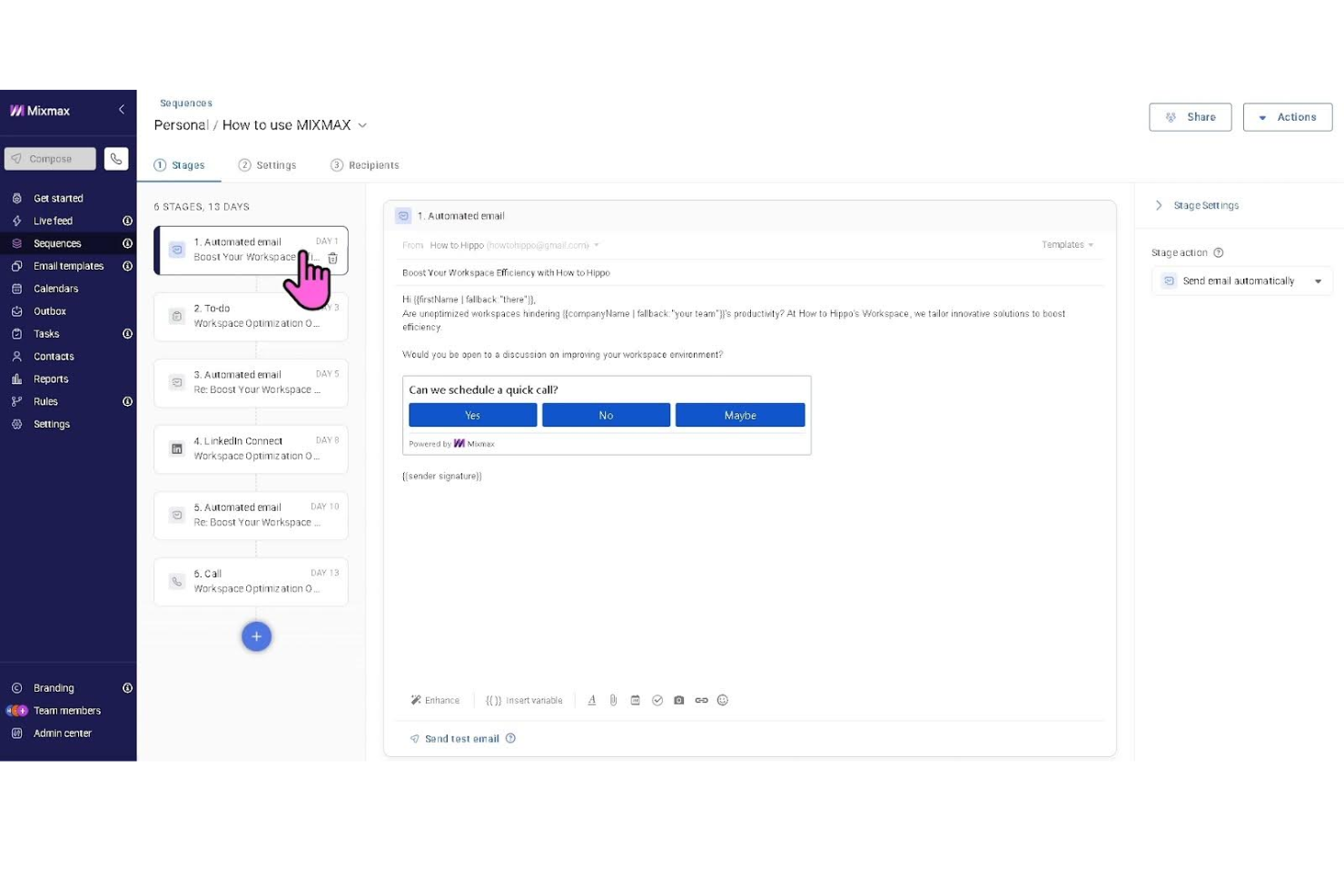
Mixmax is an AI sales engagement platform that focuses on enhancing email communication for sales teams. It helps users track email interactions, schedule meetings, and automate follow-ups, providing valuable insights to improve engagement.
Why I picked Mixmax: It's tailored for email tracking, offering features such as real-time tracking and analytics to monitor open rates and engagement. Mixmax's scheduling capabilities allow you to book meetings directly from your inbox. Its sales automation tools help you manage follow-ups efficiently. These features make Mixmax a great choice for teams prioritizing email communication.
Standout features and integrations:
Features include email templates to standardize communication, sequences to automate email follow-ups, and an in-app dialer for making calls directly from Mixmax. These features work together to support your team's email outreach efforts.
Integrations include Salesforce, Slack, Zoom, Google Calendar, Microsoft Dynamics 365, HubSpot, Dropbox, LinkedIn, and more.
Pros and cons
Pros:
- Customizable email templates
- Easy meeting scheduling
- Real-time email tracking
Cons:
- Occasional tracking and accuracy issues
- Limited advanced analytics

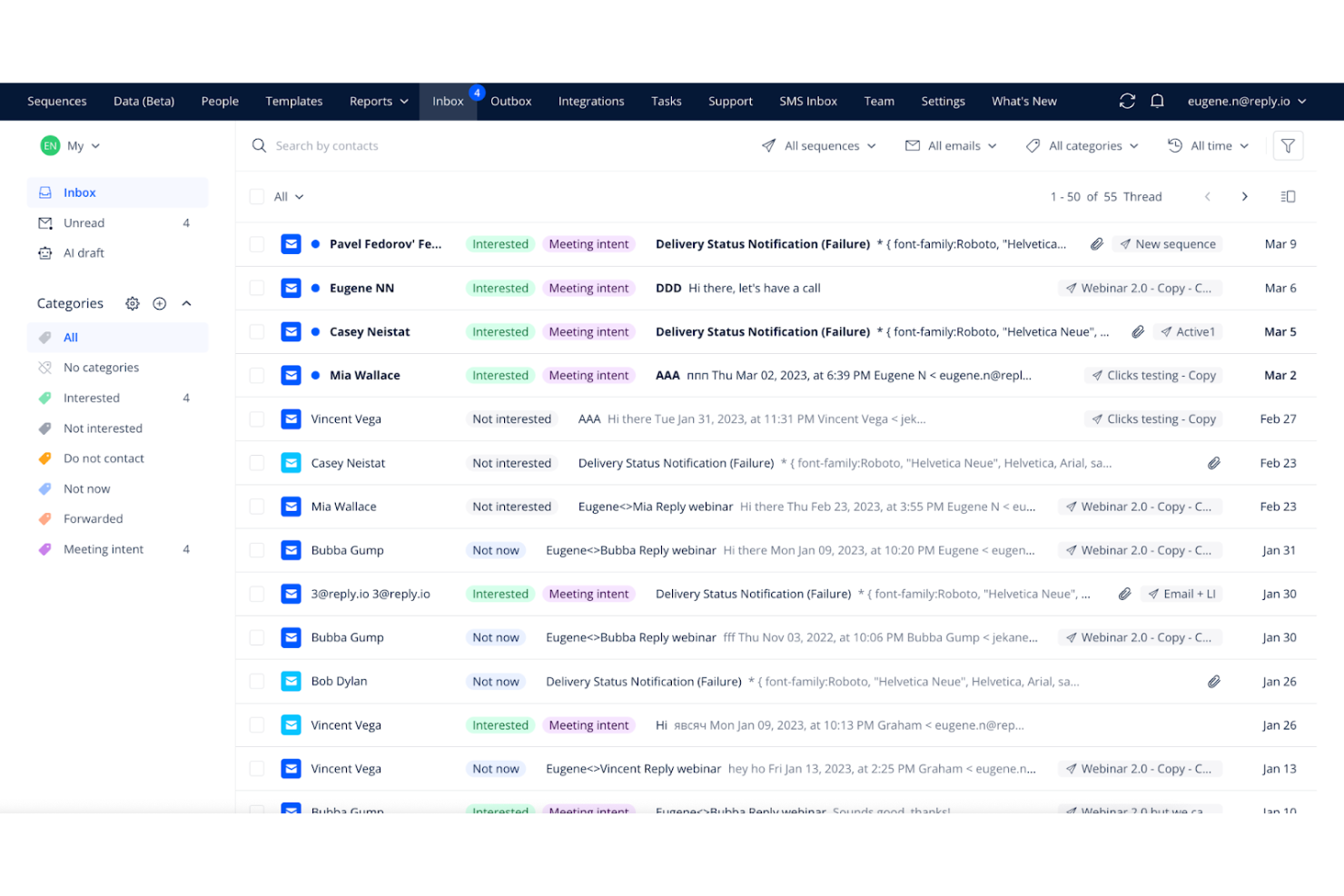
Reply is a sales engagement platform designed for sales teams to manage communication across multiple channels. It helps users automate outreach through email, calls, and social media, making it a versatile tool for engaging prospects.
Why I picked Reply: Reply is designed for multichannel engagement, with automated email sequences, calling, and social media integration. Its analytics provide insights into campaign performance, helping teams refine their strategies. The platform’s multichannel approach allows you to reach prospects across multiple channels.
Standout features and integrations:
Features include email templates for consistent messaging, A/B testing to optimize campaigns, and detailed reporting to track success. These features help your team improve communication and engagement strategies.
Integrations include Salesforce, HubSpot, LinkedIn, Slack, Microsoft Dynamics 365, Gmail, Outlook, and more.
Pros and cons
Pros:
- Customizable email templates
- Includes A/B testing capabilities
- Offers automated, multi-channel outreach tools
Cons:
- Some users report high bounce rates
- Can feel cluttered

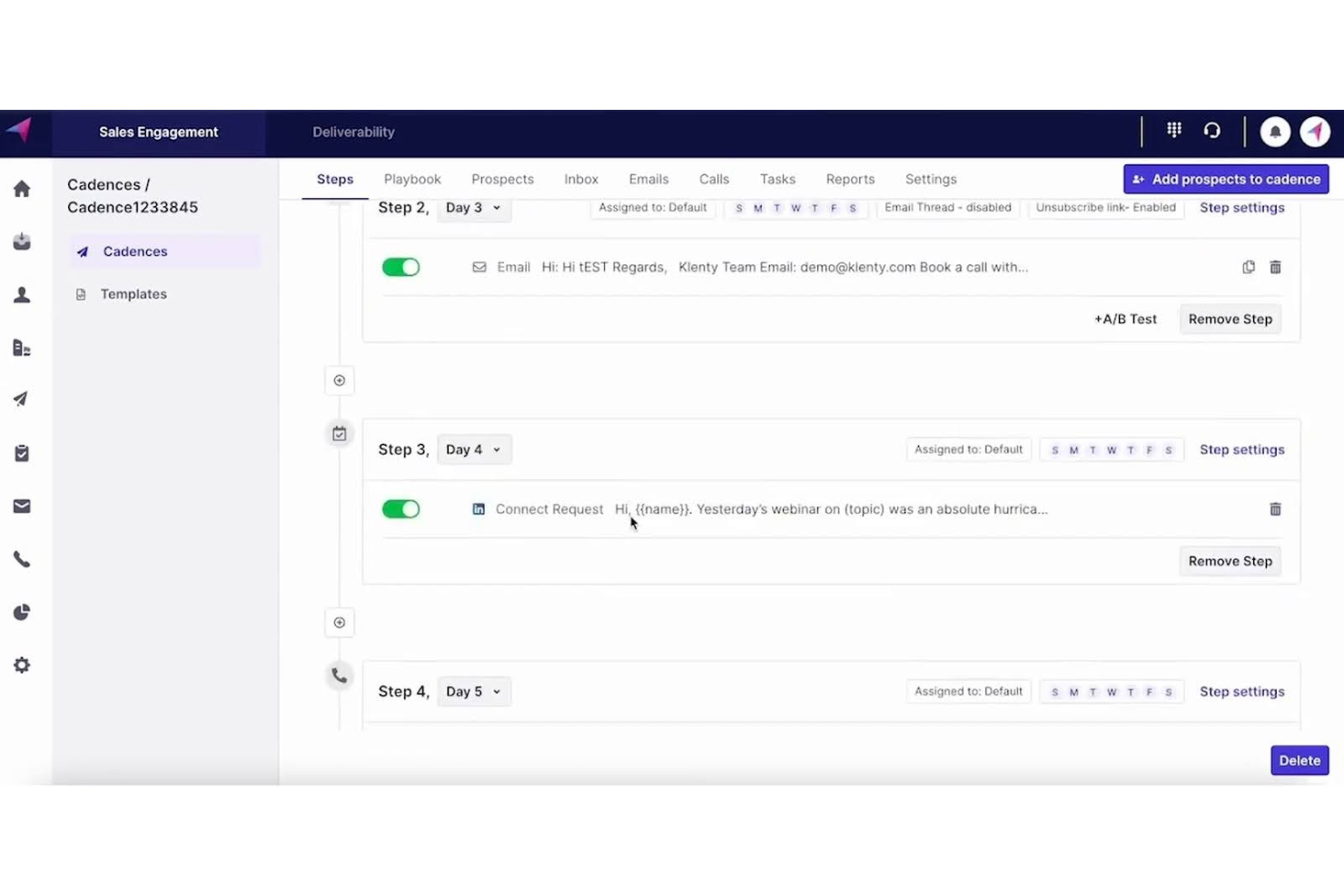
Klenty is a sales engagement platform designed for sales teams to automate and manage outreach sequences. It helps users create personalized sales cadences and automate follow-ups, ensuring consistent communication with prospects.
Why I picked Klenty: It's perfect for sales sequencing, providing features such as automated follow-ups and customizable cadences. Klenty's email personalization tools help your team tailor messages to individual prospects. The platform's analytics offer insights into sequence performance, allowing you to optimize your strategies. These features make Klenty a strong choice for teams focused on structured and personalized outreach.
Standout features and integrations:
Features include email personalization to tailor messages, cadence management for structured outreach, and detailed analytics to track sequence success. These features help your team execute consistent and personalized sales campaigns.
Integrations include Salesforce, HubSpot, Slack, LinkedIn, Gmail, Outlook, Microsoft Dynamics 365, and more.
Pros and cons
Pros:
- Reliable email deliverability
- Offers detailed sequence analytics
- Supports personalized sales cadences
Cons:
- Limited customization features
- Some users find the interface unintuitive

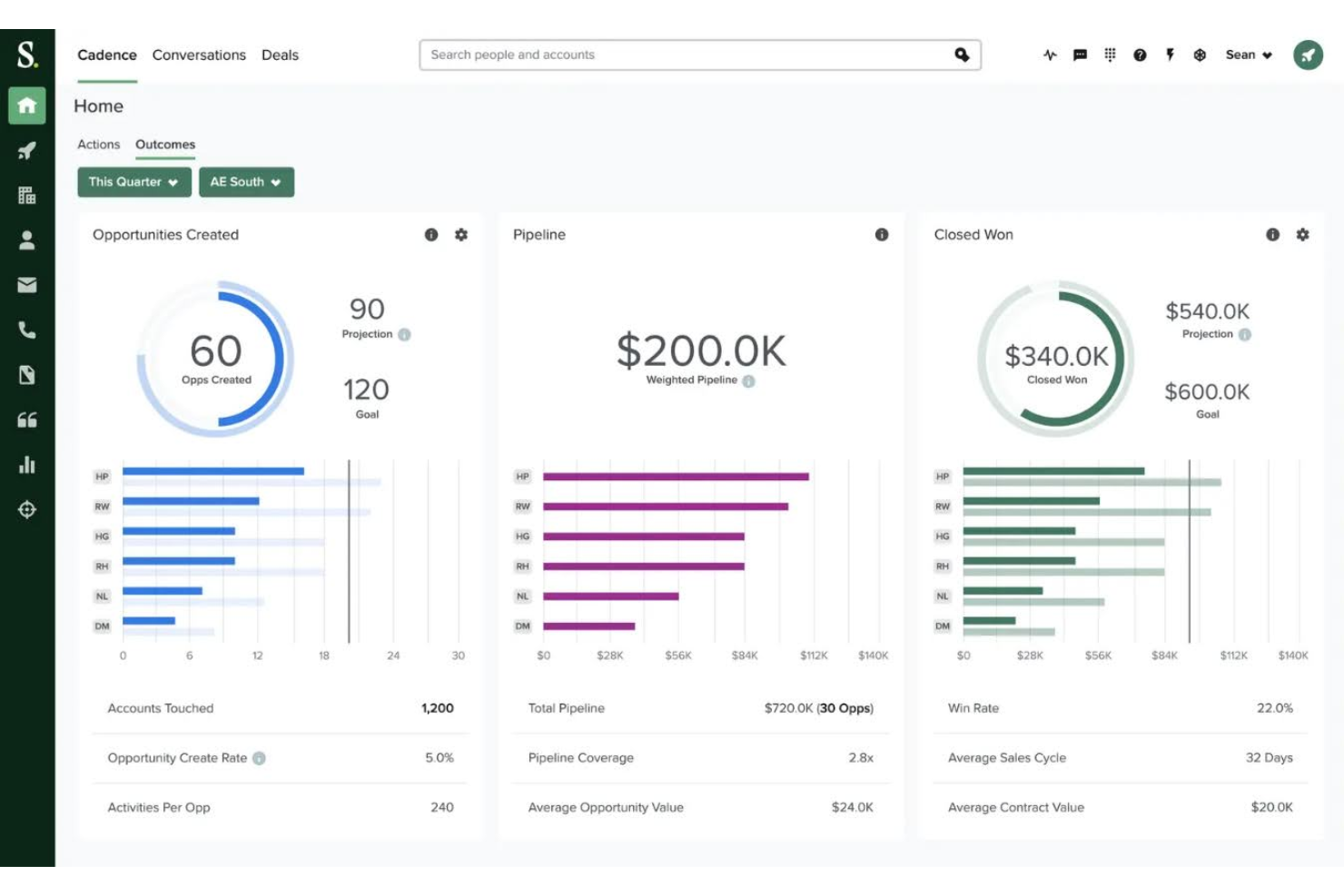
Salesloft is an AI-driven revenue orchestration platform designed for sales managers looking to improve collaboration and sales processes. It serves a wide range of sales roles by offering tools for pipeline management, customer engagement, and actionable insights.
Why I picked Salesloft: It excels in fostering team collaboration with features such as Cadence for consistent, predictable pipeline management and Conversations for real-time coaching. Salesloft's Rhythm prioritizes actions based on what's most likely to convert, making it easier for sales reps to focus their efforts. The platform's analytics provide insights into performance, boosting team productivity. These features collectively support effective sales automation.
Standout features and integrations:
Features include analytics for performance insights, Drift AI chat for lead engagement, and a forecasting tool for accurate sales predictions. These features work together to improve sales efficiency, win rates, and decision-making.
Integrations include Salesforce, Microsoft Dynamics 365, LinkedIn Sales Navigator, Zoom, Slack, Google Workspace, Outlook, and more.
Pros and cons
Pros:
- Great analytics
- Automates multi-channel sales cadences
- Breaks down silos across teams
Cons:
- Lacks advanced AI
- Steep learning curve for new users


Outreach is a sales enablement platform for large enterprises. It helps sales teams automate tasks and provides insights to improve productivity and forecasting.
Why I picked Outreach: It caters to enterprise-level scalability with its AI agents that automate prospecting and deal management. Outreach's sales process management improves forecasting accuracy and provides granular data about team and individual performance to help your sales leaders coach their team. Its security features, such as configurable access controls, protect data privacy, making it suitable for large organizations that prioritize customer success. These elements collectively enable Outreach to support complex sales operations efficiently.
Standout features and integrations:
Features include AI agents for task automation, sales process management for better insights, and configurable access controls for data security. These features improve productivity and support large-scale operations effectively.
Integrations include Salesforce, Microsoft Dynamics 365 Sales, LinkedIn Sales Navigator, Google Workspace, Outlook, HubSpot, and more.
Pros and cons
Pros:
- Flexible sales process management
- Strong AI-driven automation
- Scalable for enterprise needs
Cons:
- Slow customer support response times
- Complex setup process


Apollo is a sales engagement platform designed to help sales teams with lead generation and outreach. It provides tools for finding and engaging with potential customers, making it a valuable asset for sales professionals looking to expand their reach.
Why I picked Apollo: It's well-suited for lead generation, offering features such as a vast database of contacts and advanced search filters to find the right leads. Apollo's email outreach tools enable you to engage with prospects easily. The platform also provides analytics to measure the success of your campaigns. These features make Apollo a strong choice for teams focused on expanding their customer base.
Standout features and integrations:
Features include a contact enrichment tool to update lead information, task automation to manage outreach efforts, and email tracking to monitor engagement. These features help your team maintain an organized and efficient lead generation process, while providing stakeholders with overviews on demand.
Integrations include Salesforce, HubSpot, LinkedIn, Slack, Google Workspace, Microsoft 365, Zoom, Mailchimp, Outreach, and more.
Pros and cons
Pros:
- Strong email accuracy
- No experience required
- Extensive, accurate B2B contact database with hundreds of leads
Cons:
- Customer support inconsistency
- Data accuracy issues
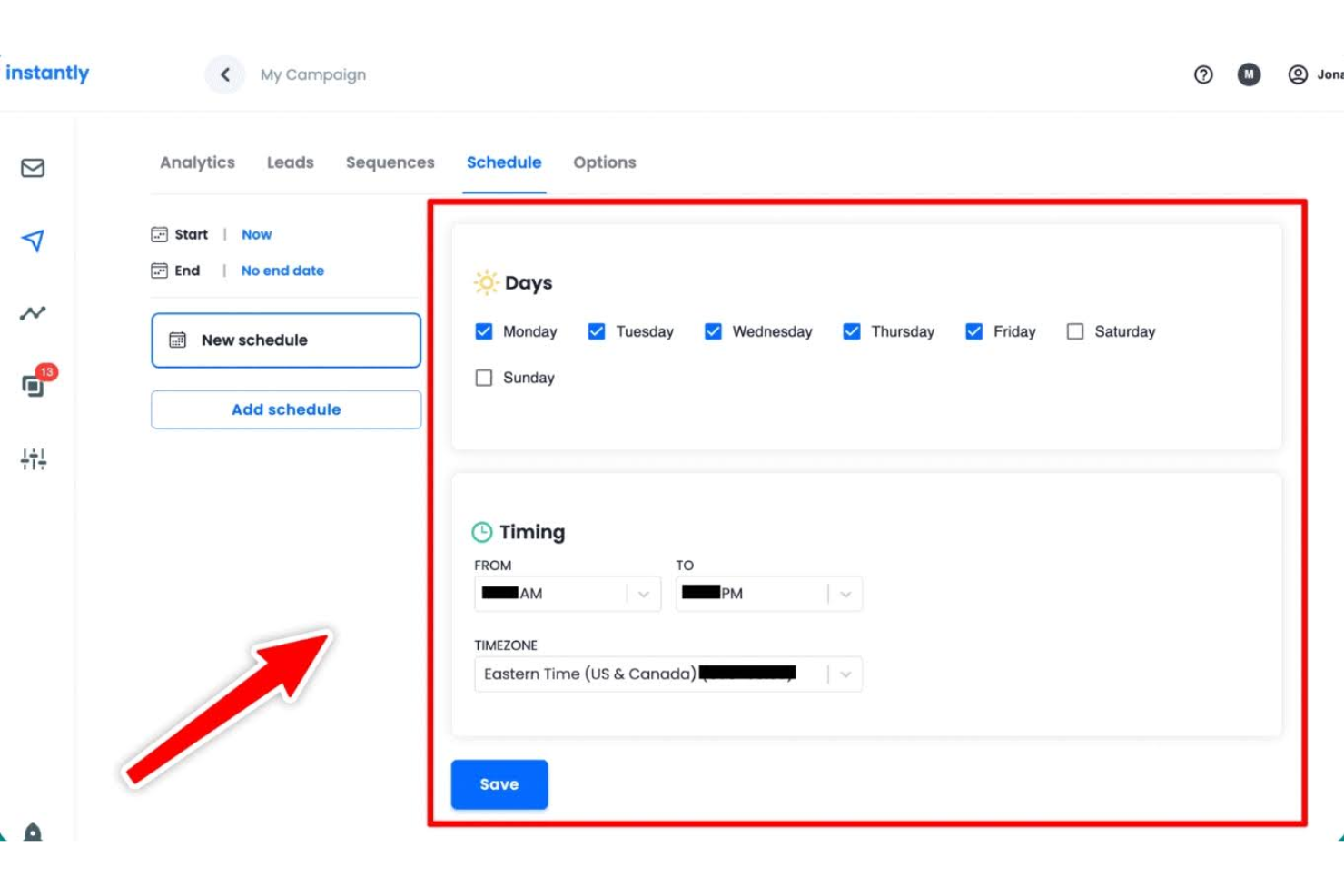
Instantly is a sales engagement platform that specializes in email automation for sales teams. It helps users automate their email outreach and follow-ups, making it easier to manage large-scale campaigns.
Why I picked Instantly: It's ideal for email automation, providing features such as automated follow-ups and personalized email sequences. Instantly's scheduling tools let you send emails at optimal times for engagement. The platform also offers analytics to track campaign performance. These features make it a great choice for teams looking to improve their email outreach efforts.
Standout features and integrations:
Features include personalized email sequences to tailor messages, scheduling tools to optimize send times, and analytics to monitor campaign success. These features take the guesswork out of emailing prospects, helping your team nail effective email campaigns.
Integrations include Salesforce, HubSpot, Google Workspace, Microsoft 365, Slack, LinkedIn, Zoom, and more.
Pros and cons
Pros:
- Supports large-scale outreach
- Personalized email sequences
- Effective email automation tools
Cons:
- Deliverability and spam issues
- Limited multichannel and personalization


ClearSlide is a sales engagement platform tailored for sales teams needing a centralized hub for managing and sharing sales content. It helps users deliver presentations, track engagement, and analyze content performance to improve sales effectiveness.
Why I picked ClearSlide: It's ideal for sales content management, offering features such as a content library and personalized presentations. ClearSlide's engagement tracking lets your team see how prospects interact with content. The platform's analytics provide insights into which content performs best. These features make ClearSlide a strong choice for teams focused on optimizing their sales materials.
Standout features and integrations:
Features include a content library to organize sales materials, engagement tracking to monitor prospect interactions, and analytics to evaluate content performance. These features help your team present and manage sales content confidently.
Integrations include Salesforce, Microsoft Dynamics CRM, LinkedIn, Gmail, Outlook, Slack, Zoom, Google Calendar, and more.
Pros and cons
Pros:
- Detailed engagement tracking
- Real-time analytics boost sales efficiency and engagement
- Ease and speed of creating sales content
Cons:
- Limited flexibility in the type of content that can be uploaded
- Organizations with extensive content could find the curation capability limited

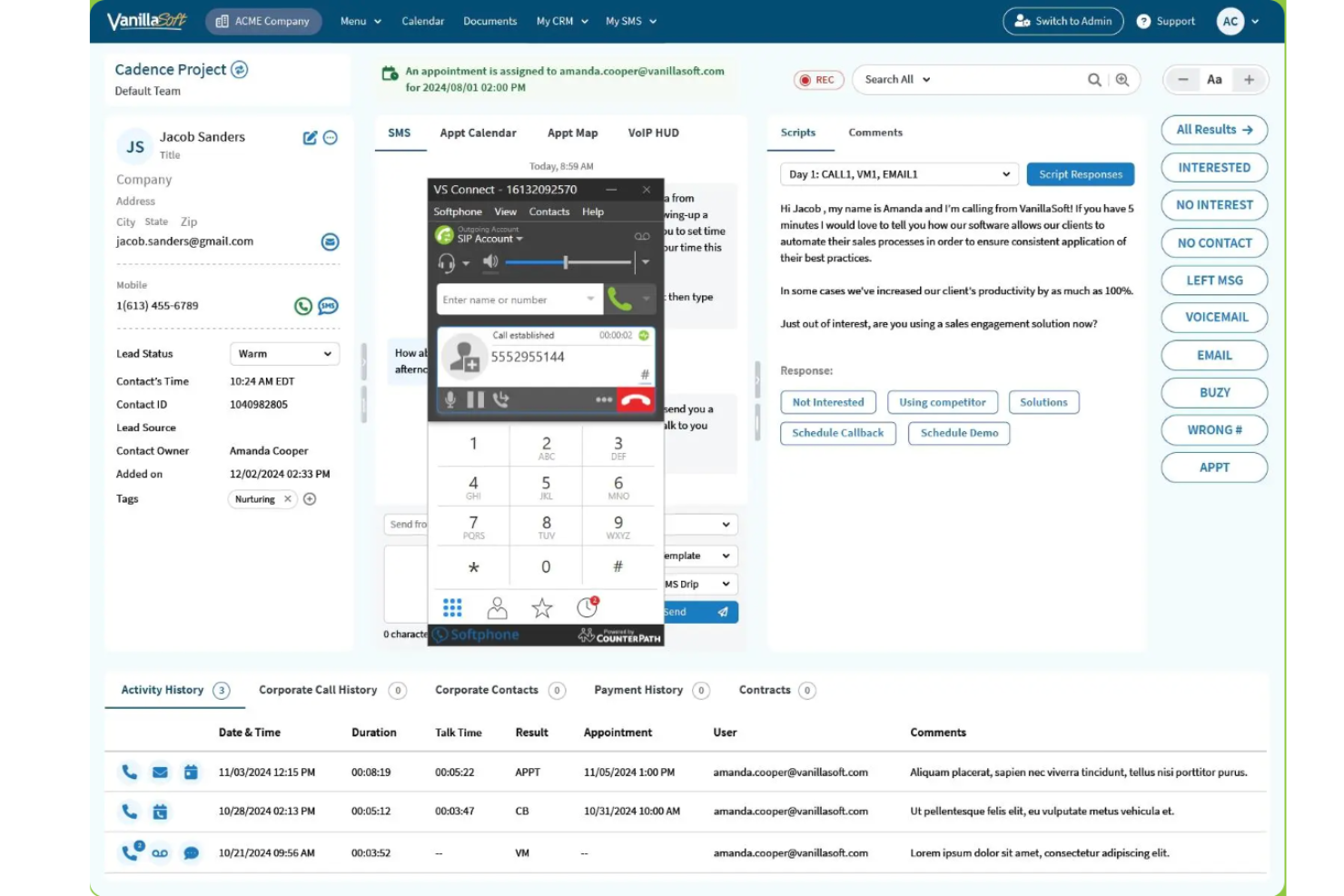
VanillaSoft is a sales engagement platform tailored for inside sales teams, offering tools to manage leads and automate outreach efforts. It helps sales professionals with call management, email tracking, and lead routing to transform their productivity.
Why I picked VanillaSoft: VanillaSoft is designed for inside sales teams needing efficient call management and lead routing. Its queue-based lead management helps prioritize tasks, and email tracking with reporting provides insights into communication success.
Standout features and integrations:
Features include queue-based lead management to prioritize leads, call recording for quality assurance, and email tracking to monitor engagement. These features help your team stay organized and improve sales productivity.
Integrations include Salesforce, Microsoft Dynamics 365, Mailchimp, HubSpot, Google Workspace, QuickBooks, and more.
Pros and cons
Pros:
- Supports high call volumes
- Efficient lead management
- Prioritizes inside sales tasks
Cons:
- Limited messaging capabilities
- The admin interface can be complex to configure

Salesforce is a leading customer relationship management (CRM) platform used by businesses of all sizes to manage customer interactions and data. It helps sales teams to close deals with prioritized lead tracking, customer engagement, and performance analytics.
Why I picked Salesforce: Perfect for CRM integration, Salesforce is a high-quality ecosystem, offering connectivity with its core CRM capabilities. It provides tools such as Sales Cloud for managing sales processes and Service Cloud for customer support. Its customizable dashboards and reports offer deep insights into sales activities. This makes Salesforce an all-in-one solution for driving revenue growth, aligning sales efforts with CRM.
Standout features and integrations:
Features include customizable metrics dashboards for visualizing data, lead tracking to manage prospects, and performance analytics to measure sales success. These features support your team in making data-driven decisions and improving customer relationships.
Integrations include Slack, Mailchimp, QuickBooks, Dropbox, Google Workspace, Microsoft 365, LinkedIn, Zoom, HubSpot, DocuSign, and more.
Pros and cons
Pros:
- Scalable for growing businesses
- Strong CRM capabilities
- Extensive customization options
Cons:
- Complexity in setting up workflows
- May be costly when adding features or additional users
Other Sales Engagement Platforms
Here are some additional sales engagement platform options that didn’t make it onto my shortlist but are still worth checking out:
- Kixie
For sales call automation
- Bigin by Zoho CRM
For small business CRM
- Warmly
For virtual meeting insights


Sales Engagement Platform Selection Criteria
When selecting the best sales engagement platform to include in this list, I considered common buyer needs and pain points, such as improving lead response time and managing multichannel communication. I also used the following framework to keep my evaluation structured and fair
Core Functionality (25% of total score)
To be considered for inclusion in this list, each solution had to fulfill these common use cases:
- Automating outreach sequences
- Tracking email engagement
- Managing contact lists
- Scheduling meetings
- Reporting on sales activities
Additional Standout Features (25% of total score)
To help further narrow down the competition, I also looked for unique features, such as:
- AI-driven insights
- Advanced analytics dashboards
- Multichannel communication support
- Customizable workflows
- Predictive sales forecasting
Usability (10% of total score)
To get a sense of the usability of each system, I considered the following:
- Intuitive user interface
- Easy navigation
- Minimal learning curve
- Clear and concise design
- Responsive interface
Onboarding (10% of total score)
To evaluate the onboarding experience for each platform, I considered the following:
- Availability of training videos
- Interactive product tours
- Access to templates
- Supportive chatbots
- Live webinars for training
Customer Support (10% of total score)
To assess each software provider’s customer support services, I considered the following:
- 24/7 support availability
- Multiple support channels
- Quick response times
- Complete knowledge base
- Personalized support options
Value For Money (10% of total score)
To evaluate the value for money of each platform, I considered the following:
- Competitive pricing
- Transparent pricing structure
- Feature set versus cost
- Availability of discounts
- Scalability of pricing plans
Customer Reviews (10% of total score)
To get a sense of overall customer satisfaction, I considered the following when reading customer reviews:
- Overall satisfaction ratings
- Feedback on core functionality
- Comments on ease of use
- Opinions on customer support
- Insights on pricing value
How to Choose a Sales Engagement Platform
It’s easy to get bogged down in long feature lists and complex pricing structures. To help you stay focused as you work through your unique software selection process, here’s a checklist of factors to keep in mind:
| Factor | What to Consider |
|---|---|
| Scalability | Will the platform grow with your team? Check if it supports an increasing number of users and data without a hitch. Consider future growth and how the tool can adapt. |
| Integrations | Does it connect with your existing tools? Check that it supports all necessary apps, such as your CRM, email, and calendar systems. Avoid tools that require isolated workflows. |
| Customizability | Can you tweak it to fit your needs? Look for flexible settings that let you tailor workflows, dashboards, and reports to match your processes. |
| Ease of use | Is the tool intuitive? Choose platforms with straightforward interfaces to minimize training time. Complex tools can slow down productivity. |
| Implementation and onboarding | How quickly can you get started? Evaluate the speed and support for onboarding. Consider tools with complete guides and support during setup. |
| Cost | Is it within your budget? Compare pricing across competitors. Watch for hidden fees and confirm that the features justify the expense. |
| Security safeguards | Does it protect your data? Look for encryption, regular updates, and compliance with standards, such as GDPR. Security lapses can lead to costly breaches. |
| Support availability | Can you get help when you need it? Check for 24/7 support, multiple contact methods, and a responsive team. Lack of support can lead to downtime. |
What Is a Sales Engagement Platform?
A sales engagement platform is a software solution that helps sales teams manage and automate their interactions with prospects and customers. Sales professionals and managers commonly use these tools to boost productivity and improve communication. Email automation, call tracking, and analytics capabilities help with organizing outreach, monitoring performance, and gaining insights. Overall, these tools improve sales efficiency and drive better customer engagement.
Features
When selecting a sales engagement platform, keep an eye out for the following key features:
- Email automation: Automates sending and scheduling emails, improving efficiency and ensuring timely communication with prospects.
- Call tracking: Monitors and records calls to help analyze interactions and improve sales strategies.
- Analytics capabilities: Provides insights into sales performance, helping teams make data-driven decisions to optimize processes.
- Lead management: Organizes and tracks leads through the sales pipeline, ensuring no opportunities are missed.
- Multichannel communication: Supports outreach through various channels, such as email, phone, and social media to engage prospects where they are.
- Customizable cadences: Allows users to create tailored outreach sequences, ensuring personalized and effective communication with leads.
- Integration support: Connects with existing tools, such as CRM systems and email clients, ensuring a smooth workflow and data consistency.
- Engagement tracking: Tracks how prospects interact with content, providing valuable insights into their interests and engagement levels.
- Security safeguards: Protect sensitive data with encryption and compliance with standards, ensuring information remains secure.
- Onboarding assistance: Offers resources, such as training videos and product tours, to help teams quickly adapt to the platform and start seeing value.
Benefits
Implementing a sales engagement platform provides several benefits for your team and your business. Here are a few you can look forward to:
- Increased productivity: Automates repetitive tasks, such as email sending and follow-ups, freeing up time for your team to focus on selling.
- Improved communication: Supports multichannel outreach, ensuring you can communicate with prospects through their preferred channels.
- Better insights: Offers analytics and engagement tracking, helping you understand customer behavior and refine your sales strategies.
- Strong lead management: Organizes and tracks leads efficiently, ensuring no opportunities slip through the cracks.
- Personalized outreach: Provides customizable cadences, allowing for tailored communication that resonates with each prospect.
- Secure data handling: Protects data protection with security safeguards, so your team's information remains safe.
- Quick adaptation: Facilitates fast onboarding with resources and support, getting your team up and running with minimal downtime.
Costs and Pricing
Selecting a sales engagement platform requires an understanding of the various pricing models and plans available. Costs vary based on features, team size, add-ons, and more. The table below summarizes common plans, their average prices, and typical features included in sales engagement platform solutions:
Plan Comparison Table for Sales Engagement Platform
| Plan Type | Average Price | Common Features |
|---|---|---|
| Free Plan | $0 | Basic email tracking, limited analytics, and restricted integrations. |
| Personal Plan | $25-40/user/month | Email automation, call logging, and basic reporting. |
| Business Plan | $35-$60/user/month | Advanced analytics, multichannel support, and customizable cadences. |
| Enterprise Plan | $70-$120/user/month | Complete integrations, security safeguards, and personalized onboarding. |
Sales Engagement Platform FAQs
Here are some answers to common questions about sales engagement platforms:
How do sales engagement platforms improve sales forecasting accuracy?
Sales engagement platforms improve sales forecasting accuracy by giving you real-time data on pipeline activity and rep performance. This helps you identify patterns and trends, so you can make more precise predictions. Track engagement rates, conversion milestones, and stalled deals to spot bottlenecks early and adjust your forecasts with confidence.
Can sales engagement tools help standardize sales processes across teams?
Yes, sales engagement tools help standardize sales processes by enforcing consistent workflows and messaging. You can set up shared cadences, templates, and process rules, making sure every team member follows the same best practices. This creates reliable data for Revenue Operations and helps new sales reps ramp up faster.
What steps can I take to achieve high adoption of a new sales engagement platform?
To achieve high adoption, involve team leaders early and get feedback during setup. Start with pilot groups, offer hands-on training, and celebrate quick wins. Keep communication open and regularly gather user feedback to make improvements. Highlight how the platform helps reps meet their goals, not just the business’s goals.
Are there common pitfalls to avoid when scaling the usage of a sales engagement platform?
Yes, common pitfalls include rolling out new features too quickly, not updating playbooks, and skipping regular training. Avoid making changes without user input and watch for data overload—too many dashboards can confuse teams. Check usage data often and adjust rollouts to make sure your platform grows smoothly with your team.
Is training required to use a sales engagement platform?
Yes, some training is often necessary, especially for complex platforms. Many vendors offer onboarding resources, such as videos, interactive tours, and webinars, to help your team get started. The learning curve varies, so assess the platform’s usability and available support for a smooth transition.
What’s Next:
If you're in the process of researching sales engagement platforms, connect with a SoftwareSelect advisor for free recommendations.
You fill out a form and have a quick chat where they get into the specifics of your needs. Then you'll get a shortlist of software to review. They'll even support you through the entire buying process, including price negotiations.