
Affinity Review: Pros, Cons, Features and Pricing


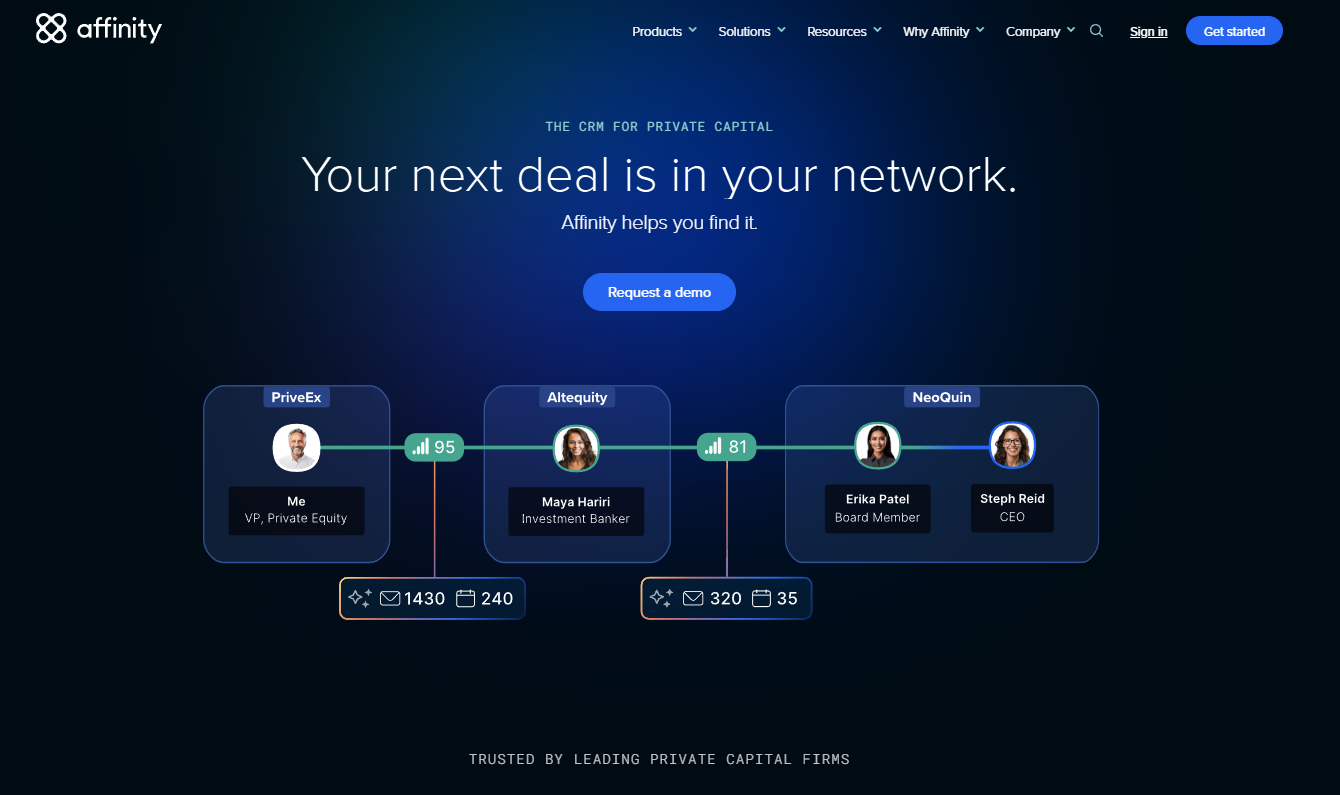
Affinity is a simple-to-use CRM software that focuses on relationship intelligence to enhance networking and deal-making. It's ideal for venture capital firms, private equity teams, and relationship-driven sales departments needing to manage complex networks. Affinity delivers actionable insights to improve relationship management and business outcomes.
Affinity addresses the pain points of tracking and leveraging professional networks, especially for sales and investment teams. In this article, I'll cover Affinity's features, pros and cons, use cases, pricing, and more to help you decide if it aligns with your relationship management needs and goals.
Affinity Evaluation Summary
- From $2000/user/year
- Free demo available
Why Trust Our Software Reviews
Affinity Overview
From my perspective, Affinity stands out for its relationship intelligence capabilities, making it ideal for teams focused on networking and deal-making. It's particularly beneficial for venture capital and private equity firms. While it excels in providing actionable insights, it might not offer the same breadth of integrations as some competitors. I think it's a great choice for organizations that prioritize sophisticated relationship management over extensive third-party integrations. The onboarding process is smooth, and the customer support is top-notch, which is a plus if your team needs guidance.
pros
-
The customer support is highly rated and reliable for your team.
-
You get actionable insights to boost networking and deal-making.
-
It excels in relationship intelligence, helping your team manage complex networks.
cons
-
Some users find the customization options limited for their specific needs.
-
The user interface can feel less intuitive for new users.
-
It might not have the same range of integrations as other CRM options.
-

Prisync
Visit WebsiteThis is an aggregated rating for this tool including ratings from Crozdesk users and ratings from other sites.4.7 -
Expedite Commerce
Visit Website -
QuickBooks Online
Visit WebsiteThis is an aggregated rating for this tool including ratings from Crozdesk users and ratings from other sites.4




How We Test & Score Tools
We’ve spent years building, refining, and improving our software testing and scoring system. The rubric is designed to capture the nuances of software selection and what makes a tool effective, focusing on critical aspects of the decision-making process.
Below, you can see exactly how our testing and scoring works across seven criteria. It allows us to provide an unbiased evaluation of the software based on core functionality, standout features, ease of use, onboarding, customer support, integrations, customer reviews, and value for money.
Core Functionality (25% of final scoring)
The starting point of our evaluation is always the core functionality of the tool. Does it have the basic features and functions that a user would expect to see? Are any of those core features locked to higher-tiered pricing plans? At its core, we expect a tool to stand up against the baseline capabilities of its competitors.
Standout Features (25% of final scoring)
Next, we evaluate uncommon standout features that go above and beyond the core functionality typically found in tools of its kind. A high score reflects specialized or unique features that make the product faster, more efficient, or offer additional value to the user.
We also evaluate how easy it is to integrate with other tools typically found in the tech stack to expand the functionality and utility of the software. Tools offering plentiful native integrations, 3rd party connections, and API access to build custom integrations score best.
Ease of Use (10% of final scoring)
We consider how quick and easy it is to execute the tasks defined in the core functionality using the tool. High scoring software is well designed, intuitive to use, offers mobile apps, provides templates, and makes relatively complex tasks seem simple.
Onboarding (10% of final scoring)
We know how important rapid team adoption is for a new platform, so we evaluate how easy it is to learn and use a tool with minimal training. We evaluate how quickly a team member can get set up and start using the tool with no experience. High scoring solutions indicate little or no support is required.
Customer Support (10% of final scoring)
We review how quick and easy it is to get unstuck and find help by phone, live chat, or knowledge base. Tools and companies that provide real-time support score best, while chatbots score worst.
Customer Reviews (10% of final scoring)
Beyond our own testing and evaluation, we consider the net promoter score from current and past customers. We review their likelihood, given the option, to choose the tool again for the core functionality. A high scoring software reflects a high net promoter score from current or past customers.
Value for Money (10% of final scoring)
Lastly, in consideration of all the other criteria, we review the average price of entry level plans against the core features and consider the value of the other evaluation criteria. Software that delivers more, for less, will score higher.
Core Features
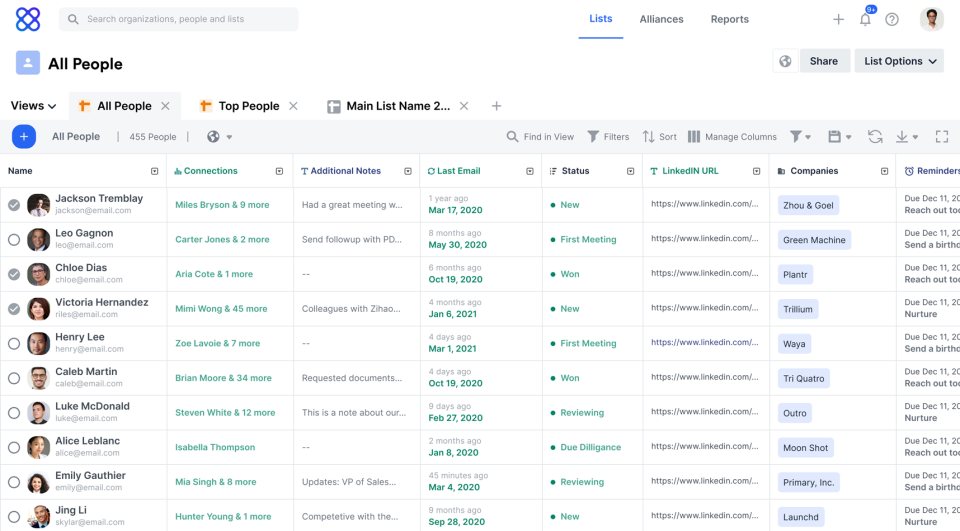
Contact Management: Affinity lets you store and organize your contacts efficiently. You can access detailed profiles and track interactions to enhance your networking.
Pipeline Management: Your team can visualize and manage deals in real-time with ease. This feature helps you track progress and prioritize tasks effectively.
Email Tracking: You can track email opens and responses and receive timely notifications, gaining insights into your communication effectiveness. This helps you follow up at the right time.
Calendar Integration: Affinity syncs with your calendar to manage appointments seamlessly. It ensures you never miss important meetings or follow-ups.
Reporting and Analytics: You get detailed reports, key metrics, and customizable dashboards to understand your team's performance. This helps you make informed decisions.
Ease of Use
Affinity is fairly user-friendly, but some users might find the interface less intuitive compared to other CRM options. While its robust features like relationship intelligence offer significant value, they can also come with a learning curve. Your team may need some time to adapt and fully leverage its capabilities. However, once you're familiar with the system, managing contacts and tracking deals becomes straightforward, enhancing your productivity.

Integrations
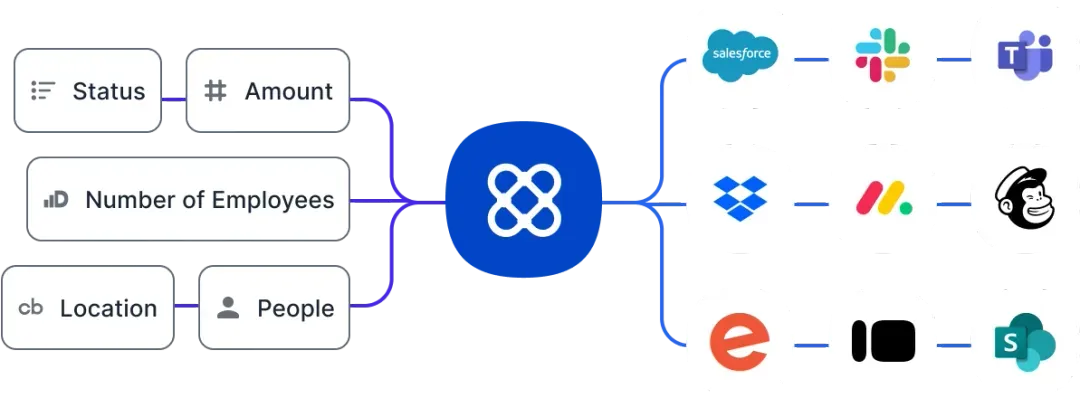
Affinity integrates with Dropbox, Eventbrite, Google Drive, Mailchimp, Microsoft SharePoint, Microsoft Teams, PitchBook, Slack, and Typeform. It also allows seamless email sync with providers like Gmail and Microsoft Outlook.
Additionally, Affinity offers an API and connects with third-party integration tools to enhance its capabilities.
Affinity Specs
- 2-Factor Authentication
- API
- Calendar Management
- Call Tracking
- Campaign Management
- Click-to-Dial
- Contact Management
- Contact Sharing
- Custom Data Forms
- Customer Management
- Dashboard
- Data Export
- Data Import
- Data Visualization
- Email Integration
- External Integrations
- File Sharing
- File Transfer
- Google Apps Integration
- Lead Management
- Lead Scoring
- Marketing Automation
- Mobile App
- Multi-User
- Notifications
- Pipeline Management
- Sales Automation
- Scheduling
- Social-Media Integration
- Task Scheduling/Tracking
- Third-Party Plugins/Add-Ons