

Klaviyo-arvostelu: hyvät ja huonot puolet, ominaisuudet ja hinnoittelun yleiskatsaus
Olen testannut valtavan määrän sähköpostimarkkinoinnin myyntityökaluja, mutta Klaviyo osuu täydelliseen kohtaan älykkään automaation ja intuitiivisen suunnittelun välillä – näin se auttaa kasvattamaan liiketoimintaa pelkkiä joukkolähetyksiä tehokkaammin.

We review tools independently, and commissions help fund our testing. See our transparency policy, our methodology, or suggest a tool.
Klaviyo is a sales email automation software for ecommerce and DTC brands. It's built around triggering personalized campaigns from customer behavior and purchase data. I'd consider it when your team needs deep segmentation and revenue-attributed reporting. Those are areas where Mailchimp starts to fall short once your data complexity and list size grow.
Klaviyo Evaluation Summary
4.6/5
- From $20/month
- Free plan available
Why Trust Our Software Recommendations
6,700+
Reviews
20
Industry experts
16+
Evaluation factors
14
Years
Our reviews reflect our independent judgment—not a sales pitch. Learn how we stay transparent.
For this guide, we evaluated tools using hands-on testing and independent research, scoring tools using our selection criteria.
Our reviews reflect our human editorial judgment, not a sales pitch.
Klaviyo Overview
In my experience, Klaviyo stands out for its deep segmentation, simple automation builder, and its AI tools. I think teams looking for quick onboarding and fast access to deliverability insights will appreciate Klaviyo most. The interface is clean and makes building targeted sales sequences much easier than most alternatives. If you care about integration flexibility, Klaviyo delivers—but I’d suggest its reporting options can feel a bit templated compared to some advanced tools. For fast-moving revenue orgs who want data-driven automation without the complexity, Klaviyo is easy to recommend.
Pros
- Advanced segmentation lets you target highly specific sales audiences
- Automated flows adapt easily to real-time activity triggers
- Built-in predictive analytics help prioritize high-value prospects
Cons
- Limited native reporting for multi-channel attribution tracking
- No built-in phone support for troubleshooting urgent issues
- Drag-and-drop email builder sometimes struggles with custom layouts
Is Klaviyo Right For Your Needs?
Who Would be a Good Fit for Klaviyo?
If you’re running a modern ecommerce brand, a fast-scaling DTC startup, or a marketing team focused on revenue-driving automation, I think Klaviyo fits extremely well. Its deep ecommerce integrations, segmentation, and multi-channel capabilities stand out for brands that want to personalize email and SMS campaigns based on real buying behavior, especially when your team wants built-in analytics and flexible automations.
- Ecommerce StoresKlaviyo’s ready-made ecommerce integrations and purchase-triggered workflows make it ideal for online retailers.
- DTC BrandsBuilt-in SMS and advanced segmentation help DTC brands run highly personalized campaigns tied to shopping behavior.
- Growth Marketing TeamsTeams looking for sophisticated A/B testing, analytics, and workflow automation will appreciate Klaviyo’s powerful features.
- Consumer Subscription ServicesRecurring revenue businesses get value from Klaviyo’s lifecycle automations and targeting based on subscriber activity.
- Small Marketing TeamsEasy-to-use templates and automation let small teams punch above their weight without a developer.
- Retail FranchisesFranchise marketing teams can segment audiences by locations and track results across multiple stores.
Who Would be a Bad Fit for Klaviyo?
Klaviyo just isn’t a match for teams looking for broad B2B sales features, organizations with heavy compliance requirements, or industries outside consumer commerce. The platform focuses on transactional emails and retail-oriented logic, so you may run into limits if you need advanced integrations, hands-on support, or complex sales pipelines.
- B2B Enterprise SalesKlaviyo lacks built-in tools for managing long sales cycles, proposals, or lead scoring common in B2B.
- Regulated Financial ServicesFinancial services may miss compliance features needed for regulations like FINRA or GDPR customization.
- Nonprofit FundraisingNonprofits looking for specialized donor management or event triggers will find Klaviyo too commerce-focused.
- Healthcare ProvidersStrict data privacy and HIPAA compliance requirements aren’t fully addressed by Klaviyo’s features.
- Offline-Only BusinessesBusinesses without an ecommerce presence won’t make use of Klaviyo’s integration strengths.
- IT or Engineering TeamsTechnical teams needing developer-first platforms or custom integrations will hit limits with Klaviyo’s no-code-first approach.
How We Test & Score Tools
We’ve spent years building, refining, and improving our software testing and scoring system. The rubric is designed to capture the nuances of software selection and what makes a tool effective, focusing on critical aspects of the decision-making process.
Below, you can see exactly how our testing and scoring works across seven criteria. It allows us to provide an unbiased evaluation of the software based on core functionality, standout features, ease of use, onboarding, customer support, integrations, customer reviews, and value for money.
Core Functionality (25% of final scoring)
The starting point of our evaluation is always the core functionality of the tool. Does it have the basic features and functions that a user would expect to see? Are any of those core features locked to higher-tiered pricing plans? At its core, we expect a tool to stand up against the baseline capabilities of its competitors.
Standout Features (25% of final scoring)
Next, we evaluate uncommon standout features that go above and beyond the core functionality typically found in tools of its kind. A high score reflects specialized or unique features that make the product faster, more efficient, or offer additional value to the user.
We also evaluate how easy it is to integrate with other tools typically found in the tech stack to expand the functionality and utility of the software. Tools offering plentiful native integrations, 3rd party connections, and API access to build custom integrations score best.
Ease of Use (10% of final scoring)
We consider how quick and easy it is to execute the tasks defined in the core functionality using the tool. High scoring software is well designed, intuitive to use, offers mobile apps, provides templates, and makes relatively complex tasks seem simple.
Onboarding (10% of final scoring)
We know how important rapid team adoption is for a new platform, so we evaluate how easy it is to learn and use a tool with minimal training. We evaluate how quickly a team member can get set up and start using the tool with no experience. High scoring solutions indicate little or no support is required.
Customer Support (10% of final scoring)
We review how quick and easy it is to get unstuck and find help by phone, live chat, or knowledge base. Tools and companies that provide real-time support score best, while chatbots score worst.
Customer Reviews (10% of final scoring)
Beyond our own testing and evaluation, we consider the net promoter score from current and past customers. We review their likelihood, given the option, to choose the tool again for the core functionality. A high scoring software reflects a high net promoter score from current or past customers.
Value for Money (10% of final scoring)
Lastly, in consideration of all the other criteria, we review the average price of entry level plans against the core features and consider the value of the other evaluation criteria. Software that delivers more, for less, will score higher.
Core Features
Automated Email Flows
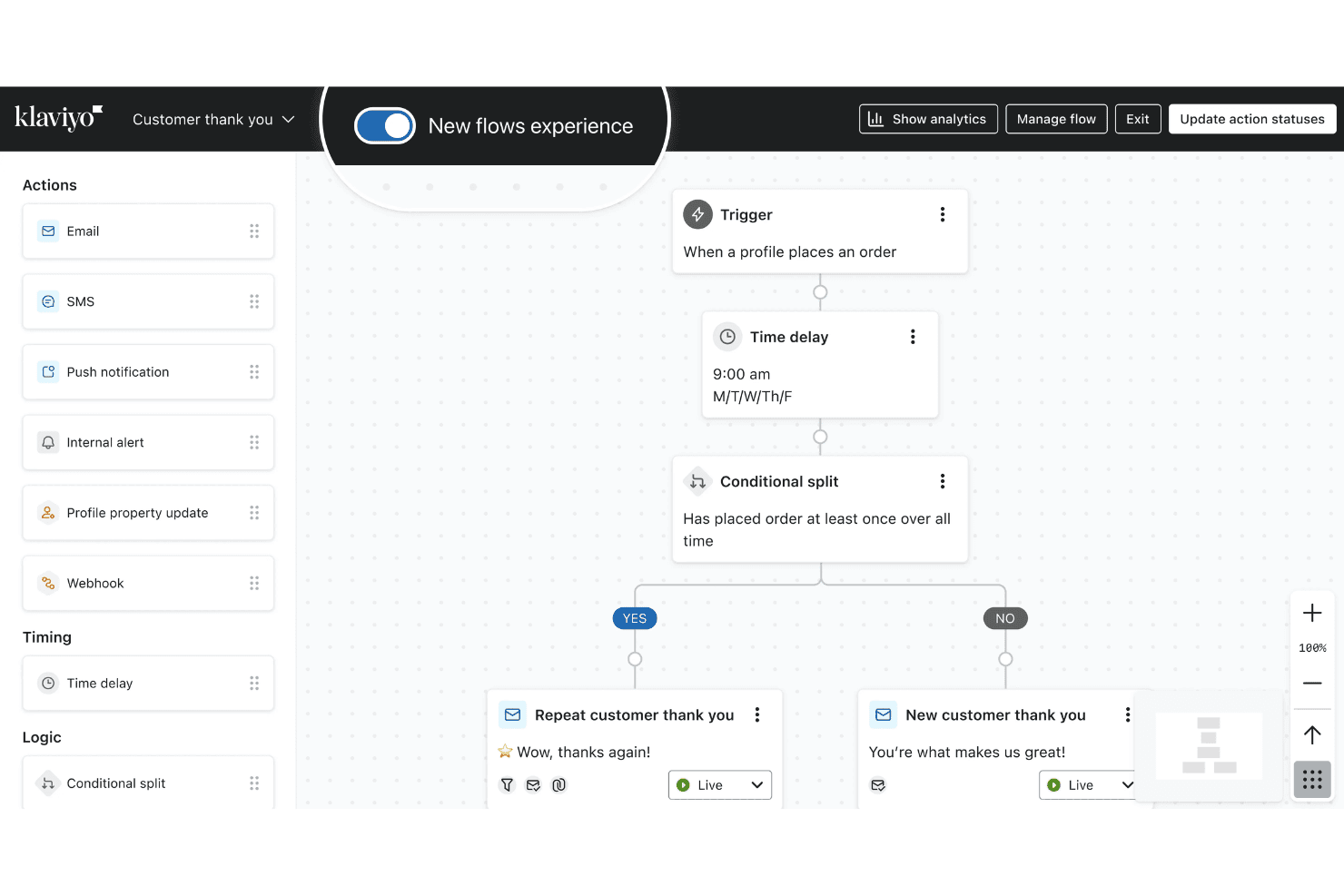
Set up email sequences that react instantly to user actions. Trigger emails for lead follow-up, abandoned carts, or post-sale check-ins.
Dynamic Segmentation
Build audience segments using real-time behavioral and demographic data. Target sales efforts with pinpoint precision across multiple customer profiles.
Predictive Analytics
Leverage predictive scoring and revenue forecasting backed by Klaviyo’s built-in machine learning. Prioritize and personalize outreach to contacts most likely to convert.
A/B Email Testing
Test subject lines, content blocks, and sending times directly in campaigns. See real-time results to optimize for higher reply and open rates.
Drag-and-Drop Email Builder
Design branded sales emails quickly with a visual editor. No coding is needed, and you can customize templates to fit different sales motions and email marketing strategies.
Performance Reporting Dashboard
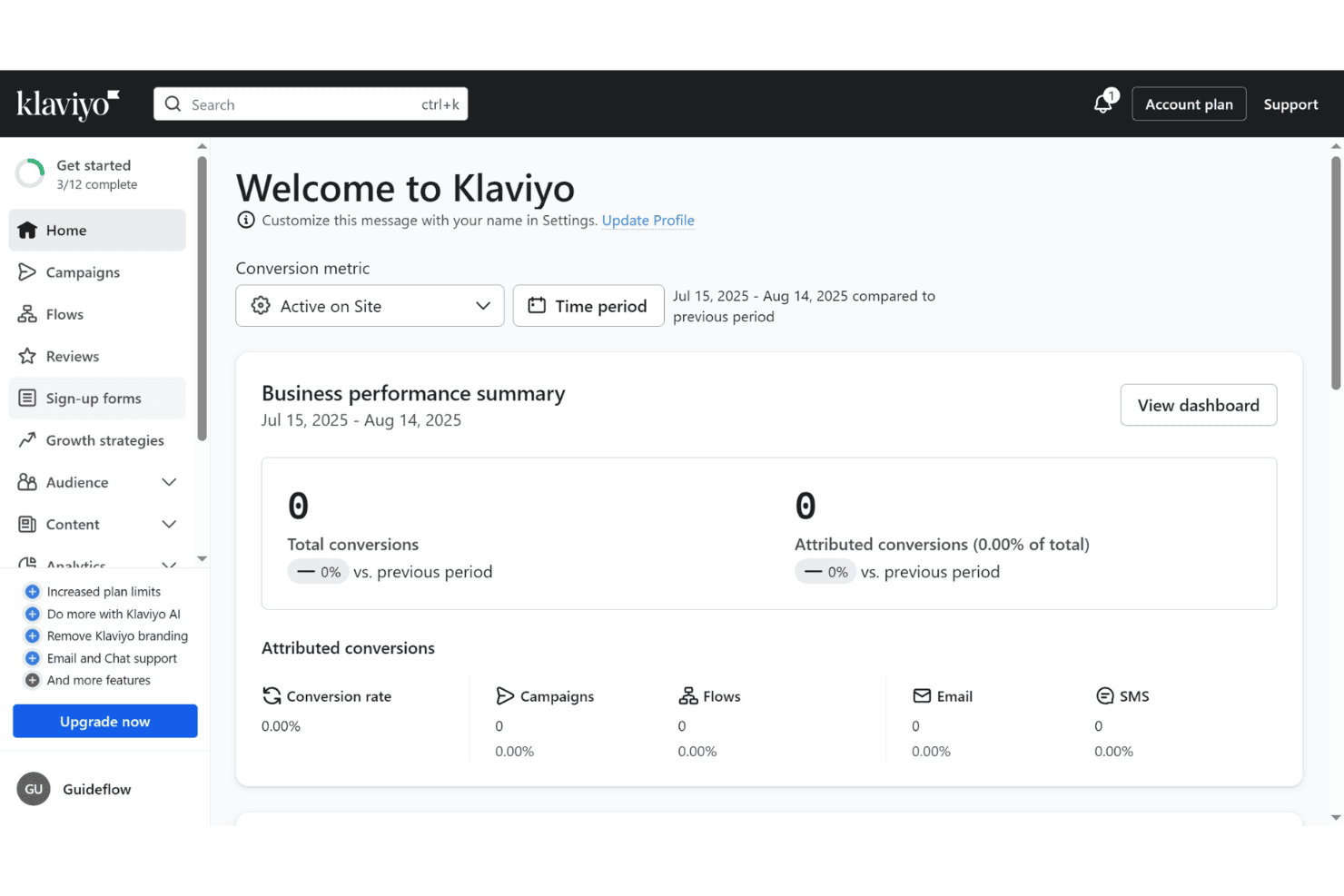
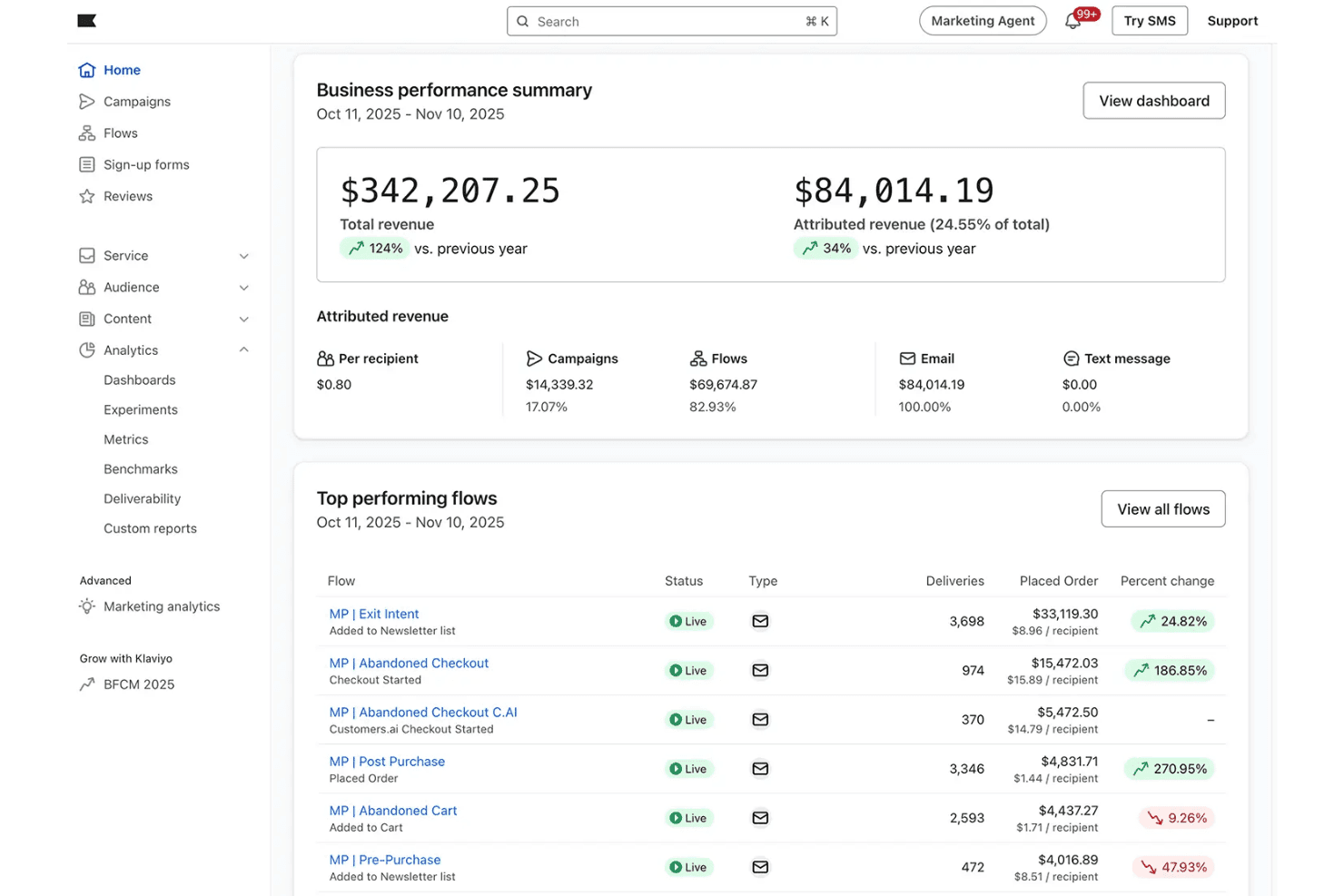
Monitor campaign metrics like open, click, and revenue rates in a unified dashboard. Access granular details to fine-tune list targeting and message timing.
Ease of Use
Klaviyo’s interface is clean, user-friendly, and designed for non-technical users, making list-building and workflow creation quick and stress-free. I think most sales teams will find the drag-and-drop builder, prebuilt flow templates, and real-time feedback especially approachable. From my standpoint, the dashboard’s simplicity helps reduce onboarding friction, while the accessible navigation means new hires can start contributing fast.
Integrations
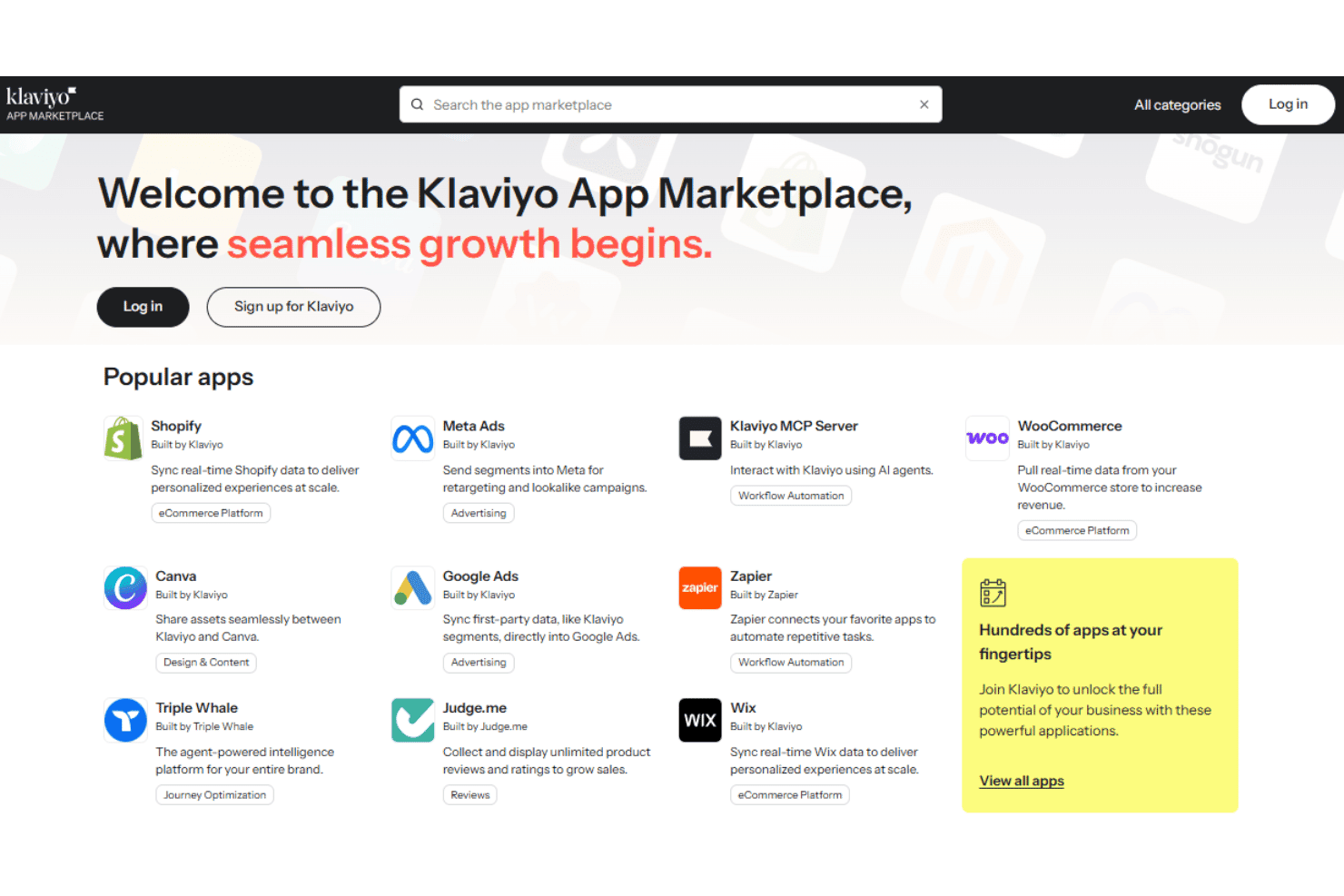
Klaviyo integrates with Shopify, WooCommerce, BigCommerce, Magento, Facebook Ads, Google Ads, Zendesk, Yotpo, Typeform, and Salesforce, among others.
Klaviyo also offers an open API and connects with third-party integration tools, giving you extra flexibility for custom workflows.
Klaviyo Specs
- 2-Factor Authentication: Yes
- API: Yes
- Calendar Management: Yes
- Call Tracking: Yes
- Campaign Management: Yes
- Click-to-Dial: Yes
- Contact Management: Yes
- Contact Sharing: Yes
- Custom Data Forms: Yes
- Customer Management: Yes
- Dashboard: Yes
- Data Export: Yes
- Data Import: Yes
- Data Visualization: Yes
- Email Integration: Yes
- External Integrations: Yes
- File Sharing: Yes
- File Transfer: Yes
- Google Apps Integration: Yes
- Lead Management: Yes
- Lead Scoring: Yes
- Marketing Automation: Yes
- Mobile App: Yes
- Multi-User: Yes
- Notifications: Yes
- Pipeline Management: Yes
- Sales Automation: Yes
- Scheduling: Yes
- Social-Media Integration: Yes
- Task Scheduling/Tracking: Yes
- Third-Party Plugins/Add-Ons: Yes


